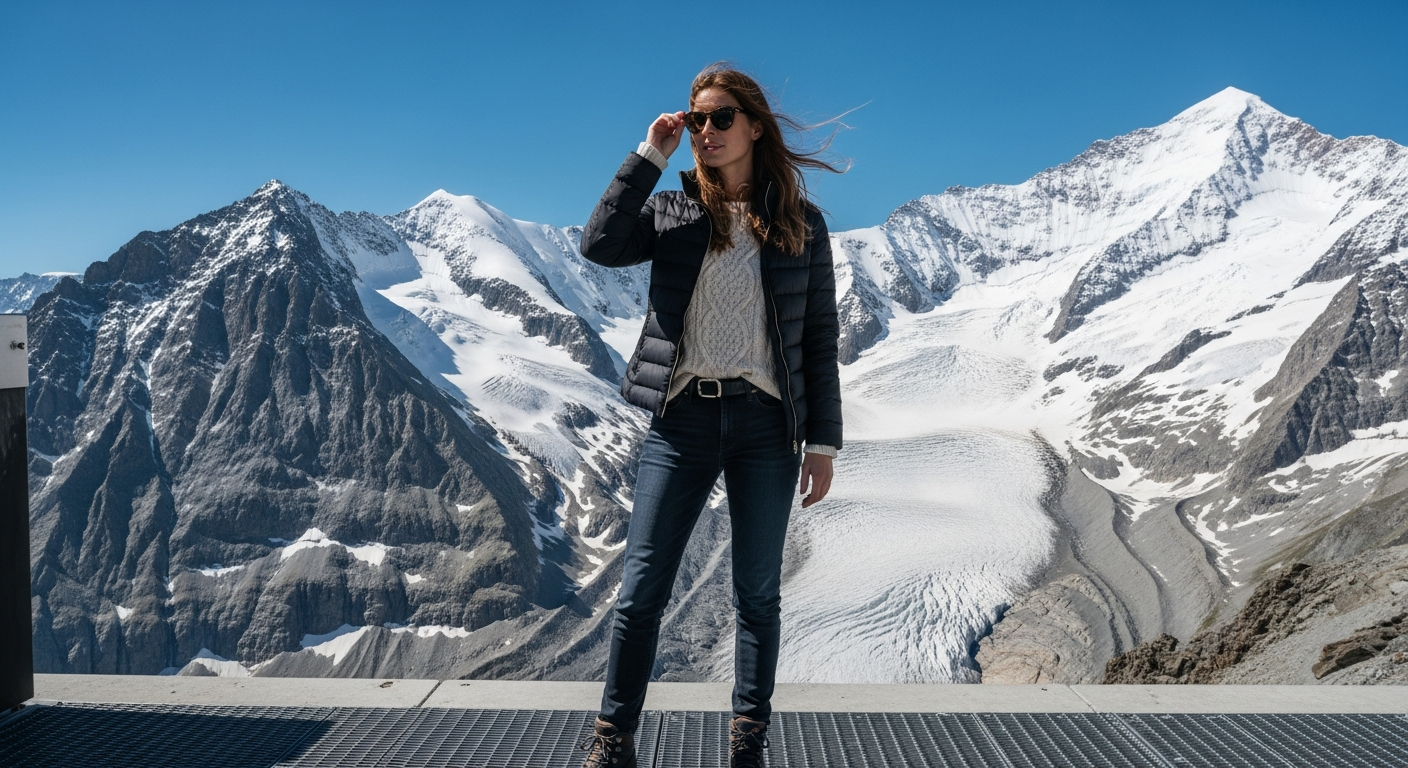
jungfraujoch switzerland outfit summer

Master the art of dressing for Jungfraujoch in summer with this complete outfit guide. Get the layering formula, specific looks, and shopping tips for the Top of Europe.
Ever thought of standing at the Top of Europe, surrounded by pristine glaciers and breathtaking Alpine views, when suddenly you realize your cute summer dress isn’t cutting it at 11,332 feet—and you’re freezing. Sound familiar?
I learned this lesson the hard way during my first visit to Jungfraujoch. While everyone in Interlaken was rocking sundresses and sandals in 75°F weather, I confidently boarded the train in my trendy linen shorts and crop top.
Two hours later, stepping onto the observation deck at -2°F with 40mph winds, I understood why the gift shop sells emergency fleeces at premium prices.
Here’s what makes Jungfraujoch such a styling challenge: You’re not just visiting a mountain—you’re traveling through three distinct climates in a single day.
The valley towns feel like peak summer. The train journey transitions through spring conditions. And the summit? That’s straight-up winter, complete with snow, ice, and wind chill that drops temperatures 20 degrees below the actual reading.
But here’s the good news: You don’t need a separate suitcase for this day trip, and you definitely don’t need to sacrifice style for warmth.
What you’ll learn in this guide: – The essential layering formula for unpredictable mountain weather that keeps you comfortable from valley to summit – Specific outfit combinations that photograph beautifully while actually functioning in sub-freezing temperatures – Footwear that’s both Instagram-worthy and slip-resistant on snow and ice – How to accessorize for extreme conditions without looking like you’re headed to the ski slopes – Three complete outfit formulas for different style preferences—from minimalist chic to romantic feminine
Let’s get you properly dressed for one of Switzerland’s most spectacular experiences.
Understanding the Jungfraujoch Climate Challenge

Why Summer Doesn’t Mean Warm at the Top of Europe
The temperature differential between Interlaken and Jungfraujoch is staggering. On a typical July afternoon, Interlaken sits comfortably at 75-80°F while the Jungfraujoch summit hovers between 32-45°F. That’s a 30-40 degree drop in less than two hours of travel time.
But raw temperature tells only part of the story. At 11,332 feet, you’re dealing with wind chill that regularly drops the “feels like” temperature into the teens or single digits. The wind whips across those glaciers with nothing to slow it down, and when you step out onto the Sphinx observation terrace, it hits you like a wall.
Then there’s the sun situation. UV radiation increases approximately 10% for every 3,000 feet of elevation gain. At Jungfraujoch, you’re exposed to 40% more UV than at sea level, and that sunlight reflects off endless expanses of white snow and ice, creating intense glare that burns skin faster than a beach day in Ibiza. You’ll see tourists with lobster-red faces who assumed “cold equals no sunburn”—they learned otherwise.
The Ice Palace adds another layer of complexity. This attraction carved inside the glacier maintains temperatures around 23°F year-round. You’ll go from outdoor observation platforms (cold with wind) to indoor viewing areas (comfortable) to the Ice Palace (legitimately frigid) within minutes.
Your regular summer wardrobe—those breezy dresses, shorts, and tank tops that work perfectly in Interlaken—becomes completely inadequate the moment you step off that train. Yet full ski gear looks ridiculous and photographs terribly when you’re back in the valley towns for lunch.
The Golden Rule: Dress for 3 Seasons in One Day
Think of your Jungfraujoch day as a reverse time-travel experience through the seasons. You’re not packing for one destination—you’re packing for three distinct climate zones.
Morning in Interlaken (Summer): You’ll start your day in warm, pleasant conditions. Cafés have outdoor seating. Locals wear sundresses and shorts. Your winter coat stays in your bag, and you’re comfortable in a single layer. This is when you take those charming village photos with flower boxes and Alpine architecture.
Midday on the train (Spring): The cogwheel railway climbs through progressively cooler zones. You’ll notice the temperature dropping as you ascend, and smart travelers start adding layers during the journey. By the time you reach Kleine Scheidegg station (halfway up), you’re in transitional spring weather—cool enough for a sweater but not yet freezing.
Afternoon at the summit (Winter): Stepping onto the Jungfraujoch platform is like entering January in the Alps. Snow covers everything. Ice formations glitter in the sunlight. Your breath creates visible clouds. This is full winter-coat territory, and you’ll be grateful for every layer you brought.
The pieces that work across all three “seasons” become your wardrobe heroes: items you can add, remove, or tie around your waist as conditions change. A lightweight puffer jacket packs into your daypack when you don’t need it. Thermal leggings fit under jeans without adding bulk. A cashmere sweater works alone in Interlaken or as a mid-layer at the summit.
This versatility is what separates a successful Jungfraujoch outfit from a miserable one.
Common Outfit Mistakes (And How to Avoid Them)
Mistake #1: The sundress optimist arrives at Jungfraujoch in a flowing maxi dress and denim jacket, having ignored every weather warning. She spends 20 minutes at the summit before retreating to the indoor restaurant, missing the Aletsch Glacier viewpoint and Ice Palace entirely. Her Instagram feed shows one shivering selfie before she gave up.
Mistake #2: The overpacker brings full ski pants, a heavyweight parka, and snow boots—then feels absurdly overdressed in Interlaken and Grindelwald. She’s sweating on the train, carrying unnecessary bulk, and her photos scream “I didn’t research this trip” because she’s dressed for February when everyone else is in summer layers.
Mistake #3: The sneaker gamble shows up in pristine white fashion sneakers with smooth soles. The moment she steps onto the icy observation platform, she’s sliding around like Bambi on ice. The Snow Fun area? Completely off-limits. She spends the entire visit clinging to railings and moving at a snail’s pace.
Mistake #4: Forgetting sun protection seems logical when you’re visiting a place called “Top of Europe” in freezing temperatures. But that Alpine sun is merciless. I watched a woman develop a painful sunburn across her nose and cheeks in less than an hour because she assumed cold weather meant sun safety. The reflection off snow doubles your exposure.
The flattering middle ground keeps you comfortable, mobile, and camera-ready: strategic layers you can adjust, footwear with actual traction, and accessories that protect without overwhelming your look. You’ll photograph beautifully against those glacier backdrops while everyone else is either freezing or overdressed.
The Essential Jungfraujoch Summer Outfit Formula

Layer 1: The Smart Base (What Touches Your Skin)
Your base layer does the invisible work that makes or breaks your comfort. This is the foundation that regulates temperature, manages moisture, and sits directly against your skin—which means fabric choice matters enormously.
The Foundation Pieces: Start with a lightweight, breathable base layer or fitted long-sleeve top in merino wool or moisture-wicking synthetic fabric. Merino wool is the gold standard here: it regulates temperature whether you’re warm or cold, resists odor even after a full day of wear, and feels soft rather than scratchy against skin. Modern moisture-wicking synthetics work nearly as well at a fraction of the price.
Here’s why cotton is your enemy at altitude: It absorbs moisture (sweat, melting snow, humidity) and stays wet, which actually pulls heat away from your body. A cotton t-shirt might feel fine in Interlaken, but the moment you start sweating during the uphill walk to the Sphinx observation deck, that moisture gets trapped. At 32°F, wet cotton makes you genuinely cold.
For elevated basics that look polished rather than athletic, choose fitted turtlenecks in neutral colors, seamless thermal tops that disappear under sweaters, or sleek athletic-style long-sleeves in luxe fabrics. These pieces photograph well when you shed your outer layers indoors and maintain that curated, intentional look.
Color strategy: Stick with neutrals (black, cream, grey, navy) that work under everything, or choose rich jewel tones (burgundy, emerald, sapphire) that pop beautifully against white snow in photos. Avoid busy patterns in your base layer—save those for mid-layers where they’ll actually show.
Budget-friendly options: Uniqlo Heattech tops ($15-30) offer exceptional warmth-to-price ratio and come in multiple weights. H&M Conscious basics provide sustainable options in the same price range. Both brands offer fitted silhouettes that work as standalone tops or hidden layers.
Investment pieces: Icebreaker merino base layers ($60-90) last for years with proper care. Patagonia Capilene ($65-85) provides technical performance if you’re doing multiple mountain activities during your Switzerland trip.
Bottom Base: Fitted leggings or thermal tights under pants or jeans add crucial warmth without bulk. Black thermal tights disappear under dark jeans and provide an extra layer when temperatures drop. In warmer July or August conditions, you can skip this layer entirely—but bring them in your daypack just in case.
The timeless black legging works under everything: jeans, joggers, or even as standalone bottoms with an oversized sweater for the train ride.
Layer 2: The Stylish Insulation
This is your statement layer—the piece that defines your aesthetic while providing essential warmth. Choose based on your personal style and the look you want to achieve.
Mid-Layer Options:
A chunky knit sweater delivers that classic Swiss Alps aesthetic. Cable knits, ribbed textures, and oversized silhouettes photograph gorgeously against mountain backdrops and provide substantial warmth. This is the piece you’ll wear in 90% of your Jungfraujoch photos.
Fleece jackets offer a modern, sporty-chic alternative. Quarter-zips, pullovers, and cropped styles in neutral or bold colors work for active travelers who want mobility and technical performance. Sherpa fleece adds trendy texture.
Quilted vests add core warmth without restricting arm movement. They layer beautifully over long-sleeve base layers and under outer jackets when conditions demand maximum insulation. The sleeveless silhouette keeps you from overheating during the train journey.
Cardigans or hoodies provide casual, effortless vibes. A longline cardigan in chunky knit creates elegant proportions. An elevated hoodie in premium fabric (cashmere blend, French terry) keeps things relaxed but polished.
Style Specifications:
Texture matters enormously in photos. Cable knits, waffle weaves, and sherpa fleece create visual interest and dimension that reads beautifully on camera. Smooth, flat fabrics disappear against mountain backgrounds—choose pieces with tactile appeal.
Fit guidance: Slightly oversized silhouettes deliver that trendy, cozy look without adding unflattering bulk. You want enough room to layer underneath but not so much fabric that you lose your shape entirely. The sweet spot is one size up from your usual fit.
Colors that pop against mountain backdrops: Cream and camel create elegant contrast with blue sky and white snow. Burgundy, forest green, and rust orange add warmth to cold-toned landscapes. Classic navy provides sophisticated versatility. Avoid pale blues and whites that blend into the background.
How to keep it flattering: Define your waist by tucking one side of an oversized sweater, or balance proportions with fitted bottoms when wearing voluminous tops. Half-tucks, front tucks, and strategic belting create shape without sacrificing comfort.
Shopping Strategy: High-street heroes like Zara, Mango, and & Other Stories ($40-80) offer on-trend pieces that deliver style without investment-level commitment. These brands excel at textured knits and elevated basics.
Investment classics from Ganni, Everlane, and Sezane ($120-200) provide superior quality that lasts multiple seasons. Cashmere blends, premium wools, and timeless silhouettes justify the higher price point.
Vintage and thrift finds add character and uniqueness. Swiss vintage shops and European secondhand platforms often carry authentic Alpine sweaters with incredible craftsmanship.
Layer 3: The Statement Outer Layer
Your jacket is the hero piece that ties everything together while providing essential protection from wind, cold, and potential precipitation.
Your Hero Piece:
Puffer jackets dominate the trendy, practical category. Lightweight down or synthetic fill packs into your daypack when you don’t need it, then provides substantial warmth when temperatures drop. Modern cuts avoid the “marshmallow” effect with strategic quilting and tailored silhouettes.
Wool coats deliver elevated, timeless appeal. A classic camel coat or tailored wool blend creates Instagram-worthy moments while providing genuine warmth. This option works best for travelers prioritizing style over technical performance.
Technical shells offer practical versatility for sporty aesthetics. Waterproof, windproof fabrics protect in all conditions, and streamlined designs work from mountain summits to city streets.
The Perfect Jungfraujoch Jacket:
Windproof and water-resistant construction is non-negotiable. Even if rain isn’t forecasted, wind chill at the summit demands a jacket that blocks air movement. Water resistance protects against melting snow and unexpected weather changes.
Lightweight enough to tie around your waist when not needed—because you will be removing and adding this piece multiple times throughout the day. Heavy, bulky jackets become annoying to carry when you’re warm.
Stylish enough to wear in Interlaken cafés without looking like you’re headed to base camp. Your jacket appears in transit photos, lunch stops, and valley town wandering—not just summit shots.
Colors: Bold reds create striking contrast in mountain photos. Classic camel provides timeless elegance. Chic black works everywhere and never looks wrong. Trendy sage green or rust orange add contemporary appeal.
Specific Recommendations:
Budget ($50-100): Uniqlo Ultra Light Down jackets pack incredibly small and provide excellent warmth. H&M padded jackets offer trendy silhouettes at accessible prices. Both brands release new colors seasonally.
Mid-range ($100-250): The North Face and Patagonia deliver proven performance with style-conscious designs. Arc’teryx outlet pieces provide premium quality at reduced prices. These brands hold resale value if you later upgrade.
Investment ($250+): Moncler (secondhand markets offer significant savings), Canada Goose, and Mackage create luxury pieces that last decades. These jackets make statements while performing flawlessly in extreme conditions.
Complete Outfit Ideas for Different Styles

The Classic Minimalist (Timeless & Polished)
The Look: – Black thermal base layer (Uniqlo Heattech or similar) – Cream cable-knit sweater with subtle texture – Dark wash jeans or black thermal leggings – Camel wool coat or black lightweight puffer – White leather sneakers with grippy soles or tan hiking boots – Delicate gold jewelry (small hoops, simple necklace) – Black crossbody bag or compact backpack
Why It Works:
This outfit achieves effortless chic without trying too hard—the hallmark of great minimalist style. The neutral palette (black, cream, camel, dark denim) creates cohesive elegance that photographs beautifully against any background. Snow, sky, and stone all complement these timeless tones.
Every piece works together and separately, giving you maximum versatility for your entire Switzerland trip. That cream sweater pairs with the black base for Jungfraujoch, then works alone with jeans in Lucerne. The camel coat transitions from mountain summits to city streets without missing a beat.
The silhouette flatters all body types by balancing proportions: fitted base layers prevent bulk, the sweater provides comfortable coverage, and structured outerwear creates clean lines. There’s nothing fussy, nothing trendy enough to date your photos, nothing that demands specific body proportions.
You can recreate this entire look with closet staples you likely already own. The only specialized purchase might be the thermal base layer—everything else exists in most wardrobes.
Styling Tips:
Tuck your sweater slightly into jeans at the front only, letting the back drape naturally. This defines your waist without looking overly styled and prevents fabric bunching under your coat.
Roll your coat sleeves once or twice for casual elegance and to show off your sweater texture. This styling trick adds visual interest and creates that “I woke up like this” vibe fashion editors love.
Add texture through knit patterns and fabric mixing—the cable knit sweater against smooth denim, soft wool coat over chunky knit, leather bag details against textile layers. Texture creates dimension in photos when color stays neutral.
The Trendy Adventurer (Sporty-Chic)
The Look: – Fitted athletic base in black or neutral (cropped or full-length) – Oversized fleece or half-zip pullover in bold color – High-waisted black leggings or tapered joggers – Colorful puffer jacket (burgundy, forest green, or rust) – Chunky hiking boots or trail sneakers in neutral tones – Knit beanie and sporty backpack – Minimal jewelry (small studs, simple watch)
Why It Works:
This outfit captures the on-trend athleisure aesthetic that dominates current fashion while providing maximum comfort and mobility. You can actually move, climb stairs to observation platforms, and explore the Ice Palace without restriction.
The look is perfect for the active traveler who wants to maximize their Jungfraujoch experience. While others are carefully navigating in fashion boots, you’re confidently walking across snow, participating in the Snow Fun area, and accessing every viewpoint without worry.
The youthful, energetic vibe photographs well on social media and appeals to adventure-focused audiences. This outfit says “I’m here to experience everything, not just take one photo and leave.”
Every piece earns its place on your entire Switzerland itinerary. These items work for hiking in Lauterbrunnen, exploring Grindelwald, or taking the cable car up Schilthorn. Maximum versatility for active trips.
Styling Tips:
Mix athletic and casual elements—don’t go full gym mode. Pair technical pieces with fashion-forward items to avoid looking like you’re headed to CrossFit. The oversized fleece over fitted athletic base creates that perfect balance.
Play with proportions: fitted bottom, oversized top creates the trendy silhouette everyone’s wearing. This combination flatters by defining your lower half while providing comfortable coverage on top.
Add one statement piece to elevate the sporty base. A colorful puffer jacket in an unexpected shade (rust, burgundy, sage) or a trendy beanie with unique texture prevents the outfit from reading as pure activewear.
The Romantic Explorer (Feminine & Elevated)
The Look: – Fitted turtleneck base in cream, blush, or soft grey – Longline cardigan in chunky knit or feminine silhouette – High-waisted wool trousers or dark jeans – Belted wool coat in classic camel or soft rose – Heeled ankle boots with traction or elegant hiking boots – Silk scarf, pearl earrings, structured handbag – Delicate layered necklaces
Why It Works:
This outfit delivers feminine elegance without sacrificing warmth or practicality. You can absolutely bring romantic style to the mountains—it just requires strategic choices.
The longline cardigan creates beautiful proportions and movement in photos.