Best Southern California Beach Towns for Summer

I still remember the moment I realized I’d been doing Southern California beaches all wrong. It was July 2019, and I was stuck in bumper-to-bumper traffic on PCH heading to Huntington Beach, watching my precious Saturday morning evaporate.
When I finally arrived at noon, parking cost $30, the sand was so crowded I could barely find space for my towel, and the “authentic beach experience” I’d driven two hours for felt more like a theme park than paradise.
That frustration launched a five-year obsession. I’ve since spent countless weekends exploring every stretch of Southern California’s 400-mile coastline, from the hidden coves of Laguna to the secret local beaches in Encinitas that don’t even appear on most maps. I’ve learned which towns deliver unforgettable experiences and which ones will drain your wallet while leaving you disappointed.
Here’s what you need to know: The best beach towns aren’t always the most famous ones. They’re the places where you can park without selling a kidney, where restaurants serve locals year-round (not just tourists in summer), and where the beach experience feels authentic rather than manufactured.
Whether you’ve got a long weekend or a full week, whether you’re traveling on a backpacker budget or ready to splurge, this guide reveals the Southern California beach towns actually worth your limited vacation time—and exactly how to experience each one like someone who lives there.
What Makes a Southern California Beach Town Worth Visiting?

The Perfect Beach Town Checklist
After visiting dozens of coastal communities, I’ve developed a framework that separates the magical from the mediocre. The best beach towns share four essential qualities that most travelers overlook when planning their trips.
Authentic local vibe beats overdevelopment every time. You can feel the difference the moment you arrive. Real beach towns have hardware stores and surf shops that have been there for decades, not just rows of identical souvenir stores. The restaurants are packed on Tuesday nights in February, not just Saturday afternoons in July. When I’m evaluating a new town, I look for where locals get their morning coffee—if the line is full of people in wetsuits and work clothes at 7 AM, that’s a green flag.
Variety of experiences matters more than beach quality alone. I learned this the hard way in Pismo Beach, where I spent three days with nothing to do after exhausting the beach itself in about four hours. The towns worth visiting offer compelling reasons to leave the sand: art galleries, hiking trails with ocean views, farmers markets, live music venues, tide pools, kayaking opportunities. You want options when the afternoon heat gets intense or when someone in your group isn’t a beach person.
Accessibility can make or break your entire trip. I once calculated I spent 14 hours of a week-long vacation just dealing with parking in Santa Monica—that’s two entire days lost. The best beach towns either have ample parking (rare but magical), excellent public transit or trolley systems, or are compact enough to walk everywhere once you park once. Walkability especially transforms the experience; there’s something soul-crushing about driving half a mile to dinner after spending all day at the beach.
Value proposition means different things at different price points. In La Jolla, you’re paying premium prices but getting world-class snorkeling, dramatic cliffs, and restaurant quality that rivals any major city. In Encinitas, you’re paying moderate prices for authentic surf culture and excellent casual dining. Both deliver value—just to different audiences. The worst towns charge La Jolla prices while delivering Encinitas experiences (I’m looking at you, parts of Malibu).
Summer-Specific Considerations
Summer fundamentally changes Southern California beaches, and most visitors don’t account for these seasonal shifts when planning.
Crowd levels vary dramatically between towns and even between beaches within the same town. Here’s what five years of summer weekends taught me: Coronado’s main beach gets absolutely slammed, but North Beach stays manageable even on Fourth of July weekend. Laguna’s Main Beach is a zoo, but walk ten minutes south to Aliso Beach and you’ll find breathing room. The secret is that most tourists stick to the first beach they find or the most famous one. Locals know the alternatives.
Weather patterns create microclimates that will shock you. May Gray and June Gloom are real phenomena—marine layer clouds that can keep beaches overcast until afternoon, especially in June. But here’s what the guidebooks miss: this affects different towns differently. La Jolla often stays clearer because it’s farther south and east. Encinitas can be socked in while Coronado is sunny. I always check specific forecasts for each town, not just “San Diego weather.”
Peak season pricing hits hard from Memorial Day through Labor Day. Hotel rates can double or triple. That charming Laguna Beach inn that’s $150 in April becomes $400 in July. But here’s the insider move: book Sunday through Thursday instead of weekends, and you’ll often get near-shoulder-season rates even in peak summer. I’ve saved thousands using this strategy. Also, early September offers the best weather of the entire year with dramatically lower prices—the ocean is warmest, the crowds thin out after Labor Day, and hotels desperately want to fill rooms.
Matching Beach Towns to Your Travel Style
The biggest mistake I see travelers make is choosing a beach town based on Instagram photos rather than their actual travel style and priorities.
For romantic getaways, Laguna Beach dominates. The cove beaches create intimate settings, the art galleries give you indoor activities for variety, and the clifftop restaurants deliver sunset dinner experiences worth the premium prices. Budget $300-500 per night for accommodations, $150-200 daily for meals and activities. A weekend here (two nights) gives you enough time without feeling rushed.
For family adventures, Coronado wins decisively. The wide, flat beach is perfect for kids, the calm water is safer for young swimmers, bike rentals let you explore as a family, and the village has casual dining that won’t stress you out with children. Budget $250-400 per night for family accommodations, $100-150 daily for meals and activities. You want at least three nights here to justify the trip and really settle in.
For solo exploration and surf culture, Encinitas offers the best value and most authentic experience. You can stay in a hostel for $50/night or a decent hotel for $150-200, eat incredible food for $30-40 daily, and immerse yourself in genuine Southern California beach culture without feeling like a tourist. A week here never feels too long.
For active travelers who want adventure, La Jolla provides the most options: kayaking, snorkeling, coastal hiking, tide pooling. Budget $200-350 per night for accommodations, $120-180 daily for meals and activities (kayak rentals, gear, etc.). Three to four nights lets you experience everything without exhausting the options.
Laguna Beach – The Artist’s Paradise with Stunning Coves

Why Laguna Beach Stands Out
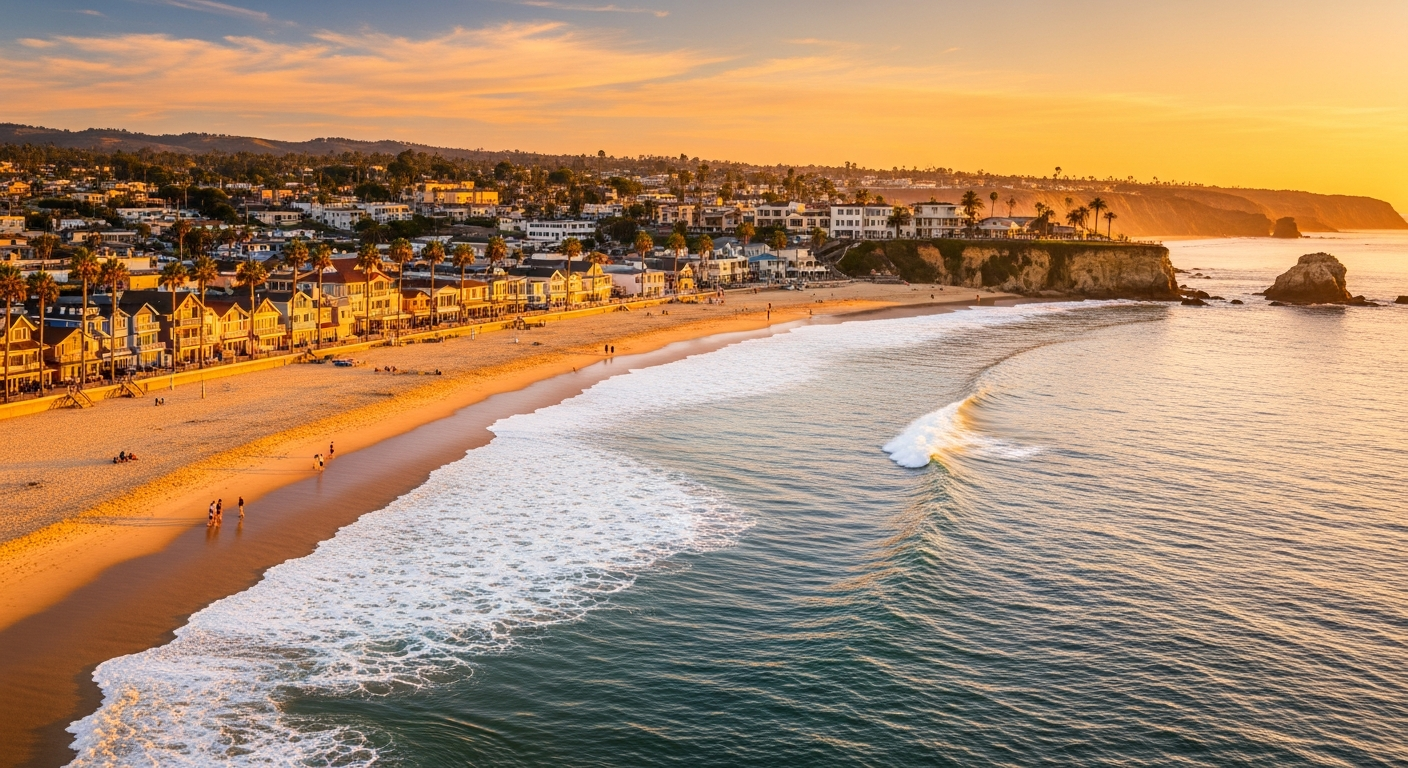
The first time I descended the stairs to Thousand Steps Beach (which actually has 220 steps—I counted), I understood why artists have flocked to Laguna for over a century. The light here is different. It’s softer, more golden, especially in the hours before sunset when it illuminates the cliffs and turns the water into liquid turquoise.
The beaches here are unlike anywhere else in Southern California. Instead of one long stretch of sand, Laguna offers over 30 distinct cove beaches, each with its own character. Treasure Island Beach, tucked beneath the Montage Resort, feels like a private paradise with its rock formations and tide pools. Shaw’s Cove attracts snorkelers who know it’s one of the best spots in Southern California for underwater visibility—I’ve seen bright orange Garibaldi fish, octopuses, and even the occasional leopard shark here.
What makes Laguna magical is that you can beach-hop. Spend the morning snorkeling at Shaw’s, grab lunch in the village, then head to Victoria Beach for the afternoon to photograph the iconic pirate tower (officially called the Victoria Beach Tower, built in 1926 as a stairway to a beachfront home). Each cove offers completely different experiences, and most are connected by the scenic coastal pathway.
The authentic culture runs deep. The Pageant of the Masters, where real people pose to recreate famous artworks, has run every summer since 1933 (except 2020). First Thursdays Art Walk brings the entire community out to stroll through galleries with wine and cheese—it’s free and genuinely fun, not touristy. I’ve bought original paintings here for $200-300 that would cost thousands in LA galleries.
The walkability factor transforms the experience. Once you park (more on that strategy in a minute), you can walk to dozens of beaches, hundreds of restaurants, and all the galleries without moving your car. The village is compact, hilly, and utterly charming. This is crucial because summer parking is legitimately challenging.
This town is best for couples, art lovers, photographers, and anyone seeking romance mixed with culture. It’s not ideal for families with very young children (too many stairs, limited beach space) or budget travelers (though I’ll share money-saving strategies).
How to Maximize Your Time Here
Morning strategy starts with parking. Here’s what five years of Laguna visits taught me: arrive before 9 AM on summer weekends, or you’ll pay $2-3 per hour in metered spots (if you find them) or $30-40 for private lots. The secret is the free residential parking on streets above PCH—park on Cliff Drive or Park Avenue, then walk down. Yes, it’s a 10-15 minute walk, but you’ll save $30 and get exercise.
Hit the beaches early for another reason: the marine layer often burns off by 10-11 AM, but you’ll have already claimed your spot. I prefer Shaw’s Cove or Crescent Bay for morning snorkeling when the water is calmest. Bring your own gear—rental shops charge $25-30 for equipment you can buy for $40 and use repeatedly.
Afternoon is for gallery hopping and lunch. The concentrated art district along PCH and Forest Avenue contains over 100 galleries. Don’t try to see them all; instead, grab the free gallery map from the visitors center and pick five that match your taste. My favorites: Wyland Galleries for marine art, Sherwood Gallery for contemporary pieces, and the hidden Studio Seven Arts for emerging artists with reasonable prices.
For lunch, skip the PCH tourist traps. Locals eat at Las Brisas (splurge-worthy for the clifftop view and fresh seafood, $25-35 per person), Zinc Cafe (healthy, affordable, $12-18 per person, always packed with locals), or grab tacos at Taco Loco ($8-12 per person, cash only, absolutely delicious).
Evening belongs to sunset and dinner. The best sunset viewing that isn’t crowded: Heisler Park. Everyone flocks to Main Beach, but Heisler Park offers the same views with grass to sit on, benches, and far fewer people. Arrive 30 minutes before sunset, bring wine (it’s allowed in the park), and watch the light show.
For dinner, I have strong opinions after eating at 40+ Laguna restaurants. Splurge-worthy: The Deck on Laguna Beach ($40-60 per person, incredible ocean views, reserve ahead). Mid-range: Mozambique ($25-35 per person, excellent South African cuisine, unique). Budget: Brussels Bistro ($15-25 per person, Belgian frites and mussels, casual and delicious).
Insider Tips & Hidden Gems
Secret local spot: Aliso Beach. While everyone crowds Main Beach and Thousand Steps, Aliso Beach offers ample free parking (arrive before 10 AM on weekends), excellent tide pools on the north end, and a more relaxed vibe. The tide pools are best at low tide—check tide charts before visiting. I’ve found sea anemones, hermit crabs, and tiny fish in the pools here.
Avoid this mistake: Don’t stay on PCH. The highway-side hotels are cheaper for a reason—constant traffic noise, no ocean views despite being “beachfront,” and you’ll spend your entire trip crossing a dangerous highway. Stay in the village itself (pricier but worth it) or in the residential hills above (quieter, often cheaper, short walk down).
Best photo opportunities beyond the obvious: Skip the crowded Victoria Beach tower shot. Instead, shoot from Heisler Park’s walkway at sunset for dramatic cliff photos, or capture the sunrise at Crescent Bay with the rocks in silhouette. The hidden gem shot: the mosaic whale wall on Ocean Avenue—colorful, unique, and no one photographs it.
Where to stay: Budget ($150-200/night): Laguna Brisas Hotel, simple but clean, walking distance to everything. Mid-range ($250-350/night): Inn at Laguna Beach, right on the sand, recently renovated. Splurge ($400-600/night): Montage Laguna Beach, absolute luxury, private beach access, worth it for special occasions. Book Sunday-Thursday for 30-40% savings even in summer.
La Jolla – Breathtaking Cliffs Meet Seal Colonies

The Complete La Jolla Experience
I’ll never forget kayaking into the La Jolla sea caves for the first time and realizing I was paddling through the same waters where leopard sharks congregate by the hundreds. A harbor seal popped up three feet from my kayak, looked at me like I was the intruder (fair), and dove back under. This is what separates La Jolla from other beach towns—the marine life here is extraordinary and accessible.
The famous spots done right: La Jolla Cove is legitimately stunning, but timing matters enormously. Summer weekends between 11 AM and 4 PM, it’s a zoo—literally thousands of people crammed into a small area. But arrive at 7:30 AM, and you’ll have the place nearly to yourself. The water clarity is best in the morning before sediment gets stirred up. I’ve snorkeled here dozens of times and consistently see garibaldi (California’s state fish), kelp bass, and if you’re lucky, bat rays gliding along the bottom.
Children’s Pool (despite the name, swimming is limited due to seal protection) offers the best seal viewing in Southern California. The pupping season runs December through May, but seals are present year-round. Best viewing time: low tide in the afternoon when they haul out on the beach. Bring a telephoto lens and respect the barriers—these are wild animals, and getting too close is both illegal and dangerous.
Beyond the basics, Sunny Jim Sea Cave is the only sea cave in Southern California accessible by land. You’ll pay $10 to descend 145 steps through a hand-carved tunnel (created in 1902) to a cave with an opening shaped like a profile of the cartoon character Sunny Jim. It’s quirky, historical, and offers unique photo opportunities. Worth it? Yes, if you’re not claustrophobic and can handle stairs.
Goldfish Point, just north of the Cove, is where I send people who want excellent snorkeling without the Cove crowds. The underwater canyon here drops to 600 feet, creating upwelling that brings nutrients and attracts fish. I’ve encountered schools of señorita fish so dense they blocked out the sun.
Outdoor adventures define La Jolla. Kayak tours through the seven caves cost $50-70 per person for two hours—expensive but genuinely thrilling. I recommend Everyday California or La Jolla Kayak; both employ knowledgeable guides who’ll explain the marine ecosystem. You can’t kayak into the caves on your own (it’s restricted), so tours are the only option.
Tide pooling at Bird Rock is best during negative low tides (check tide charts at tide-forecast.com). I’ve found sea stars, sea cucumbers, and once, a small octopus. The coastal hiking from La Jolla Shores to Torrey Pines State Reserve offers seven miles of stunning clifftop trails—free, uncrowded, and absolutely beautiful.
This town is best for active travelers, nature lovers, and luxury seekers who want authentic experiences alongside comfort. It’s not ideal for budget travelers (though I’ll share cost-saving strategies) or people who just want to lounge on the beach (the beaches are rocky and better for activities than sunbathing).
Eating Like a Local (Without Tourist Prices)
Breakfast spots where La Jolla residents actually go: Skip the $18 avocado toast at the touristy cafes. The Cottage La Jolla has a wait (arrive before 8 AM or after 10 AM to avoid it), but the portions are huge and prices reasonable ($12-16 per person). Harry’s Coffee Shop is a 1960s diner that’s remained unchanged—locals pack it for $10 breakfast specials.
Lunch strategy: I almost always do beach picnics from Whole Foods. The La Jolla location has an excellent prepared foods section, and you’ll spend $12-15 per person for lunch versus $25-35 at beachfront restaurants serving the same quality food. Grab sandwiches, fruit, and drinks, then head to La Jolla Shores where picnic tables overlook the beach.
When I do sit-down lunch, it’s at The Taco Stand ($10-15 per person, authentic Tijuana-style tacos, always packed with locals) or Piatti ($18-25 per person, Italian, beautiful patio, lunch specials are the best value).
Dinner splurge-worthy picks: George’s at the Cove is the iconic choice—three levels, three price points. I always choose George’s Ocean Terrace (middle level) where you get the view without the fine-dining prices ($35-50 per person). The sunset timing is crucial; make reservations for 30 minutes before sunset.
Duke’s La Jolla offers similar views for less ($25-35 per person), though food quality doesn’t match George’s. For value, Puesto is my favorite—upscale Mexican, incredible tacos, craft cocktails, $30-40 per person, and worth every dollar.
The coffee culture here is serious. Better Buzz Coffee Roasters is the local chain (started in San Diego), and their La Jolla Shores location offers ocean views with your morning espresso. Brick & Bell Cafe is quieter, less touristy, and makes the best pour-over coffee in town ($4-5, which is actually reasonable for La Jolla).
Planning Your Perfect Day
Timing is everything in La Jolla. Summer crowds are intense, but here’s the strategy: arrive at your beach by 8 AM, leave by noon when crowds peak and heat intensifies, spend midday doing indoor activities (galleries, shopping, lunch), return to different beach or activity around 4 PM when crowds thin and light softens.
Parking hacks I’ve learned the hard way: La Jolla Shores has a large free lot, but it fills by 9 AM on summer weekends. Alternative: park in the residential streets east of Camino del Oro (free, 10-minute walk to beach).