packing for Portugal summer 2026

The Alfama district in Lisbon hits you at dawn: narrow stone streets still damp from the night, laundry strung between pastel buildings, the first pastéis de nata smell drifting from a corner bakery.
By 9 AM you’ve already walked three miles on uneven cobblestones in shoes that seemed fine at home. Your feet are already regretting it. Your suitcase is now a liability you’re dragging up stairs that predate electricity.
This is the moment most travelers wish they’d packed differently. Portugal in summer demands a specific strategy: versatile pieces that work from a beachside café in the Algarve to a rooftop wine bar in Porto, footwear that survives medieval stone streets, and a carry-on that doesn’t betray you at security. You need a Portugal packing list built for the actual friction of the country—not a generic European summer guide.
Summer 2026 travel is tighter than it was five years ago. Carry-on-only flying saves €25–60 per checked bag on budget airlines. Hotels fill months in advance. Your vacation days are numbered. Every piece in your bag needs to earn its weight and space. This guide walks you through exactly what fits, why it works, and what to leave behind.
You’ve booked Portugal for summer 2026. The flights are locked in. Your Airbnb confirmations are saved. Now comes the part that makes even seasoned travelers sweat: fitting everything you actually need into luggage that works for Lisbon’s cobblestones, Algarve beach clubs, and Porto’s wine bars without looking unprepared or overpacked.
The problem isn’t that Portugal is complicated to pack for. The problem is that Portugal feels simple—it’s warm, it’s Europe, just throw in some shorts and a sundress, right? Wrong. Portugal’s summer demands something more specific. You’re navigating:
- Unforgiving terrain: Historic centers like Alfama and Ribeira have cobblestones that punish thin soles and heels over two inches. Your feet will cover 8–12 miles daily just sightseeing.
- Dual dress codes: Beaches are relaxed; restaurants and bars after 7 PM expect something more polished than athletic wear. Portuguese style skews put-together, not casual-American.
- Micro-climates: Lisbon’s 75–85°F days drop to 60–65°F at night. The Algarve hits 85–95°F with brutal UV. Porto stays cooler but more humid. You need layers that don’t take up a suitcase.
- Carry-on constraints: EU airlines enforce strict size limits (55x40x20 cm). TAP Air Portugal weighs carry-ons at 8kg. Budget carriers charge €25–60 for checked bags.
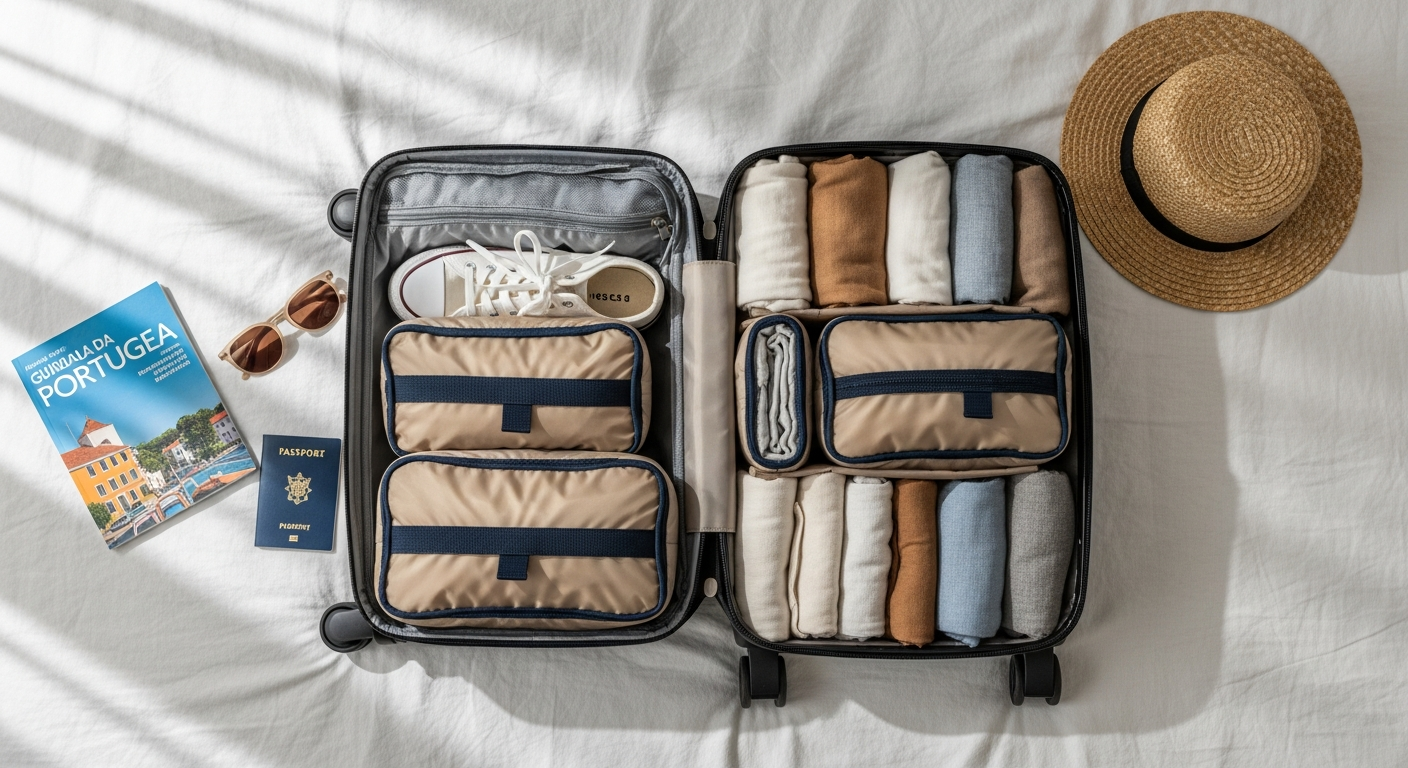
This guide solves all of it. You’ll learn the exact packing for Portugal strategy that works: a 12-piece capsule wardrobe, the shoe trio that survives cobblestones and looks appropriate everywhere, and the specific items that make the difference between a trip where you feel organized and one where you’re rewearing the same outfit by day four.
Portugal Packing List: Why Summer 2026 Is Different

Climate Reality Check by Region
Portugal’s summer isn’t uniform. The country stretches north to south, and those 300 miles matter. Understanding your specific route shapes everything you pack.
Lisbon and central Portugal (June–August) averages 75–85°F during the day, dropping to 60–65°F in the evening. Atlantic winds kick up unpredictably, especially near the water. The city’s tile-floored museums and churches stay cool—sometimes uncomfortably so—regardless of outdoor temps. You’ll feel the temperature swing the moment you step indoors.
The Algarve is the hottest zone: consistently 85–95°F, with a UV index that regularly hits 9 or 10. Shade is scarce on beaches. The reflection off sand and water intensifies sun exposure. If you’re spending three or more days in the Algarve, sunscreen isn’t optional—it’s the difference between a pleasant trip and painful sunburn that ruins your remaining days.
Porto and the north stay 70–80°F, cooler than Lisbon. Humidity is higher, especially near the Douro River. Evenings are noticeably fresher. If your trip includes Porto, Braga, or the Douro Valley, you’ll want one extra layer compared to a Lisbon-only itinerary.
The key insight most guides miss: you need layers even in summer. Those evening temperature drops from 85°F to 62°F happen fast. A lightweight cardigan or linen button-up isn’t optional—it’s the difference between being comfortable at dinner or spending the evening cold and regretting your packing choices.
The Cobblestone + Beach + City Problem
Here’s what separates Portugal packing from generic European summer packing: the cobblestone-to-beach-to-dinner transition happens in a single day. You’re in three different contexts before sunset.
Historic centers—Alfama in Lisbon, Ribeira in Porto, the old town in Sintra—have uneven stone streets that destroy thin-soled shoes and make heels a liability. The inclines are steep. The surfaces are unforgiving. A pair of shoes that feels fine for a mall walk at home will leave your feet screaming after climbing Alfama’s hills.
Beach culture in the Algarve is relaxed: swimwear, cover-ups, sandals. But the moment you head to a restaurant or bar after 7 PM, the dress code shifts. Athletic wear screams tourist. Portuguese style leans polished—fitted jeans, structured tops, intentional accessories. It’s not formal, but it’s not casual-American either. You need pieces that transition without feeling like you’re trying too hard.