where to stay in kyoto: Best Hotels & Areas

The call to prayer echoes across Kyoto’s rooftops at dawn, but you won’t hear it from a hotel near Kyoto Station. You’ll hear it if you’re staying in Gion, where the sound carries across machiya rooftops and lantern-lit alleys. That’s the difference between a practical hotel and a stay that actually feels like Kyoto.
Let me guess: you’ve got 47 browser tabs open right now, each showing a different “perfect” Kyoto hotel. Should you stay near the bamboo groves? In the geisha district? Near Kyoto Station for convenience? And why does every travel blogger recommend completely different neighborhoods?
Here’s the truth nobody tells you: there’s no single best place to stay in Kyoto. But there IS a best place for your trip, and it depends entirely on your travel style, itinerary, and what kind of Kyoto experience you’re after. I’m going to break down Kyoto’s neighborhoods in a way that actually makes sense, show you what you get at every price point (from roughly ¥6,000 hostels to ¥60,000+ ryokans), and give you the decision framework to pick your perfect base. No more analysis paralysis, just clear, practical advice from someone who’s navigated this decision multiple times.
Where to Stay in Kyoto Japan: Choosing Your Perfect Neighborhood

Before you book a single night, answer this: What does your ideal Kyoto day look like?
Are you someone who wants to walk out your hotel door and hit a major temple within 10 minutes? Do you want to sleep on a futon, eat an 8-course kaiseki dinner at 6:30 PM, and wake to the sound of a temple bell? Or would you rather wake up surrounded by bamboo groves, even if it means a 40-minute commute to central Kyoto?
These questions matter more than any hotel rating. Your neighborhood choice determines how many steps you’ll walk daily (Kyoto visitors average 15,000-20,000), whether you’ll catch the evening geisha parade in Gion, and whether you’ll have time for both temples and local restaurants without exhausting yourself.
The First-Timer Framework
If this is your first visit to Kyoto or Japan, stay central. Central Kyoto (Kawaramachi/Karasuma area) puts you within walking distance or a short bus ride of most major sights. You’ll walk 15,000-20,000 steps daily visiting temples, and every minute spent commuting is a minute lost to jet lag, crowded buses, or simple fatigue. The Philosopher’s Path, Kiyomizu-dera, and Arashiyama are all reachable in 15-30 minutes by bus. Nishiki Market and Pontocho alley are walkable. You can actually explore without a rigid itinerary.
The Atmosphere Seeker
Want to slide open shoji screens, sleep on futons, and spot geisha at dusk? Gion and Higashiyama deliver that authentic, traditional Kyoto feeling. You’ll pay more (expect ¥15,000-40,000+ per night), and you’ll walk uphill to temples, but the evening ambiance is unforgettable. Stepping into Gion after 6 PM, when tour groups have left and lanterns light the cobblestones, is worth the premium. This is where you stay on your second or third Kyoto trip, when you know the major sights and want to go deeper into atmosphere.
The Nature Lover
Arashiyama offers bamboo groves, river views, and peaceful mornings. But you’re 30-40 minutes from central Kyoto’s temples and restaurants. Perfect for a one-night splurge or if you’re spending a full day exploring western Kyoto temples (Tenryu-ji, Okochi Villa). Not ideal as your entire base unless you’re willing to spend significant time in transit.
Transportation Reality Check
Here’s what most guides don’t tell you: Kyoto’s public transit is not like Tokyo’s. Unlike Tokyo, Kyoto’s subway system is limited to just two lines (Karasuma and Tozai). You’ll rely heavily on buses, which means traffic during peak season (April, November) and crowds that rival Tokyo’s rush hour. Staying within walking distance of your top-priority sights matters more here than in other Japanese cities. A hotel that’s “only two bus stops away” can easily become a 30-minute journey during cherry blossom season.
The Kyoto Station question comes up constantly: Yes, it’s convenient for shinkansen arrivals and departures. Yes, hotels are modern and often affordable. But the area feels more “transit hub” than “historic Kyoto.” Best for one-night stopovers, not your entire stay. If you’re arriving by shinkansen and staying 3+ nights, take a bus or taxi to your central Kyoto hotel and save the station area for your final night before departure.
Common Rookie Mistakes to Avoid
The Fushimi Inari trap: Booking a hotel near Fushimi Inari because it’s iconic, then realizing the neighborhood is isolated, tourist-centric, and 30+ minutes by train from everything else. Visit the shrine at sunrise (arrive by 6:30 AM to beat crowds), but don’t stay there. You’ll lose evening exploration time and waste money on a location-based hotel in a location you’ll only visit once.
The Osaka day-trip miscalculation: Staying in Osaka to “save money” and day-tripping to Kyoto sounds logical until you miss Kyoto’s secret weapon: the evening atmosphere when tour groups leave. Early morning temples (arriving by 7 AM) and evening strolls through Gion after 6 PM are worth the higher accommodation cost. You can’t replicate that by commuting from Osaka and arriving at 9 AM.
Best Area to Stay in Kyoto: Central Kyoto (Kawaramachi & Karasuma)

Central Kyoto is where most travelers should start. The Kawaramachi and Karasuma neighborhoods form the practical heart of Kyoto, where locals live, work, and eat. If you’re asking where to stay in Kyoto for maximum flexibility and minimum travel time, this is your answer.
Why Central Kyoto Works for Most Travelers
You’re 10-15 minutes on foot from Nishiki Market (a 150-year-old food market with sushi, pickles, and kitchen tools), Pontocho alley (a lantern-lit geisha district that’s less touristy than Gion), and the Kamo River. Temples like Kiyomizu-dera and the Philosopher’s Path are 15-20 minutes by bus. Arashiyama is a 30-minute train ride. Everything is accessible without exhausting commutes. This is the best area to stay in Kyoto if you’re on your first visit and want to see as much as possible without logistics stress.
Restaurant and convenience density matters more than you’d think. This is where locals actually live and eat. You’ll find everything from standing sushi bars (¥2,000-3,500 per person) to Michelin-starred kaiseki (¥8,000-15,000+), plus 24-hour convenience stores (essential for breakfast supplies and IC card top-ups). If you’re jet-lagged and hungry at 11 PM, you have options. If you need to grab a coffee before heading to a 6 AM temple visit, there’s a Family Mart on every corner.
Both subway lines (Karasuma and Tozai) intersect here. While you’ll still use buses frequently, having subway options reduces travel time to outlying areas like Fushimi Inari and Kurama. The Karasuma Line runs north-south; the Tozai Line runs east-west. This intersection gives you flexibility that other neighborhoods lack.
What You’ll Pay & What You’ll Get
Budget tier (¥6,000-10,000 / $40-65 per night): Clean business hotels or capsule hotels with tiny rooms but excellent locations. Think compact efficiency—a bed, a small desk, a private bathroom, and little else. Toyoko Inn and similar chains offer this: impeccably clean, free breakfast, no charm, but perfect if you’re using your room only to sleep. Single rooms in this tier are often 10-12 square meters. Not spacious, but functional.
Mid-range tier (¥15,000-25,000 / $100-165 per night): Boutique hotels with actual space, Japanese-Western hybrid rooms, and thoughtful design. You’ll get a proper double bed (not a single), a desk where you can work, and maybe a small sofa. This is the sweet spot for comfort without ryokan pricing. Rooms are typically 25-35 square meters. Many include a small bath and separate shower. This is where you feel like you’re staying in a nice hotel, not just a transit pod.
Luxury tier (¥45,000+ / $300+ per night): High-end hotels with river views, or small luxury ryokans that blend traditional aesthetics with modern bathrooms. You’ll get rooftop bars, concierge service, and often an on-site restaurant. Rooms are 40+ square meters with premium bedding and marble bathrooms.
Specific Hotels to Consider
Budget pick: Look for hostels and business hotels within a 5-minute walk of Kawaramachi or Karasuma subway stations. Rooftop terraces and common areas matter here—you’ll want a place to decompress. Verify current availability and pricing before booking, as rates fluctuate significantly by season.
Mid-range pick: Search for boutique hotels with “minimalist Japanese design” or “contemporary” in the description. Look for properties with spacious rooms (over 25 square meters), in-room wifi, and locations within walking distance to major sites. Many mid-range hotels offer a light breakfast or access to a convenience store partnership.
Splurge pick: High-end properties often offer Kamogawa River locations, impeccable service, and traditional-meets-contemporary design. Look for properties with on-site kaiseki restaurants, spa facilities, and concierge who can book temple visits or geisha performances in advance.
Kyoto Where to Stay for Traditional Atmosphere: Gion & Higashiyama

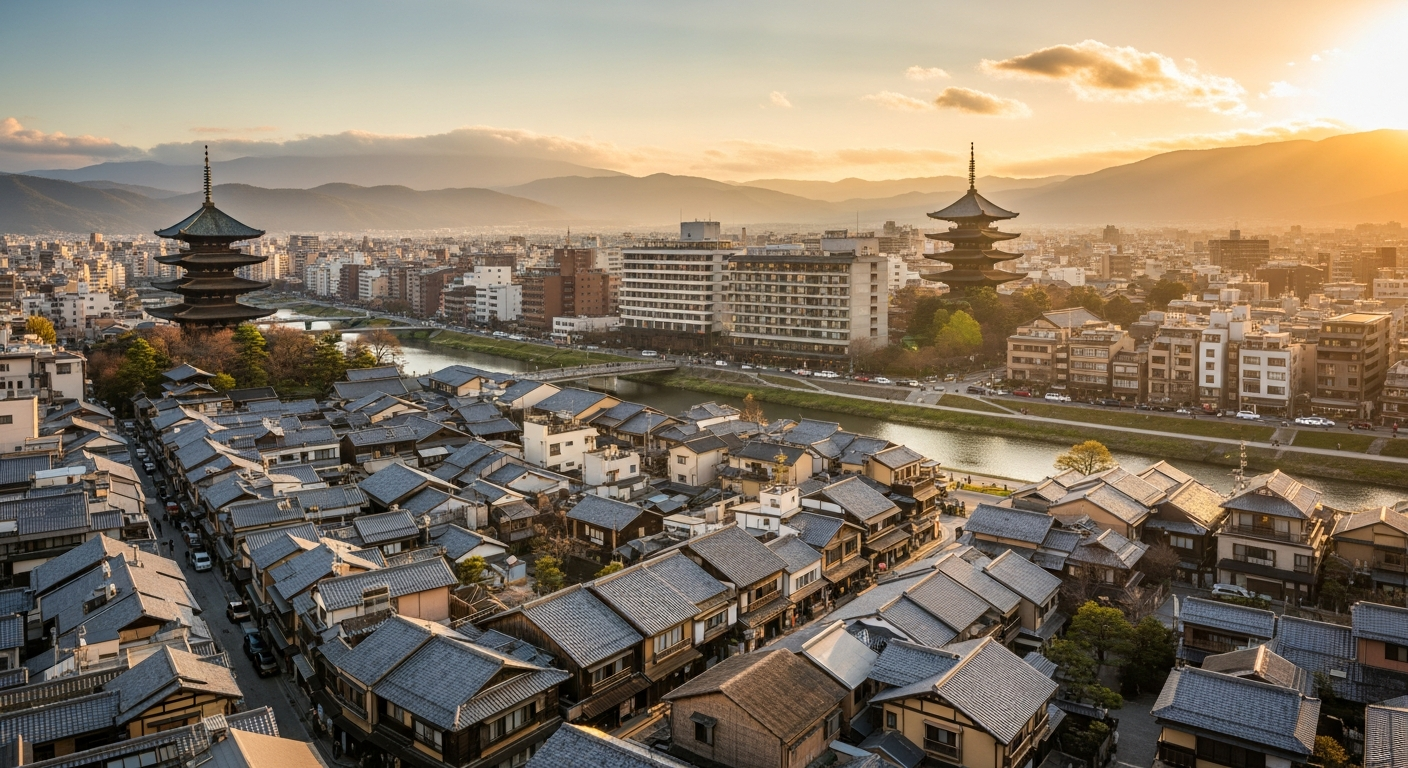
If central Kyoto is practical, Gion and Higashiyama are transcendent. These neighborhoods are where Kyoto’s postcard image lives: cobblestone streets, preserved machiya townhouses, lanterns casting shadows on wooden facades, and the genuine possibility of spotting geisha heading to appointments at dusk. This is the Kyoto you’ve seen in photographs. But it comes with trade-offs.
The Trade-Off You’re Making
What you gain: Cobblestone streets, preserved machiya townhouses, the genuine possibility of spotting geisha heading to appointments at dusk. This is the Kyoto you’ve seen in photos—lantern-lit alleys, traditional tea houses, and that ineffable sense of stepping back in time. Walking through Gion after 6 PM, when tour groups have dispersed, feels like time travel. The evening light hits the wooden buildings at exactly the right angle, and the air smells like charcoal and incense.
What you sacrifice: Steeper prices (both hotels and restaurants cater to tourists), hilly terrain (Kiyomizu-dera is a 15-minute uphill walk from lower Gion), and fewer convenience stores. You’re choosing atmosphere over practicality. A mid-range ryokan or traditional hotel in Gion costs ¥20,000-40,000+, compared to ¥15,000-25,000 in central Kyoto. Restaurants in Gion run 20-30% higher than equivalent meals in Kawaramachi. And if you need a late-night convenience store run, you’re out of luck.
Who should stay here: Couples celebrating anniversaries, travelers on their second or third Japan trip who want to go deeper into Kyoto’s character, anyone willing to pay a premium for authentic ambiance. If you’ve already seen the major temples and want to experience Kyoto as a living, breathing place (not a checklist), Gion rewards that intention.
Ryokan vs. Hotel: What to Expect
Traditional ryokan experience: Futon bedding (laid out by staff while you’re at dinner), kaiseki meals (multi-course dinners served in your room or private dining area, usually 6-8 PM), yukata robes provided in your room, and often shared bathing facilities (though private onsen rooms are increasingly common). Not all ryokans accept solo travelers, children under 12, or guests staying fewer than 2 nights. Many require advance meal preferences (vegetarian, allergies, etc.). The experience is structured and ritualized—this is intentional, but it’s not spontaneous.
The kaiseki timing issue: Dinner is typically served early (6-7 PM) and takes 2+ hours. This limits your evening flexibility—you can’t stay out exploring and return for a late meal. Breakfast is similarly scheduled (7:30-8:30 AM usually). If you value spontaneity, this might feel restrictive. You’ll need to plan your temple visits around meal times, not the other way around. Some travelers love this structure; others find it constraining.
Modern hotels in traditional buildings: A growing category—machiya-style hotels that preserve the aesthetic but offer Western beds, private bathrooms, and no meal schedule. Best of both worlds for many travelers. You get the traditional exterior and neighborhood feeling without the rigidity of kaiseki timing. Expect to pay ¥18,000-35,000 for this hybrid approach.
Hidden Gem Alert: Stay Just Outside Peak Gion
Book accommodations on the eastern edge of Higashiyama (near Nanzen-ji temple) rather than central Gion. You get the traditional neighborhood feel, easier access to the Philosopher’s Path and northern temples, and slightly lower prices (¥2,000-5,000 less per night). You’ll still see geisha in Pontocho (the smaller geisha district nearby), but you’ll avoid the peak tourist crush of central Gion. Higashiyama’s backstreets are quieter, the walking is easier, and the experience feels more like you’ve stumbled into Kyoto’s past rather than arrived at a museum.
This is where to stay in Kyoto if you want traditional atmosphere without the Gion premium. The trade-off is slightly longer walks to some temples (Kiyomizu-dera is still 15 minutes on foot, but it’s uphill), but you gain neighborhood authenticity and lower prices.
Arashiyama: Nature, Temples & Quiet Mornings
Arashiyama is Kyoto’s nature district, famous for the bamboo grove that appears in every travel magazine. Walking through those towering stalks at dawn, before tour groups arrive, is genuinely magical. The area also has excellent temples (Tenryu-ji, Okochi Villa), river views, and a slower pace than central Kyoto. But it’s isolated from the rest of the city, and that isolation is both its appeal and its limitation.
When Arashiyama Makes Sense
Stay in Arashiyama if you’re planning a full day exploring western Kyoto temples and want to wake up surrounded by bamboo. Arrive early (by 6:30 AM) to see the grove before crowds; by 9 AM, it’s wall-to-wall tourists taking selfies. The neighborhood has excellent restaurants, a riverside walk, and a more relaxed vibe than central Kyoto. But understand the trade-off: you’re 30-40 minutes by train from central sights. A round-trip commute to Kiyomizu-dera or the Philosopher’s Path eats 90 minutes of your day.
Best approach: Stay in central Kyoto for 2-3 nights, then spend one night in Arashiyama. This gives you time to explore both western temples and central Kyoto without the daily commute. Budget ¥12,000-20,000 for mid-range Arashiyama hotels, slightly less than central Kyoto because the neighborhood is less dense with tourists.
One practical detail: Arashiyama’s main train station (Sagatenryu-ji) is on the Randen Tram line, a slow, scenic route. It’s charming but not efficient for quick temple runs. If you’re committed to staying here, plan your itinerary around this slower pace. Don’t try to cram six temples into a day; instead, explore three temples thoroughly and take a riverside walk.
Kyoto Station Area: Convenience & Modern Hotels
Kyoto Station is a transportation hub, not a neighborhood. The area has rooftop views, modern hotels, and convenient shinkansen access. But it’s not where to stay in Kyoto if you want to experience the city. It’s where to stay if you’re arriving by shinkansen, staying one night, and leaving the next morning.
When Kyoto Station Area Makes Sense
Book a station-area hotel if you’re arriving late (after 7 PM) and leaving early (before 10 AM). The convenience is real: no commute from the shinkansen, luggage storage, and immediate access to buses and taxis. Hotels here are often cheaper than central Kyoto (¥10,000-18,000 for mid-range) because they’re targeting transit travelers, not tourists seeking atmosphere. The area has restaurants, convenience stores, and a shopping mall, so you can handle logistics without stress.
But understand what you’re missing: Kyoto Station is functional, not atmospheric. The area is busy, modern, and dominated by tourists and commuters. You won’t stumble into hidden temples or quiet tea houses. You’ll see Kyoto Station’s rooftop views (which are actually quite good at sunset), but you won’t see Kyoto.
If you’re staying 3+ nights, skip the station area entirely. Take a bus or taxi to central Kyoto (¥1,500-2,500, 20-30 minutes) and use those nights meaningfully. Save the station area for your final night before departure, when you’re heading back to Tokyo or Osaka.
Booking Strategy: Timing, Budget Tiers & Seasonal Realities
Now that you know which neighborhoods match your travel style, here’s the practical part: actually booking.
When to Book & Seasonal Pricing
Cherry blossom season (late March-early April): Book 5-6 months in advance. Prices spike 40-60% above normal. Hotels double their rates or sell out completely. If you’re set on cherry blossoms, book by October the previous year. Otherwise, consider visiting in early May (post-bloom, fewer crowds, normal prices) or late March (pre-bloom, cheaper, still beautiful).
Autumn foliage (November): Book 4-5 months in advance. Similar to cherry blossoms—prices surge, crowds peak. Late October and early December offer similar scenery with 30-40% fewer tourists and lower prices.
Summer (July-August) and winter (December-January): Book 6-8 weeks in advance. Prices are lowest, crowds are manageable, but weather is extreme (summer heat and humidity, winter cold). These seasons reward flexible travelers.
The IC Card & Convenience Store Reality
One detail most guides miss: buy a Kyoto IC card (ICOCA card) at the airport or train station for ¥2,000 (¥1,500 credit + ¥500 deposit). Load it with ¥5,000-10,000. This single card works on all buses, trains, and convenience store payments across Kyoto. It saves time, eliminates the need to understand different transit systems, and prevents you from overpaying for single rides. The card is reloadable and works for future Japan visits.
Also: every neighborhood has convenience stores, but they’re not equal. In central Kyoto, you’ll find one on every block. In Gion, they’re sparse. Stock up on breakfast items, snacks, and drinks where you find them. Japanese convenience stores (Family Mart, Lawson, 7-Eleven) sell fresh sushi, onigiri (rice balls), sandwiches, and drinks for ¥500-1,500. This is how locals eat breakfast, and it’s cheaper and faster than sitting down at a restaurant.
Coin Locker Strategy for Multi-Day Visits
If you’re staying 4+ nights, you don’t need to wash clothes in your hotel. Use coin lockers (¥400-600 per day) at Kyoto Station to store luggage while you explore. This gives you a lighter bag for temple visits and eliminates laundry logistics. Kyoto Station has hundreds of lockers; arrive early (before 10 AM) during peak season to find one. This is a small detail that saves enormous mental energy.
Your Next Move: The Decision Framework
The single most important takeaway: your neighborhood choice determines your entire Kyoto experience far more than your hotel’s star rating. A three-star hotel in central Kyoto beats a five-star ryokan in an isolated location if you value flexibility and temple access.
Here’s what to do right now: Ask yourself three questions. First, is this your first Kyoto visit or your second? First-timers should stay central (Kawaramachi/Karasuma). Second, do you want to wake up in temples or wake up surrounded by bamboo? Temples = central or Higashiyama; bamboo = Arashiyama. Third, how much are you willing to spend? Budget under ¥15,000 = central Kyoto. Budget ¥20,000+ = Gion or Higashiyama. Budget ¥30,000+ = luxury ryokan anywhere.
Once you’ve answered those questions, open Google Maps and search “hotels near [neighborhood name]” and filter by price range. Read recent reviews (focus on comments about location, noise, and breakfast). Book for your first 2-3 nights in your primary neighborhood, then adjust for nights 4-5 if you want to try Arashiyama or a ryokan. Stagger your booking: lock in central Kyoto first, then add Arashiyama or Gion once you’ve confirmed your temple schedule.
One cultural note before you arrive: Japanese hotels and ryokans expect quiet after 10 PM. Voices carry through thin walls. If you’re jet-lagged and tempted to call home at 11 PM, use headphones and keep your voice low. This courtesy matters—many travelers unknowingly create noise complaints and damage the experience for neighbors.
You’ve got this. Pick your neighborhood based on your travel style, book your hotel, and plan to arrive early enough to explore your neighborhood on foot the first evening. That’s when you’ll understand whether you chose right. Most travelers do.