Val Di Funes Summer Outfit Ideas

Let me save you the regret I see photographers suffer every morning: you’re standing at the world-famous Santa Maddalena viewpoint, the morning light is painting the peaks in gold, and suddenly you’re hyper-aware that your outfit is completely killing the vibe
I learned this lesson the hard way during my first visit to Val Di Funes. I showed up in heavy hiking boots and a technical rain jacket that made me look like I was summiting Everest, not strolling through one of Italy’s most photogenic valleys.
Meanwhile, European tourists glided past in effortlessly chic ensembles that somehow worked for both hiking and café stops.
Here’s what nobody tells you: Val Di Funes isn’t a hardcore alpine expedition. It’s a stunning valley where gentle trails meet sophisticated European mountain culture.
You need outfits that transition from the Santa Maddalena viewpoint to the terrace café at Hotel Fines without looking like you raided an REI clearance rack.
The good news? You don’t need a designer budget or a suitcase full of specialized gear. You need smart layering pieces, flattering silhouettes, and a color palette that photographs beautifully against lush green meadows and dramatic grey peaks.
This guide gives you five tested outfit formulas, strategic packing advice, and shopping tips that work whether you’re dropping serious cash or hitting up H&M. Let’s build your Val Di Funes wardrobe.
Understanding Val Di Funes Summer Weather (What You’re Actually Dressing For)

Temperature Ranges and Microclimates
Val Di Funes plays tricks with temperature that will mess up your outfit planning if you’re not prepared. Morning temperatures hover between 6-12°C (43-54°F), which means you’ll genuinely need that layer you’re tempted to leave at the hotel.
I watched countless visitors shiver through sunrise photography sessions at Santa Maddalena because they underestimated that alpine chill.
By midday, temperatures at valley level climb to 20-25°C (68-77°F)—a dramatic swing that makes layering non-negotiable. But here’s where it gets interesting: elevation changes everything.
The difference between the valley floor and higher viewpoints can drop temperatures by 5-7°C. That “moderate” hike suddenly feels much cooler when you’re standing still at a scenic overlook, wind whipping across the exposed ridge.
Evening brings another shift as temperatures drop quickly once the sun dips behind the peaks. Summer thunderstorms can roll in with surprising speed, transforming a sunny afternoon into a wet, chilly situation in under thirty minutes. This isn’t Tuscany—mountain weather demands respect and preparation.
Activity-Based Dressing Considerations
Photography stops require different planning than active hiking. When you’re standing still at the Santa Maddalena viewpoint, waiting for clouds to clear or light to shift, your body temperature drops fast. That lightweight layer that felt unnecessary during your walk suddenly becomes essential.
Nature park exploration in Val Di Funes translates to “moderate hiking” in guidebook speak, which means well-maintained trails with some elevation gain but nothing technical.
You’re not scrambling over rocks or crossing glaciers. Think comfortable walking with occasional uphill sections—terrain where trail runners work better than heavy boots, and where you’ll actually appreciate breathable fabrics.
Village visits add another dimension. The Puez-Geisler Nature Park Visitor Center, local churches, and mountain cafés all expect a certain level of European polish.
Showing up in full technical gear makes you look like you’re lost. The locals here have mastered alpine-meets-sophisticated, and your outfit should at least nod in that direction.
The Golden Rule of Dolomites Dressing
Function meets fashion isn’t just Instagram caption fluff—it’s the actual dress code here. You need clothes that perform (moisture-wicking, weather-resistant, comfortable for movement) but don’t scream “I bought everything at a sporting goods store.”
I call it the “tour bus test”: if you look too technical, you’ve gone too far. European mountain style leans toward fitted silhouettes, neutral colors, and pieces that could work in an urban setting. Think tailored hiking pants instead of baggy cargo pants. Sleek fleece instead of bulky pullovers. Stylish trail runners instead of clunky hiking boots.
Building outfits that transition from trail to terrace effortlessly comes down to choosing elevated versions of outdoor basics. A cropped puffer vest photographs infinitely better than a shapeless down jacket. Tapered hiking pants look polished while still handling the trail. This approach lets you hike to Santa Maddalena in the morning and sit at a café in the afternoon without feeling like you need a complete outfit change.
Your Val Di Funes Capsule Wardrobe Essentials

The Foundation Pieces (Works for Every Body Type)
Versatile base layers form the backbone of every successful Val Di Funes outfit. Lightweight merino wool or technical fabrics in neutral tones—black, navy, olive, cream—give you endless mixing options while photographing beautifully. Skip cotton, which gets damp and stays damp. Merino regulates temperature naturally and doesn’t develop that sweaty smell after a few hours of wear.
The perfect hiking pants make or break your entire look. Tapered or slim-fit styles photograph significantly better than baggy alternatives, creating a flattering silhouette that works for all body types. Look for pants with a bit of stretch (2-5% elastane), articulated knees for movement, and a higher rise that doesn’t gap when you bend over to adjust your boots. Colors like black, navy, olive, or charcoal grey work with everything.
Elevated athleisure bottoms—leggings and joggers—deserve space in your suitcase, but choose carefully. High-waisted leggings with a thick waistband flatter every body shape by creating definition at the narrowest part of your torso. Joggers should be tapered, not baggy, with cuffs that hit at or just above the ankle. These pieces need to look intentional, not like you rolled out of bed and forgot to change.
Layering Heroes That Earn Their Luggage Space
A lightweight puffer vest is the most photogenic layer you’ll pack. Cropped styles (hitting at the waist or just below) create better proportions than long vests, and fitted silhouettes look polished rather than bulky. Colors like black, navy, cream, or olive work with every outfit formula. The vest provides core warmth without restricting arm movement—crucial when you’re hiking or taking photos.
Stylish fleece or quarter-zips have evolved beyond basic athletic wear. Look for fitted or slightly oversized options (not boxy) in solid colors or subtle patterns. Patagonia’s Better Sweater, Arc’teryx Kyanite, or budget-friendly alternatives from Uniqlo offer that elevated outdoor aesthetic. Quarter-zips layer beautifully under vests and photograph well when worn alone with hiking pants or leggings.
A packable windbreaker protects against sudden weather changes without adding bulk to your bag. Choose one that folds into its own pocket and has a tailored fit—not the crinkly, shapeless variety. Brands like Outdoor Voices, Lululemon, and Patagonia make chic options that deliver on both style and function. Neutral colors work best, though a pop of color (rust, mustard, coral) can become your signature piece in photos.
Footwear Strategy (The Make-or-Break Element)
Primary hiking shoes need to handle Val Di Funes terrain while looking good in photos. Stylish trail runners from brands like Hoka, Salomon, or On Running offer excellent traction and comfort without the clunky aesthetic of traditional hiking boots. The trails here don’t require ankle support—they’re well-maintained and relatively gentle. Trail runners keep you nimble, photograph better, and work for multiple activities.
Your secondary option should be white sneakers or slip-on espadrilles for village exploring and café stops. Clean white sneakers (Veja, Common Projects, or budget-friendly alternatives) elevate any outfit instantly and work for light walking. Espadrilles add European flair but limit your mobility—save them for purely village days.
Skip heavy hiking boots entirely. They’re overkill for Val Di Funes terrain and make you look like you’re preparing for an expedition, not a scenic valley walk. Also skip fashion sandals—cute in theory, impractical in reality when trails get muddy or rocky. Your feet will thank you for choosing function over fleeting style.
5 Effortless Val Di Funes Outfit Formulas

Outfit 1: The Classic Alpine Explorer
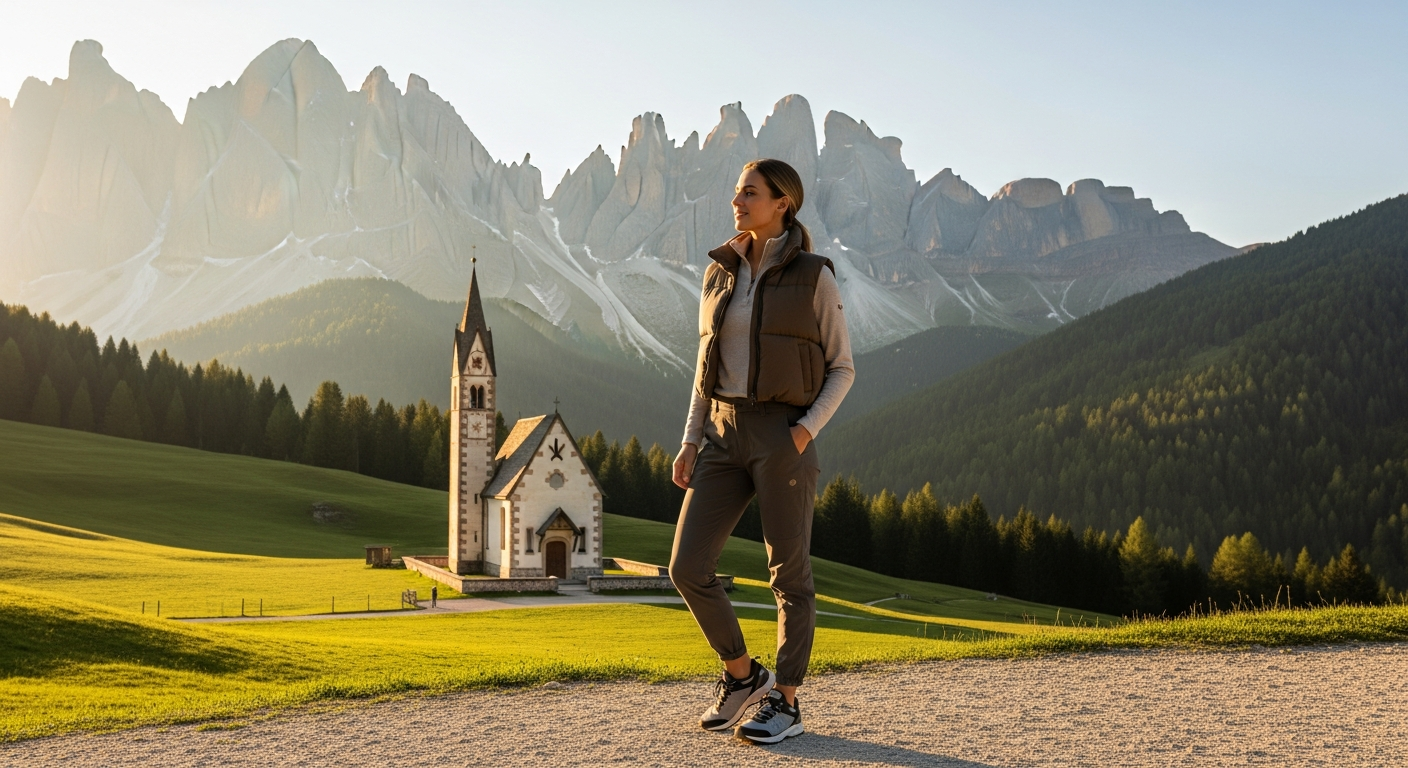
The Look: Neutral hiking pants (navy or olive) + fitted base layer (cream or black) + cropped puffer vest (black or navy) + hiking boots or trail runners.
This formula works because it creates a timeless color palette that photographs beautifully against mountain backdrops without competing with the scenery. The fitted base layer defines your waist, the vest adds dimension and warmth, and the neutral pants ground the entire look. This outfit handles morning chill, midday warmth (remove the vest), and evening coolness with ease.
Style elevation comes from small details: tuck your base layer slightly into your pants to create shape, add a silk scarf in a complementary color (rust, mustard, or burgundy), or wear minimal gold jewelry (delicate chain, small hoops, simple rings). These touches transform “athletic” into “effortlessly chic.”
Budget-friendly brands that deliver on this formula include Uniqlo (base layers and vests), Decathlon (hiking pants with surprisingly good fit), H&M Sport (affordable athleisure basics), and Prana (mid-range outdoor wear with flattering cuts). Invest in the vest and hiking pants since they’re visible in every photo; save on base layers that mostly hide under other pieces.
Outfit 2: Elevated Athleisure Chic
The Look: High-waisted black leggings + oversized linen button-down (white, cream, or chambray) + sporty baseball cap + trail runners.
This outfit works for every body type because high-waisted leggings create a flattering silhouette while the oversized button-down balances proportions and adds European sophistication. The combination feels comfortable for all-day wear but looks intentional and polished in photos. Roll the sleeves of your button-down for added style, and leave the bottom few buttons undone for movement.
Accessorizing smart makes this outfit shine. A crossbody bag (leather or canvas in neutral tones) keeps your hands free while adding structure. Oversized sunglasses and a baseball cap (solid colors like black, navy, or cream) complete the look without feeling overdone. The cap serves double duty—it protects from sun and elevates your outfit from basic to trendy.
Color variations keep this formula fresh: swap black leggings for olive or navy, try a striped button-down instead of solid, or add a camel-colored vest over the shirt when temperatures drop. The core formula stays the same, but small changes create completely different vibes.
Outfit 3: The European Hiker Aesthetic
The Look: Tailored hiking shorts (navy or khaki) + striped Breton top (classic navy and white) + lightweight cardigan (cream or grey) + hiking boots or stylish trail runners.
This outfit channels effortless European style while staying practical for Val Di Funes terrain. Breton stripes are a timeless pattern that photographs beautifully and nods to classic French style. The cardigan adds warmth for morning and evening without bulk, and tailored shorts show leg while maintaining polish.
Proportion perfection matters here. Shorts should hit mid-thigh or just above the knee—not too short (impractical for hiking) or too long (frumpy). Choose fitted or slightly relaxed styles with a defined waistband. Avoid cargo shorts with multiple pockets, which add visual bulk. The goal is clean lines that flatter your body type.
Seasonal timing makes this outfit best for late June through August when temperatures peak and you can comfortably wear shorts all day. Earlier or later in summer, swap shorts for cropped or full-length pants using the same color palette and layering strategy.
Outfit 4: Trendy Mountain Minimalist
The Look: Bike shorts (black or neutral) + oversized crewneck sweatshirt (cream, grey, or sage) + puffer vest (black or matching neutral) + white sneakers.
This outfit captures current trends while remaining comfortable and surprisingly versatile. The bike shorts and oversized sweatshirt combination creates an intentionally relaxed silhouette that works for different activities—from gentle hiking to village exploring. Adding a puffer vest introduces structure and warmth without losing the effortless vibe.
Making it work in real life requires choosing quality fabrics that don’t look cheap. Bike shorts should have a thick, supportive waistband and substantial fabric (not thin or see-through). The sweatshirt should be genuinely oversized but not sloppy—look for dropped shoulders and a hemline that hits mid-hip or slightly longer.
Styling secrets elevate this casual outfit: try the half-tuck method (tuck just the front of your sweatshirt into your bike shorts to define your waist), layer the vest over the sweatshirt for dimension, and keep accessories minimal (small hoop earrings, simple necklace, baseball cap). Play with proportions by adjusting how much sweatshirt shows below the vest.
Outfit 5: Polished Trail-to-Village Transition
The Look: Convertible hiking pants (zip-off legs, black or navy) + fitted tank top (white or neutral) + structured blazer—packable (black, navy, or camel) + versatile sneakers.
This outfit transforms instantly from trail-ready to café-appropriate, making it perfect for days combining hiking with nice dinners or exploring multiple areas. The convertible pants let you adjust for temperature and activity level, while the blazer adds unexpected polish that photographs beautifully.
The magic piece here is finding a packable blazer that doesn’t wrinkle or look cheap. Look for ponte knit, technical fabrics, or lightweight wool blends that hold their shape. Brands like Betabrand, Athleta, and Uniqlo make travel-friendly blazers that fold without creasing. Choose a fitted or slightly oversized cut—not boxy—that layers comfortably over a tank without pulling.
When to wear this outfit: save it for days when you’re hiking in the morning, returning to your accommodation to freshen up, then heading out for dinner or village exploring. The convertible pants let you hike with full coverage, then zip off the legs for shorts when temperatures rise. Add the blazer later for instant evening polish.
Color Palettes That Photograph Beautifully in Val Di Funes

Understanding the Valley’s Natural Color Story
Val Di Funes summer landscape bursts with lush greens (meadows, forests, rolling hills), golden grasses (sun-bleached fields), dramatic grey peaks (the Odle/Geisler mountain range), and bright blue skies. Your outfit colors either complement this natural palette or compete with it—there’s no middle ground.
Certain colors pop because of complementary color theory. Warm tones (rust, terracotta, mustard, cream) create beautiful contrast against cool grey mountains and blue skies. Earth tones (olive, sage, chocolate, sand) blend harmoniously with the natural surroundings, creating cohesive photos where you’re part of the landscape rather than fighting it.
Colors to avoid: bright neon shades (highlighter yellow, electric pink, lime green) get lost or look jarring against the Dolomites’ muted natural palette. All-white outfits can blow out in bright sunlight, losing detail in photos. Busy patterns (large florals, bold graphics, competing prints) distract from the scenery and date your photos quickly.
Three Foolproof Color Schemes
Warm Neutrals: Cream, camel, rust, and olive create cohesive, timeless photos that never look dated. This palette works beautifully for golden hour photography, creates visual harmony with the landscape, and flatters most skin tones. Build outfits using 2-3 colors from this family—cream base layer, olive pants, rust vest, camel accessories.
Cool Contrast: Navy, white, and denim blue deliver classic, universally flattering combinations. This palette photographs crisply against both mountain backdrops and village settings. The contrast between light and dark creates dimension in photos while staying sophisticated. Try navy pants, white button-down, denim vest, navy accessories.
Earth Tones: Terracotta, sage, chocolate, and sand blend beautifully with Val Di Funes’ natural surroundings, creating photos where you look like you belong in the landscape. This palette works especially well for nature-focused photography where you want to complement rather than stand out. Combine sage base layer, chocolate pants, sand vest, terracotta scarf.
The Statement Piece Strategy
Adding a pop of color works when you keep the rest of your outfit neutral. A red jacket, mustard accessories, or coral layer becomes your signature piece in photos—instantly recognizable and visually striking. This approach lets you experiment with trends without committing your entire outfit.
Balancing bold choices means building around your statement piece rather than adding to it. If you’re wearing a bright red puffer vest, keep everything else neutral (black pants, white base layer, black accessories). The vest gets all the attention while the supporting pieces create a polished foundation.
Pattern play requires restraint in mountain settings. Stripes (especially Breton stripes) photograph beautifully and add visual interest without overwhelming. Subtle checks or small-scale patterns work when kept to one piece. Avoid mixing multiple patterns in one outfit—the dramatic Dolomites backdrop provides plenty of visual interest already.
Accessories That Make or Break Your Alpine Look

Functional Fashion Essentials
Sunglasses need to offer proper UV protection while flattering your face shape. Round frames soften angular faces, while geometric shapes add definition to round faces. Aviators and wayfarers work for most face shapes. Choose quality lenses that reduce glare—crucial for mountain environments where light reflects intensely off rock and snow. Brands like Quay, Warby Parker, and Sunski offer stylish options at accessible price points.
Hats serve triple duty: sun protection, bad hair day coverage, and instant style elevation. Baseball caps in solid colors (black, navy, cream, olive) photograph cleanly and work with every outfit. Bucket hats add trendy appeal but can look sloppy if too large—choose fitted styles. Wide-brim hats photograph beautifully but become impractical on windy ridges or narrow trails.
Bags need to distribute weight comfortably while looking intentional. Chic backpacks from brands like Fjallraven, Herschel, or Patagonia offer both function and style. Crossbody bags work for lighter days when you’re not carrying much—leather or canvas in neutral tones elevate any outfit. Skip massive hiking backpacks for Val Di Funes day trips; you don’t need that much capacity.
The Jewelry Question
Minimalist pieces enhance your look without getting in the way during active days. Delicate chains (gold or silver), stud earrings, and simple rings add polish without risk. These pieces withstand sweat, movement, and weather while elevating even athletic outfits.
Leave statement necklaces, dangly earrings, and anything you’ll worry about losing at home. Mountain activities mean bending, reaching, and moving through varying terrain—complicated jewelry becomes a liability. You’ll spend more time adjusting and protecting it than enjoying your surroundings.