Best Times To Visit Banff National Park

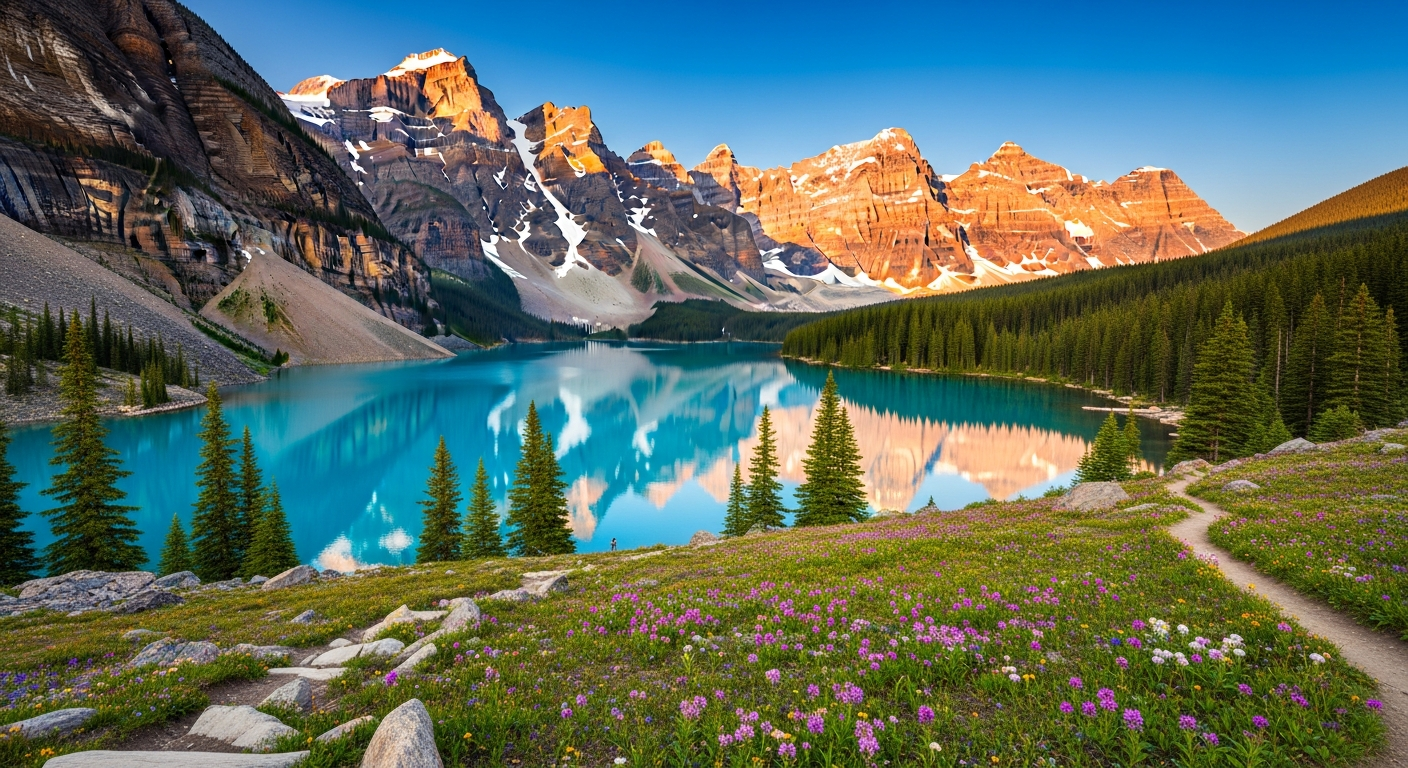
I’ll never forget standing at Moraine Lake at 4:47 AM on a mid-July morning, watching the first rays of sun ignite the Valley of the Ten Peaks in shades of pink and gold.
The parking lot was already three-quarters full—because I’d made the rookie mistake of arriving at what I thought was an absurdly early hour. By 6:15 AM, Parks Canada had closed the gates and turned away dozens of vehicles.
That morning taught me everything about timing in Banff: showing up isn’t enough. Showing up at exactly the right moment is everything.
Here’s your problem: You’ve got maybe two or three weeks of precious vacation time, and Banff’s summer season is notoriously short, unpredictable, and increasingly crowded. Arrive too early and you’ll find snow-covered trails and partially frozen lakes.
Too late and the wildflowers have withered. Hit peak season without a strategy and you’ll spend more time in parking lot traffic than on actual trails. Miss the sweet spots entirely and you’ll wonder what all the fuss was about.
This isn’t another generic “summer is nice” travel guide. I’m breaking down Banff’s summer season week by week, month by month, because the difference between early June and late August isn’t just weather—it’s an entirely different park.
I’ll give you exact crowd levels, real price ranges in Canadian dollars, specific trail conditions, and the insider strategies locals actually use. By the end, you’ll know precisely when to book your flights based on what you actually want to experience.
Understanding Banff’s Summer Season: What You Need to Know

When “Summer” Actually Happens in the Canadian Rockies
Here’s what most travel guides won’t tell you: Banff’s official summer season and its actual summer conditions are two different things. Parks Canada considers May through September as the warm season, but that’s wildly optimistic. I’ve seen snow falling in Banff townsite in early June. I’ve hiked through frost-covered meadows in early September. The Canadian Rockies don’t care about your calendar.
The reality is this: Banff’s true summer window runs from mid-June through early September—roughly 11 weeks. That’s it. And even within that compressed timeline, elevation changes everything. When it’s 22°C (72°F) and sunny in Banff townsite at 1,400 meters elevation, it might be 8°C (46°F) with lingering snowfields at Lake Agnes, sitting at 2,135 meters. The Sunshine Meadows gondola, which accesses some of the most breathtaking wildflower hikes, doesn’t even start running until late June most years because there’s still too much snow.
This elevation effect means Banff’s summer unfolds in stages, moving progressively upward. Lower valley trails become accessible in late May. Mid-elevation lakes thaw by mid-June. Alpine meadows finally emerge from their snow blanket in early July. If you’re planning a trip around a specific high-elevation experience—say, the iconic Plain of Six Glaciers trail—you need to factor in at least two extra weeks beyond what “summer” suggests.
The Three Distinct Summer Phases
Think of Banff’s summer as three distinct acts, each with its own character. Early summer (June) is the awakening. Snowmelt turns every creek into a roaring torrent. Waterfalls thunder at maximum power. Bears emerge with cubs, elk give birth in the meadows, and the rivers run fast and cold—perfect for whitewater rafting on the nearby Kicking Horse River. But it’s also unpredictable. You might get five days of gorgeous sunshine followed by three days of cold rain. Lake Louise remains partially frozen into early June, creating an otherworldly landscape of turquoise ice against snow-capped peaks.
Peak summer (July through mid-August) is when Banff delivers on every promise. Wildflowers explode across alpine meadows in early July, creating carpets of purple lupine, red Indian paintbrush, and yellow glacier lilies. Moraine Lake reaches its most intense turquoise colour as glacial meltwater carries rock flour into the lake. The weather stabilizes—warm days averaging 22°C (72°F), cool nights around 7°C (45°F), and minimal rain. Daylight stretches impossibly long, with sunrise around 5:15 AM and sunset after 9:30 PM in early July. You can hike until 10 PM and still see the trail.
Late summer (late August through early September) is the secret sweet spot many visitors miss. The crowds thin noticeably after Labour Day weekend. Weather remains stable and often warmer than July—I’ve had 25°C (77°F) days in early September. The larches begin their transformation to gold in the highest elevations. Huckleberries ripen, attracting bears (and hikers who know where to look). Most importantly, accommodation prices drop 20-30% compared to peak season, and you can actually find parking at popular trailheads after 8 AM.
Setting Realistic Expectations
Let me be blunt about something most Banff content glosses over: there is no secret time when Banff is empty in summer. None. This is Canada’s most visited national park, receiving over 4 million visitors annually, and the vast majority arrive between late June and early September. Even at 5:30 AM, you’ll encounter other photographers at Moraine Lake. Johnston Canyon’s lower falls sees a steady stream of visitors from dawn until dusk.
The weather will surprise you—and not always pleasantly. I’ve experienced everything from 28°C (82°F) sunshine to sudden hailstorms within the same afternoon. You absolutely need layers even in August. Pack a rain jacket, a warm fleece, and sunscreen. Expect to use all three in a single day.
Budget-wise, understand that summer is expensive. Mid-range hotel rooms in Banff townsite run CAD $350-500 per night in July and August. Drop that to CAD $250-350 in June or early September. Canmore, just 20 minutes east, offers better value at CAD $200-300 for comparable quality. Campgrounds book out 90 days in advance the moment reservations open. Meals in Banff townsite restaurants average CAD $25-35 per person for casual dining, CAD $60-90 for upscale. Groceries cost roughly 30% more than Calgary prices.
June: The Underrated Early Summer Experience

Why June Deserves Your Attention
When I first visited Banff in mid-June, I was prepared to be disappointed. Everything I’d read suggested it was too early, too unpredictable, too snowy. Instead, I discovered something magical: Banff before the crowds arrive. Parking at Lake Louise at 9 AM? No problem. Spontaneous dinner reservations? Easy. The Parks Canada shuttle to Moraine Lake? Barely half full.
The data backs this up. According to Parks Canada visitor statistics, June sees approximately 40% fewer visitors than July or August. That translates to actual breathing room on popular trails, available parking spots at reasonable hours, and a fundamentally different experience. You’re sharing the park with serious outdoor enthusiasts and locals, not tour buses full of day-trippers (those arrive in July).
Financially, June is the sweet spot for budget-conscious travelers. Accommodation rates sit 20-30% below peak season pricing. That CAD $450 hotel room in July? Expect CAD $300-350 in June for the identical room. The Fairmont Chateau Lake Louise, which commands CAD $800+ per night in peak summer, often has rates around CAD $550-650 in June. Multiply those savings across a week-long stay and you’re looking at hundreds of dollars that could fund extra activities or better meals.
The daylight hours are actually longer in June than any other month. Summer solstice around June 21st brings nearly 17 hours of daylight. Sunrise hits around 5:15 AM, sunset doesn’t arrive until after 9:45 PM. That’s more adventure time than July or August, when days start shortening again. I’ve done full-day hikes, returned to town for dinner, and still had two hours of golden light for evening photography at Vermilion Lakes.
What’s Spectacular in June
June is peak season for one thing most visitors completely overlook: wildlife. Bears are emerging from hibernation with new cubs, making them more visible as they forage in lower elevation meadows. Elk calving season brings dozens of wobbly-legged newborns to the Vermilion Lakes area and along the Bow Valley Parkway. I’ve watched grizzly bears digging for roots barely 100 meters from the road, completely uninterested in the handful of respectful observers with telephoto lenses.
The waterfalls are absolutely thundering. Snowmelt from the high country pours into every creek and river, turning normally modest waterfalls into roaring spectacles. Takakkaw Falls, about 90 minutes from Banff in Yoho National Park, reaches its maximum flow in June. The spray creates rainbows in the afternoon sun, and you can hear the roar from the parking lot. Johnston Canyon’s upper falls are similarly impressive—worth the crowds even in peak season, but genuinely special in June when you might have minutes alone at the viewing platform.
For whitewater rafting enthusiasts, June offers the best conditions of the entire year on the Kicking Horse River near Golden, BC (about 90 minutes west). The snowmelt creates Class III and IV rapids that are considerably tamer by August. Wild Water Adventures and other local outfitters run trips specifically designed for June’s high water. It’s cold, thrilling, and the mountain scenery is at its most dramatic with snow still clinging to the peaks.
Lower elevation hikes are absolutely gorgeous in June. The Fenland Loop, Tunnel Mountain, and Sundance Canyon trails are snow-free, green, and often lined with early wildflowers. Lake Minnewanka’s Stewart Canyon trail offers stunning views without the crowds you’ll encounter in July. The C-Level Cirque trail—one of Banff’s most underrated hikes—provides incredible views of the Bow Valley and is typically accessible by mid-June.
The June Trade-offs (Being Real)
Here’s what you’re sacrificing by visiting in June: access to high-elevation destinations. The iconic Lake Agnes Tea House hike? Likely still snow-covered or extremely muddy until late June. Plain of Six Glaciers? Same story. Paradise Valley? Forget it until early July. Helen Lake, one of the best wildflower hikes in the Rockies, won’t be accessible until mid-July most years. The Sunshine Meadows gondola, your gateway to effortless alpine hiking, typically doesn’t start operating until late June or early July.
Moraine Lake—that impossibly turquoise lake plastered across every Banff Instagram account—remains partially frozen well into June. It’s hauntingly beautiful in an Arctic sort of way, but it’s not the vibrant turquoise you’re expecting. Lake Louise similarly retains ice chunks into early June. The characteristic turquoise colour comes from glacial flour suspended in meltwater, and it takes time for that process to reach peak intensity.
Wildflowers at lower elevations begin emerging in late June, but you won’t see the explosive alpine meadow displays until July. If wildflowers are your primary motivation, June is too early. You’ll catch the tail end of spring flowers at low elevations, but the famous mountain meadows remain snow-covered.
The weather is genuinely unpredictable. I’ve experienced 25°C (77°F) sunshine one day and woken to fresh snow in the mountains the next. Pack for all four seasons. Expect rain. Hope for sun. Be flexible with your itinerary because that alpine hike you planned might be snowed in, and you’ll need a Plan B. Some services aren’t fully operational yet—certain restaurants maintain reduced hours, some gondolas haven’t started running, and a few campgrounds remain closed.
Perfect for These Travelers
June is ideal if you’re budget-conscious but refuse to compromise on scenery. You’ll save significantly on accommodation while still experiencing Banff’s dramatic mountain landscapes. It’s perfect for photographers who prefer dramatic, moody conditions over perfect blue skies—the variable weather creates incredible light and atmosphere. Wildlife photographers specifically target June for bear and elk activity.
If your priority is whitewater rafting, mountain biking, or valley-level hiking, June delivers without the crowds. Adventure seekers who care more about the experience than checking specific boxes will find June incredibly rewarding. It’s also perfect for travelers with flexible itineraries who can adapt when weather or trail conditions change plans. That flexibility is essential—rigid schedules and June don’t mix well.
July: Peak Wildflower Magic & Maximum Daylight

Why July Is the Ultimate Banff Experience
July is when Banff earns its reputation as one of the world’s most spectacular mountain destinations. This is the month when every promise in every brochure actually comes true simultaneously. The wildflowers explode in early July, transforming alpine meadows into kaleidoscopes of colour. The lakes reach their most intense turquoise. The weather stabilizes into reliable patterns of warm, sunny days. Every trail becomes accessible. Every service operates at full capacity. The mountains are alive in ways they simply aren’t in any other month.
I’ve visited Banff in every summer month over the past decade, and July remains unmatched for sheer visual impact. When you stand in Sunshine Meadows in mid-July, surrounded by carpets of wildflowers with snow-capped peaks in every direction, you understand why people travel halfway around the world for this experience. The colours are so saturated they look Photoshopped. The alpine air is so clear you can see individual trees on mountains 30 kilometers away.
The wildflower bloom typically peaks between early and mid-July, though exact timing varies by elevation and yearly weather patterns. Lower elevation meadows peak first, followed by mid-elevation areas, with the highest alpine zones blooming last. This means you can actually chase the bloom upward throughout the month. Early July might find perfect conditions at Sunshine Meadows, while Helen Lake reaches its peak in late July.
July also offers the warmest water temperatures of the year—and I use “warm” very loosely. Lake Minnewanka might reach 15°C (59°F) on the surface in late July. That’s still breath-takingly cold, but it’s swimmable for hardy souls. Johnson Lake, shallower and more sheltered, can hit 18°C (64°F) in late afternoon—downright balmy by Rockies standards.
The Unforgettable July Experiences
The wildflower hikes are non-negotiable in July. Sunshine Meadows tops every list for good reason. You can access it via gondola from the Sunshine Village ski area (CAD $45 per adult round-trip), eliminating the brutal uphill slog and making it accessible for families with young children. The meadows stretch for kilometers, painted in purple, yellow, red, and white. The Rock Isle Lake loop (6 km) is mostly flat and showcases the full diversity of alpine flowers. Go midweek if possible—weekends see hundreds of visitors.
Helen Lake requires significantly more effort—a 12 km round-trip with 455 meters of elevation gain—but rewards you with potentially the most spectacular wildflower display in Banff National Park. The final approach to the lake traverses through meadows so thick with flowers you’ll struggle to find bare ground. The turquoise lake sits in a dramatic cirque surrounded by glaciers. I’ve done this hike a dozen times, and it never fails to take my breath away. Start before 7 AM to secure parking at the Icefields Parkway trailhead.
Parker Ridge offers the best views-to-effort ratio in the park. It’s only 5.4 km round-trip with 250 meters of elevation gain, making it achievable for moderately fit hikers and older children. The trail climbs to a ridge overlooking the Saskatchewan Glacier, with wildflower meadows lining the path in July. The views are absolutely epic—you’re standing at the edge of the Columbia Icefield, staring at one of the largest glaciers in the Rockies.
Moraine Lake reaches its most iconic, impossibly turquoise state in July. The glacial flour content is perfect, the ice has completely melted, and the lighting is optimal. But here’s the catch: you need to arrive before 6 AM or take the Parks Canada shuttle that starts running in mid-June. The parking lot fills by 5:30-6:00 AM every single day in July, and Parks Canada closes the road once it’s full. They’re not kidding. I’ve watched them turn away vehicles at 6:15 AM. The shuttle (CAD $8 per person) runs from the Park & Ride in Banff townsite and is honestly the smarter choice—let someone else deal with the stress.
The July Reality Check
Let me be completely honest: July is crowded. Exceptionally crowded. Frustratingly crowded if you’re not prepared. Popular trailheads reach capacity before most people finish their morning coffee. Lake Louise parking lots fill by 7 AM on weekends, 8 AM on weekdays. Johnston Canyon sees a near-constant stream of visitors from dawn until dusk—I’ve counted over 100 people on the lower falls trail during peak afternoon hours.
Accommodation prices peak in July and August. That CAD $300 hotel room from June? Now it’s CAD $450-500. The Fairmont properties exceed CAD $800 per night easily. You need to book 6-9 months in advance for anything decent, and even then, options are limited. I’ve seen travelers forced into accommodations in Canmore, Golden, or even Radium Hot Springs (90+ minutes away) because they waited too long.
Restaurant reservations are absolutely essential for dinner. The popular spots like The Bison, Park Distillery, and Sky Bistro book out days in advance. Walk-ins mean waiting 90+ minutes or getting turned away entirely. Even casual places like Melissa’s Missteak have lines out the door during peak dinner hours (6-8 PM).
Highway traffic becomes genuinely frustrating on weekends. The Trans-Canada Highway through Banff National Park is only two lanes in each direction, and it becomes a parking lot on Sunday afternoons as weekend visitors return to Calgary. The Bow Valley Parkway, normally a peaceful alternative, also gets congested as locals try to avoid the highway.
Insider Strategies for July Success
The 6 AM rule is non-negotiable for popular destinations in July. If you’re not at the trailhead or parking lot by 6 AM, you’re too late for Moraine Lake, Lake Louise, or major trails like Plain of Six Glaciers. Yes, this means setting alarms for 4:30-5:00 AM. Yes, it’s worth it. Those early morning hours offer the best light, the calmest conditions, and the most solitude you’ll find in July.
Alternatively, embrace evening hikes. Most day-trippers clear out by 6 PM, heading back to town for dinner. The trails from 7-9:30 PM are remarkably peaceful, and the golden hour light is spectacular. I’ve had entire sections of Cascade Amphitheatre trail to myself at 8 PM on a July evening. The long daylight hours make this strategy viable—you’re not hiking in darkness.
Midweek visits make an enormous difference. The crowd levels drop noticeably Tuesday through Thursday compared to Friday through Monday. If you have flexibility in your schedule, avoid weekends entirely. The experience is fundamentally different.