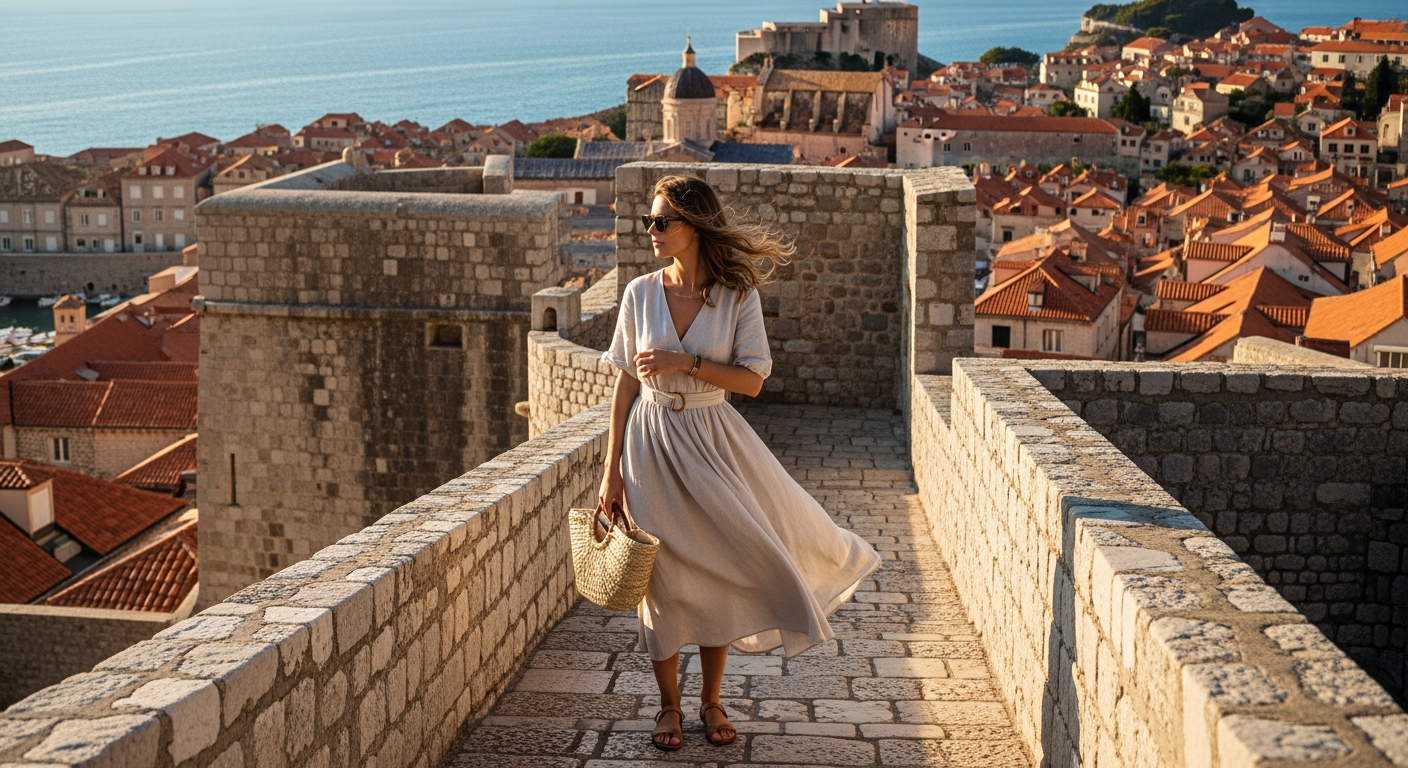
10 Croatia Summer Outfit ideas 2026

The marble streets gleam like mirrors, your feet are negotiating uneven limestone steps, and you’ve got a ferry to Hvar in three hours. That “cute” sundress you packed? Clinging to your skin.
Those trendy mules? Slipping on polished stone. Welcome to the reality check that is Croatian summer—and why your usual beach vacation wardrobe won’t survive the heat, terrain, and style standards that separate travelers from locals.
Croatia isn’t just another Mediterranean destination. It’s a unique styling challenge that punishes generic “European summer” packing.
Between the Adriatic humidity, ancient cobblestones that demand specific footwear, conservative dress codes at historic sites, and the need to transition seamlessly from beach clubs to elevated dinner spots, your typical resort wardrobe simply won’t cut it.
Most travelers underestimate this—they arrive with athletic wear, impractical heels, or synthetic fabrics that trap moisture against skin on streets that radiate heat for hours after sunset.
This guide delivers 10 versatile Croatia outfits specifically calibrated for summer 2026 travel. Whether you’re exploring Split’s Diocletian Palace, island-hopping to Vis, or hiking Plitvice Lakes, each outfit solves real Croatian terrain and climate challenges while keeping you polished enough to blend with the effortlessly chic locals. You’ll learn the exact pieces that work for marble streets and ferry schedules, fabric strategies for 28–35°C heat, footwear that survives Old Town exploration, and a capsule approach that respects airline baggage limits. Let’s build your Croatia summer wardrobe the smart way.
Understanding Croatia’s Summer Climate & Style Culture

What the Weather Actually Demands (June–August 2026)
Coastal Croatia—Dubrovnik, Split, Hvar, Rovinj—averages 28–35°C (82–95°F) during peak summer with high humidity rolling in from the Adriatic. This isn’t dry Mediterranean heat. It’s oppressive, moisture-laden air that clings to your skin and makes synthetic fabrics feel like a second layer of sweat. The UV index hits 9–10 (very high), which means sunburn happens fast, and your outfit needs built-in sun protection strategy, not just style points.
Fabric choice matters more here than anywhere else. Linen and lightweight cotton blends actually breathe—the fibers let air circulate against your skin. Polyester and rayon, by contrast, trap moisture against your body on stone streets that radiate heat for hours. When you’re walking Split’s Riva promenade or climbing Dubrovnik’s city walls, the difference between breathable linen and clinging synthetics becomes visceral. Choose wrong and you’ll spend your vacation peeling fabric away from your body every fifteen minutes.
Microclimates matter too. Plitvice Lakes National Park runs 5–7°C cooler than the coast because of elevation and forest canopy—pack a lightweight layer for waterfall hikes. Island evenings bring Adriatic breezes that make lightweight cardigans or linen blazers essential, even in July. You’re not packing for one temperature; you’re packing for a range that shifts dramatically between noon heat and evening coolness.
Croatian Coastal Fashion Norms vs. Tourist Traps
Split and Dubrovnik residents favor minimalist European elegance—quality basics in neutral palettes, not flashy resort wear or obvious vacation costumes. This is the “polished casual” standard that defines local style. Croatians dress up more than American beachgoers do; ripped denim and athletic wear read as sloppy in Old Town restaurant settings. You don’t need formal clothing, but you do need pieces that signal intentionality and respect for the environment.
Modest dress is required at some churches and monasteries—covered shoulders and knees aren’t negotiable. Rather than packing separate “church outfits,” build this requirement into your versatile pieces. A button-front linen dress works for beach mornings and monastery visits without wardrobe gymnastics. What screams “cruise passenger” to locals? All-white linen suits, obvious designer logos worn as status signals, impractical heels on cobblestones, and overdressed formality during daytime heat. You want to look intentional, not costume-y.
Terrain-Specific Packing Strategy
The marble problem is real. Split’s Riva promenade and Dubrovnik’s Stradun are polished limestone—slippery when wet, unforgiving on thin-soled shoes, and reflective in ways that amplify sun exposure. Walkability requirements are brutal: Dubrovnik walls demand 2 km of uneven steps; Hvar Town features steep hills; ferries require early-morning practicality over Instagram aesthetics. You need footwear with genuine grip and cushioning, not decorative sandals.
Budget airline reality shapes everything. Ryanair and EasyJet enforce 10kg cabin limits for intra-Croatia flights, meaning capsule wardrobes aren’t aspirational—they’re mandatory. You cannot pack “just in case” items or duplicate pieces. Every item must work multiple ways, mix with other pieces, and serve at least two distinct purposes. This constraint actually forces better packing decisions than unlimited luggage would.
Croatia Outfits for Beach Clubs & Island Days

Outfit #1: Hvar Beach Club Classic
The Look: High-waisted linen shorts (sand or oatmeal) + white ribbed square-neck tank + oversized natural straw tote + leather slide sandals + tortoiseshell sunglasses.
This is the Croatia outfit formula that works for beach clubs like Hula Hula on Hvar. Linen shorts dry quickly post-swim and maintain structure—unlike cotton cutoffs that stay damp and shapeless. The square-neck tank offers sun protection on your shoulders while staying polished enough for beachfront lunch without requiring a wardrobe change. The neutral palette (sand, white, natural straw) transitions from Dubovica Beach to an evening Hvar Town stroll without looking like you’re in costume.
The straw tote fits beach essentials plus a lightweight linen shirt for shoulder coverage at sunset church visits. Choose shorts with a 4–5″ inseam—longer than typical resort shorts—to avoid looking too casual for Croatian coastal town standards. The white tank should be substantial ribbed cotton, not thin jersey that becomes transparent when wet. Leather slide sandals grip better on marble than rubber slides and age beautifully throughout your trip.
Outfit #2: Vis Island Explorer
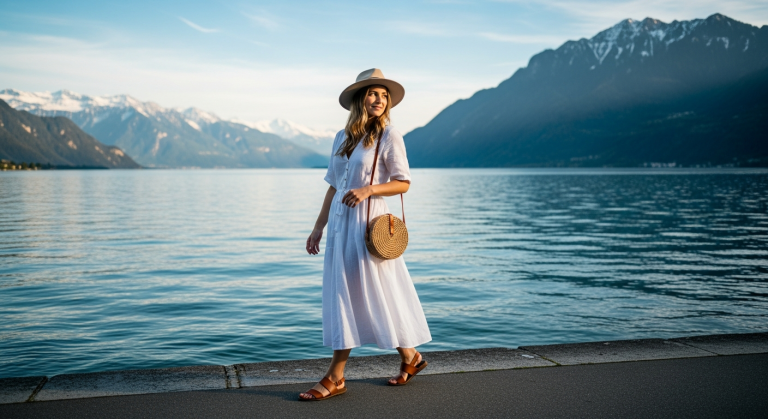
The Look: Sage green linen midi dress (button-front) + tan leather crossbody bag + espadrille wedge sandals (2″ heel max) + wide-brim packable straw hat.
Vis demands a different approach than day-trip islands. This outfit works because the button-front dress gives you ventilation control and easy beach access without full wardrobe changes. Midi length respects local modesty norms while protecting your legs from sun exposure during Blue Cave boat tours. Sage and olive tones complement Croatia’s natural palette—turquoise water, white stone, green pines—in a way that photographs authentically without looking staged.