Switzerland Summer Women’s Fashion Style 2026

Master Switzerland’s summer fashion 2026 with this complete style guide. Discover what to wear, trending colors, essential pieces, and styling formulas for every Alpine adventure—from budget-friendly to luxe.
Standing on a sun-drenched terrace overlooking Lake Geneva, the Swiss Alps creating a breathtaking backdrop, and you look absolutely effortless in an outfit that’s both Instagram-worthy and incredibly comfortable. Sounds like a dream?
Here’s the reality I learned the hard way: Switzerland’s summer weather is nothing like the predictable heat you’ll find in Southern Europe.
During my first trip to Interlaken in July, I packed like I was heading to the Mediterranean—flowy sundresses, strappy sandals, and zero layers.
By day two, I was freezing in the morning, sweating by afternoon, and completely unprepared for the sudden Alpine chill that descended each evening.
That’s when I discovered what Swiss women have mastered for generations: the art of versatile, elevated dressing that transitions seamlessly from lakeside cafés to mountain trails without missing a beat.
They understand that true style isn’t about having the trendiest pieces—it’s about curating a wardrobe that works as hard as you do while looking utterly polished.
If you’re staring at your closet wondering what actually works for Switzerland in 2026, you’re not alone. Most fashion advice for European summer travel treats the entire continent like one climate zone (spoiler: it’s not).
Switzerland demands a smarter approach—one that blends outdoor functionality with sophisticated urban style, all while keeping you comfortable through dramatic temperature swings.
This guide delivers exactly that. You’ll discover the specific pieces that work in Switzerland’s unique climate, the color palette that photographs beautifully against Alpine backdrops, and the styling formulas that take you from morning hikes to evening aperitivos without a complete outfit change.
Whether you’re working with a capsule wardrobe or planning your dream Switzerland summer, you’re about to crack the code on Swiss summer style.
Understanding Swiss Summer Weather & Style Essentials

What to Expect: Switzerland’s Summer Climate Reality
Switzerland’s summer weather operates on its own rules, and understanding this saves you from packing disasters. Temperatures typically range from 15°C to 25°C (59°F to 77°F), but here’s what the averages don’t tell you: you’ll experience all four seasons in a single day.
Morning temperatures in cities like Zurich and Geneva hover around 15°C, perfect for that linen blazer you’re about to discover. By midday, you’re looking at 23-25°C in urban areas—warm enough for a sundress but not scorching. Head to the Alps, and you’ll drop 10 degrees instantly. That cute cable car ride to Jungfraujoch? You’ll need a sweater even in August.
The microclimates are real. Lakeside areas like Montreux and Lucerne stay milder and more humid. Mountain regions experience rapid weather changes—sunshine can turn to rain in fifteen minutes. Urban centers retain heat longer, making evening strolls comfortable in just a dress, while mountain towns require that jacket you thought you wouldn’t need.
This isn’t about packing for worst-case scenarios. It’s about strategic layering that doesn’t bulk up your suitcase or your silhouette. The Swiss have perfected this balance, and their secret weapon is simple: lightweight, removable layers that elevate rather than hide your outfit.
The Swiss Style Philosophy: Understated Luxury Meets Function
Swiss women don’t follow trends blindly—they invest in quality pieces that last beyond a single season. Walk through Zurich’s Bahnhofstrasse, and you’ll notice a consistent aesthetic: clean lines, neutral foundations, and impeccable tailoring. There’s zero tolerance for fussy details or overly trendy pieces that scream “fast fashion.”
The philosophy centers on quality over quantity. A Swiss wardrobe might contain fewer pieces than yours, but each item earns its place through versatility and craftsmanship. That white linen shirt isn’t just for one occasion—it works under a blazer for meetings, tied at the waist with jeans for weekend exploring, and layered over swimwear at the lake.
This approach blends outdoor functionality with urban sophistication in ways that feel distinctly Swiss. You’ll see women transitioning from hiking trails to café terraces without looking like they just stepped off a mountain. The trick? Choosing elevated athletic pieces and styling them with intention. Those sleek hiking pants pair with a cashmere sweater and pointed-toe flats for instant sophistication.
The “effortless” look Swiss women master isn’t actually effortless—it’s carefully curated. They understand fit, they invest in tailoring, and they know exactly which accessories transform a basic outfit into something special. This is the mindset you’re adopting for Switzerland 2026.
Packing Smart: The Capsule Approach for Switzerland 2026
The 15-piece summer capsule wardrobe formula works because it forces intentional choices. Here’s what makes the cut: three dresses (white midi, flowy maxi, linen shirt dress), two pairs of pants (wide-leg linen, light-wash jeans), one denim skirt, three tops (white button-down, lightweight knit, casual tee), two outerwear pieces (linen blazer, lightweight layer), and three pairs of shoes (leather sneakers, strappy sandals, pointed-toe flats).
This combination creates over 30 outfit variations for two weeks. The math works because every piece coordinates with at least four others. Your white midi dress pairs with the denim jacket for daytime exploring, the linen blazer for dinner, and works solo for warm afternoons. Those wide-leg linen pants transition from city sightseeing with sneakers to evening elegance with your sandals and that white button-down.
Space-saving packing hacks matter when you’re navigating Swiss trains and cobblestone streets. Roll your clothes instead of folding—it prevents wrinkles and creates 30% more space. Pack your shoes first at the bottom of your suitcase, stuff them with socks and undergarments. Use packing cubes to compress lightweight items and keep outfits organized by occasion.
Essential accessories elevate every look without taking up precious luggage space. A silk scarf transforms a basic tee into something special. Statement earrings dress up your simplest outfit. A structured crossbody bag works for both hiking and dining. These small additions create the polish that defines Swiss summer style.
The 2026 Switzerland Summer Color Palette

Trending Colors That Complement Alpine Landscapes
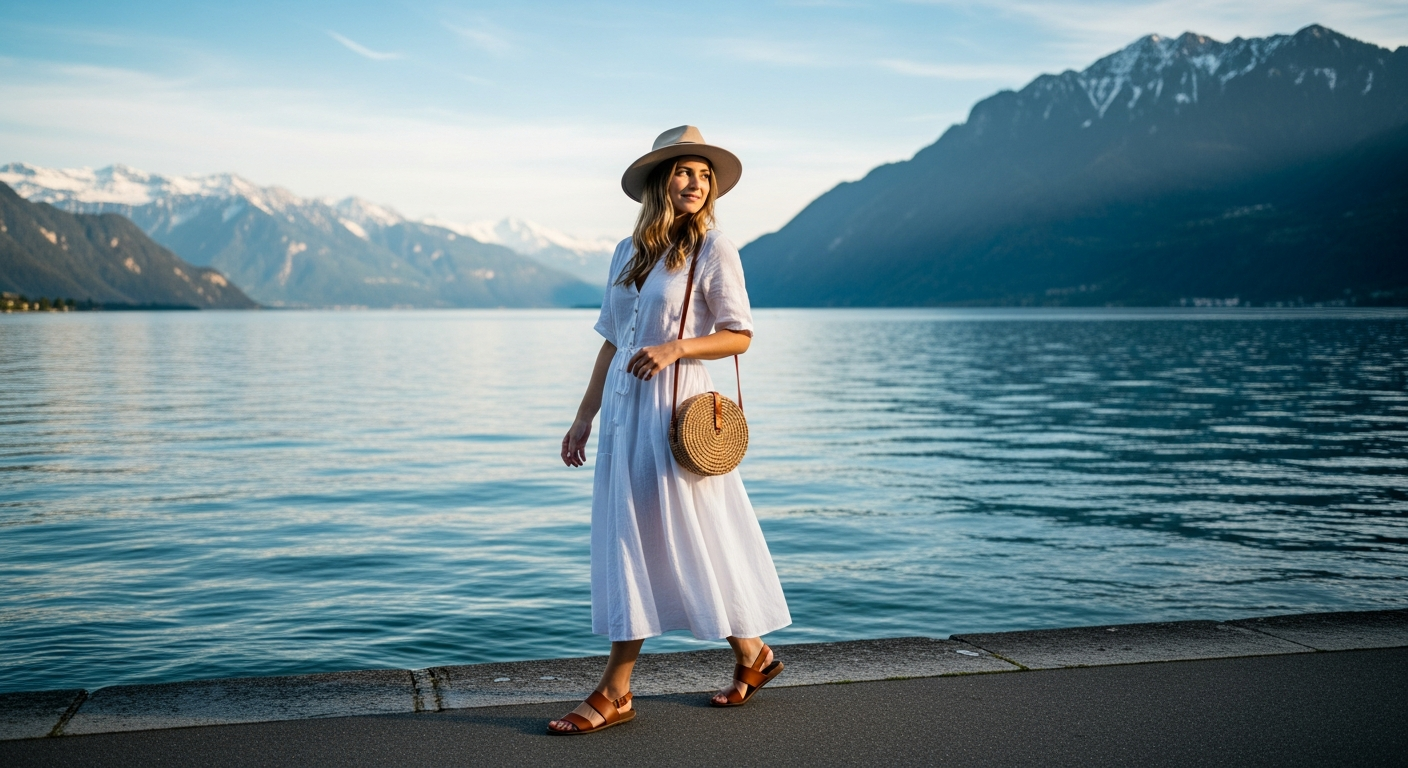
Crisp whites and creams form the foundation of Swiss chic for a reason—they photograph beautifully against every backdrop. That iconic shot of you in an all-white outfit against turquoise Lake Lucerne? It’s not accidental. White reflects the clean, minimalist aesthetic that defines Swiss style while creating stunning visual contrast with the natural landscape.
Soft neutrals dominate the 2026 palette: beige, taupe, stone, and sand. These colors blend seamlessly with Switzerland’s natural environment—the grey-blue of glaciers, the warm tones of Alpine meadows, the stone architecture of old towns. A taupe linen dress doesn’t compete with your surroundings; it complements them.
Nature-inspired accents add personality without overwhelming your aesthetic. Sage green channels Alpine forests and works beautifully with neutrals. Sky blue mirrors Switzerland’s famous lakes and creates fresh, summery combinations. Alpine pink—that soft, dusty rose you see in mountain sunsets—adds warmth to cool-toned outfits. These colors trend in 2026 specifically because they connect to sustainable, nature-forward fashion movements.
The key to incorporating trending colors without looking dated: use them as accents, not foundations. Your base wardrobe stays neutral and timeless. That sage green top or sky blue scarf adds current relevance without committing your entire wardrobe to a trend that might fade by 2027.
Building Your Base with Timeless Neutrals
An all-white outfit works everywhere in Switzerland because it’s the ultimate Swiss power move. White-on-white creates a sophisticated, editorial look that transitions from morning coffee to evening cocktails. The trick is varying textures: white linen pants with a white cotton tee and white leather sneakers creates depth through fabric contrast, not color.
Mixing warm and cool neutrals requires understanding undertones. Warm neutrals (beige, camel, cream) have yellow or golden undertones. Cool neutrals (grey, taupe, white) lean blue or pink. The Swiss approach: stick primarily to one temperature family, then add one contrasting piece for interest. Cool-toned grey wide-leg pants with a cool white top and warm beige blazer creates intentional contrast without clashing.
Monochromatic dressing delivers that polished look you see on Swiss women everywhere. Head-to-toe beige, all shades of white, or tonal grey creates a streamlined silhouette that looks expensive and intentional. This approach works brilliantly for different body types because it creates one continuous line without breaking up your frame with contrasting colors.
Adding subtle pops of color without overwhelming your aesthetic means following the 80/20 rule. Eighty percent of your outfit stays neutral, twenty percent introduces color. Your beige linen pants, white tee, and taupe blazer (80%) get elevated with sage green sandals and a matching bag (20%). This creates visual interest while maintaining that sophisticated, understated vibe.
Prints and Patterns That Photograph Beautifully
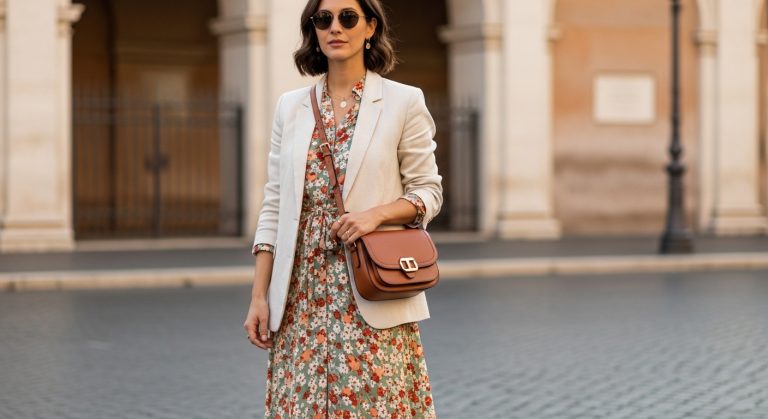
Delicate florals work for lakeside moments because they add femininity without overpowering Switzerland’s natural beauty. Choose small-scale prints in soft colors—think tiny wildflowers on white backgrounds, not bold tropical blooms. These patterns photograph beautifully against Alpine backdrops and maintain that refined aesthetic Swiss style demands.
Classic stripes deliver instant European sophistication. The Breton stripe (navy and white) is timeless for a reason—it references French Riviera style while feeling appropriate for Swiss lakeside towns. Vertical stripes in neutral colors (beige and white, grey and cream) elongate your silhouette and create that polished look that works everywhere from Montreux to Zermatt.
Choose solid colors over patterns when you’re visiting iconic locations where you want the background to shine. That photo at the Matterhorn looks more striking when you’re wearing a solid white dress that doesn’t compete with the dramatic mountain. Solid neutrals also photograph better in varying light conditions—crucial when you’re shooting in bright Alpine sun or shaded old towns.
Balancing bold prints with neutral pieces prevents overwhelming your outfit. If you’re wearing a floral midi dress, keep everything else solid and simple—neutral sandals, minimal jewelry, a solid-colored bag. This lets the print shine while maintaining visual balance. The Swiss approach to prints: one statement piece per outfit, everything else supports it.
Must-Have Pieces for Switzerland Summer 2026

The Perfect Dress Collection
The White Midi Dress serves as your versatile hero piece because it works for literally every occasion. I wore mine to a Michelin-starred restaurant in Lausanne, a casual lakeside lunch in Lucerne, and a sunset boat ride on Lake Brienz—same dress, different accessories. Look for breathable fabrics like cotton or linen blends, a flattering A-line or wrap silhouette, and a length that hits mid-calf for that elegant proportion.
Style it five ways: with leather sneakers and a denim jacket for daytime exploring, dressed up with strappy sandals and statement earrings for dinner, layered under a linen blazer for cooler evenings, belted at the waist for definition, or paired with a wide-brim hat for lakeside sophistication. Budget-friendly options from Zara or Mango start around $50-70, while investment pieces from Reformation or Ganni run $150-250 and deliver superior fabric quality that lasts multiple seasons.
The Flowy Maxi Dress creates effortless elegance for evening strolls along Swiss promenades. Choose lightweight fabrics that move beautifully in photographs—think rayon, modal, or silk blends. Empire waists flatter every body type by defining the narrowest part of your torso, while tiered designs add movement and visual interest. Avoid heavy fabrics that bulk up your frame or restrict movement when you’re navigating cobblestone streets.
The Linen Shirt Dress delivers breathable, chic style that feels distinctly Swiss. Linen naturally regulates temperature—cool when it’s warm, insulating when it’s cool—making it perfect for Switzerland’s variable climate. Look for relaxed fits that skim your body without clinging, button-front styles that let you control coverage, and neutral colors that coordinate with everything in your capsule. Roll the sleeves, add a belt, and you’ve created instant polish.
Elevated Casual Separates
The Perfect White Button-Down works harder than any other piece in your wardrobe. Wear it traditionally buttoned with wide-leg pants for polished sophistication. Tie it at the waist over a midi skirt for casual-chic vibes. Layer it under a sweater with just the collar showing for preppy elegance. Wear it open over a tank and jeans for effortless cool. Or knot it at the front with denim shorts for lakeside leisure. The key: choose quality cotton or linen that holds its shape and doesn’t wrinkle instantly.
Wide-Leg Linen Pants deliver comfortable sophistication for warm Swiss days. The wide-leg silhouette creates elegant proportions while allowing airflow—crucial when you’re walking 15,000 steps exploring Bern’s old town. High-waisted styles elongate your legs and create a flattering line. Neutral colors (white, beige, stone) coordinate with everything. Pair them with fitted tops to balance the volume and avoid looking shapeless.
Denim Done Right means choosing light-wash jeans and denim skirts that feel current for 2026. Straight-leg or slightly wide-leg jeans in pale blue or white denim create that relaxed European aesthetic. Denim midi skirts in light washes pair beautifully with white tees and leather sneakers for effortless style. Avoid overly distressed or heavily embellished denim—Swiss style leans clean and minimal.
The Lightweight Knit becomes essential for cool Swiss evenings when temperatures drop to 15°C. Choose fine-gauge knits in merino wool or cotton blends that layer smoothly under blazers or wear alone. Neutral colors maximize versatility. Crewneck or V-neck styles work better than turtlenecks in summer. This piece transitions your daytime outfit to evening without requiring a complete change.
Outerwear That Works Overtime
The Chic Linen Blazer adds instant sophistication to any outfit while providing that crucial layering option. Oversized fits trend in 2026 and create effortless cool when paired with fitted basics. Neutral colors (beige, cream, white) work with everything. Wear it over dresses for evening elegance, with jeans and a tee for elevated casual, or over your hiking outfit when you transition to lunch in town.
The Lightweight Trench delivers classic European style that photographs beautifully. Choose water-resistant fabrics for Switzerland’s unpredictable weather. Neutral colors (classic beige, stone, or white) create that timeless look. The trench works over dresses for rainy days, with jeans for city exploring, or tied at the waist over casual outfits for added style dimension.
The Denim Jacket serves as your casual layering essential that works everywhere. Light-wash denim feels current for 2026 and coordinates with your neutral wardrobe. Cropped styles create better proportions with high-waisted bottoms. This piece transitions from morning hikes (over athletic wear) to afternoon exploring (over dresses) to evening casual dinners (with jeans and a nice top).
Layer strategically based on your itinerary. Mountain excursions require all three outerwear pieces packed. City-focused days need just one light layer. Skip outerwear entirely for warm lakeside afternoons. Choose pieces that compress well and don’t wrinkle—linen and denim travel better than structured wool.
Footwear Strategy: From Alps to Avenues

Walking Shoes That Don’t Scream “Tourist”
Stylish sneakers that actually support all-day exploration exist, and they’re non-negotiable for Switzerland. You’ll walk 8-12 miles daily on cobblestones, train platforms, and mountain paths. Those cute but unsupportive fashion sneakers will destroy your feet by day two. Instead, invest in leather sneakers from brands like Veja, Common Projects, or even elevated options from Adidas Stan Smiths that deliver both style and comfort.
The leather sneaker trend dominates 2026 because leather molds to your feet, provides better support than canvas, and looks infinitely more polished. White leather sneakers coordinate with every outfit in your capsule wardrobe. They work with dresses for casual sophistication, with jeans for classic cool, and even with your hiking outfit when you stop for lunch in mountain villages.
Color choices matter more than you think. White or cream sneakers create a clean, fresh look that photographs beautifully and coordinates with everything. Avoid bright colors or heavy branding that screams “athletic shoe” rather than “stylish sneaker.” Neutral tones blend seamlessly with Swiss style’s minimalist aesthetic.
Break in your shoes before your trip—this isn’t optional. Wear them for full days at home, walk on various surfaces, and identify any problem spots early. Apply leather conditioner to prevent stiffness. Add gel inserts if needed. Your feet will thank you when you’re exploring Lucerne’s old town on day five without a single blister.
Elevated Flats and Sandals
Pointed-Toe Flats unlock the secret to looking polished in comfort. The pointed toe creates a sophisticated line that elevates even your most casual outfits. Leather or suede options in nude, black, or neutral tones work with everything. These transition seamlessly from museum visits to café lunches to evening strolls. Look for cushioned insoles and flexible soles—Swiss streets demand comfortable footwear.
Strappy Sandals work perfectly for lakeside dining and city strolls when temperatures climb. Choose styles with ankle support rather than flimsy flip-flops. Leather straps prevent blisters better than synthetic materials. Block heels (if you want height) provide stability on cobblestones. Neutral colors maximize versatility—nude elongates your legs, black creates classic elegance, tan coordinates with earth tones.
Espadrilles deliver timeless summer style with authentic European flair. Wedge espadrilles provide height without the instability of stilettos. Platform styles create comfort for all-day wear. Choose neutral canvas uppers (white, beige, black) that coordinate with your wardrobe. These work beautifully for casual dinners, lakeside walks, and relaxed sightseeing days.
The nude versus black versus statement color debate: Nude tones elongate your legs by creating one continuous line from hem to toe—ideal for petite women or when wearing cropped pants. Black creates classic sophistication and hides dirt better during travel. Statement colors (sage green, sky blue) add personality but limit versatility. For a capsule wardrobe, choose nude or black first, add statement colors if space allows.
The One Heel to Pack (If You Pack Any)
Block heel sandals deliver evening elegance without sacrificing stability on Switzerland’s uneven surfaces. A 2-3 inch block heel provides height while remaining walkable on cobblestones. Strappy designs in leather create sophisticated style for dinners and evening events. Neutral colors (nude, black, metallic) coordinate with your dressier outfits.
Here’s when you’ll actually wear heels in Switzerland: upscale restaurant reservations, evening events at hotels, rooftop bars in cities like Zurich or Geneva, and formal cultural performances. That’s maybe 2-3 occasions on a typical trip.