8 Unforgettable UK Spots to Soak Up the Summer

Let me start with a confession: I love a good UK summer. I know, I know — we’ve all heard the jokes. “British summer” is basically a euphemism for two warm weekends and a heatwave that ends in a thunderstorm.
But there’s something genuinely magical about the long, hazy days when this country actually delivers, and we trade Mediterranean dreams for the absolute joy of being right here. Cliffs, coves, ancient woodland, dolphins jumping a stone’s throw from the shore — it’s all on our doorstep.
I stumbled across a Specsavers leaflet recently (yes, really — picked it up at an opticians appointment) that listed eight UK spots that practically demand a pair of decent sunnies.
And honestly? It was a brilliant little list. So I went down the rabbit hole, did the proper research, and turned it into the kind of guide I wish someone had handed me before I started planning my own UK road trips.
Here are eight places to chase the summer this year — what to do, when to go, and the bits the leaflet didn’t have room for. Pack the prescription shades (more on why those specifically matter at the end), and let’s go.
1. Chanonry Point, Scotland — where dolphins genuinely come to you
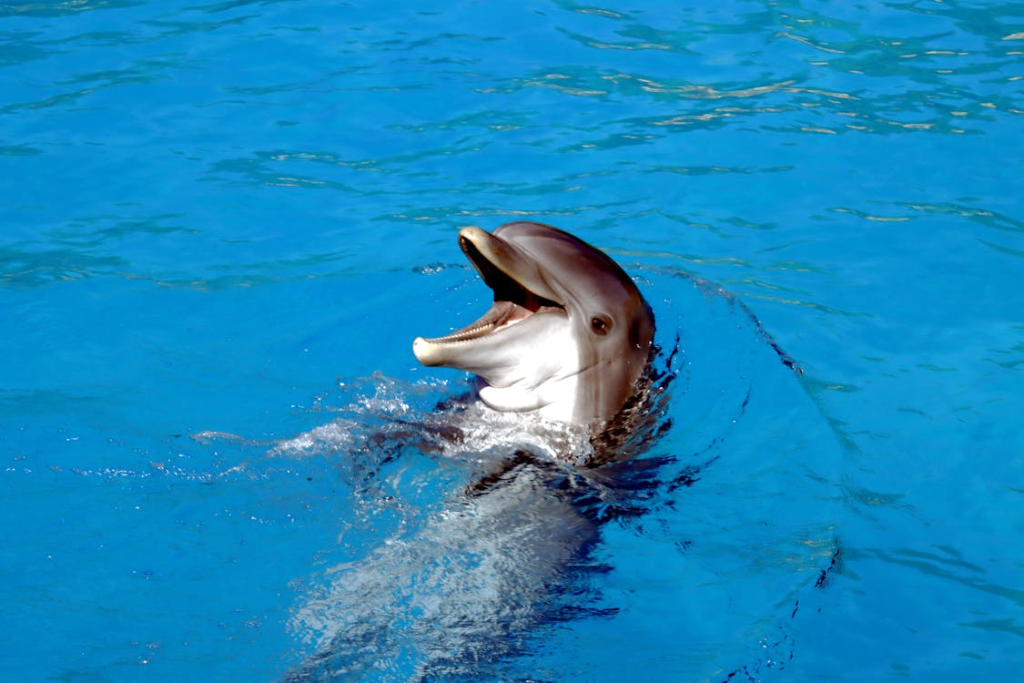
If you’ve never seen a wild bottlenose dolphin breach the water about ten metres from where you’re standing, I can’t quite explain how giddy it makes you. There are people in their sixties bouncing around like kids when it happens. It’s that good.
Chanonry Point sits on the Black Isle, a thin spit of land jutting into the Moray Firth between Fortrose and Rosemarkie. The Moray Firth is home to the only resident bottlenose dolphin population in the North Sea — a well-studied pod of around 200 dolphins that researchers know individually by name (yes, names — there’s one called Spirtle, another called Porridge). And because of the way the tides funnel salmon and mackerel through the narrow channel here, the dolphins come staggeringly close to shore to hunt.
When to go: Summer is peak season — late May through to September. The dolphins are around all year, but they’re far more visible in summer when food sources are richest, and late August into September is when newborn calves start appearing. It’s basically the maternity ward of the Moray Firth.
The all-important tide trick: This is the bit nobody tells you. Don’t just rock up at any old time. The dolphins come in to feed on a rising tide — specifically, around an hour after low tide. Check the tide times before you drive up. Spring tides (the biggest tidal differences) are better than neap tides. Late afternoon also tends to give you the best light if you’re hoping to take photos.
Practical bits:
- Parking at the Point itself is small and gets rammed in summer. There’s a £3 charge. Honestly, park in Fortrose or Rosemarkie and walk the mile along the shore — much more pleasant.
- No toilets at the Point. Use the ones in Rosemarkie before you go.
- The wind off the firth is brutal even in July. Layers and a jacket — no joke.
- Bring midge spray. You will thank me.
Your sunnies will save you from the relentless glare bouncing off the water — and trust me, when a dolphin breaches and you’re already squinting, you’ll miss the moment. Polarised lenses are the move here.
2. Silver Sands of Morar, West Highlands — Scotland’s Caribbean impression
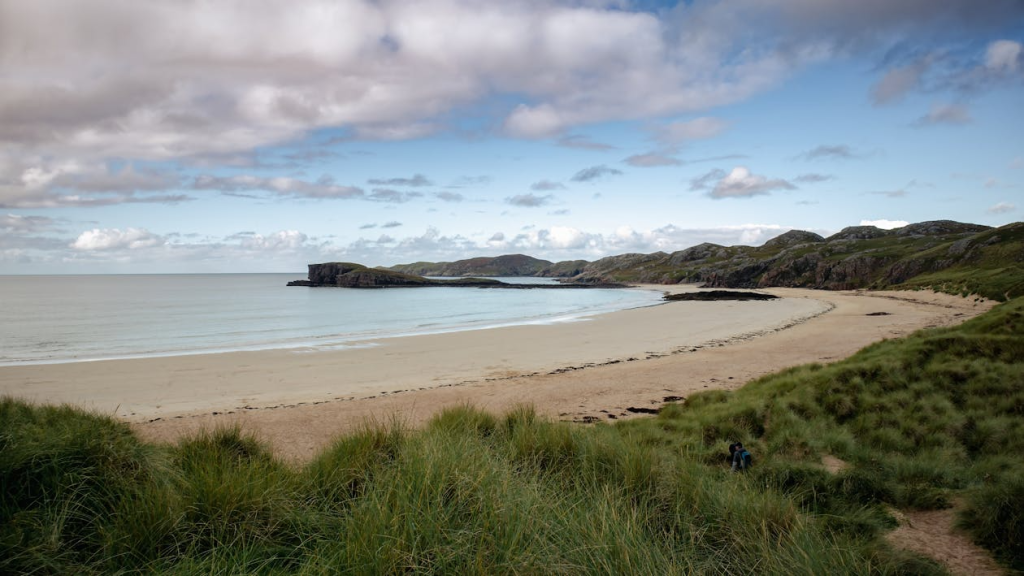
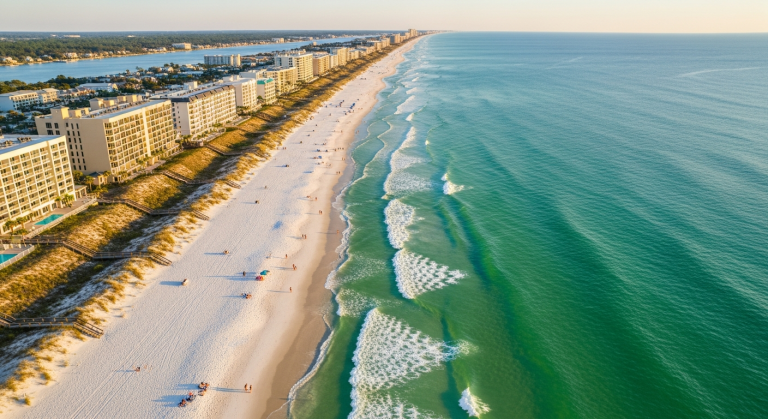
I genuinely cannot get my head around the fact that this is Scotland. Powdery white sand, water that goes from clear to electric turquoise to deep blue, with the islands of Eigg and Rum sitting on the horizon like something out of a film. (And actually, it was a film — the beach scenes in the cult 1983 classic Local Hero were shot here.)
The Silver Sands aren’t just one beach — they’re a whole string of them along the coast road between Arisaig and Morar. Some are signposted; the best ones aren’t. Half the fun is pulling over at random lay-bys on the B8008 and finding your own little patch.
When to go: July and August are the warmest, but May and June actually get more sunshine hours, which feels counterintuitive but it’s a Highlands thing. Summer also means midges — they’re worst at dawn and dusk, and a bit of breeze keeps them off you. Don’t let them put you off; this place is worth a few bites.
The beaches worth seeking out:
- Camusdarach is the famous Local Hero one. Gorgeous, but the car park is a third of a mile inland, which is a faff if you’ve got picnic gear and kids in tow.
- Morar Bay (the main Silver Sands) is the easiest — there’s a proper car park with toilets, motorhome-friendly, and the sheltered shallow water is brilliant for little ones.
- Tougal Beach and Sgeir Dubh (Black Rock) are quieter and better for actually swimming.
Heads up: Where the River Morar meets the sea, the currents are no joke — there are strong undercurrents and whirlpools in the channel. Keep little kids on the safer beaches. The water’s also genuinely chilly even in August, but on a hot day, a swim here is a memory you’ll carry for years.
Getting there: The drive is half the magic. The A830 — known as the Road to the Isles — runs from Fort William to Mallaig, taking in Glenfinnan Viaduct (yes, the Hogwarts Express bridge) on the way. You can also take the train from Fort William, which is one of the great rail journeys of the UK.
Sunnies are non-negotiable here — that white sand throws sunlight straight back at your face.
3. Whitby, Yorkshire — fish and chips, Dracula, and proper seaside chaos
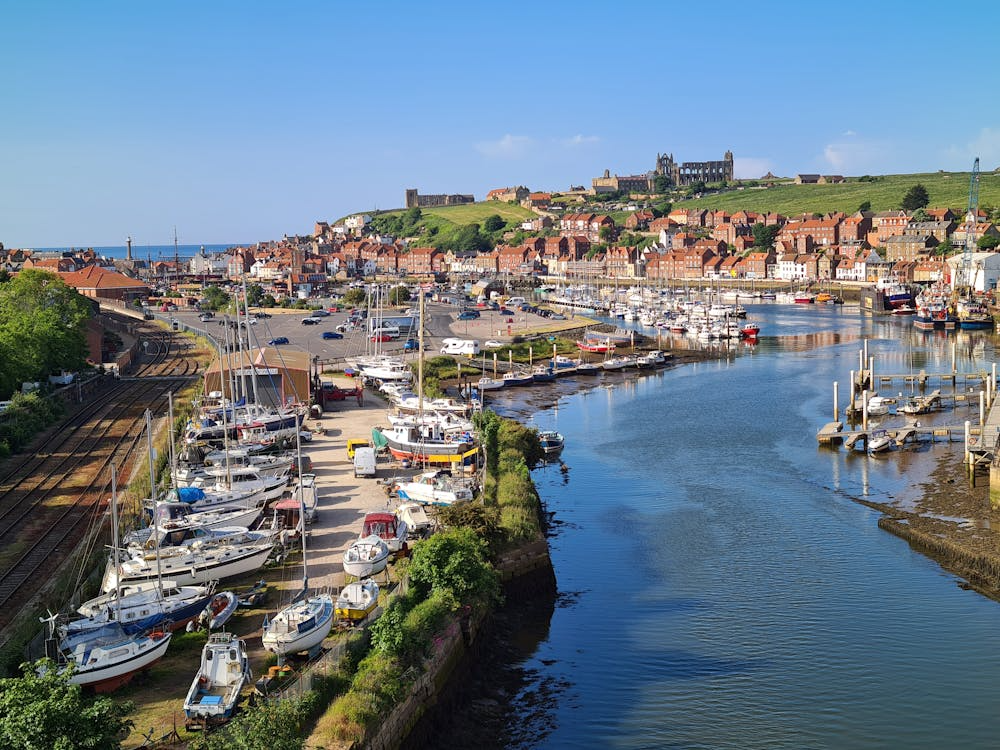
Whitby is the kind of place where you go for a weekend and immediately start checking property prices. It’s a former whaling town wedged between two cliffs, with the gothic ruins of Whitby Abbey looming over everything from the eastern cliff. Bram Stoker visited once, got obsessed, and wrote Dracula with the abbey as his backdrop. The town leans into it — there are two Goth Weekends a year, and you’ll spot the occasional vampire enthusiast on a regular Tuesday.
But beyond the gothic stuff, Whitby is just a brilliant working seaside town. The harbour is a proper bustle of fishing boats, the swing bridge opens for boats in the most charmingly inefficient way, and the smell of frying batter follows you everywhere.
Fish and chips — the proper league table: The Magpie Café is the famous one. You’ll see queues snaking down Pier Road from lunchtime onwards. Their cod is fried in beef dripping (the proper Yorkshire way), and locals will tell you it’s worth the wait. If the queue’s too much:
- Trenchers — right by the lighthouse, was crowned best fish and chip restaurant in the UK in 2019
- Silver Street Fisheries — quieter, a couple of streets back from the harbour, often rated highest by Tripadvisor users
- Quayside — another contender and a Whitby institution
The other essentials:
- Climb the 199 Steps to St Mary’s Church and the abbey ruins. Tradition says you count as you go up. Views over the harbour at the top are honestly stunning, especially around sunset.
- Stock up on smoked kippers at Fortune’s, a tiny smokehouse that’s been trading since 1872 with charred-black walls and the smell of generations of smoked fish baked into them.
- The North Yorkshire Moors Railway runs heritage steam trains from Whitby to Pickering, trundling through purple heather moorland in summer.
- Walk west along the sand from West Pier all the way to Sandsend — it’s about two miles of caramel-coloured sand backed by colourful beach huts.
A small warning: the public toilets in Whitby will cost you 50p, and there are limited free options. Carry change.
Sunnies sort the harbour glare and let you actually read the fish and chip menu boards in the sun without squinting like you’re in a spaghetti western.
4. Abbots Bromley, Staffordshire — the Best Kept Village in the Midlands
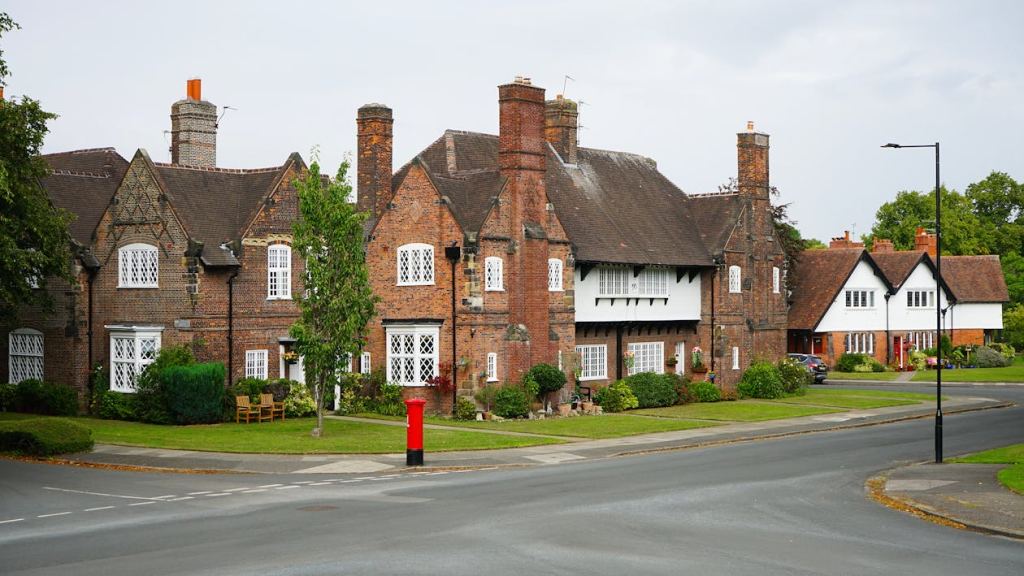
Quick honesty moment: the leaflet I read called this place out for its “Fairy Stones” — and after a fair bit of digging, I genuinely couldn’t find anything matching that description. What I did find is a village that’s quietly extraordinary in a much realer way, and probably even more worth your time.
Abbots Bromley has been crowned best-kept village in Staffordshire so many times the rivalry with nearby Yoxall is basically folklore at this point. The Sunday Times rated it the best place to live in the Midlands. It’s a proper old village, with Tudor half-timbered cottages, an ancient market cross on the green, and three excellent pubs (the Bagot Arms, the Royal Oak, and the Goat’s Head) all within stumbling distance of each other.
The thing that makes it special: the Abbots Bromley Horn Dance, one of the oldest surviving folk traditions in England. Six men carry ancient reindeer antlers — the antlers themselves are roughly a thousand years old — and dance around the village and surrounding farms. It’s medieval. It’s a bit weird. It’s wonderful. The dance happens annually on Wakes Monday (the Monday after the first Sunday after September 4th), so it’s really an early autumn thing, but the antlers themselves hang in St Nicholas’s Church year-round if you want to see them.
For a summer day out:
- Walk the Staffordshire Way through Bagot’s Park, the ancient woodland on the village’s edge that was once part of the medieval Needwood Forest. Forestry England is currently planting a brand new 303-hectare woodland here — Bagots Park Wood — that will eventually be the size of 420 football pitches. (It’s still in early stages, but the existing woods and farmland are gorgeous.)
- Blithfield Reservoir is two miles away and great for a quiet afternoon walk.
- Cannock Chase (Area of Outstanding Natural Beauty) is a short drive — proper woodland walks with deer and tranquil heathland.
- Croxden Abbey, Tutbury Castle, and Alton Towers are all within 12-14 miles if you want to spin out into a bigger day.
The village does its own Open Gardens weekend in summer (usually June), which is essentially permission to nose around twenty private gardens with a slice of homemade cake in your hand. Quintessentially English.
This is not a place where you need polarised lenses for water glare — you need them because you’ll be sitting outside a sun-drenched pub garden for several hours, judging me silently as I order another pint.
5. Skomer Island, Wales — where puffins practically walk over your feet
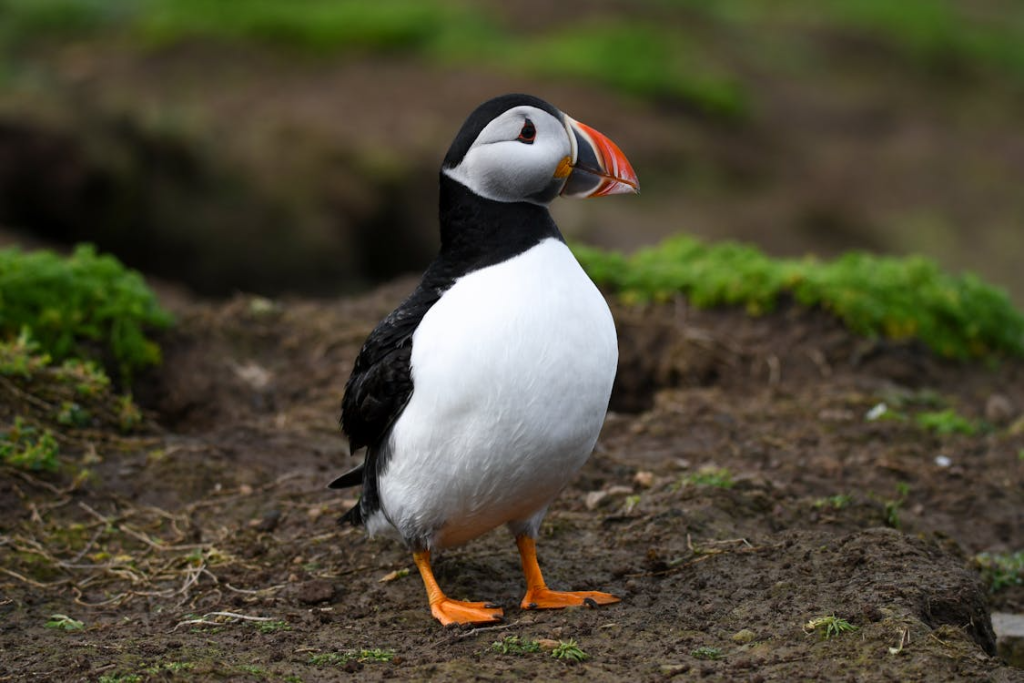
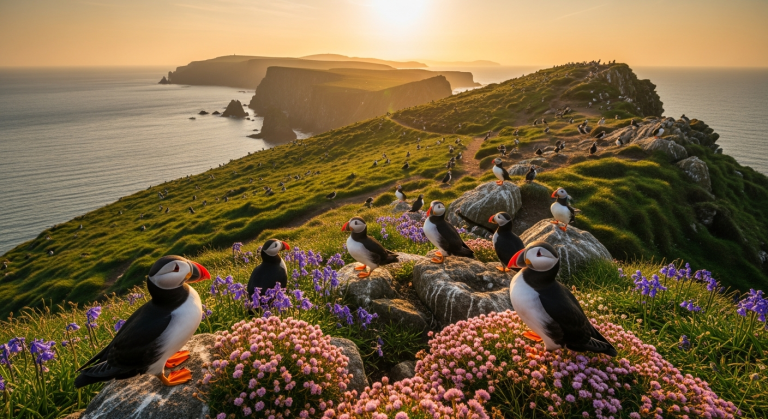
Right, I’ll just say it: visiting Skomer is one of the best wildlife experiences you can have in the UK, full stop. There are puffin colonies in Iceland and the Faroes that get more hype, but Skomer’s got numbers (over 20,000 puffins) plus it’s a 15-minute boat ride from the Welsh mainland.
The puffins on Skomer are unfazed by humans. The footpaths run alongside their burrows, and the birds will scurry across the path inches from your feet on their way to and from the sea. One blogger I read described the boat skipper saying “they practically walk over your feet” — and that turned out to be literally true.
The crucial timing window:
- Puffins arrive: mid-April
- Peak viewing: mid-May to mid-July (this is when you want to go)
- Pufflings hatch: late May
- Adults leave: late July (usually within a few days of each other — they all just go)
- By August: they’re gone for another year
If you’re going specifically for puffins, May and June are the absolute peak. July is still good but they start drifting off towards the end. Forget August — they’re back at sea.
The booking situation (read this carefully): Tickets sell out fast. Like, “book months in advance” fast. As of November 2025, May and June 2026 already had no availability. There’s only one boat operator landing on the island — Pembrokeshire Islands Boat Trips from Martin’s Haven. Booking opens December 1st each year. The boat costs £46 per adult in May/June peak, £42 in April and July, £32 in September.
On the day:
- Boat is 15 minutes; you get about 4.5 hours on the island
- 87 steep steps from the jetty to the welcoming point — moderate fitness needed
- The full island trail is about 4 miles / 2.5–3 hours
- No food on the island — bring a picnic. The only refreshment is bottled water for sale.
- Closed Mondays (except bank holidays)
- Dogs not allowed
- Pack your bag at home in a rodent-free environment — biosecurity is mega important to keep the island rat-free
You’ll see more than just puffins: Manx shearwaters (Skomer holds half the world population — 350,000 pairs), guillemots, razorbills, kittiwakes, choughs, seals, possibly porpoises, and a Skomer-specific subspecies of vole that you almost certainly won’t see but is fun to know exists.
The light reflecting off the water around the cliffs is intense — sunglasses make a real difference for photography and just for actually seeing what the puffins are up to.
6. Brandon (High Lodge, Thetford Forest), West Suffolk — Britain’s biggest pine forest
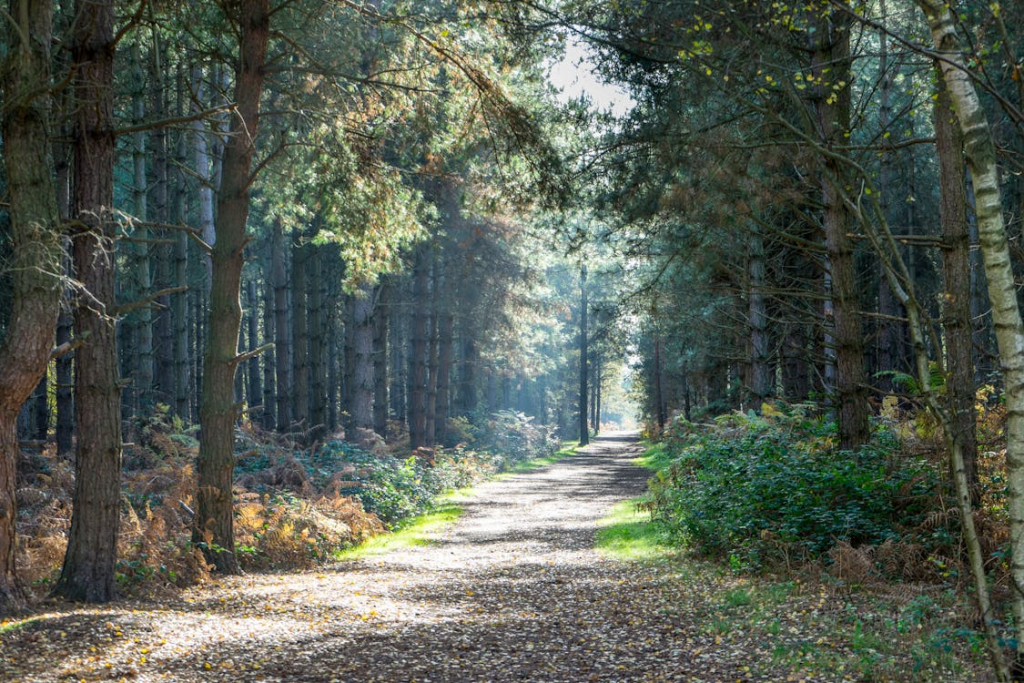
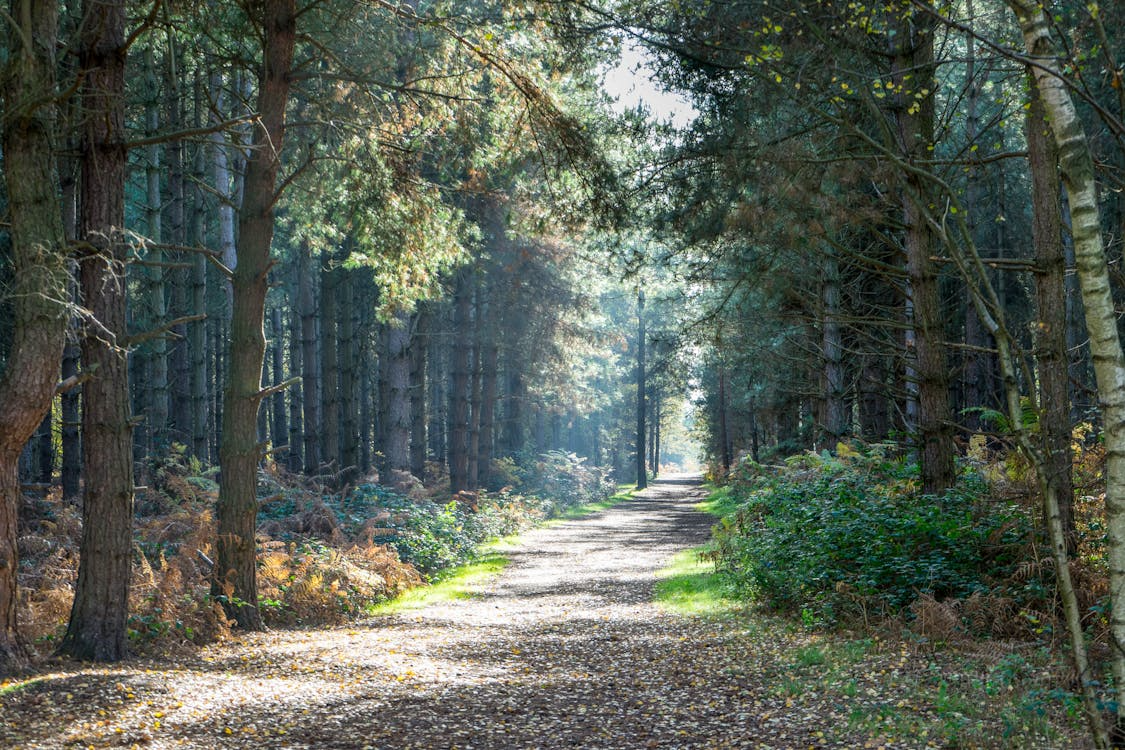
Brandon itself is a sleepy market town, but the reason you come here is High Lodge in Thetford Forest — the heart of Britain’s largest lowland pine forest, run by Forestry England. It’s 18,000-plus hectares of pine, heathland, and broadleaf woodland, and there’s so much packed into the visitor centre that you can easily lose a whole day.
What you can actually do here:
- Go Ape treetop adventure (the original UK location)
- Forest Segway trail — properly fun once you get the hang of it
- Mountain biking — three graded cycling trails plus bike hire if you didn’t bring your own
- Adventure Golf with 18 forest-themed holes
- Archery at Lookout Archery
- Disc golf, walking trails, an enormous adventure playground (with a tunnel slide that genuinely impressed me)
- Forest Live concerts — Forestry England runs proper outdoor gigs in the woods every June. Past lineups have included Tom Jones, Madness, Stereophonics. Magic in the long summer evenings.
- The Gruffalo Trail for younger kids (the Gruffalo “lives” here)
The BBQ situation: You can hire BBQs on site, but you cannot bring your own (and open fires are banned anywhere on the premises). Book the BBQ in advance — they go quickly on summer weekends. There are proper picnic tables and BBQ areas dotted around.
Practical bits:
- It’s a “binless” site — pack your rubbish out
- Parking is by number-plate recognition; you pay before leaving. Pre-pay £14.50 for the day to skip the queue.
- Cafés on site, but the queuing system gets a bit chaotic at peak times — pack a picnic if you’d rather not deal with it
- Toilets close 1:30–2pm for cleaning (use the café toilets in that window)
- Dogs welcome on most trails
Why it’s a brilliant summer choice: Pine forests stay cooler than open countryside in heatwaves. The dappled shade through the trees, plus the smell of warm pine resin, is genuinely one of my favourite British summer sensations.
7. Minack Theatre (Open Air Theatre), Cornwall — the most ridiculous theatre on Earth
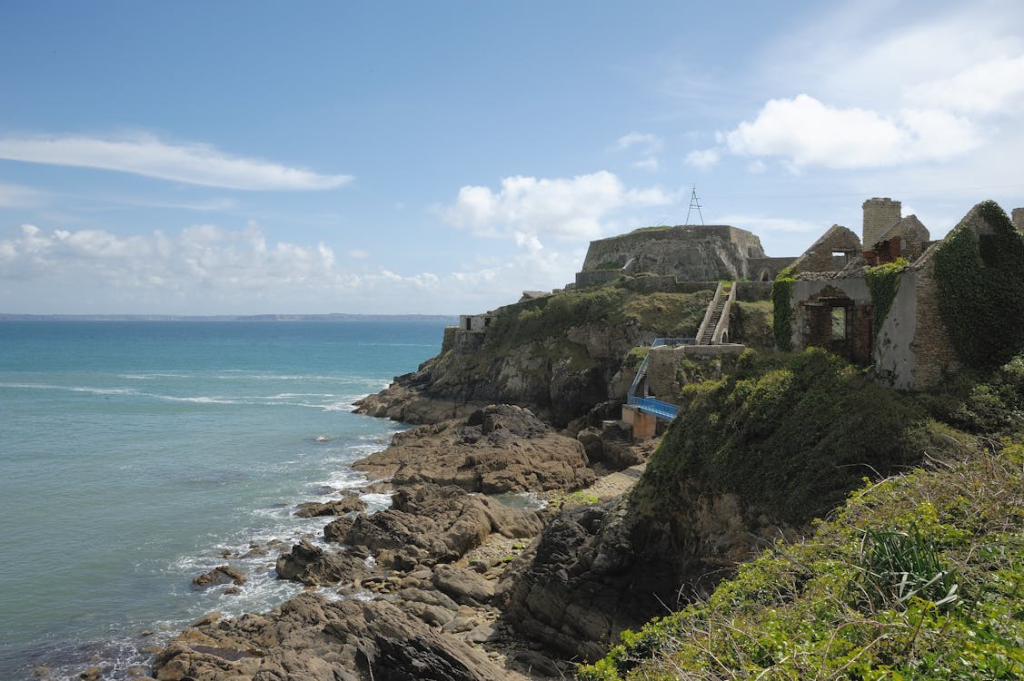
The Minack is the place the leaflet describes as the “Open Air Theatre” — a cliffside amphitheatre carved straight into the Cornish granite above Porthcurno Bay, four miles from Land’s End. It looks like the ancient Greeks built it. They didn’t. A woman called Rowena Cade did, mostly with her own hands, starting in the 1930s and continuing for fifty-odd years.
You sit on stone benches (or grassy terraces) cut into the cliff face. Behind the stage is the Atlantic Ocean. As the sun sinks during an evening performance, the lighting gradually changes from gold to pink to navy blue, and at some point a fishing boat will potter across the horizon during a Shakespeare soliloquy and you’ll think, yeah, this is genuinely one of the great theatres of the world.
The 2026 season runs from April to October, with shows including:
- Fisherman’s Friends (26-27 April) — the Port Isaac sea shanty group, perfect Cornish casting
- Come From Away (25–29 May)
- Romeo and Juliet (15–18 June)
- Dear Evan Hansen (27–31 July)
- Goodnight Mister Tom (17 August – 1 September)
- The Importance of Being Earnest, Julius Caesar, The Girl on the Train — and more
Evening shows usually start at 8pm; matinees run through summer for families and people who’d rather not do an open-air theatre at 11pm.
Important survival tips:
- Performances run in the rain. They only cancel in extreme weather. Bring waterproofs.
- Bring a cushion. Seriously. It’s stone or grass; a folded jumper won’t cut it after two hours.
- Layers — even on hot days, the wind off the Atlantic gets cold once the sun drops.
- Sun cream and a hat for matinees — there’s no shade
- Steep site, lots of steps. Not great for limited mobility. Wear proper shoes.
- No buggies allowed inside for safety reasons
- No dogs (except guide dogs)
- Book ahead. Always. Always always.
If you’re not catching a performance, you can still visit during the day to explore the gardens (sub-tropical, full of succulents and exotic plants — Cornwall’s microclimate is something else) and the small visitor centre that tells Rowena Cade’s story.
While you’re in the area: Porthcurno Beach is right below the theatre — turquoise water, white sand, genuinely Caribbean-looking on a sunny day. The Telegraph Museum (PK Porthcurno) is fascinating if you’re into communications history. Sennen Cove for surfing. Land’s End if you must, though the actual visitor complex is a bit of a tourist trap.
Polarised sunnies are perfect for matinees here — the glare bouncing off the Atlantic during a daytime show is no joke.
8. Blackpool Sands Beach, Devon — the South Devon stunner with a misleading name
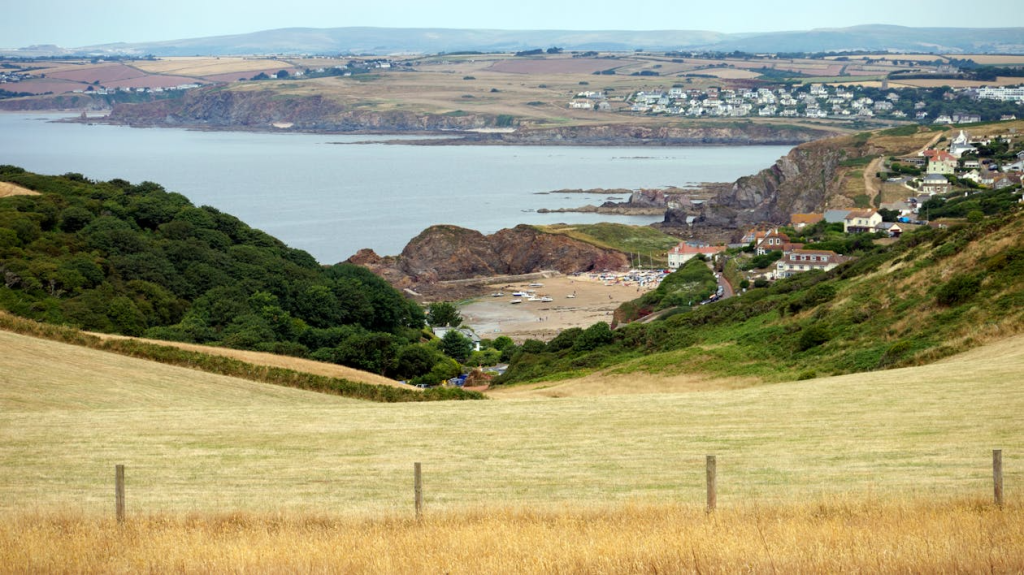
Two things to know up front: (1) This is not the Blackpool with the tower and the donkeys. That’s Lancashire. This Blackpool Sands is a privately-owned beach near Dartmouth in South Devon. (2) It’s also not actually sandy. It’s fine golden shingle. The “Sands” part is an old historical name; the beach is small pebbles. Don’t let the name lure you in expecting Bondi.
That said, it’s one of the prettiest beaches in the southwest. A perfect crescent bay backed by towering pines and evergreens, set in the South Devon National Landscape (formerly an AONB), with crystal-clear water that genuinely looks Mediterranean on a hot day. It’s been a Blue Flag beach for years — water quality is consistently excellent.
What’s on offer:
- RNLI lifeguards on duty July to early September
- Stand-up paddleboarding and kayak rentals through Sea Kayak Devon
- Guided paddleboard and kayak trips along the coast — half day or full day
- A proper Finnish wood-fired sauna on the beachfront, which I’m honestly here for
- Beach shop stocked with Red Paddle Co inflatable SUPs and a pump station
- Venus Café for proper food, plus a takeaway window for chips on the beach
- Sandpits added in summer for the kids (since the beach itself is shingle)
- Rockpooling at either end of the bay — keep an eye out for mermaid’s purses (egg cases of skates and rays)
- Wildlife Ranger sessions in summer where kids can meet anemones and crabs
- Fishing off the rocks in the evenings (mackerel, bass, wrasse, garfish)
Important rules to know:
- BBQs only after 5pm in peak summer
- No open fires anywhere on the premises, including the waterline
- No dogs March to October — important if you’re a dog person
- 800-space car park but it can fill on hot weekends
The wider area: You’re three miles from Dartmouth, one of the best little towns in the southwest. The South West Coast Path runs along the headland on either side of the beach — proper coastal walking with views to Slapton Sands and Start Point. Slapton Sands itself is well worth a detour: a long shingle bar with a freshwater lagoon (Slapton Ley) on one side and the sea on the other, plus a sobering WWII history (the area was evacuated in 1944 for D-Day rehearsals that went tragically wrong).
This is the beach where polarised sunnies properly earn their keep. The Atlantic sun, white-pebbled beach, and clear water send light bouncing in every direction — without good sunglasses, you’re squinting all day.
A quick, sincere word on prescription sunglasses
Right — I went into this expecting to write a fun blog post and then bolt on a token paragraph about sunglasses. But once I started reading what optometrists actually say, I realised it’s a more important point than I’d given it credit for.
UV damage to your eyes is cumulative across your lifetime. It builds up and contributes to cataracts, macular degeneration, and growths on the surface of the eye called pterygiums. And it’s worse when you’re around water, sand, or anywhere reflective — exactly the conditions you’re going to encounter at six of the eight places on this list.
If you wear glasses normally, regular prescription glasses don’t usually have UV protection unless you’ve specifically asked for the coating. Which means the choice is basically:
- Wear normal glasses outdoors and not protect your eyes from UV (and squint a lot, and probably get a headache)
- Wear sunglasses without your prescription and not see properly (which is genuinely dangerous when you’re scrambling around cliff paths or watching for dolphins or driving the Road to the Isles)
- Get prescription sunglasses with proper UV400 protection and ideally polarised lenses for water glare
Option three is the obvious one. Polarised lenses cut glare from water, wet roads, sand and shingle — which makes a massive difference at every single place on this list except maybe Abbots Bromley. They also reduce eye fatigue, which is the kind of thing you don’t notice until your eyes stop feeling tired at the end of a long day on the coast.
So, where are you going?
Eight places, eight completely different summers. Watch dolphins from a Highland headland, eat fish and chips by a gothic abbey, sit on a Cornish cliffside as the sun sets behind a Shakespeare play, watch puffins literally walk past your boots on a Welsh island. Britain in the summer is genuinely, properly brilliant when you know where to look.
Pick one. Maybe two. Drive there or take the train, pack your sunnies (yes, I’m going to keep saying it), and actually go. The summer’s shorter than we’d like and the country’s bigger than people give it credit for.
If you do any of these, I’d genuinely love to hear how it went. And if your local optician’s leaflet ever sends you down a four-hour rabbit hole like this one did me — congratulations, you’re a person after my own heart.
Safe travels. ☀️