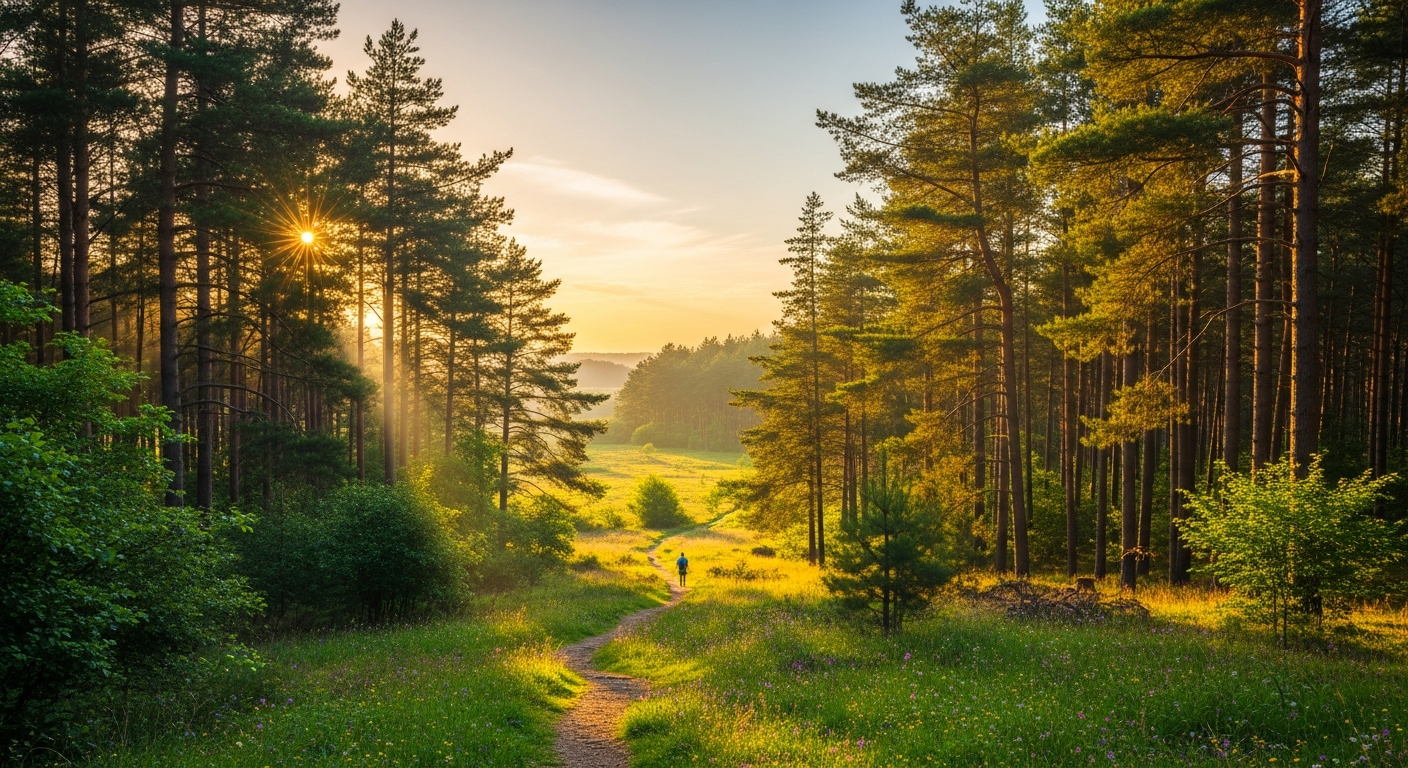
5 best things to do in Brandon West Suffolk UK this Summer

The morning mist was just lifting off the lake at Lynford Arboretum when I first discovered Brandon. I’d driven past this unassuming Suffolk town dozens of times on my way to Norfolk, never once considering it held one of England’s most underrated summer destinations.
That changed when I descended nine meters into a 5,000-year-old flint mine shaft at Grimes Graves, my hands touching the same chalk walls that Neolithic miners had carved with deer antler picks. Brandon, I realized, was Suffolk’s best-kept secret.
Nestled in the Breckland area on the Norfolk-Suffolk border, Brandon offers something increasingly rare: authentic English countryside experiences without the coach tours and gift shop gauntlets. Whether you’ve got a weekend or a full week, £50 or £500, this guide cuts through the planning overwhelm with insider knowledge from someone who’s actually walked these trails, descended into those mines, and found the quiet corners locals treasure.
The beauty of Brandon? It’s perfectly sized for limited vacation time. You can genuinely experience its highlights in a long weekend, and most activities are either free or remarkably affordable.
No crowds fighting for that Instagram shot. No overpriced “heritage experiences” that feel manufactured. Just Thetford Forest’s 50,000 acres of pine-scented trails, prehistoric wonders, and Victorian gardens where you might be the only visitor.
1. Brandon Country Park: Your Gateway to Nature’s Hidden Playground
Start here, and you’ll immediately understand why locals guard Brandon like a secret. I arrived at 8 AM on a June Saturday expecting at least a modest crowd. Instead, I had the Walled Garden entirely to myself for the first hour, watching a family of deer graze near the Tree Cathedral as golden light filtered through the Scots pines.
Brandon Country Park operates on a brilliant three-trail system that solves one of travel’s most frustrating problems: mismatched expectations. The Red Trail (1 mile) gives families with young children or time-pressed visitors the park’s highlights without commitment. You’ll see the restored Walled Garden—a Victorian gem with heritage vegetables and medicinal herbs—and the Tree Cathedral, a living monument where trees form natural arches overhead. Budget 45 minutes if you’re genuinely just walking; an hour if you’ll stop for photos.
The Purple Trail (3.5 miles) is the sweet spot most visitors should choose. It loops through varied landscapes: dense woodland where you’ll likely spot muntjac deer, open heathland with purple heather in late summer, and quiet stretches along the Little Ouse River. I’ve walked it four times now, and each season reveals something different. Summer brings wildflowers and the best chance of seeing hobbies hunting dragonflies over the wetlands. The trail takes 1.5 to 2 hours at a leisurely pace—perfect for a morning activity before lunch in Brandon town.
For serious hikers, the Orange Trail (5.5 miles) extends into deeper forest sections where you’ll encounter fewer people and more wildlife. One crucial insider tip: start any trail early. By 11 AM in summer, the car park fills and the afternoon heat makes longer walks less enjoyable. The park offers completely free parking and entry—a rarity in the UK—so pack a picnic from Brandon’s Co-op (about £8 for a proper spread for two) to maximize value.
Here’s what most guides miss: the Interactive Artist-Led Audio Trail transforms a simple walk into an immersive storytelling experience. Artist Sophie Cullinan created this soundscape specifically for Brandon Country Park, weaving local history, nature observations, and creative prompts into your journey. Access it through the What’s On West Suffolk website before you arrive—mobile signal can be patchy in the forest. It’s free, unique to Brandon, and genuinely enhances the experience rather than feeling gimmicky. I’m typically skeptical of audio tours, but this one had me noticing details I’d walked past three times before: the specific way light filters through larch trees, the Victorian water management systems still visible in the landscape.
What to bring: Comfortable walking shoes (trails can be muddy even in summer after rain), water bottle, camera, and insect repellent. The wetland areas breed midges in warm, still conditions. Time needed: 2-4 hours depending on your chosen trail and whether you’ll picnic.
2. Thetford Forest: An Unforgettable Adventure in England’s Largest Lowland Pine Forest
The moment you enter Thetford Forest on two wheels, you understand why cycling magazines consistently rank it among the UK’s top five forest riding experiences. With over 50,000 acres of Scots pine, Corsican pine, larch, and beech, this is England’s largest lowland pine forest—a wonderfully mysterious landscape that feels remarkably un-English in the best possible way.
High Lodge Thetford Forest Centre should be your starting point. This Forestry England facility provides trail maps (essential), bike rentals (£25-35 for a full day depending on bike type), and the crucial facilities that make a full day outdoors comfortable. Here’s the money-saving hack most visitors miss: book bike rentals online at least 48 hours in advance for a 10% discount. It’s not advertised prominently, but the savings add up for families.
The marked cycling trails cater to every skill level. The family-friendly routes—color-coded green and blue—offer gentle, well-maintained paths perfect for children or casual riders. The 5-mile blue trail loops through classic pine forest with just enough variation to stay interesting. But if you’re a confident mountain biker, the red and black routes deliver proper challenges: technical singletrack, jumps, and bermed corners that justify the “adventure” label.
The local secret? The unmarked trails radiating from the main routes. I discovered this from a Brandon resident I met at High Lodge: if you’re comfortable navigating by map, these quieter paths offer solitude even on summer weekends when the main trails see steady traffic. Download the OS Maps app (£3.99/month, worth it for a trip) to explore confidently without getting genuinely lost.
For walkers and hikers, Thetford Forest offers everything from 30-minute nature strolls to full-day expeditions. The themed trails include a Sculpture Trail featuring contemporary artworks integrated into the landscape—genuinely interesting, not the forgettable “art” some nature reserves install. Summer evenings in the forest possess an almost magical quality: long, golden light filtering through the pines, woodpeckers drumming their final calls, the temperature perfect for walking without overheating.
Wildlife spotting opportunities abound. Deer are almost guaranteed if you’re quiet—I’ve seen red, roe, and muntjac all in a single visit. The forest supports rare species including woodlarks, nightjars (listen for their churring calls at dusk), and goshawks. Bring binoculars if you’re a birder; the forest in summer is genuinely excellent.
Is Go Ape Thetford worth it? This high ropes adventure course divides opinion. At £33 for adults (£25 for children), it’s not cheap. I did it to give you an honest assessment: if you enjoy adventure activities and haven’t done a high ropes course before, yes, it’s worth it. The forest canopy setting is spectacular, and the zip lines are genuinely thrilling. But if you’re budget-conscious or heights aren’t your thing, you’ll get more authentic Brandon experiences elsewhere. Advanced booking is essential in summer—weekends sell out weeks ahead.
Time-saving planning: A half-day forest visit (3-4 hours) gives you a good cycling loop or substantial walk. A full day (6-8 hours) lets you combine activities: morning cycle ride, picnic lunch, afternoon walk on a different trail, perhaps Go Ape if you’re energetic. Pack insect repellent (essential in summer), sun protection, and plenty of water. Parking costs £3 for up to 3 hours, £6 all day at High Lodge—pay by phone or at the machine.
3. Grimes Graves: Step 5,000 Years Back in Time at This Authentic Neolithic Site
Standing at the bottom of a 5,000-year-old flint mine shaft, nine meters underground, my head torch illuminating ancient tool marks in the chalk walls, I experienced something no crowded heritage site has ever delivered: genuine connection to prehistoric life. Grimes Graves isn’t Stonehenge with its managed viewpoints and rope barriers. This is hands-on archaeology where you descend a ladder into actual Neolithic workings, touching the same surfaces Stone Age miners touched.
Grimes Graves represents one of the best-preserved Neolithic flint mining complexes in Europe. Between roughly 3000 and 1900 BCE, prehistoric miners dug over 400 shafts here, some reaching 12 meters deep, to extract the high-quality flint seams buried in the chalk. The landscape today looks like the surface of the moon: crater after crater where ancient shafts have partially collapsed, creating an otherworldly topography unique in England.
The experience of descending into Shaft 1 (the only shaft open to visitors) beats crowded heritage sites for one simple reason: intimacy. Groups are kept small—typically 8-10 people maximum—and you’re given time to explore the underground galleries where Neolithic miners used deer antler picks to extract flint. English Heritage staff (who manage the site) are genuinely knowledgeable, answering questions with enthusiasm rather than scripted responses. When I visited on a Wednesday morning in June, our group was just four people, allowing for an almost private experience.
Planning your visit: Summer opening hours run Thursday to Monday, 10 AM to 5 PM (last entry 4:30 PM). Adult tickets cost £7.70; children (5-17) £4.60; under-5s free. If you’re an English Heritage member, entry is free—worth considering if you’ll visit multiple heritage sites on your trip. The honest trade-off: you must be physically capable of descending and ascending a vertical ladder. It’s not technically difficult, but if you have mobility issues, claustrophobia, or serious fear of heights, this isn’t for you. There’s plenty to see above ground, but the underground experience is the main event.
Time needed: 1-2 hours typically suffices. The above-ground crater field takes 20-30 minutes to explore, the underground visit about 30 minutes, and the small visitor center another 15-20 minutes. This makes Grimes Graves perfect for combining with other Brandon activities in a half-day itinerary.
The budget-friendly approach: If you’re choosing between paid attractions, Grimes Graves offers better value than many Norfolk/Suffolk heritage sites. At £7.70, you’re paying for a genuinely unique experience, not just another historic building. Compare that to some stately homes charging £15+ for what amounts to walking through furnished rooms.
Mid-week mornings deliver the best experience. I’ve visited on a Saturday afternoon (manageable but busier) and a Wednesday morning (near-private). The difference is substantial. School holidays bring more families, which isn’t necessarily negative—the site fascinates children—but you’ll wait longer for your underground tour slot.
4. Lynford Arboretum: The Stunning Secret Garden Locals Treasure
I’ve visited famous gardens across England—Sissinghurst, Hidcote, Wisley—and paid £15-20 for the privilege. Lynford Arboretum, which costs absolutely nothing and sees a fraction of the visitors, rivals them for beauty and surpasses them for peaceful atmosphere. On a July afternoon, I had the lake view entirely to myself for 45 minutes, watching dragonflies patrol the water lilies while a great spotted woodpecker hammered away in the canopy above.
Summer showcases Lynford at its finest. While the rhododendrons peak in late spring (May into early June—still worth catching if you visit early summer), July and August bring different pleasures: the lake at its most beautiful with water lilies blooming, exotic tree species in full leaf creating cathedral-like canopies, and wildflowers carpeting the understory. The Victorian plantings include specimens you won’t see elsewhere: rare conifers, unusual deciduous trees from Asia and North America, and carefully composed vistas designed to surprise and delight.
The walking experience is blissfully simple: roughly 1.5 miles of easy, well-maintained paths loop around the lake and through the planted areas. There’s no difficult terrain, making this genuinely accessible for families with young children, elderly visitors, or anyone seeking a gentle stroll rather than a hike. I’ve walked it in 40 minutes when pressed for time and lingered for 2.5 hours when I wanted to photograph and observe wildlife.
The secret picnic spot: Follow the main path clockwise around the lake until you reach the small peninsula jutting into the water on the western shore. A fallen log provides natural seating, and the view across the lake toward the Victorian boathouse is picture-perfect. I’ve picnicked here three times and never encountered another soul using this spot.
Finding Lynford Arboretum requires attention—it’s slightly tricky. From Brandon, take the A1065 north toward Mundford. After about 3 miles, turn right onto Lynford Road (signposted). Continue for approximately 1.5 miles; the arboretum entrance is on your right. The lack of prominent signage means many visitors drive past, which maintains the peaceful atmosphere locals treasure. Parking is free but limited to perhaps 15-20 cars. I’ve never found it full, even on sunny weekends, but arrive before 11 AM to guarantee a space.
What to bring: Picnic supplies (no facilities on-site), camera (the photography opportunities are exceptional), comfortable walking shoes, and perhaps a tree identification guide if you’re interested in the botanical specimens. The arboretum is managed by Forestry England but feels wonderfully uncommercialized—no visitor center, no café, no gift shop. Just a beautiful landscape to explore at your own pace.
Why this beats more famous gardens: Beyond the obvious cost advantage (free versus £15-20), Lynford offers something increasingly rare: solitude. Famous gardens are lovely but often crowded, with visitors jostling for photos and the constant background hum of other people. Lynford gives you space to actually experience nature rather than just photograph it. The peaceful atmosphere is genuinely restorative in a way that crowded attractions cannot match.
5. Brandon Heritage Trail: Authentic Local Life and Unexpected Charms
Most visitors treat Brandon town itself as merely a base for forest adventures, missing the authentic local character that makes this place special. The compact town center reveals a history most people don’t expect: Brandon was once the “flint capital of the world,” supplying gun flints to armies across Europe and beyond. That industrial heritage has left architectural traces and stories that the self-guided Flint Heritage Trail brings to life.
The Flint Heritage Trail is a free, self-paced walking tour that takes 45 minutes to an hour depending on how thoroughly you explore. Pick up a trail map from the library on High Street or download it from West Suffolk Council’s website. The trail connects 15 sites around town, each marked with interpretation panels explaining Brandon’s unique history. You’ll see flint-knapper’s cottages, the Heritage Centre (open limited hours—check before visiting), and buildings constructed entirely from knapped flint, showcasing the material that made Brandon prosperous.
What most guides won’t tell you: Brandon’s flint industry continued into the 20th century, only truly ending in the 1960s. The last traditional flint knapper in England, Fred Avery, worked in Brandon until his death in 2012. This isn’t ancient history—it’s living memory for many residents, which makes conversations with locals particularly interesting if you show genuine curiosity.
Market days occur on Saturdays in the Market Square, though honestly, this is a modest affair compared to larger towns. The appeal isn’t volume but authenticity: local producers, genuine bargains on everyday items, and the opportunity to observe actual local life rather than a tourist-oriented experience. Best stalls vary seasonally, but the vegetable vendor (southwest corner) consistently offers better prices and fresher produce than supermarkets.
Where locals actually eat: The Flintknappers Arms on The Street offers proper pub food without tourist markup (mains £10-15, portions generous). For lunch or afternoon tea, Blooms Café on High Street serves excellent sandwiches and cakes (budget £6-8 for lunch). The honest assessment: Brandon isn’t a foodie destination. You’re here for nature and heritage, not Michelin stars. But these establishments provide good value and authentic atmosphere.
The splurge-worthy choice: If you want one nice meal, The Breckland Lodge Hotel’s restaurant offers the most refined dining in Brandon (mains £16-24). I had an excellent locally-sourced lamb dish there, though the setting and service were more memorable than groundbreaking cuisine.
Practical town center tips: Free parking is available on High Street (2-hour limit) and in the small car park behind the library (4-hour limit). Most shops close by 5 PM; Sunday opening is limited. Brandon operates on genuine small-town rhythms, which is part of its charm but requires planning if you need specific services.
Small-town etiquette: Brandon residents are friendly but reserved in typical Suffolk fashion. A smile and “good morning” go a long way. If you’re photographing buildings, be respectful of private residences. Ask before photographing people. These courtesies seem obvious but are often forgotten by visitors treating everywhere like a theme park.
Making the Most of Your Brandon Summer
Brandon works because it doesn’t try too hard. There are no manufactured “experiences,” no influencer-bait installations, no heritage sites that feel more like theme parks than history. What you get instead is authentic English countryside at its summer finest: ancient forests where you can cycle for hours without seeing crowds, prehistoric sites you can actually touch, Victorian gardens maintained for beauty rather than profit, and a small town that remains genuinely itself.
The practical magic of Brandon is efficiency. In a long weekend, you can genuinely experience everything in this guide without rushing. Friday afternoon: arrive, explore Brandon town and the heritage trail, dinner at The Flintknappers. Saturday: morning at Brandon Country Park, afternoon cycling in Thetford Forest, evening picnic at Lynford Arboretum. Sunday: Grimes Graves mid-morning, final forest walk, drive home. You’ve maximized your limited vacation time, spent perhaps £100-150 total beyond accommodation and meals, and experienced corners of Suffolk most visitors never discover.
Summer in Brandon means long daylight hours (sunset after 9 PM in June and July), warm but rarely oppressive temperatures, and nature at peak abundance. The trade-off? July and August bring more visitors than other months, though “crowded” in Brandon means you might encounter a dozen other people on a forest trail rather than complete solitude. If you can visit in June or early September, you’ll find even better value in the sweet spot between seasons.
Your next step is simple: Check accommodation availability in Brandon or nearby Thetford (Brandon’s options are limited; Thetford offers more variety at similar prices). Book any paid activities in advance if visiting weekends or school holidays. Download trail maps and the Lynford Arboretum directions.