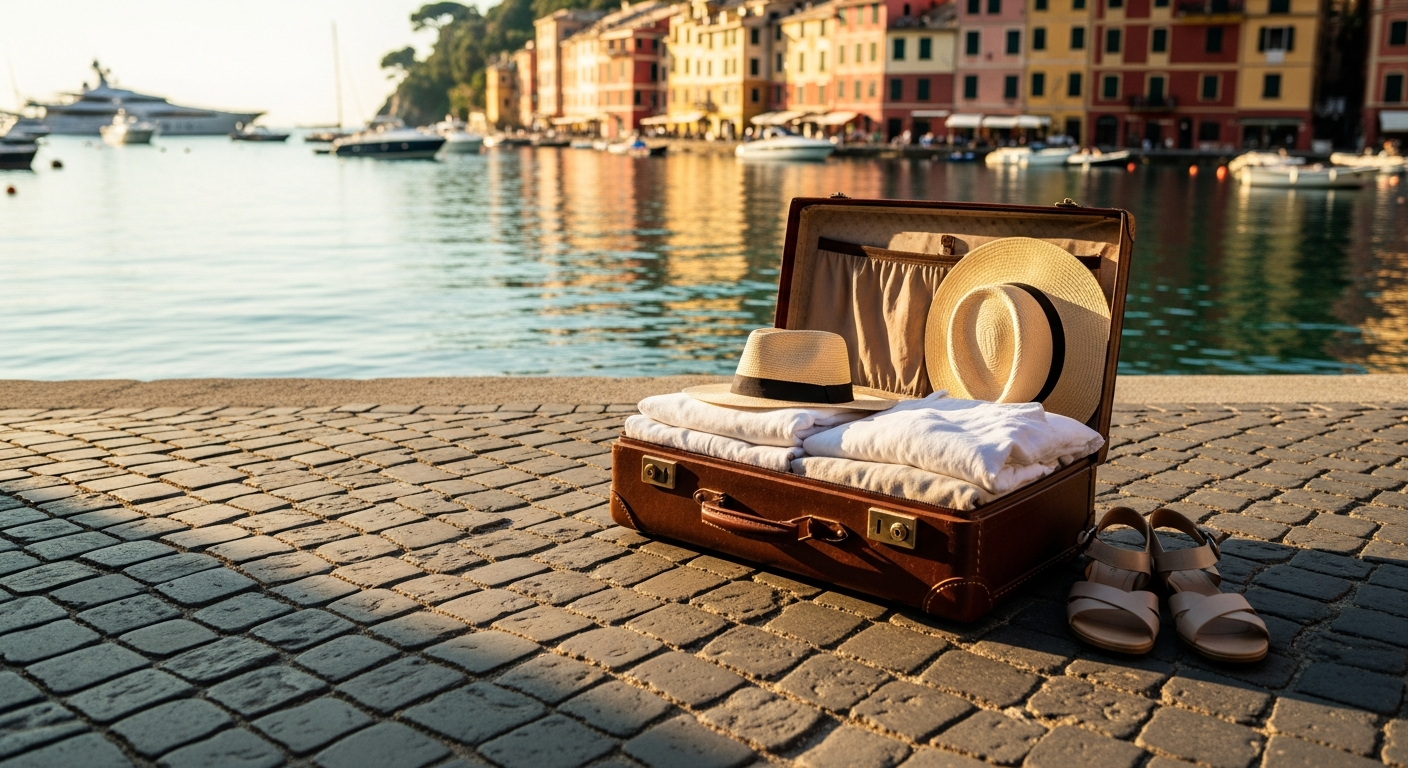
Ultimate Portofino Packing List 2026

I still remember standing on Portofino’s Piazzetta at sunset, watching the golden light paint those iconic pastel buildings in shades of peach and rose.
The scene was breathtaking—until I glanced down at my feet, already blistered and screaming after just three hours in those “cute” leather sandals I’d convinced myself would work.
As I limped toward the harbor-side restaurant I’d been dying to try, I realized I was also woefully underdressed among the effortlessly chic Italians in their flowing linens and statement accessories. That trip taught me everything about what NOT to pack for Portofino.
The truth is, packing for this jewel of the Italian Riviera isn’t like packing for any other beach destination. You need versatility that transitions from steep cobblestone climbs to yacht club elegance, from hidden hiking trails to Michelin-starred dining—often within the same afternoon.
Get it wrong, and you’ll spend your precious vacation time uncomfortable, self-conscious, or both. Get it right, and you’ll blend seamlessly into the sophisticated coastal atmosphere while actually enjoying every moment.
This guide isn’t about overpacking or bringing your entire wardrobe. It’s about strategic choices that maximize your limited suitcase space while ensuring you’re prepared for everything Portofino throws at you—from its deceptive microclimates to its dual personality as both fishing village and luxury playground.
Understanding Portofino’s Unique Packing Challenges

Why Portofino Isn’t Your Typical Beach Destination
Here’s what catches most travelers off-guard: Portofino isn’t primarily a beach town. Yes, there’s water everywhere and boats dotting the harbor, but this is a vertical village built into steep hillsides with narrow cobblestone streets that climb sharply from the waterfront. You’ll walk more—and more steeply—than you expect.
The village demands a wardrobe that handles dramatic contrasts. One minute you’re hiking the trail to Castello Brown, sweating through the Mediterranean heat and navigating uneven stone steps. An hour later, you’re sipping Aperol spritzes at a harborside café where elegance isn’t optional—it’s expected. That evening, you might dine at a restaurant where locals arrive in flowing linens and delicate gold jewelry, looking effortlessly put-together despite the 28°C heat.
The weather here operates on its own rules too. The Ligurian coast creates microclimates that differ significantly from other Italian regions. Sea breezes can drop temperatures by 5-7°C within minutes, especially in the evening. Morning fog isn’t uncommon even in summer, burning off by 10 AM to reveal blazing sunshine. I learned this the hard way in June 2023, shivering through breakfast in a sleeveless dress before roasting by lunch in the same outfit.
The hidden challenge nobody warns you about? Most visitors park in nearby Santa Margherita Ligure or Camogli and walk or take the bus to Portofino proper. That means hauling your beach bag, camera, and everything else up and down hills for 20+ minutes before you even reach the village center.
What Makes 2026 Different: Updated Travel Considerations
Post-pandemic travel patterns have fundamentally shifted how Portofino operates. The village now implements crowd management during peak season, with visitor caps on certain days. This means smaller, more intimate experiences—but also means you’ll stand out more if you’re not dressed appropriately. The “blend in with the masses” strategy no longer works when there are fewer masses to blend with.
Sustainability initiatives across the Italian Riviera have introduced new considerations for 2026. Many accommodations now charge fees for single-use plastics, encouraging reusable water bottles and shopping bags. Some beaches have banned certain chemical sunscreens to protect marine ecosystems. Pack reef-safe SPF 50+ sunscreen (look for zinc oxide or titanium dioxide as active ingredients) or plan to purchase it locally at Italian pharmacies, where options like Bioderma and La Roche-Posay dominate.
Tech requirements have evolved too. Italy standardized on Type L outlets (three-pronged) in 2025, though older buildings still use Type C and F. A universal adapter is non-negotiable. More importantly, many restaurants and hotels now operate primarily through apps—digital menus, contactless payment, reservation systems. Ensure your phone works internationally and consider an Italian SIM card or international plan.
Climate-wise, 2026 continues the warming trend. June through August now regularly hit 30-32°C, with July and August particularly humid. The “secret” shoulder seasons of May and September offer more comfortable temperatures (21-26°C) with significantly fewer crowds—and require different packing strategies.
The Perfect Timing: Seasonal Packing Variations
Peak summer (June-August): Expect temperatures of 28-32°C with high humidity. Pack exclusively lightweight, breathable fabrics. Every item should dry quickly because sea air and humidity mean nothing truly dries overnight. Prioritize sun protection—wide-brimmed hats, SPF 50+ sunscreen, and UV-protective sunglasses aren’t optional accessories; they’re survival gear. The Ligurian sun reflects off the water and pale buildings, intensifying exposure.
Shoulder seasons (May and September): These are the secret windows when Portofino reveals its authentic charm. Temperatures range from 21-26°C, perfect for layering. Pack a lightweight cardigan or linen blazer for evening breezes. May brings occasional rain showers—brief but intense—so a packable rain jacket earns its suitcase space. September offers warm water temperatures (still 22-24°C) with fewer crowds and lower accommodation prices.
Quick reference: If daytime temperatures exceed 28°C, you’ll want exclusively natural fabrics (linen, cotton, silk). Between 22-28°C, you can mix in lightweight synthetics. Below 22°C (rare but possible in May evenings), add one light sweater or jacket to your capsule.
The Essential Portofino Capsule Wardrobe

The Foundation Pieces That Do All the Heavy Lifting
Natural fabrics aren’t just an aesthetic choice in Portofino—they’re a necessity. Synthetic materials trap heat and moisture, leaving you uncomfortable and, frankly, smelly by midday. Linen, cotton, and silk-blend pieces breathe with you, dry faster, and actually look better slightly wrinkled (a good thing, since wrinkles are inevitable in coastal humidity).
Wide-leg linen trousers are my non-negotiable foundation piece. Choose them in beige, soft white, or terracotta. The wide leg allows air circulation while still looking polished enough for upscale venues. I wore mine five times in seven days—paired with different tops, they created completely different looks. They’re forgiving after indulgent Italian meals, comfortable for walking, and transition seamlessly from daytime exploration to evening dining.
An oversized cotton poplin shirt in white or soft blue does triple duty: beach cover-up over your swimsuit, casual daytime top tucked into trousers, or layered open over a slip dress for evening. The oversized cut means it doesn’t cling in humidity. Roll the sleeves for a more relaxed vibe or wear them long for sun protection.
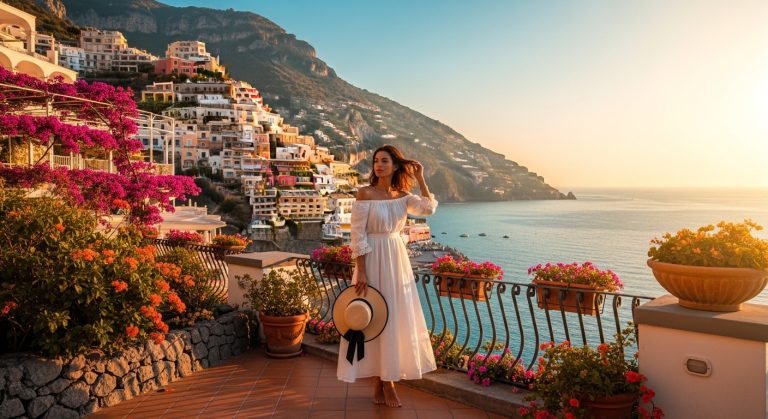
Your breathable midi dress should fall in that magical length between knee and ankle—long enough to feel elegant, short enough to navigate stairs comfortably. Choose colors that echo Portofino’s palette: ceramic blue (like the painted shutters), terracotta (like the roof tiles), or soft peach (like the buildings at sunset). These shades photograph beautifully against the village’s pastel backdrop and feel intentionally chosen rather than random.
The strategic color palette matters more than you’d think. Stick to terracotta, Mediterranean blues, soft pastels (blush, sage, cream), and classic neutrals (white, beige, tan). These colors complement each other endlessly, meaning five tops and three bottoms genuinely create 15+ outfit combinations. Avoid all-black outfits—they absorb heat mercilessly and create harsh contrast against Portofino’s soft, sun-bleached aesthetic.
Statement Pieces for Those Unforgettable Moments
The off-shoulder silhouette dominates Italian coastal style for good reason. It’s romantic without being fussy, shows just enough skin to stay cool, and photographs gorgeously. An off-shoulder top in white linen or a soft floral print works for daytime when paired with your wide-leg trousers. Add statement earrings and wedge espadrilles, and the same top transitions to evening.
Look for pieces with embroidered details—they channel Italian artisan craftsmanship and add visual interest to simple silhouettes. I found a white cotton top with delicate floral embroidery at the neckline that became my favorite piece. It felt special without trying too hard, and the handcrafted details sparked conversations with locals who appreciated the nod to traditional Italian textiles.
Here’s the red accent strategy that transforms good photos into stunning ones: Portofino’s buildings are painted in soft pastels—pink, yellow, peach, cream. Red creates perfect visual contrast. One red piece—cherry-print skirt, bold red sunglasses, statement red bag, or coral-red sandals—makes you pop against the pastel backdrop. Fashion influencers know this secret; that’s why every stunning Portofino photo features a red element somewhere in the frame.
Your silk-crepe essential handles the trickiest requirement: elegant enough for upscale restaurants, lightweight enough for 30°C heat. A slip dress in a solid neutral (champagne, sage, or dusty blue) or a matching silk co-ord set (crop top and midi skirt) works beautifully. Silk-crepe drapes elegantly, resists wrinkles better than pure silk, and packs incredibly small. I rolled mine into a tube the width of a water bottle.
What NOT to Pack (Save That Suitcase Space!)
Heavy denim is a mistake I see constantly. Jeans take forever to dry in humid coastal air, feel stifling in heat, and look out of place among Portofino’s breezy linens. If you absolutely must bring denim, limit it to one pair of lightweight chambray or linen-blend jeans for the plane journey.
Anything requiring ironing fights a losing battle. Between humidity, sea air, and suitcase compression, wrinkles are inevitable. Embrace them. In fact, slightly rumpled linen and cotton look authentically relaxed—it’s part of the Mediterranean aesthetic. Pack wrinkle-resistant fabrics and accept that crisp perfection isn’t the goal.
All-black outfits absorb heat, show sweat stains, and clash tonally with Portofino’s colorful, sun-drenched atmosphere. Black works for evening shoes or a bag, but head-to-toe black makes you look like you’re heading to a funeral, not a coastal paradise.
More than two pairs of shoes per week is excessive. Yes, really. You need comfortable walking shoes, one dressy option, and beach-appropriate footwear. That’s it. Every additional pair takes valuable suitcase space better used for that extra linen dress or statement accessory.
Footwear Strategy: Conquering Cobblestones Without Sacrificing Style

The Non-Negotiable Comfortable Walking Shoes
This is where trips succeed or fail. Portofino’s cobblestones are uneven, worn smooth by centuries of foot traffic, and often slippery when wet. The village climbs steeply from the harbor—you’ll navigate stairs, inclines, and narrow pathways constantly. Hidden gem locations like the trail to San Fruttuoso require 20+ minutes of walking from the nearest parking area.
I watched a woman in stiletto heels attempt the walk from the parking area to the Piazzetta. She made it about 200 meters before giving up, nearly twisting her ankle twice. Don’t be that person.
The perfect walking shoe formula combines three elements: cushioned footbed (your feet will thank you after 15,000+ steps daily), ankle support (straps or a secured fit that prevents sliding), and neutral tones that pair with everything (white, tan, blush, or soft gray).
Leather sneakers work brilliantly—think minimalist styles in white or tan leather. They’re comfortable enough for all-day wear, smart enough for casual restaurants, and surprisingly versatile. I wore white leather sneakers with both my linen trousers and midi dresses. The key is keeping them clean; bring a small pack of wet wipes to spot-clean daily.
Supportive sandals need actual arch support and cushioned footbeds. Brands like Birkenstock, Vionic, and Naot aren’t the most glamorous, but they’re engineered for walking. Choose styles with ankle straps rather than slip-ons—your feet swell slightly in heat, and secured sandals prevent blisters. For those with bunions or wide feet, look for sandals with adjustable straps and roomier toe boxes. Trust me, fashion means nothing when you’re limping.
Break them in before you go. This is non-negotiable. Wear your walking shoes for at least two weeks before departure, including one full day of 10,000+ steps. New shoes, no matter how well-designed, need time to mold to your feet. Breaking them in during your vacation wastes precious time and causes preventable pain.
The One Dressy Option That Actually Works
You need exactly one pair of dressier shoes for evening dining and special moments. The key is choosing something elevated enough to feel special but practical enough to actually wear on Portofino’s terrain.
Wedge espadrilles or block-heeled sandals strike this balance perfectly. The wedge or block heel provides stability on cobblestones that stilettos simply cannot. Stay under 2 inches—any higher and you’re fighting gravity on those inclines. Look for natural materials: raffia, woven details, canvas, or soft leather. These materials feel intentionally coastal rather than trying-too-hard formal.
I wore tan raffia wedge espadrilles with ankle ties for every dinner. At 1.5 inches, they gave me height without instability. The ankle ties added a romantic touch that photographed beautifully, and the neutral tone paired with everything from my terracotta midi dress to white linen trousers.
Style them throughout the day, not just evenings. Wedge espadrilles work for harbor strolls, afternoon aperitivo, and sunset watching. They’re that rare dressy shoe you’ll actually wear multiple times rather than carry around “just in case.”
Beach and Boat Footwear
Here’s what nobody tells you: Portofino’s beaches aren’t sandy. They’re rocky, pebbly, and sometimes require navigating slippery stones to reach the water. Flip-flops won’t cut it.
Slip-on waterproof sandals with grip soles are essential. Think sporty water shoes or fisherman-style sandals that can get wet without damage. Brands like Teva, Keen, or even Crocs (the classic clogs, not the fashion collaborations) work perfectly. They’re not glamorous, but they’re functional. Wear them for beach days, boat excursions to Cinque Terre or San Fruttuoso Abbey, and any water-adjacent activities.
The compact flip-flop debate: I bring one pair of simple flip-flops exclusively for showering in shared facilities or walking around accommodation. They take minimal space and serve a specific purpose. But for actual beach time? They offer zero support on rocky terrain and slip dangerously on wet stones.
Accessories That Elevate Your Portofino Experience

Sun Protection Essentials (Function Meets Fashion)
The Ligurian sun is deceptively strong. You’re surrounded by water that reflects UV rays, pale buildings that bounce light, and clear skies that offer little natural shade. Sunburn isn’t just uncomfortable—it ruins vacation plans.
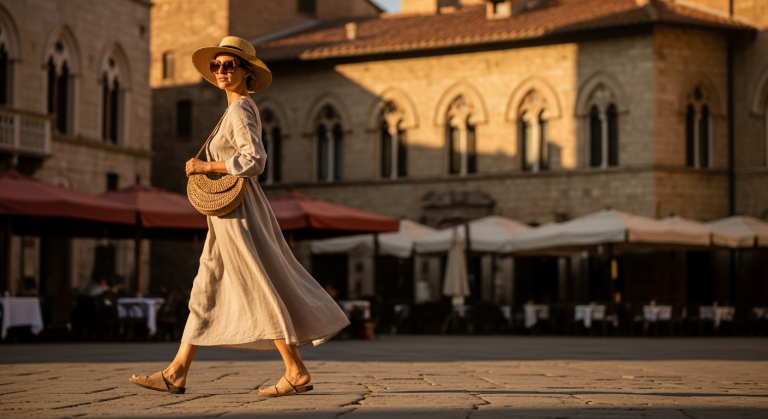
The statement sun hat serves dual purposes: protecting your face, neck, and shoulders while adding instant Italian Riviera style. Wide-brimmed raffia hats (at least 3-4 inches of brim) provide maximum coverage. Look for packable options that survive suitcase compression—many now include internal wire brims that reshape easily.
Cherry-print details, embroidered flowers, or playful embellishments are very 2026. I saw countless travelers in embroidered bucket hats, which work beautifully if wide-brimmed styles aren’t your preference. The key is choosing something substantial enough to actually block sun, not just look cute.
Sunglasses require two features: UV 400 protection (non-negotiable for eye health) and polarized lenses. Polarization cuts glare from water and helps you actually see where you’re walking on bright, reflective surfaces. Oversized frames in tortoiseshell or bold red make a statement while providing better coverage. I wore oversized red-framed sunglasses that became my signature accessory—they appeared in every photo and tied my outfits together.
The scarf secret is something I learned from watching Italian women. A lightweight silk or cotton scarf (roughly 70x70cm) serves multiple purposes: draped over shoulders for sun protection in sleeveless dresses, tied around your ponytail for a chic Audrey Hepburn moment, wrapped around your bag handles for a pop of color, or laid across your lap during boat rides. Choose a pattern that includes your accent colors—florals, geometric prints, or solid jewel tones all work.
Bags for Every Portofino Scenario
You need three bags maximum. More than that, and you’re overthinking it.
Crossbody for exploring keeps your hands free for photographing, climbing stairs, and eating gelato (priorities). Choose leather or woven raffia in neutral tones—tan, natural, or cognac brown. It must fit your phone, wallet, sunscreen stick, lip balm, and a small water bottle. Adjustable straps are crucial; you’ll want to wear it across your body for security and comfort.
I used a tan woven crossbody with leather trim daily. The natural material felt appropriately coastal, and the neutral color paired with every outfit. Look for interior organization—multiple pockets prevent the dreaded bag-dumping search for your phone.
Beach tote with purpose needs structure. Floppy canvas bags look cute but become frustrating when you’re trying to find anything inside. Choose a tote with a flat bottom, interior pockets, and a zip closure (for boat trips and crowded areas). Natural materials—canvas, woven straw, or raffia—complement the coastal aesthetic better than synthetic fabrics.
Size it to hold beach essentials (towel, sunscreen, water bottle, book, change of clothes) but not so large it becomes unwieldy. You’ll likely carry this from parking areas to beaches, so manageable weight matters. Many travelers use their beach tote as a secondary carry-on for flights, maximizing its utility.
Evening clutch or small shoulder bag elevates dinner outfits. Choose something structured in leather, woven raffia, or beaded fabric. It should fit your phone, cards, lipstick, and nothing else. I brought a small tan leather crossbody that converted to a clutch by tucking the strap inside—dual functionality in one piece.
Jewelry and Finishing Touches
Heat, humidity, salt water, and chlorine destroy costume jewelry. Those trendy gold-plated pieces will tarnish within days. Stick to solid metals or leave jewelry at home.
Minimal, delicate gold pieces work best: simple gold hoops or studs, one delicate necklace, perhaps a thin bangle. These add polish without overwhelming your breezy aesthetic. I wore the same small gold hoops and simple pendant necklace daily—they required zero thought and always looked appropriate.
One statement piece for evening transformation changes your look dramatically. Statement earrings, a bold cuff bracelet, or a layered necklace takes your slip dress from daytime simple to evening special. Choose one piece that makes you feel confident and leave the rest of your jewelry box at home.
The authentic local touch: Consider purchasing Ligurian coral jewelry once you arrive. Red coral is traditional to this region, and buying a piece from local artisans supports the community while giving you a meaningful souvenir. Small coral stud earrings or a delicate coral pendant cost €40-80 and will always remind you of this trip.