Hiddens Gems of Lake Como 2026

I’ll never forget the morning I stumbled into a tiny café in Dervio, Lake Como’s northernmost fishing village, around 7 AM. The owner—a woman named Claudia who’d been running the place for thirty years—looked genuinely surprised to see a tourist. She poured me an espresso and pointed to the terrace, where three local fishermen were arguing passionately about football while mending nets. The sunrise over Monte Legnone painted the lake gold, and I had the entire view to myself. No influencers. No tour groups. Just the real Lake Como, the one that exists beyond the Instagram carousels of Bellagio and Varenna.
This is what you’re actually looking for, isn’t it? Not another recycled list of the same five towns every travel blog mentions. You’ve got limited vacation days, a realistic budget, and you’re drowning in contradictory advice about Lake Como. Should you splurge on that €400-per-night hotel in Bellagio? Will you spend your entire trip stuck in crowds? And most importantly—are you going to miss the authentic experiences while everyone else is taking the same photos at the same viewpoints?
Here’s what I’m giving you: the Lake Como that locals actually know. The villages where you’ll be the only foreigner at dinner. The hiking trails that don’t appear in guidebooks. The exact ferry routes that unlock secret corners of the lake. Real prices, honest trade-offs, and practical logistics from someone who’s spent months exploring every corner of this stunning region. By the end of this guide, you’ll have a complete plan for 2-5 days that maximizes your time and budget while avoiding the tourist circus entirely.
Why 2026 is the Perfect Year to Discover Lake Como’s Hidden Side

The Over-Tourism Shift (What’s Changed)
Bellagio implemented visitor reservation systems in late 2025, and it’s changed everything. The town that once welcomed unlimited day-trippers now caps arrivals during peak season, and honestly? It’s pushing savvy travelers exactly where they should have been going all along—to the authentic villages that never needed Instagram fame to be spectacular.
The ferry system expanded routes to northern lakeshore towns in 2025, making places like Dervio and Corenno Plinio genuinely accessible without a car for the first time. Meanwhile, Villa Carlotta in Tremezzo now requires timed-entry tickets that sell out weeks in advance. The message is clear: Lake Como’s most famous spots are actively discouraging spontaneous visits, which means the hidden gems are more appealing than ever.
Best Times to Visit in 2026 (Avoid the Crowds)
April 15 to May 31 is perfection. The wisteria blooms cascade over villa walls, temperatures hover around 20°C (68°F), and you’ll pay 30-40% less for accommodation than July rates. I’ve visited in both peak summer and late April—the difference is staggering. In April, you can walk into restaurants without reservations and actually have conversations with locals who aren’t exhausted from tourist season.
September 15 to October 20 is the other sweet spot. The lake temperature is still warm enough for swimming (around 22°C/72°F), the hiking trails offer stunning fall colors, and Italian families have returned home after August holidays. Avoid the first two weeks of August entirely—this is when Italians take their annual vacation, and prices skyrocket while availability plummets.
Skip Easter week (April 18-21, 2026) and Italian Liberation Day weekend (April 25)—hotels triple their rates and locals flood the lake. Similarly, avoid June 2 (Italian Republic Day) and the entire first week of August (Ferragosto preparations).
Getting Around Like a Local
The dirty secret about Lake Como: renting a car unlocks everything. Yes, the ferries are romantic and the coastal road (SS340) is narrow and occasionally terrifying. But here’s the reality—those hidden villages I’m about to reveal? Most are uphill from ferry stops, requiring either expensive taxis or exhausting climbs with luggage.
I rent from AutoEuropa in Como city (€45-60/day for a compact car, book three months ahead for best rates). The SS340 coastal road is one-way in many sections with minimal pullouts—drive it clockwise (Como to Colico) for easier navigation and better views. Most importantly, drive before 10 AM or after 4 PM to avoid the worst traffic.
Ferry hack that saves €30/day: The unlimited day pass (€15-18 depending on zones) only makes sense if you’re doing four or more crossings. For hidden gem exploring, you’re better off buying single tickets (€2.60-€6.80 per crossing) because you’ll be driving between northern villages. The C10 ferry route from Colico to Piona Abbey is the most underrated—stunning mountain views and zero tourists.
The Secret Northern Villages: Where Locals Escape

Dervio—Lake Como’s Best-Kept Secret
When I asked my Airbnb host in Varenna where she goes to escape tourists, she didn’t hesitate: “Dervio, always Dervio.” This fishing village 20 minutes north of Varenna has everything the famous towns offer—mountain backdrop, lakeside promenades, excellent restaurants—with one crucial difference: you’ll be the only tourist.
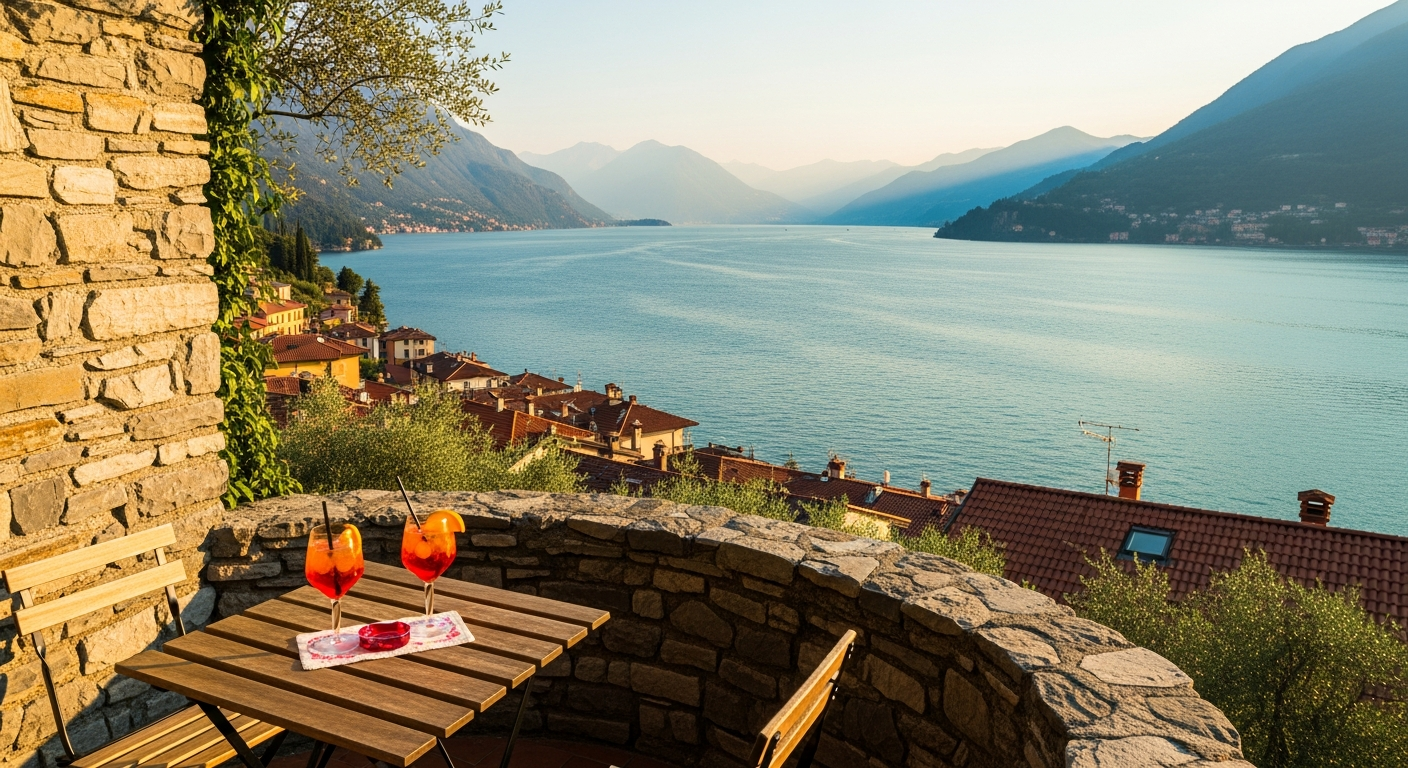
The Lido di Dervio beach club (€8 entry, includes sunbed and umbrella) is where local families spend summer weekends. The water is clearer here than Bellagio because there’s less boat traffic, and the beach bar serves €6 Aperol spritzes with free focaccia—half the price of tourist-trap alternatives. Behind the lido, a trail leads to Cascata del Bregai, a hidden waterfall that requires a steep 30-minute climb but rewards you with natural pools perfect for cooling off.
Eat at Osteria Il Caminetto (Via Martiri della Libertà 12)—family-run for three generations, €12-18 for primi, €16-24 for secondi. Order the lavarello (whitefish) caught that morning from the lake, served simply with lemon and olive oil. They don’t take reservations for parties under four, so arrive by 7:30 PM or prepare to wait. The alternative is Ristorante Beccaccino (lakeside location, slightly higher prices at €18-28 for mains, but the sunset views justify it).
Budget accommodation: B&B La Meridiana (€75-95/night for doubles with breakfast, book via their website not Booking.com for 10% discount). Mid-range: Hotel Splendido Dervio (€120-160/night, recently renovated, lake views from most rooms).
Corenno Plinio—A Medieval Time Capsule
This isn’t a town—it’s barely a hamlet. Maybe 50 permanent residents, a cluster of stone buildings clinging to the lakeshore, and a 14th-century castle that looks like it grew organically from the rock. I drove past it twice before realizing the tiny parking area (free, holds maybe 10 cars) was the only access point.
The Chiesa di San Tommaso di Canterbury contains 14th-century frescoes that would draw massive crowds in Tuscany but here remain blissfully unguarded. The church is usually unlocked 9 AM-6 PM, free entry, no one watching. The stone pathways between buildings are so narrow you can touch both walls simultaneously—bring a wide-angle lens if you’re photographing.
The secret swimming spot: follow the path north from the castle for 200 meters until you reach a small rocky beach (no sign, locals just know). The water depth drops quickly, perfect for diving, and you’ll likely have it entirely to yourself on weekdays. Best sunset viewpoint: climb to the castle ruins (free access, slightly sketchy stone steps) 45 minutes before sunset. The view encompasses the entire central lake basin with mountains framing both sides.
Visit as a day trip from Dervio (5 minutes by car) or Bellano (10 minutes). There’s no accommodation in Corenno Plinio itself—it’s too small—but that’s precisely what preserves its magic.
Bellano and the Orrido Gorge
Bellano gets overlooked because it’s industrial compared to picture-perfect Varenna. But locals love it for exactly that reason—it’s a real working town where tourism is supplementary, not the entire economy. The Wednesday morning market (8 AM-1 PM, Piazza San Giorgio) sells everything from fresh mozzarella to hardware supplies, with maybe two tourists among 200 shoppers.
The Orrido di Bellano gorge is the main attraction (€5 entry, €3.50 with Como Card), but timing is everything. Arrive right at 10 AM opening or after 4 PM to avoid tour groups. The walkway through the gorge is genuinely spectacular—rushing water, dramatic rock formations, excellent lighting for photos—but it’s only 300 meters long, so the experience lasts 20-30 minutes maximum. Not worth it if there’s a crowd.
For the ultimate risotto al pesce persico (perch risotto, Lake Como’s signature dish), go to Trattoria Sergio (Via Manzoni 57, €14 for the risotto, €20-25 for full meal with wine). Sergio himself still cooks most nights, and his version uses fish caught from the lake that morning. The texture should be slightly loose (all’onda—”wavy”), not stiff like Spanish paella. If it’s firm, it’s overcooked.
Hidden beach access: from the Orrido parking area, walk south along Via Tommaso Grossi for 400 meters until you see a small gate (usually open) leading to rocky lakeside access. Locals swim here because it’s free, unlike the private lidos.
Off-the-Beaten-Path Experiences in Popular Towns

Varenna’s Secret Corners (Beyond the Instagram Spots)
Everyone photographs Varenna’s colorful buildings from the ferry. What they miss is the Sentiero del Viandante, the ancient walking path that connected lakeside villages before roads existed. The Varenna section starts just past Villa Monastero and climbs through olive groves to the village of Esino Lario (2 hours uphill, moderate difficulty). You don’t need to do the entire hike—even 30 minutes up rewards you with views that make the famous Varenna waterfront look ordinary.
The Fiumelatte (literally “milk river”) is Italy’s shortest river at 250 meters, flowing only March through October when snow melts. The tourist trap is the marked viewpoint near the main road. The local secret: follow Via al Fiume past the viewpoint for another 200 meters until the path narrows. Here, you can actually reach the water and feel the spray. The river appears milky-white because of the force and foam—genuinely unique.
For authentic aperitivo, skip the lakefront restaurants where €12 spritzes come with three sad potato chips. Instead, walk to Bar Il Molo (Via XX Settembre 29, locals call it “Nilus’s place” after the owner). €7 Aperol spritz, and the complimentary snacks actually constitute dinner: olives, focaccia, cheese, salami. Arrive around 6:30 PM for the best selection before locals clean it out.
Villa Monastero’s gardens (€10 entry, open 9:30 AM-7 PM peak season) are spectacular but crowded by 11 AM. The secret: enter at 9:30 AM opening or after 5 PM. The late afternoon light makes the lakeside path magical, and you’ll photograph the gardens without strangers in every frame. The best photo spot isn’t the main terrace—it’s the small bench near the boat house, facing north toward the mountains.
Como City’s Authentic Neighborhoods
The Duomo and lakefront promenade are fine, but real Como life happens in Borgo Vico, a neighborhood 15 minutes’ walk from the tourist center. This is where Como residents actually live—family-run alimentari (grocery stores), neighborhood bars where regulars argue about politics, and zero English menus.
Mercato di Como (Piazza San Rocchetto, Tuesday and Thursday 8 AM-1 PM, Saturday all day) is where locals shop for produce, cheese, and fresh pasta. It’s not quaint or photogenic—it’s utilitarian and slightly chaotic, which is exactly why it’s authentic. Buy fresh ravioli from the pasta vendors (€8-12/kg, they’ll cook it for you if you’re staying in an Airbnb with a kitchen).
The Como-Brunate funicular is famous, but everyone stops at Brunate village. The local secret: from Brunate, follow the red-and-white trail markers uphill for 45 minutes to Faro Voltiano (Volta Lighthouse). The 360-degree view encompasses the entire lake, the Alps, and on clear days, Milan’s skyline. The trail is well-maintained but steep—proper hiking shoes required. At the top, Baita Carla refuge serves polenta and cheese (€10-14 for a huge portion) with the best view in the region.
Evening activity: Join the passeggiata (evening stroll) along Lungolario Trento starting around 6 PM. This is when Como residents walk, see friends, and show off new outfits. You’re not watching a performance—you’re participating in daily Italian life. Stop at Gelateria Lariana (Via Boldoni 2) for gelato (€2.50-4 depending on size, the pistachio is legitimately excellent).
Ultimate Food & Wine Experiences (Tourist-Trap Free)

Authentic Restaurants Locals Actually Recommend
Northern lakeshore dining is a revelation because restaurants cater to locals, not tour groups. Prices are 30-40% lower than Bellagio, quality is often higher, and you’ll actually taste traditional preparation methods instead of tourist-friendly modifications.
Ristorante La Baia (Piona, near Colico): Specializes in missoltini—sun-dried and pressed lake shad fish, served with polenta and vinegar. This is the traditional preservation method from when refrigeration didn’t exist, and it’s an acquired taste (salty, intensely fishy). €16 for the missoltini plate, €12-18 for other lake fish preparations. The location overlooks Piona Abbey—stunning at sunset. Closed Mondays.
Osteria del Pescatore (Lezzeno, western shore): Family-run since 1962, specializing in lavarello and pesce persico. The fritto misto di lago (mixed fried lake fish, €18) is perfectly crispy without being greasy—the secret is frying in lard, not oil. Arrive before 7:30 PM or after 9 PM to avoid the Italian dinner rush. Cash only, no credit cards.
Trattoria Santo Stefano (Lenno): This is where locals celebrate special occasions. The polenta uncia (polenta with butter and cheese, €12 as a side, €16 as a main with added ingredients) is prepared traditionally—stirred in a copper pot for 45 minutes until creamy. Order the brasato al vino rosso (beef braised in red wine, €24) if you want meat instead of fish. Reservations essential on weekends (call +39 0344 55434, they speak limited English).
Budget reality check: A full meal at these places runs €30-45 per person including wine, cover charge (coperto, €2-3), and coffee. Tourist restaurants in Bellagio charge €50-70 for equivalent quality. The savings are real.
Hidden Wine Bars and Aperitivo Spots
Lake Como isn’t a wine region—the real vineyards are 40 minutes north in Valtellina. But several wine bars have emerged that showcase Valtellina wines (Nebbiolo-based Sassella, Grumello, Inferno) paired with local salumi and cheese.
Enoteca Vino Divino (Menaggio, Via Lusardi 5): Tiny wine bar, maybe 15 seats, run by Marco who previously worked at a Michelin-starred restaurant in Milan. €8-12 for wine by the glass, €15-20 for cheese and salumi plates. The selection focuses on natural wines from small Valtellina producers you won’t find elsewhere. Open 5 PM-11 PM, closed Sundays.
Il Baretto (Gravedona, lakeside location): The aperitivo spread here (€10 for drink plus food) is legendary among locals—fresh pasta salad, meatballs, focaccia, vegetables. The trick: arrive exactly at 6 PM when they set out fresh food. By 7:30 PM, it’s picked over. Lake views, locals outnumber tourists 10:1.
Day trip to Valtellina wineries: Drive to Sondrio (45 minutes from Como, 1 hour from Varenna) and visit Nino Negri winery in Chiuro (tours €15-25, book ahead via their website). The Sforzato di Valtellina wine (made from partially dried grapes, similar to Amarone) is spectacular—rich, complex, €25-40 per bottle. Buy directly from the winery to save 30% versus restaurant prices.
Aperitivo etiquette: Drinks cost €7-12. The food is included but not unlimited—take what you’ll eat, don’t pile a plate like it’s a buffet. Stand at the bar or sit at tables, but if you sit, you’ll pay €1-2 more (table service charge). The ritual happens 6-8 PM—arriving at 5 PM or 9 PM misses the point.
Breathtaking Hikes and Nature Spots Nobody Talks About

Secret Lakeside Trails
The Greenway del Lago di Como is a 10-kilometer walking path from Colonno to Griante along the western shore. It’s marked on maps but remains blissfully uncrowded because it requires effort—uneven stone paths, some steep sections, and no shortcuts. I recommend the Lenno to Tremezzo section (4 kilometers, 1.5 hours at leisurely pace) for the best lake views and historic villas.
Start at Lenno’s main parking area (€2/hour, free November-March) around 9 AM. The path winds through olive groves, past Villa Balbianello (worth the €10 entry fee for the gardens alone), and ends at Tremezzo ferry dock. The best photo spot: 20 minutes into the walk, there’s an unmarked viewpoint where the path curves—you can frame Villa Balbianello with the lake and mountains behind it. Morning light is essential.
Via dei Monti Lariani is the high-altitude trail running the entire western shore at 600-1400 meters elevation. Don’t attempt the whole thing (it’s 125 kilometers), but the Breglia to Rifugio Menaggio section (8 kilometers, 3-4 hours, moderate-difficult) offers unforgettable views. Access from Breglia village (tiny parking area, arrive before 9 AM on weekends) and follow red-and-white markers. The trail crosses alpine meadows with wildflowers (peak season late May to early June 2026).
Hidden beach coves: At Lido di Lenno, walk south along the shore past the main beach for 400 meters. You’ll reach a rocky cove (GPS: 45.9753° N, 9.2192° E) with clear water and natural shade from overhanging trees. Locals swim here because it’s free and never crowded. Bring water shoes—the rocks are sharp.
Mountain Refuges and Alpine Adventures
Rifugio Menaggio sits at 1400 meters with panoramic views of the lake and Alps. The hike from Menaggio town takes 2.5-3 hours uphill (steep, proper hiking boots required), but you can drive 80% of the way. From Menaggio, follow signs to Plesio, then Breglia, then the rifugio access road (narrow, one-way sections, not suitable for large vehicles). Park at the final lot (free) and hike the last 45 minutes.
The rifugio serves traditional mountain food—polenta with cheese and mushrooms (€12), bresaola (air-dried beef, €14), and homemade cake (€5). Portions are massive. You can overnight in the dormitory (€25/person including breakfast, book ahead via their website) or return the same day. Best timing: arrive by 11 AM to secure lunch seating on the terrace, or come for sunset aperitivo (5-7 PM).
The Pigra cable car (from Argegno village, €6 one-way, €9 return) is the alternative to the crowded Como-Brunate funicular. At the top, hiking trails lead to Monte Galbiga (1700 meters, another 1.5 hours uphill from Pigra station). The view encompasses the entire lake from a different angle than Brunate—equally spectacular, 90% fewer people.
Family-friendly option: The Sentiero delle Espressioni (Path of Expressions) near Schignano features wooden sculptures along a forest trail. Easy 2-kilometer loop, suitable for children, shaded in summer.