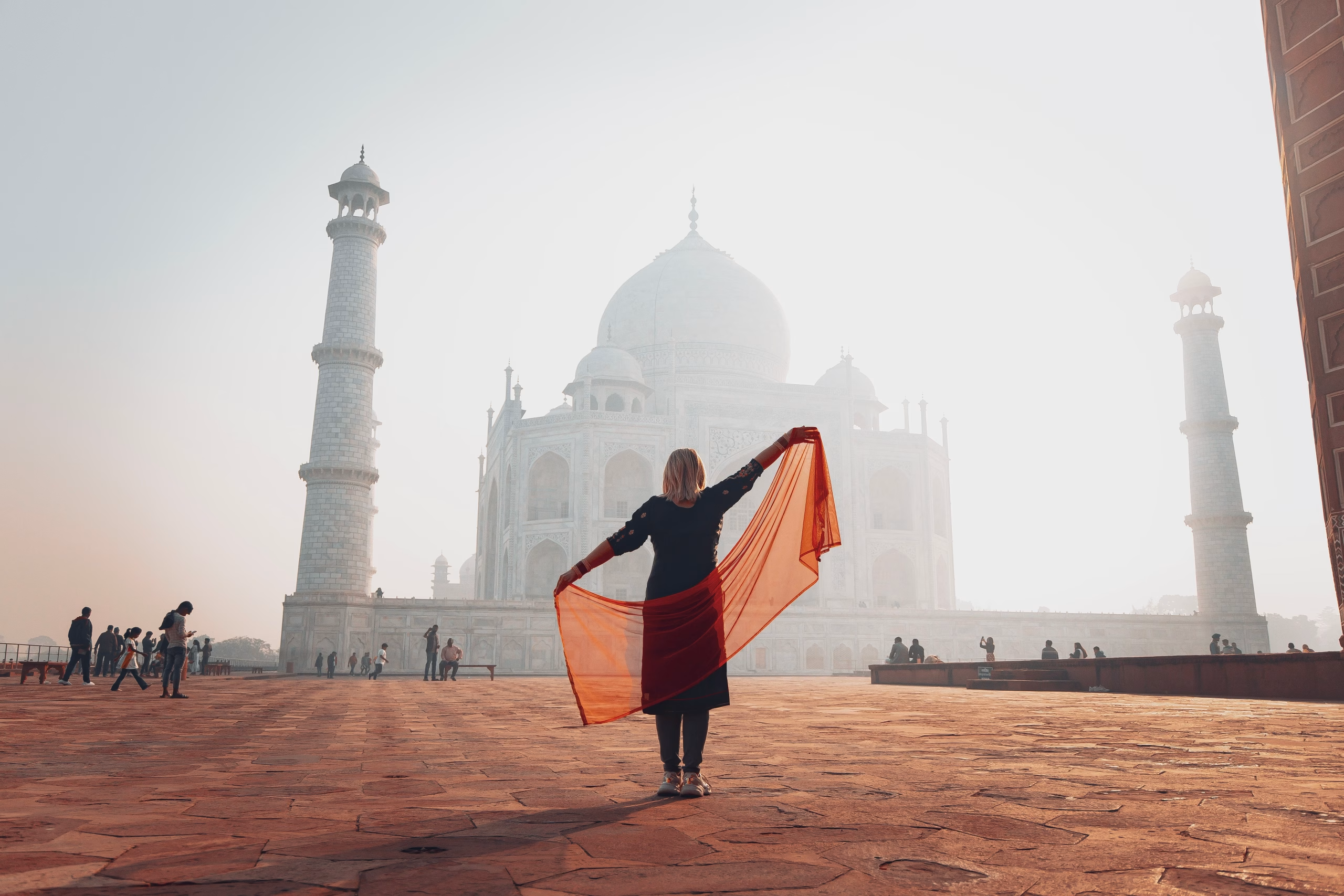
Taj Mahal Aesthetic Outfit: 7 Chic Looks That Photograph Beautifully

The Taj Mahal isn’t just a monument—it’s a masterclass in timeless elegance, and your outfit should match its ivory-and-gold sophistication.
You’ve been invited to an Indian wedding, planned a trip to Agra, or secured tickets to one of the world’s most photographed landmarks.
Here’s the friction: your closet is full, yet nothing feels right. You want to honor the location’s significance without looking like you’re wearing a costume.
You need an outfit that works for the climate, respects the dress code, and photographs beautifully against marble and Mughal architecture.
This guide gives you exactly that—specific outfit formulas, concrete shopping guidance, and styling secrets that make your photos look effortlessly polished.
Taj Mahal Outfit Ideas: The Color Palette That Photographs Best
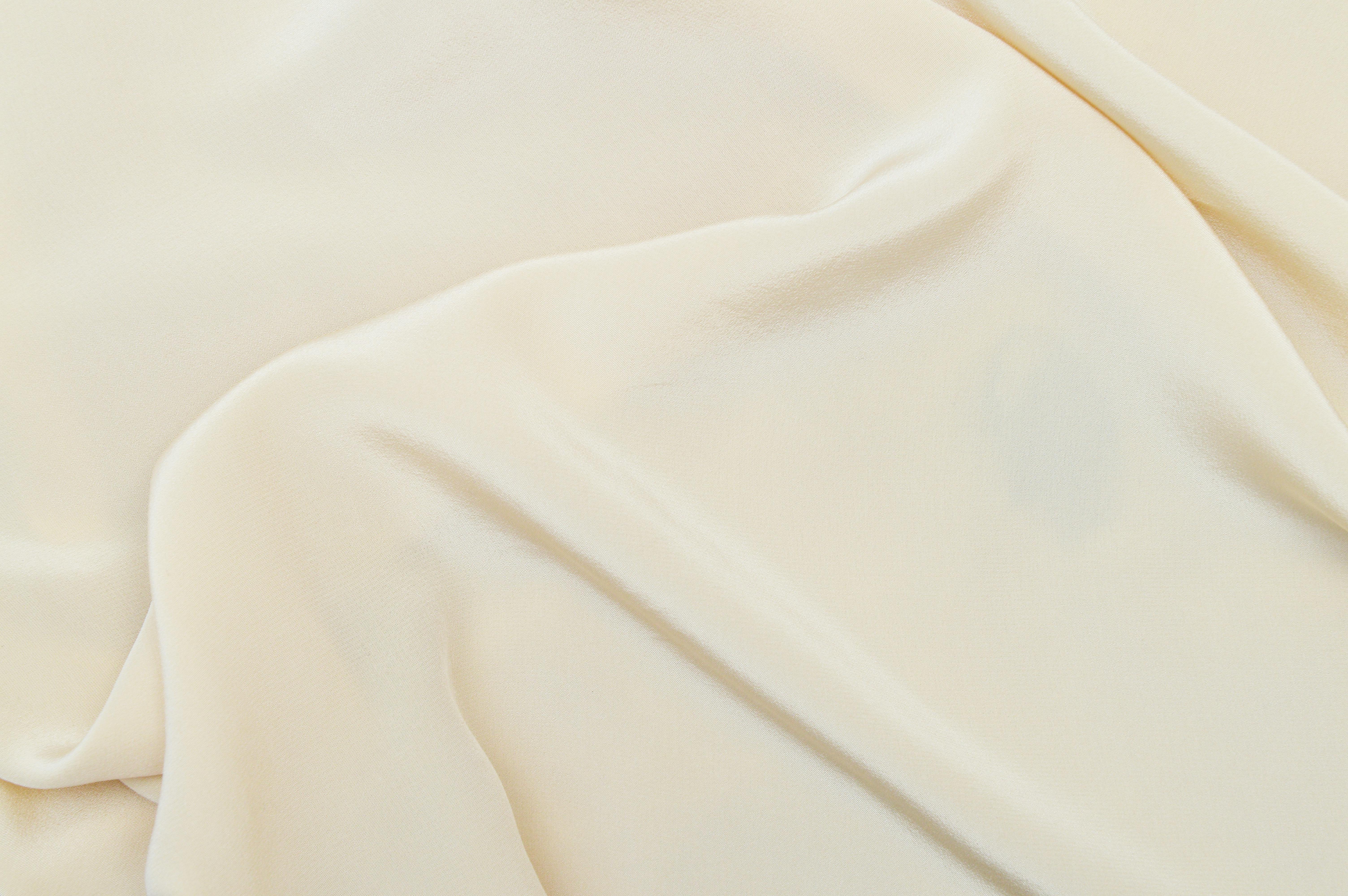
The Taj Mahal’s visual language is built on white marble, gold inlay, and soft pietra dura floral details in blush and sage. When you dress in this palette, your outfit doesn’t fight the monument for attention—it echoes it.
Monochromatic dressing works powerfully here. A cream kurta against cream palazzo pants creates cohesion in photographs. You become a unified shape rather than competing elements. The camera reads simplicity as sophistication.
Ivory, cream, and blush are your anchors. Add champagne gold accents through jewelry, and you’re aligned with the monument’s inlay work.
Dusty rose, powder blue, and sage green work as secondary tones—they’re soft enough to feel period-appropriate without looking costume-y.
What doesn’t work: stark white (it blows out in bright sunlight), busy prints (they compete with marble detail), and deep blacks (too severe against the monument’s softness).
Fabric choice matters as much as color. Linen and cotton breathe in Agra’s heat. Silk and chanderi catch light and create movement that photographs beautifully when you walk or pose.
Avoid synthetic sheens—they read cheap on camera. The best fabrics for the Taj Mahal aesthetic outfit are those that move, flow, and let light pass through them rather than reflect it harshly.
Outfits To Wear At Taj Mahal: Dress Code Essentials
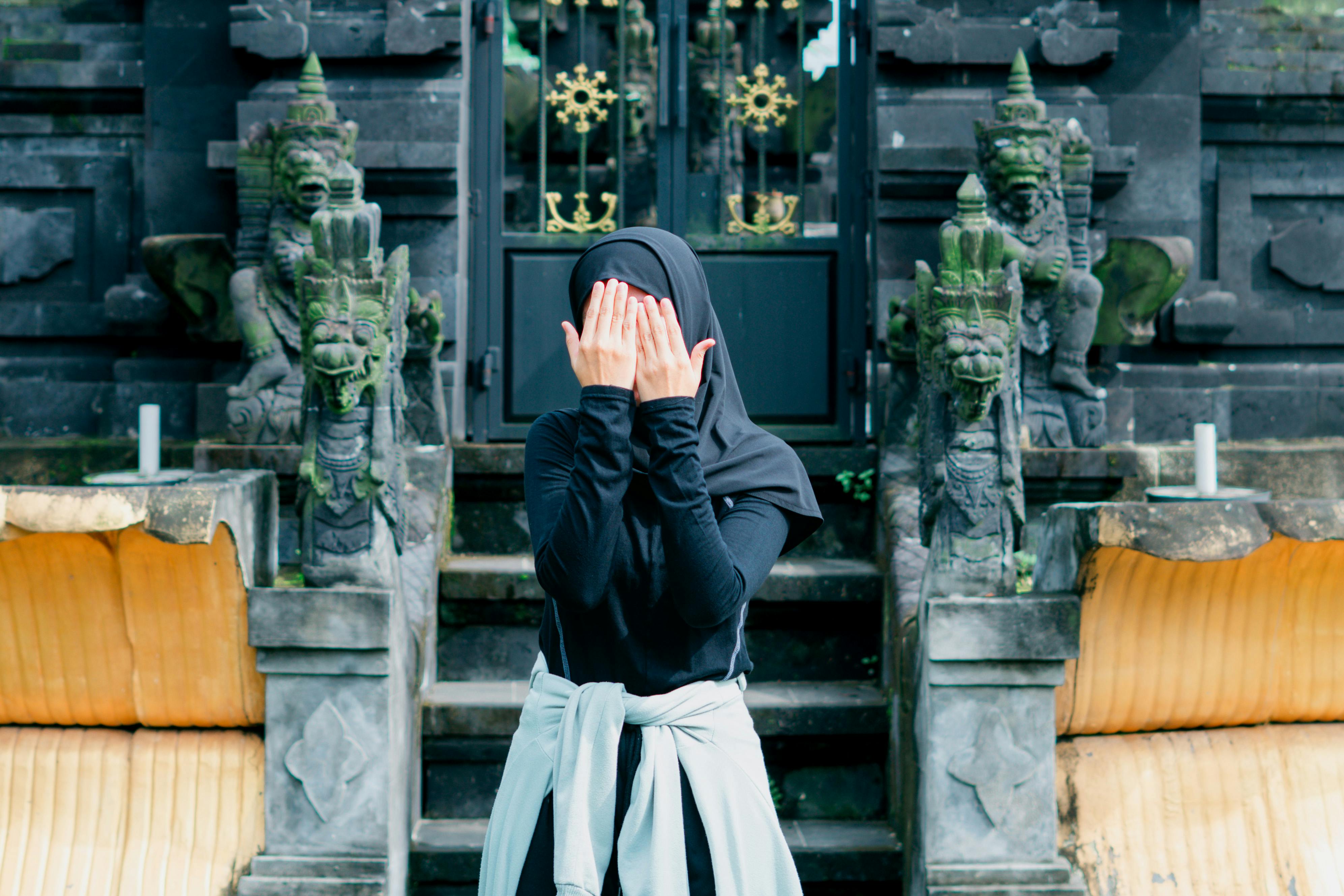
The Taj Mahal is an active mausoleum and a religious site. This isn’t negotiable: shoulders and knees must be covered. You’ll remove your shoes inside the main chamber, so footwear strategy matters.
A lightweight dupatta (scarf) solves multiple problems—it covers your shoulders if your kurta has cap sleeves, gives you something to hold while walking barefoot through marble, and adds visual movement to photos.
Climate shifts dramatically by season. Summer (March–June) demands breathable fabrics: cotton kurtas, linen palazzo pants, and closed-toe sandals you can slip off easily.
Monsoon (July–September) brings humidity and sudden rain—quick-dry fabrics and closed-toe footwear become essential.
Winter (November–February) is cooler; pashminas, silk blends, and velvet accents keep you comfortable. The footwear strategy is simple: juttis (embroidered flats) and block heels you can slip on and off without fussing.
Sneakers work if styled intentionally (white leather with minimal branding). Pack a small crossbody bag to carry your shoes during the mausoleum walk-through—this keeps your hands free for photos and balance on marble.
The dupatta is your styling safety net. Drape it over both shoulders for formal coverage, tie it loosely around your waist for movement, or let it flow behind you for photographs. It’s not costume—it’s a practical piece that elevates any Taj Mahal outfit while solving the coverage question entirely.
Taj Mahal Outfit Ideas Women Actually Want: 7 Complete Looks
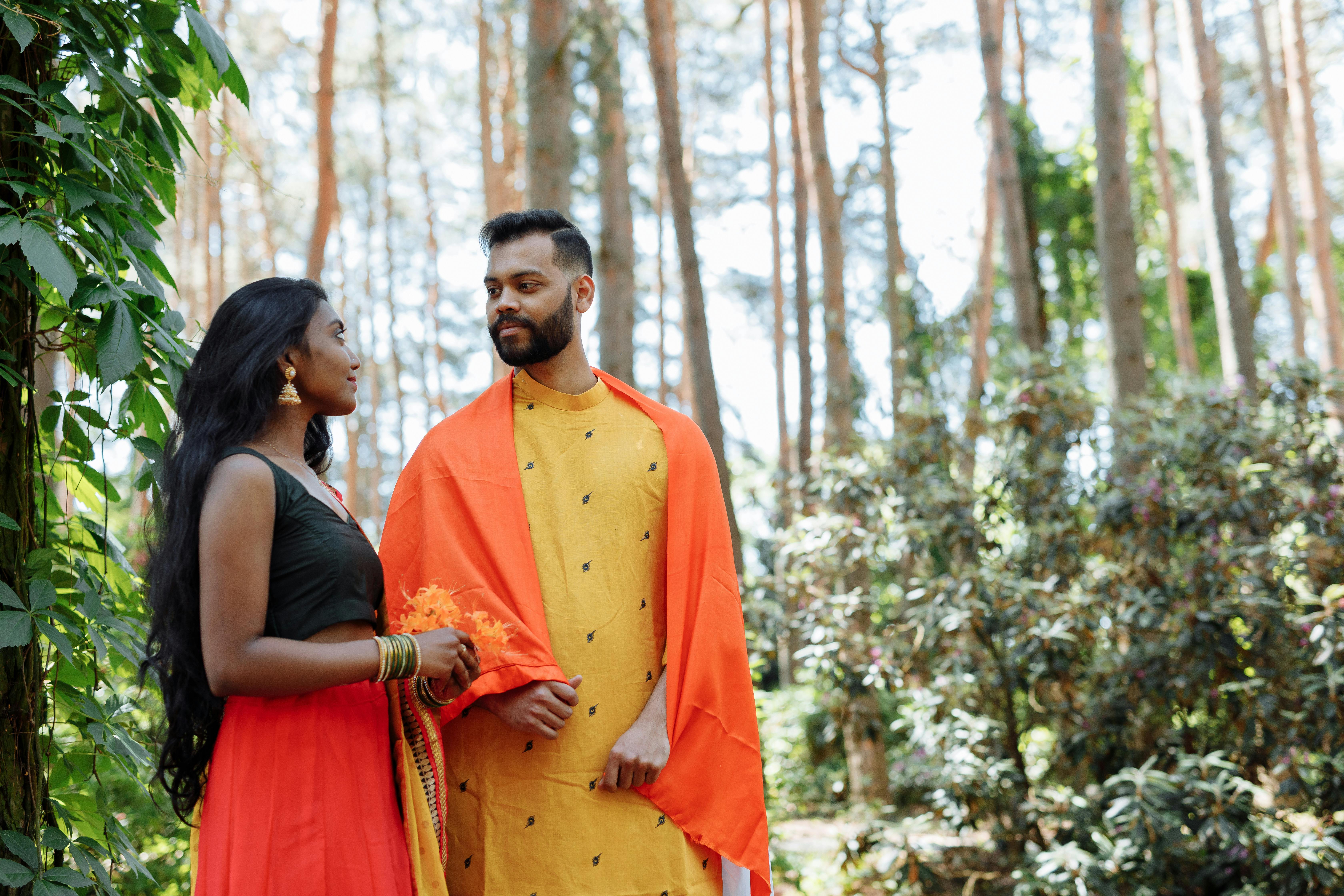
Look 1: The Classic Palazzo + Kurta (Under $75)
Ivory wide-leg palazzo pants, cream embroidered short kurta, tan block heels, gold hoop earrings, woven crossbody bag. The wide-leg silhouette photographs beautifully in motion and stays breathable in heat. Embroidered details on the kurta add visual interest without pattern clutter. Gold hoops catch light without overwhelming. This look works for early morning visits and feels polished without fuss.
Look 2: Indo-Western Fusion (Under $150)
White linen wide-leg trousers, blush silk sleeveless kurta or tunic, nude juttis, statement Kundan earrings, ivory dupatta as wrap. This bridges Western tailoring with Indian silhouettes. The linen trousers are professional-grade, while the kurta softens the look. Kundan earrings reference traditional jewelry without feeling costume-y. The dupatta adds movement and covers your shoulders entirely.
Look 3: The Effortless Maxi Dress
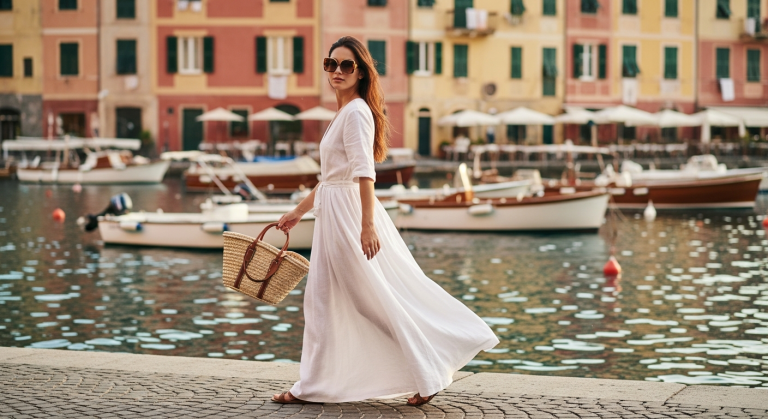
Floor-length cotton or linen dress in cream, champagne, or soft peach, lightweight denim jacket or embroidered cropped jacket for shoulder coverage, strappy sandals, delicate gold layered necklaces. A maxi dress simplifies the equation entirely. You get coverage, movement, and elegance in one piece. The cropped jacket adds dimension and solves the shoulder-coverage requirement. Layered necklaces catch light beautifully without competing with the monument.
Look 4: Elevated Separates for Professionals
Tailored cream trousers or culottes, ivory button-down kurta or tunic blouse, cognac leather accessories, minimalist gold jewelry. This is the outfit for people building work wardrobes who want to layer cultural elements into professional dressing. Culottes offer more movement than pencil pants while maintaining polish. The button-down kurta reads modern and tailored. Cognac leather grounds the palette without competing with ivory.
Look 5: The Flowy Anarkali (Investment Piece)
Pastel Anarkali suit in georgette or silk, matching or contrasting dupatta, embroidered juttis, chandelier earrings. An Anarkali is the statement piece for people who want to lean into the aesthetic fully. The silhouette is inherently elegant—it photographs like a dream in motion. Pastel colors keep it modern rather than traditional-wedding-costume. Chandelier earrings add drama without clashing. Quality Anarkalis range from $150 to $500+, but it’s a piece you’ll wear to multiple events.
Look 6: Modest Jumpsuit Styling
Wide-leg ivory or blush jumpsuit, long sheer kimono or cape overlay for coverage, metallic block heels, structured tote. A jumpsuit is unexpected and modern while still honoring modesty. The overlay solves the shoulder coverage question and adds visual dimension. Block heels keep it grounded and practical. This works for people who want to feel fashion-forward while respecting the dress code.
Look 7: The Coordinated Set
Matching kurta + palazzo or kurta + skirt set in white, powder blue, or mint, texture through embroidery or lace details, juttis, minimal jewelry. A coordinated set removes styling decisions entirely. You know the pieces work together. Add texture through embroidery or lace to keep it visually interesting. This approach is foolproof for people who prefer simplicity.
Taj Mahal Photo Ideas: Styling Details That Elevate Your Shots
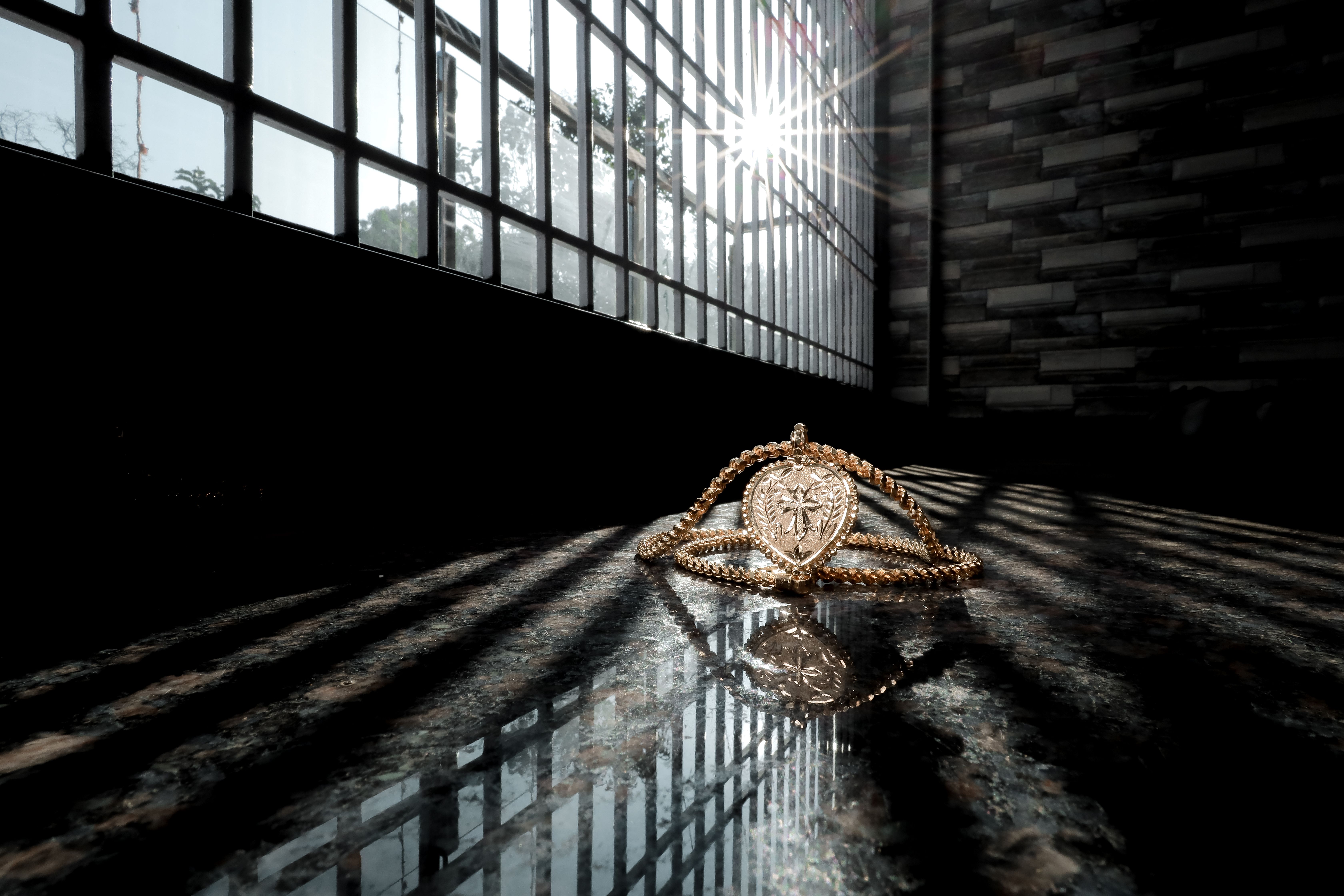
Gold jewelry complements the monument’s inlay work. Silver reads cold against white marble. Kundan and Polki pieces reference traditional craftsmanship without feeling touristy. The one-statement-piece rule: wear bold chandelier earrings OR layered necklaces, not both. Let one element anchor the look.
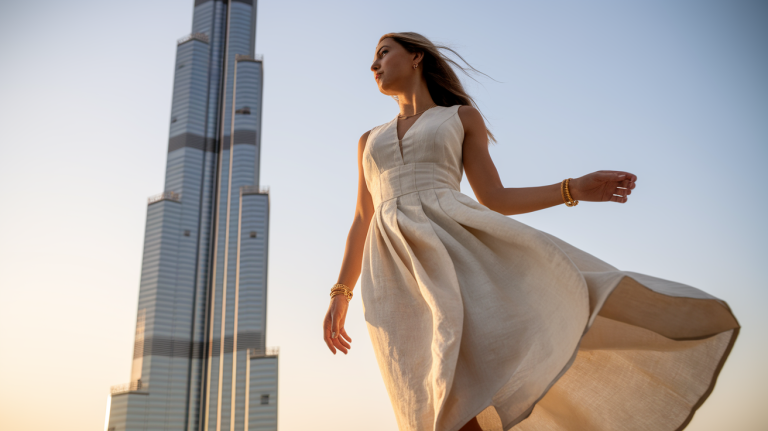
Fabric movement is everything in photographs. Flowy dupattas, palazzo pants, and maxi skirts catch light and create dynamic shapes. Stiff, structured fabrics fall flat on camera. When you walk away from the camera and look back, flowing silhouettes create visual interest that static outfits can’t match. Silk and linen move differently—silk catches light; linen creates soft shadows. Both work beautifully.
Timing and angles determine everything. Golden hour (sunrise 6–7 AM, sunset 5–6 PM depending on season) transforms your outfit’s color palette. Ivory looks warmer, blush glows, and gold catches fire. Photograph against the reflection pools for symmetry—your outfit’s vertical lines mirror the monument’s. Avoid harsh midday light (11 AM–3 PM) when shadows are stark and white fabrics blow out. Book your tickets for sunrise or sunset, and your chic, timeless outfit will photograph beautifully.
India Travel Wardrobe: Beyond the Taj Mahal
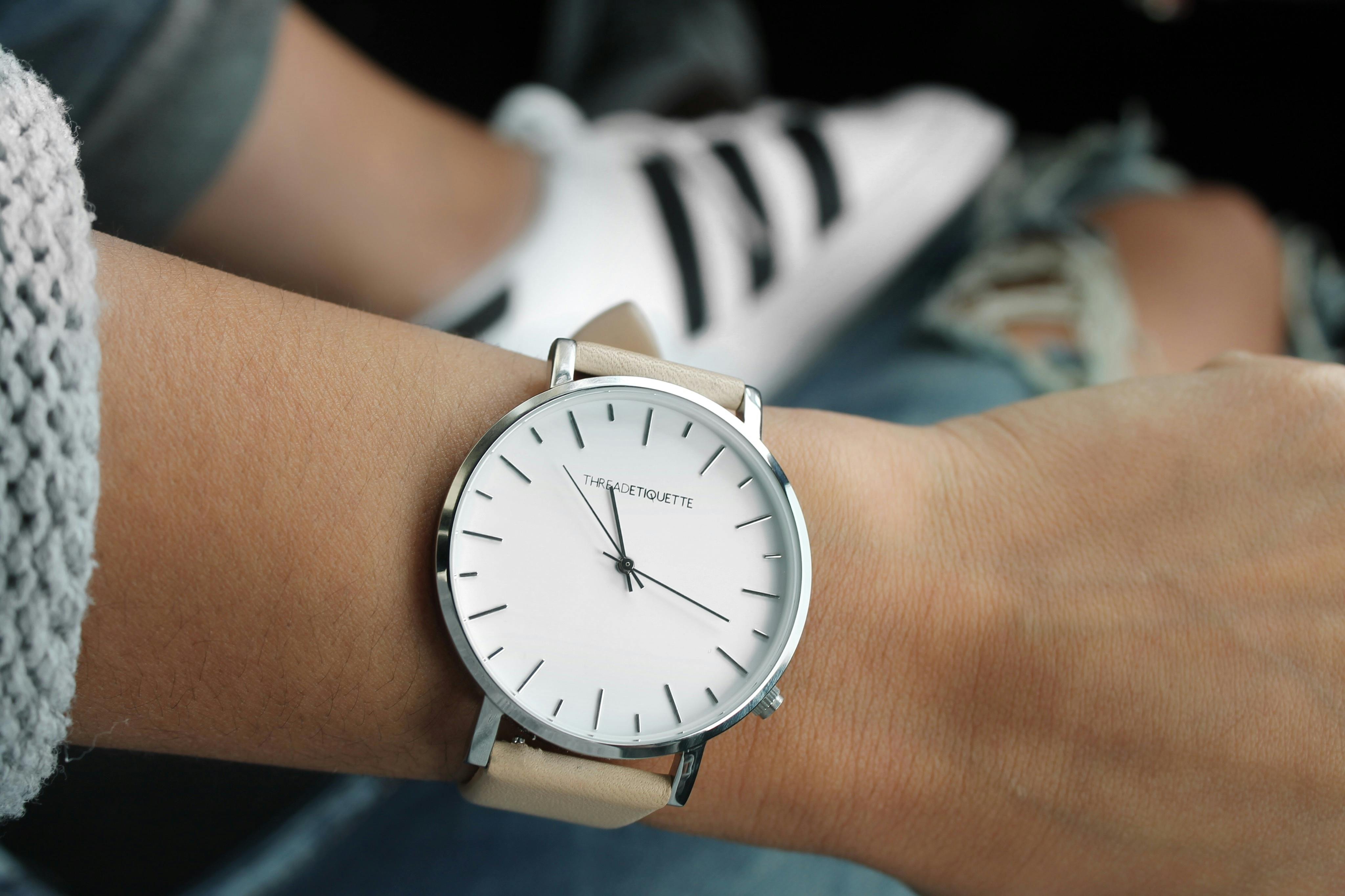
The versatile white kurta is your foundation piece. Pair it with jeans for casual sightseeing, palazzos for evening dinners, or a skirt for temple visits. A neutral dupatta doubles as scarf, wrap, and modesty layer across multiple outfits. Block heels transition seamlessly from monument visits to evening events. These three pieces anchor a five-day capsule wardrobe.
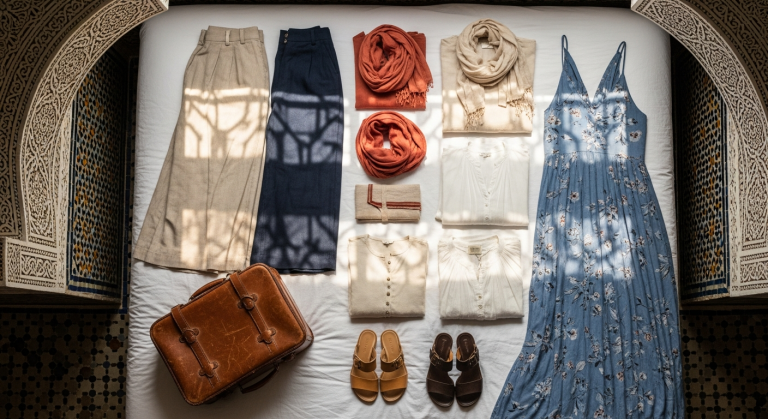
Build your 5-day Agra + Delhi capsule around these anchors: three bottoms (one palazzo, one pair of tailored trousers, one maxi skirt), four tops (two kurtas, one tunic, one blouse), two layering pieces (dupatta and lightweight jacket), and two pairs of shoes (block heels and comfortable flats). This gives you 12+ outfit combinations without overpacking. Choose colors that work together—ivory, cream, blush, and white—so everything coordinates.
Where to shop depends on your budget. Budget-friendly options include Fabindia and Global Desi. Mid-range brands like Anita Dongre and Sézane offer quality fabrics and modern silhouettes. Investment pieces from Sabyasachi deliver heirloom quality. You don’t need to shop all three tiers; choose what fits your budget and build from there.
Taj Mahal Aesthetic Outfit Mistakes to Avoid

Stark white blows out in bright sunlight and reads washed-out in photographs. Choose cream or ivory instead—they photograph warmer and more flattering. Busy patterns compete with the monument’s intricate marble inlay. Save bold prints for other occasions. All-black outfits read too harsh against the Taj Mahal’s softness.
Cultural missteps undermine your entire look. Overly revealing cuts are disrespectful at a religious site. Wearing a bindi or religious symbols as “accessories” without understanding their significance is appropriation, not appreciation. The “Bollywood costume” trap happens when you choose ornate lehengas meant for weddings—they’re beautiful but wrong for a monument visit. You’re not playing a character; you’re a respectful visitor honoring a sacred space.
Practical fashion fails ruin your experience. Heavy fabrics in summer heat make you miserable and sweat shows on camera. Complicated footwear becomes a nightmare when you’re removing shoes multiple times. White jeans pick up marble dust and look dingy by afternoon. Wear something you can actually move in, breathe in, and photograph well in. Your outfit should serve you, not punish you.
CONCLUSION
The Taj Mahal aesthetic outfit is built on one principle: effortless elegance in a soft, neutral palette. Think ivory, blush, cream, and gold accents that echo Mughal architecture. Modesty and practicality aren’t boring constraints—they’re creative parameters that force you to choose better. A palazzo + kurta combination, a flowy maxi dress, or an Indo-Western fusion delivers both coverage and style without compromise. Your outfit should complement the monument, not compete with it. Save bold prints and dark colors for other occasions. The Taj Mahal speaks in whispers; your outfit should too.
Screenshot your favorite outfit formulas from the seven looks above and build a shopping list today. Check the weather forecast for Agra during your travel dates—fabric weight matters more than style. Pack a lightweight dupatta or scarf in your day bag; it’s your styling safety net for coverage, photos, and layering. Book your Taj Mahal tickets in advance and aim for sunrise or sunset. When you step out in a chic, timeless outfit aligned with the monument’s visual language, your photographs won’t just capture a moment—they’ll tell a story of grace, intention, and respect. That’s the difference between a vacation photo and a photograph you’ll treasure.