Japanese Pagoda Kyoto: Complete Guide to 4 Essential Temples

The train pulled into Kyoto Station at 7:15 AM, and I made a deliberate choice: skip the station itself and head straight uphill toward Higashiyama.
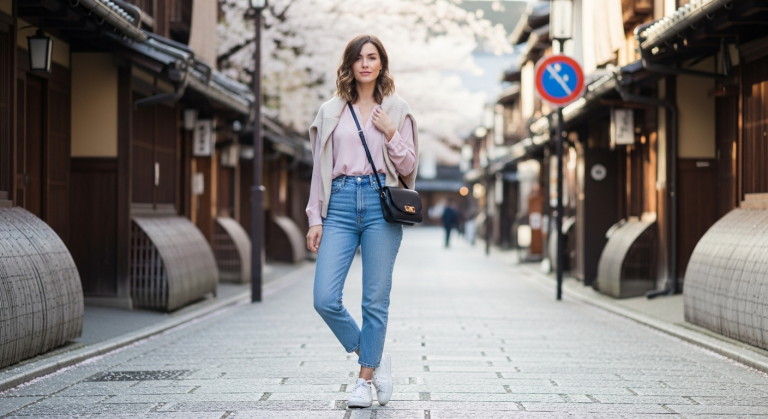
By 8:30 AM, I was standing on the Ninenzaka slope, looking up at Yasaka Pagoda framed against a pale sky, with maybe a dozen other people visible across the street.
Two hours later, the same street would be shoulder to shoulder with tour groups. This timing difference determined whether my pagoda visit felt like a discovery or an endurance.
You’ve seen the Instagram shots of Kyoto’s five-story pagodas framed by cherry blossoms or autumn maples. But which ones actually deserve your limited Kyoto time?
Which can you enter, and which are exterior-viewing only? How do you avoid the 10 AM tour-bus crush? And what’s the architectural difference between a pagoda built in 951 AD and one reconstructed in 1644?
With 2–3 days in Kyoto, you need a filter, not another “15 temples you can’t miss” list. This guide delivers tactical intel for Kyoto’s four essential pagodas: which ones cluster together for efficient temple-hopping, exact timing to dodge crowds, what you’ll actually pay, and the architectural details that transform these structures from pretty backdrops into meaningful experiences.
Kyoto’s Four Essential Traditional Japanese Pagodas
Yasaka Pagoda (Hokan-ji): The Higashiyama Icon
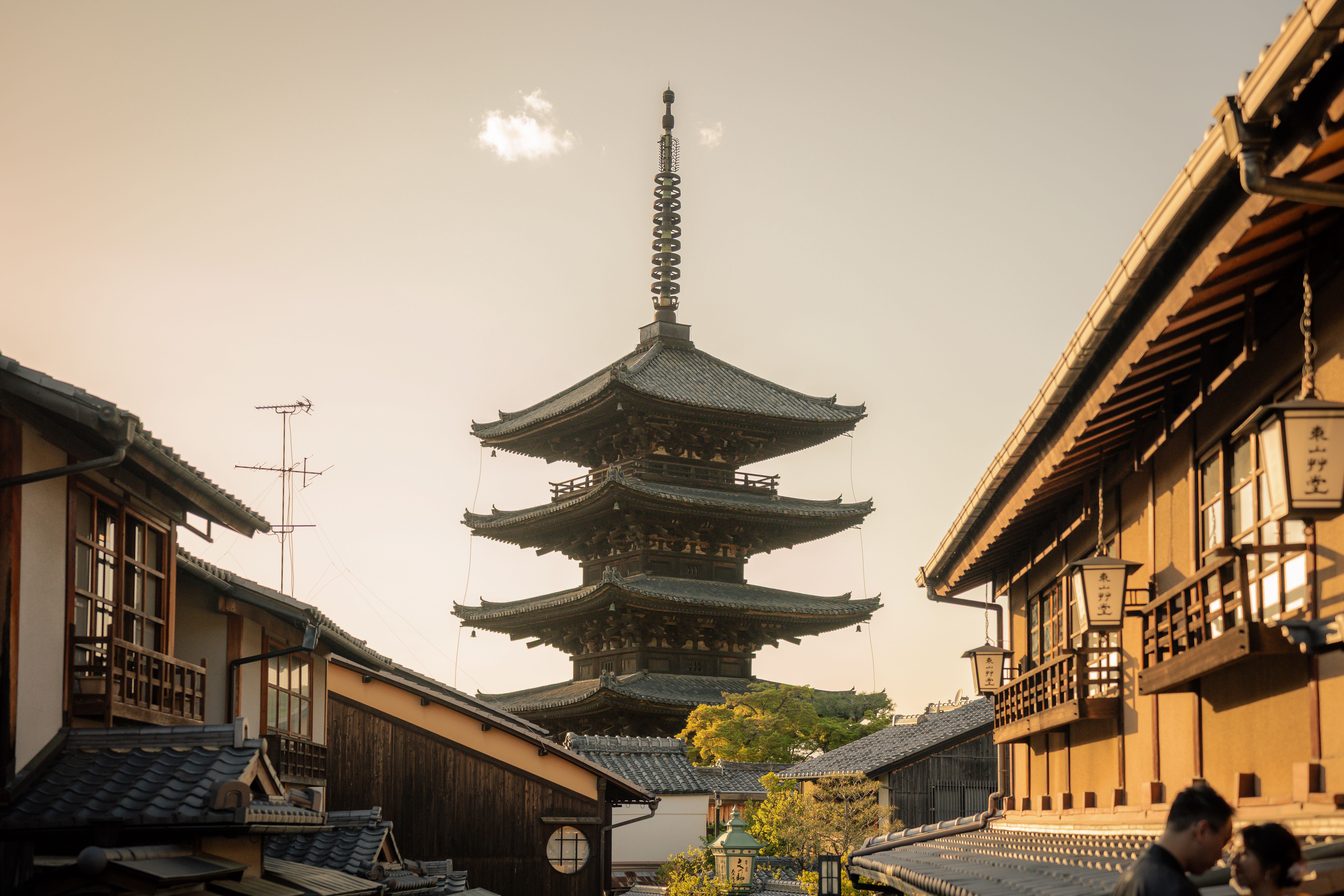
Yasaka Pagoda is the five-story structure that dominates the Higashiyama district skyline, visible from Ninenzaka’s sloped street, framed by maple trees in autumn or cherry blossoms in spring.
The official name is Hokan-ji Temple, but locals and visitors alike call it Yasaka—the neighborhood name has absorbed the temple’s identity.
Here’s the crucial detail most guides miss: you cannot enter Yasaka Pagoda. The structure stands on temple grounds, but the pagoda itself is exterior-viewing only.
This isn’t a limitation—it’s actually the reason it works so well for time-strapped visitors. You spend 15–20 minutes photographing from multiple angles and moving on. No queues, no shoes-off transitions, no confusion about whether you’re supposed to be there.
Entry to Hokan-ji Temple grounds costs ¥400 (roughly $2.75 USD). The best approach is walking uphill from Ninenzaka—the street itself is lined with craft shops, tea houses, and restaurants. Start at Kiyomizu-dera (the larger temple at the top of the slope), then walk downhill.
Yasaka Pagoda appears on your left around the midpoint. Late afternoon light (4–5 PM) illuminates the front facade beautifully, and crowds thin considerably after 4 PM.
The pagoda stands approximately 46 meters tall and dates to 1711, though the site has hosted a pagoda structure since the 1400s.
Toji Pagoda: Japan’s Tallest Wooden Tower
Toji Pagoda stands 55 meters tall—Japan’s tallest wooden pagoda—and occupies a very different role in your Kyoto itinerary than Yasaka.
Where Yasaka anchors a walking neighborhood, Toji sits in relative isolation near Kyoto Station, making it perfect for arrival or departure days.
The walk from Kyoto Station takes 15 minutes, mostly flat. Toji Temple grounds cost ¥500 to enter (pagoda exterior included). The pagoda was reconstructed in 1644 after a fire destroyed the original structure, but the design follows the original 826 AD construction. “Reconstructed” doesn’t mean fake—it means the structure carries 380 years of patina and weathering, built by Edo-period craftspeople using traditional techniques refined for centuries.
The real advantage of Toji is evening illumination. Starting approximately 30 minutes after sunset, the pagoda is lit from below with warm golden light.
The effect is dramatic—the five tiers become distinct sculptural forms. You can view this illumination from the adjacent public park for free, though the full temple grounds experience requires the ¥500 entry fee.
Rare interior access opens during special occasions (typically in spring and autumn, dates announced annually). When available, you pay ¥800–¥1,000 additional to climb the interior structure and see the central pillar system that makes Japanese pagodas earthquake-resistant.
Check the official Toji Temple website for current interior-access dates. Most visitors skip it and photograph the exterior, which is perfectly sufficient.
Daigo-ji: Kyoto’s Oldest Standing Pagoda
Daigo-ji Temple houses Kyoto’s oldest standing five-story pagoda, built in 951 AD—over 1,000 years old. This is the structure you visit if you want to touch actual medieval architecture.
The pagoda has survived earthquakes, fires, wars, and centuries of weather. The wooden surfaces show genuine age, not restoration patina.
The location is southeastern Kyoto, requiring either a 20-minute walk from Daigo Station (Tozai Line subway) or a 10-minute bus ride.
Temple grounds cost ¥600 for the lower section (Shimo-Daigo, which includes the pagoda), or ¥1,500 if you want to add the upper temple area (Kami-Daigo, requiring a steep 30-minute hike). For pagoda-focused visits, the ¥600 ticket suffices.
Daigo-ji’s fame peaks in early April when cherry trees bloom in a dramatic tunnel effect. This is also when crowds peak dramatically—expect 1,000+ visitors daily during peak blossom week (usually April 5–10).
If you visit during cherry blossom season, arrive by 7:30 AM or plan to visit on a weekday. The same pagoda in November, surrounded by red and gold maples, is equally stunning with 80% fewer people. Winter visits (December–February) bring the possibility of snow dusting the pagoda roof—rare but breathtaking.
The pagoda pairs well with Fushimi Inari shrine (20 minutes by train from Daigo Station), making a logical half-day itinerary: morning at Daigo-ji, lunch near the station, afternoon at Fushimi Inari’s famous torii gate tunnels.
Ninna-ji: The Authentic Local Alternative
Ninna-ji Temple sits in northwestern Kyoto, far from the central Higashiyama crush. Its five-story pagoda is architecturally significant but visually less dramatic than Yasaka or Toji—it’s surrounded by temple buildings and gardens rather than standing isolated against the sky. Entry costs ¥500 for main temple buildings (pagoda viewable from grounds).
The real reason to visit Ninna-ji is late-blooming cherry trees. While central Kyoto’s cherry blossoms peak in early April, Ninna-ji’s varieties bloom mid-to-late April, sometimes into early May.
This timing shift is crucial if you’re visiting Kyoto in mid-April and want to avoid the peak-season crowds entirely. The same pagoda in a nearly-empty temple complex feels like a completely different experience than Yasaka Pagoda surrounded by hundreds of other visitors.
Ninna-ji is less famous than the other three pagodas, which means it consistently has thinner crowds on weekends and receives barely any visitors on weekdays. If you value solitude over iconic Instagram angles, this is your choice. The trade-off: the pagoda itself is less visually commanding when surrounded by other buildings, and the neighborhood is less walkable than Higashiyama.
Pagoda Japan Architecture: What You’re Actually Looking At
The Five-Story Symbolism and Engineering
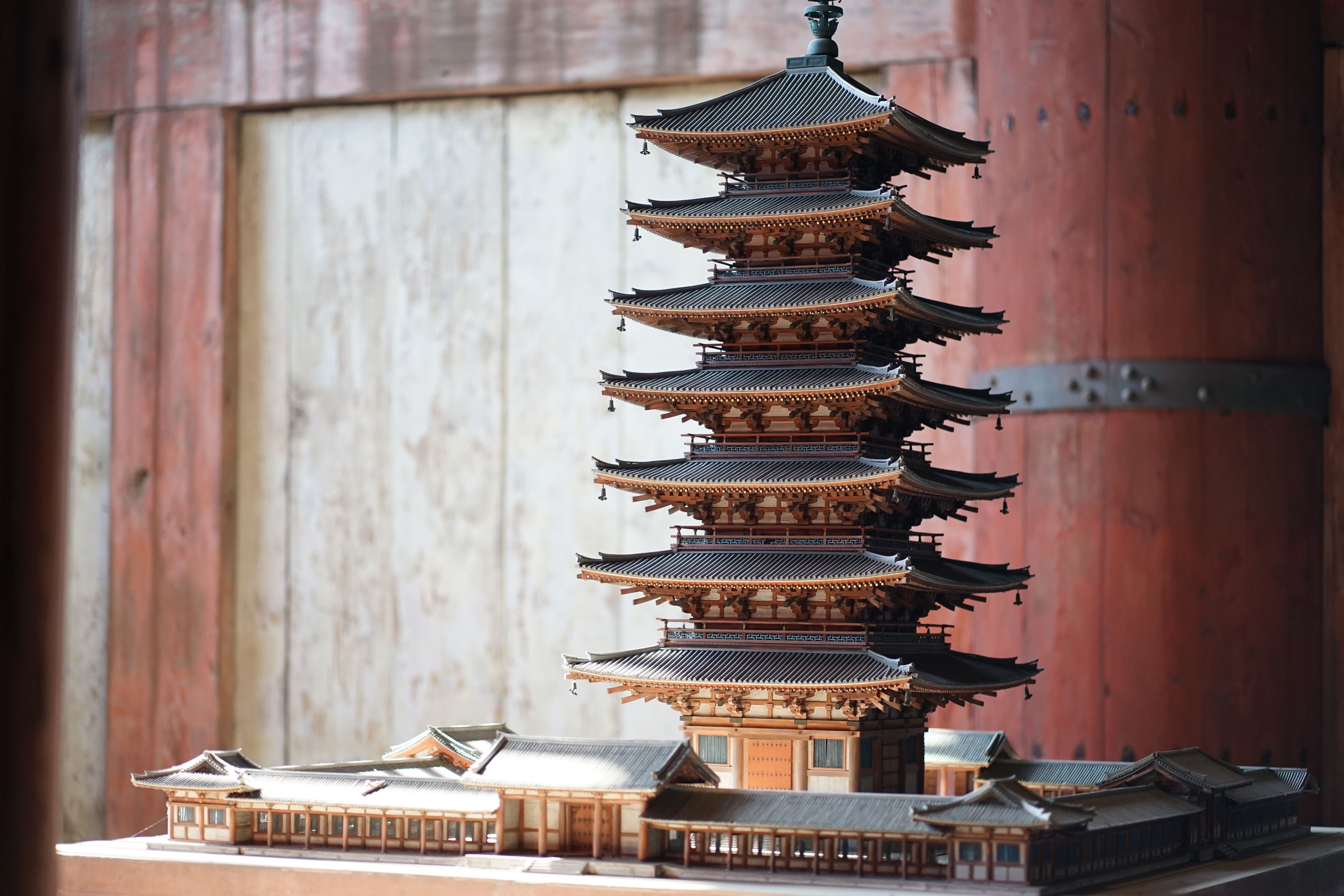
Every five-story pagoda in Japan represents the same cosmological structure: five elements stacked from bottom to top. The first tier is Earth (solid, grounded).
The second is Water (flowing, adaptive). The third is Fire (transformative, rising). The fourth is Wind (moving, spreading). The fifth is Void or Sky (infinite, transcendent). This isn’t arbitrary decoration—it’s a three-dimensional representation of Buddhist cosmology, visible from every angle.
The central spire (called a finial or sorin) at the very top is always metal, usually gilded, and it represents the final ascension beyond the five elements into enlightenment.
When you see that gold spike catching afternoon light, you’re looking at the visual punctuation mark of the entire structure’s spiritual intention.
Japanese pagodas differ significantly from Chinese and Korean counterparts in their proportions. Japanese structures tend toward a more slender, vertical emphasis with more pronounced roof curves at each tier.
The eaves extend outward more dramatically, creating shadow lines that emphasize the stacked-element structure. The extended eaves serve a practical function, directing rainwater away from the wooden walls and reducing weather damage.
Earthquake Engineering That Predates Modern Science
Here’s the detail that transforms a pagoda from “pretty building” into “engineering marvel”: the central pillar system called shinbashira. Instead of anchoring the central support column to the foundation, traditional Japanese pagodas suspend the central pillar from the roof structure using a system of brackets and wooden joints. The pillar floats inside the structure, held in place by its own weight and the geometry of the brackets.
When an earthquake strikes, the outer walls and floors move and flex, but the central pillar remains relatively stable due to its suspension system.
This allows the structure to absorb seismic energy through movement rather than resisting it through rigidity. It’s the opposite of modern engineering instinct—instead of making something stronger and more fixed, Japanese builders made it more flexible and responsive.
The 1995 Kobe earthquake caused significant damage across western Japan, but Kyoto’s historical pagodas—including Toji and Daigo-ji—survived virtually unscathed because of this 1,000-year-old engineering principle.
When you stand in front of a pagoda, you’re looking at the material expression of this philosophy: wood over stone, flexibility over rigidity, response over resistance.
The weathered surfaces, the subtle settling of the tiers, the way the roof curves shift slightly at each level—these aren’t signs of decay. They’re evidence that the structure has survived centuries of earthquakes, storms, and environmental stress by being smart enough to move.
Spotting Restoration vs. Original Construction
Toji Pagoda’s 1644 reconstruction raises a fair question: if it was rebuilt, is it “authentic”? Yes—and here’s why that distinction matters less than you might think. The 1644 rebuild used the same design principles, materials, and construction techniques as the original 826 structure.
Edo-period carpenters weren’t inventing something new; they were replicating what had worked for centuries. The building has stood for 380 years since that reconstruction, weathering countless earthquakes and storms.
You can spot Edo-period carpentry techniques if you look closely: the wood joints show a specific style of interlocking, the nails are hand-forged iron with distinctive shapes, and the wood grain patterns reflect the timber available in the 1600s. Daigo-ji’s 951 AD pagoda shows different joinery styles and wood characteristics from a thousand years earlier.
Neither is “more authentic”—they’re both authentic to their respective periods. The practical takeaway: don’t skip a pagoda because it was “reconstructed.” Toji’s 1644 rebuild is as historically significant and architecturally masterful as Daigo-ji’s original 951 structure.
Planning Your Kyoto Traditional Street Pagoda Sunset Route
The Higashiyama Loop: Half-Day Pagoda Itinerary
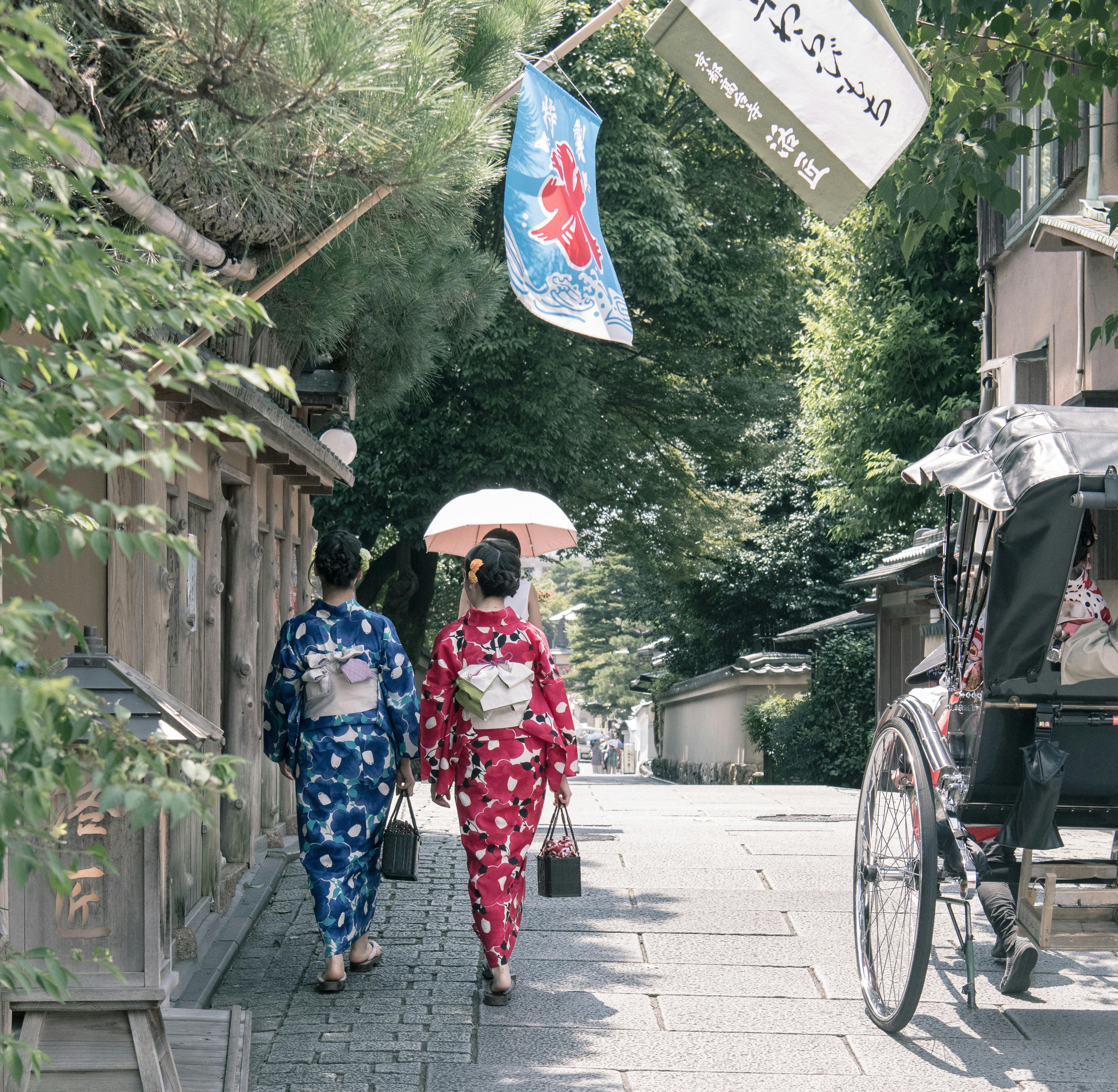
If you have one afternoon in Kyoto and pagodas are your priority, this route delivers maximum impact in 3–4 hours. Start at Kiyomizu-dera (the large, famous temple at the top of the Higashiyama slope).
Arrive by 8 AM to avoid the tour-bus wave that hits around 9:30 AM. Kiyomizu-dera itself is worth 45 minutes—the main hall juts out over a cliff with valley views, and the architecture demonstrates the same earthquake-resistant principles as pagodas.
From Kiyomizu-dera’s main entrance, walk downhill along Sannenzaka street. This is a genuine neighborhood street with craft shops, tea houses, and restaurants.
Walk for about 10 minutes until you see Yasaka Pagoda appearing on your left through the buildings. Spend 20 minutes photographing from multiple angles.
The best shots come from standing directly on Ninenzaka and looking uphill at the pagoda, with the street’s perspective leading your eye toward the structure.
Continue downhill another 10 minutes to reach Kodai-ji Temple (¥600 entry) or Maruyama Park (free). Both offer views back uphill toward Yasaka Pagoda and the surrounding Higashiyama district.
Total time for this loop: 3–4 hours including all walking and photo stops. You’ll see the most iconic pagoda in Kyoto, understand its relationship to the surrounding neighborhood, and avoid the 10 AM crush by starting early.
Kyoto Station Area: Toji + Southern Temples
If you’re arriving in or departing from Kyoto Station, use that as your pagoda anchor. Spend your first or last morning at Toji Temple.
Walk from the station (15 minutes, mostly flat), spend 45 minutes exploring the temple grounds and photographing the pagoda from multiple angles, then continue to Fushimi Inari shrine (20 minutes by train from Kyoto Station’s Nara Line). This pairing works because both sites are south of central Kyoto and don’t require backtracking.
Evening illumination at Toji (starts ~30 minutes after sunset) is worth staying for if your schedule allows. The golden light transforms the pagoda into a completely different visual experience than daytime viewing.
If you’re departing that evening, plan your station departure for 90 minutes after sunset so you can photograph the illuminated pagoda and still make your train.
Transit Logistics Between Pagodas
Kyoto’s public transit consists of buses and a single subway line (Tozai). Most pagoda visits work best on foot or short bus rides. Here’s what you need to know:
- Kyoto City Bus day pass (¥700): Unlimited bus rides for 24 hours. Buy one if you’re doing multiple pagoda sites in a single day. Individual fares cost ¥210 per ride, so the day pass pays for itself after four rides.
- Tozai Line (subway): Limited coverage, but essential for reaching Daigo-ji. Get off at Daigo Station, then walk 20 minutes or take a bus 10 minutes to the temple.
- Walking times: Yasaka to Kiyomizu-dera (15 min uphill), Kyoto Station to Toji (15 min flat), Daigo Station to Daigo-ji (20 min walk, hilly).
- Ninna-ji access: Bus #59 or #93 from central Kyoto (30–40 min depending on traffic), or train to Omuro-Ninna-ji Station on the Randen Streetcar line.
Kyoto’s transit is functional but not intuitive for visitors. Google Maps works reliably for routing, but download an offline map (Maps.me is excellent) because cell coverage in temple areas can be spotty. Always know your next destination before leaving a pagoda site.
Best Times to Visit: Kyoto Japan Autumn, Cherry Blossoms & Crowd Strategy
Seasonal Visuals: When Each Pagoda Looks Stunning
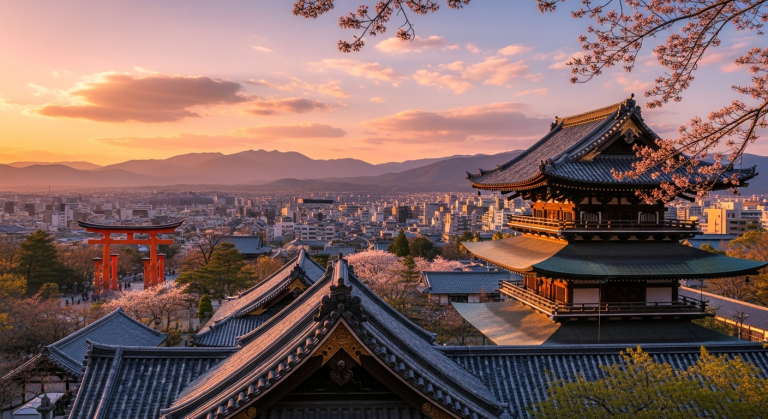
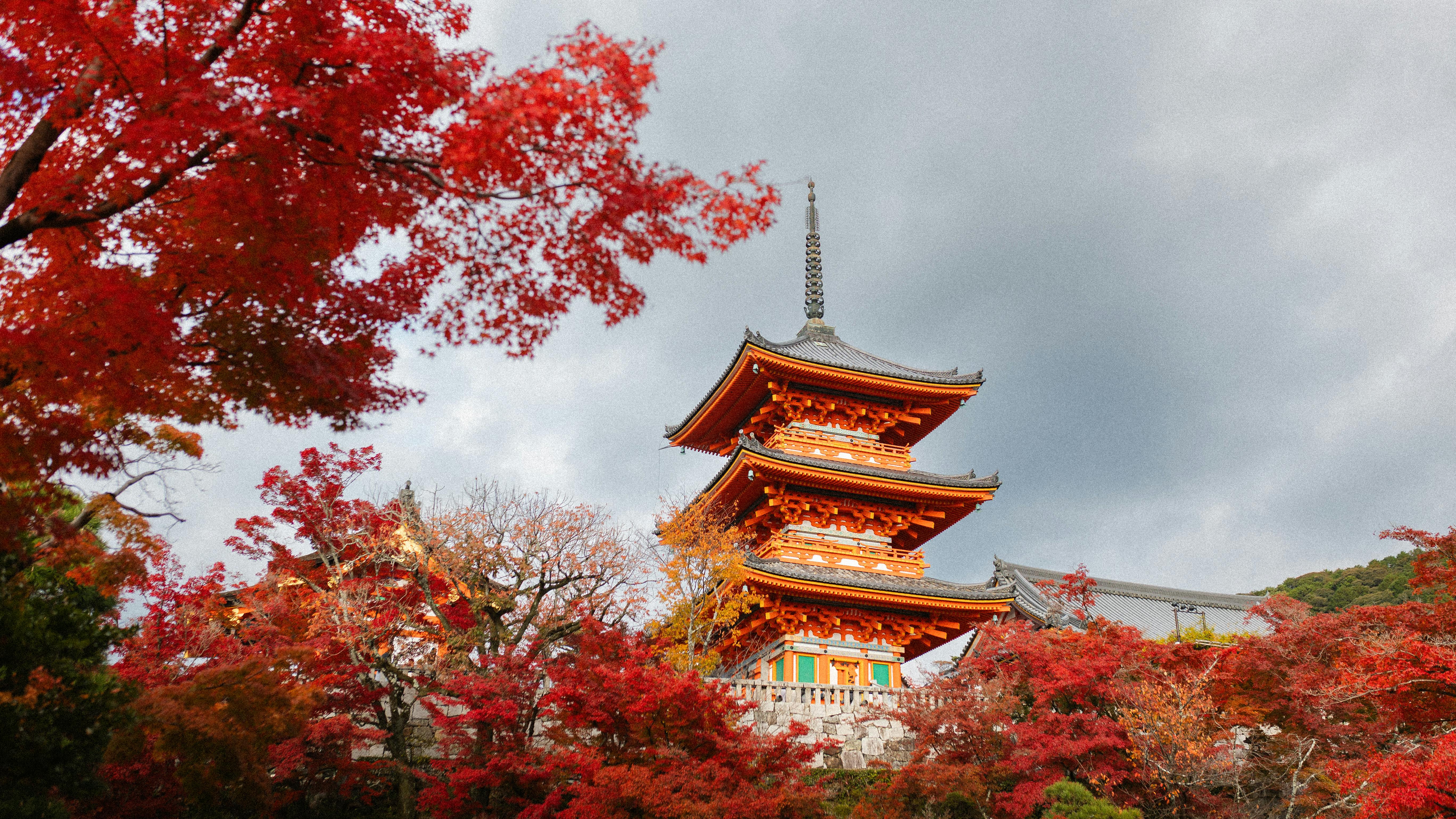
Cherry blossom season (late March–early April) transforms Kyoto into a visual spectacle. Daigo-ji’s pagoda is framed by a tunnel of blooming cherry trees—the most famous pagoda-and-blossom composition in Kyoto.
Yasaka Pagoda, when photographed from Maruyama Park during peak bloom, appears to emerge from a cloud of pink and white flowers. Ninna-ji’s late-blooming varieties (mid-to-late April) offer the same visual magic with 80% fewer visitors than central Kyoto.
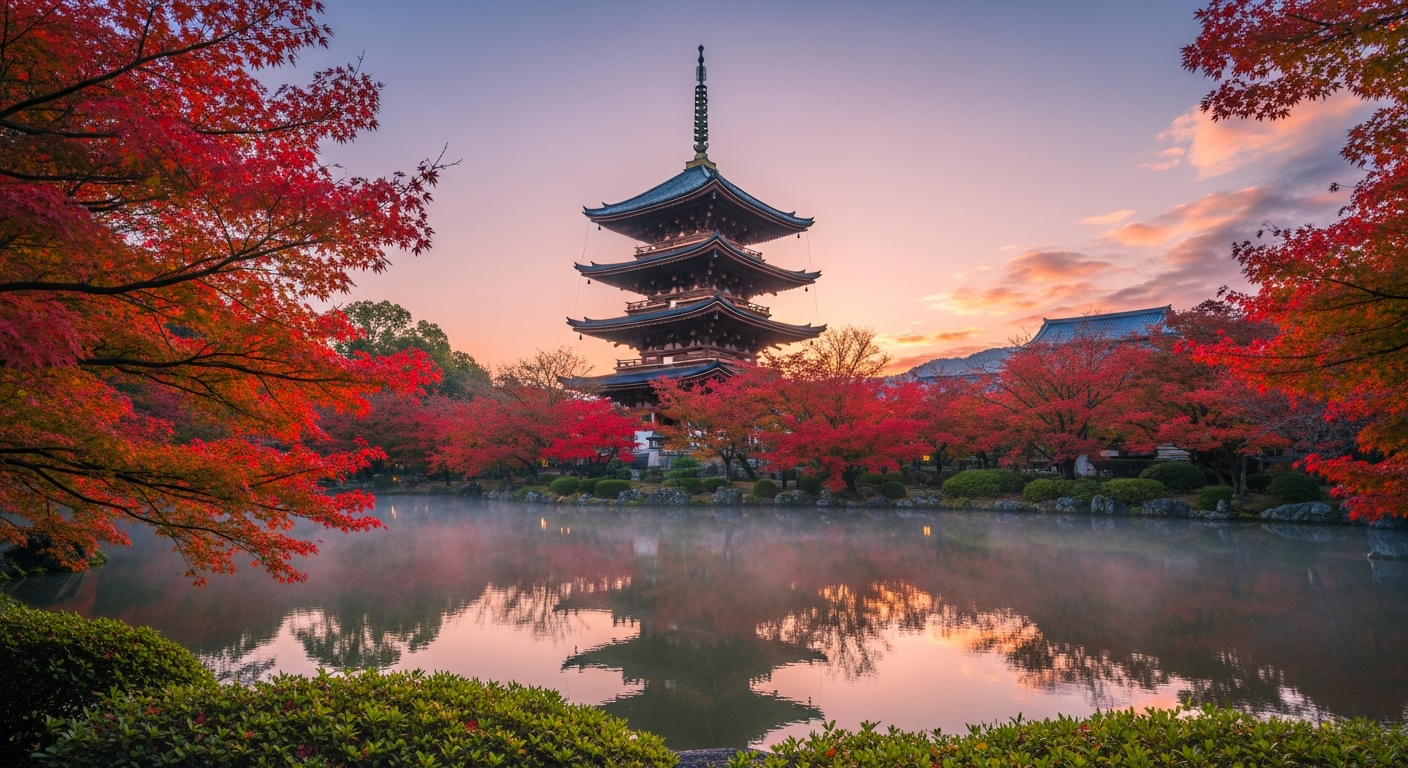
Kyoto autumn (mid-November through early December) brings maple leaves turning red and gold, with ginkgo trees turning luminous yellow. Daigo-ji’s pagoda stands against a backdrop of red maples.
Toji’s ginkgo trees create a golden frame around the base of the pagoda. The light in autumn is also superior to spring—clearer, with less atmospheric haze, and lower-angled sun that emphasizes texture and shadow.
Winter (December–February) is Kyoto’s secret season for pagoda photography. Snow on the pagoda roof is rare but breathtaking.
Even without snow, the bare branches reveal the architecture’s skeletal structure more clearly than any other season. Crowds drop to 20% of peak levels.
The light is crisp and cool-toned, ideal for photography. If you can visit in January or February, the experience is qualitatively different from summer or peak autumn.
Summer (June–August) brings verdant green foliage, humidity, and the densest tour-group presence outside of cherry blossom season. Only visit in summer if you’re chasing empty-frame landscape photography (early morning, 6–7 AM) or if your travel dates are fixed.
Daily Timing to Avoid Tour Buses
Tour buses from Osaka arrive in Kyoto around 9:30–10 AM and depart around 2–3 PM. This window is the worst time to visit any famous pagoda. Here’s the timing strategy that actually works:
- Early morning (7:30–9 AM): Kiyomizu-dera and Yasaka Pagoda are nearly empty. The light is soft and cool. You’ll see mostly Japanese visitors and serious photographers. This is the optimal window for your first pagoda visit of the day.
- Late afternoon (4–5 PM): Day-trippers head back to Kyoto Station or their hotels. Pagodas that were crowded at noon are manageable again. Afternoon light is warmer and more dramatic than morning light, ideal for photography.
- Weekdays vs. weekends: Monday through Thursday see 40% fewer visitors than weekends, especially at Ninna-ji and Daigo-ji. If your schedule allows, visit on a weekday.
- Worst windows: 10 AM–2 PM on weekends during cherry blossom season (April 1–10) and autumn peak (November 10–20). Avoid these windows unless you thrive in crowds or you’re visiting a less-famous pagoda like Ninna-ji.
The single most valuable timing hack: if you’re in Kyoto during cherry blossom or autumn peak season, visit Ninna-ji instead of the famous four.
You’ll see comparable seasonal beauty with 85% fewer people, and the pagoda is equally authentic and historically significant.
Photography Golden Hours
If you’re carrying a camera (phone or dedicated), timing matters significantly. Here’s when each pagoda looks best for photography:
- Yasaka Pagoda: Late afternoon (4–5 PM) illuminates the front facade from Ninenzaka. The warm light emphasizes the wood grain and roof curves. Morning light (8–9 AM) is softer but flatter—better for detail shots than dramatic compositions.
- Toji Pagoda: Sunset through early evening (illumination starts ~30 minutes after sunset). The golden light transforms the structure. Daytime visits are functional but less visually compelling.
- Daigo-ji: Morning light (8–10 AM) for front-lit pagoda and mist in autumn. The pagoda faces east, so morning light hits it directly. Afternoon light (3–5 PM) creates side-lighting that emphasizes texture.
- Ninna-ji: Midday works better than other pagodas because trees surround the structure. Golden hour adds warmth to the five-story structure, but surrounding buildings can create shadow patches that complicate composition.
The practical takeaway: if you’re serious about photography, plan your pagoda visits around these optimal light windows. A pagoda shot at golden hour, with seasonal foliage or snow as backdrop, will be dramatically better than the same pagoda photographed at noon with flat overhead light.
What to Expect: Entry Fees, Etiquette & Photography Rules
Admission Costs and What You Get
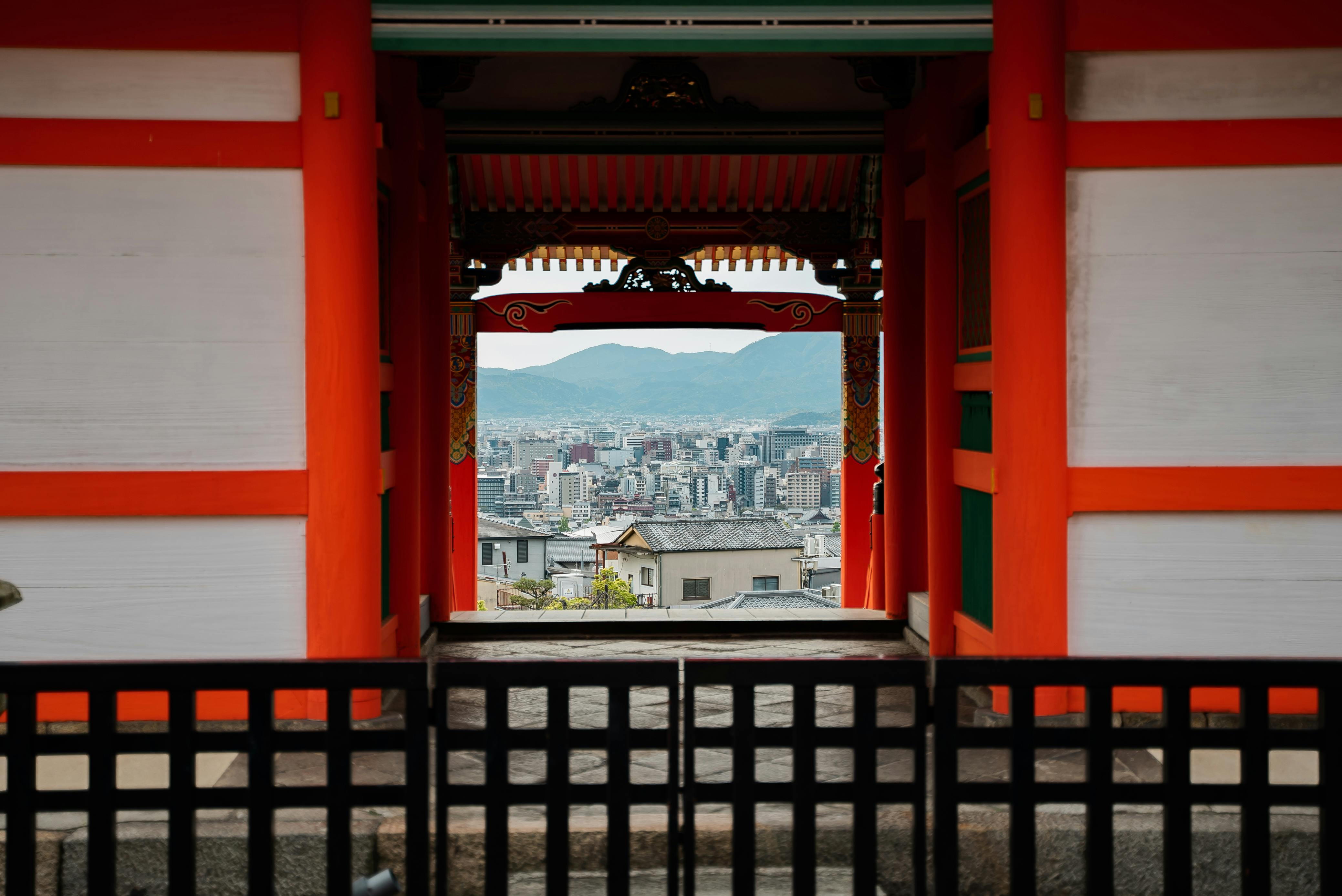
Temple entry fees in Kyoto are modest, but they add up if you’re visiting multiple sites. Here’s the exact breakdown:
- Yasaka Pagoda (Hokan-ji): ¥400. You get access to temple grounds, the pagoda exterior, and a small tea house. The pagoda itself cannot be entered.
- Toji Pagoda: ¥500 for temple grounds (pagoda exterior included). Interior access (when available) costs ¥800–¥1,000 additional. Check the official website for current interior-access dates.
- Daigo-ji: ¥600 for Shimo-Daigo area (lower temple, includes the pagoda). ¥1,500 total if you add Kami-Daigo (upper temple, requires 30-minute steep hike). Pagoda-only visits require only the ¥600 ticket.
- Ninna-ji: ¥500 for main temple buildings and grounds (pagoda viewable from exterior). Interior access to the main hall included in this price.
- Free options: Toji pagoda is partially visible from the adjacent public park (no entry fee). Yasaka Pagoda is photogenic from public streets surrounding the temple (though the best angles require ¥400 temple-grounds entry).
Total cost for visiting all four pagodas: approximately ¥2,000 (roughly $13–14 USD). This is genuinely affordable, even for budget travelers. The real cost is time, not money.
Temple Etiquette That Actually Matters
Japanese temples operate under specific etiquette rules. Most are common sense, but a few specifics matter:
- Dress code: No bare shoulders or knees at active worship sites (Daigo-ji, Ninna-ji are functioning temples with regular worshippers). Yasaka and Toji have fewer active worshippers but go conservative anyway. Wear long pants or a skirt below the knee, and a shirt with sleeves. This isn’t about judgment; it’s about respect for ongoing religious practice.
- Footwear: Remove shoes before entering temple buildings. For outdoor pagoda viewing areas, shoes are fine. Watch what other visitors do and follow their lead.
- Silence and respect: Lower your voice near worship halls. Don’t point at or touch religious objects. If you see worshippers engaged in prayer or meditation, give them space.
- Incense and offerings: Many temples have incense stations (usually ¥100–¥200 per stick). If you want to light incense, watch a local do it first, then follow their process. Offerings are optional; small coins (¥5 or ¥10) are appropriate if you choose to participate.
The most common mistake: treating temples like outdoor museums rather than active religious sites. These are places where people pray, meditate, and practice their faith. Your visit is a privilege, not an entitlement. Behave accordingly.
Photography Restrictions
Kyoto temples generally permit photography, but with important restrictions:
- Tripods: Generally prohibited without advance permission. Some temples enforce this strictly, others don’t. Ask at the ticket counter before setting up. If you’re serious about photography, call ahead and request permission.
- Interior photography: Forbidden inside temple halls and worship areas. Pagoda exteriors are fair game. If you’re unsure whether a space is “interior,” ask.
- Drone rules: Completely illegal in Kyoto temple areas without permits (which are nearly impossible to obtain). Don’t risk it.
- Respectful framing: Avoid photographing worshippers’ faces, even if you think it looks good compositionally. Don’t block pathways or viewpoints for other visitors while setting up shots. Move quickly and efficiently.
The honest truth: most temples don’t have staff actively monitoring photography. But that doesn’t mean restrictions don’t exist. Assume they do, ask when uncertain, and respect the answer you get.
Accessibility Notes
Most Kyoto pagodas are not accessible for visitors with mobility limitations. Here’s what you need to know:
- Pagoda interiors: You cannot climb inside any of the four essential pagodas. They are not open for interior exploration. This isn’t a restriction; it’s the standard design. The pagoda is a religious object, not a tourist attraction with viewing platforms.
- Temple grounds: Most involve stairs, gravel paths, and uneven surfaces. Wheelchair accessibility is limited. Toji offers the most accessible layout (flat grounds, paved paths to pagoda viewpoint). Yasaka and Ninna-ji involve significant stairs. Daigo-ji’s pagoda is accessible, but reaching it requires navigating uneven temple grounds.
- Seating: Limited benches available. Bring a cushion if sitting on the ground is difficult for you.
If mobility is a concern, prioritize Toji (flat, paved, most accessible) and photograph Yasaka Pagoda from the public streets surrounding it. Plan rest breaks, and don’t hesitate to skip a pagoda if the terrain is too challenging.
Beyond the Big Four: Hidden Pagodas for Return Visitors
Ruriko-ji Pagoda (Yamaguchi Prefecture—Day Trip from Kyoto)
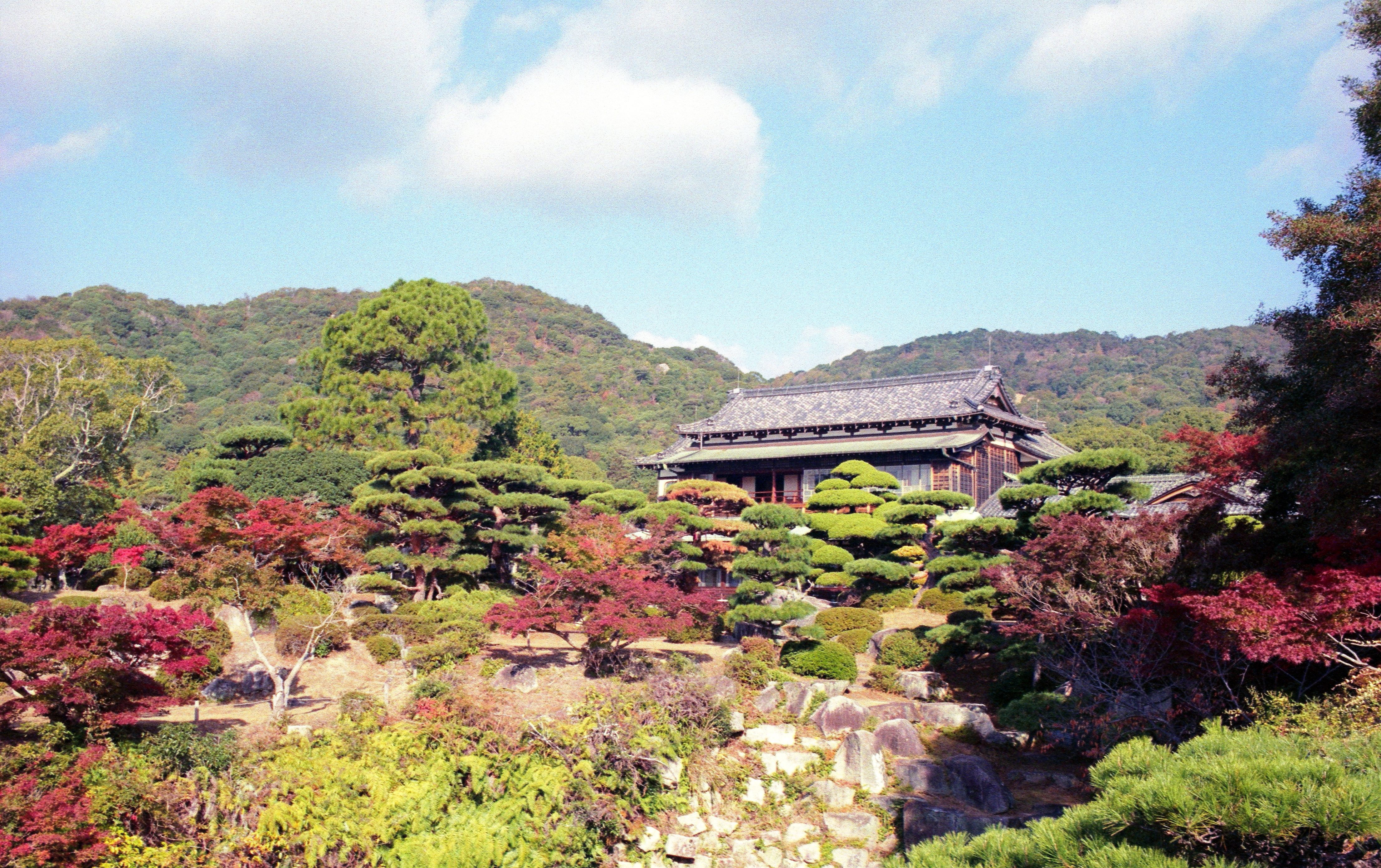
If you’ve already visited Kyoto’s four essential pagodas and want to explore further, Ruriko-ji Temple in Yamaguchi Prefecture (western Honshu) houses a five-story pagoda built in 1442—a National Treasure with distinctive architectural proportions that differ subtly from Kyoto’s pagodas. The structure is slightly wider and more compact, reflecting regional building traditions.
Getting there: 2.5 hours by shinkansen (bullet train) from Kyoto to Yamaguchi City, then local train or bus to the temple. This is only for dedicated pagoda enthusiasts.
The trip requires a full day and eats significantly into your Kyoto time. Better approach: combine Ruriko-ji with a broader western Honshu itinerary (Hagi, Iwakuni, Hiroshima), visiting Kyoto separately.
Kofuku-ji Pagoda (Nara—30 Min from Kyoto)
Nara’s Kofuku-ji Temple houses a five-story pagoda in Nara Park, surrounded by free-roaming deer. The pagoda is visually distinctive because deer often stand directly in front of it, creating an unusual composition (deer + pagoda + autumn maples). This is less about pagoda architecture and more about the unique setting.
Getting there: 45 minutes by train from Kyoto (Kintetsu Line to Nara). This works well as a day trip paired with Todai-ji Temple (the massive Buddha hall) and Kasuga Taisha shrine.
If you have 3+ days in the Kyoto-Nara region, Kofuku-ji is worth a half-day visit. If you only have 2 days total, skip it and focus on Kyoto’s four essential pagodas.
Pagodas You Can Skip
Kyoto has dozens of three-story pagodas scattered across various temples. Architecturally, three-story structures are less significant than five-story pagodas (they represent only three of the five elements).
Visually, they’re less dramatic. Unless you’re chasing a specific architectural style or have unlimited time, skip the three-story pagodas and focus on the five-story structures.
Modern reconstructions (20th century rebuilds) are historically interesting but lack the patina of older structures. Toji’s 1644 reconstruction is an exception—it’s old enough and well-documented enough to be architecturally significant. Newer rebuilds (1950s onward) are less compelling for most visitors.
Distant outliers requiring 45+ minutes of transit from central Kyoto are worth visiting only if you’re deeply interested in pagoda architecture or if they fit naturally into a broader regional itinerary. Don’t make a special trip to a remote pagoda if you haven’t yet visited the four essential ones.
CONCLUSION
Here’s what matters: Prioritize Yasaka and Toji if you only have one day for pagodas. They’re Kyoto’s most iconic, accessible, and photographically rewarding.
Yasaka anchors the perfect Higashiyama walking route through a living neighborhood; Toji fits seamlessly into arrival or departure logistics near Kyoto Station.
Together, they represent the full range of what makes Kyoto’s pagodas significant—one as a neighborhood anchor, one as an isolated architectural monument.
Seasonal timing trumps daily timing for visual impact. A pagoda framed by cherry blossoms or autumn maples in late afternoon delivers more memorable photographs and deeper emotional resonance than a crowd-free winter morning—though both have genuine merit.
If you’re flexible with your travel dates, plan your Kyoto visit for early April (cherry blossoms, Daigo-ji’s famous tunnel) or mid-November (autumn colors, crisp light, manageable crowds).
If your dates are fixed, work with what you have. Winter pagodas are underrated. Summer pagodas are hot and crowded but still beautiful at 7 AM.
Exterior viewing is the norm, and that’s perfectly fine. You’re here for the architecture, the cultural context, and the way these five-story towers anchor Kyoto’s landscape.
The handful of interior-access opportunities (Toji’s special openings) are bonuses, not requirements. Most of the meaning lives in the exterior proportions, the relationship between the pagoda and its surroundings, and understanding the engineering principles that let these wooden structures survive centuries of earthquakes.
Your next move: Map your pagoda route using the Higashiyama Loop (Yasaka + Kiyomizu-dera) or Kyoto Station Area (Toji + Fushimi Inari) itineraries above. Drop the specific pagoda names into Google Maps and check walking times between your hotel and each site.
Cross-reference temple opening hours on official websites—Toji’s illumination schedule and Daigo-ji’s cherry blossom dates shift slightly year to year. If pagoda photography is a priority, book accommodation in Higashiyama so you can start at Kiyomizu-dera by 7:30 AM.
Pair pagodas with broader Kyoto goals: let the pagoda draw you into a neighborhood, then explore the gardens, tea houses, and craft shops that surround it. You’re not collecting monument checkboxes. You’re understanding why these structures matter to the places they anchor.