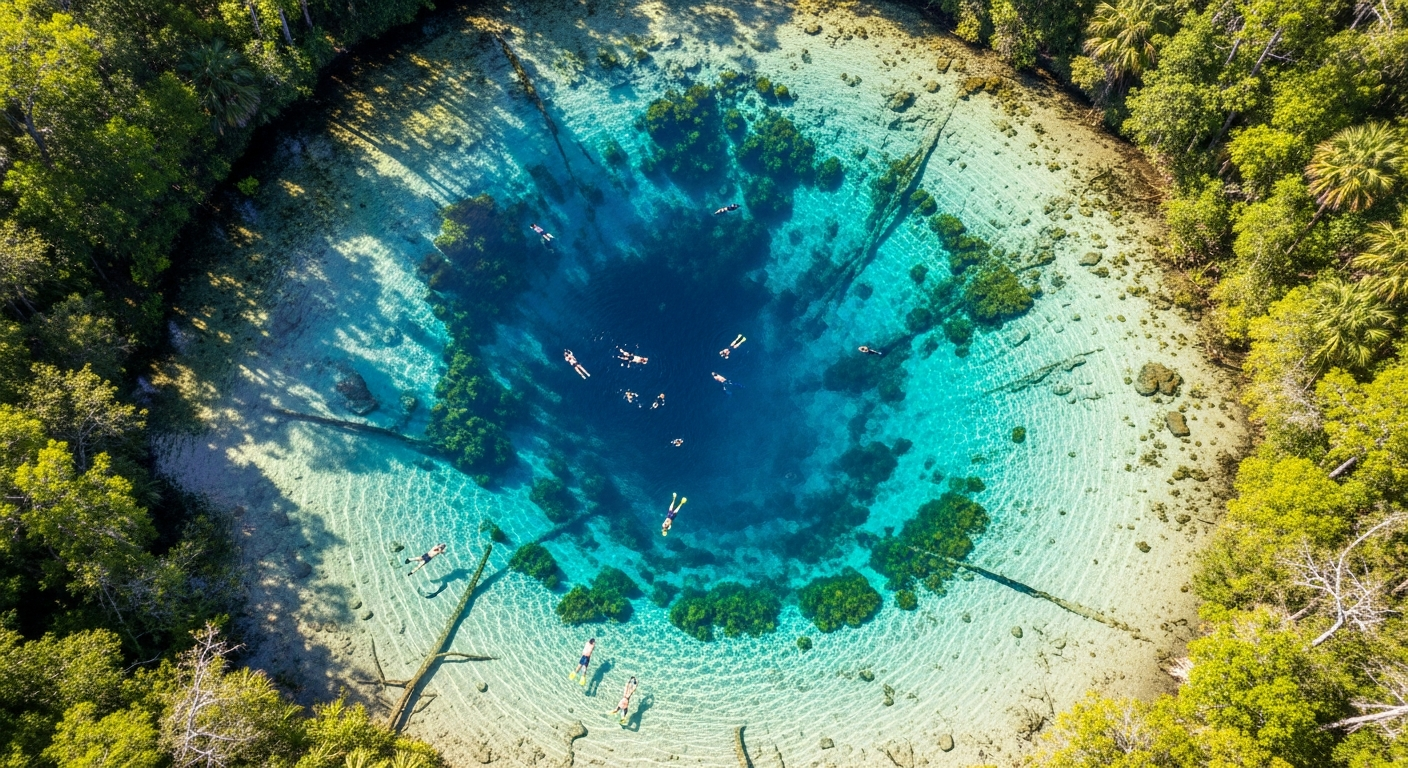
clearest springs in florida silver glen springs

My mask had barely touched the water’s surface when I gasped—not from the constant 72°F temperature, but from what I could see. Twenty feet below, a turtle was methodically grazing on spring grass, and I could count the individual scutes on its shell.
A school of bluegill hovered near the limestone outcropping, and I watched their gills pulse in perfect clarity. After snorkeling in a dozen Florida springs, I’d found the one that spoiled me for all others.
Here’s what most travel guides won’t tell you: not all “crystal-clear” springs are created equal. I’ve visited springs where “clear” meant you could see maybe ten feet down on a good day.
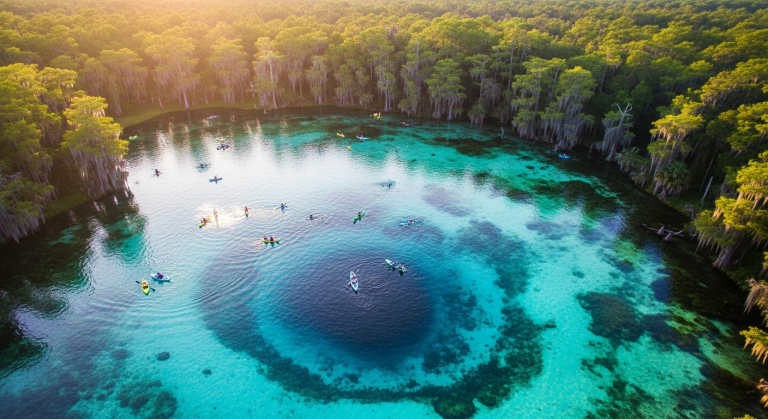
Silver Glen Springs, tucked into the Ocala National Forest, delivers visibility that genuinely reaches 50+ feet in optimal conditions.
But that clarity comes with specific timing requirements, a reservation system that confuses first-timers, and a $12 per person admission fee that catches budget travelers off guard.
The trade-off? You’re experiencing what locals quietly claim is the clearest spring in all of Florida—and after my fifth visit, I’m inclined to agree with them.
The biggest mistake I see visitors make is showing up on a Saturday afternoon in July, wondering why the water looks cloudy. I learned the hard way that timing isn’t just important at Silver Glen—it’s everything. This guide will walk you through exactly when to visit, what to bring, how much to budget, and which hidden spots to explore once the main basin fills with families. Because maximizing your limited vacation time means knowing what the guidebooks leave out.
What Makes Silver Glen Springs So Special? (The Clarity Factor)

The Science Behind the Crystal-Clear Waters
Silver Glen Springs pumps out approximately 65 million gallons of water daily from the Floridan Aquifer—a massive underground reservoir that naturally filters water through layers of porous limestone. This isn’t just marketing speak; it’s geology doing the heavy lifting. As rainwater percolates down through hundreds of feet of limestone, it emerges stripped of sediment and tannins, creating that signature blue-green clarity that photographs honestly can’t capture.
The constant 72°F temperature year-round isn’t just comfortable for swimmers—it’s a crucial factor in maintaining water clarity. Unlike surface water that experiences temperature fluctuations and algae blooms, spring water maintains consistent conditions that support a stable ecosystem without the murky overgrowth you’ll find in many natural swimming holes. The limestone also acts as a natural pH buffer, keeping the water chemistry remarkably stable.
What separates Silver Glen from other Florida springs is the relatively short spring run to Lake George. While longer runs like at Rainbow Springs can accumulate sediment and vegetation, Silver Glen’s compact system means you’re swimming in water that’s just emerged from the aquifer. When locals claim it’s the clearest spring in Florida, they’re comparing it to heavy-hitters like Ginnie Springs and Ichetucknee. I’ve snorkeled all three, and Silver Glen wins on peak clarity—though I’ll acknowledge that Ginnie has better cave systems for certified divers.
First-Time Visitor Expectations: What You’ll Actually See
Let me set realistic expectations: on a Tuesday morning in October, with no recent rain, you’ll experience that legendary 50+ foot visibility. The spring basin reveals every detail—the limestone formations, the spring vents bubbling up from below, even individual blades of spring grass swaying in the current. I’ve spotted largemouth bass, mullet, bluegill, and the occasional gar hanging motionless in the water column. The fish here aren’t particularly afraid of humans, which makes for incredible wildlife watching.
The water color shifts throughout the day. Early morning brings a crystalline quality with almost no blue tint—just pure, colorless transparency. As the sun climbs higher, the water takes on that iconic azure hue that makes Florida springs famous. By midday, when the sun is directly overhead, the contrast between the deep blue spring vents and the lighter sandy areas creates a natural mosaic that’s genuinely breathtaking.
But here’s the honest truth: you won’t always get that postcard-perfect clarity. After heavy rains, tannic water from Lake George can push up the spring run, reducing visibility to 20-30 feet. On busy weekends, dozens of swimmers stir up the sandy bottom, creating a temporary haze. I once visited on Memorial Day weekend and could barely see 15 feet—a reminder that even the clearest spring in Florida has its off days.
Best Times to Experience Peak Clarity
The magic window is 8:00 AM to 10:00 AM on weekdays, particularly September through May. I’ve arrived at 7:45 AM (the gates open at 8:00 AM during most seasons) and had the entire spring basin to myself for a solid hour. The water sits undisturbed overnight, allowing any suspended particles to settle. It’s during these early morning sessions that you’ll experience the visibility that makes Silver Glen legendary.
Seasonal variations matter more than most visitors realize. Winter (December through February) offers the best overall clarity because fewer swimmers mean less sediment disturbance, and cooler air temperatures keep the crowds thin. The 72°F water feels downright warm when the air temperature is 55°F. Summer brings peak crowds and afternoon thunderstorms that can temporarily cloud the water. I’ve learned to check the weather forecast not just for rain on my visit day, but for the three days prior—recent rainfall impacts clarity significantly.
Weekday versus weekend is a night-and-day difference. I visited on a Thursday in January and counted maybe 15 other people total. The following Saturday, I estimated 200+ visitors by noon. If you can only visit on weekends, arrive right at opening and plan to leave by 11:00 AM before the main rush hits. The parking lot fills up quickly, and once the reservation slots are gone during peak season, you’re simply turned away.
The Complete Cost Breakdown (No Hidden Fees)

Admission and Parking Fees
The admission fee is $12 per person for day use—not per vehicle, per person. This catches families off guard. A family of four pays $48 just for entry, which is significantly higher than many Florida state parks. Children under 6 are free, which helps slightly, but budget accordingly. This fee is collected at the entrance station, and they accept cash or card.
During peak seasons (typically May through August, plus major holiday weekends), you must also book a parking pass through ReserveOcala.com in addition to the admission fee. Here’s where it gets confusing: the parking reservation system doesn’t charge an additional fee, but it limits capacity. You’re essentially reserving your parking spot to ensure the spring doesn’t become dangerously overcrowded. I learned this the hard way when I drove 90 minutes from Orlando on a July Saturday, only to be turned away because all parking slots were booked.
The reservation process is straightforward once you know the system. Visit ReserveOcala.com, select “Day Use Areas,” find Silver Glen Springs, and book your date. Do this at least two weeks in advance for summer weekends—I’ve seen popular dates fully booked a month out. The system releases reservations at midnight 90 days before the visit date, so mark your calendar if you’re planning a specific summer weekend.
Budget-Friendly Tips for Maximum Value
Florida residents can purchase an annual Ocala National Forest pass for $40, which covers admission to Silver Glen Springs and other forest recreation areas. If you plan to visit more than three times in a year, this pays for itself immediately. The pass covers the vehicle, not individual passengers, which makes it particularly valuable for families.
What’s included in your admission: parking, access to the spring basin, use of the picnic areas and pavilions, and access to restrooms and changing facilities. What costs extra: absolutely nothing on-site. There’s no gear rental available (more on that in a moment), no food vendors, and no additional activity fees. This is refreshingly simple compared to some commercial springs that nickel-and-dime you for tubes, snorkel gear, and parking.
The free activities you shouldn’t miss include hiking the short nature trail that loops around the spring run—it’s only about a half-mile but offers gorgeous views of the spring from above. The picnic pavilions are first-come, first-served, and I’ve found that if you arrive early, you can claim a shaded spot for your entire visit. The spring-fed swimming area naturally includes the entire basin and spring run, giving you hundreds of yards to explore without paying for a “special snorkeling area” like at some springs.
Total Day Trip Budget Estimate
For a solo traveler: $12 admission, $15-20 if you need to buy reef-safe sunscreen and snacks, $25-30 in gas from Orlando or Jacksonville (round trip). Total: approximately $50-60 for a full day. If you bring your own gear and pack lunch, you can realistically do this for under $40.
For a family of four (two adults, two kids over 6): $48 admission, $40-50 for gas and snacks if you’re buying on the road, potentially $30-40 if you need to rent or buy snorkel gear. Total: $120-140. However, if you pack a cooler with lunch and already own snorkel masks, you’re looking at closer to $80-90 total.
The gear rental situation is worth addressing directly: Silver Glen Springs does not offer equipment rental on-site. The nearest place to rent snorkel gear is in Ocala, about 30 minutes away, which isn’t practical for a day trip. You have three options: buy budget snorkel gear for $20-30 per person at a sporting goods store on your way, invest in quality gear if you’ll visit multiple springs ($50-80 per person for decent mask, snorkel, and fins), or go without and just swim. I strongly recommend bringing gear—you’re missing 80% of the experience if you can’t see underwater.
Planning Your Perfect Visit (Timing Is Everything)

Peak Season vs. Off-Season Strategy
Summer (May through August) brings the crowds, the heat, and the parking reservation headaches. Water clarity is still excellent in early morning hours, but by noon on a Saturday, you’re sharing the spring with hundreds of other visitors. The advantage? The 72°F water feels refreshing when air temperatures hit 95°F. The disadvantage? You’ll spend more time navigating swimmers than actually observing fish.
Winter’s secret advantage is something I wish I’d discovered earlier: fewer people, identical water clarity, and a completely different experience. I visited on a January Wednesday and had the spring practically to myself for three hours. Yes, the 72°F water still feels perfectly comfortable, but getting out into 60°F air requires planning—bring a towel and a warm layer for between swims. The spring stays open year-round, and winter is when you’ll get those postcard-perfect photos without a hundred people in the background.
Spring break (March) is the one period I actively avoid. Florida spring break, Georgia spring break, and Northern spring breaks all overlap slightly, creating a weeks-long crush of visitors. The spring can handle the crowds safely, but the experience shifts from peaceful nature immersion to something closer to a busy community pool. If spring is your only option, aim for early April after most schools are back in session.
Ideal Length of Visit
A half-day visit (3-4 hours) is perfect for most people. Arrive at opening, snorkel the spring basin and run for two hours, take a break for lunch at the picnic area, do one more swim, and head out by early afternoon. This gives you the best water clarity, avoids the midday crowds, and doesn’t overstay the experience. The spring basin isn’t enormous—you can thoroughly explore it in a couple of hours.
A full-day visit works if you’re combining Silver Glen with camping or if you’re bringing kids who want to play in the shallow areas for extended periods. I’ve done full days where I alternated between snorkeling, hiking the nature trail, reading in the shade, and taking multiple dips to cool off. It’s a relaxing way to spend a day, but be honest about whether you’ll actually use those extra hours or if you’re just lingering because you paid the admission fee.
Weather contingencies: Florida afternoon thunderstorms are nearly guaranteed in summer. The spring closes when lightning is within range (you’ll hear the warning siren), and everyone must exit the water. I’ve had visits cut short by storms rolling in at 2:00 PM—another reason to arrive early and get your swimming done before the afternoon weather pattern kicks in. Check the hourly forecast, not just the daily summary, and plan your visit around the predicted storm windows.
What to Bring: The Ultimate Packing List

Snorkeling Essentials (Don’t Skip These)
A proper-fitting mask is non-negotiable. I’ve watched countless visitors struggle with leaky masks, spending more time adjusting than actually snorkeling. The mask should create a seal without the strap—hold it to your face and inhale through your nose; if it stays put, it fits. I use a Cressi F1 frameless mask ($40-50) that’s served me well across dozens of springs. For kids, the Phantom Aquatics mask with adjustable straps works better than adult masks that are too large.
Fins genuinely make the difference between casually floating and efficiently exploring the spring run. The run stretches nearly a mile to Lake George, and fighting the current without fins gets exhausting. I prefer short, travel-friendly fins like the Cressi Palau ($30-40) that pack easily but still provide good propulsion. Full-foot fins work better than adjustable in the warm water—no need for booties.
Underwater cameras range from budget to professional. Your waterproof phone case ($15-25) will capture decent shots in the incredible visibility, though colors tend to wash out without filters. I upgraded to a GoPro Hero ($200-300) and the color difference is remarkable—the blues and greens pop. Whatever you use, the key is getting close to your subjects. The water is so clear you can shoot from 10 feet away, but getting within 3-4 feet makes the fish and details really stand out.
Comfort and Safety Items
Reef-safe sunscreen is legally and ethically required. Florida has been cracking down on harmful sunscreens in spring systems, and for good reason—chemicals like oxybenzone devastate aquatic ecosystems. I use Stream2Sea ($14-16 for 3 oz) or Badger Unscented ($15-18), both mineral-based and truly reef-safe. Apply 30 minutes before entering the water and reapply after drying off. The Florida sun is brutal, and I’ve seen too many visitors turn lobster-red by noon.
Water shoes protect your feet on the rocky spring bottom and the concrete areas around the basin. The spring bottom is primarily sand, but limestone rocks and shells are scattered throughout. I’ve cut my foot on a sharp shell, learned my lesson, and now always wear Aleader mesh water shoes ($25-30) that drain quickly and provide decent traction. Skip the flip-flops—they’ll float away the moment you enter the water.
A waterproof dry bag (10-20 liter size, $15-25) keeps your phone, keys, and wallet safe while you swim. The picnic areas have tables but no lockers, and while I’ve never experienced theft, leaving valuables unattended isn’t smart. I use a Sea to Summit dry bag that I can leave at my picnic table with confidence, or even float with me if I’m doing an extended swim down the run.
Local Insider Tips on Gear
What you cannot rent on-site: anything. No snorkel gear, no tubes, no kayaks, no life jackets. The nearest rental options are 30+ minutes away in Ocala. Plan accordingly—this isn’t a show-up-empty-handed kind of place. The Forest Service intentionally keeps the site undeveloped, which I appreciate for the natural experience but which requires more preparation than commercial springs.
Items first-timers forget: a towel (the changing facilities have no towel service), a cooler with ice (no food vendors on-site), cash for the entrance fee (they accept cards, but cell service is spotty and the card reader occasionally fails), and a change of clothes. I keep a complete backup outfit in the car because driving home in a wet swimsuit for 90 minutes is miserable.
Unnecessary items that waste packing space: snorkel vests (the water is calm and easy to float in), underwater scooters (the spring run is short and the current does the work), massive beach umbrellas (the pavilion provides shade), and excessive beach toys (the spring is for swimming and snorkeling, not building sandcastles). Pack light and focus on the essentials—your car will thank you.
The Authentic Silver Glen Springs Experience

Snorkeling the Spring Run: A Breathtaking Adventure
The spring run flows from the main basin toward Lake George, creating a natural lazy river with crystal-clear visibility. I start at the basin’s eastern edge where the run begins, then drift with the gentle current. The run narrows to maybe 30 feet wide in places, with spring grass creating underwater meadows on both sides. This is where I’ve spotted the most wildlife—bass lurking in the grass, mullet schooling in the current, and turtles surfacing for air.
The aquatic vegetation here is stunning. Eelgrass and coontail create underwater forests that sway in the current, and the clarity lets you observe the entire ecosystem. I’ve watched tiny fish dart between grass blades, seen crayfish scuttling along the limestone bottom, and even spotted a small alligator (they’re rare but present—more on that in safety section). The spring grass is protected, so don’t touch or disturb it, but swimming above this underwater landscape feels like flying over an alien world.
For beginners, stay in the main basin where the water is calm and the depth is manageable (10-15 feet in most areas). The basin is spring-fed with minimal current, making it perfect for practicing your snorkeling skills. Experienced swimmers should absolutely explore the run—follow it downstream for a quarter-mile, and you’ll find quieter sections where fish are less accustomed to humans. The run eventually opens into Lake George, but I recommend turning back before you reach the lake proper, as the water clarity drops significantly where spring water meets lake water.