
Alpine Mountain Wellness Retreat Ideas

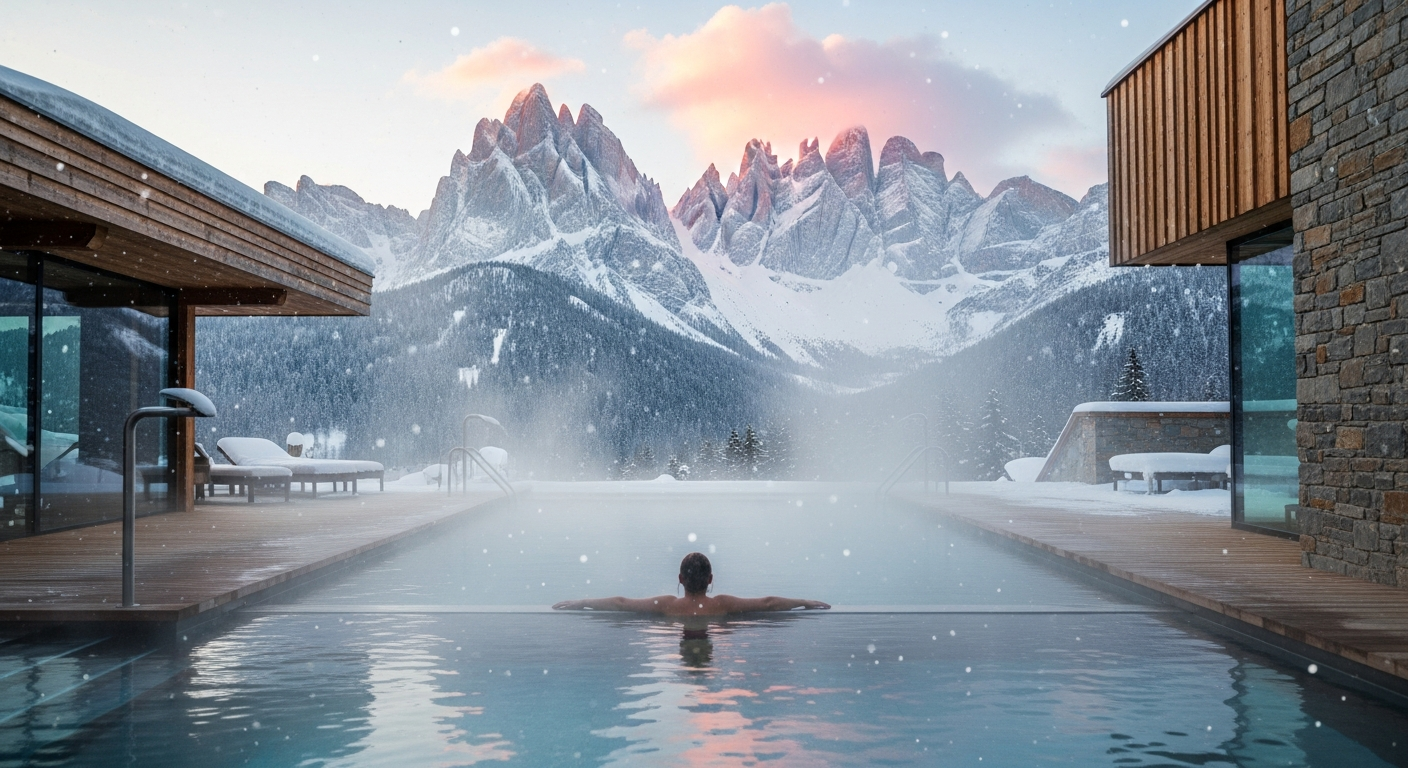
I’m waist-deep in an outdoor thermal pool at 1,100 meters, watching snowflakes dissolve on the water’s surface while the Leogang Stone Mountains turn violet in the fading light. The air temperature is -4°C. The water is 38°C.
My heart rate has dropped 12 beats per minute since I arrived three hours ago—not because I’m relaxed (though I am), but because the stone pine-lined walls of this alpine spa are releasing documented cardiovascular benefits with every breath.
This is Priesteregg Premium ECO Resort in Austria, and it costs $319 per night. That’s 30% less than equivalent properties in the Italian Dolomites, where the same experience—infinity pools framing UNESCO peaks, private saunas in individual chalets, treatments using botanicals you can’t get anywhere else—runs $451 on average.
If you’ve spent hours scrolling through aspirational spa photography, wondering which mountain retreat properties deliver authentic wellness (not just Instagram-worthy bathtubs with mountain backdrops), the difference matters.
This guide delivers named properties with exact pricing, alpine-specific treatments unavailable at coastal spas, and the functional differences between a Bavarian longevity retreat and a Dolomites design hotel.
Drawing from verified Booking.com 2025 pricing data, National Geographic wellness research, and firsthand resort analysis across Austria, Italy, Bavaria, and Switzerland, this is your complete planning resource for alpine wellness retreats that combine centuries-old healing traditions with modern spa interior design.
What Makes a Mountain Retreat Different from Regular Spas

The Five Pillars of Alpine Wellness Philosophy
Walk into any mountain retreat spa in the Austrian Alps and you’ll encounter the Kneipp Method within the first hour—a contrast therapy protocol founded in the 1890s by Sebastian Kneipp that’s now UNESCO-recognized.
You start with a 5-10 minute warm bath that draws blood to your skin’s surface, then immediately plunge into 20-60 seconds of cold water that triggers a vascular response.
Repeat this cycle 3-5 times, finishing with a Kneipp Path where you walk through guided alpine stream circuits with nebulized hot and cold jets.
The science is straightforward: improved circulation, reduced inflammation, vascular training that persists for days after treatment. You won’t find this at Bali yoga retreat centers or Arizona destination spas.
Altitude functions as medicine. Mountain air at 1,100 meters and above delivers measurable benefits beyond scenic views. Thinner air increases oxygen intake efficiency, documented studies show reduced anxiety markers in regular mountain visitors, and sleep quality improves within 48 hours of arrival.
Properties like Priesteregg and Vigilius Mountain Resort position treatment rooms and infinity pools at specific elevations because the altitude itself is therapeutic.
Alpine retreats practice terroir-based treatments that rotate seasonally. In summer, therapists use fresh-cut Alpine herbs harvested at 1,500+ meters—stone pine, mountain hay flowers, high-altitude botanicals with essential oil profiles you can’t replicate at lower elevations.
Come winter, those same herbs are fermented and dried, creating entirely different treatment experiences. Compare this to generic luxury spas importing the same products worldwide regardless of season or location.
Architectural Integration You Won’t Find Elsewhere
Floor-to-ceiling windows aren’t just aesthetic choices at properties like Vigilius Mountain Resort and Lefay Resort & SPA Dolomiti—they’re a therapeutic design.
Treatment rooms, thermal pools, and relaxation lounges frame specific mountain vistas because the views themselves are part of the healing protocol. You’re positioned to watch alpenglow on the Dolomites’ distinctive pink limestone or track weather patterns moving across the Zugspitze massif. The architecture uses panoramic glass to bring measurable stress-reduction benefits from natural landscapes directly into the treatment experience.
Eco-construction standards here go beyond greenwashing. Priesteregg carries full eco-certification, using locally quarried stone and sustainably sourced wood—specifically stone pine (Zirbenholz), which releases aromatic compounds that reduce heart rate and improve sleep quality according to Austrian forestry studies. The wood itself is medicine. Many properties like Vigilius operate on car-free access models, requiring cable car arrival that eliminates vehicle emissions and creates psychological separation from daily life. The modern chalet aesthetic you see—natural wood tones, local stone, minimalist lines—isn’t just design trend following. It’s functional architecture supporting the wellness philosophy.
Nordic Rituals vs. Global Spa Culture
Bali yoga retreat centers focus on spiritual practice. Arizona destination spas emphasize medical detox. Alpine wellness combines physical therapy (Kneipp circuits, hay baths), mountain air science, and cultural traditions spanning Swiss, Austrian, Italian, and Bavarian lineages. A typical day includes morning mountain air exposure during guided hikes, midday Kneipp hydrotherapy that’s part physical therapy and part cardiovascular training, and evening treatments using locally foraged botanicals that change with the seasons. It’s the ultimate blend of nature therapy and European spa heritage, delivered in luxury spa settings where the architecture itself reinforces every element of the wellness program.
Luxury Spa Destinations in the Alps (By Region)

Austrian Alps – Best Value for Authentic Alpine Wellness
Priesteregg Premium ECO Resort sits at 1,100 meters in the Leogang Stone Mountains, offering private chalets where each unit includes an individual sauna and hot tub. The infinity pool overlooks jagged limestone peaks, and the entire property carries independently verified eco-certification. This is a mountain retreat designed for couples wanting exclusivity without ultra-luxury pricing, and it accommodates families through adventure programming that keeps kids engaged while adults cycle through spa treatments. The Austrian Alps average $319 per night according to Booking.com’s 2025 data—a 30% discount compared to Italian Dolomites equivalents.
Named properties worth researching include Interalpen-Hotel Tyrol in the Tyrol region, Stock Resort, Hotel Schloss Mönchstein, Chalet Mimi, and Kaiserhof. All deliver authentic Kneipp tradition, eco-lodge construction with modern chalet design sensibility, and budget flexibility that doesn’t sacrifice treatment quality. If you want stone pine aromatherapy in rooms constructed from the actual wood, hay bath rituals using fermented Alpine botanicals harvested within 50 kilometers, and Kneipp Paths fed by actual mountain streams, Austrian retreats deliver hidden value that Italian properties charge premium rates for.
Italian Dolomites – Ultra-Luxury Design Hotels
Lefay Resort & SPA Dolomiti in Pinzolo averages $451 per night and carries the same eco-certification as its sister property at Lake Garda, but with a more holistic wellness concept. Three indoor pools overlook UNESCO World Heritage Dolomite peaks, and the spa interior uses local stone and floor-to-ceiling windows that frame the distinctive pink limestone these mountains are famous for. This is where you go when architectural innovation matters as much as the treatments themselves.
Vigilius Mountain Resort in Lana requires cable car access—it’s genuinely car-free. Agoda lists the average at $465 per night, though Kayak shows Superior rooms at $320 and Deluxe at $421, revealing pricing flexibility if you book strategically. As a Design Hotels member, Vigilius attracts travelers who want modern minimalist architecture meeting Dolomite drama. The luxury spa here emphasizes clean lines, natural materials, and treatments using altitude-specific botanicals you can’t source at lower elevations.
The regional cluster includes COMO Alpina, Miramonti Boutique Hotel, and Adler Lodge Alpe. The Dolomites attract design-forward travelers willing to pay premium rates for architectural innovation combined with authentic alpine wellness traditions. If your Pinterest boards feature beautiful bathtubs positioned against floor-to-ceiling mountain views, you’re looking at Dolomites properties.
Bavarian & Swiss Alps – Cultural Longevity Retreats
Schloss Elmau sits between Zugspitze and Karwendel mountains in Bavaria, offering ultra-luxury accommodations where multiple spa areas include a rooftop pool and cultural programming that’s hosted G7 summits. This isn’t a yoga retreat focused solely on physical practice—it’s a longevity-focused wellness center for travelers seeking intellectual and physical rejuvenation simultaneously. Expect classical music performances, literary readings, and spa treatments grounded in German medical spa tradition rather than holistic wellness philosophy. If you want clinical precision and measurable health outcomes, Bavarian retreats deliver that better than Italian properties emphasizing aesthetic experience.
The Swiss Alps offer 21+ luxury properties according to MyPremiumEurope’s curated collection, with Condé Nast-featured hotels dominating the landscape. Switzerland delivers the most diverse spa hotel density across all alpine regions but at the highest price points. If budget isn’t your primary constraint and you want maximum property choice within a single country, Swiss options provide that breadth.
The French Alps deserve mention for properties like Les Fermes de Marie in Megève and La Folie Douce in Chamonix, where French gastronomy fuses with alpine wellness. These mountain retreat centers emphasize culinary experience as part of the wellness program—not as an add-on, but as core therapy.
Signature Treatments at an Alpine Yoga Retreat or Spa

Kneipp Method Hydrotherapy (The Secret Alpine Ritual)
Here’s the step-by-step experience you’ll encounter at properties like Terme di Rabbi and most Austrian alpine spas: Start with a 5-10 minute warm bath that draws blood to your skin’s surface, creating visible flushing. Immediately follow with a cold plunge lasting 20-60 seconds—this triggers the vascular response that delivers the method’s documented benefits. You’ll feel your heart rate spike, then rapidly normalize. Repeat this cycle 3-5 times, with each repetition training your cardiovascular system to respond more efficiently to temperature stress. Finish with a Kneipp Path, where you walk barefoot through guided alpine stream circuits equipped with nebulized hot and cold jets targeting specific muscle groups and pressure points.
The benefits are measurable: improved circulation that persists for 48-72 hours post-treatment, reduced chronic pain in joints and muscles, stress hormone reduction, and immune system boost. Sebastian Kneipp founded this method in the 1890s, and it’s now UNESCO-recognized as intangible cultural heritage. The best time to experience Kneipp therapy is after morning mountain hikes or skiing, when your muscles are warm and your cardiovascular system is already activated.
Hay Bath Ritual (You Can’t Get This Anywhere Else)
Fermented mountain hay flowers are heated and applied as full-body wraps in this treatment exclusive to alpine luxury spa settings. The fermentation process releases essential oils and generates internal heat up to 60°C, creating a detoxifying sauna effect that penetrates deeper than surface-level heat. You’re wrapped in layers of this fermented hay for 60-90 minutes while the botanical compounds—unique to high-altitude Alpine meadows—work on muscle tension and circulation.
Seasonal rotation matters here. Summer treatments use fresh-cut Alpine hay harvested within weeks of your visit, delivering different aromatic profiles and essential oil concentrations than winter’s dried, fermented hay from the previous season’s harvest. The terroir is specific: hay from 1,500+ meter elevations contains botanical profiles you can’t replicate at lower altitudes. Priesteregg and traditional Austrian spas offer authentic hay baths—if a “mountain spa” menu doesn’t mention this treatment, it’s not tapping into real alpine wellness traditions.
Stone Pine Aromatherapy & Alpine Herb Therapies
Zirbenholz (stone pine) reduces heart rate and improves sleep quality according to documented Austrian forestry studies. This isn’t aromatherapy marketing—it’s measurable physiological response to volatile compounds the wood releases continuously. Alpine spa interior design incorporates stone pine in room construction, sauna lining, and massage oil formulations because the wood itself delivers therapeutic benefits beyond its aesthetic appeal. You’ll sleep better in a stone pine-lined room than in an identical room constructed from generic lumber.
Alpine herb treatments rotate seasonally in ways that reveal whether a property sources locally or imports generic spa products. Summer brings fresh Alpine rose, mountain arnica, and edelweiss harvested at peak potency. Therapists at authentic retreats can tell you the exact meadow elevation where this week’s botanicals were foraged. Winter treatments shift to preserved herbs, fermented preparations, and essential oil concentrations that deliver different therapeutic profiles. Properties that practice true alpine tradition adjust their treatment menus quarterly—if the menu looks identical in June and December, you’re seeing imported products.
Design Elements That Define Alpine Spa Architecture
Floor-to-Ceiling Panoramic Windows as Therapy
When Vigilius Mountain Resort positions treatment rooms to frame specific Dolomite peaks, and Lefay orients its infinity pools toward UNESCO World Heritage mountain vistas, this isn’t just luxury bathroom interior design following aesthetic trends. Panoramic windows serve as therapeutic infrastructure, bringing documented stress-reduction benefits from natural landscapes directly into the spa experience. You’re positioned to watch real-time weather patterns, track alpenglow color shifts across specific geological formations, and maintain visual connection to the altitude that’s delivering measurable physiological benefits.
The spa bathroom design in these properties extends this principle to private spaces. Beautiful bathtubs aren’t just positioned near windows—they’re architecturally integrated so the tub, the view, and the framing work as a single therapeutic element. Properties like Priesteregg place individual hot tubs on private chalet terraces where you’re submerged in 38°C water while surrounded by -4°C air and unobstructed mountain panoramas.
Natural Material Palette & Eco-Construction
Stone pine (Zirbenholz) appears in authentic alpine spa interior design not because it’s trendy but because Austrian forestry research documents its cardiovascular benefits. The wood releases aromatic compounds that reduce heart rate and improve sleep quality—measurable effects that persist as long as the wood remains exposed to air. Properties like Priesteregg and Lefay use locally quarried stone and sustainably sourced wood as structural elements, not decorative veneers. You can verify this: authentic eco-construction shows wood grain variation, natural stone color inconsistency, and material aging that reveals genuine local sourcing.
The modern chalet aesthetic—natural wood tones, exposed stone, minimalist lines—originated as functional architecture supporting wellness philosophy, not as design trend. When you see this aesthetic in authentic alpine retreats, you’re looking at materials chosen for therapeutic properties first and visual appeal second. Generic mountain hotels reverse this priority, using stone and wood veneers over conventional construction.
Altitude as Architectural Feature
Positioning properties at 1,100+ meters isn’t just about views—it’s about accessing measurable altitude benefits. Thinner air increases oxygen intake efficiency, documented studies show reduced anxiety markers in regular mountain visitors, and sleep quality improves within 48 hours of arrival at these elevations. Properties like Priesteregg and Vigilius build at specific altitudes because the elevation itself is therapeutic infrastructure.
Car-free access models reinforce this. Vigilius requires cable car arrival, creating psychological separation from daily life the moment you board. You can’t check email during the ascent—you’re watching altitude gain and landscape transformation in real time. This architectural decision supports the wellness philosophy more effectively than any treatment menu could alone.
How to Choose Your Alpine Retreat (Decision Framework)
Budget Tiers & Regional Value
Austrian Alps properties average $319 per night according to Booking.com 2025 data, delivering authentic Kneipp tradition, eco-certified construction, and locally sourced treatments at 30% less than Italian Dolomites equivalents. If budget is your primary constraint but you refuse to sacrifice treatment authenticity, Austrian mountain retreat centers like Priesteregg, Interalpen-Hotel Tyrol, and Stock Resort deliver maximum value.
Italian Dolomites properties justify their premium through architectural innovation and design hotel credentials. Lefay, Vigilius, and COMO Alpina attract travelers for whom spa interior design and modern minimalist aesthetics matter as much as the treatments themselves. If you’re willing to pay $451-$465 per night for that specific aesthetic combined with UNESCO World Heritage backdrops, Dolomites properties deliver what you’re visualizing.
Swiss Alps offer the broadest property selection (21+ luxury options) but at the highest price points. Bavaria’s Schloss Elmau targets longevity-focused travelers seeking clinical precision rather than holistic wellness philosophy. Choose your region based on whether you prioritize value (Austria), design innovation (Dolomites), property diversity (Switzerland), or medical spa tradition (Bavaria).
Couples vs. Family & Wellness Philosophy
Priesteregg accommodates families through adventure programming—kids engage in mountain activities while adults cycle through spa treatments. This is rare among alpine luxury spa properties, most of which target couples exclusively. If you’re traveling with children and refuse to compromise on authentic alpine wellness, Priesteregg is your primary option in the Austrian Alps.
Wellness philosophy varies significantly: Lefay emphasizes holistic integration, Schloss Elmau focuses on longevity and measurable health outcomes through German medical spa tradition, and Austrian retreats center on Kneipp hydrotherapy and terroir-based treatments. If you want spiritual practice integrated throughout, look for properties explicitly marketing yoga retreat programming—many alpine spas offer yoga classes but don’t structure the entire experience around practice.
Eco-Certification & Car-Free Access
Priesteregg and Lefay carry independently verified eco-certification, not just marketing claims about sustainability. Car-free access (Vigilius, some Swiss properties) eliminates vehicle emissions and creates psychological separation from daily life—you can’t bring work stress if you can’t drive to the property.
What to ask when booking: Does the property use locally sourced Alpine herbs? Are treatments seasonal? Is architecture certified eco with verified standards? What’s the exact altitude (1,100m+ delivers measurable oxygen benefits)? If the booking agent can’t answer these questions specifically, you’re looking at a hotel with spa amenities, not an authentic alpine wellness retreat.
Your Next Move: Booking the Right Alpine Experience
The single most important decision is matching regional strengths to your priorities: Austrian Alps for authentic Kneipp tradition at $319/night value, Italian Dolomites for design hotel innovation at $451+ premium, Bavaria for clinical longevity focus, or Switzerland for maximum property diversity. Everything else—specific treatments, architectural details, seasonal timing—flows from that regional choice.
Your immediate next action: Open three browser tabs. First tab: Priesteregg’s official site (priesteregg.at) to see what $319/night delivers in the Austrian Alps—private chalets, eco-certification, individual saunas and hot tubs, infinity pools framing Leogang peaks. Second tab: Lefay Dolomiti (dolomiti.lefayresorts.com) to compare what $451/night buys in Italian design hotel territory—three indoor pools, holistic wellness programming, UNESCO mountain backdrops. Third tab: Booking.com or Kayak with your travel dates, filtering for properties at 1,100+ meter elevations in your chosen region. Compare the specific treatments each property lists: if they mention Kneipp circuits, hay baths, stone pine aromatherapy, and seasonal Alpine herb rotations, you’re looking at authentic alpine wellness. If the menu lists generic Swedish massage and hot stone therapy without regional specificity, keep scrolling.
Seasonal timing affects more than just pricing. Summer delivers fresh Alpine herb harvests and outdoor thermal pool access with mountain hiking integration. Winter brings fermented hay season, post-ski Kneipp therapy, and thermal contrast experiences (38°C pools surrounded by -4°C air and snow). Shoulder seasons (late spring, early fall) offer 20-30% pricing discounts while maintaining full treatment availability—the herbs are still fresh in May, the snow hasn’t arrived yet in October, and you’re avoiding peak summer and winter crowds.
The mistake to avoid: booking based on Instagram imagery alone. Those beautiful bathtubs with floor-to-ceiling mountain views photograph identically whether they’re at an authentic alpine wellness retreat or a generic luxury hotel that happens to be near mountains. Verify the property offers treatments you can’t get elsewhere—Kneipp hydrotherapy founded in the 1890s and UNESCO-recognized, hay baths using fermented Alpine botanicals harvested at 1,500+ meters, stone pine construction delivering documented cardiovascular benefits, seasonal treatment rotations reflecting local terroir. If the spa menu looks identical to what you’d find at a Bali resort or Arizona destination spa, you’re paying alpine prices for generic wellness.
Book your alpine wellness retreat for the treatments that justify the elevation, not just the views from your room. The mountains deliver measurable benefits—thinner air increasing oxygen intake, documented anxiety reduction, improved sleep quality—but only if you’re at properties positioned to maximize those benefits through architecture, treatment programming, and genuine integration of alpine wellness traditions. Start with the regional choice (Austria for value, Dolomites for design, Bavaria for longevity, Switzerland for diversity), verify the property offers authentic alpine-specific treatments, and book during the season that aligns with the botanical rotations you most want to experience. The perfect alpine wellness retreat isn’t the one with the most stunning photography—it’s the one where every element, from the stone pine construction to the altitude-specific treatments to the Kneipp circuits fed by actual mountain streams, works together to deliver benefits you can’t access anywhere else.