12 best hikes in oregon

Oregon packs more hiking diversity into one state than most countries offer across entire mountain ranges. In a single week, you can walk behind a 100-foot waterfall in the Columbia Gorge, scramble to a 10,000-foot alpine summit in the Cascades, stand on a coastal headland watching whales migrate, and hike through lava fields painted in rust and ochre. The problem isn’t finding great trails. It’s choosing between 300+ of them when you’ve got maybe five vacation days.
You’re worried about permits you don’t understand. You’ve read conflicting information about snow closures, parking nightmares, and which “famous” trails actually deliver versus which are Instagram traps. This guide cuts through the noise with specific recommendations matched to your fitness level, exact mileage and elevation gain, concrete logistics, and honest trade-offs so you maximize every hiking day in Oregon.
Best Hiking Spots in Oregon: Choosing Your Perfect Region

Cascade Mountains: Alpine Lakes and Volcanic Peaks
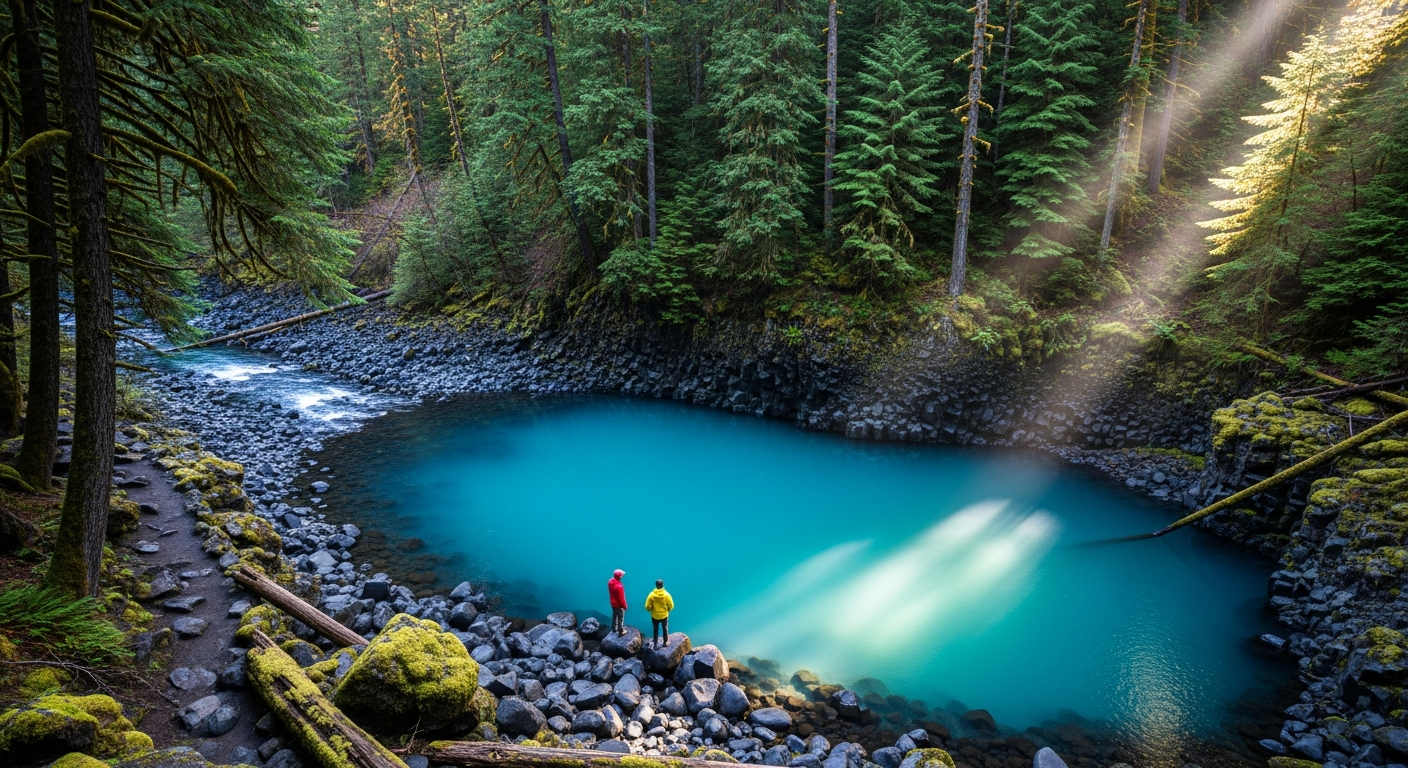
The Cascades offer turquoise glacial lakes, wildflower meadows, and 10,000-foot volcanic peaks rising from dense old-growth forest. This is where South Sister, Mount Hood, and the Three Sisters Wilderness live. Access window: July through October. Most high-elevation trails are snow-blocked through June. By November, the passes start closing again.
Drive times from Portland: 1.5 to 4 hours depending on the trailhead. Mount Hood National Forest trails are closest at 1.5 hours. The Three Sisters Wilderness is 3 hours. Popular trails like South Sister and Eagle Creek fill up days in advance during peak season.
Columbia River Gorge: Waterfall Corridor
Eighty miles of canyon with more waterfall hikes than any other region in Oregon. The gorge has 10+ waterfalls, most with far fewer crowds than famous Multnomah Falls. The forest is Sitka spruce and Douglas fir, dense and primordial. Most gorge trails are 3 to 5 miles with modest elevation gain—the easiest hiking region in the state.
The gorge is accessible year-round, but spring (April-May) is peak waterfall season when snowmelt pushes water flow to maximum. Critical logistics: The Columbia Gorge National Scenic Area requires a free permit April through October (reserve at Recreation.gov at least two days ahead). You’ll also need an NW Forest Pass ($5 per day or $30 annual) for most trailheads. Drive time from Portland: 30 minutes to 1.5 hours.
One thing most guides don’t mention: many gorge trails are still recovering from the 2017 Eagle Creek Fire. Check the USFS website before driving. Eagle Creek Trail itself reopened in 2022 but verify current status 48 hours before your trip.
Oregon Coast: Rugged Headlands and Tidepools
Rocky headlands drop 300 feet to crashing waves. Old-growth spruce forests meet the ocean. You’ll see sea lions, migrating whales, and tide pools packed with starfish and anemones. Hiking here is shorter (1 to 6 miles mostly) but scenery is unmatched.
Spring (March-May) brings wildflowers and calm seas. Fall is the sweet spot—fewer crowds, perfect temperatures. Winter is storm-watching season. Critical detail most people miss: tide charts matter. Some coastal hikes require tide windows to access certain sections safely. Check tide times before heading out. The marine layer fog can roll in suddenly and reduce visibility from 10 miles to 100 feet in minutes. Bring layers even on sunny-forecast days.
Waterfall Hikes: Oregon’s Most Stunning Cascades

Tamanawas Falls: The Moderate Introduction
Tamanawas Falls is 3.8 miles round-trip with 400 feet of elevation gain. The waterfall is 100 feet tall, pouring into a clear pool. You’ll hike through old-growth Douglas fir, cross a creek on an easy log bridge, and arrive at the base of the cascade. Dogs are welcome.
Why this beats crowded Multnomah Falls: Multnomah is 620 feet tall and photographed by 2 million people per year. The parking lot is massive. The trail is paved. You’re hiking shoulder-to-shoulder with international tour groups. Tamanawas is 30 minutes away, requires an NW Forest Pass, and gets a fraction of the crowds. The waterfall is smaller but the experience is infinitely better.
Logistics: Located in Mount Hood National Forest. NW Forest Pass required ($5 day pass, $30 annual). The parking lot fills on summer weekends by 11 AM—arrive early. Best months: June through October. Snow can linger into June on the approach.
Proxy Falls Loop: Ancient Lava Fields
Proxy Falls Loop is 1.5 miles through ancient lava fields covered in moss and small conifers. Two waterfalls—Proxy Falls and Sahalie Falls—drop into clear pools surrounded by dark basalt. This trail gets half the crowds of nearby Sahalie Falls but is equally beautiful.
Accessible late June through October only (snow-dependent). The parking lot is small, so arrive before 10 AM on weekends. The trail is flat and easy, making it perfect for families. Located near Springfield, about 90 minutes from Portland. NW Forest Pass required. Best months: July through September.
Drift Creek Falls: Coastal Canyon Suspension Bridge
Drift Creek Falls is 3 miles round-trip through a hidden coastal canyon to a 75-foot waterfall. The trail crosses a suspension bridge over a gorge, winds through old-growth Sitka spruce, and drops to the falls. This is the only waterfall hike in Oregon accessible year-round—the coastal climate means no snow.
When the Cascades are snow-blocked in winter or early spring, Drift Creek is the fallback option. The parking lot is tiny (maybe 8 spaces), so arrive before 10 AM on weekends. Located near Lincoln City on the Oregon coast, about 2.5 hours from Portland. No permit required. Best months: November through April. The suspension bridge is a solid modern structure, not a rope bridge.
Oregon Coast Hikes: Where Forest Meets Ocean

Cape Falcon Trail: Old-Growth Forest to Pacific Viewpoint
Cape Falcon Trail is 5 miles round-trip through Sitka spruce forest to a dramatic headland 300 feet above the ocean. The payoff is a sweeping view of the Pacific, sea stacks, and (in winter) migrating gray whales. Whale watching season runs December through May.
The viewpoint is exposed—bring wind layers. Located near Cannon Beach, about 1.5 hours from Portland. No permit required. The parking lot is small but rarely full. Dogs are allowed. Best months: December through May for whale watching; July through September for clear views. Local tip: Combine this with Smuggler Cove beach access for an authentic coastal experience. Check tide times before attempting the scramble to the cove.
Cascade Head Trail: Grassy Headland Above Crashing Waves
Cascade Head Trail is 6.6 miles round-trip climbing to a grassy headland 1,000 feet above the ocean. The views are unobstructed—you’re looking down at sea stacks, watching waves crash, seeing the coastline stretch for miles. This is one of the most dramatic coastal viewpoints in Oregon.
Critical timing: This trail is closed January through June for nesting seabirds. It’s open July through December only. Mid-July through August is peak wildflower season—the headland explodes with lupine, Indian paintbrush, and coastal flowers. Located near Lincoln City, about 2 hours from Portland. No permit required. The trail is moderate difficulty with sustained elevation gain. The headland is exposed to wind—bring a jacket even on warm days.
Heceta Head to Hobbit Beach: Sea Lions and Hidden Coves
This 2-mile easy coastal walk connects Heceta Head Lighthouse to Hobbit Beach, a hidden cove with sea lion caves and dramatic rock formations. The trail is flat, the parking is straightforward, and the payoff is huge for the effort.
Most people drive to Cape Perpetua or Yaquina Head and walk paved overlooks. This trail gets you on actual ground with real ocean views and the possibility of seeing sea lions, seals, and migrating whales. Located near Yachats, about 2.5 hours from Portland. Use the Heceta Head Lighthouse parking area. No permit required. Best months: May through October for warm weather; December through March for whale watching and dramatic storms. The trail is dog-friendly and accessible for most fitness levels.
Central Oregon: High Desert and Volcanic Wonders

Smith Rock State Park: Misery Ridge Loop Through Basalt Cliffs
Misery Ridge Loop is 4.5 miles with 800 feet of elevation gain, winding through towering basalt cliffs and high desert landscape. The trail climbs through juniper and sagebrush, offering views of the Cascades and the Deschutes River valley.
Spring (April-May) brings wildflower blooms—lupine, balsamroot, and Indian paintbrush cover the slopes. Fall (September-October) is perfect for hiking with cool temperatures. Avoid summer (June-August) when temperatures regularly hit 95 degrees and the parking lot fills by 9 AM. Located near Bend, about 3.5 hours from Portland. Day-use fee required ($5). The parking lot is large but fills on weekends. Dogs are allowed. This is one of the most beginner-friendly moderate hikes in Central Oregon.
Painted Hills: Geological Masterpiece
The Painted Hills are striped layers of volcanic ash and basalt, creating bands of red, gold, and black across a hillside. The Leaf Hill Trail is a 0.5-mile easy boardwalk through the most dramatic section. Late afternoon light (4 PM to sunset) hits the hills at an angle that makes the colors absolutely vivid. If you’re visiting for photography, this is when you go.
Located near Mitchell in Central Oregon, about 3 hours from Portland. The Leaf Hill Trail itself is free and easy. Combine with nearby Sheep Rock Unit for a full John Day Fossil Beds experience. Best months: April through October. The area is hot in summer, so early morning or late afternoon is best.
Tam McArthur Rim: Alpine Lake Views Without the Crowds
Tam McArthur Rim is 5.2 miles round-trip to a stunning panoramic viewpoint overlooking Broken Top and South Sister. The trail climbs through forest, emerges into alpine meadow, and ends at a ridgeline with 360-degree mountain views. This hike delivers alpine lake views equal to nearby Green Lakes Trail but with half the crowds.
The elevation gain is moderate (1,500 feet), the trail is well-maintained, and the payoff is enormous. Located near Bend, about 3 hours from Portland. NW Forest Pass required. Accessible July through October only (snow-dependent). The parking lot is small; arrive early on weekends. Best months: August and September when snow has melted and wildflowers are blooming.
Best Hikes for Peak Baggers and Experienced Trekkers

South Sister Summit: Oregon’s Most Accessible 10,000-Foot Peak
South Sister is 11.6 miles round-trip with 4,900 feet of elevation gain, climbing to 10,358 feet. The payoff is a 360-degree panorama of the entire Cascade Range. This hike requires a permit (free but limited daily quota—reserve at Recreation.gov). It’s only accessible July through September. You’ll encounter microspikes through July (snow patches persist). The summit is exposed; plan for 40-degree temperatures and wind even on warm days.
Pack microspikes, layers, offline maps, plenty of water (no water sources above 8,000 feet), and sun protection. Start early—the summit is a 6-7 hour round-trip from the parking lot. Weather deteriorates in afternoon; aim to be off the mountain by 2 PM. Located near Bend, about 3 hours from Portland. NW Forest Pass required. Best months: July through September. The trail is non-technical but sustained—expect 3 to 4 hours uphill.
Eagle Creek to Tunnel Falls: Ten Waterfalls in Twelve Miles
Eagle Creek Trail is 12 miles round-trip passing 10+ waterfalls, including Tunnel Falls where the trail literally passes behind the waterfall through a tunnel carved into the rock. This is one of Oregon’s most iconic hikes for good reason—the scenery is relentless.
Critical status: This trail was devastated by the 2017 Eagle Creek Fire and closed for years. It reopened in 2022 but check USFS status before driving. Verify current conditions 48 hours before your trip. Located in the Columbia River Gorge, about 1 hour from Portland. Permit required (free but reserve at Recreation.gov at least 2 days ahead). NW Forest Pass required. The trail is moderate difficulty but popular—expect crowds on weekends. Best months: April through October. Spring (April-May) brings peak waterfall flow.
Mount McLoughlin: Southern Oregon’s Summit Gem
Mount McLoughlin is 10 miles round-trip with 4,000 feet of elevation gain to a 9,495-foot summit. This is southern Oregon’s most prominent peak, offering a 360-degree panorama of the entire Cascade Range. The trail is non-technical—no scrambling required—but it’s relentless climbing.
This peak gets a fraction of the traffic that Mount Hood or South Sister attract. The views are equally spectacular. The permit system is simpler (no reservation required, just show up). Located near Klamath Falls, about 5 hours from Portland. No permit required. NW Forest Pass required. Accessible July through October (snow-dependent). The parking lot is small and rarely full. Best months: August and September. The summit is exposed to wind; bring layers and sun protection.
Seasonal Hiking Guide: When to Go Where in Oregon

Spring (March-May): Waterfall Season and Coastal Wildflowers
Spring is peak waterfall season. Snowmelt from the high country feeds every creek and cascade. The Columbia River Gorge waterfalls are at maximum flow—Multnomah Falls transforms into a thundering column of water. This is the best season for waterfall photography. The Oregon coast explodes with wildflowers. Lupine, Indian paintbrush, and coastal flowers cover headlands and meadows. Trails like Cascade Head and Cape Falcon are absolutely spectacular mid-May through early June.
What’s still inaccessible: Most Cascade high-elevation trails are snow-blocked through June. South Sister, Tam McArthur Rim, and most alpine routes are impassable. If you want to hike in spring, stick to the gorge and the coast. Spring weather is unpredictable. Bring rain gear even on sunny-forecast days. Gorge trails can be muddy. Coastal trails require wind layers. The advantage: crowds are minimal compared to summer.
Summer (June-September): High Country Window
Summer is the only window for high-elevation Cascade hiking. South Sister, Tam McArthur Rim, and most alpine trails are accessible July through September only. The weather is most stable. The wildflower meadows are at peak bloom (late July-August). This is peak season. Popular trails fill up days in advance. Parking lots overflow. Permits are required and limited. The Columbia Gorge gets hot (80+ degrees) and crowded. The coast is foggier in mornings but clears by afternoon.
Crowd management strategy: Hike on weekdays if possible. Arrive at trailheads by 7 AM on weekends. Reserve permits 2-3 days ahead for popular trails (South Sister, Eagle Creek). Consider less famous alternatives (Tam McArthur instead of Green Lakes, Tamanawas instead of Multnomah). August brings huckleberry season on Mt. Hood trails. The berries are everywhere—blue huckleberries, red huckleberries, and salal berries cover the forest floor. Bring containers and plan to eat as much as you carry.
Fall & Winter: Shoulder Season Gems
October is fall color season on Mount Hood. Vine maple turns brilliant red and orange. The weather is cool and clear. Crowds drop dramatically after Labor Day. This is genuinely one of the best hiking months in Oregon. November through March brings winter. Most Forest Service roads close. Avalanche danger increases in steep terrain. But the coast is perfect—quiet, cool, dramatic storms. Drift Creek Falls is accessible year-round. Coastal trails are muddy but uncrowded. Winter is storm-watching season.
Safety considerations: Check TripCheck.com for road closures before driving to any mountain trailhead. Many Forest Service roads close November through April. Avalanche awareness is critical for any snow travel. Coastal trails are slippery when wet—bring microspikes or traction devices. Winter and shoulder seasons have minimal crowds, better parking, and no permit hassles. The trade-off is unpredictable weather and shorter daylight. Plan for shorter hikes and earlier start times.
CONCLUSION: Planning Your Ultimate Oregon Hiking Adventure

Oregon’s hiking diversity means you can find a perfect trail in any season if you choose the right region. The Cascades demand July-September access and careful permit planning. The Columbia Gorge is accessible year-round but peaks in spring. The coast is perfect in fall and winter when crowds vanish and storms create drama. Central Oregon’s high desert is best in spring and fall when temperatures are reasonable.
The most authentic Oregon hiking experiences don’t come from chasing famous trails. They come from matching your actual fitness level to the right trail at the right season. A beginner who completes Tamanawas Falls and stands in front of a 100-foot waterfall gets more from that hike than someone who rushes through five trails and remembers none. A peak bagger who summits South Sister at sunrise and watches the entire Cascade Range emerge from darkness gets something genuinely transformative.
Here’s what to do right now: Pick one region (Cascades, Gorge, or Coast) based on what season you’re hiking. Choose one trail from this guide that matches your fitness level. Check permits and current conditions on the USFS website 48 hours before you go. Download offline maps (AllTrails or Gaia GPS) because cell service doesn’t exist at trailheads. Pack layers, rain gear, and sun protection—Oregon weather shifts 30 degrees in hours.
Book permits now if you’re hiking July-September. South Sister, Eagle Creek, and popular Gorge trails fill up days in advance. Don’t wait. Start with one perfect hike, not five mediocre rushes. Better to fully experience one waterfall than race through three and remember none. Oregon’s trails aren’t going anywhere. Plan to return. There’s always another season, another region, another peak waiting.