Paracas Peru Travel Guide & Planning Tips

The port town of El Chaco wakes up before dawn, fishing boats rumbling past weathered docks while tour operators arrange life jackets on wooden benches.
You’re about to spend two hours on the Pacific watching Humboldt penguins dive between sea lion colonies, and the water is already turning that impossible turquoise.
This is Paracas—the part of Peru that most itineraries skip entirely because they’re too busy fighting crowds at Machu Picchu.
But here’s what guidebooks get wrong: you don’t need a week in the mountains to experience Peru’s most dramatic landscapes.
A single day on this desert coast delivers penguins, condors, red sand cliffs, and an ecosystem so stark it looks like another planet.
The problem is that most travelers don’t realize Paracas exists as anything more than a checkbox between Lima and Huacachina. You’re building a Peru itinerary but unsure if this coastal detour deserves your precious vacation days.
You’re overwhelmed by conflicting advice on tour operators, wondering whether the Ballestas Islands tour actually lives up to the hype. And you’re trying to maximize a tight route through southern Peru without backtracking or wasting time.
This guide cuts through the noise. You’ll get exactly how Paracas fits into efficient Peru routing, an honest breakdown of what you’ll actually see on the water, and practical day-by-day planning that maximizes a 1-2 day visit.
Most importantly, you’ll understand why skipping this coastal desert means missing an entirely different side of Peru—one that doesn’t require mountain acclimatization, doesn’t demand a week of trekking, and costs significantly less than Cusco’s tourist-inflated prices.
Why Paracas Peru Travel Should Be on Your Itinerary

While most Peru itineraries fixate on Machu Picchu and Cusco’s mountain peaks, the country’s dramatic desert coastline offers an entirely different side of Peru—one with penguins, sea lions, and red sand beaches just hours from Lima.
Paracas sits 260 kilometers south of the capital, where the Atacama Desert ecosystem collides with the Humboldt Current’s cold Pacific waters.
This collision creates something visually and ecologically unique: a landscape that looks more like Mars than a typical beach destination, combined with one of the world’s richest marine ecosystems.
The geographic positioning makes Paracas Peru travel incredibly efficient for time-pressed travelers. It sits directly on the route between Lima and southern Peru highlights like Huacachina and Nazca, meaning you don’t backtrack or waste hours on detours.
More importantly, it solves a problem that hits most Peru visitors after 4-5 days in the Andes: mountain fatigue. The altitude of Cusco and the Sacred Valley leaves many travelers exhausted.
Paracas offers exactly what you need—sea-level coastal air, dramatic but accessible landscapes, and wildlife viewing that requires nothing more strenuous than sitting on a boat.
This coastal region avoids the resort-town feel that dominates Peru’s other beach destinations. El Chaco remains a working fishing village where local boats still outnumber tour operators.
The nearby pisco bodegas in the Ica Valley produce Peru’s national spirit using methods that haven’t changed in decades. And the Paracas National Reserve protects 335,000 hectares of pristine coastal desert where you’ll see wildlife in numbers that rival multi-day Amazon lodge commitments—but in a single afternoon.
The honest trade-off: Paracas won’t blow you away with conventional beauty. There are no lush valleys, no ancient ruins, no picture-perfect colonial towns.
The landscape is harsh, windswept, and sometimes bleak. But that’s exactly why it matters. After weeks of curated Peru highlights, Paracas offers something raw and genuinely different.
The Desert-Meets-Ocean Experience You Can’t Get Elsewhere
Paracas National Reserve represents a specific ecological intersection. The Humboldt Current brings cold, nutrient-rich water from Antarctica, creating one of the planet’s most productive marine ecosystems.
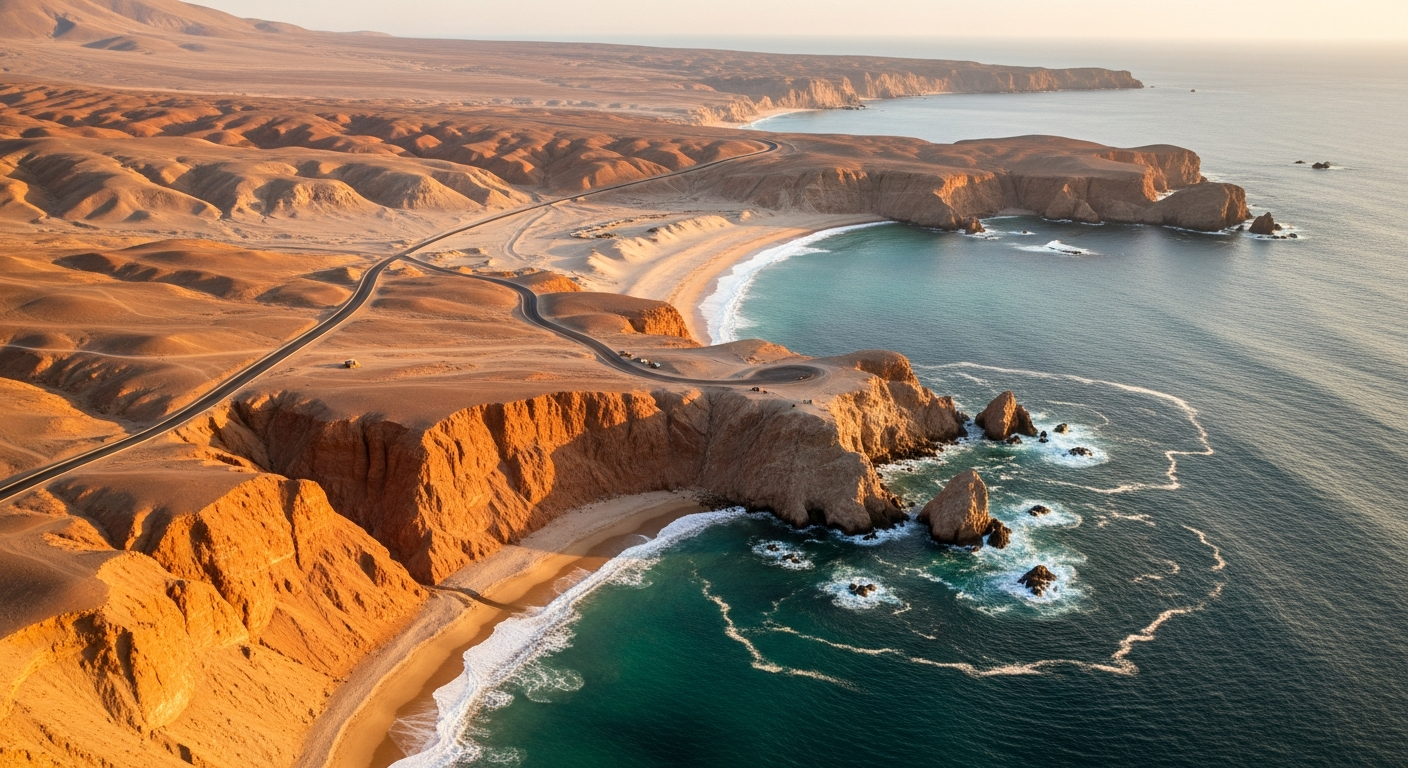
That same current creates coastal fog and prevents rainfall—the region gets almost nothing annually. The result is a desert coastline that supports massive colonies of sea lions, penguins, and seabirds despite zero vegetation. You’ll see red sand cliffs colored by volcanic minerals, turquoise bays, and rock formations that look sculpted rather than natural.
The Ballestas Islands themselves are protected reserves, so you never actually land on them. Instead, boats navigate within 10-30 meters of the rocks where sea lions haul out by the hundreds, where Humboldt penguins nest in cliff crevices, and where Peruvian boobies dive for fish.
The El Candelabro geoglyph—a 180-meter candelabra carved into coastal hills—appears about 15 minutes into every tour. It’s visible only from the water, which means most Peru travelers miss it entirely.
Perfect Routing for Time-Pressed Travelers
The strategic position between Lima and southern Peru highlights means Paracas fits seamlessly into any itinerary without wasted time.
A typical efficient route looks like this: fly into Lima, spend one night acclimatizing, take a morning bus south to Paracas (3.5-4 hours), spend one full day on boats and in the Reserve, then continue south to Huacachina (1 hour) or Nazca (3 hours) with no backtracking. This routing makes far more sense than trying to squeeze Paracas into a rushed day-trip from Lima.
The time commitment is realistic for actual travelers. A meaningful Paracas Peru travel experience requires one full day minimum—that’s a Ballestas Islands morning tour (2 hours) plus a Reserve afternoon visit (3-4 hours).
Two days is ideal because it adds pisco bodega visits, beach time, and sunset viewpoints without rushing. Compare this to Amazon lodge commitments (minimum 3-4 days), Machu Picchu treks (2-4 days), or Lake Titicaca exploration (2-3 days). Paracas delivers significant experiences in a compact timeframe.
Authentic Coastal Culture Without Resort Crowds
El Chaco is not a manufactured tourist town. Fishermen still bring in daily catches. The restaurants around the port serve ceviche because that’s what the town eats, not because it’s on a tourism board’s recommended menu.
Accommodation and food in Paracas run 30-40% cheaper than equivalent quality in Cusco, where tourism has inflated prices dramatically.
The crowd factor matters more than most guides acknowledge. The Ballestas Islands tours run in small boats with 15-20 people max, not the 40-50 person groups you’ll experience at Machu Picchu. The National Reserve sees a fraction of the visitors that Cusco receives daily. You’ll encounter other travelers, but you won’t be herded through sites in massive groups.
Planning Your Paracas Peru Travel: When to Visit and How Long to Stay

Paracas is a year-round destination, which simplifies planning compared to destinations with strict seasonal windows. The Atacama Desert doesn’t produce rain, so weather predictability is high. But timing still matters for comfort, crowds, and what you’ll actually experience on the water.
Best Time to Visit Paracas
Summer in Peru (December through March) brings the warmest temperatures to Paracas, typically 75-85°F. The water is calmest, the skies are clearest, and boat tours are most comfortable. This is peak season, so you’ll encounter more tourists and tour operators charge premium prices. Advance booking becomes important during these months.
Winter (June through September) brings cooler temperatures (60-70°F) and introduces the garúa—a persistent morning fog. This fog often clears by mid-morning, but it affects photography and visibility on early boat tours. The water gets choppier, which means seasickness becomes more likely. However, winter brings significantly fewer tourists, and tour prices drop noticeably. This is the best window for budget-conscious travelers who don’t mind layering up.
Shoulder months (April-May and October-November) represent the sweet spot for most travelers. Temperatures are mild (65-75°F), weather is stable, and crowds are moderate. Prices fall between summer and winter rates. If your Peru itinerary has flexibility, these months offer the best balance of comfort, cost, and accessibility.
How Many Days You Actually Need
The minimum viable Paracas Peru travel visit is one full day. This means arriving in El Chaco by 7:30 AM, joining an 8:00 AM Ballestas Islands tour (2 hours), having lunch, then spending the afternoon exploring the National Reserve (3-4 hours). You’ll see the major highlights and leave by early evening to continue south.
Two days is the ideal allocation. Day one follows the one-day structure but with less rushing. Day two adds pisco bodega visits (1-2 hours), beach time at Playa Roja or Lagunillas, sunset viewpoints in the Reserve, or water sports. Two days allows you to experience Paracas Peru travel without constant time pressure.
A common mistake is the overnight-only stop. Travelers arrive late evening, sleep, take a morning Ballestas tour, and leave by early afternoon—completely missing the National Reserve. They see penguins and sea lions, check the box, and move on. But the Reserve is where Paracas reveals its true character. The red sand beaches, the condor sightings, the coastal vistas—these happen in the afternoon and require dedicated time.
Getting to Paracas from Lima and Beyond
Bus travel is the standard method. Cruz del Sur and Peru Bus operate the main routes, with departures every 1-2 hours throughout the day. The journey takes 3.5-4 hours depending on traffic. Book online in advance during summer months, or walk up to the terminal for flexibility during shoulder and winter seasons.
The buses arrive in El Chaco, the port area where tour operators congregate. This is not the “Paracas town” you might read about in some guides—that’s the upscale resort zone 10 minutes south by taxi. Most budget and mid-range travelers stay in El Chaco because it’s cheaper and closer to tour departure points.
Onward connections from Paracas are straightforward. Direct buses run to Ica/Huacachina (1 hour), Nazca (3 hours), and Arequipa (5-6 hours). You don’t need to backtrack to Lima. This routing efficiency—Lima to Paracas to southern Peru highlights—is one of the biggest advantages of including Paracas Peru travel in your itinerary.
Ballestas Islands Peru: What to Expect on the Boat Tour

The Ballestas Islands tour is the main event, and it’s worth the early morning and boat spray. But understanding what you’re actually getting into separates a great experience from disappointment.
The Complete Ballestas Islands Experience
Tours depart from El Chaco port at 8:00 AM and 10:00 AM daily, running about 2 hours total. The boats are small—typically 15-20 people—which means you’re not packed in like a cruise ship excursion. The first 15 minutes take you past the El Candelabro geoglyph, a 180-meter candelabra carved into coastal hills. Its age is debated (estimates range from 500 to 2,000 years old), and its purpose remains mysterious.
The islands themselves host massive sea lion colonies. You’ll see hundreds of animals hauled out on rocks, barking, fighting, and lounging in the sun. Humboldt penguins nest in cliff crevices—they’re small (about 2 feet tall) and surprisingly common once your eyes adjust to spotting them. Peruvian boobies dive for fish in coordinated groups. If you’re lucky, you’ll see a condor soaring overhead, though this isn’t guaranteed. The boat maintains 10-30 meters distance per marine reserve regulations, so binoculars or a good camera zoom are essential for detail photography.
The critical reality check: you do not land on the Ballestas Islands. This isn’t a weakness of the tour—it’s the entire point. The islands are a protected reserve, and landing would destroy the ecosystem these animals depend on. The tour is about viewing from boats, not exploring beaches. If you understand it’s a wildlife viewing boat ride, you’ll be amazed.
Booking Your Tour Without the Stress
The simplest approach: walk the El Chaco waterfront the afternoon before your tour or the morning-of and book directly with operators. You’ll find dozens of tour companies with near-identical offerings. They all run the same route, see the same wildlife, and charge similar prices (S/35-50 per person, roughly $10-15 USD). The differences are minimal—slightly newer boats, slightly smaller groups—but they don’t significantly change the experience.
Price expectations: S/35-50 for the Ballestas Islands tour itself, plus S/11 for Paracas National Reserve entry (a separate fee collected at the port). Some operators bundle both, others charge separately. There’s no meaningful discount for booking multiple days in advance, and walk-up prices are identical to pre-booked rates.
Skip the upsells. “Private tours” use the same route and see the same wildlife as group tours—they just cost 3-4 times more. “VIP experiences” mainly mean smaller groups, which is nice but not worth the 200% price premium. The standard group tour delivers the actual experience you came for.
Making the Most of Your Morning on the Water
Pack layers. The morning is cold—the Pacific wind cuts right through, and spray soaks the front of the boat. Bring a fleece or light jacket even if it’s warm on land. Sun protection is equally important because the reflection off the water intensifies UV exposure. Sunscreen, hat, and sunglasses are non-negotiable.
Seasickness medication matters if you’re prone to motion sickness. The water can be choppy, and small boats amplify every wave. Ginger tablets, motion sickness patches, or prescription medication—take your preferred option before boarding.
Photography requires zoom. Animals stay at regulated distances, so a phone with good digital zoom or a proper camera with a telephoto lens captures detail. Without zoom, wildlife appears as distant specks. Bring a waterproof bag for electronics because spray is inevitable.
Timing strategy: the 8:00 AM tour has better morning light and slightly calmer water. It also means you can grab breakfast first and still make the departure. The 10:00 AM tour lets you sleep in and still explore the Reserve in the afternoon. Choose based on your energy level and how much you value the early-morning light for photography.
One local insight most guides miss: sit on the left side of the boat heading out for the best El Candelabro views, then move to the right side for the return wildlife angles. The sun position and your angle to the islands changes dramatically depending on which direction you’re traveling.
Exploring Paracas National Reserve: Peru’s Coastal Desert

The National Reserve is where Paracas Peru travel becomes truly unforgettable. While the Ballestas Islands tour shows you wildlife, the Reserve shows you the landscape itself—red sand beaches, dramatic cliff formations, and vistas that make you understand why this region feels like another planet.
How to Visit the Reserve (Tour vs. Self-Drive)
Paracas National Reserve covers 335,000 hectares of protected coastal desert, established in 1975. Entry costs S/11 (about $3 USD) and is valid for the full day. The Reserve has no facilities inside—no restaurants, no bathrooms, no water. Plan accordingly.
The organized tour option: afternoon tours run 3-4 hours, hitting the main viewpoints and beaches. Operators charge S/35-50 per person. These tours are good for solo travelers or non-drivers because they handle transportation and navigation. The downside is you’re on someone else’s schedule, and you’ll stop at tourist-oriented viewpoints rather than exploring freely.
The self-drive option: rent a vehicle in El Chaco (taxis or moto-taxis available for negotiated rates, roughly S/80-120 for 3-4 hours) or rent a bike (S/20-30 per day). This gives you flexibility to linger at viewpoints you love and skip ones that don’t interest you. The road is rough in places but passable for standard vehicles.
Best approach for maximizers: take the 8:00 AM Ballestas Islands tour, grab lunch in El Chaco, then rent a taxi for a 3-4 hour Reserve exploration. You’ll experience both major attractions without rushing either one.
Can’t-Miss Viewpoints and Beaches
Playa Roja (Red Beach) is the most striking viewpoint in the Reserve. The sand is vivid red due to volcanic mineral content, creating a color contrast against the turquoise water and rust-colored cliffs that looks photoshopped. The beach is small and rarely crowded. Swimming is possible but cold—the water temperature stays around 60°F year-round due to the Humboldt Current.
Lagunillas Beach is a protected cove with beachfront restaurants serving fresh ceviche and grilled fish. The water here is slightly warmer than other Reserve beaches, and the protected setting makes it better for swimming. This is the most “resort-like” experience in the Reserve, but still far more authentic than typical beach towns.
Mirador de La Catedral is a viewpoint where the famous arch formation once stood until the 2007 earthquake destroyed it. Even without the arch, the coastal panoramas are stunning. Condors sometimes soar near the cliffs here, especially in morning hours. The viewpoint offers some of the best photography angles in the Reserve.
Playa La Mina features turquoise water against rust-colored cliffs—a color combination that feels unreal. The beach is small and isolated, making it perfect for contemplation or photography. Most tour groups skip this beach, so you’ll likely have it to yourself.
What to Know Before You Go
Bring water and snacks. The Reserve has no services inside. A 3-4 hour visit requires at least 2-3 liters of water per person. Sun protection is essential—the landscape reflects heat intensely, and there’s zero shade. Sunscreen, hat, and sunglasses aren’t optional.
The dirt roads are rough but passable for standard taxis. Time allocation matters. Rushing through in 1-2 hours means seeing viewpoints but not experiencing them. Budget 3-4 hours minimum to explore without constant time pressure. Add an extra hour if you want beach time or sunset photography.
Wildlife beyond the islands: condors are the prize sighting. They’re massive (9-10 foot wingspan) and soar near cliff areas, especially Mirador de La Catedral. You won’t see them guaranteed, but they’re more likely here than anywhere else in Peru accessible without trekking to remote mountains. Sea birds are common throughout the Reserve.
Where to Stay in Paracas: From Budget to Beachfront

Accommodation in Paracas splits into two distinct areas, and your choice affects your experience and budget significantly.
El Chaco: Budget-Friendly and Tour-Convenient
El Chaco is the working port area where buses arrive and tour operators cluster. It’s functional, authentic, and cheap. Hostels and guesthouses run S/40-80 per night ($12-25 USD), with private rooms at the higher end. The rooms are basic but clean—you’re paying for location and convenience, not amenities.
The vibe is working port town rather than tourist destination. You’ll see fishing boats, locals eating ceviche, and tour operators arranging logistics. It’s not particularly charming, but it’s genuine. The waterfront restaurants serve excellent fresh fish at local prices (ceviche around S/15-20, grilled fish S/20-30). The trade-off is noise—fishing activity starts early and continues throughout the day.
El Chaco is ideal for backpackers, budget travelers, and anyone prioritizing location over ambiance. You’re walking distance from all tour operators, restaurants, and the bus terminal. You’ll spend minimal time in your room anyway—you’re there for the experiences, not the accommodation.
Paracas Bay: Where Comfort Meets Coastal Views
Paracas Bay sits 10 minutes south of El Chaco by taxi (roughly S/15-20). This area hosts mid-range and upscale hotels with pools, restaurants, and ocean views. Prices range from S/150-250 per night ($45-75 USD) for mid-range options, up to S/400+ ($120+) for luxury properties. You’re paying for comfort, views, and amenities—not proximity to tour operators.
The upside is obvious: you wake up to ocean views, swim in a pool, eat better meals, and sleep in comfort. The downside is that you’ll taxi to El Chaco for tours anyway (adding time and cost), and you’re isolated from the working town atmosphere that makes Paracas authentic.
Paracas Bay works best if you’re combining Paracas Peru travel with relaxation time—spending an afternoon on the beach, enjoying sunset drinks by the pool, or treating yourself after weeks of budget travel. If you’re maximizing experiences and minimizing costs, El Chaco makes more sense.
Booking Strategy and Timing
During summer (December-March), book accommodation 2-3 weeks in advance. Paracas gets busier during these months, and the best budget options fill quickly. Shoulder and winter months allow walk-up booking or 3-5 days advance notice.
Booking platforms like Booking.com, Agoda, and Hostelworld show current availability and real guest reviews. Local booking sites sometimes offer lower prices but less verification. The difference is usually minimal (5-10%), so prioritize reviews and actual amenities over chasing the lowest price.
Most accommodations in El Chaco include basic breakfast (bread, jam, coffee). Mid-range and upscale options in Paracas Bay offer more substantial breakfasts. This saves money on morning meals, which matters if you’re on a tight budget.
Your Next Move: Making Paracas Part of Your Peru Itinerary
The single most important takeaway: Paracas Peru travel deserves 1-2 days of your Peru itinerary because it offers experiences you literally cannot get anywhere else in the country. Penguins, sea lions, red sand beaches, and coastal desert landscapes don’t exist in the Sacred Valley or Cusco. They’re exclusive to this region, and they’re worth the detour.
Here’s your next action: if you’re building a Peru itinerary, add Paracas between Lima and Huacachina/Nazca. The routing makes geographic sense, it requires zero backtracking, and it fits seamlessly into 2-3 week Peru trips. Spend one night in El Chaco, take the 8:00 AM Ballestas Islands tour, explore the National Reserve in the afternoon, and continue south the next morning. You’ll experience coastal Peru without sacrificing mountain highlights or adding significant time to your trip.
Budget roughly $40-50 USD per day for accommodation (El Chaco), $30-40 for food, $25-30 for tours and park entry, and $15-20 for transport. A 2-day Paracas visit costs $150-200 total—less than a single night in upscale Cusco accommodation. You’re getting authentic coastal experiences, genuine wildlife encounters, and landscapes that change how you understand Peru’s geographic diversity. That’s the real value of including Paracas Peru travel in your itinerary: it completes the picture instead of leaving a gap.