Ballestas Islands Boat Tour Guide

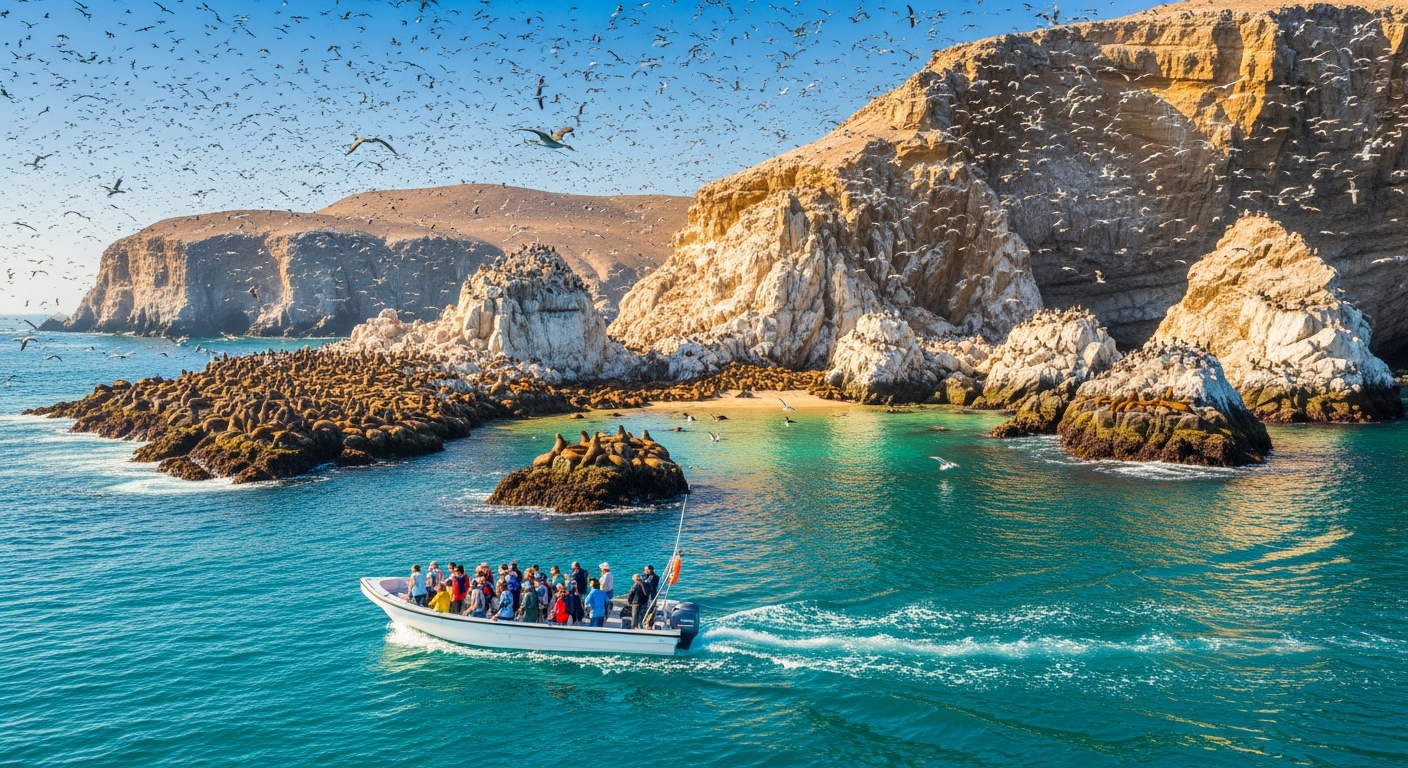
The engine cuts to a low rumble as your boat rounds the first rocky outcrop, and suddenly the noise hits you—a cacophony of barking so loud you can’t hear the guide.
Hundreds of South American sea lions are piled on the rocks like furry boulders, their heads swiveling toward the boat with curiosity and annoyance.
To your left, Humboldt penguins waddle across a narrow ledge. Overhead, thousands of seabirds wheel in formation. You’re not in the Galápagos—you’re two hours south of Lima on the Ballestas Islands, and you paid roughly 5% of what a Galápagos cruise would cost.
Planning a Peru itinerary means making brutal choices with limited vacation days. You’ve already blocked time for Machu Picchu and Lima’s museums.
But you’re hearing whispers about wildlife experiences on the coast that rival the Amazon without the logistics nightmare. Is the Ballestas Islands tour worth the detour to Paracas?
Will it consume precious time you’d rather spend elsewhere? How do you navigate tour operators and avoid the ones that prioritize speed over experience?
This guide answers every logistical question about the Ballestas Islands boat tour—from choosing legitimate operators and timing your visit to understanding which wildlife species you’ll encounter and why.
You’ll discover how to add this unforgettable half-day experience to your Peru travel plans without derailing your schedule or budget, plus insider tips that separate a rushed photo-op from an authentic wildlife encounter.
Peru Travel Planning: Where Ballestas Islands Fit Your Itinerary

The Ballestas Islands are Peru’s most accessible wildlife spectacle, located in Paracas National Reserve roughly 250 kilometers south of Lima.
A standard 2-hour boat excursion from El Chaco pier guarantees animal sightings within the first 15 minutes—hundreds of creatures in dense colonies.
Unlike Amazon lodge stays requiring 3-5 days to spot a jaguar, Ballestas delivers immediate, intensive wildlife encounters. This density, combined with Paracas’ accessibility as a half-day trip from Lima, makes Ballestas the perfect addition to a packed Peru itinerary.
The trade-offs are real. Boats are small, crowded during high season, and exposed to Atlantic swells that trigger motion sickness even in calm conditions.
You cannot land on the islands—all tours circle only. The experience is compressed and intense rather than contemplative. If you want guaranteed wildlife encounters with minimal time investment, this is exactly what you need.
Why Coastal Peru Deserves a Place on Your Route
Most Peru travel itineraries follow the same script: Lima, Sacred Valley, Machu Picchu, Lake Titicaca. The coast gets skipped entirely.
This is a mistake. The Peruvian coast is one of the world’s most productive marine ecosystems, fed by the cold Humboldt Current flowing north from Antarctica.
This current creates upwelling zones where nutrient-rich water rises to the surface, supporting massive fish populations that in turn support the seabirds and marine mammals you’ll see on the tour.
The islands themselves are covered in guano—accumulated bird droppings over centuries—which is why they’re called the Guano Islands.
Historically, this guano was Peru’s most valuable export, funding the nation’s 19th-century infrastructure. Understanding this context transforms the tour from a simple animal-watching exercise into a window on Peru’s ecological and economic history.
For Peru travel planning, Ballestas works as either a dedicated day trip from Lima (3.5-hour bus journey) or a half-day component of a longer coastal stay.
If you have 10-14 days in Peru, the bus journey is justified by the morning tour, leaving your afternoon free for Paracas exploration.
If you’re allocating 3-4 days to coastal Peru, pair Ballestas with the Paracas National Reserve’s land-based attractions and overnight in the region.
The “Poor Man’s Galápagos” Reputation Explained
Ballestas earned the nickname “Poor Man’s Galápagos” because it offers wildlife encounters at a fraction of Galápagos prices. A 7-day Galápagos cruise costs $3,500–$6,000 per person.
A Ballestas Islands tour costs $20–$40 USD. Both feature penguins, sea lions, seabirds, and marine ecosystems shaped by cold ocean currents. Both offer close-quarters animal encounters and dramatic geological formations.
But the comparison has limits. Galápagos offers endemic species found nowhere else—giant tortoises, marine iguanas, flightless cormorants. Ballestas features species common to the South American coast, though seeing them in such density is exceptional.
Galápagos allows island landings and multi-day immersion. Ballestas is boat-only, 2-hour snapshot. Neither is “better”—they serve different travel goals and budgets. Ballestas is perfect for travelers wanting wildlife without the time or financial commitment of a Galápagos expedition.
Combining Ballestas with Other Peru Highlights
Paracas sits on the Pan-American Highway (Route 1S) running directly south from Lima toward Nazca, Arequipa, and Lake Titicaca.
This means Ballestas doesn’t require backtracking—it fits naturally into southbound journeys. A typical itinerary: spend 2–3 days in Lima, take an overnight bus or morning departure to Paracas (3.5 hours), book a morning Ballestas tour, spend the afternoon exploring Paracas National Reserve, then continue south to Nazca the following morning. This structure maximizes wildlife and landscape diversity without extra flights or backtracking.
Island Tour Essentials: What to Expect on the Water

Tour Structure and Duration Breakdown
Standard Ballestas Islands tours depart at 8:00 AM or 10:00 AM from El Chaco pier in Paracas town. Tours last approximately 2 hours total, including 15 minutes of boarding and safety briefing, roughly 90 minutes on the water circling the islands, and 15 minutes returning to the pier. Morning tours are superior because seas are calmer and lighting is better for photography.
The boat route follows a circuit around the main island clusters, typically starting with the Candelabra geoglyph (a massive trident-shaped figure carved into the cliff face), then proceeding to sea lion colonies, penguin ledges, and seabird nesting areas. Guide quality varies dramatically between operators—better guides explain ecological relationships and species behavior, while rushed guides simply point and name animals. This is where operator choice matters most.
Boats typically hold 15–40 passengers. Smaller boats (15–20 people) offer more intimate experiences and less crowding at railings. Larger boats (30–40 people) are cheaper per person but feel like floating tour buses. Most boats have a covered cabin with bench seating, though serious wildlife watchers spend the entire tour on the open deck where visibility is best.
Boat Conditions and Comfort Considerations
Ballestas boats are working fishing boats repurposed for tourism, with basic safety equipment, minimal cushioning, and exposed seating where ocean spray soaks you thoroughly. The front rows get the worst spray—water hits directly and runs down your neck. Experienced visitors sit in the middle or back, trading forward visibility for dryness.
Sea conditions vary by season. May through September (winter) brings calmer waters and better stability. December through February (summer) can produce rough swells that make even seasoned travelers queasy. The boat rocks constantly because the Atlantic doesn’t have barrier reefs to break wave energy. If you’re motion-sensitive, take seasickness medication 30–60 minutes before departure. Scopolamine patches work best but require prescription and aren’t available in Peru without advance planning.
Bathrooms on boats are basic facilities that rock along with the vessel. Use the bathroom before boarding if possible. Life jackets are provided and required, though they’re uncomfortable and rarely fit perfectly. Bring a towel or microfiber cloth to dry off, and wear clothes you don’t mind soaking. Waterproof bags for electronics are essential, not optional.
Accessibility and Physical Requirements
Ballestas tours require moderate physical capability. You must navigate a floating dock to board, stepping over gaps and gripping railings on a moving platform. The boat has steep stairs to the upper deck and narrow railings. If you have mobility limitations, arthritis, or balance issues, this tour is challenging. There’s no accommodation for wheelchairs, and crew assistance is limited to verbal guidance.
Seasickness is the primary accessibility concern. Pregnant women, people with inner ear conditions, and those prone to motion sickness should consider whether medication will make the experience tolerable. Some travelers skip Ballestas entirely if they know they’re susceptible to nausea—a valid choice.
Age isn’t a strict barrier. Children as young as 4–5 can handle the tour if comfortable with motion and noise. Older adults regularly complete the tour successfully if confident with stairs and boat movement. Contact your tour operator directly before booking to assess whether the experience suits your physical capabilities.
Peru Wildlife Guide: Species You’ll Actually See

South American Sea Lions—The Headliners
South American sea lions are the superstars of the Ballestas Islands tour. You’ll encounter them immediately—hundreds lounging on rocky outcrops in various states of activity. Males reach 2.5 meters in length and weigh up to 350 kilograms, with distinctive manes and aggressive territorial demeanor. Females are smaller, more agile, and less aggressive. Pups born during breeding season (December–January) add chaos, with mothers nursing and defending offspring.
The barking is constant and deafening—a mix of territorial calls, mating displays, and mother-pup communication. The smell is intense: fish, salt, and guano combined. Your guide will explain sea lion social structure, breeding behavior, and their ecological role as apex consumers in the marine food chain. The real magic is watching them interact—males sparring, pups playing in shallow water, females basking in the sun. They’re intelligent, curious, and often aware of the boat without being alarmed.
Humboldt Penguins and Seabird Colonies
Humboldt penguins are the second major draw. These flightless birds are smaller than Antarctic cousins—about 65 centimeters tall—and perfectly adapted to the cold Humboldt Current. You’ll see them waddling on narrow ledges, diving into the water with remarkable agility, and climbing back onto rocks. They’re comical to watch: upright posture and clumsy walking contrast sharply with their underwater grace.
Seabirds dominate the islands numerically. Primary species include Peruvian boobies, guanay cormorants (the most abundant bird, responsible for most guano), and Peruvian pelicans (massive birds with wingspans exceeding 2 meters). You’ll also see Inca terns with distinctive white cheek patches. These birds are in constant motion—diving for fish, nesting, defending territory. The cacophony is overwhelming in the best possible way.
One detail most guides mention: these guano birds were historically valuable. Their accumulated droppings contained nitrogen and phosphorus in concentrations that made guano one of the world’s most sought-after fertilizers before synthetic alternatives. Understanding this context—that these “worthless” birds generated Peru’s wealth—adds historical dimension to what you’re observing.
Marine Life and Occasional Surprises
While the boat circles the islands, you may spot marine life: fish jumping, dolphins passing, and occasionally sea turtles. Sightings are unpredictable—some tours see nothing in the water while others encounter dolphin pods. A good guide will point out signs of marine activity even when animals aren’t directly visible—ripples indicating fish schools, bird diving patterns suggesting prey location.
The Candelabra geoglyph is technically not wildlife, but it’s a major tour feature. This enormous trident-shaped figure is etched into the cliff face, roughly 180 meters tall and 75 meters wide. Its origin is debated—some theories link it to Nazca Lines culture, others suggest it’s an ancient navigational marker or astronomical indicator. Most scholars agree it’s pre-Columbian, though dating is uncertain. It’s visible only from the water, which is why it’s included on every Ballestas tour. Photography is best from the approach, before the boat passes directly beneath it.
Paracas Peru Travel Guide: Beyond the Boat Tour

Paracas National Reserve—The Hidden Desert Coast
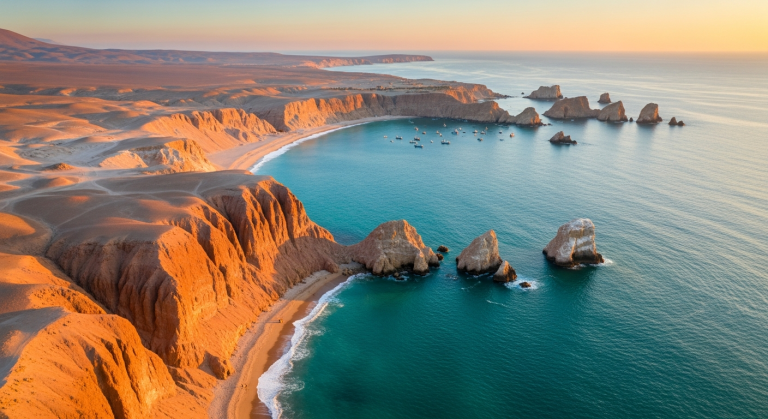
Paracas National Reserve extends beyond the Ballestas Islands, encompassing coastal desert, sandy beaches, and archaeological sites. If you have an afternoon after your morning tour, the reserve offers worthwhile experiences that complement your wildlife encounter. Playa Roja (Red Beach) is the most photogenic, a crescent of reddish sand backed by rust-colored cliffs. The color comes from iron oxide in the rock—genuinely striking and unusual for Peru. The beach is calm and swimmable, though water temperature is cold year-round (around 15–18°C) due to the Humboldt Current.
Cathedral Beach (Playa Catedral) features dramatic rock formations resembling a Gothic cathedral at sunset. The walk from the parking area is short (15–20 minutes) and easy. The formations are best photographed in late afternoon when light angles create shadows and depth. These beaches aren’t crowded—you’ll often have the space nearly to yourself.
The reserve also contains archaeological sites related to the Paracas culture (900–100 BCE), known for sophisticated textile work. The Paracas Museum in Paracas town displays mummies and textiles, offering context for the pre-Columbian history of the region. Entry to the reserve costs 40–50 soles (roughly $10–12 USD).
Where to Stay and Eat in Paracas
Paracas is a small fishing village with limited but adequate accommodation. Budget travelers find hostels and basic hotels for 40–80 soles per night ($10–20 USD). Mid-range options like Hotel Paracas run 150–250 soles ($35–60 USD). These are functional, clean, and within walking distance of El Chaco pier. High-end options are minimal—this isn’t a luxury destination.
Eating in Paracas means fresh seafood at local prices. The town’s restaurants cluster near the pier and main plaza. Expect ceviche (raw fish cured in citrus), grilled fish, and seafood soups for 20–40 soles ($5–10 USD) at casual spots. Portions are generous, quality is high, and the fish is literally landed by boats you can see from your table. Restaurants catering to tourists charge 60–100 soles ($15–25 USD) for similar meals.
A strategic tip: eat breakfast before your tour (most hotels offer bread, coffee, fruit around 6–7 AM) because the boat ride triggers appetite. After your 10:30 AM return, you’ll be hungry and ready for substantial lunch. This timing also lets you explore the reserve in the afternoon when light is warm and shadows are interesting for photography.
Getting to Paracas from Lima and Beyond
Bus travel from Lima to Paracas takes 3.5–4 hours. Several companies operate this route—Soyuz, Oltursa, and Flores are reliable options with air-conditioned buses. Tickets cost 30–50 soles ($7–12 USD). Buses depart from Lima’s south terminal (Terminal Sur) throughout the day. Book tickets a day ahead during high season (June–August, December–January), though walk-up tickets are usually available except during national holidays.
From Paracas, continuing south is straightforward. Buses to Nazca (3 hours) cost 30–40 soles. Buses to Arequipa (8 hours) cost 80–120 soles. The Pan-American Highway is well-maintained, and bus companies are accustomed to tourist traffic. If coordinating with flights, allow buffer time—bus delays happen. Private drivers can be hired through hotels for roughly 200–300 soles ($50–75 USD) for a day, offering flexibility to explore multiple reserve sites at your own pace.
Peru Travel Guide: Booking Your Perfect Tour

Choosing Tour Operators—Quality vs. Price
There are roughly 20–30 tour operators offering Ballestas Islands tours from El Chaco pier. Prices range from 25–60 soles ($6–15 USD), with variation driven by boat quality, guide expertise, and group size rather than actual differences in wildlife. The cheapest operators maximize profit by cramming 40+ people onto boats with minimal guide training. The most expensive operators offer smaller groups and bilingual guides with naturalist credentials.
The sweet spot is 40–50 soles ($10–12 USD) with operators that maintain boats in decent condition, limit groups to 25–30 people, and employ guides who’ve worked the islands for multiple seasons. Identify these by checking recent TripAdvisor reviews focusing on specific details: “guide explained animal behavior,” “boat was clean and stable,” “not overcrowded.” Ignore generic reviews saying “amazing!” or “terrible!”—they lack diagnostic value. Read reviews from the past 3 months, as operator quality fluctuates.
Legitimate operators include Ballestas Tours, Paracas Explorer, and several family-run companies operating from the pier directly. Avoid booking through Lima tour companies that charge 80–100 soles and pocket the difference—you’re paying for their commission, not better service. Book directly with the operator at the pier or through their website. Most accept cash (soles) and card payments, though cash is more reliable in Paracas.
Advance Booking vs. Walk-Up—What Works When
High season (June–August and December–January) requires advance booking. Tours fill 1–2 days ahead, and popular time slots (8:00 AM and 10:00 AM) sell out. Book the evening before if you’re already in Paracas, or contact operators from Lima 2–3 days prior. Low season (March–May, September–November) allows walk-up booking—you can arrive at the pier at 7:30 AM and book a tour departing 30 minutes later.
Booking directly with operators at the pier gives you the advantage of seeing the actual boat before committing. You can ask about group size, inspect the vessel’s condition, and request specific guides if you hear good recommendations. If you must book in advance, use operators with responsive email or WhatsApp communication (many Peruvian businesses use WhatsApp extensively), and request confirmation 24 hours before your tour.
What’s Included and Hidden Costs to Expect
Tour prices typically include the boat ride, guide service, and life jacket. What’s not included: park entrance fee (40–50 soles, paid separately), transportation to El Chaco pier, food and water, and tips. Budget an additional 100–120 soles ($25–30 USD) beyond the tour price to cover parking, entrance, meals, and gratuities.
One hidden cost: parking at El Chaco costs 5–10 soles. Taxis from Paracas town to the pier cost 10–15 soles. If you’re staying in a hotel, ask whether they offer pier shuttle service—many do free or for a small fee. These costs are minor individually but add up if you’re not budgeting carefully.
Tipping is expected but not mandatory. 10–20 soles ($2.50–5 USD) is appropriate for decent guide service. If the guide goes above and beyond—explaining behavior in detail, spotting rare animals, offering photography tips—tip 30–40 soles. Guides depend on tips to supplement modest wages. Cash tips are preferred and necessary, as most boats don’t process cards.
South America Travel Tips: Maximizing Your Ballestas Experience

Best Time to Visit—Seasons, Weather, and Wildlife
May through September (Peruvian winter) offers the best combination of calm seas, consistent wildlife presence, and manageable temperatures. Water is cold, but air temperatures are mild (15–20°C), and clear skies provide excellent visibility and photography conditions. Seas are relatively calm because winter brings stable atmospheric pressure and reduced wind.
December through February (summer) brings warmer air temperatures (25–30°C) but rougher seas. Swells are larger, making the boat ride more uncomfortable and potentially triggering motion sickness. Sea lion breeding season peaks in January, meaning maximum animal activity and noise—exciting for some, overwhelming for others. Tourist crowds are heaviest during summer holidays, making tours feel crowded.
March through April and September through November are shoulder seasons with moderate conditions. Seas are calmer than summer but less stable than winter. Crowds are significantly lighter. If you’re flexible with timing, these months offer the best balance of comfort, wildlife activity, and manageable tourism volume. Avoid late February through early March—this is when winter transitions to spring, and seas can be unpredictable.
What to Pack—Essential Gear and Common Oversights
Sun protection is non-negotiable. The sun reflects off water and intensifies UV exposure. Bring high-SPF sunscreen (50+) and reapply before boarding and again halfway through the tour. A wide-brimmed hat with a chin strap is essential—wind will blow standard hats overboard. Polarized sunglasses with a retainer strap prevent both sun damage and lost eyewear. Sunburn here develops fast and ruins subsequent days of travel.
Layers matter despite the season. Even in summer, ocean wind creates a chill that regular t-shirts don’t address. A lightweight windbreaker or rain jacket protects against spray and wind. A fleece or hoodie works for winter morning departures. The front rows catch consistent spray—water soaks through cotton. Synthetic or wool layers dry faster and provide better insulation when wet. Bring a small towel or microfiber cloth to dry off.
Camera gear requires protection. Telephoto lenses or good zoom are essential because wildlife stays 20–100 feet away. A waterproof camera bag or waterproof dry bag protects electronics from spray. If you don’t have a waterproof bag, seal your camera in a large plastic ziplock bag. Extra batteries drain faster in cold, so bring spares. Bring a backup memory card just in case.
Seasickness prevention is personal but important. If you’re motion-sensitive, take medication 30–60 minutes before departure. Dramamine, Bonine, or prescription scopolamine patches all work. Ginger supplements, acupressure wristbands, and focusing on the horizon provide supplementary relief but aren’t sufficient for severe motion sensitivity. Being sick for two hours ruins the experience—prevention is worth the minimal cost.
Practical items complete the kit: A water bottle (refill before boarding—bottled water at the pier is overpriced at 5–8 soles). Cash in soles for entrance fees, tips, and snacks. A small notebook for jotting species names and guide commentary. Slip-on shoes that can get wet without damage. Avoid flip-flops—the boat deck is slippery. Consider a dry bag large enough for valuables (phone, wallet, keys) to prevent loss if spray soaks your pockets.
Photography Tips and Respectful Wildlife Viewing
Wildlife photography on Ballestas is challenging because animals are distant and the boat is moving. A telephoto lens (200mm equivalent or better) is essential. Smartphone zoom won’t cut it. If you have a mirrorless or DSLR camera, bring a 70–200mm lens or equivalent. Autofocus helps track moving subjects. Burst mode captures multiple frames, increasing odds of sharp shots. Shutter speed should be at least 1/500th of a second to freeze motion.
Composition matters more than gear. Avoid centering animals directly in the frame—place them in the rule of thirds for more dynamic images. Include context: rocks, water, sky. Close-ups of animal faces are tempting but less interesting than behavior shots showing animals interacting or diving. Wait for moments rather than shooting constantly. The best wildlife photography comes from patience, not volume.
Respectful viewing means respecting the boat operator’s distance rules. Guides keep boats at specified distances to avoid stressing animals. Don’t encourage operators to get closer for photos—this pressures them to ignore safety guidelines and disturbs breeding colonies. Use zoom instead. Don’t throw objects or make loud noises to provoke reactions. Take photos, but prioritize the animals’ wellbeing over your Instagram feed. This balance is what separates authentic wildlife tourism from exploitative operations.
CONCLUSION
The Ballestas Islands tour delivers on its promise: unforgettable wildlife encounters in a half-day timeframe without Galápagos-level costs or logistics complexity. You’ll see hundreds of sea lions, penguins, and seabirds in their natural habitat. You’ll smell the guano, hear the chaos, feel the spray, and understand why this ecosystem matters ecologically and historically. The experience is intense, compressed, and genuinely magical—the kind of moment that shifts how you think about wildlife and coastal ecosystems.
The single most important takeaway: book directly with pier-based operators, choose morning departures, and pack sun protection and seasickness prevention. These three decisions account for 80% of tour satisfaction. Everything else—timing your Peru travel plans, combining Ballestas with other coastal experiences, understanding the wildlife you’ll encounter—flows naturally from these fundamentals.
Your next move is straightforward. If you’re planning a Peru itinerary and you have flexibility in your timeline, allocate 1–2 days to Paracas and the Ballestas Islands tour. The experience justifies the detour. Research tour operators on TripAdvisor focusing on recent reviews mentioning boat condition and guide quality. Book your tour 1–2 days in advance during high season or walk up during shoulder months. Assemble your packing list emphasizing sun protection and waterproof camera gear. Arrive at the pier 30 minutes early, bring cash for tips, and prepare yourself for two hours of controlled chaos that you’ll be talking about for years.