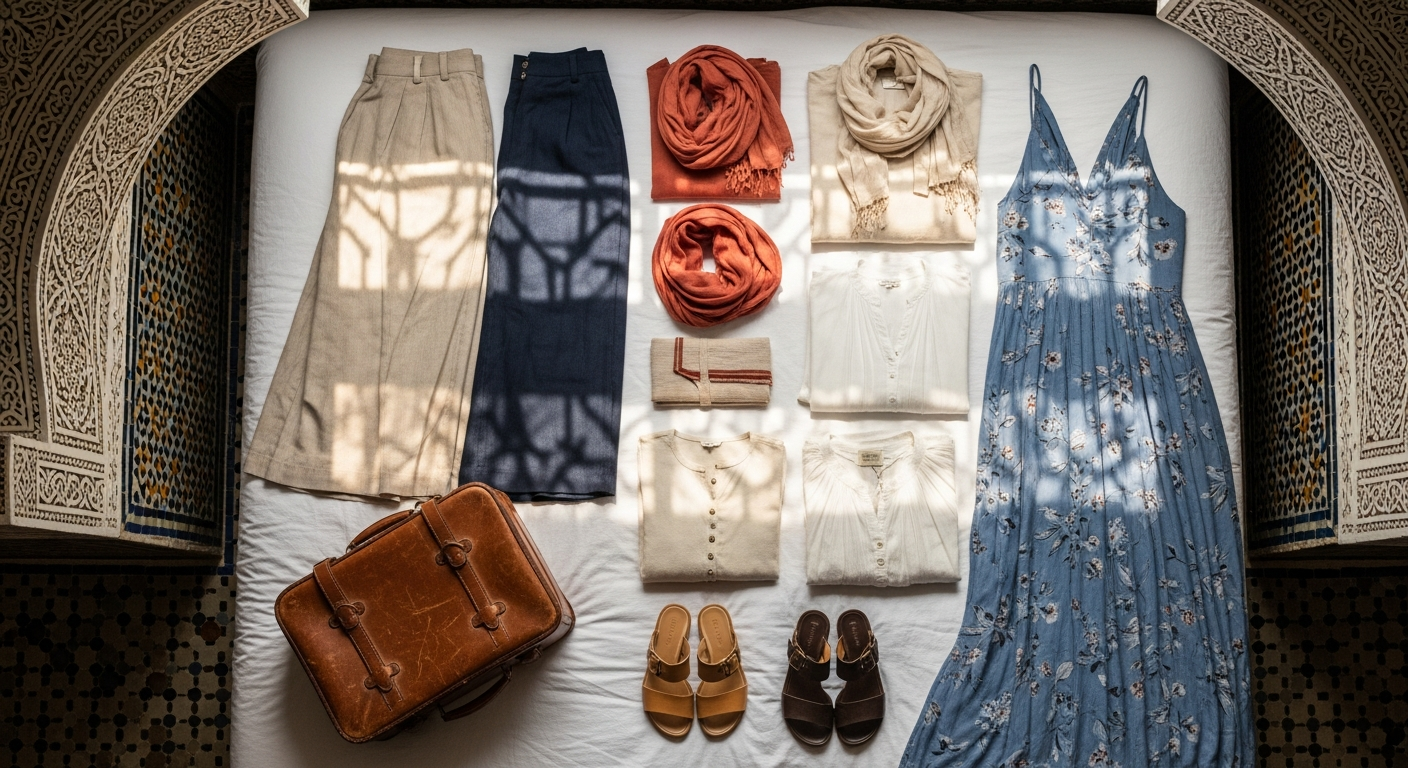
best Morocco capsule wardrobe ideas

You’ve booked your Morocco trip, and now you’re staring at your closet wondering how to pack outfits that respect local culture without sacrificing your personal style or lugging a checked bag through the medinas.
The anxiety is real: Will I stand out disrespectfully? Will I melt in 100°F heat? Will I freeze during the Sahara Desert nights? What happens if I show up at a mosque unprepared?
Here’s the truth: you don’t need 20 outfits for a 10-day trip. A strategic 8-12-piece Moroccan capsule wardrobe will give you 20+ effortless outfit combinations that work everywhere from Marrakech’s bustling souks to desert camps and coastal beaches — and it all fits in a carry-on.
This isn’t generic packing advice. I’ve pulled insights from Morocco-based expats at marocmama.com, tour operators who guide thousands of travellers annually through moroccolivetrips.com and gomoroccotour.com, and female travellers who’ve tested these exact pieces under real-world conditions.
You’re getting the outfit formulas that actually work when you’re navigating cobblestone medinas in 95°F heat or watching the sunset over Erg Chebbi dunes.
I’ll walk you through exactly what to pack for Morocco, the cultural dress codes by location, seasonal adjustments, and where to shop — from budget-friendly finds under $30 to elevated investment pieces.
By the end, you’ll have a complete Morocco travel outfit strategy that balances cultural respect with looking polished in every photo.
Why a Morocco Capsule Wardrobe Works

The Cultural Modesty + Comfort Equation
Morocco’s dress expectations are straightforward: shoulders, chest, and knees covered as your baseline. This isn’t about moral judgment — it’s about blending in respectfully and avoiding unwanted attention in a conservative Muslim country.
The good news? You CAN honor local customs AND look stylish in photos. The secret is breathable, modest silhouettes that serve dual purposes.
Wide-leg linen pants cover your legs completely while allowing air circulation in 100°F+ temperatures. A cotton tunic gives you hip coverage and arm coverage in one piece, flattering every body type without clinging. When you nail the Morocco capsule wardrobe formula, you’re not sacrificing comfort for respect — you’re getting both.
The biggest misconception? That modest clothing means frumpy or shapeless. Morocco’s dress code actually forces you into the most universally flattering silhouettes: flowing fabrics that skim rather than squeeze, longer hemlines that elongate your frame, and loose fits that photograph beautifully against vibrant tile work and desert landscapes.
The Carry-On Advantage
An 8-12 piece capsule fits comfortably in a 22x14x9 inch carry-on suitcase — the standard U.S. airline size limit. This matters more in Morocco than most destinations. You’ll be navigating narrow, uneven cobblestone medinas where wheeling a full-size suitcase becomes a sweaty nightmare.
You’ll move between cities frequently (Marrakech to Fes, Fes to Merzouga, Merzouga to Essaouira), and lugging checked bags through multiple riads adds unnecessary friction.
Here’s what most packing guides skip: Morocco has excellent laundry services in riads and hotels. Most accommodations offer same-day or next-day laundry for $5-10 per load.
You don’t need an outfit-per-day approach. Pack 8-12 versatile pieces, do laundry once mid-trip, and you’re covered for two weeks.
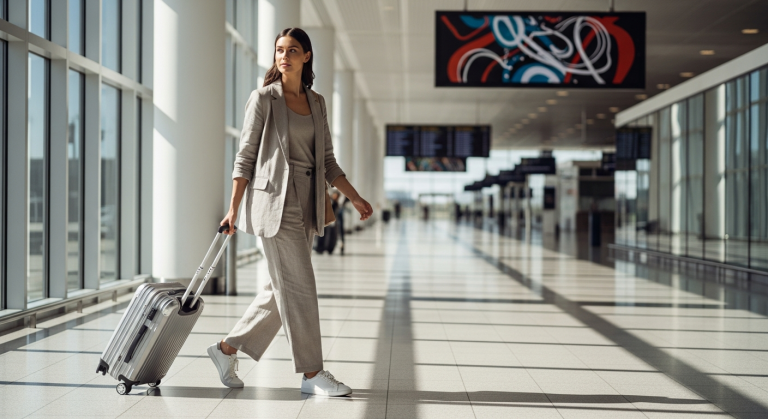
The carry-on strategy also protects you from airline mishaps. Lost luggage in Casablanca means scrambling to replace your entire wardrobe in an unfamiliar city. Your carry-on stays with you from departure to arrival.
Mix-and-Match Math
The capsule formula delivers exponential outfit combinations through intentional color coordination. Here’s the breakdown: 3-4 bottoms + 4-5 tops + 2-3 layers = 20+ distinct outfits. The math works because every piece coordinates with every other piece.
Use a neutral color palette as your foundation: tan, white, navy, and black. These are your base colors for bottoms and core tops. Then add 1-2 accent colors — chambray blue, olive green, or terracotta — in secondary tops or scarves. This creates visual interest without requiring you to think through outfit coordination every morning.
A concrete example: one pair of tan wide-leg linen pants pairs with a white button-down (outfit 1), a chambray tunic (outfit 2), a black sleeveless top with cardigan (outfit 3), and a striped linen shirt (outfit 4).
That’s four distinct looks from one bottom. Multiply that across three bottoms and five tops, and you’re well past 20 combinations before adding scarves, jewelry, or shoe variations.
The sample capsule coming later in this post demonstrates exactly how these pieces work together — you’ll see the specific items, the color palette, and the outfit formulas that carry you from medina exploration to desert camps to beachside dinners.
What to Wear in Morocco: Cultural Dress Codes by Location

Medinas & City Streets
In Marrakech, Fes, and Chefchaouen medinas, the dress code is consistent: long pants or midi/maxi skirts, tops covering elbows and chest, and loose fits that don’t outline your body. This applies to both men and women, though women face more scrutiny.
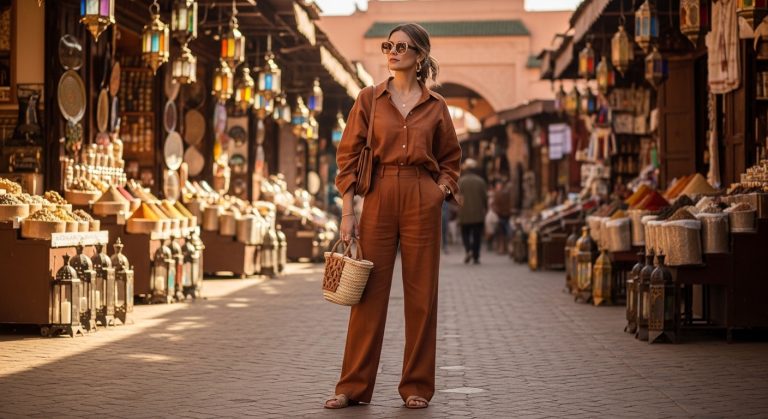
What works perfectly: Wide-leg linen pants paired with a cotton tunic. Palazzo pants with a lightweight button-down. A maxi dress with a cardigan layered over if the neckline dips below your collarbone. The key is breathable fabrics — you’re walking 10,000+ steps daily through markets with zero air conditioning.
What to avoid: Shorts of any length (even knee-length bermudas read as too casual). Tank tops or sleeveless shirts worn alone. Tight clothing like leggings, bodycon dresses, or skinny jeans paired with cropped tops. Low necklines that show cleavage. Sheer fabrics without an underlayer.
I wore palazzo pants and a lightweight button-down through Fes medina in July when temperatures hit 98°F — stayed cool and blended in perfectly. The locals appreciated the effort, and I avoided the uncomfortable stares that come with standing out. When you’re deciding what to wear in Morocco, think “flowy and covered” as your default for city exploration.
Mosques & Religious Sites
Mosques enforce strict requirements: head covering (scarf), wrist-to-ankle coverage, and floor-length skirts or long pants. Non-Muslims can’t enter most active mosques in Morocco (Hassan II Mosque in Casablanca is the major exception), but these rules apply when visiting religious sites, mausoleums, and certain historic buildings.
The quick formula: maxi dress + large cotton scarf = instant mosque-ready outfit. Keep a lightweight scarf accessible in your day bag for spontaneous visits. A 40×40 inch cotton scarf folds small, weighs nothing, and drapes easily over your head and shoulders.
If you’re wearing pants and a tunic, you’re already covered from wrist to ankle — just add the head scarf. This is why long-sleeve options matter in your Morocco travel outfit capsule, even in summer. You don’t want to scramble for coverage when you decide to visit a religious site mid-afternoon.
Riads, Hotels & Private Spaces
Inside your riad’s private courtyard or pool area, dress codes relax significantly. Sleeveless tops and shorter hemlines are acceptable in these spaces. Many riads have rooftop terraces or interior pools where you can wear standard resort wear.
The caveat: you’re still respectful in common areas and when interacting with staff. Cover up when walking through the riad’s main entrance, dining in shared spaces, or passing through hallways. Think of it like wearing a robe over your swimsuit when you leave the pool deck — basic courtesy.
This is where your swimsuit + kaftan cover-up combination shines. Your modest one-piece or covered bikini works for the pool, and the kaftan doubles as a breezy outfit for lounging in the courtyard or grabbing breakfast. One piece, multiple uses — exactly what a capsule wardrobe delivers.
Beaches (Agadir, Essaouira)
Morocco’s beach towns like Agadir and Essaouira are more relaxed than inland cities, but they’re not European beach resorts. Modest one-piece swimsuits or covered bikinis (high-waisted bottoms, tankini tops) are acceptable on the beach itself. What’s required: a tunic or kaftan cover-up the moment you leave the sand.
Moroccan women typically swim fully clothed in loose garments. Your modest swimwear is acceptable as a foreign visitor, but walking through town in a bikini or heading to a beachside café in just your swimsuit will draw negative attention. The cultural expectation is clear: beach attire stays on the beach.
Pack one versatile cover-up that works as both beach gear and a casual outfit. A knee-length cotton kaftan in a neutral color pairs with sandals for beachside lunch, then goes over your swimsuit for ocean time. This is smart packing — one item, two distinct functions.
Desert Camps (Sahara)
The Sahara Desert presents unique challenges beyond cultural modesty. You need long sleeves for sun protection (UV exposure is intense without shade), tightly woven fabrics that resist sand infiltration, and closed-toe shoes to protect from hot sand and scorpions.
Temperature swings are dramatic: 100°F+ during the day dropping to 30-40°F at night in winter months (December through February). Even in summer, desert nights cool to 65-70°F. Layers are critical. Your lightweight cardigan or jacket that seemed unnecessary in Marrakech becomes essential in Merzouga after sunset.
The multi-use scarf earns its place here. It doubles as head and face covering during sandstorms, neck protection from sun exposure, and an extra layer for chilly camel rides at dawn. Tour operators through moroccanjourneys.com consistently list a large scarf as the single most versatile item for desert portions of Morocco itineraries.
What to Pack for Morocco: Essential Bottoms

Wide-Leg Linen Pants (The MVP)
Wide-leg linen pants are the foundation of every successful Morocco capsule wardrobe. They deliver breathability in 100°F heat through loose weave and air circulation, modest coverage that works in every location from medinas to mosques, and effortless elegance that photographs beautifully.
Color strategy matters: choose tan or beige for your first pair. These shades hide the inevitable dust from medina cobblestones and desert sand. A second pair in white or navy expands your outfit options without adding bulk.
Budget to premium options:
- Uniqlo Linen Relaxed Pants — $39.90, available in multiple inseams, wrinkle-resistant blend
- Everlane Wide Leg Linen Pant — $98, European linen, clean lines, mid-weight
- Eileen Fisher Organic Linen Wide-Leg Pant — $178, premium drape, petite and tall sizing
The Uniqlo option delivers 80% of the performance at one-quarter the price. If you’re building your first Morocco travel outfit capsule on a budget, start here. The Everlane and Eileen Fisher versions justify their cost through superior fabric quality and longevity — these pants last for years of travel.
Palazzo Pants or Culottes
Palazzo pants offer versatility that straight wide-leg pants can’t match. Their flowing silhouette dresses up for dinners at upscale riads, then dresses down for day touring through souks. The wider leg opening creates visual drama that elevates simple tops.
Fabric choice determines packability: cotton-linen blends wrinkle less than pure linen while maintaining breathability. Look for mid-weight fabrics that hold their shape — too lightweight and they’ll cling in wind or show every wrinkle after sitting.
Styling tip: pair palazzo pants with fitted tops to balance proportions. A tucked-in button-down or a cropped tunic keeps the silhouette intentional rather than shapeless. This matters in photos — you want to look polished, not drowned in fabric.
Midi or Maxi Skirt
A midi or maxi skirt is your one-piece modesty solution. Pair it with any top in your capsule for an instant outfit that meets Morocco’s dress codes. The skirt does the coverage work, giving you freedom to vary your tops without worrying about hemlines or fit.
Best fabrics: Modal, Tencel, or cotton jersey. These materials pack without wrinkling, drape beautifully, and resist showing sweat stains — a real consideration when you’re walking medinas in 90°F+ heat. Avoid stiff cotton that creases or synthetic fabrics that trap heat.
Choose navy or black for your skirt color. These shades hide travel wear, pair with every top color in your capsule, and transition from day to night without looking too casual. A tan or white skirt shows every spill and dust mark by day two.
Dark Jeans (Optional for Evenings)
Dark jeans earn a spot in your Morocco capsule wardrobe only for winter trips (December through February) or if you’re visiting mountain regions like the Atlas Mountains. Pack them for evening outings when temperatures drop and you want a more polished look than linen pants.
Skip jeans entirely for summer travel. They’re too heavy for 85-100°F+ temperatures and take forever to dry if you need to wash them. Even in air-conditioned restaurants, denim traps heat uncomfortably.
If you do pack jeans, choose straight-leg or boyfriend fits over tight skinny jeans. Looser fits respect the cultural preference for modest silhouettes and offer better comfort during long days of travel.
The capsule formula for bottoms: Pack 3 bottoms total — 1 wide-leg linen pant, 1 palazzo pant or midi skirt, 1 optional dark jean for winter/evenings. This combination creates maximum outfit variety with minimum luggage space.
Morocco Travel Outfit Essentials: Tops & Dresses

Linen Button-Down Shirts (Pack 2)
Linen button-down shirts are the workhorse of your Morocco travel outfit rotation. They deliver unmatched versatility: tuck them into pants for a polished look, wear them open over a tank top as a layer, tie them at the waist for a casual vibe, or layer them under a cardigan when temperatures drop.
Color combination strategy: Pack one white shirt and one chambray or striped shirt. The white works everywhere from mosque visits to beach dinners. The chambray or stripe adds visual interest without clashing with your neutral bottoms.
Sleeve length matters for what to wear in Morocco: choose ¾ or long sleeves. You can roll them up when heat demands it, but coverage is always available for mosque visits or sun protection. Short-sleeve button-downs limit your options.
Budget picks that perform:
- H&M Conscious Linen Shirt — $29.99, sustainable sourcing, relaxed fit
- Uniqlo Premium Linen Long-Sleeve Shirt — $39.90, French linen, minimal wrinkling
- Everlane Linen Relaxed Shirt — $68, clean tailoring, available in 6+ colors
The H&M option is unbeatable for first-time Morocco travelers testing the capsule approach. The Uniqlo and Everlane versions justify higher prices through superior fabric quality and construction that survives multiple trips.
Cotton or Linen Tunics (Pack 2)
Tunics solve the coverage equation in one piece: they provide hip coverage and arm coverage simultaneously, eliminating the need to coordinate separate tops and layers. They’re universally flattering across body types because the loose fit skims rather than clings.
Length is critical: mid-thigh minimum. This ensures coverage when you bend over in markets or sit on low cushions in restaurants. Too-short tunics defeat the modesty purpose.
Neckline guidelines: scoop or V-neck styles work well, but avoid plunging necklines that show cleavage when you lean forward. A good test: if you need to worry about adjusting it throughout the day, the neckline is too low.
Elevated option vs. budget: Jenni Kayne Linen Tunic at $175 delivers restaurant-worthy polish with impeccable draping. Old Navy Linen-Blend Tunic at $34.99 provides 90% of the function at one-fifth the cost. For a 10-day trip, the Old Navy version is completely adequate.
Lightweight Long-Sleeve Blouse
One lightweight long-sleeve blouse serves as your mosque backup — the piece you reach for when you need wrist coverage for religious sites or extra sun protection in the desert. This doesn’t need to be linen; breathable cotton or modal works perfectly.
Fabric warning: avoid polyester or synthetic blends marketed as “wrinkle-free.” These fabrics trap heat and prevent moisture evaporation — you’ll overheat within 30 minutes of medina walking. Natural fibers breathe; synthetics suffocate.
Classic choice: white or neutral solid. This pairs with every bottom in your capsule and doesn’t compete visually with Morocco’s vibrant architecture and textiles. Save bold patterns for scarves or accessories.
Maxi Dress (The Ultimate Cheat Code)
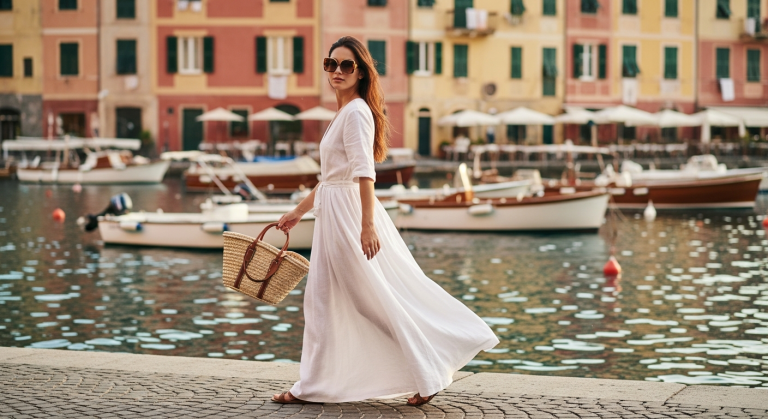
A maxi dress is your one-piece modesty solution for Morocco. It works instantly for medina exploration, transitions to dinner with jewelry and sandals, and becomes mosque-ready with a scarf draped over your shoulders. No coordination required — just put it on and go.
Best styles for Morocco: empire waist, A-line, or wrap dresses. These silhouettes define your waist without clinging to your body, creating a flattering shape that respects cultural modesty norms. Avoid bodycon maxi dresses or styles with high slits.
Fabric performance ranking:
- Modal or Tencel — moisture-wicking, drapes beautifully, packs without wrinkles
- Cotton jersey — comfortable, breathable, affordable, slight wrinkling
- Linen — maximum breathability, elegant texture, wrinkles heavily (embrace it or skip it)
- Rayon — good drape, budget-friendly, can show sweat stains
Avoid polyester maxi dresses regardless of price. The fabric doesn’t breathe in Morocco’s heat, and you’ll be uncomfortable within an hour of wear. Natural fibers or high-performance synthetic blends (like modal) are non-negotiable for clothing for Morocco in warm months.
Sleeve length consideration: sleeveless maxi dresses work if you pair them with a cardigan or scarf for mosque visits and conservative areas. ¾ or long-sleeve maxi dresses eliminate the layering step but limit your versatility in private spaces like riad pools.
The capsule formula for tops: 2 linen button-downs + 2 tunics + 1 long-sleeve blouse + 1 maxi dress = 6 tops total. This creates 18+ outfit combinations when paired with your 3 bottoms, plus the maxi dress functions as a standalone outfit.
Your Morocco Capsule Wardrobe Action Plan
The single most important takeaway: you don’t need a massive wardrobe to travel Morocco stylishly and respectfully. You need 8-12 strategic pieces in a neutral color palette that work together mathematically to create 20+ outfits. Every item earns its space by serving multiple purposes — the linen pants that work in medinas and deserts, the scarf that functions as mosque covering and sun protection, the maxi dress that transitions from day touring to dinner.
Start with the bottoms. Invest in one excellent pair of wide-leg linen pants in tan or beige — this is your foundation piece that you’ll wear 40% of your trip. Add one palazzo pant or midi skirt in navy or black. If you’re traveling in winter or visiting mountain regions, include dark jeans. That’s your bottom rotation complete.
Build your tops around versatility. Two linen button-downs (white plus chambray or stripe) give you the widest styling range. Two cotton or linen tunics provide instant modest coverage. One lightweight long-sleeve blouse handles mosque visits and sun protection. One maxi dress serves as your effortless one-piece outfit. These six tops pair with your three bottoms to create every outfit you need.
Don’t forget the multipliers: one lightweight cardigan for evening temperature drops and air-conditioned restaurants, one large cotton scarf (40×40 inches minimum) for mosque visits and desert protection, and one kaftan or tunic cover-up that works for beaches and riad pools. These three pieces exponentially increase your outfit options without adding significant weight or bulk.
Your next move: audit your current closet against this list. You likely already own 50-70% of these items. Identify the gaps, then shop strategically using the specific brand recommendations and price points throughout this guide. Budget-conscious travelers can build a complete Morocco capsule wardrobe for under $300 using Uniqlo, H&M, and Old Navy options. Those seeking elevated pieces can invest in Everlane, Eileen Fisher, or Jenni Kayne knowing these items will serve you for years of travel beyond Morocco.
The Morocco capsule wardrobe approach eliminates decision fatigue, reduces luggage stress, and ensures you’re appropriately dressed for every location from Marrakech souks to Sahara camps. You’ll pack lighter, move easier through medinas, and spend less time worrying about what to wear and more time experiencing one of the world’s most visually stunning countries. That’s the promise of intentional packing — and it delivers every single time.