The Dolomites Packing List 2026

I was standing at 2,300 meters on the Seceda ridgeline, watching the most breathtaking sunset paint the Odle peaks crimson, when I realized I couldn’t feel my fingers.
It was mid-July. I’d packed for “summer in Italy” — which meant I was wearing a single cotton t-shirt under a lightweight windbreaker while the temperature plummeted to 4°C.
My expensive camera sat uselessly in my daypack because my hands were too numb to operate it. That sunset cost me €200 in gear and taught me the single most important lesson about the Dolomites: mountain weather doesn’t care what month your calendar says.
After five trips to these limestone giants and countless conversations with rifugio keepers, Via Ferrata guides, and locals in Cortina, I’ve finally cracked the code.
Packing for the Dolomites isn’t about bringing everything you *might* need — it’s about bringing exactly what you *will* need, tested and proven at altitude.
This guide will save you from my mistakes, help you pack everything essential in a carry-on, and ensure you’re prepared for the reality of alpine conditions without hauling half your closet up mountain passes.
Understanding the Dolomites Climate (And Why It Changes Everything)

The Mountain Weather Reality Check
Here’s what the tourism brochures won’t tell you: the Dolomites experience temperature swings of 20°C in a single day. I’ve started hikes at 8am in shorts and finished them at 6pm wearing every layer I owned. This isn’t occasional — it’s the norm.
Spring (April-May) brings daytime temperatures of 10-18°C in valleys, but drop to -5°C at elevation. Snow lingers above 2,000 meters well into May, and I’ve encountered whiteout conditions on Tre Cime in mid-April. Summer (June-August) offers the warmest window with valley temperatures hitting 25-30°C, but those same peaks stay between 5-15°C. The honest truth? I’ve worn my down jacket in every month I’ve visited, including August.
Fall (September-October) is my secret favourite season — fewer crowds, stunning larch forests turning gold, and stable weather patterns. Expect 12-20°C in valleys, 0-10°C at altitude. The first significant snow typically arrives late October, though 2025’s patterns showed earlier precipitation, so 2026 might continue this trend.
The infamous afternoon thunderstorm pattern is non-negotiable: clear mornings give way to cloud build-up around 1-2pm, with storms rolling in between 3-5pm. Every single rifugio keeper I’ve met emphasizes the same rule: summit by noon, descend by 2pm. Pack accordingly.
Layering: Your Secret Weapon Against Alpine Mood Swings
The three-layer system isn’t just outdoor industry marketing — it’s survival strategy in the Dolomites. Base layer regulates moisture, mid-layer provides insulation, outer layer blocks wind and rain. Simple concept, but the execution determines whether you’re comfortable or miserable.
I’ve tested this extensively: start your day wearing just the base layer. Carry the mid-layer (fleece or light down) in your pack until you stop moving or gain significant elevation. The outer shell stays accessible in an external pocket because when weather turns, it turns fast. At Lago di Sorapis, I watched clouds roll in so quickly that hikers caught without rain gear were soaked within five minutes.
For a week-long trip, here’s my proven minimal wardrobe: two merino wool base layers (one worn, one packed), one synthetic hiking shirt, one fleece mid-layer, one insulated jacket, one rain shell, two pairs of hiking pants/shorts. This fits in packing cubes the size of a shoebox. The secret is wearing the same hiking pants 3-4 days straight — they’re designed for it, and nobody cares on the trail.
Temperature guide by elevation: Below 1,500m (valleys and towns): Dress for regular summer/spring/fall weather. 1,500-2,000m (most popular trails): Add one insulating layer. Above 2,000m (Tre Cime, Seceda summit, Via Ferratas): All three layers accessible, gloves and hat in your pack even in July.
2026 Weather Trends and What They Mean for Your Packing
Climate data from the past three years shows the Dolomites experiencing slightly warmer springs but more unpredictable precipitation patterns. What this means practically: pack for shoulder seasons to be wetter than historical averages suggest, but don’t expect snow to linger as long at moderate elevations.
The absolute best months for hiking remain late June through early October, but here’s the insider knowledge: mid-September is perfection. Temperatures stabilize, afternoon storms decrease in frequency, autumn colours peak, and the summer crowds vanish. I’ve had entire trails to myself in September that required 6am starts to avoid crowds in July.
For photography, the Enrosadira (alpenglow phenomenon where peaks turn pink-purple at sunrise/sunset) is most dramatic in September-October when the sun angle is lower. Pack accordingly: this means being out during the coldest parts of the day, so those insulating layers aren’t optional.
Via Ferrata season runs June-September, but the best conditions are July-August when routes are driest. If you’re planning ferrata climbs, pack for the specific gear requirements (detailed later) and understand that most routes close if thunderstorms threaten.
The Ultimate Hiking Gear Essentials

Footwear: The Make-or-Break Decision
I’ve watched countless hikers hobble down from Seceda with blistered feet, wearing brand-new boots they bought specifically for this trip. This is the single most common mistake, and it’s entirely preventable.
The honest comparison: Hiking boots provide ankle support and durability for rocky, uneven terrain — which describes 80% of Dolomites trails. Trail runners offer better breathability and less break-in time but sacrifice stability on scree and Via Ferrata approaches. For your first Dolomites trip, boots win. For experienced hikers on well-maintained paths (Alpe di Siusi, Lago di Braies loop), trail runners work perfectly.
The 30-day rule is real: wear your boots for progressively longer walks over a month before your trip. Start with 30 minutes around your neighbourhood, build to 2-hour hikes with a loaded pack. Your feet need time to adapt to pressure points that don’t appear during 10-minute store try-ons. I learned this the expensive way with a €180 pair of Salomon boots that gave me blisters on day one because I’d only worn them twice before departing.
The backup shoe everyone overlooks: lightweight sandals or slip-ons for rifugio evenings and town exploration. After 8 hours in hiking boots, your feet will thank you. I pack Teva-style sandals that double as shower shoes and weigh almost nothing.
Your Daypack: What to Bring on Every Trail
The ideal size for Dolomites day hikes is 20-30 liters. Anything smaller won’t fit your layers and safety gear; anything larger tempts you to overpack. I use a 25L Osprey Talon that’s accompanied me on everything from easy valley walks to full-day Via Ferrata routes.
Features that matter: external water bottle pockets (you’ll drink constantly at altitude), hip belt with pockets for snacks and phone, rain cover or waterproof material, and compression straps to stabilize the load. What doesn’t matter: complicated hydration bladder systems, excessive organizational pockets, and fashion aesthetics.
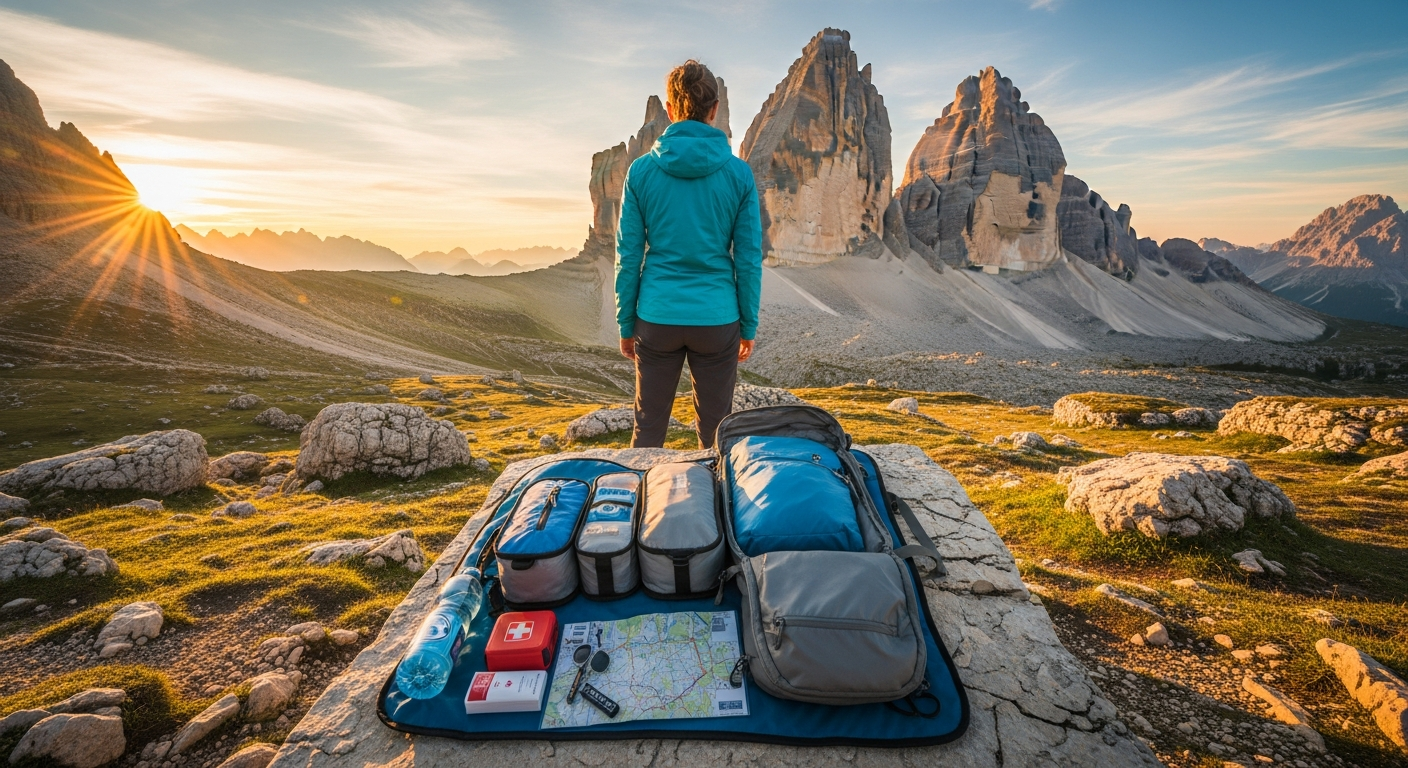
The 10 non-negotiables for every Dolomites trail: 1) First aid kit (blister treatment especially), 2) Headlamp with fresh batteries, 3) Paper map (cell service is spotty), 4) Extra food beyond your planned snacks, 5) Extra water (1.5L minimum), 6) All three clothing layers, 7) Sun protection (detailed next section), 8) Fully charged phone, 9) Emergency whistle, 10) Small amount of cash (some rifugios don’t take cards).
Italian Alpine Club (CAI) regulations require certain safety equipment on marked trails, and rescue teams have the authority to fine underprepared hikers. This isn’t theoretical — I watched a family get turned back at a Via Ferrata checkpoint for lacking proper gear.
Weight-saving hack: use your phone for photos instead of a dedicated camera. Modern smartphones shoot spectacular images, and you’re already carrying the device. This single decision saves 500-800 grams and eliminates the anxiety of expensive equipment on exposed trails.
Clothing That Works as Hard as You Do

The Base Layer Strategy
Merino wool versus synthetic is the eternal debate, so here’s the honest truth after testing both extensively: merino wool doesn’t smell even after 4-5 days of wear, regulates temperature better, and feels more comfortable. Synthetic dries faster, costs less, and maintains insulating properties when wet. For the Dolomites, I pack one of each.
The merino base layer becomes my daily hiking shirt. I hand-wash it every 3-4 days in rifugio sinks and it’s dry by morning. The synthetic layer is backup for wet conditions or when the merino is drying. This two-shirt system has carried me through week-long trips without ever feeling under-equipped.
Pants reality check: you need exactly two pairs. One full-length hiking pant with zip-off capability (Fjällräven Keb or similar), one pair of shorts or lightweight pants for warmer valley days. The zip-offs are brilliant for Dolomites conditions because you start in pants at 7am, convert to shorts by 10am, and back to pants for the descent.
The versatile pieces that work everywhere: a merino or technical fabric button-down shirt that’s acceptable in rifugios and mountain restaurants. Italians care about presentation even at altitude, and showing up to dinner in sweaty hiking gear marks you as a tourist. I pack one Patagonia long-sleeve shirt that weighs 200 grams and transitions from trail to table.
Weather Protection Without the Bulk
Your rain jacket is your insurance policy, and this isn’t where you cut corners. Minimum specifications: 10,000mm waterproof rating, fully taped seams, hood that fits over a hat, pit zips for ventilation. I use an Arc’teryx Beta LT that’s survived Dolomites downpours, Scottish highlands, and Patagonian wind without leaking a drop.
The waterproof rating numbers decoded: 10,000mm handles moderate rain for several hours. 20,000mm is expedition-grade and overkill for most Dolomites hiking. The sweet spot is 15,000mm — enough protection for the reality of alpine storms without the weight and cost penalty.
Insulated layer choice: down packs smaller and provides more warmth per gram, but loses all insulating ability when wet. Synthetic insulation (PrimaLoft, Climashield) maintains warmth even soaked but bulks larger. My solution is a lightweight down jacket (Patagonia Down Sweater or similar) that lives in a waterproof stuff sack inside my pack. It’s only coming out during rest stops or emergencies, so the wet-weather limitation doesn’t matter.
Wind protection is criminally underrated. Exposed ridgelines like Seceda or the Tre Cime circuit funnel winds that cut through everything except dedicated windbreakers. If your rain shell has good ventilation, it doubles as wind protection. Otherwise, a simple wind shirt weighing 100 grams makes those exposed sections bearable.
Accessories and Small Essentials That Make a Big Difference

Sun and Eye Protection at Altitude
UV exposure increases 10-12% for every 1,000 meters of elevation gain. At Tre Cime (2,300m), you’re receiving 25% more UV radiation than at sea level. This isn’t abstract science — I got second-degree burns on my neck during a cloudy day at Seceda because I assumed overcast meant safe.
SPF 50 is the minimum for face and neck, reapplied every two hours without exception. I’ve tested dozens of sunscreens at altitude, and the winners are mineral-based formulas (zinc oxide or titanium dioxide) that don’t run into your eyes when you sweat. Neutrogena SheerZinc and Thinkbaby are my go-to options.
Sunglasses specifications matter at altitude: Category 3 or 4 lenses (blocking 82-97% of light), 100% UV protection, wraparound style to prevent side glare. Cheap gas station sunglasses don’t cut it when you’re surrounded by reflective limestone walls. I use Julbo Explorer 2.0s designed specifically for alpine conditions.
The forgotten essentials: SPF 30+ lip balm (reapply constantly), wide-brimmed hat or buff for neck protection, and after-sun lotion for inevitable missed spots. Aloe gel tubes are available in every Dolomites pharmacy, but prevention beats treatment.
Hydration and Nutrition on the Trail
Water consumption at altitude should be 3-4 liters per day minimum. I carry two 1-liter bottles in external pack pockets for easy access without stopping. Insulated bottles keep water cold for 8+ hours, which is genuinely wonderful on hot trails, but they weigh 300-400 grams empty. Regular Nalgene bottles weigh 180 grams and work perfectly fine.
The collapsible bottle hack: I pack a Platypus SoftBottle that weighs 30 grams and folds to nothing when empty. This becomes my third bottle for long days or my only bottle for short rifugio-to-rifugio hikes where water sources are guaranteed.
Snack strategy is crucial because rifugio meals are expensive (€15-25 per meal) and not always available when you need them. I pack: energy bars (4-5 per day), mixed nuts, dried fruit, and salami or cheese from local valley shops. The local option is speck (smoked prosciutto) and Graukäse (grey cheese) from any Südtirol grocery store — both travel well without refrigeration.
Rifugios sell snacks and drinks, but at premium prices (€4-6 for a chocolate bar, €5-7 for a beer). Budget €20-30 per day for rifugio refreshments if you’re not packing everything.
Seasonal Packing Variations

Spring (April-May): Wildflower Season Essentials
Spring in the Dolomites is spectacularly beautiful and wildly unpredictable. I’ve experienced 25°C sunshine and snow squalls within the same afternoon. The wildflower meadows of Alpe di Siusi and Passo Gardena are worth this chaos, but you must pack for full winter conditions above 2,000m.
Additional items for spring: lightweight gloves (even if you’re visiting in May), waterproof hiking pants or rain pants over your regular pants, gaiters for snow crossings on north-facing slopes, and traction devices like Yaktrax if you’re attempting higher elevation trails before mid-May.
The snow reality: trails officially open in June, but lower elevation paths (below 1,800m) are usually accessible by late April. Check local hiking associations (AVS Südtirol, CAI) for current trail conditions before committing to specific routes. I learned this the hard way attempting Tre Cime in early May and encountering waist-deep snow at the saddle.
Bonus advantage: accommodation prices are 30-40% lower than summer peak, and you’ll have most trails entirely to yourself. The trade-off is worth it if you pack properly.
Summer (June-August): Peak Season Smart Packing
Summer brings the warmest temperatures, longest days, and biggest crowds. Your packing strategy shifts toward lighter gear and crowd-management tools.
Lighter options: swap heavy hiking pants for convertible pants or hiking shorts, reduce your insulated layer to a lightweight fleece instead of down, and consider a sun hoodie instead of separate hat and sun shirt.
Crowd management essentials: headlamp for predawn starts (watching sunrise from Seceda requires a 5am departure during peak season), reservation confirmations for rifugio meals printed or downloaded offline, and patience. The popular trails (Tre Cime circuit, Seceda, Lago di Braies) see thousands of visitors daily in July-August.
Heat protection becomes relevant in valleys and lower trails: electrolyte tablets for your water (altitude and heat create serious dehydration risk), cooling towel or buff you can wet for neck cooling, and lighter color clothing that reflects sun instead of absorbing it.
The afternoon storm pattern intensifies in summer. I’ve witnessed lightning strikes on exposed ridges that sent hikers scrambling for lower ground. Your rain gear and weather awareness become life-safety equipment, not just comfort items.
Fall (September-October): The Secret Best Time
September and early October offer the absolute best conditions for Dolomites hiking, and it’s the season I recommend to everyone asking when to visit. The weather stabilizes, temperatures are perfect for exertion (12-18°C at moderate elevations), and the larch forests transform into golden cathedrals.
Additional layers for fall: bring the full insulation package (fleece AND down jacket), pack gloves and warm hat even for September trips, and consider bringing a lightweight balaclava for early morning starts when temperatures hover near freezing.
Photography gear becomes essential: the low-angle autumn light creates spectacular conditions for landscape photography, and you’ll regret not having a proper camera. This is the one season where I break my “phone only” rule and pack my Sony A7III with a 24-70mm lens.
The first snow possibility is real from late September onward. Check weather forecasts obsessively in the week before departure, and have flexible plans. I’ve had perfect conditions turn to whiteout overnight, closing high passes and making trails dangerous.
Pack Smart, Travel Light, Experience Everything

After those five trips and countless mistakes, here’s what I know for certain: the Dolomites will test your gear, challenge your preparation, and reward your planning with experiences that redefine what mountains can be. That sunset I missed because of numb fingers taught me more than any packing list ever could — respect the altitude, trust the layer system, and never assume “summer” means what it does at sea level.
Your three key takeaways: First, test everything before you go. Break in those boots, verify your rain jacket actually keeps you dry, and wear your pack loaded with the weight you’ll carry. Second, embrace the minimalist mindset. You can genuinely pack everything essential in a carry-on if you choose versatile, multi-use items and resist “just in case” thinking. Third, prioritize weather protection over everything else. The perfect Instagram outfit means nothing if you’re hypothermic on an exposed ridge.
The Dolomites are waiting, and they’re even more breathtaking than the photos suggest. Pack smart using this guide, stay flexible when weather changes plans, and give yourself permission to slow down and experience these mountains instead of just checking them off a list.
Now stop reading and start packing — those limestone giants aren’t getting any less spectacular while you deliberate over which socks to bring.