Norway midnight sun summer: Expect These

The Night That Never Comes
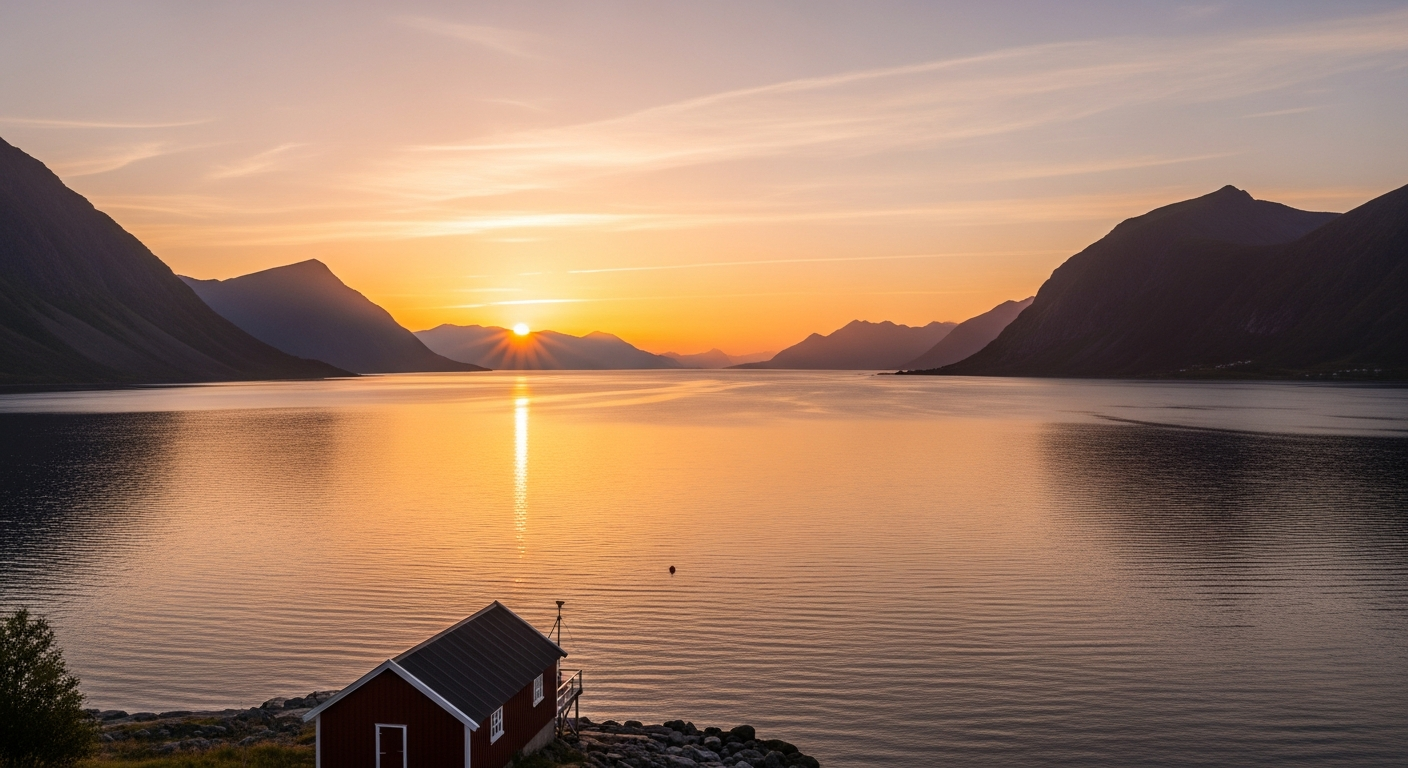
Imagine checking your watch at 11:47 PM, expecting darkness, but finding the sky painted in shades of honey and rose gold instead. Welcome to Norway’s midnight sun—where your internal clock becomes delightfully confused and adventure knows no bedtime.
I’ll be honest: when I first heard about the midnight sun, I thought it sounded gimmicky. Another “bucket list” destination that looks better on Instagram than in reality. Then I found myself standing on a beach in Lofoten at 1 AM, watching locals play volleyball while the sun hung stubbornly above the horizon, and I understood. This isn’t just about seeing something unusual—it’s about experiencing time differently.
The midnight sun happens when Earth’s tilt positions the Arctic Circle toward the sun during summer months, creating 24 hours of continuous daylight. In Norway, this phenomenon stretches from mid-May through late July, depending on how far north you venture. The further north, the longer the sun stays up, with Svalbard offering nearly four months of uninterrupted daylight.
But here’s what the guidebooks won’t tell you: the midnight sun isn’t just a natural phenomenon to observe—it’s a complete game-changer for how you experience travel. You’re no longer racing against sunset to fit in activities. That hike you thought would take all day? Start it at 10 PM. Want to kayak through fjords? The water’s actually calmer at midnight. Limited vacation days? You’ll fit more authentic experiences into a week than most travelers manage in two.
This guide strips away the Instagram filters and gives you the practical reality: what to actually expect, how to plan efficiently, where to go beyond the tourist traps, and how to maximize your time in this magical corner of the Arctic. Whether you have three days or three weeks, I’ll show you how to experience Norway’s endless summer light without exhausting yourself or your budget.
What to Actually Expect: The Reality Check You Need

Your Sleep Schedule Will Rebel (And How to Handle It)
Let’s address the elephant in the midnight sun: your body will have no idea what’s happening. Your circadian rhythm, that internal clock that’s been reliably telling you when to sleep for your entire life, suddenly becomes as confused as a tourist trying to pronounce “Lofoten.”
The first night, you’ll feel fine. Maybe even energized. By night three, you’ll understand why every Norwegian accommodation includes blackout curtains as standard equipment. These aren’t suggestions—they’re survival tools. Even with curtains drawn, your brain knows something’s off. The light seeps in around edges, through cracks, under doors, as if the sun itself is determined to keep you awake.
Here’s your practical survival strategy: pack a quality sleep mask (not the flimsy airline freebie). Bring melatonin if you use it. Most importantly, embrace what I call the “Norwegian nap” strategy—short 20-30 minute power naps when your energy dips, rather than forcing yourself into an eight-hour sleep block that your body doesn’t want.
Real talk from travelers: many report their best sleep comes from exhausting themselves with activities. That midnight hike? It’ll help you sleep better than any pill. The key is working with the endless daylight rather than fighting it.
The Stunning Light You Can’t Find Anywhere Else
Photographers call it “the golden hour that never ends,” and they’re not exaggerating. The quality of light during Norway’s midnight sun differs fundamentally from regular daylight. It’s softer, warmer, more diffused—like someone wrapped the entire landscape in a honey-colored filter.
Between 10 PM and 2 AM, you’ll experience what I consider the sweet spot. The sun hovers low on the horizon, creating impossibly long shadows and bathing everything in that coveted golden glow. Mountains look sculpted rather than flat. Water turns into liquid metal. Even ordinary fishing villages transform into something from a Nordic fairytale.
For your photos (because yes, your Instagram will benefit), shoot during these “midnight” hours. The crowds thin out, the light is breathtaking, and you’ll capture images that don’t look like everyone else’s Norway photos. But more importantly, this light changes how you experience places. Everything feels more intimate, more magical, more alive.
Weather Won’t Always Cooperate (But That’s Okay)
Here’s the truth bomb: Norway doesn’t suddenly become the Mediterranean in summer. Expect temperatures between 10-20°C (50-68°F) in most coastal areas. Rain doesn’t take a vacation just because you’re visiting. Clouds sometimes hide the midnight sun for days.
Pack layers—this isn’t a suggestion, it’s a requirement. A waterproof jacket, warm fleece, and breathable base layers will see you through everything from sunny beach days to sudden mountain squalls. Norwegians have a saying: “There’s no bad weather, only bad clothing.” Live by this mantra.
The authentic Norwegian attitude toward weather is refreshingly practical. Rain on your hiking day? Hike anyway. Clouds blocking the midnight sun? The light is still stunning. This isn’t about perfect conditions—it’s about experiencing a place authentically, weather and all.
Prices Peak, But Value Doesn’t Disappear
Summer is peak season in Norway, and prices reflect that reality. Accommodation costs jump. Popular attractions get crowded. Ferry bookings fill up months in advance. A basic hotel room that costs 700 NOK in April might be 1,200 NOK in July.
But here’s where smart planning pays off: book 3-6 months ahead for the best deals. Consider late May or early August for shoulder-season pricing with nearly the same midnight sun experience. Use grocery stores (Rema 1000 and Kiwi are your budget friends) rather than restaurants for most meals. Wild camp legally under Norway’s “Right to Roam” laws.
The value proposition isn’t about cheap travel—Norway will never be cheap. It’s about unique experiences you literally cannot have anywhere else on Earth. Where else can you hike at midnight, kayak under a sun that never sets, or watch locals having beach bonfires at 2 AM? That’s worth the premium.
Unforgettable Experiences You Can ONLY Have Under the Midnight Sun
Midnight Hiking: The Complete Game-Changer
Starting a mountain hike at 11 PM feels surreal the first time. Your brain protests that this is backwards, that you should be winding down, that sensible people are in bed. Then you reach the summit at 1 AM, look out over a landscape bathed in golden light, and understand why Norwegians consider this completely normal.
Reinebringen in Lofoten has become famous (maybe too famous), but there’s a reason. The view from the top—that iconic vista of red rorbuer cabins against turquoise water and jagged peaks—looks impossibly beautiful under the midnight sun. Start your ascent around 10 PM to avoid the day crowds and reach the summit during the golden hour.
For a more authentic local experience, try Tromsdalstinden near Tromsø. It’s steeper and more challenging than Reinebringen, but you’ll share the trail with Norwegians rather than tour groups. The summit view across Tromsø and the surrounding islands at midnight is breathtaking.
Hiking at “night” offers practical advantages beyond fewer crowds. Temperatures are cooler, making strenuous climbs more comfortable. The light is better for photography. Wildlife is more active. And there’s something profound about standing on a mountain peak at midnight, watching the sun skim the horizon, that makes you feel connected to something larger than yourself.
Pack essentials: water, snacks, warm layers (temperatures drop even if the sun doesn’t set), and a headlamp just in case clouds roll in. The unnecessary? That heavy sleeping bag you thought you’d need for an overnight summit—you won’t sleep anyway.
Kayaking Through Liquid Gold
Paddling Norwegian fjords at midnight transforms kayaking from a daytime activity into something almost meditative. The water is typically calmer after evening winds die down. The light turns the surface into molten gold. And you’ll have entire fjords practically to yourself.
Lofoten offers the most dramatic kayaking, with granite peaks rising directly from the sea. Geirangerfjord and Nærøyfjord (both UNESCO World Heritage sites) provide calmer waters perfect for beginners. Most areas offer both guided tours (1,200-1,800 NOK for 3-4 hours) and rentals (400-600 NOK per day if you’re experienced).
The wildlife encounters alone justify midnight kayaking. Seals pop up beside your boat, curious and unafraid. White-tailed sea eagles soar overhead in the endless twilight. If you’re incredibly lucky, you might spot orcas or minke whales in deeper waters.
One local guide told me the secret: “Tourists kayak during the day because that’s when they think they should. Norwegians kayak at midnight because that’s when it’s actually best.” Take the local approach.
The Authentic Local Experience: Midnight Beach Bonfires
This is the experience that costs nothing but gives you the most authentic taste of Norwegian summer culture. On warm(ish) evenings, locals gather at beaches throughout northern Norway for bonfires that last until the early morning hours. It’s not organized or advertised—it just happens.
In Lofoten, head to Haukland or Uttakleiv beaches after 10 PM. In Tromsø, locals favor beaches on Kvaløya island. You’ll find groups of Norwegians grilling sausages, playing guitars, and simply enjoying the endless daylight. The unwritten rules: bring your own food and drinks, respect the space, and take all trash with you.
This is where you’ll have actual conversations with locals, learn about life in the Arctic, and experience Norwegian summer culture beyond the tourist attractions. Bring a warm jacket (beach temperatures at midnight can be surprisingly cold), something to sit on, and maybe some food to share. The memories from these spontaneous gatherings often outlast those from expensive tours.
Driving the Scenic Routes When Everyone Else Is “Sleeping”
Norway’s famous scenic routes—the Atlantic Ocean Road, Trollstigen, and others—are spectacular during the day. At midnight, with empty roads and magical light, they’re transcendent. No tour buses blocking pull-offs. No crowds at viewpoints. Just you, the road, and some of the most dramatic landscapes on Earth.
The Atlantic Ocean Road between Kristiansund and Molde looks like it’s floating on water during the midnight sun, with the low-angle light creating impossible reflections. Trollstigen’s hairpin turns and waterfalls feel more dramatic without daytime crowds. Even the ferry rides between scenic route segments become experiences rather than just transportation.
Safety considerations: despite the daylight, it’s still midnight, and fatigue is real. Take breaks. Share driving duties. And remember that while the roads are emptier, they’re also narrower and more winding than you’re probably used to. The advantage is you can actually pull over at viewpoints without playing parking lot roulette.
Planning Your Perfect Midnight Sun Itinerary

The 7-Day Essential Route (For Limited Vacation Time)
This itinerary focuses on Tromsø and Lofoten—the two destinations that give you maximum midnight sun impact with minimum travel time between locations.
Days 1-2: Tromsø – Fly directly into Tromsø. Spend your first full day adjusting to the light and exploring the city: Arctic Cathedral, Polar Museum, and the cable car to Storsteinen for panoramic views. Day two, join a midnight sun sailing trip or hike Tromsdalstinden if you’re fit enough. Evening: explore the city’s surprisingly good restaurant scene.
Days 3-5: Lofoten – Fly or drive to Lofoten (flying saves time; driving offers stunning scenery). Base yourself in Svolvær or Reine. Day three: explore the E10 highway, stopping at beaches like Haukland and Uttakleiv. Day four: hike Reinebringen in the evening, reaching the summit around midnight. Day five: kayak tour in the morning, visit fishing villages like Å and Nusfjord in the afternoon, beach bonfire at night.
Days 6-7: Return via Tromsø – Drive back to Tromsø (or fly if time is tight), with stops at scenic viewpoints. Final evening: midnight sun photography session and farewell dinner.
Budget estimate for mid-range travelers: €2,000-2,800 per person including flights from major European hubs, rental car, mid-range accommodation, activities, and food (mix of grocery store meals and restaurant dinners).
The 10-14 Day Ultimate Experience
With two weeks, add Nordkapp (the northernmost point accessible by car) and the Vesterålen Islands for a more complete Arctic experience.
Days 1-3: Tromsø – Same as above, but add a day for a whale safari or northern lights center visit (yes, they’re open in summer for educational exhibits).
Days 4-6: Vesterålen – Drive north through stunning coastal scenery. Base in Nyksund, a former ghost village turned artist community. Hike to Måtind for views across the islands. Whale watching from Andenes (summer is prime time for sperm whales).
Days 7-9: Nordkapp – Continue to the top of Europe. The midnight sun at Nordkapp Plateau is iconic, though touristy. Stay in nearby Honningsvåg for a more authentic experience. Explore the Finnmark plateau and Sami culture.
Days 10-14: Lofoten – Head south to Lofoten, spending more time exploring hidden beaches, smaller villages, and taking your time with hikes and kayaking. This slower pace lets you truly absorb the midnight sun lifestyle rather than just checking off sights.
Getting Around: Your Complete Transportation Guide
Flights: Norwegian and SAS offer the most routes within Norway. Book internal flights 2-3 months ahead for best prices (typically 600-1,200 NOK one-way). Tromsø and Bodø (gateway to Lofoten) have multiple daily connections from Oslo.
Rental cars: Essential for Lofoten, highly recommended for Tromsø area. Expect 500-800 NOK per day for a basic car. Book early—availability gets tight in peak summer. Note: gas is expensive (around 20 NOK per liter), but distances are manageable.
Ferries: Not optional in many areas—they’re how you get around. The Bodø-Moskenes ferry to Lofoten takes 3-4 hours and costs around 350 NOK per person plus 750 NOK for a car. Book vehicle space weeks in advance for summer travel.
Buses: Budget-friendly and surprisingly comfortable. The coastal bus route from Tromsø to Lofoten takes longer than driving but offers stunning views and costs less than rental car + ferry. Expect 600-900 NOK for longer routes.
Real costs breakdown: For a 7-day trip, budget €800-1,200 for transportation (flights, car rental, ferry, gas). This is your biggest expense after accommodation.
Where to Stay and What to Eat Without Breaking the Bank
Authentic Norwegian Accommodation Options
Rorbuer (Fisherman’s cabins): These red wooden cabins on stilts over the water are the quintessential Lofoten experience. Originally built for seasonal fishermen, many are now renovated for tourists while maintaining authentic character. Expect 1,200-2,000 NOK per night for a basic cabin sleeping 2-4 people. Book through local agencies like Lofoten Rorbuer or individual property websites. The advantage: full kitchen facilities let you save money on meals.
Camping: Norway’s “Right to Roam” (Allemannsretten) allows wild camping on uncultivated land for up to two nights, as long as you’re 150 meters from buildings. This is legal, safe, and free. For facilities (showers, electricity), use designated campgrounds (200-350 NOK per night for tent and two people). Under the midnight sun, camping takes on new dimensions—though you’ll definitely need that sleep mask.
Lodges and guesthouses: The sweet spot for value and comfort. Family-run guesthouses throughout northern Norway offer rooms for 800-1,200 NOK per night with breakfast included. They’re cleaner and more personal than hotels, often with local tips worth their weight in gold.
Hotels: Splurge selectively. In Tromsø, a hotel makes sense for convenience and amenities. In Lofoten, you’re paying for location—a hotel in Reine costs double what you’d pay in Svolvær for similar quality.
Location Strategy: Where to Base Yourself
Tromsø offers urban convenience with Arctic adventure on your doorstep. Stay central (near the harbor) for walkability to restaurants and attractions, or on Kvaløya island for nature access and lower prices.
Svolvær in Lofoten serves as a practical hub with supermarkets, restaurants, and central location for exploring the islands. It’s less scenic than Reine but more affordable and less touristy.
Reine is Instagram-famous for good reason—it’s stunningly beautiful. But expect premium prices, limited accommodation options, and crowds at the main viewpoints. Book 4-6 months ahead if you’re set on staying here.
Å (yes, that’s the entire name) sits at the end of the E10 highway in Lofoten. It’s more authentic than Reine, with a fascinating fishing village museum and easier access to hiking trails. Locals recommend it over Reine for good reason.
Eating Well Without Breaking the Bank
Norwegian food prices shock most visitors. A basic restaurant meal runs 200-350 NOK per person. A beer costs 90-120 NOK. But you don’t have to survive on instant noodles to stay within budget.
Grocery store strategy: Shop at Rema 1000, Kiwi, or Coop—the budget-friendly chains. Pick up ingredients for picnic lunches and simple dinners. Norwegian bread, cheese, and cured meats are excellent and affordable. Fresh vegetables and fruit cost more but are worth it for health and energy.
Local fish markets: In coastal towns, fish markets sell incredibly fresh seafood at prices that beat restaurants. Buy salmon, cod, or shrimp, and cook it at your accommodation. This is how Norwegians eat—simply prepared, incredibly fresh fish.
Restaurant splurges worth the price: Budget one or two nice meals during your trip. In Tromsø, try Fiskekompaniet for Arctic seafood. In Lofoten, Børsen Spiseri in Svolvær serves traditional fish dishes in an authentic setting. These meals cost 400-600 NOK per person but offer experiences you’ll remember.
The secret to Norwegian food culture: It’s about quality ingredients prepared simply. You don’t need fancy restaurants when you’re grilling fresh-caught fish on a beach at midnight or making open-faced sandwiches with local cheese while watching the sun skim the horizon.
Making It Happen: Your Action Plan
The midnight sun isn’t just another travel experience—it’s a completely different way of experiencing time, nature, and yourself. You’ll return home with your sleep schedule still adjusting, your camera full of golden-hour photos taken at 1 AM, and stories that make your friends question whether you’ve edited reality.
But here’s what matters most: the midnight sun forces you to let go of normal schedules and routines. You’ll eat dinner at 10 PM because you just finished a hike. You’ll start kayaking at midnight because that’s when the water is calmest. You’ll find yourself on a beach at 2 AM, talking with locals around a bonfire, realizing this spontaneous moment is more valuable than any planned tour.
Your immediate action steps:
- Choose your timeframe and location based on your vacation length. One week? Focus on Tromsø and Lofoten. Two weeks? Add Nordkapp or Vesterålen.
- Book flights now if you’re traveling June-August. Prices increase as summer approaches, and internal Norwegian flights fill up.
- Reserve accommodation 3-6 months ahead for popular areas like Lofoten. Flexibility on exact location saves money—Svolvær over Reine, for example.
- Plan activities but stay flexible. The midnight sun’s greatest gift is freedom from rigid schedules. Book one or two key experiences (kayaking, guided hikes), but leave days open for spontaneous adventures.
- Prepare mentally for the light. This isn’t a normal vacation where you sightsee during the day and relax at night. The midnight sun blurs those boundaries. Embrace it.
The Arctic summer is short—roughly 10 weeks when the midnight sun creates this magical window. Norwegians understand this deeply, which is why they pack so much living into these brief months. They’re not being excessive; they’re being realistic about how precious this time is.
Your turn. Book that flight. Pack the layers and the sleep mask. Prepare for your internal clock to rebel and your sense of time to dissolve. The midnight sun is waiting, and it doesn’t care what time your watch says it is.
Ready to experience Norway’s endless summer light? Start planning your midnight sun adventure today—because some experiences can’t wait for the “right time.” The right time is when the sun refuses to set.