Ultra Light Europe Backpacking For Women Beginners

Master ultra light backpacking across Europe with this complete beginner’s guide for women. Learn the perfect packing system, essential gear under 15 pounds, safety tips, and insider strategies to travel lighter, smarter, and more authentically through European cities. You’re not just traveling lighter—you’re traveling smarter, freer, and more authentically than you ever imagined possible.
I’ll never forget watching a woman at Munich’s hauptbahnhof literally crying because she couldn’t lift her massive suitcase up the stairs. Meanwhile, I breezed past with my compact pack, catching a train she missed because she needed help. That moment crystallized everything I’d learned about ultra light backpacking: it’s not about deprivation—it’s about liberation.
Here’s the truth most travel blogs won’t tell you: that “complete packing list” with 47 items? You don’t need it. Those Instagram backpackers with perfectly coordinated outfits for every European capital? They’re either checking bags or doing laundry every other day. The secret to incredible European adventures isn’t bringing everything you might need—it’s bringing only what you’ll actually use.
Ultra light backpacking transforms how you experience Europe. You’ll navigate cobblestone streets in Lisbon without wincing at every bump. You’ll accept spontaneous invitations to stay in a local’s countryside villa because you can literally grab your bag and go. You’ll save hundreds on baggage fees, taxis, and porter tips. Most importantly, you’ll have the energy to actually enjoy your destinations instead of arriving exhausted from lugging around unnecessary weight.
This guide will show you exactly how to pack everything you need for weeks or months of European travel into a single backpack weighing 15 pounds or less. No fluff, no sponsored product placements—just the authentic, tested strategies that have helped thousands of women backpack Europe with confidence and ease.
Why Ultra Light Backpacking Changes Everything for Women Travelers

The Hidden Benefits Beyond a Lighter Pack
Let’s talk about what ultra light backpacking actually means for your daily travel experience. When your entire pack weighs 15 pounds instead of 35, you’re not just carrying less weight—you’re fundamentally changing how you move through Europe.
Freedom of movement becomes your superpower. That last-minute train to the Cinque Terre everyone’s raving about? You can catch it with five minutes’ notice. Those charming medieval stairs in Dubrovnik’s Old Town? You’ll climb them without dreading every step. The Paris Metro at rush hour? You’ll navigate it like a local instead of blocking doorways with an oversized suitcase. I’ve caught trains pulling out of stations, explored six-story walk-up apartments in Rome, and wandered through narrow alleyways in Barcelona—all because my pack never held me back.
The financial savings add up faster than you’d think. Budget airlines like Ryanair and EasyJet charge €25-50 per checked bag each way. Over a two-month trip with six flights, that’s €300-600 saved. You’ll skip taxi fees from airports because you can easily walk to public transport. Many hostels offer cheaper rates for guests who only need locker storage instead of under-bed space for massive luggage. These savings fund extra experiences, better meals, or additional travel days.
Your body will thank you. This matters especially for women with smaller frames who aren’t used to carrying heavy loads. Traditional backpackers often develop shoulder pain, back strain, and hip bruising from poorly distributed weight. Ultra light packing prevents these issues entirely. You’ll have more energy for actual exploring instead of recovering from the physical toll of moving between destinations. After my first ultra light trip, I realized I’d spent previous vacations genuinely exhausted—not from sightseeing, but from my luggage.
Safety Advantages for Solo Women Travelers
Here’s something nobody talks about: your luggage affects how safe you are while traveling.
Ultra light backpackers appear more confident and capable. Thieves and scammers specifically target tourists who look lost, overwhelmed, or struggling with luggage. When you’re moving smoothly through train stations with a compact pack, you blend in with locals and experienced travelers. You look like someone who knows what they’re doing—even if it’s your first trip to Europe.
You maintain complete control of your belongings. Everything you own fits in a bag you can keep in front of you on crowded metros, hold on your lap during bus rides, and secure in small hostel lockers. You’ll never experience that stomach-dropping moment of realizing your checked bag didn’t make your connection. On overnight trains, your pack fits in the overhead compartment or beside you—no leaving valuables in luggage storage cars.
Greater mobility equals better safety. If a situation feels uncomfortable, you can leave immediately. No struggling to extract a wheeled suitcase from overhead bins, no waiting for checked luggage, no being physically slowed down by unwieldy bags. I once left a sketchy hostel at 11 PM and found alternative accommodation because I could simply grab my pack and walk out the door. That flexibility provides genuine peace of mind.
The Psychology of Traveling Light
The mental benefits of ultra light packing surprised me more than the physical ones.
Decision fatigue disappears when you have fewer options. Studies show we make thousands of micro-decisions daily, and each one depletes our mental energy. With a capsule wardrobe of 10-15 clothing items, you’ll spend 30 seconds choosing outfits instead of 15 minutes. That mental energy goes toward planning adventures, connecting with locals, and actually experiencing your destinations.
Authentic local experiences become accessible. When a Barcelona local invites you to their family’s countryside farmhouse for the weekend, you can say yes immediately. When you discover a perfect tiny guesthouse in a Croatian fishing village, you don’t worry whether your luggage will fit in their ancient stone building. Ultra light packing removes logistical barriers to spontaneity and authentic connection.
The freedom is intoxicating. You’re not a tourist managing belongings—you’re a traveler experiencing Europe.
The Complete Ultra Light Packing System: What Actually Goes in Your Pack

The Perfect Backpack for Women (Size, Features, and Top Picks)
Your backpack is the foundation of your entire system. Get this right, and everything else falls into place.
The ideal size is 35-45 liters for European backpacking. Anything larger tempts overpacking—it’s human nature to fill available space. Smaller works beautifully for summer-only travel, but 40 liters gives you flexibility for shoulder seasons when you need an extra layer. This size meets carry-on requirements for virtually every European airline, including budget carriers with strict policies.
Essential features for women travelers include: an adjustable torso length (women’s torsos are typically shorter than men’s), a padded hip belt that actually transfers weight from your shoulders to your hips, compression straps to cinch down your load, and front-loading access like a suitcase. Top-loading backpacks force you to unpack everything to reach items at the bottom—infuriating when you’re searching for your phone charger at midnight in a hostel.
Top recommendations by budget:
- Budget ($50-100): Decathlon Forclaz 40L – Incredible value, surprisingly durable, women’s-specific fit available. I’ve seen these survive six-month trips.
- Mid-range ($100-200): Osprey Fairview 40 – The gold standard for women backpackers. Excellent warranty, comfortable carry, widely available for trying on in stores.
- Investment ($200+): Gregory Maven 45 – Premium comfort and durability. Worth it if you plan multiple long trips or have back issues.
The one-bag test: Load your packed bag and wear it for 20 minutes while walking around your neighborhood. If you’re uncomfortable, it’s too heavy. Period. Your pack should feel manageable, not like a punishment.
The “Big 4” Ultra Light Essentials
Traditional backpackers obsess over the “big four” heaviest items: backpack, sleeping bag, shelter, and sleeping pad. For European hostel and hotel travel, this simplifies dramatically.
Your backpack should weigh under 3 pounds empty. The Osprey Fairview 40 weighs 3.1 pounds—acceptable. If your empty pack weighs 5-6 pounds, you’re starting with a massive disadvantage.
Sleeping bag/liner: Most European accommodations provide bedding, making sleeping bags unnecessary. However, a silk or lightweight liner adds hygiene and warmth for just 4-6 ounces. I use mine in every hostel bed and as an extra layer on cold nights.
Shelter: Not applicable unless you’re camping, which most European backpackers skip.
Sleep system: A small inflatable pillow (2-3 ounces) dramatically improves hostel sleep quality. Hostel pillows range from non-existent to concrete-hard. This tiny luxury earns its weight.
Clothing Capsule: The 5-4-3-2-1 Rule
This system works for trips from two weeks to six months across any European season.
5 tops:
- 3 short-sleeve merino wool t-shirts (rotate daily, wear twice between washes)
- 1 long-sleeve base layer (warmth, sun protection, dressier option)
- 1 nicer top for evenings (casual button-up or blouse that doesn’t wrinkle)
4 bottoms:
- 2 pants or leggings (one black, one versatile color; quick-dry technical fabric)
- 1 shorts (I prefer athletic shorts that work for hiking and casual wear)
- 1 skirt or dress (provides outfit variety, easy for bathroom situations, dressier option)
3 underwear:
- ExOfficio or merino wool only. Cotton takes forever to dry. Wash in shower, dry overnight. Three pairs means you’re always wearing one, one’s drying, one’s clean.
2 bras:
- 1 regular everyday bra
- 1 sports bra (doubles for activities, yoga classes, beach days)
1 jacket:
- Lightweight, waterproof, packable. This is absolutely non-negotiable. Rain happens everywhere in Europe. I recommend jackets that stuff into their own pocket.
Bonus: 2-3 pairs merino wool socks. SmartWool PhD or Darn Tough brands last for years and never smell. Worth every penny.
This capsule creates dozens of outfit combinations while weighing under 8 pounds total.
The Secret to One-Pair Shoes (Yes, Really)
This is where beginners panic. One pair of shoes for an entire European trip? Absolutely—and here’s why it works.
European cities are incredibly walkable with excellent infrastructure. You’re not wilderness hiking through mud. You’re walking on cobblestones, pavement, and the occasional park trail. One great pair of shoes handles all of this beautifully.
The ultimate choice: lightweight waterproof walking shoes or trail runners. They must be: comfortable for 20,000+ steps daily, quick-drying (you’ll encounter rain and puddles), supportive enough for all-day wear, and not screaming “American tourist.” Brands like Merrell, Salomon, and Altra make excellent options. Trail runners work perfectly and weigh significantly less than traditional hiking boots.
Acceptable alternatives:
- Minimalist sneakers (Allbirds, Vessi) for summer-only travel in Western Europe
- Broken-in ankle boots for fall/winter trips (must already be comfortable—don’t break in new boots while traveling)
The sandal debate: Only bring sandals if you’re visiting the Mediterranean in peak summer. They add 8-12 ounces and create outfit complications. I’ve done three-month European trips in summer with just trail runners—no regrets.
Pro tip: Wear your shoes for several weeks before your trip. Your feet will expand slightly during long travel days. Shoes that fit perfectly at home might cause blisters after 10 hours of sightseeing.
Toiletries, Tech, and Extras: Cutting Weight Without Sacrificing Comfort

The Minimalist Toiletry Kit for Women
Toiletries are where beginners pack 5 pounds of unnecessary items. Here’s how to cut that to under 1 pound while maintaining your routine.
Solid products are absolute game-changers. Shampoo bars, conditioner bars, and solid face wash eliminate liquid restrictions, last 2-3 times longer than bottles, and weigh a fraction as much. I use Ethique brand bars—one shampoo bar lasts me two months of daily washing and weighs 3.5 ounces.
Multi-use products simplify everything:
- Tinted moisturizer with SPF (foundation, moisturizer, and sun protection in one)
- Dr. Bronner’s liquid soap (body wash, hand soap, laundry detergent, dish soap—seriously)
- Coconut oil (makeup remover, deep conditioner, moisturizer, lip balm)
Complete toiletry list under 1 pound:
- Toothbrush and toothpaste (get travel sizes)
- Deodorant (solid stick, not aerosol)
- Razor (single quality razor, not disposables)
- Menstrual products (menstrual cup or period underwear saves massive space and weight)
- Basic makeup (mascara, concealer, lip balm/tint)
- Hair ties and bobby pins
- Nail clippers
- Small hairbrush (not full-size)
What to definitively skip:
- Hair dryer (hostels and hotels have them)
- Full-size anything (decant into small containers)
- Cotton rounds (use a washcloth)
- Multiple shoes (covered above)
- Jewelry beyond what you wear daily
Smart Tech for the Modern Backpacker
Technology enables ultra light travel by replacing multiple items with single devices.
Essential electronics you absolutely need:
- Smartphone (your camera, map, translator, guidebook, entertainment, and communication device)
- Universal adapter (get one that works across Europe—Type C plugs with USB ports)
- Portable charger (minimum 10,000 mAh capacity for full-day sightseeing without outlet access)
Nice-to-haves if you have room and budget:
- E-reader (ounces versus pounds of physical books; I’ve read 30+ books on long trips)
- Earbuds with noise cancellation (essential for overnight buses, trains, and hostel sleeping)
What to leave home:
- Laptop (unless you’re working remotely—then it’s obviously essential)
- Tablet (your phone handles everything a tablet does)
- Multiple charging cables (get multi-device cables that charge phone, earbuds, and charger from one cable)
- Camera (modern smartphones take incredible photos; dedicated cameras add pounds)
Pro tip: Download offline maps, translation apps, and entertainment before arriving in each country. You won’t always have WiFi or data.
The “Just in Case” Items That Actually Earn Their Weight
Some items seem optional but prove invaluable during real travel situations.
Microfiber quick-dry towel: Many hostels charge €2-5 to rent towels or provide postage-stamp-sized ones. A quality microfiber towel weighs 4-6 ounces, dries in hours, and works for beach days, unexpected rainstorms, and hostel showers. I use mine almost daily.
Packable daypack: A 15-liter foldable backpack for daily exploring weighs 3-4 ounces and doubles as your personal item on flights. You’ll use this constantly for day trips, carrying groceries from markets, and beach excursions.
First aid and medication:
- Pain reliever (ibuprofen or acetaminophen)
- Antihistamine (allergies, bug bites, unexpected reactions)
- Bandaids and blister treatment
- Prescription medications (bring extras)
- Birth control (don’t rely on finding your brand abroad)
Safety essentials:
- Door stop alarm (adds security to hostel rooms and budget hotels)
- Photocopy of passport (keep separate from actual passport)
- Backup credit card (store separately from primary card)
The authentic experience enablers:
- Reusable water bottle (save money, reduce plastic, stay hydrated during long walking days)
- Reusable utensils set (for market picnics, takeaway meals, reducing waste)
- Small dry bag (for wet clothes after rain or beach days—prevents everything else from getting damp)
Each of these items has saved me money, improved my experience, or solved unexpected problems. They’ve earned their place in my pack.
Packing Strategies: How to Fit Everything and Stay Organized

The Packing Cube System for Maximum Efficiency
Packing cubes transform chaos into organization. They’re absolutely non-negotiable for ultra light travel.
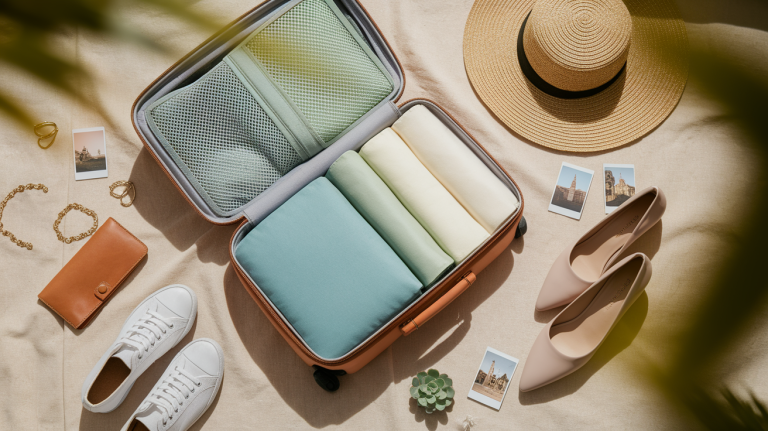
Why cubes matter: They compress clothing, keep everything organized, and double as drawers in hostels where you’re living out of your pack. You’ll find items in seconds instead of unpacking everything. When you arrive at a new hostel at midnight, you can grab your toiletry cube and pajamas without waking roommates by rustling through your entire bag.
Strategic cube organization:
- Cube 1: All tops (t-shirts, long-sleeve layer, nice top)
- Cube 2: All bottoms (pants, shorts, skirt)
- Cube 3: Underwear, socks, and bras
- Cube 4: Toiletries (or use a hanging toiletry bag)
Compression bags for bulky items like jackets and warmer layers. These aren’t the vacuum-seal kind—just simple compression sacks that you roll to squeeze out air.
Pro tip: Use different colored cubes for clean versus dirty clothes. When your green cube is empty and red cube is full, it’s laundry day. No more sniff-testing shirts.
The Roll vs. Fold Debate (Settled)
After years of testing both methods across dozens of trips, here’s what actually works:
Rolling wins for most items. Rolled clothes have fewer wrinkles, you can see everything at a glance, and they utilize space more efficiently in packing cubes. Roll t-shirts, pants, shorts, underwear, and socks.
Fold these items: Button-up shirts, dresses, or anything you want completely wrinkle-free. Folding works better for structured garments.
Bundle wrapping for perfectionists: Wrap items around a central core (like your toiletry bag), creating a single bundle. This minimizes wrinkles and maximizes space. It’s more time-consuming but produces the best results for wrinkle-prone fabrics.
Wear Your Bulkiest Items on Travel Days
This simple strategy saves significant pack space and weight.
Always wear during flights and long train journeys:
- Heaviest shoes (your only pair, but still)
- Jacket (even if you don’t need it—tie around waist if necessary)
- Jeans or bulkiest pants
- Long-sleeve layer
Layer up strategically. Wear your base layer, regular top, and jacket together. You can remove layers once on the plane or train. This keeps 2-3 pounds out of your pack weight, which matters for budget airline restrictions.
The airport outfit formula: Heaviest shoes + jeans + t-shirt + long-sleeve layer + jacket. You’ll look normal, stay comfortable, and maximize pack space.
Daily Organization Systems That Actually Work
The night-before routine: Before bed, pack your daypack for tomorrow. Phone, charger, water bottle, snacks, rain jacket, and any tickets or reservations. You’ll leave your accommodation smoothly instead of frantically searching for items.
The weekly reset: Once a week, completely unpack and repack your main bag. Remove accumulated receipts, reorganize cubes, and assess what you’re actually using. I always discover items I haven’t touched and can leave behind or mail home.
Laundry strategy: Wash items in your hostel shower using Dr. Bronner’s soap. Hang dry overnight. With quick-dry fabrics, everything’s ready by morning. This eliminates laundromat time and costs. I do sink laundry every 3-4 days and never visit laundromats.
The accessibility principle: Items you use daily (phone charger, toiletries, headphones) go in outside pockets or top of your pack. Items you need weekly (extra shoes if you brought them, backup clothes) go at the bottom. Never dig through your entire pack for frequently used items.
Conclusion: Your Ultra Light European Adventure Starts Now
Ultra light backpacking isn’t about deprivation or suffering with minimal belongings. It’s about intentionally choosing freedom over excess, experiences over possessions, and mobility over the illusion of preparedness.
That 15-pound backpack represents something profound: you’re capable of more than you think. You don’t need 40 pounds of stuff to feel secure in unfamiliar places. You need good planning, smart choices, and confidence in your ability to handle situations as they arise.
The women I’ve met who travel ultra light share a common trait: they’re fully present in their experiences. They’re not worried about their checked luggage, not stressed about protecting expensive belongings, not exhausted from carrying heavy loads. They’re engaged, spontaneous, and genuinely experiencing Europe rather than just photographing it.
Your first ultra light trip will feel slightly uncomfortable. You’ll second-guess leaving items home. You’ll worry you don’t have enough outfit options. Then you’ll arrive in Barcelona, swing your pack over one shoulder, and walk confidently to the metro while other travelers struggle with oversized luggage. You’ll accept a last-minute invitation to a local’s countryside villa. You’ll catch a train with two minutes to spare. And you’ll realize that everything you need has been on your back the entire time.
Start your ultra light journey today. Lay out everything you think you need for your European trip. Now remove half of it. Then remove half again. What remains is probably still too much, but it’s a start.
The cobblestones of Prague, the hills of Lisbon, the stairs of Santorini, and the metros of Paris are waiting for you. Pack light, travel far, and discover that the best adventures come to those who aren’t weighed down by unnecessary baggage—literal or metaphorical.
Ready to book that flight? Your 15-pound backpack and the adventure of a lifetime are calling.