The Minimalist Carry-On Packing List for Any Trip

You know that feeling when you’re standing at the baggage carousel, watching everyone else grab their luggage while you’re already halfway to your destination?
That’s the freedom of carry-on-only travel. But here’s what stops most people: the overwhelming fear of “what if I need this?”
I’ve been there—stuffing my suitcase with three extra pairs of shoes, backup outfits for scenarios that never happen, and enough toiletries to stock a small pharmacy. The result? Overweight baggage fees, a sore shoulder, and clothes I never wore.
Minimalist packing changes everything. It’s not about deprivation—it’s about strategic choices that give you more freedom, less stress, and the confidence to move through airports like you own them.
This proven packing list works whether you’re heading out for a long weekend or a month-long adventure, and it’s going to transform how you travel.
The secret? Every item earns its place by serving multiple purposes, working with everything else in your bag, and actually getting used. No “just in case” items allowed. By the end of this guide, you’ll have a complete system that makes packing feel effortless instead of exhausting.
The Essential Minimalist Packing Mindset (Before You Start)
The Versatility Rule: Choose Multi-Purpose Items
The foundation of minimalist packing is simple: every item must work overtime. When you choose pieces that serve multiple purposes, you slash your packing list in half without sacrificing functionality.
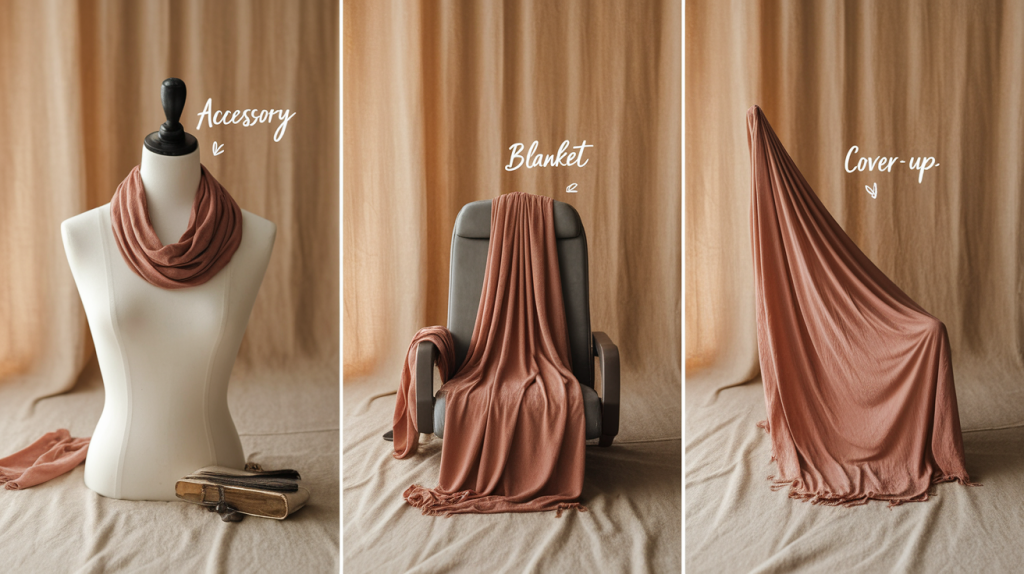
Think about a lightweight scarf. It’s a fashion accessory, a blanket on cold flights, a beach cover-up, a makeshift pillowcase, and even an emergency bag if needed. That’s five uses from one small item that weighs almost nothing.
This is where neutral colors become your best friend. Black, navy, gray, white, and olive green mix and match effortlessly, creating endless outfit combinations from just a few pieces. A black t-shirt pairs with jeans for sightseeing, tucks into a skirt for dinner, and works as sleepwear in a pinch. That’s versatility in action.
When you build your packing list around multi-purpose items in coordinating colors, you reduce the number of pieces you need by at least 50%. Three tops that all work with two bottoms give you six outfit combinations. Add a cardigan and scarf, and you’ve suddenly got dozens of looks from just seven items.
The “Wear It Twice” Strategy
Here’s a truth that will revolutionize your packing: nobody notices when you repeat outfits while traveling. The people you meet today won’t see you tomorrow. The locals don’t care. Your travel companions are too busy enjoying their trip to track your wardrobe rotation.
Once you embrace this reality, you’re free to pack significantly less. You can absolutely wear those jeans three times during a week-long trip. That comfortable t-shirt? It’s getting worn multiple times, and that’s perfectly fine.
The key is having quick laundry solutions. Hand-wash small items in your hotel sink with a bit of shampoo, roll them in a towel to remove excess water, and hang them to dry overnight. Most lightweight, quick-dry fabrics are ready to wear by morning. For longer trips, finding a local laundromat becomes a simple errand rather than an emergency.
This strategy extends your wardrobe infinitely. Five shirts can last two weeks when you’re willing to wash and repeat. That’s the freedom of minimalist travel—you’re not locked into bringing a fresh outfit for every single day.
Trust That You Can Buy It There
One of the biggest mental shifts in minimalist packing is trusting that you’re not traveling to a remote island without resources. Almost everywhere you go has stores that sell basic necessities.
Forgot your toothpaste? You can buy it there. Need an extra t-shirt? Available locally. Realize you want a warmer layer? Shopping is an option. This isn’t about being unprepared—it’s about recognizing that most items aren’t unique or irreplaceable.
The real question becomes: what do you actually need versus what might be nice to have? You need your prescription medications and essential documents. You don’t need six different “just in case” outfit options for hypothetical scenarios.
This mindset creates incredible freedom. You’re not locked into every packing decision you make at home. If you realize you need something, buying it becomes part of the adventure. Plus, picking up items locally often makes better souvenirs than anything from a gift shop.
Your Complete Minimalist Clothing List

The Core Clothing Essentials
Your clothing foundation should create maximum outfit combinations from minimum pieces. Here’s the proven formula that works for any destination:
Tops: Pack 3-5 lightweight t-shirts and blouses in neutral colors. Mix casual and slightly dressy options so you’re covered for any situation. A simple white t-shirt, a black v-neck, and a chambray button-down give you three distinct looks that work together seamlessly. These tops should be comfortable enough for all-day wear but presentable enough that you’d feel confident in any setting.
Bottoms: Two pairs of pants or jeans that can dress up or down are all you need. One pair of dark jeans works for almost everything—sightseeing, casual dinners, even slightly dressier occasions when paired with the right top. Your second pair might be lightweight travel pants, another jean style, or even a versatile skirt. The key is choosing bottoms that don’t wrinkle easily and work with all your tops.
Layering pieces: One chambray shirt or cardigan serves as your versatile layer for temperature changes, air-conditioned spaces, or dressier moments. Add one lightweight scarf for warmth, style, and multiple uses. These pieces transform your basic outfits into completely different looks.
Sleepwear: One or two comfortable t-shirts or lightweight pajamas keep you covered. Choose something you wouldn’t hate being seen in publicly—hotel fire alarms happen, and you want to be reasonably presentable.
This combination creates endless possibilities. Each top works with each bottom. Add your layering pieces, and you’ve got outfit variations for weeks, not just days.
Underwear and Accessories Done Right
This is where many minimalist packers make mistakes by cutting too much. Underwear and socks are small, so don’t skimp here. Pack one pair per day of your trip—they take up minimal space and give you the comfort of fresh basics every day.
Bring 2-3 bras that work with all your tops. A neutral t-shirt bra, a sports bra for active days, and possibly a strapless option covers every situation without overloading your bag. Choose bras that don’t require special washing or extensive care.
A warm beanie or hat protects you from unpredictable weather and bad hair days. This small item weighs almost nothing but provides outsized value when temperatures drop or you’re rushing out the door.
Pack a lightweight mini umbrella that fits in your bag’s exterior pocket. Weather changes quickly, and staying dry makes every trip more enjoyable. Modern compact umbrellas are so small and light that there’s no reason to skip this essential.
The Two-Shoe Rule That Changes Everything
Shoes are the bulkiest items in any suitcase, which is why limiting yourself to two pairs is transformative. This isn’t a sacrifice—it’s strategic packing that actually improves your travel experience.
Pair one: Comfortable, waterproof boots or sneakers that you wear on the plane. These are your workhorses—the shoes you’ll wear 80% of the time. They need to be broken in, comfortable for all-day walking, and weather-appropriate. Quality matters here because these shoes will carry you through miles of exploration.
Pair two: Versatile shoes that transition from day to night. This might be stylish sneakers, low-heeled booties, or comfortable flats. Choose shoes that dress up your casual outfits but don’t sacrifice comfort. If you can’t walk a mile in them comfortably, leave them home.
Why three pairs is too many: That third pair takes up significant luggage space, adds weight, and rarely gets worn. Most travelers find their “nice” shoes stay in the suitcase because comfort wins every time.
Why one pair isn’t enough: Having a backup pair gives you options when your main shoes get wet, need a break, or don’t match your outfit. Two pairs is the perfect balance.
The amazing freedom comes from wearing your bulkiest pair on the plane. This single strategy saves massive space in your carry-on and makes packing infinitely easier.
Toiletries, Tech, and Travel Essentials
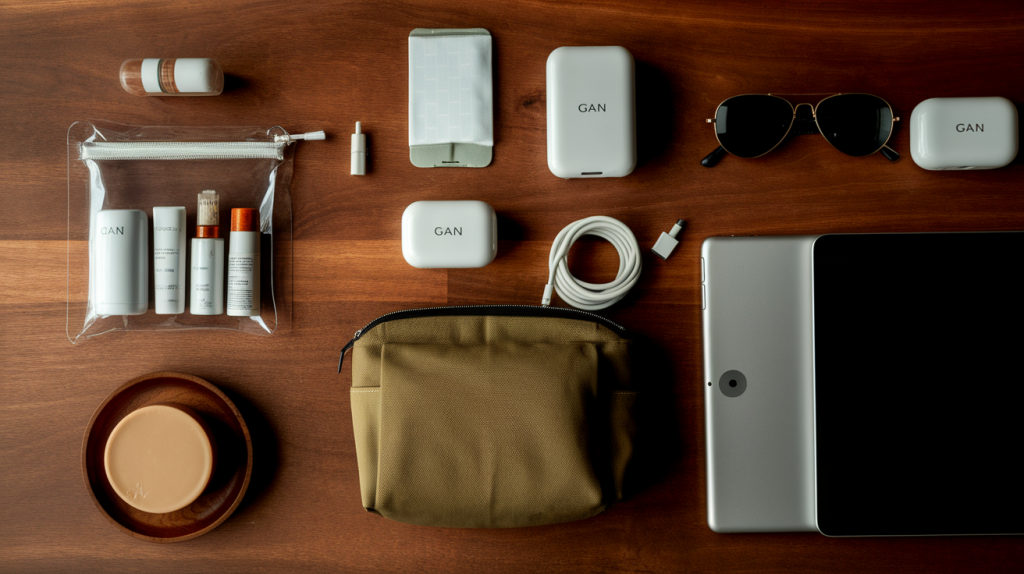
Your Simple Toiletry Kit
Toiletries are where overpacking happens most often. We bring full-size products “just in case” and end up lugging around items we barely use. Your toiletry kit should contain only what you truly need in travel-sized containers.
The essentials: toothbrush, toothpaste, deodorant, face wash, and moisturizer. That’s it. These five items cover your basic hygiene needs. Everything else is optional based on your personal requirements.
Solid products revolutionize space-saving. Shampoo bars, conditioner bars, and solid perfumes eliminate liquid restrictions and take up a fraction of the space. They last longer than you’d expect and work just as well as liquid versions. Plus, you’ll never worry about bottles leaking in your bag.
Skip the “just in case” items that clutter your toiletry bag. That full-size hair dryer? Hotels have them. The complete makeup collection? Bring your essential five-minute routine. The twelve different skincare products? Choose your top three. Remember, you can buy items at your destination if needed.
Store everything in a clear, TSA-approved bag that’s easy to pull out during security. This simple organization saves time and stress at the airport.
Smart Tech Packing for Modern Travelers
Technology is essential for modern travel, but you don’t need every device you own. Pack smart by choosing versatile tech that serves multiple purposes.
One universal GaN-based charger for all your USB-C devices eliminates the need for multiple chargers. Modern GaN chargers are compact, powerful, and can charge your phone, tablet, and laptop simultaneously. This single item replaces three or four traditional chargers, saving significant space and weight.
A single 10,000mAh power bank is plenty for most travelers. This capacity charges your phone 2-3 times, which covers a full day of heavy use. Unless you’re going off-grid for extended periods, you don’t need a larger, heavier battery pack.
Tablet versus laptop: Choose based on actual needs, not hypothetical ones. If you’re checking emails and browsing, a tablet works perfectly and weighs much less. Only bring a laptop if you objectively need it for work or specific tasks that tablets can’t handle.
Quality headphones make flights and downtime significantly better. Noise-canceling options are worth the investment for frequent travelers. Choose comfortable headphones that fold or collapse for easier packing.
The Must-Have Travel Accessories
Your accessories organize your belongings and make travel more comfortable. These items earn their space by solving real problems.
In your carry-on: A hip belt bag keeps your valuables secure and accessible during sightseeing. A laundry bag separates dirty clothes from clean ones. Packing cubes compress clothing and create organization that makes finding items effortless.
In your personal item: Your passport, wallet, hand sanitizer, and lip balm need to be immediately accessible. Keep these essentials in your personal item bag—the one that stays under the seat in front of you. This ensures you can access important items without opening the overhead bin.
Antibacterial wipes clean tray tables, armrests, and hotel surfaces. Hand cream prevents the dry, cracked hands that come from frequent washing and airplane air. These small comfort items make travel more pleasant.
Sunglasses and masks are easy to forget but essential to have. Sunglasses protect your eyes and reduce headaches from bright sunlight. Masks are still required in some locations and useful for crowded spaces or when you’re feeling under the weather.
Packing Strategies and Pro Tips for Maximum Efficiency

The Rolling vs. Folding Debate (Solved)
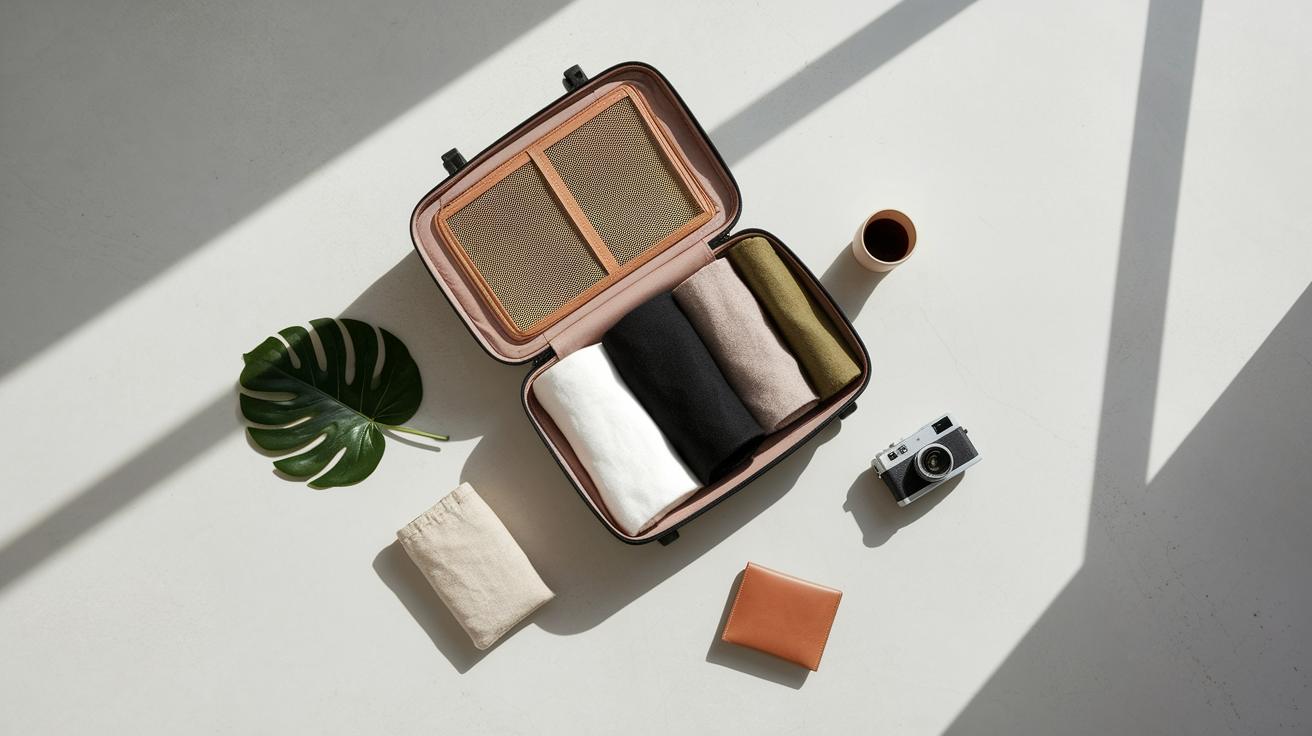
The rolling versus folding debate has a clear winner for most items: rolling works best. Rolling t-shirts, casual tops, and lightweight pants creates compact cylinders that fit together like puzzle pieces, maximizing every inch of your carry-on.
Here’s why rolling is effective: it reduces wrinkles in most fabrics, allows you to see everything at once when you open your bag, and creates compression that saves space. Roll each item tightly, starting from the bottom and working up, then stand the rolls vertically in your suitcase.
When to fold instead: Structured items like dress shirts, blazers, and pants with creases look better when folded. These pieces need their shape maintained, and rolling can create unwanted creases. Fold them carefully and place them on top of your rolled items.
Using packing cubes elevates your organization to professional levels. These zippered fabric containers compress clothing, separate outfits by category, and make unpacking at your destination effortless. You can pull out your entire toiletry cube or your tops cube without disturbing everything else.
The quick trick for fitting more without overstuffing: use the space inside your shoes. Socks, underwear, and small accessories fit perfectly inside shoes, utilizing otherwise wasted space. Stuff shoes with these items, then place them along the edges of your suitcase.
Wear Your Bulkiest Items on the Plane
This strategy alone can save 30-40% of your suitcase space. Always travel wearing your boots or sneakers—your bulkiest footwear. These items take up disproportionate space in luggage, but wearing them eliminates that problem entirely.
Layer your jacket, cardigan, or hoodie during transit. Even if you’re traveling to a warm destination, you can wear these items through the airport and on the plane, then stuff them in the overhead bin once you’re settled. Airplanes are notoriously cold anyway, so these layers serve a practical purpose during your flight.
The comfort factor matters too. Dressing in layers gives you flexibility as temperatures change throughout your travel day. You can adjust your comfort level without digging through your luggage. Plus, wearing comfortable shoes and clothing makes long security lines and airport walks significantly more bearable.
This approach creates a surprising amount of extra space in your carry-on. That space becomes available for souvenirs, items you pick up during your trip, or simply breathing room that makes packing and unpacking easier.
The Night-Before Packing Method
Successful minimalist packing starts with preparation, not spontaneous throwing items in a bag. The night before your trip, lay everything out on your bed to visualize your complete packing list.
This visualization reveals redundancies and gaps. You’ll notice you’ve selected three similar black tops when you only need one. You’ll realize you forgot socks. You’ll see that those extra “just in case” items aren’t actually necessary.
Remove one outfit from your laid-out selection. This step is crucial—you probably won’t need that extra option, and removing it creates valuable space. Trust me, you’ll never miss that outfit you almost packed.
Pack in reverse order: what you need last goes in first. Your shoes and heavier items form the base layer near the wheels of your suitcase. Items you’ll need first—like pajamas or tomorrow’s outfit—go on top for easy access. This strategic layering means you’re not unpacking everything to find one item.
Leave room for souvenirs and items you pick up during your trip. Don’t pack your carry-on to absolute capacity. That 10-15% of empty space gives you flexibility and eliminates the stress of figuring out how to fit new items on your return journey.
Embrace the Freedom of Minimalist Travel

Minimalist carry-on packing delivers freedom you didn’t know was possible. You’ll breeze through airports while others wait at baggage claim. You’ll save hundreds of dollars in checked bag fees over time. You’ll experience the confidence of knowing you have everything you need in one compact, manageable bag.
This proven system works for weekend getaways and month-long adventures alike. The principles remain the same: choose versatile items, embrace repeating outfits, and trust that you can handle whatever comes up. You don’t need a different packing list for every trip—you need one effective approach that adapts to any destination.
The money you’ll save on baggage fees adds up quickly. At $35-70 per checked bag each way, a few trips per year means hundreds of dollars back in your pocket. That’s money better spent on experiences, meals, and activities at your destination.
The time you’ll gain is equally valuable. No waiting at baggage claim. No worrying about lost luggage. No lugging heavy suitcases through cobblestone streets or up narrow hotel stairs. You move through travel days with ease, arriving at your destination ready to start exploring instead of exhausted from managing your belongings.
Start your next trip with this essential checklist. Challenge yourself to pack lighter than you think possible. Remove one more outfit than feels comfortable. Trust the process, even when your instinct says to add “just one more thing.”
The amazing feeling of traveling with complete simplicity is addictive. You’ll wonder why you ever hauled around those overstuffed suitcases. You’ll feel lighter, more mobile, and more present in your travel experiences.
Once you experience minimalist travel, you’ll never go back. Your perfect carry-on adventure starts with this simple list and the willingness to let go of “what if” thinking. You have everything you need. Now go explore the world with nothing holding you back.