5 best things to do in Whitby Yorkshire this summer

Standing at the bottom of those 199 steps at 6:47 AM on a July morning, watching the mist roll off the North Sea while a handful of locals walked their dogs past me without even breathing hard.
My lungs were already protesting, and I hadn’t even started climbing. But that early morning ascent, with Whitby Abbey emerging from the fog like something from a fever dream, remains one of my most unforgettable travel moments in England.
Here’s the truth about Whitby that most travel guides won’t tell you: this isn’t your typical British seaside resort. You won’t find candy-floss-stuffed amusement arcades dominating the seafront or overpriced chain restaurants lining every street.
What you *will* find is a working fishing port that happens to be staggeringly beautiful, a town where Dracula’s legacy mingles with Captain Cook’s history, and a coastal experience that delivers authentic Yorkshire charm without the tourist-trap premium of Cornwall or the Lake District.
But with limited vacation time and Yorkshire’s famously unpredictable summer weather, you need to maximize every moment. I’ve spent five separate visits to Whitby figuring out what’s genuinely worth your time versus what’s just Instagram bait.
After countless fish and chips comparisons, multiple coastal walks in varying weather conditions, and more Abbey visits than I care to admit, I’ve distilled Whitby down to its essential experiences—the ones that justify the journey north.
Conquer the Legendary 199 Steps to Whitby Abbey (And Why It’s Worth Every Breath)

The Climb That Rewards You Twice
Let me be honest: those 199 steps are exactly as challenging as they sound if you’re rushing. But here’s what the guidebooks don’t mention—they’re also significantly wider than most historic staircases, with natural stopping points every 20-30 steps that locals have cleverly disguised as “photo opportunities.” The Church Stairs, as they’re properly known, were built in the 1370s to connect the harbour with St Mary’s Church and Whitby Abbey above.
The best time to make this climb is before 8 AM or after 6 PM in summer. I learned this the hard way after attempting a midday ascent in August, wedged between tour groups and families with young children, everyone stopping at different intervals. Early morning offers you the town waking up below, fishing boats heading out, and that magical quality of light that makes the red-roofed houses glow. Golden hour (roughly 7-8 PM in July) gives you stunning photographs but also brings out every photographer in Whitby, so arrive early to claim your spot.
Here’s the budget-friendly win that makes this unmissable: it’s completely free. You’re getting million-pound views over the harbour, across the North Sea, and down the coastline toward Sandsend without paying a penny. The steps themselves are a historic monument, worn smooth by centuries of feet, with gravestones embedded in the walls at various points—a delightfully gothic touch that sets the tone for what’s above.
If you genuinely can’t manage the climb due to mobility issues, the Whitby hop-on-hop-off bus (£10 for adults, £5 for children) will take you up to the Abbey entrance. No shame in this—the view from the top is what matters, not your method of arrival.
Whitby Abbey: Where Gothic Dreams Come Alive
The ruins at the top justify every burning quadricep. Whitby Abbey isn’t just another English Heritage site—it’s the atmospheric ruin that inspired Bram Stoker to set Dracula’s arrival in England right here. He stayed in Whitby in 1890, looked up at these skeletal arches silhouetted against storm clouds, and found his setting.
What you’ll actually experience: soaring Gothic arches open to the sky (the roof collapsed centuries ago), walls that frame the sea perfectly, and an overwhelming sense of time’s passage. The original monastery dates to 657 AD, though what you see now is primarily 13th-century. Walk through the nave, and you’ll understand why this spot has been sacred for over 1,300 years—the location itself feels otherworldly.
Entry costs £11.50 for adults (English Heritage members enter free—and if you’re visiting multiple heritage sites in England, the £60 annual membership pays for itself after six visits). The site includes an excellent visitor center with Dracula exhibits and genuine historical artifacts, plus St Mary’s Church next door, which is free to enter and absolutely worth 15 minutes of your time. The church’s interior is wonderfully eccentric, with box pews and a three-decker pulpit that feels frozen in the 18th century.
Time-saving tip: Arrive right when it opens at 10 AM, spend 45 minutes at the Abbey, then 20 minutes in St Mary’s Church before the crowds arrive around 11:30 AM. This gives you the atmospheric experience without sharing it with 200 other people.
Local Secret: The Hidden Perspectives
Most visitors photograph the Abbey from the obvious spot—standing in the nave looking toward the east window. But locals know the best shots come from three other angles: from the graveyard’s northwest corner looking back toward the Abbey with the town below (this is the classic postcard view), from the cliff edge path just south of the Abbey grounds (you’ll need to walk five minutes past the exit), and from the harbour at sunset when the ruins are backlit.
The story that makes the climb meaningful: these steps weren’t just a convenience—they were the main route for funeral processions. Coffins were carried up these stairs to St Mary’s churchyard. On windy days, bearers would sometimes struggle, and there are documented cases of coffins slipping. This is why there’s a flat resting stone at the halfway point. Knowing this transforms the steps from a tourist challenge into a genuine historical experience.
Lose Yourself in Whitby’s Authentic Harbour & Maritime Heritage

The Working Harbour That Time Forgot
Whitby Harbour isn’t a sanitized tourist attraction—it’s a genuine working fishing port that happens to be photogenic. The best times to witness this are 6-7 AM when boats unload the night’s catch, or 4-5 PM when they’re preparing for evening departures. Stand on the harbor’s east side near the fish market, and you’ll watch crates of crab, lobster, and fresh fish being hauled off boats by men in waterproofs who’ve been doing this for decades.
This is also where Captain James Cook’s story begins, and it’s impossible to overstate his significance to Whitby. Cook served his maritime apprenticeship here from 1746-1749, learning navigation and seamanship on Whitby-built colliers (coal ships). The ships he later commanded on his Pacific explorations—*Endeavour*, *Resolution*, *Adventure*—were all Whitby-built vessels, chosen specifically because Cook trusted the design.
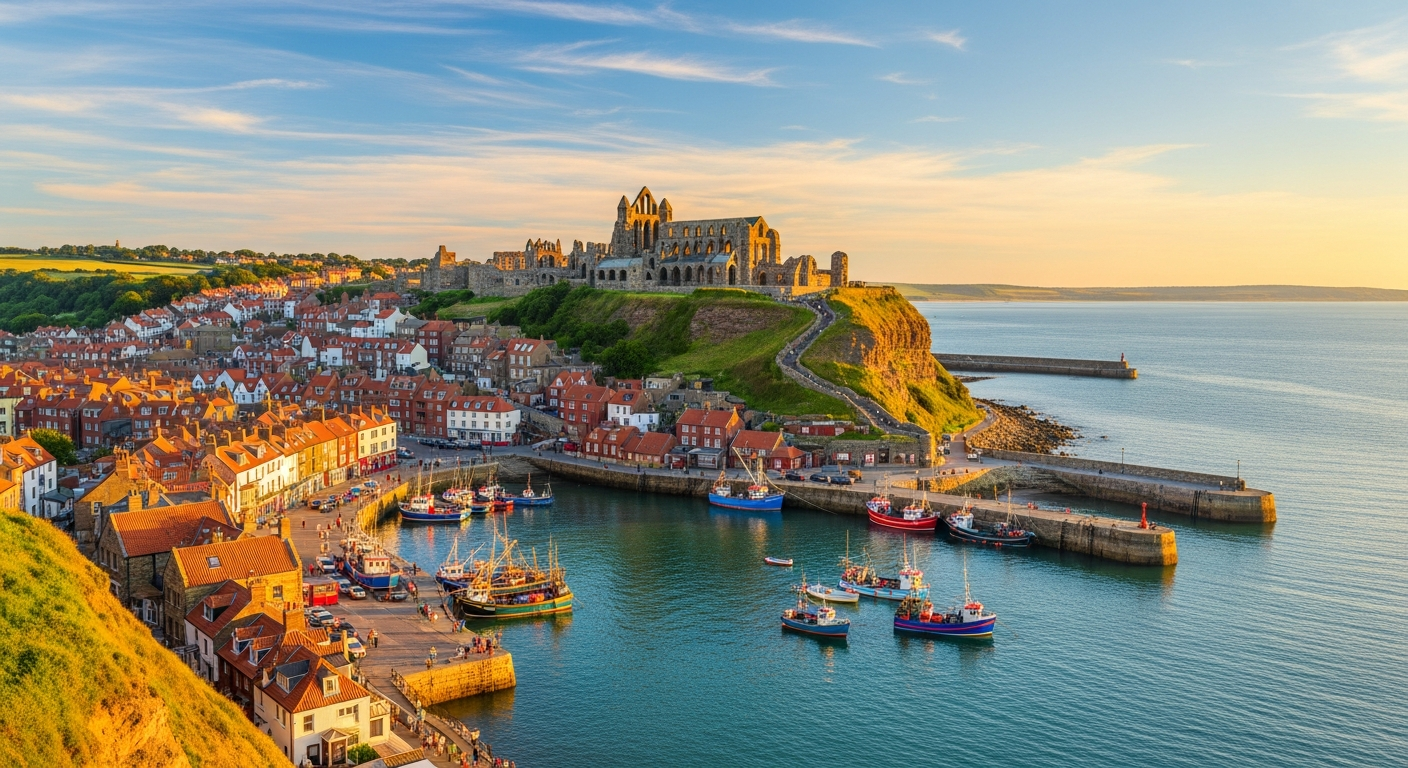
For the perfect harbour photograph without tourist photobombers, position yourself on the west pier around 7 AM. You’ll get fishing boats in the foreground, the 199 steps and Abbey rising behind, and typically just a handful of dog walkers sharing the space. The early morning light is softer and more flattering than harsh midday sun.
The Complete Harbour Experience
Here’s what most visitors miss: Whitby Harbour has two distinct sides with completely different characters. The east side is grittier and more authentically maritime—this is where working fishermen still operate, where you’ll find the genuine ship chandlers and the fish market. The west side is prettier and more touristy, with the famous Magpie Café, gift shops, and ice cream parlors.
Explore the east side first, early in your visit, before you’ve become desensitized to Whitby’s charm. The narrow alleyways called “ghauts” that slice between buildings are the routes locals actually use—Arguments Yard, Sandgate, and Henrietta Street are particularly atmospheric. These medieval passages were designed to allow quick access from homes to the harbour when fishing boats came in.
Now, let’s address the elephant in the harbour: The Magpie Café. Yes, it’s famous. Yes, the fish and chips are genuinely good. But is the 60-90 minute queue worth it on a summer afternoon? Absolutely not when you have limited time in Whitby. Instead, try Mister Chips on Church Street (£8-10 for fish and chips, usually a 10-minute wait maximum), or take your meal from Quayside fish and chips (£9 for haddock and chips) and eat on the harbour wall watching the boats. The fish is just as fresh—it’s all coming from the same boats—and you’re saving an hour of your precious vacation time.
Maritime Museums Worth Your Time (And One to Skip)
The Captain Cook Memorial Museum (£6.50 adults, £5.50 seniors) occupies the 17th-century harbourside house where Cook lodged as an apprentice. It’s small—you’ll cover it in 45 minutes—but genuinely fascinating if you have any interest in maritime history or exploration. The museum includes Cook’s own letters, navigation instruments, and artifacts from his Pacific voyages. The volunteers who staff it are often retired sailors or local historians who can answer detailed questions.
Pair this with a morning walk around the harbour, and you’ve got a perfect 2-3 hour experience that gives you both the historical context and the living maritime tradition. What I’d skip: the Whitby Museum on Pannett Park is fine but generic, covering everything from local geology to Victorian curiosities without any real depth. If you’re time-limited, the Captain Cook Museum gives you more specific, memorable insights.
Beach Bliss: Whitby’s Stunning Coastline Beyond the Postcard

West Cliff Beach—Your Perfect Summer Sanctuary
West Cliff Beach holds Blue Flag status, which means it meets strict European standards for water quality, safety, and environmental management. But here’s what that certification doesn’t tell you: this beach is genuinely lovely in a way that crowded southern resorts like Brighton or Bournemouth simply aren’t anymore. On a July weekday, you can still find stretches of sand where you’re not elbow-to-elbow with other families.
The beach stretches for nearly a mile of golden sand, backed by colorful beach huts and the Victorian promenade. When the tide goes out (check local tide times—they’re posted at every beach access point), you get vast expanses of firm sand perfect for walking, and rock pools appear that children can explore for hours.
Essential packing for Yorkshire beach days: layers, always layers. I’ve experienced 22°C sunshine that turned to 14°C and drizzle within an hour. Bring a windbreak (you can buy cheap ones at the seafront shops for £15-20, or rent them from the beach hut services for £5), a waterproof jacket even if the forecast looks perfect, and sunscreen—the North Sea breeze disguises how strong the sun is.
For families, the area closest to the pier has lifeguard coverage in summer and gentler waves. For couples wanting quieter spots, walk toward Sandsend (north) for ten minutes, and the crowds thin dramatically. The beach is dog-friendly year-round, though restrictions apply to certain sections from May to September—look for the clearly marked signs.
Secret Sandsend: The Hidden Beach 10 Minutes Away
When West Cliff Beach gets busy on summer weekends, locals drive or walk the 1.5 miles north to Sandsend. This smaller village offers the same quality of sand and sea but with a fraction of the visitors. The beach here is backed by steep cliffs and feels more secluded, almost private on quieter days.
You can walk there via the coastal path in about 25-30 minutes—it’s flat, paved, and suitable for pushchairs, following the old railway line. By car, it’s a five-minute drive with a pay-and-display car park (£4 for 4 hours). The walk is genuinely scenic, hugging the coastline with the sea on your right and occasional glimpses of fossils in the cliff face.
The ultimate beach pub stop: Wits End sits right on Sandsend beach, a traditional pub with outdoor seating where you can watch the sunset over the water with a pint (£4.20 for local ales) or fish and chips (£13.95). It’s where Whitby locals actually go when they want a beach day without the tourist crowds. Book ahead for dinner on summer weekends—it’s small and fills up quickly.
Breathtaking Coastal Walks You Can’t Miss
The Whitby to Robin Hood’s Bay coastal walk is the single best thing you can do if you have good weather and reasonable fitness. This 6-mile cliff-top walk follows the Cleveland Way National Trail and delivers the kind of dramatic coastal scenery that rivals anywhere in Britain.
Distance and difficulty reality check: It’s 6 miles, mostly flat with a few moderate inclines, taking 2.5-3 hours at a relaxed pace with photo stops. The path is well-maintained but can be muddy after rain—proper walking boots or trail shoes are essential, not optional. I’ve seen tourists attempt this in flip-flops and regret it within the first mile.
Pack a small backpack with water, snacks, waterproof jacket, and fully charged phone (for photos and emergencies). The walk is well-marked and hard to get lost on, but mobile signal can be patchy in sections. Start early—leave Whitby by 9 AM—so you finish in Robin Hood’s Bay with time to explore the village and catch the 12:30 PM or 2:30 PM bus back to Whitby (£4.50 single fare, buses run every two hours in summer).
Three photography viewpoints that’ll make your Instagram followers jealous: Saltwick Bay at the 1.5-mile mark (dramatic rock formations and a hidden beach accessible at low tide), the clifftop just before High Hawsker (sweeping views back toward Whitby Abbey), and the descent into Robin Hood’s Bay itself (the village tumbling down the cliff face is impossibly picturesque).
Whitby’s Food Scene: From Traditional Fish & Chips to Hidden Culinary Gems

The Authentic Fish & Chips Experience
Beyond The Magpie, three local favorites deliver better value with shorter queues: Hadley’s Fish & Chips on Bridge Street (£9.50 for haddock and chips, consistently excellent batter, 15-20 minute wait maximum), Trenchers on New Quay Road (£10.95 for fish and chips, massive portions, popular with locals for sit-down meals), and the aforementioned Quayside (best for takeaway, eaten on the harbour wall).
The secret menu item locals order: ask for “scrapings” or “scraps” for free—these are the crispy batter bits that fall off during frying, and they’re delicious sprinkled over your chips. At Hadley’s, order the curry sauce on the side (£1.20)—it’s made in-house and transforms the meal.
Takeaway versus sit-down strategy: Takeaway saves you 20-30% and lets you eat with the best views (harbour wall, beach, or riverside benches). Sit-down restaurants offer comfort and table service but charge premium prices for the privilege. In summer, with good weather, takeaway maximizes both your budget and your experience.
Where Locals Actually Eat
Morning: Skip the hotel breakfast and head to The Edge café on Flowergate (full English breakfast £7.95, opens at 8 AM, rarely crowded before 9:30 AM). The coffee is properly good—they use a local roaster—and the breakfast ingredients are sourced from Yorkshire suppliers.
Lunch: Rusty Shears on Silver Street is a hidden gem tucked into the old town’s winding streets. It’s a traditional tea room serving homemade soups (£4.95), sandwiches (£6.50), and the best Yorkshire curd tart I’ve found in Whitby (£3.50). The interior is cottage-cozy with mismatched china and low beams—arrive before noon to get a table.
Dinner: For seafood that came off Whitby boats that morning, book ahead at The Moon and Sixpence on Marine Parade (mains £16-24, seafood platter for two £38). It’s not cheap, but the quality justifies the cost. Alternatively, The Fisherman’s Wife on Khyber Pass serves excellent seafood in a less formal setting (£12-18 mains, no bookings, arrive by 6:30 PM to avoid queues).
Budget breakdown for eating incredibly well: Breakfast £8, lunch £10, dinner £20, plus coffee and ice cream £4 = £42 per person per day. You can easily reduce this to £25-30 by choosing takeaway options and picnic lunches, or splurge to £60+ if you’re dining at upscale restaurants for every meal.
Sweet Treats & Yorkshire Specialties
Fortune’s Kippers on Henrietta Street is a Whitby institution that’s been smoking fish since 1872. Yes, you can buy kippers here (vacuum-packed for travel, £6-8 per pair), but they also do smoked salmon, mackerel, and other seafood that makes excellent gifts or picnic additions. The shop itself is tiny and atmospheric, smelling gloriously of oak smoke.
For the best cream tea with a view, head to Monk’s Haven at the top of the 199 steps (yes, you have to climb them, but you’ve already done it once). Scones with jam and cream, plus a pot of tea, costs £7.50, and you’re eating it with Whitby Abbey literally next door and views across the harbour. Open until 5 PM in summer.
Jet jewelry versus edible souvenirs: Whitby jet (fossilized wood unique to this area) has been crafted into jewelry since Victorian times. Authentic pieces start around £30 for simple pendants and can reach hundreds for elaborate Victorian antiques. Visit W. Hamond on Church Street to see the workshop where craftspeople still carve jet by hand—it’s free to watch and genuinely fascinating. But honestly? I’d rather spend £20 on a vacuum-packed kipper and £10 on local fudge from Bothams—these capture Whitby’s flavor more authentically than jewelry I’ll rarely wear.
Gothic Whitby: Embrace the Town’s Darker Side

The Dracula Connection Explained
Bram Stoker visited Whitby in July 1890, staying at 6 Royal Crescent (now marked with a plaque). He spent his days researching in Whitby Library, where he discovered the name “Dracula” in a book about Wallachia, and his evenings walking the harbour and Abbey, absorbing the atmosphere. In his novel, Dracula arrives in England aboard a Russian ship called the *Demeter*, which runs aground at Whitby during a violent storm. The count, in the form of a massive dog, leaps ashore and races up the 199 steps to the Abbey.
Real locations you can visit: The Abbey ruins where Dracula first sets foot on English soil, the 199 steps he climbed, St Mary’s churchyard where Lucy Westenra is attacked, and the bench on Khyber Pass where Mina Murray sat watching for Lucy. A self-guided Dracula walk takes about 90 minutes and is completely free—just download the route from Visit Whitby’s website.