5 best things to do in Cornwall UK this summer

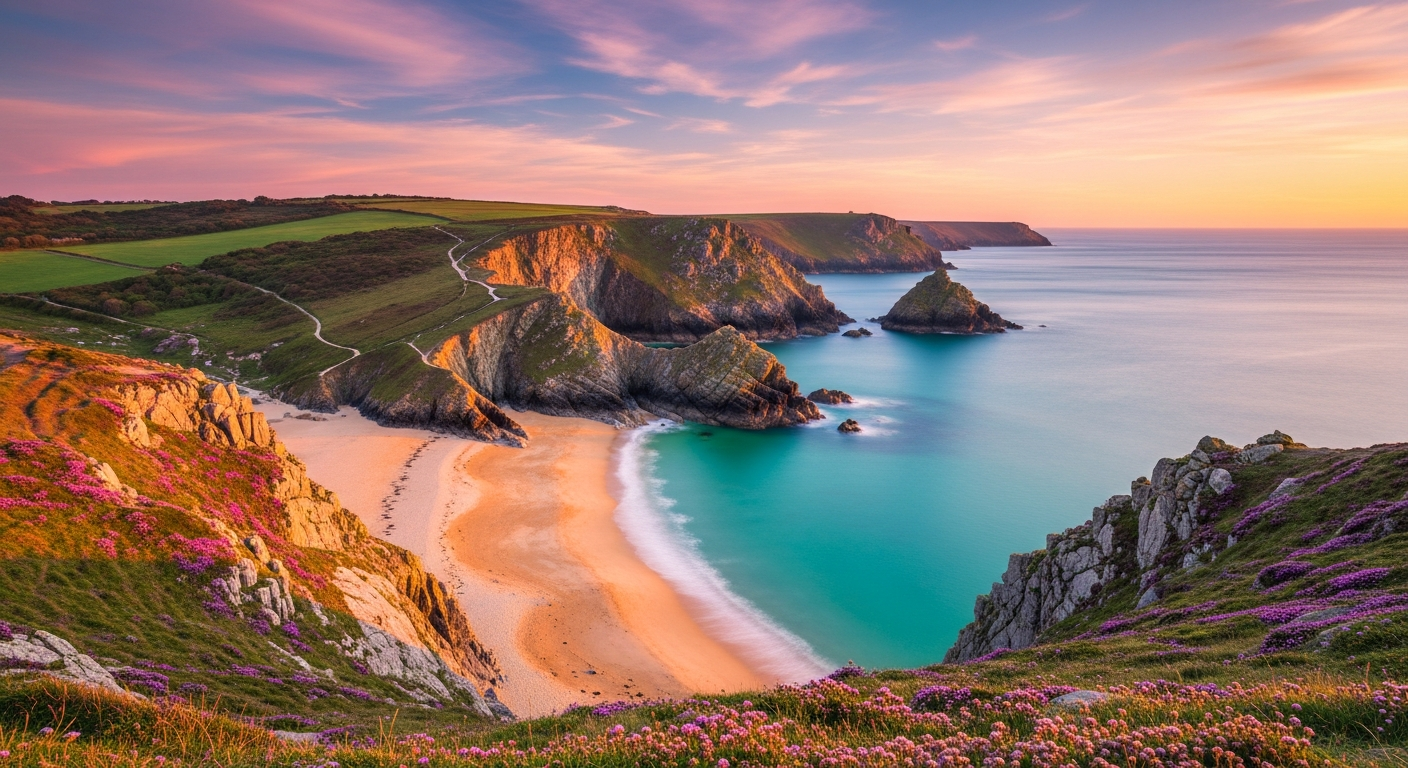
I’ll never forget my first Cornish sunrise at Porthcurno. I’d driven through the night from London, parked in the dark, and stumbled down the coastal path with just my phone torch for guidance.
When dawn broke over that turquoise bay—waters so Caribbean-clear I actually checked my location—I understood why people abandon sensible careers to run surf shacks here.
The pasty I’d bought at a 24-hour garage in Plymouth suddenly tasted like the best thing I’d ever eaten, eaten warm on those granite cliffs with the Atlantic spreading endlessly westward.
Here’s the problem with Cornwall in summer: you’ve got maybe a week, possibly two if you’re lucky, and there are literally hundreds of beaches, dozens of coastal walks, historic sites everywhere, and every local you meet will insist their favourite cove is the one you absolutely cannot miss.
I’ve spent the better part of five summers exploring this peninsula, and I’ve made every mistake—visited St Ives on a bank holiday Monday (nightmare), missed the tide at St Michael’s Mount (amateur hour), and eaten far too many disappointing pasties from places with Union Jacks in the window.
This guide cuts through the overwhelm. These five experiences represent the absolute essence of Cornish summer—the perfect blend of stunning natural beauty, authentic local culture, and practical accessibility, whether you’re backpacking on £40 a day or treating yourself to boutique luxury. I’m giving you the insider timing, the real costs, and the local secrets that took me years to uncover.
Summer is genuinely the perfect window: the water’s warmest (relatively speaking—this is still the Atlantic), the wildflowers are in full bloom along the coastal paths, and the outdoor theatre season is in full swing. Let’s maximize your limited vacation time.
1. Explore the Hidden Beaches of the Penwith Peninsula
The Penwith Peninsula—that final wedge of land before you hit Land’s End—holds Cornwall’s most breathtaking coastal secrets. While coach tours clog up the car park at the touristy beaches, locals guard these gems fiercely. I’m about to betray that confidence, but only because these places deserve to be experienced properly, not stumbled upon by accident.
Porthcurno & the Secret Song of the Sea Cave at Nanjizal
Porthcurno delivers those postcard-perfect Caribbean blues that don’t look real until you’re standing in them. The white sand beach sits in a natural amphitheatre of cliffs, with the Minack Theatre perched dramatically above (more on that shortly). On a sunny July afternoon, you’ll swear you’re in the Mediterranean—except the water temperature will quickly remind you this is the Atlantic (around 15-17°C even in peak summer, wetsuit recommended for anything beyond a quick dip).
But here’s what most visitors miss: the 30-minute coastal walk from Porthcurno to Nanjizal Beach, also called Zawn Pyg. This is where you’ll find the Song of the Sea Cave, a natural archway through the cliffs that creates an otherworldly acoustic effect when waves crash through. The catch? It’s only accessible at low tide, and you need to time it right. I learned this the hard way, arriving at high tide to find the beach completely submerged—check tide times obsessively on apps like Tides Near Me.
Practical details: Porthcurno car park costs £4 for four hours in summer (cash or card). Arrive before 10am to guarantee a space—by 11am on sunny weekends, you’ll be circling. The coastal path to Nanjizal involves some steep sections and can be slippery after rain, so proper walking shoes are non-negotiable. There are no facilities at Nanjizal itself, so pack everything you need.
Budget tip: Stop at the Co-op in Penzance (about 20 minutes’ drive away) for picnic supplies rather than paying beach café prices. A proper Cornish spread—local cheese, crusty bread, Cornish Orchards cider—runs about £15 and feeds two generously.
Pedn Vounder Beach: Cornwall’s Hidden Naturist Haven
Tucked beneath the Minack Theatre, Pedn Vounder is Cornwall’s worst-kept secret among those who prefer their beaches clothing-optional. Don’t let that deter you if naturism isn’t your thing—it’s a genuinely stunning cove with dramatic rock formations and crystal-clear water, and the clothing-optional aspect is casual, not enforced. I’ve visited dozens of times both clothed and unclothed, and the atmosphere is always respectful and relaxed.
Getting there requires navigating a steep coastal path from the Minack Theatre car park—it’s only about 10 minutes, but it’s genuinely steep and involves some scrambling over rocks at the bottom. This isn’t suitable if you have mobility issues or are carrying a lot of beach gear. The beach itself is small, maybe 50 meters of sand at low tide, shrinking to almost nothing at high tide.
What to bring: There are zero facilities here—no lifeguards, no toilets, no cafés. Pack water, snacks, sun protection, and a dry bag for valuables. The rocks can be sharp, so water shoes are worth having. And absolutely essential: download a tide table app. At high tide, this beach essentially disappears.
Pro tip: Combine your beach visit with a performance or daytime visit to the Minack Theatre above. You can park once (£5 for the day) and experience both. Just don’t attempt the beach path in flip-flops after a theatre performance in the dark—learned that one the hard way too.
Planning Your Beach Day Like a Local
Here’s what separates tourists from locals on Cornish beaches: locals always bring a windbreaker, even on blazing sunny days. The Atlantic breeze can turn chilly the moment the sun dips behind a cloud. They bring reusable water bottles because there are precious few taps or shops at remote beaches. And they always, always carry cash for parking—many beach car parks are still cash-only or have dodgy card machines.
Best beaches for different travelers: Families with small kids should stick to Porthcurno proper, which has lifeguards in summer and calmer water. Couples seeking romantic seclusion will love Nanjizal (at the right tide). Solo travelers and photographers should hit these spots at sunrise or sunset for magical light and solitude.
The essential apps: Tides Near Me (accurate tide predictions), Met Office Weather (more reliable than generic weather apps for coastal Cornwall), and RingGo or PayByPhone (for car parks that take mobile payment).
2. Experience the Minack Theatre: Where Drama Meets the Atlantic
There is nowhere else on Earth quite like the Minack Theatre. I’ve said this to skeptical friends who thought I was overselling it, and every single one has messaged me afterward admitting I was right. An open-air amphitheatre carved into granite cliffs, with the Atlantic Ocean as your backdrop and waves crashing on the rocks 100 feet below—it’s the kind of place that makes you understand why humans have always gathered to tell stories.
Catching a Performance Under the Stars
The magic of watching live theatre here is genuinely hard to articulate until you experience it. I’ve seen everything from Shakespeare to The Fishermen’s Friends (Cornwall’s famous sea shanty group—absolute must-see if they’re performing) on this stage, and the setting transforms even mediocre productions into something memorable. When the sun sets over the ocean during the second act, painting everything gold and pink, you’ll forget you’re in England.
The summer season runs from May through September, with performances most evenings at 8pm (7:30pm earlier in the season). Book tickets 2-3 months ahead for popular shows like The Fishermen’s Friends or well-known productions—the theatre only seats about 750 people, and shows sell out fast. Tickets range from £15 for back rows to £25 for premium front-row seats, which is remarkable value considering the experience.
What to expect and what to bring: This is outdoor theatre on the Cornish coast, which means you need to prepare properly. Bring cushions or a padded seat (the stone benches are beautiful but brutal after two hours), blankets or a sleeping bag for your legs, and layers—even if it’s 25°C when the show starts, it will be 15°C by the end. The theatre has a strict no-umbrella policy (they block views), but you can bring waterproof ponchos. I’ve sat through performances in light drizzle that somehow added to the atmosphere, but heavy rain does occasionally lead to cancellations.
Insider secret: Arrive at least 45 minutes early. This gives you time to explore the stunning subtropical gardens terraced into the cliffs, grab a drink from the café, and claim the best seats (it’s unreserved seating within your price tier). The gardens alone are worth the early arrival—they’re filled with exotic plants that somehow thrive in this microclimate, and the photo opportunities are incredible.
Daytime Visits: The Complete Experience
If you can’t catch a performance or shows are sold out, the daytime garden visits are still absolutely worth it. For £6.50 (adults), you can explore the theatre and gardens at your leisure from 9:30am to 5pm most days. The self-guided tour includes the exhibition center, which tells the remarkable story of Rowena Cade, the woman who built this theatre with her own hands starting in 1932.
The best photo opportunities come during golden hour—either early morning around 8am (arrive when they open) or early evening around 6-7pm in summer. The light turns the granite warm amber, and you’ll have the place relatively to yourself compared to midday crowds.
Budget-friendly option: If you’re traveling on a tight budget and have to choose between a performance and a daytime visit, I’d actually recommend the daytime visit. You save £10-20 per person, you can explore at your own pace, and you still get the full visual impact of this extraordinary place.
Making the Most of Your Visit
Where to eat nearby: The Porthcurno Beach Café, just down the road, serves excellent fresh crab sandwiches and locally caught fish (£8-12 for mains). For something more substantial, drive 15 minutes to The Shore in Penzance—it’s where locals eat when they want proper seafood without the tourist markup (£15-25 per person).
Parking and transport: The Minack has its own car park (£5 for the day), but it’s small and fills up early on performance days. Alternative: park at Porthcurno beach car park and walk up (about 10 minutes uphill). Public transport from Penzance involves the bus 1 or 1A to Porthcurno (about 40 minutes, £5 return), but check the timetable carefully—evening services are limited, and you don’t want to miss the last bus after a show.
3. Journey to St Michael’s Mount: Cornwall’s Tidal Island Castle
St Michael’s Mount is the postcard shot of Cornwall—a medieval castle perched on a tidal island, connected to the mainland by an ancient causeway that appears and disappears with the tides. It’s been photographed a million times, featured in countless films and TV shows, and yet somehow it still takes your breath away in person. I’ve visited probably 20 times, and I still get that little thrill when the causeway emerges from the water.
Timing Your Visit with the Tides
Here’s the unforgettable approach: walking the cobbled causeway at low tide, following the same path pilgrims have walked for over 1,000 years. The causeway is accessible roughly 3-4 hours either side of low tide, creating a window that shifts daily. This is where most tourists mess up—they arrive at high tide, take a boat across (which is also lovely, but not the same), and miss the full medieval pilgrimage experience.
My recommended strategy: Check the tide times on the St Michael’s Mount website (they publish them months in advance), then arrive about 2 hours before high tide. This gives you time to walk across the causeway while it’s still exposed, explore the castle and gardens for 2-3 hours, then take the charming boat back when the tide has come in. The boat ride costs £2 each way and runs from Marazion beach—it’s a proper wooden boat, often rowed by the same families who’ve been doing this for generations.
Local secret: Most tourists visit between 11am-3pm, creating queues and crowds. Visit early morning (the castle opens at 10:30am on accessible days) and you’ll have the Great Hall practically to yourself. The light is also better for photography in the morning, with the sun illuminating the castle rather than backlighting it.
Exploring the Castle and Gardens
What you get for your £10.50 ticket (National Trust members enter free): Access to the medieval castle rooms, including the stunning Chevy Chase Room with its intricate 17th-century plasterwork depicting hunting scenes, the armory with its collection of historic weapons, and the Blue Drawing Rooms with their period furniture and family portraits. The castle is still home to the St Aubyn family, who’ve lived here since 1659, so you’re touring a real home, not a museum reconstruction.
The subtropical gardens terraced into the southern slopes are genuinely impressive—exotic plants from around the world thrive in the mild microclimate. In summer, the agapanthus and Mediterranean plants are in full bloom. The gardens are steep, with lots of steps, so factor in your fitness level.
Hidden gem: The Chevy Chase Room is often rushed past, but spend time looking at the plasterwork ceiling—it’s one of the finest examples of Restoration-era decorative plasterwork in England, and each panel tells a different story.
Time needed: Budget 2-3 hours minimum for the complete experience—45 minutes for the castle, 45 minutes for the gardens, and time for the boat ride or causeway walk. If you’re with kids, add another hour because they’ll want to explore the rock pools and beach.
The Perfect St Michael’s Mount Day
Here’s how I’d structure the ideal visit: Arrive in Marazion by 9:30am, park in the main car park (£4 for 4 hours, or free street parking if you’re lucky and patient). Walk the causeway at 10am (check your specific tide time), enter the castle when it opens at 10:30am. Explore for 2-3 hours, then take the boat back around 1pm when the causeway is covered.
Lunch at the Godolphin Arms in Marazion, literally on the beach with Mount views—they do excellent fish and chips (£14) and local crab sandwiches (£12). Afternoon on Marazion’s long golden beach, which is one of Cornwall’s finest and often overlooked because everyone’s focused on the Mount.
Photography tips: For the iconic shot, position yourself on Marazion beach at sunset. The Mount silhouetted against the setting sun is genuinely breathtaking. Low tide at sunset is the holy grail—Mount surrounded by reflected light in the wet sand.
Practical notes: The castle isn’t open every day—check the website before traveling. Mondays and Fridays are often closed for maintenance. The cobblestone causeway and castle steps are not wheelchair accessible, though the boat can accommodate wheelchairs to the island (but not into the castle). Wear comfortable shoes—there’s a lot of walking on uneven historic surfaces.
4. Discover Authentic Cornwall: Local Food & Drink Experiences
Let’s address the elephant in the room: most tourists eat terrible food in Cornwall. They grab pasties from shops with pictures of pasties in the window, eat fish and chips from places on the main tourist drag, and wonder why everyone raves about Cornish food. The difference between tourist food and real Cornish food is night and day, and it’s not even more expensive—you just need to know where to look.
The Ultimate Cornish Food Trail
The perfect Cornish pasty is a Protected Geographical Indication product, like Champagne or Parma ham. To legally call itself a Cornish pasty, it must be made in Cornwall and follow specific ingredient ratios and crimping techniques—crimped on the side, never the top, with a distinctive D-shape. The filling must be beef, potato, swede (rutabaga), and onion, seasoned with just salt and pepper. That’s it. No carrots, no gravy, no variations.
Where to find the real thing: Ann’s Pasties in Lizard (£4.50, genuinely the best I’ve ever had), Philps in Hayle (£4, locals queue out the door), or Warren’s Bakery (multiple locations, £3.80). Avoid anywhere with Union Jacks in the window or photos of pasties on the menu—locals don’t need pictures to know what a pasty is.
How to eat it properly: Fresh and warm, never reheated. The proper technique is to hold it by the crimped edge (which historically was the handle for miners with dirty hands, then discarded). The pastry should shatter slightly when you bite in, and the filling should be peppery and steaming. If it’s soggy or bland, you’ve bought a tourist pasty.
Price reality check: £3-5 for a genuine article versus £2 for tourist versions. That extra £2 is the difference between a memorable meal and a disappointing lunch. A proper pasty is genuinely filling—one makes a complete lunch.
Cornwall’s Thriving Seafood Scene
Cornwall’s coastline means seafood is what locals do best. Rick Stein built an empire in Padstow based on this simple fact, but you don’t need to spend £40-50 per person at his restaurants (though they are excellent if you want to splurge). The same fish gets served at humbler establishments for a fraction of the price.
The luxury option: Rick Stein’s Fish in Falmouth or The Seafood Restaurant in Padstow. Expect £30-50 per person, but you’re getting Michelin-quality seafood prepared by expert chefs. Book weeks ahead in summer.
Hidden local gems: The Shore in Penzance (£15-25 per person) serves the same day’s catch as the fancy places, just without the celebrity chef markup. The Tolcarne Inn in Newlyn is where actual fishermen eat—crab sandwiches for £9, whole grilled mackerel for £12. The Gurnard’s Head near Zennor is a proper Cornish pub doing sophisticated food (£18-25 mains) with ocean views.
Budget-friendly excellence: Fish and chips from harbourside takeaways in Newlyn or Mousehole (£8-10). The fish is literally hours old, battered and fried perfectly. Eat it on the harbour wall watching the boats.
Insider experience: Visit Newlyn Fish Market early morning Monday-Friday (around 7am) to watch the daily catch being auctioned. It’s free, fascinating, and gives you a real appreciation for Cornwall’s fishing heritage. The Pilchard Works in Newlyn offers tours explaining how pilchards (sardines) were once Cornwall’s economic backbone.