The Ultimate Florida Natural Springs Road Trip Guide

The surface temperature hovered near 95°F that July afternoon, but as I submerged into the 72-degree spring water, the shock was immediate and glorious.
Below me, visibility stretched 100 feet in every direction—I could see every grain of sand, every darting fish, every undulation of the limestone cavern walls.
A family of manatees drifted past, utterly unbothered by my presence. This wasn’t the Florida I’d grown up visiting. This was something entirely different.
If you’re exhausted by the idea of another overcrowded beach vacation or another wallet-draining theme park trip, I have news that will change how you see Florida entirely. Hidden beneath the tourist chaos, Florida harbors over 700 natural springs—year-round 72°F oases of crystal-clear water that most visitors never discover. These aren’t just swimming holes. They’re complete ecosystems, adventure playgrounds, and authentic natural wonders that cost between $2-$8 to access.
This guide will give you three complete road trip routes (from 1-7 days), exact budget breakdowns based on real spending, and the insider timing strategies I’ve learned through dozens of springs visits. You’ll know which springs to hit for your specific interests, where the locals actually go, and the one crucial mistake that ruins most first-timers’ experiences. By the end, you’ll have a printable itinerary that maximizes your limited vacation time while avoiding the tourist traps that plague typical Florida trips.
Why Florida’s Natural Springs Are Your Ultimate Hidden Escape

What Makes Florida Springs Special
Florida sits atop the Floridan Aquifer, one of the world’s most productive aquifer systems. This geological gift creates something remarkable: hundreds of springs that maintain a constant 72°F temperature year-round, pumping millions of gallons of crystal-clear water daily. Unlike beach water that varies with weather and tides, spring water offers 100+ feet of visibility—you can literally see the bottom of 30-foot-deep springs as if you’re looking through glass.
The consistency is what makes these springs magical. In January, when air temperatures drop to 50°F, that 72-degree water feels like a warm bath. In August, when humidity makes Florida unbearable, the same 72 degrees provides instant relief. I’ve visited Rainbow Springs in both February and July, and the water temperature difference? Zero degrees.
Beyond swimming, these springs support activities most people don’t associate with Florida: world-class cave diving, natural lazy river tubing that puts any water park to shame, kayaking through ancient cypress forests, and manatee encounters that rival any paid aquarium experience. The diversity means you’re not locked into one activity—if you get bored snorkeling, grab a tube. If tubing feels too lazy, rent a kayak.
Who This Road Trip Is Perfect For
This isn’t a niche adventure for hardcore outdoors enthusiasts only. I’ve watched toddlers splash in the shallows at De Leon Springs while their grandparents floated peacefully nearby. The same afternoon, certified cave divers descended into underwater caverns at the same location.
Budget travelers should pay particular attention: while a day at a Florida theme park costs $100-150 per person before food, most springs charge $2-8 for vehicle entry. A family of four can spend an entire day swimming, snorkeling, and picnicking for under $30. Compare that to $600+ for the same family at Disney.
Photographers find springs irresistible. The combination of impossibly clear water, dramatic limestone formations, and abundant wildlife creates shots that look heavily edited but are completely natural. Bring an underwater camera (even a basic GoPro) and you’ll capture images that make your friends question whether you’ve left the country.
Best Times to Visit (Maximize Your Experience)
Here’s what most guides won’t tell you: summer weekends at popular springs like Ichetucknee can mean 2-hour waits just to park. I learned this the hard way on a Saturday in June at Ginnie Springs, arriving at 11am to find the parking lot full and a line of cars stretching down the highway.
The secret local timing? Weekdays between September and November, or March through May. You’ll encounter 70-80% fewer crowds, better parking, and the same perfect water temperature. If you can only visit on weekends, arrive at opening time (typically 8am) without exception. By 10am, the best parking is gone and springs start feeling crowded.
For manatee viewing, the timing flips entirely. November through March is peak manatee season, when hundreds of these gentle giants seek the warm spring water as refuge from cold Gulf temperatures. Blue Spring State Park hosts 300+ manatees on cold winter mornings—a spectacle worth planning around. But understand the trade-off: winter weekends at Blue Spring mean crowds of manatee watchers. I recommend weekday mornings in January or February for the best manatee-to-human ratio.
Planning Your Perfect Springs Road Trip: The Essentials

Route Options Based on Your Time & Starting Point
The Orlando Express Loop (1-2 days): Perfect for first-timers or those with limited time, this route hits three accessible springs within 90 minutes of Orlando. Start at Blue Spring State Park (45 minutes north), continue to Wekiwa Springs (30 minutes west), and finish at De Leon Springs (20 minutes from Blue Spring). Total driving: under 2 hours. Total experience: a complete introduction to Florida springs culture.
The North-Central Circuit (3-4 days): This route ventures into the Ocala National Forest, where springs density peaks and crowds thin. Begin in Orlando, head to the Ocala springs cluster (Silver Glen, Juniper, Alexander), continue north to Gainesville-area springs (Ginnie, Ichetucknee), then loop back through Rainbow Springs. This itinerary balances popular destinations with hidden gems and provides the full springs experience without excessive driving.
The Ultimate Springs Adventure (5-7 days): For those serious about springs exploration, this comprehensive route extends from Orlando to the Panhandle, hitting 10-12 major springs systems. You’ll experience the full diversity: from manatee sanctuaries to cave diving sites, from natural lazy rivers to historic glass-bottom boat tours. This route requires commitment but delivers the complete story of Florida’s springs.
I’ve done all three routes. The Orlando Express satisfies curiosity but leaves you wanting more. The Ultimate Adventure can feel rushed unless you’re comfortable with aggressive itineraries. The North-Central Circuit hits the sweet spot—enough variety to feel comprehensive, enough time at each spring to actually relax.
Budget Breakdown: What to Actually Expect
Let me give you real numbers from my most recent 4-day springs trip:
Entry fees: State park springs charge $4-6 per vehicle (up to 8 people). Private springs like Ginnie cost $15-20 per person. Over four days hitting six springs, I spent $52 total on entry fees.
Gear rentals: If you don’t own snorkel gear, expect $10-15 per person per day. Kayak rentals run $25-40 for 2-3 hours. Tubes cost $4-10 depending on the spring. I spent $68 on rentals over four days because I brought my own snorkel gear but rented kayaks twice and tubes once.
Accommodation: Camping at springs like Juniper or Ginnie costs $20-35/night and puts you steps from the water. Budget motels in towns like High Springs or Dunnellon run $60-80/night. Mid-range hotels in Ocala or Gainesville cost $100-130. I camped two nights ($60 total) and stayed in a High Springs B&B one night ($95), averaging $51/night.
Food: Cooking at campsites or packing coolers dramatically reduces costs. I spent about $40/day on food by eating breakfast at camp, packing lunch, and dining at local restaurants for dinner. Without the camping strategy, expect $60-80/day for three meals.
Daily totals by budget tier: – Budget (camping, packed meals, minimal rentals): $50-75/day – Mid-range (budget motels, mix of packed and restaurant meals, some rentals): $100-150/day – Comfort (nice hotels, all restaurant meals, full gear rentals): $200-250/day
The biggest money mistake I see? Renting gear at every single spring. Buy a basic snorkel set for $25-40 and it pays for itself in two days.
What to Pack for Springs Success
After forgetting critical items on early trips, I’ve refined my springs packing list to essentials only:
Must-haves: Reef-safe sunscreen (regular sunscreen damages spring ecosystems and some springs ban it), water shoes (limestone can be sharp), underwater camera or phone housing, dry bag for valuables, and a cooler with ice. These items make or break your experience.
Smart additions: Quick-dry towel (regular towels stay wet and musty), waterproof phone pouch, small first aid kit, and insect repellent for camping. Florida mosquitoes are legendary—don’t underestimate them.
What NOT to bring: I’ve watched people haul massive beach umbrellas, full-size coolers, and mountains of pool toys to springs, only to find most springs have limited beach areas or don’t allow certain flotation devices. Travel light. Most springs have covered pavilions and shaded areas. The water is the attraction, not sunbathing.
Seasonal adjustments: Winter visits require a wetsuit if you plan extended swimming—that 72-degree water feels cold when air temps are 50°F. Summer visits need extra sunscreen and hydration. I bring 2-3x more water than I think I’ll need because Florida heat is deceptive.
Know Before You Go: Local Rules & Safety
Let’s address the alligator question everyone has: Yes, alligators live in Florida. Yes, they can occasionally appear near springs. No, this shouldn’t terrify you into staying home.
Springs with concrete walls and smaller surface areas (like Silver Glen or Wekiwa) rarely see alligators in the actual swimming areas. Larger springs with natural shorelines and river connections (like Wakulla or parts of Ichetucknee) have higher alligator presence in surrounding areas, though not typically in the main spring bowls. In two dozen springs visits, I’ve seen exactly two alligators—both sunning on distant banks, completely uninterested in swimmers.
The actual rule: Never approach an alligator, never swim at dawn/dusk when they’re most active, and stay in designated swimming areas. Rangers actively monitor popular springs and close areas if alligators appear. Trust the system.
Manatee etiquette matters more than most visitors realize. Federal law prohibits touching, chasing, or harassing manatees. At Blue Spring, you can’t even enter the water during manatee season—viewing happens from boardwalks. The fines start at $500 and climb quickly. Admire from distance, let manatees approach you if they choose, and never attempt to ride or touch them no matter how friendly they seem.
Reservation requirements catch people off guard. Ichetucknee Springs limits daily visitors and often reaches capacity by 10am on summer weekends. Some springs require online reservations for tube rentals or camping. Check individual spring websites before driving hours only to find them at capacity.
The Ultimate Florida Springs Road Trip Route: Stop by Stop

Stop 1: Blue Spring State Park (Orange City)
Blue Spring pumps 104 million gallons of water daily, creating a stunning azure pool that serves as winter refuge for up to 600 West Indian manatees. This is Florida’s premier manatee viewing destination, and for good reason—the concentration of manatees here during cold snaps is unmatched anywhere in the state.
I arrived at 7:30am on a February weekday (air temperature: 48°F) and walked the boardwalk overlooking the spring run. Below me, manatees packed the crystal-clear water like subway cars at rush hour—mothers with calves, massive bulls, juveniles playing. The scene was simultaneously peaceful and overwhelming. By 10am, the boardwalk was shoulder-to-shoulder with visitors, and the magic diluted.
The authentic experience: Visit on weekdays between November and March, arriving at park opening (8am). The manatees are most active in early morning, and you’ll have the boardwalk largely to yourself. Swimming is prohibited during manatee season (mid-November through March), but the wildlife viewing compensates.
Outside manatee season, Blue Spring offers excellent snorkeling and a 4-mile paddle down the spring run to the St. Johns River. The spring stays a constant 73°F and maintains incredible visibility. Rent a kayak ($28 for 2 hours) or bring your own.
Time needed: 3-4 hours for manatee viewing and boardwalk exploration; full morning if swimming/kayaking in summer.
Cost: $6 per vehicle entry. Kayak rentals extra if needed.
Insider tip: The park often reaches capacity by 10am on winter weekends. Arrive early or face parking lot closures.
Stop 2: De Leon Springs State Park (De Leon Springs)
The Old Spanish Sugar Mill restaurant sits directly over the spring run at De Leon Springs, offering a genuinely unique experience: make-your-own pancakes at griddles built into your table. This isn’t some gimmicky tourist trap—locals pack this place on weekend mornings, and the pancakes (made with stone-ground flour from the park’s historic water-powered mill) are legitimately excellent.
I’ve eaten pancakes worldwide, and these rank among my favorites purely for the experience. You pour your own batter on the griddle, flip them yourself, and eat them overlooking the spring. Kids love it. Adults love it. The only downside? Weekend waits can exceed 90 minutes. I now visit on weekday mornings, arriving right at the 9am opening for immediate seating.
The spring itself is a perfect 72-degree swimming hole with a roped-off area, small beach, and rental tubes ($5). It’s not the most dramatic spring visually, but the combination of swimming and pancakes creates a memorable morning. Early-morning kayaking through the surrounding cypress swamp offers wildlife viewing (herons, turtles, occasional otters) without crowds.
What to do: Start with pancakes at the Sugar Mill (arrive at opening to avoid waits), swim in the spring, kayak the spring run if time permits.
Time needed: Half day minimum. The pancake experience alone takes 1-2 hours with wait times.
Cost: $6 per vehicle entry. Pancakes run $8-12 per person. Kayak rentals available.
Hidden gem: The historic water-powered mill tour (included with admission) explains Florida’s early settlement history. Most visitors skip it—their loss.
Stop 3: Silver Glen Springs (Ocala National Forest)
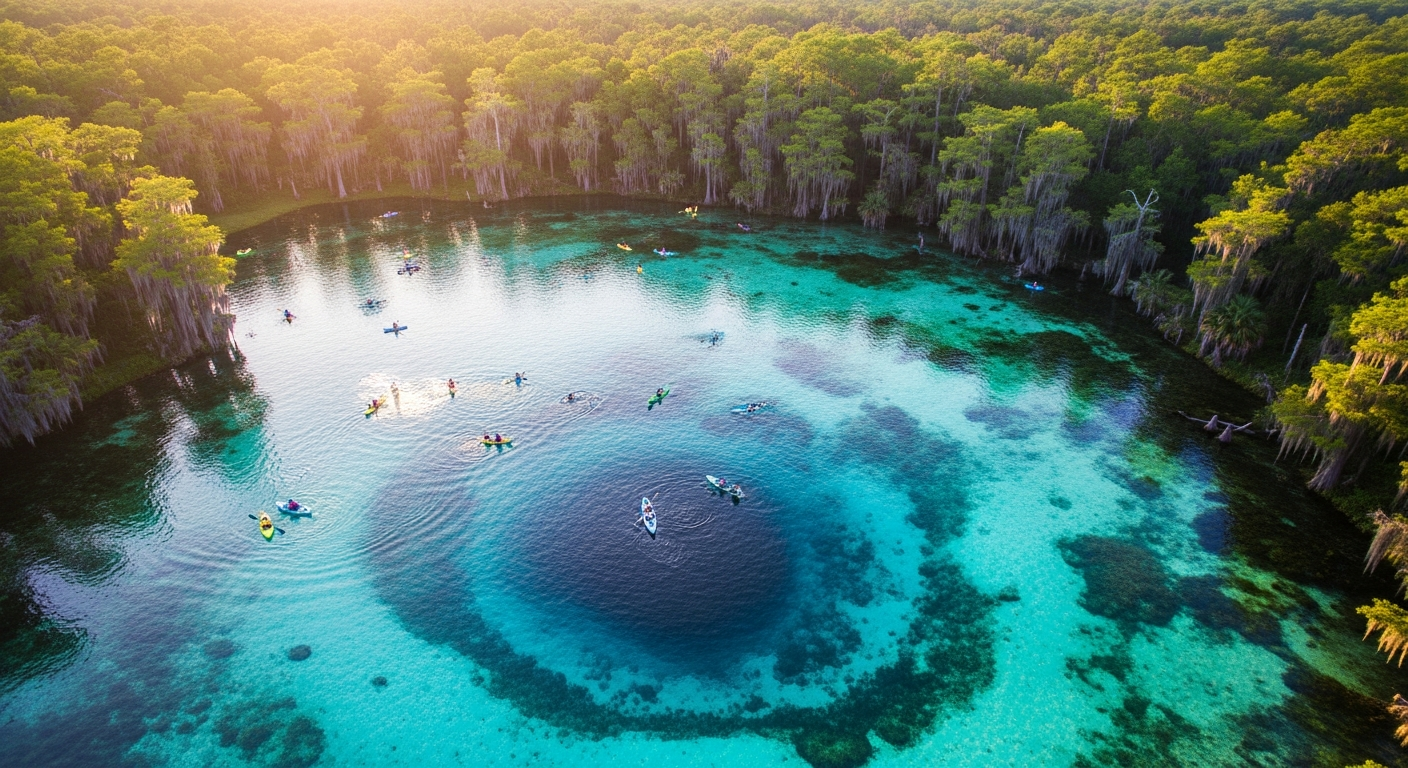
Silver Glen delivers the most stunning first impression of any spring I’ve visited. You park, walk a short trail through palmettos, and suddenly emerge at a turquoise amphitheater—a perfect bowl of water so blue it looks artificial. The spring sits at the base of a natural limestone basin, creating a swimming area that feels like a hidden grotto.
This is a local favorite precisely because it stays off most tourist radars. On a Saturday in April, I counted maybe 30 people at Silver Glen while Ginnie Springs (an hour north) was absolutely packed. The trade-off? Fewer amenities. There’s a small beach, picnic tables, and basic facilities, but no rentals, no concessions, no gift shop. Bring everything you need.
The spring is perfect for snorkeling—the bowl shape concentrates fish and provides interesting limestone formations to explore. Photography is exceptional here; the natural amphitheater creates dramatic compositions. I’ve shot some of my favorite spring photos at Silver Glen during midday when sunlight penetrates the water.
What to do: Swimming, snorkeling, underwater photography, picnicking. Bring your own gear—no rentals available.
Perfect for: Photographers seeking uncrowded shots, families wanting a quieter spring experience, anyone who values natural beauty over amenities.
Time needed: 2-3 hours for swimming and relaxation.
Cost: $7 day-use fee per vehicle.
Local secret: The spring connects to Lake George via a short run. Kayaking this section offers excellent bird watching, but watch for boat traffic from the lake.
Stop 4: Juniper Springs (Ocala National Forest)
Juniper Springs offers two completely different experiences: the spring swimming area and the legendary 7-mile canoe run through wild Florida jungle. Most visitors do one or the other. I recommend both if you have time.
The canoe run is unlike anything else on this list. You paddle through a narrow, winding creek overhung with cypress, palms, and vines—it feels like paddling through a tunnel. The current does most of the work, but you’ll navigate tight turns, duck under low branches, and potentially spot wildlife (I’ve seen otters, countless turtles, and one very surprised black bear). The run takes 3-4 hours and requires moderate paddling skill. It’s not extreme, but it’s not a lazy float either.
Book canoe rentals at least a week ahead for weekends—Juniper has limited canoes and they sell out. The outfitter provides shuttle service back to the start. Cost is $32 per canoe (holds 2-3 people), making it one of the better adventure values in Florida.
The swimming area itself is small but scenic, surrounded by lush vegetation and featuring a stone-lined pool. It’s less dramatic than Silver Glen but offers a different aesthetic—more jungle grotto than limestone bowl.
What to do: The canoe run is the highlight. Swimming is secondary but worthwhile if you’re not canoeing.
Time needed: Full day if doing the canoe run (allow 4-5 hours total). Swimming only requires 2-3 hours.
Cost: $6 entry fee. Canoe rental $32 (includes shuttle). Camping available ($32/night).
Insider tip: The canoe run gets overgrown in summer. Spring and fall offer the best paddling conditions with fewer obstacles.
Stop 5: Rainbow Springs State Park (Dunnellon)
Rainbow Springs is Florida’s fourth-largest spring by volume, pumping 400-700 million gallons daily. The result? A massive swimming area, beautiful gardens, waterfalls (rare in Florida), and a 5.7-mile tubing/kayaking run that’s become legendary among locals.
At $2 per person entry, Rainbow Springs offers the best value-to-experience ratio on this entire list. The swimming area features multiple spring vents, creating pools of varying depths. The headspring itself is roped off for protection, but the swimming area downstream is enormous. I’ve visited on summer weekends and still found space—the sheer size prevents overcrowding.
The tubing run is what makes Rainbow Springs special. Unlike some springs where you float for 20 minutes, Rainbow’s run takes 2-3 hours and passes through diverse scenery: deep pools, shallow rapids, overhanging trees, open river sections. The outfitter provides tubes and shuttle service for $26 per person—steep compared to entry fees, but worth it for the experience.
The gardens surrounding the springs are remnants of a 1930s attraction. Azaleas, ferns, and native plants create a park-like setting. It’s unexpectedly beautiful and provides shaded walking when you need a break from swimming.
What to do: Swimming in the main spring area, tubing the run (highly recommended), exploring the gardens, kayaking if you prefer paddling to floating.
Time needed: Half day minimum. Full day if tubing and swimming.