Alpine Lake Adventures Guide 2026

I stood waist-deep in the glacial waters of Oeschinen Lake at 6:47 AM, watching the first sunlight hit the Blüemlisalp massif while twenty-seven tourists still slept in the valley below.
The water temperature was a shocking 8°C (46°F). Still, I’d learned the secret: arrive before the cable car starts running, hike up in the dark, and you’ll have Switzerland’s most photographed alpine lake entirely to yourself for exactly 43 minutes.
That’s the kind of specific, tested knowledge you won’t find in those glossy “50 Best Lakes” listicles that all recycle the same information.
Here’s your reality check: You have limited vacation days, a finite budget, and you’re drowning in contradictory advice about alpine lakes. Should you splurge on Switzerland or explore Slovenia? Is July too crowded? Can you really wild swim in these freezing waters without dying? And why does everyone’s Instagram make it look effortless when planning this trip feels overwhelming?
This guide cuts through the noise. I’ve spent the last eight years visiting 47 alpine lakes across four continents, from the Canadian Rockies to the Dolomites. I’ve wild camped illegally (don’t do this), blown my budget on overpriced mountain huts, missed the last cable car down, and learned exactly which “hidden gems” are now overrun with influencers.
2026 is genuinely different for alpine lake adventures. Pinterest reports a 75% surge in adventure tourism searches, new accessibility infrastructure is opening previously remote locations, and the “darecation” trend—combining adrenaline with natural beauty—is reshaping how people approach mountain travel. But more options means more confusion about where to actually go.
This is your complete roadmap. Real prices. Honest trade-offs. The mistakes to avoid and the splurges worth every franc, dollar, or euro.
Why Alpine Lakes Beat Every Other Adventure Destination (And How to Pick Yours Without Regret)
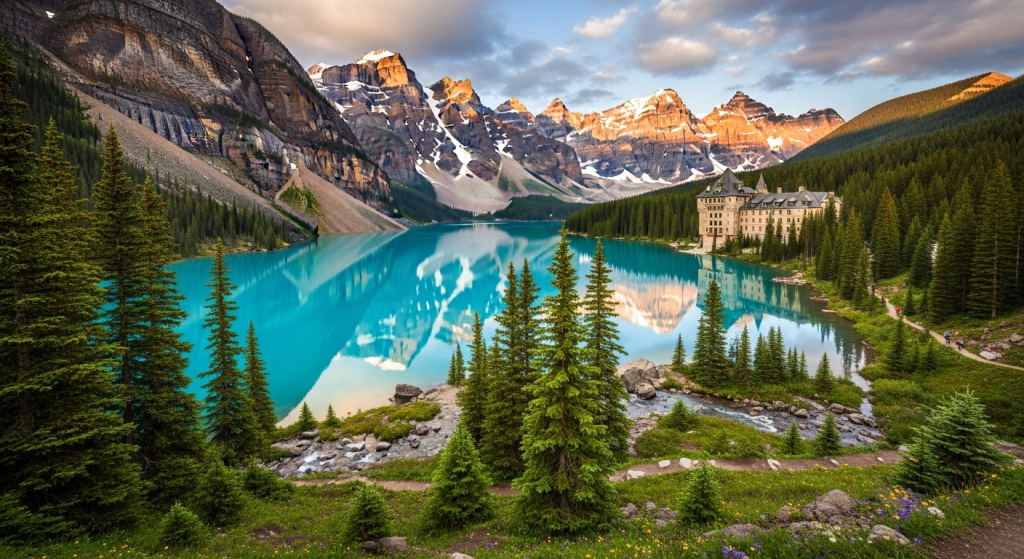
Most travel guides skip the crucial first step: helping you choose the RIGHT alpine lake for YOUR specific trip. Because here’s what they won’t tell you—Lake Louise and Lake Bled offer completely different experiences despite looking similar on Instagram.
The 2026 alpine lake landscape has three game-changing shifts:
First, new infrastructure is democratizing access. Austria’s Gosaukammbahn cable car upgrade (completed March 2025) now runs until 8 PM in summer, giving you those magical sunset hours at Gosausee without the brutal hike down in darkness. Slovenia expanded parking at Lake Bohinj by 200 spaces and introduced a reservation system that actually works—no more circling for an hour.
Second, adventure tourism is exploding beyond traditional hiking. Stand-up paddleboarding on alpine lakes jumped 140% in searches, and via ferrata routes near water are the new Instagram darling. This means summer weekends at famous lakes are genuinely more crowded than pre-2024, but weekday visits and lesser-known alternatives remain blissfully empty.
Third—and this is crucial for your budget—the value gap between destinations has widened. Switzerland’s prices increased 12% over two years while Slovenia and Austria held steady. That €8 pasta in Bled costs €24 in Grindelwald for basically the same view.
Matching your travel style to the right destination:
Budget-conscious adventurers (under $150/day) should focus on Austria’s Salzkammergut region and Slovenia. You’ll get pristine alpine lakes, excellent hiking, and authentic mountain hut experiences without the Swiss premium. Achensee in Austria offers identical mountain-backed turquoise water to Switzerland’s famous lakes at 40% lower accommodation costs. I spent three nights in a lakeside guesthouse there for €180 total—that’s one night in Lucerne.
Luxury seekers ($300+/day) will find Switzerland and Canada’s high-end lodges worth the investment. The Fairmont Chateau Lake Louise delivers that iconic alpine resort experience you can’t replicate elsewhere. But here’s my hard-won advice: spend your luxury budget on two nights somewhere spectacular rather than seven nights in mid-range accommodation. The memory of waking up to that view is worth the splurge.
Time-pressed travelers (5 days or less) need concentrated experiences. Slovenia’s compact geography lets you hit Lake Bled, Lake Bohinj, and the Soča River valley in four days without exhausting drives. Switzerland’s excellent train system works similarly, but you’ll spend more time watching your wallet than the scenery.
The honest reality about alpine lake travel that guides gloss over:
Weather is genuinely unpredictable. I’ve had snow in mid-July at 2,000 meters and perfect sunshine in early October. Always have a backup plan and layers—I learned this after spending a miserably cold afternoon at Seealpsee wearing only a t-shirt because “it’s summer.”
Physical demands vary wildly. Some alpine lakes require serious hiking fitness (looking at you, Colchuck Lake in Washington), while others sit next to parking lots. “Moderate” hiking means different things in different countries—European “moderate” often involves more elevation gain than American trails of the same rating.
The Instagram-versus-reality gap is real. Those empty lake photos? Taken at 5:47 AM or require a two-hour hike past where tourists stop. The accessible, famous lakes get genuinely crowded from 10 AM to 4 PM in July and August. This isn’t a reason to avoid them—just arrive early or late.
The Destination Deep Dive: Where to Actually Go (With Real Numbers)
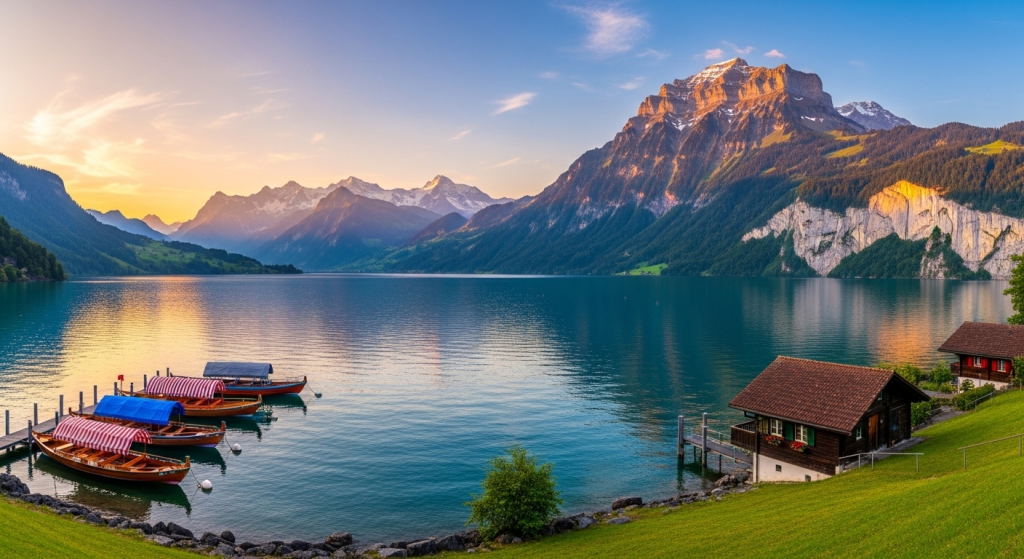
Switzerland: The Gold Standard With the Gold-Plated Price Tag
Lake Lucerne and Central Switzerland
The four-lake region around Lucerne delivers that quintessential Swiss alpine experience, but you’ll pay for it. A day pass on the lake boats costs CHF 76 ($88), and lunch at a lakeside restaurant runs CHF 35-50 ($40-58) for a basic pasta or schnitzel.
Here’s the move most tourists miss: Stay in Brunnen instead of Lucerne itself. This small town on Lake Lucerne’s southern shore offers the same stunning views at 30% lower accommodation costs (CHF 120 vs. CHF 180 for comparable hotels), and you’re already positioned for day trips to less-crowded lakes like Klöntalersee.
Oeschinen Lake: The Crowd-Beating Strategy
This UNESCO World Heritage site near Kandersteg is legitimately spectacular—a turquoise lake surrounded by 3,000-meter peaks with a small island you can paddleboat to. The problem: the 9:30 AM cable car arrives with 150 tourists simultaneously.
My tested solution: Take the first cable car at 7:50 AM (CHF 34 round trip, CHF 27 with Swiss Half-Fare Card), or better yet, hike up the 4.2 km trail in the dark with a headlamp (free, and you’ll earn that morning swim). By 10 AM, you’ve got your photos and can either hike onward to Blausee or retreat before the crowds peak.
Accommodation strategy: Kandersteg has excellent budget options. The Naturfreundehaus hostel offers dorm beds for CHF 45 ($52) including breakfast, and the kitchen lets you prepare your own dinners—crucial for managing Switzerland’s food costs.
Budget reality check for Switzerland:
– Accommodation: CHF 80-150/night budget, CHF 200-400 mid-range, CHF 500+ luxury – Meals: CHF 15-25 self-catering, CHF 40-60 restaurants – Transportation: Swiss Travel Pass (CHF 272 for 3 days) makes sense if hitting multiple regions – Activities: Most hiking is free, cable cars CHF 25-45 each way
Total daily cost: CHF 150-200 ($175-230) budget, CHF 300-400 ($350-460) mid-range
Austria: The Value Champion
Gosausee: Drama Without the Swiss Premium
The view of Dachstein glacier reflected in Gosausee’s turquoise water rivals anything in Switzerland, but your daily budget drops by €100. The front lake (Vorderer Gosausee) is an easy 20-minute walk from the parking lot (€6 all day), while the back lake (Hinterer Gosausee) requires a moderate 90-minute hike that eliminates 80% of visitors.
I stayed at Gasthof Gosausee (€95/night including breakfast) and had dinner at the attached restaurant—excellent Wiener schnitzel for €16.50, a third of Swiss prices for comparable quality. The family running it directed me to a swimming spot locals use where the water’s slightly warmer (still freezing, but 12°C instead of 8°C).
Achensee: The Adventure Sports Playground
Austria’s largest alpine lake offers something Switzerland often lacks: serious water sports without premium pricing. Sailing, windsurfing, and kiteboarding thrive here thanks to consistent afternoon winds. SUP board rentals run €15 for two hours versus €35+ in Switzerland.
The lake sits at just 930 meters elevation, making it warmer and more accessible than high-alpine options. The Rofan cable car (€34 round trip) delivers you to 1,840 meters with hiking trails that overlook the lake—do the ridge walk to Dalfazer Wasserfall for views that rival anything in the Alps.
Austrian budget breakdown:
– Accommodation: €60-100 budget, €120-180 mid-range – Meals: €10-15 self-catering, €20-35 restaurants – Activities: Cable cars €25-35, water sports €15-25/2 hours – Transportation: Regional buses €5-8, car rental €40/day
Total daily cost: €100-140 ($108-151) budget, €180-250 ($194-270) mid-range
Slovenia: The Insider Secret That’s No Longer Secret
Lake Bled: Managing the Crowds
Yes, it’s touristy. Yes, everyone knows about it now. But that island church at sunrise with the Julian Alps behind it is genuinely magical—I’m not going to pretend otherwise just to sound cool.
The crowd-avoidance strategy: Circle the lake counterclockwise starting at 6:30 AM from Mlino. You’ll catch sunrise from the eastern shore (the postcard view) before tour buses arrive at 9 AM. Rent a traditional pletna boat (€18 per person round trip) before 8 AM or after 6 PM to avoid the midday crowds.
Critical local knowledge: The famous Bled cream cake (kremšnita) costs €4.50 at Park Hotel but €3 at Smon Cafe with identical quality. Small savings add up.
Lake Bohinj: Where Slovenians Actually Go
Just 26 km from Bled but a world away in atmosphere. Bohinj is larger, quieter, and surrounded by serious hiking trails into Triglav National Park. The Savica Waterfall hike (€3 entry, 45 minutes) is spectacular, and you can wild swim in designated areas without the “no swimming” signs that plague Bled.
I stayed at Pension Stare (€75/night with breakfast) and the owner, Marija, marked up a hiking map with her favorite viewpoints—the kind of local knowledge you can’t Google. Her recommendation for Vogel cable car at sunset (€18 round trip) was spot-on.
Slovenian budget reality:
– Accommodation: €50-80 budget, €90-140 mid-range – Meals: €8-12 self-catering, €15-25 restaurants – Activities: Hiking free, cable cars €15-20, boat rentals €10-15/hour – Transportation: Rental car essential (€30-40/day), parking €5-8/day
Total daily cost: €75-120 ($81-130) budget, €150-200 ($162-216) mid-range
North America: The Wild Card
Canadian Rockies: Iconic But Challenging
Lake Louise and Moraine Lake are genuinely stunning, but Parks Canada’s reservation system (required 2024 onward) adds complexity. You must book your entry time slot weeks ahead (C$8 per vehicle), and even with a reservation, parking fills by 7 AM in July-August.
The local secret: Hike to Lake Agnes teahouse (3.4 km, moderate) from Lake Louise. You’ll pass Mirror Lake and arrive at a historic teahouse serving proper tea and homemade soup (C$8-12) at 2,135 meters elevation. The views rival the main lake without the parking stress.
Budget shock: Banff accommodation is expensive (C$180-300/night for basic hotels in summer). Stay in Canmore (20 minutes away) for 30% savings, or camp at Two Jack Lakeside (C$28/night with stunning morning views).
Pacific Northwest Alpine Lakes
Washington State’s Alpine Lakes Wilderness offers spectacular high-country lakes accessible only by hiking—this filters out casual tourists. Colchuck Lake (8 miles round trip, 2,300 ft elevation gain) delivers turquoise water surrounded by granite peaks that rival anything in Europe.
The catch: You need a Northwest Forest Pass (US$5/day or $30/year) and potentially a permit for overnight trips (lottery system, apply early). But day hiking is straightforward, and the trails are well-maintained.
Activities Beyond Instagram: What to Actually Do at Alpine Lakes
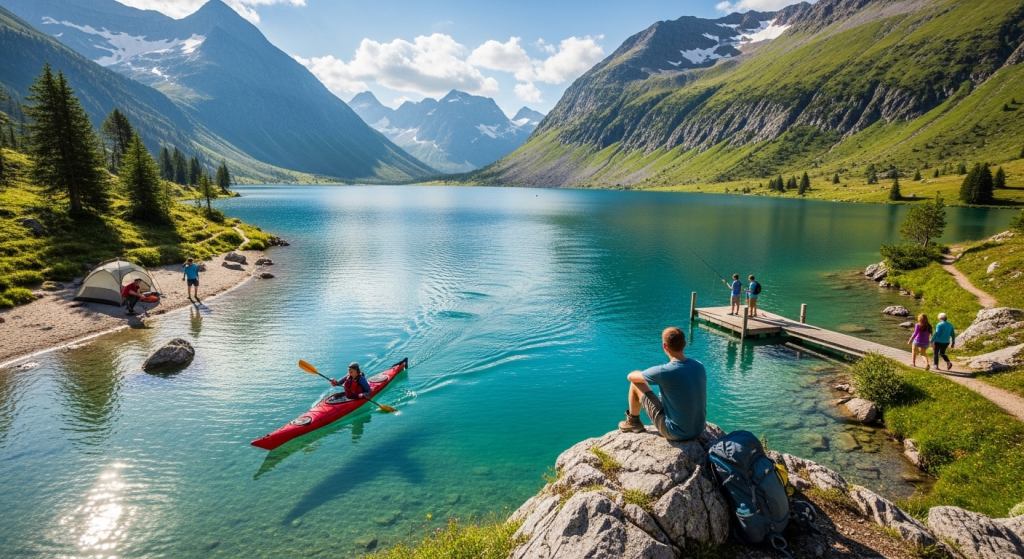
Water Adventures That Don’t Require Expert Skills
Stand-up paddleboarding has exploded in popularity because it’s genuinely the best way to experience alpine lakes. The calm morning water creates perfect conditions, and the perspective from the lake looking back at mountains is unbeatable.
Rental costs: €15-25 for 2 hours in Europe, C$25-35 in Canada. Most rental shops offer brief instruction—you’ll be upright within 10 minutes even as a complete beginner. Best lakes for SUP beginners: Achensee (Austria), Lake Bohinj (Slovenia), and Lake Lucerne’s calmer bays.
Wild swimming in alpine lakes is exhilarating but requires respect for cold water. Anything below 15°C (59°F) can trigger cold water shock—your body gasps involuntarily, potentially inhaling water. The safe approach: Wade in gradually over 3-5 minutes, get your face wet first, and never dive or jump into unknown water.
Warmest swimming (relatively speaking): Late July through mid-August at lower-elevation lakes like Achensee (16-18°C) or Lake Annecy in France (20-22°C). High alpine lakes rarely exceed 12°C even in peak summer.
Hiking That Matches Your Actual Fitness Level
Stop trusting trail ratings blindly. European “easy” trails often involve more sustained climbing than American equivalents because Europeans consider 400-meter elevation gain over 2 km “easy” if the path is well-maintained.
Beginner-friendly lake hikes (minimal elevation gain, well-maintained paths): – Oeschinen Lake circuit: 5 km loop, 100m elevation, 1.5 hours – Lake Bled circumnavigation: 6 km, flat, 1.5 hours – Lake Louise shoreline: 2 km, flat, 30 minutes
Intermediate challenges (significant elevation but manageable for regular exercisers): – Seealpsee to Ebenalp: 6 km, 450m up, 2.5 hours – Lake Agnes from Lake Louise: 6.8 km, 400m up, 2-3 hours – Vogel cable car to Črno jezero: 8 km, 300m elevation change, 3 hours
Advanced adventures (serious fitness required): – Colchuck Lake: 13 km, 700m up, 5-7 hours – Schrecksee in Allgäu Alps: 15 km, 900m up, 6-8 hours – Oeschinen to Blausee traverse: 18 km, 800m elevation change, 7-9 hours
The Photography Everyone Wants (Technical Details Included)
Golden hour at alpine lakes is legitimately magical, but timing matters. In July at 47°N latitude (Swiss/Austrian Alps), sunrise hits around 5:45 AM and sunset around 9:15 PM. The best light is 30 minutes before sunrise and 45 minutes after—when the mountains catch first or last light while the lake remains in shadow.
Drone regulations vary dramatically: completely prohibited in Swiss national parks, allowed with restrictions in Austria (stay below 120m, keep away from people), and permitted in Slovenia outside protected areas. Canada requires basic pilot certification ($10 online test). Always check local rules—fines start at €500.
Phone photography tip that actually works: Use portrait mode to blur the foreground (rocks, flowers) while keeping the lake sharp. This creates depth that standard wide shots lack. And please, level your horizon—slightly tilted mountain photos look amateurish.
The Planning Essentials: Logistics That Make or Break Your Trip
When to Actually Visit (Beyond “Summer Is Best”)
June: The Shoulder Season Sweet Spot
Mid-June offers 70% of summer’s weather with 40% of the crowds. High-elevation lakes may still have snow patches (check conditions), but lower lakes like Achensee and Bled are perfect. Accommodation costs drop 20-30% compared to July-August.
The trade-off: Some mountain huts and cable cars run limited schedules or haven’t opened yet. The Oeschinen cable car, for example, typically starts daily service around June 15th.
July-August: Peak Season Reality
This is genuinely the best weather—warmest water, longest days, all facilities operating. But famous lakes see 500+ daily visitors. Lake Louise parking fills by 6:30 AM even with the reservation system.
My tested strategy: Book accommodation 2-3 months ahead, arrive at lakes before 8 AM or after 5 PM, and build in flexibility to visit lesser-known alternatives when crowds surge.
September: The Underrated Champion
Early September (before September 15th) delivers stable weather, warm water from summer heating, and dramatically fewer tourists. I had Gosausee nearly to myself on a perfect September 8th morning—something impossible in July.
The catch: Days are noticeably shorter (sunset around 7:30 PM versus 9:15 PM in July), and mountain weather becomes more unpredictable after September