7 days in Greece itinerary summer

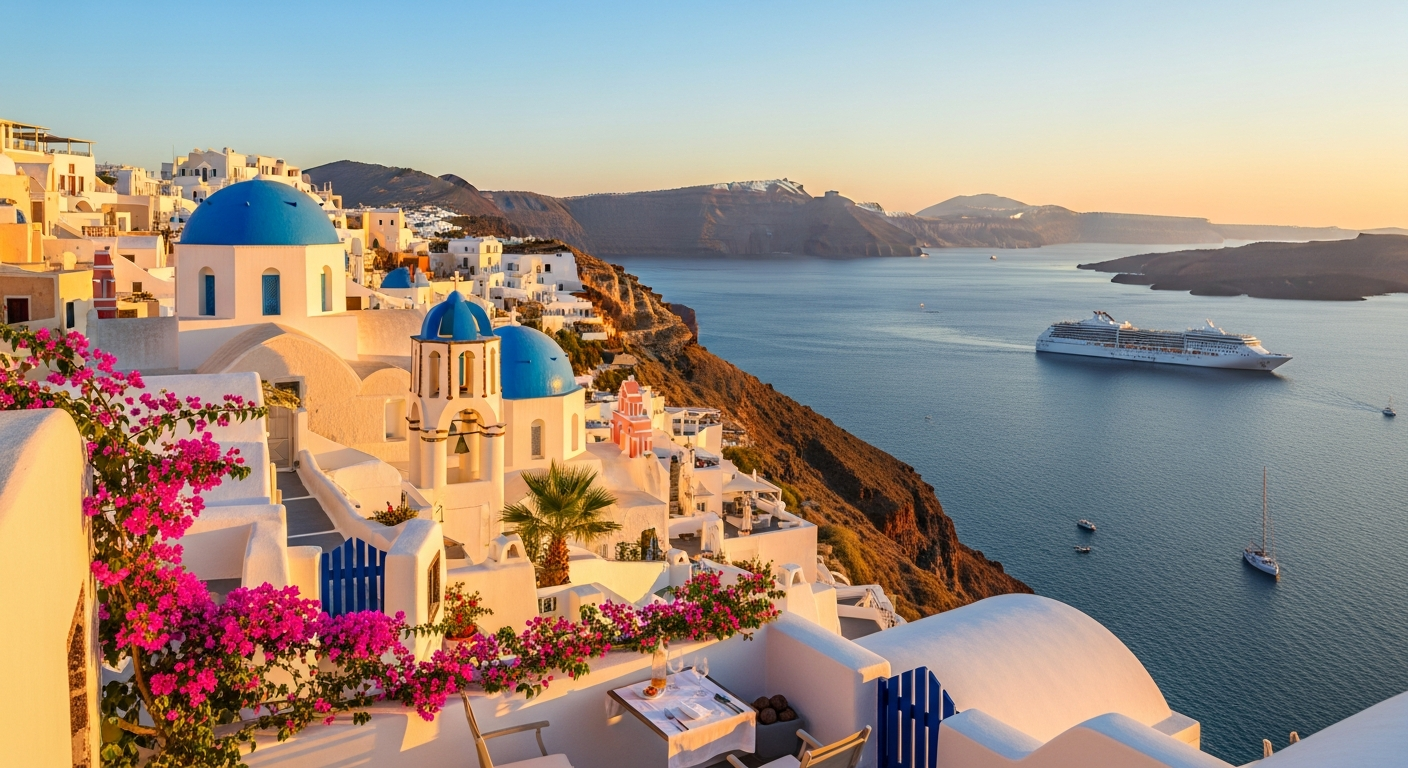
You’re standing on a sun-drenched terrace overlooking the impossibly blue Aegean Sea, a glass of crisp Assyrtiko wine in hand, watching the most breathtaking sunset you’ve ever seen.
The whitewashed buildings glow golden in the fading light, and you can hear the distant sound of bouzouki music drifting from a nearby taverna. This isn’t just a dream—it’s exactly what awaits you in Greece, and you only need 7 days to experience it.
I know what you’re thinking: “Seven days? That’s not enough time to see everything!” You’re right—Greece could fill a lifetime of travel. With over 6,000 islands (227 inhabited), countless archaeological sites, and endless hidden villages, it’s tempting to try cramming everything into one trip.
But here’s the secret I’ve learned after multiple visits: trying to see too much means you’ll end up exhausted, overwhelmed, and feeling like you’re just checking boxes rather than actually experiencing Greece.
The truth is, one week is the perfect amount of time to experience the ultimate Greek summer without feeling rushed. You’ll have enough time to explore ancient ruins that date back thousands of years, swim in crystal-clear waters that look photoshopped, watch those legendary Santorini sunsets, and still have moments to simply sit in a seaside taverna and soak it all in.
This complete guide will show you exactly how to maximize every single day, balance iconic landmarks with authentic local experiences, and create unforgettable memories while staying on budget.
No fluff, no impossible-to-follow plans that require you to wake up at 4 AM every day—just a practical, tested itinerary that actually works. Whether you’re a first-time visitor or returning to explore new islands, this 7-day journey will give you the Greece experience you’ve been dreaming about.
Before You Go: Essential Planning Tips for Your 7-Day Greece Adventure

Best Time to Visit Greece in Summer
Let’s talk timing, because this makes a massive difference in your experience. The sweet spot months are early June or late September—you’ll find fewer crowds, better prices, and weather that’s still absolutely gorgeous. I’m talking 25-28°C (77-82°F), perfect beach weather without the scorching heat.
July and August bring peak season reality: stunning weather, guaranteed sunshine, and maximum energy—but also maximum tourists and inflated prices. Hotels in Santorini can cost double what they do in June. The Acropolis becomes a sweaty sardine can by 10 AM. That said, if these are your only available months, don’t worry—Greece in summer is still magical, you just need to be strategic about timing your activities.
For booking, start 3-4 months ahead for flights (you’ll save 30-40% compared to last-minute bookings) and 2-3 months for accommodations to get the best value and selection. The most popular cave hotels in Santorini book out 6 months in advance.
Budget Breakdown: What to Actually Expect
Let’s get real about costs because Greece spans the full spectrum from budget-friendly to splurge-worthy. For accommodation, expect €60-150 per night depending on islands and season. Athens and Naxos sit on the lower end, while Santorini and Mykonos push the upper limits. A decent cave hotel in Fira costs around €100-120 in June, but €200+ in August.
Daily food costs run €30-50 per person if you mix local tavernas with casual dining. A traditional Greek lunch at a neighborhood taverna costs €12-15, while dinner at a nicer restaurant with caldera views runs €25-40 per person. Street food like gyros and souvlaki costs just €3-5 and makes perfect quick lunches.
Transportation between islands takes €100-200 for ferries. An Athens to Santorini ferry costs €35-70 depending on speed and class, while inter-island ferries run €20-40. Here’s a money-saving secret that most tourists miss: book ferry tickets in advance online through platforms like FerryHopper or Direct Ferries for 10-15% savings compared to buying at the port.
Getting Between Islands: Ferry vs. Flight
This decision impacts your entire itinerary. Ferries offer major advantages: they’re scenic (watching the Aegean islands appear on the horizon is magical), more affordable, and give you luggage flexibility without strict weight limits. The Blue Star Ferries are reliable and comfortable with air-conditioned seating, cafes, and outdoor decks.
However, you should fly when time matters more than money. The Athens to Santorini flight takes 45 minutes versus 5-8 hours by ferry. That’s basically an entire day saved. Budget airlines like Sky Express and Aegean offer flights for €50-120 depending on how far ahead you book.
For booking platforms, I recommend FerryHopper and Direct Ferries for comparing routes, times, and prices across different ferry companies. They show you all options in one place instead of visiting multiple company websites.
Here’s a local tip that saved me on my last trip: morning ferries (7-9 AM departures) are significantly more reliable than afternoon departures. Afternoon ferries face more delays due to wind conditions, especially in August. Yes, waking up early on vacation isn’t fun, but arriving on schedule is worth it.
Packing Essentials You Can’t Forget
Greek summer sun is absolutely no joke—it’s intense, especially in July and August when there’s zero cloud cover. Pack SPF 50+ sunscreen (it’s expensive in tourist areas), a wide-brimmed hat, and quality sunglasses. I learned this the hard way with a painful sunburn on Day 2 of my first trip.
Comfortable walking shoes are non-negotiable. You’ll be navigating ancient marble ruins, cobblestone streets, and steep village staircases. Those Instagram-perfect photos of Santorini don’t show the hundreds of steps you’ll climb. Skip the flip-flops for exploring and bring actual walking shoes or supportive sandals.
Modest clothing matters for cultural respect and practical access. Many monasteries and churches require covered shoulders and knees. Bring a lightweight scarf or shawl that you can throw on when needed. It doubles as sun protection and airplane blanket.
Finally, don’t forget a Type C European power adapter. Greek outlets won’t fit your devices without one, and buying adapters at airports costs 3x what they should.
The Perfect 7-Day Greece Itinerary: Athens & Two Islands (Overview)

Why This Itinerary Works
After testing multiple routes across several trips, I’ve found the winning formula: 2 days Athens + 2-3 days Santorini + 2-3 days Mykonos (or Naxos for authentic local vibes instead of party scenes). This combination gives you everything that makes Greece unforgettable:
Ancient history through Athens’ archaeological wonders—you’ll walk where Socrates walked and see structures that have stood for 2,500 years. Iconic scenery with Santorini’s famous sunsets and dramatic caldera views that look exactly like the postcards (they’re not exaggerated). Beach relaxation with crystal-clear waters and golden sand where you can actually unwind instead of just rushing through. Authentic culture through local tavernas, traditional villages, and genuine Greek hospitality that goes beyond tourist transactions.
This isn’t about cramming in maximum destinations—it’s about having enough time in each place to actually experience it. Two days in Athens lets you see the major sites without feeling rushed. Three days per island gives you time for both must-see spots and spontaneous discoveries.
Alternative Routes to Consider
Your perfect itinerary depends on what matters most to you. For budget-conscious travelers, consider Athens → Naxos → Paros instead. These islands are less touristy, significantly more affordable (accommodations cost 40-50% less than Santorini), and offer equally beautiful beaches with more authentic Greek atmosphere.
Party seekers should follow the Athens → Mykonos → Ios route for the most vibrant nightlife scene in Greece. Mykonos clubs don’t even get started until midnight, and Ios caters specifically to the 20s-30s party crowd.
Romance-focused couples might skip the island hopping entirely and do Athens → Santorini only, spending 5 full days on the most romantic island. This gives you more time for couples’ spa experiences, private sailing tours, and leisurely sunset dinners without the stress of packing and ferry schedules.
Adventure lovers should explore Athens → Milos → Santorini for dramatic landscapes, hidden beaches accessible only by boat, and some of the most unique geological formations in the Cyclades. Milos remains relatively undiscovered compared to its famous neighbors.
Logistics at a Glance
Here’s how your week breaks down: Days 1-2 you arrive in Athens, recover from jet lag while exploring ancient sites and vibrant neighborhoods. Days 3-5 you’re on your first island (Santorini or Naxos) experiencing that quintessential Greek island life. Days 6-7 you either head to a second island (Mykonos or Paros) or return to Athens if you prefer deeper exploration of fewer places.
Pro tip that saves significant time and money: fly into Athens and out of your last island destination. This eliminates backtracking to Athens for your departure flight. A one-way ticket from Santorini to your home city often costs the same as round-trip from Athens, and you save an entire day of travel.
Days 1-2: Athens—Where Ancient History Meets Modern Energy

Day 1: Conquering the Acropolis & Plaka Neighborhood
Morning: The Acropolis (arrive by 8 AM)
Set your alarm early—this is worth it. Arriving at the Acropolis by 8 AM means you beat both the heat and the massive tour bus crowds that arrive around 10 AM. The morning light is softer, the marble isn’t scorching hot yet, and you can actually take photos without 50 people in the background.
You’ll see the Parthenon (even more impressive in person than photos suggest), the Erechtheion with its famous Caryatid columns, the Temple of Athena Nike, and the Theater of Dionysus. Budget 2-3 hours including the outstanding Acropolis Museum at the base of the hill, which houses the original sculptures and provides crucial context for what you’re seeing.
Here’s an insider secret that saves you money: buy the €30 combo ticket that covers 7 archaeological sites including the Acropolis, Ancient Agora, Roman Agora, and more. It’s valid for 5 days, and if you plan to see even 3-4 sites, you’re already saving money. Single Acropolis admission alone costs €20 in summer.
Photography tip: the best light for photos is before 10 AM when the sun illuminates the structures without harsh shadows. The west side of the Parthenon offers the most iconic angles.
Afternoon: Wander Through Historic Plaka
After the Acropolis, descend into Plaka, Athens’ oldest neighborhood. Stop for lunch at Taverna tou Psara, where locals have been eating for decades. Sit in their stunning courtyard and order a variety of meze—Greek small plates like tzatziki, melitzanosalata (eggplant dip), grilled octopus, and saganaki (fried cheese). This is authentic Greek dining at its best, not the tourist-trap stuff.
Spend the afternoon wandering Plaka’s narrow cobblestone streets lined with neoclassical architecture, artisan shops selling handmade sandals and jewelry, and cats lounging in sunny spots. The neighborhood has a village feel despite being in the heart of Athens.
Don’t miss Anafiotika, a hidden gem within Plaka that most tourists walk right past. This tiny neighborhood was built by craftsmen from the island of Anafi in the 19th century, and it looks exactly like a Cycladic island village—whitewashed houses, blue doors, bougainvillea cascading over walls—right in central Athens. It’s surreal and beautiful.
Budget tip: skip the restaurants on the main squares like Monastiraki Square where prices are inflated for tourists. Walk one or two streets away and you’ll find better food at half the price.
Evening: Sunset at Lycabettus Hill
End your first day at Lycabettus Hill for breathtaking 360-degree views of Athens and the Aegean Sea. You can take the funicular railway (€7.50 round trip) or hike up in about 20 minutes if you’re feeling energetic. The sunset views are absolutely worth it—you’ll see the Acropolis lit up, the city spreading out to the sea, and on clear days, you can see all the way to the islands.
For dinner, return to Monastiraki for rooftop dining with Acropolis views. A for Athens rooftop bar is a local favorite—book ahead because it fills up fast. The food is modern Greek cuisine, prices are reasonable for the view (€15-25 per main), and watching the Acropolis illuminate as night falls is magical.
Day 2: Ancient Agora, Markets & Neighborhoods
Morning: Ancient Agora & Temple of Hephaestus
Start Day 2 at the Ancient Agora, the heart of ancient Athenian democracy where Socrates, Plato, and Aristotle walked and taught. The Temple of Hephaestus here is actually better preserved than the Parthenon—it still has its roof and columns intact, giving you a clearer sense of what these temples originally looked like.
The site is less crowded than the Acropolis, more shaded with trees, and equally fascinating historically. This was Athens’ commercial, political, and social center for centuries. Budget 1.5-2 hours to explore properly. If you bought the combo ticket yesterday, admission is already covered—see how smart that was?
Midday: Central Market & Food Tour
Head to Varvakios Agora, Athens’ authentic central food market. This isn’t a tourist market—it’s where locals actually shop. You’ll see vendors selling fresh olives in dozens of varieties, Greek cheeses like graviera and kasseri, whole fish on ice, and hanging meat that might shock sensitive stomachs.
Try loukoumades (Greek honey donuts) from a nearby stand—they’re crispy, sweet, and completely addictive. Sample different olives and ask vendors for recommendations. This is where you learn that not all Greek olives taste the same.
For a complete experience, join a 3-hour Athens food tour (€70-90) that takes you through the market and surrounding neighborhoods with a local guide who explains everything and gets you access to places you wouldn’t find alone. Alternatively, explore independently and trust your instincts about which stalls look best.
Secret spot: Diporto Agoras is an underground taverna that’s been serving workers since 1887. No sign, no menu, just whatever they’re cooking that day (usually chickpeas, beans, or fish). It’s €5-7 for a massive plate and wine. You’ll be the only tourist there.
Afternoon: Syntagma Square & National Garden
Walk to Syntagma Square to watch the changing of the guard at the Parliament Building. This happens every hour, but the elaborate ceremony with full regalia occurs at 11 AM on Sundays. The Evzones guards wear traditional uniforms with pom-pom shoes and perform synchronized movements—it’s uniquely Greek and worth catching.
The National Garden right behind Parliament offers a free, shaded oasis perfect for escaping the afternoon heat. It’s where locals come to rest, and you’ll see turtles in the ponds, peacocks wandering around, and old men playing backgammon under the trees.
If you want shopping time, Ermou Street has international brands, while Kolonaki neighborhood offers upscale boutiques and designer shops. Personally, I prefer spending this time relaxing before dinner.
Evening: Psyrri or Koukaki Neighborhood Dinner
For your final Athens evening, explore either Psyrri or Koukaki neighborhoods. Psyrri has a trendy, artistic vibe—it’s great for bar hopping with street art everywhere and a younger crowd. Koukaki feels more residential and authentic with traditional tavernas where locals actually eat and a calmer atmosphere.
Restaurant recommendations: Seychelles serves modern Greek cuisine with creative twists on traditional dishes (€20-30 per person). Oineas is old-school traditional fare in a cozy setting with barrel wine and generous portions (€15-20 per person). Both require reservations in summer.
End the night at Brettos Bar in Plaka, the oldest distillery in Athens. The walls are lined with hundreds of colorful bottles that create a stunning backdrop. Try their house-made liqueurs—the mastiha (mastic) is uniquely Greek and surprisingly delicious. It’s the perfect Athens nightcap before you head to the islands tomorrow.
Days 3-5: Santorini—The Iconic Greek Island Experience

Getting There & Getting Around
You have two transportation options from Athens to Santorini. Flying takes just 45 minutes and costs €50-120 depending on how far ahead you book and which airline you choose. Sky Express and Aegean run multiple daily flights. The ferry option takes 5-8 hours depending on whether you choose the slow ferry (€35-50) or high-speed catamaran (€60-70). The ferry is scenic—you’ll watch multiple islands pass by—but it consumes most of your day.
For getting around Santorini, you have choices. Renting an ATV or car (€25-40 per day) gives you complete freedom to explore at your own pace. The buses are reliable and cheap at just €1.80 per ride, but they get incredibly crowded in peak season and don’t run late at night. Taxis exist but are expensive and hard to find during busy times. I recommend renting wheels for maximum flexibility.
Local secret: if you’re comfortable on two wheels, ATVs are perfect for Santorini’s narrow roads and limited parking. Cars are better if you’re not confident with scooters or have lots of luggage.
Day 3: Arrival & Oia Exploration
Afternoon: Settle Into Your Base
Where you stay dramatically affects your experience and budget. Fira, the capital, offers the best combination of affordability, nightlife, restaurants, and central location. Oia is the most romantic with those famous sunset views, but everything costs more and it’s farther from beaches. Imerovigli sits between the two—quieter than Fira, closer than Oia, with equally stunning caldera views.
Budget accommodation options include cave hostels in Fira starting around €40-60 per night. You’ll get the cave experience without the luxury price tag. Mid-range cave hotels run €100-150. Splurge options with private plunge pools and caldera views cost €200-500 per night—but honestly, they’re worth it if your budget allows. Waking up to that view is unforgettable.
Money-saving tip: stay in the beach towns of Perissa or Kamari for literally half the price of caldera villages. You won’t have the iconic views from your room, but you’re steps from the beach and can easily visit Fira and Oia during the day.
Late Afternoon: Oia Village Wandering
Arrive in Oia by 4 PM to explore before the sunset crowds descend. This village is postcard-perfect—blue domes, whitewashed buildings, narrow marble streets, and bougainvillea everywhere. It’s the Greece you’ve seen in every Instagram photo, and it actually looks exactly like that in real life.
Wander the main marble street lined with art galleries, jewelry boutiques, and bookstores. Duck into side alleys where you’ll find quieter corners and hidden viewpoints. The whole village is essentially a maze built into the cliff, so getting lost is part of the experience.
Stop at Atlantis Books, one of the world’s most charming bookstores. It’s tiny, crammed with books floor to ceiling, and run by a rotating cast of international volunteers who live upstairs. Buy a book and have them stamp it with the Atlantis seal—it makes a perfect souvenir.
Evening: The Famous Oia Sunset
Here’s what nobody tells you about the Oia sunset: it’s absolutely as beautiful as everyone says, but you’ll be watching it with approximately 1,000 other people. The castle ruins at the northern tip offer the classic viewpoint, but people start claiming spots 2 hours before sunset in peak season.
My insider alternative: skip the crowds and watch from Amoudi Bay below Oia. Walk down the 300 steps (yes, you’ll have to walk back up, but it’s worth it) to this tiny fishing village. Have dinner at one of the seafood tavernas literally on the water—Katina’s or Dimitris are both excellent. Order the grilled octopus, fresh fish, and local wine. Watch the sunset reflect on the water while the crowds are all above you. It’s more romantic, more peaceful, and you get an incredible meal included.
If you must do the classic Oia sunset, arrive by 5:30 PM in summer, find your spot, and commit to staying put. Bring water and snacks. The moment the sun dips below the horizon, everyone applauds—it’s a weird but charming tradition.
Day 4: Beaches, Wineries & Villages
Morning: Red Beach & Akrotiri
Start early at Red Beach near Akrotiri. This beach gets its name from the dramatic red volcanic cliffs surrounding it. The contrast of red rocks against blue water creates stunning photos. Fair warning: the beach is rocky (bring water shoes), gets crowded by 11 AM, and requires a 10-minute walk from the parking area. But it’s uniquely beautiful and worth seeing.
Nearby is the Akrotiri Archaeological Site, a Minoan Bronze Age settlement preserved under volcanic ash from the eruption that destroyed ancient Santorini. It’s essentially the Greek Pompeii. The site has a modern roof structure protecting the ruins, so you can visit comfortably even in summer heat. Budget 1 hour here.
Midday: Santorini Winery Tour
Santorini produces some of Greece’s best wines thanks to its volcanic soil and unique growing conditions. The indigenous Assyrtiko grape creates crisp, mineral-driven white wines perfect for hot summer days. Visit at least one winery—Santo Wines and Venetsanos Winery both offer tastings with spectacular caldera views.
A typical tasting costs €15-25 and includes 4-5 wines with local cheese and breadsticks. The staff explains Santorini’s unique basket-weaving vine training method that protects grapes from strong winds. Even if you’re not a wine expert, the setting alone makes this worthwhile.
Pro tip: book the earliest afternoon time slot (usually 2 PM) before the sunset crowd arrives. You’ll have better service and less competition for the view.
Afternoon: Pyrgos Village
Escape the tourist crowds at Pyrgos, Santorini’s highest village and former capital. This traditional settlement feels authentically Greek—locals still outnumber tourists, kids play in the streets, and old women sit in doorways doing needlework.
Climb to the Kasteli fortress ruins at the village peak for 360-degree views of the entire island. You’ll see vineyards, the caldera, the airport, and neighboring islands. It’s the best panoramic view in Santorini, and you might have it to yourself.
Have lunch at Metaxi Mas, a local favorite serving traditional Greek food in generous portions at reasonable prices (€12-18 per person). No view, no fancy presentation—just excellent food that locals drive across the island to eat.
Evening: Fira Nightlife
Spend your evening in Fira experiencing Santorini’s nightlife. The caldera-side bars come alive after sunset with DJs, cocktails, and energy. Two Brothers Bar offers affordable drinks and a fun crowd. Koo Club is the island’s main dance club if you want to party until 4 AM.
For something more relaxed, walk the caldera path from Fira toward Firostefani as the sun sets. Stop at any of the cocktail bars along the way—Franco’s Bar and Palia Kameni both have excellent sunset views without Oia’s crowds. Order a mojito, watch the sky turn pink and purple, and congratulate yourself on living your best life.
Day 5: Sailing & Final Santorini Moments
Morning/Afternoon: Catamaran Sailing Tour
Book a catamaran sailing tour for your final full day—this is the ultimate Santorini experience. Tours typically run 5 hours, cost €80-120 per person, and include swimming stops at hot springs and secluded beaches, lunch on board, and unlimited wine.
You’ll sail along the caldera, see Santorini from the water (which gives you perspective on how massive the volcanic crater is), swim in warm volcanic hot springs that turn the water orange, and visit beaches only accessible by boat. The crew prepares a Greek BBQ lunch while you’re swimming.
The best part? You’ll see those iconic blue domes and white villages from the sea while sipping wine on deck. It’s relaxing, scenic, and includes everything—no planning required on your part.
Evening: Farewell Dinner in Imerovigli
End your Santorini stay with a special dinner in Imerovigli at a caldera-view restaurant. Avocado Restaurant offers creative Mediterranean cuisine with spectacular views (€30-45 per person, reservations essential). Arrive for sunset, watch the sky change colors over dinner, and see the villages light up as night falls.
Order the fava (yellow split pea puree—a Santorini specialty), fresh seafood, and save room for dessert. Pair everything with local Assyrtiko wine. This is the meal you’ll remember years later when you think about Greece.
After dinner, take a final walk through whichever village you’re staying in. The late evening is when these places feel most magical—the day crowds have left, the lights twinkle, and you can hear music and conversation drifting from tavernas. Soak it all in before you leave tomorrow.
Days 6-7: Mykonos, Naxos, or Return to Athens
Option A: Mykonos—Beaches & Nightlife
If you choose Mykonos for your final days, you’re in for world-class beaches and legendary nightlife. Take the morning ferry from Santorini (2-3 hours, €40-60). Mykonos Town (Chora) is a maze of white-washed streets designed to confuse pirates—now they confuse tourists instead, but that’s part of the charm.
Day 6, explore Mykonos Town’s boutiques, waterfront restaurants, and iconic windmills. Have lunch at Niko’s Taverna for authentic Greek food away from the tourist traps. Afternoon, head to Paradise Beach or Super Paradise Beach for beach clubs, crystal-clear water, and party atmosphere. These beaches have loungers, bars, DJs, and beautiful people everywhere.
Evening in Mykonos means legendary nightlife. Start with sunset drinks at Scorpios, a beach club with bohemian vibes. Move to Little Venice for cocktails overlooking the water. End at Cavo Paradiso or Paradise Club if you want to dance until sunrise. Mykonos doesn’t sleep in summer.
Day 7, recover at a quieter beach like Agios Sostis or Fokos. These northern beaches have no facilities but offer peaceful swimming and authentic atmosphere. Have a final Greek lunch at a family taverna, then catch your evening flight home or back to Athens.
Option B: Naxos—Authentic Greek Island Life
For a more authentic, less touristy experience, take the ferry to Naxos (1.5-2 hours, €30-45). Naxos is the largest Cycladic island but feels relaxed and genuine. Locals still outnumber tourists, prices are reasonable, and you’ll experience real Greek island life.
Day 6, explore Naxos Town (Chora) with its Venetian castle, winding marble streets, and excellent restaurants. Walk to the Portara, a massive marble doorway that’s all that remains of an ancient temple—it frames the sunset perfectly. Have lunch at Apostolis Fish Tavern right on the harbor for the freshest seafood.
Afternoon, rent a car or scooter (€20-30) and drive to mountain villages. Halki has beautiful architecture and local shops. Apiranthos is called the “marble village” for its distinctive paving. Stop at traditional kafeneia (coffee houses) where old men play cards and gossip.
Day 7, spend your final day at Plaka Beach, one of Greece’s finest—4 kilometers of golden sand, shallow turquoise water, and far fewer crowds than Santorini or Mykonos. Have lunch at Paradiso Beach Bar, swim, relax, and reflect on your incredible week.
Option C: Return to Athens for Deep Exploration
If you prefer depth over breadth, return to Athens for your final days. This gives you time to visit sites you missed, explore neighborhoods more thoroughly, and see Athens at a more relaxed pace.
Day 6, take a day trip to Cape Sounion (90 minutes from Athens) to see the Temple of Poseidon perched on dramatic cliffs above the Aegean. The temple is stunning, the coastal drive is beautiful, and it’s far less crowded than Athens sites. Many tours combine this with a seaside lunch.
Alternatively, visit Delphi, the ancient sanctuary of Apollo and one of Greece’s most important archaeological sites. It’s 2.5 hours from Athens but absolutely worth it—the mountain setting is spectacular, the ruins are extensive, and the museum houses incredible ancient treasures.
Day 7, explore neighborhoods you haven’t seen yet. Exarchia has an alternative, artistic vibe with street art and independent cafes. Kifisia is upscale with tree-lined streets and elegant shops. The National Archaeological Museum houses Greece’s finest ancient artifacts and deserves at least 2 hours.
Have your farewell dinner at Varoulko Seaside in Piraeus—it’s a Michelin-starred seafood restaurant right on the water. Splurge on your final night to celebrate an incredible week in Greece.
Your Greek Adventure Awaits
Seven days in Greece gives you enough time to experience the country’s incredible diversity—ancient history, iconic islands, stunning beaches, delicious food, and warm hospitality—without feeling rushed or exhausted. You’ll return home with thousands of photos, unforgettable memories, and already planning your next visit.
The key to success is choosing the right combination of destinations for your interests, booking strategically to save money, and balancing must-see attractions with spontaneous discoveries. Don’t try to see everything—focus on experiencing a few places deeply rather than many places superficially.
Greece rewards travelers who take time to sit in tavernas, chat with locals, watch sunsets without rushing to the next activity, and simply soak in the atmosphere. The best moments often happen when you’re not following an itinerary at all.
Ready to book your Greek adventure? Start by securing your flights and accommodations—summer sells out fast. Research ferry schedules on FerryHopper, read recent reviews on accommodation options, and create a rough daily plan that allows flexibility for spontaneous changes.
Most importantly, go with an open mind and adventurous spirit. Greece has been welcoming travelers for thousands of years, and it will welcome you with sunshine, incredible food, breathtaking beauty, and hospitality that makes you feel like family. Your dream Greek vacation is waiting—all you have to do is book that ticket.
Have a good trip!