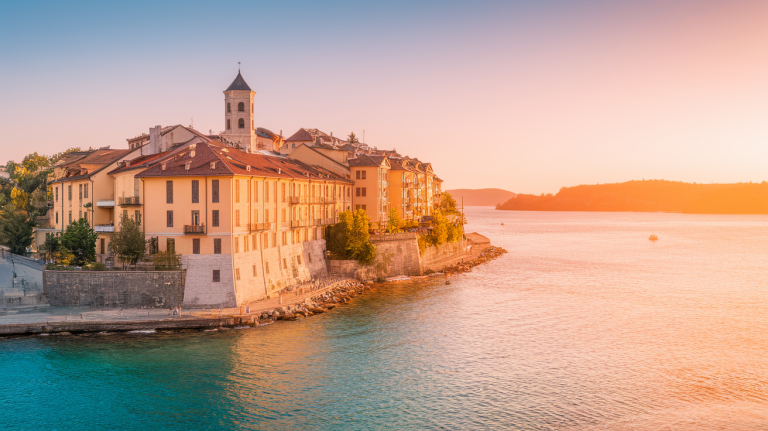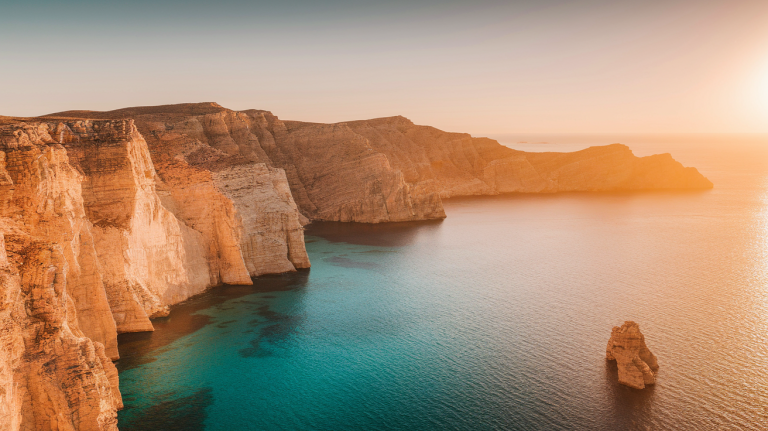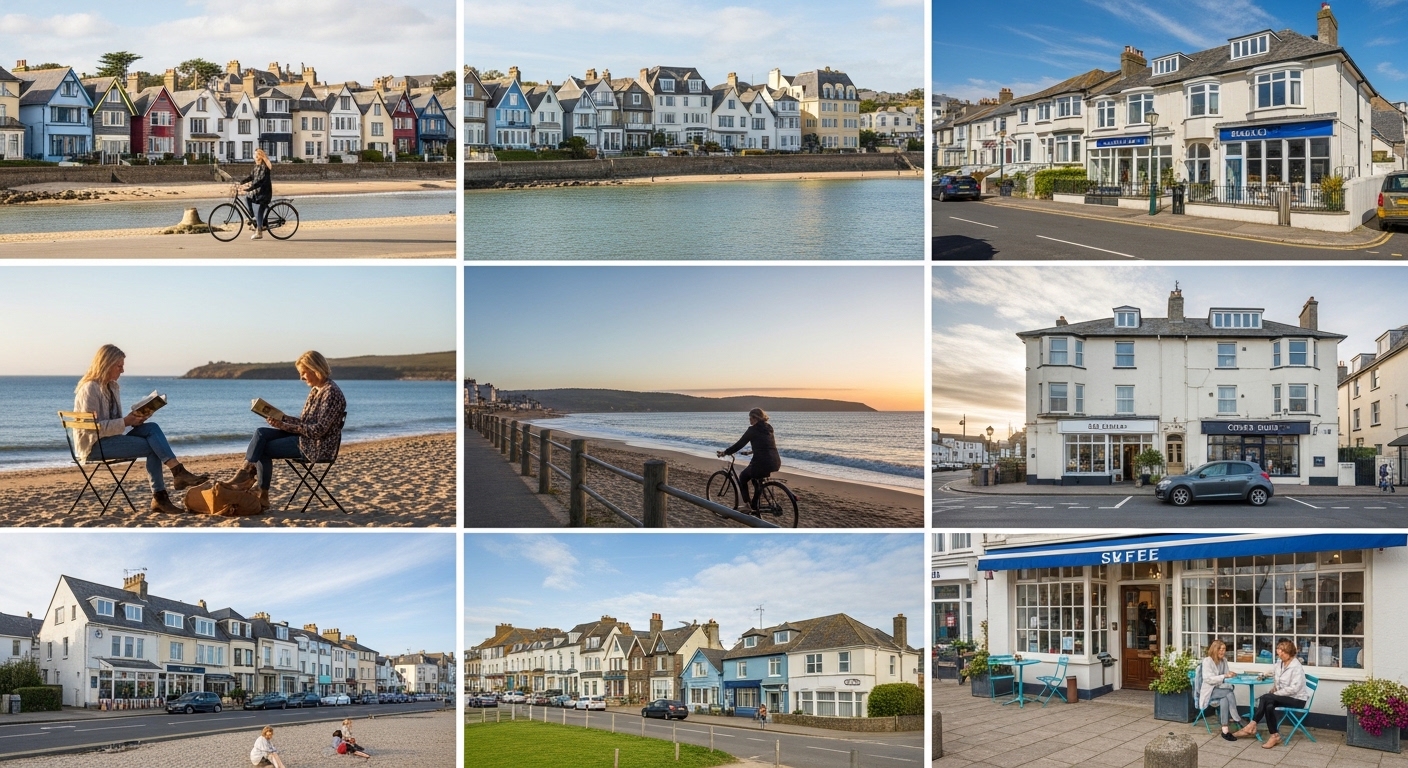
20 Quiet Beach Towns Women Over 30 Love

Remember when beach vacations meant fighting crowds at noon, dodging spring breakers, and feeling too old for the party scene but too young for the early-bird dinner crowd? Those days are over.
Something shifts after 30. You stop measuring vacation success by how many bars you hit and start valuing how rested you feel when you return home.
You’d rather spend money on a perfect meal than cheap drinks. You want beaches where you can actually hear the waves instead of competing sound systems.
You’re seeking authentic experiences, not Instagram backdrops—though if the photos turn out stunning, that’s a bonus.
Quiet beach towns offer exactly this balance. They’re places where locals still outnumber tourists, where you can walk barefoot to a family-run restaurant serving the day’s catch, where the most exciting nightlife might be watching bioluminescence in the water or catching live music at a wine bar.
These aren’t sleepy retirement communities—they’re vibrant, walkable destinations with genuine culture, just without the chaos.
What makes these towns specifically appealing? Safety you can feel, not just read about in hotel brochures. Walkability that means exploring without constant Uber calculations.
Cultural richness that goes beyond resort entertainment. And that intangible quality of being welcomed rather than merely tolerated as a tourist.
Each of the 20 destinations ahead offers something unique. Some are hidden coastal gems where you’ll practice your language skills. Others are under-the-radar havens in countries you thought you knew.
They span different budgets, travel styles, and continents—from European villages where cobblestones meet the sea to Caribbean hideaways where jungle spills onto white sand.
You’ll discover practical details for each: realistic budgets, perfect timing, insider tips that skip the tourist traps, and what makes each town ideal for solo travelers, girlfriends’ getaways, or romantic escapes. These aren’t just beautiful places—they’re destinations that understand what you’re looking for now.
What Makes a Beach Town Perfect for Women Over 30?
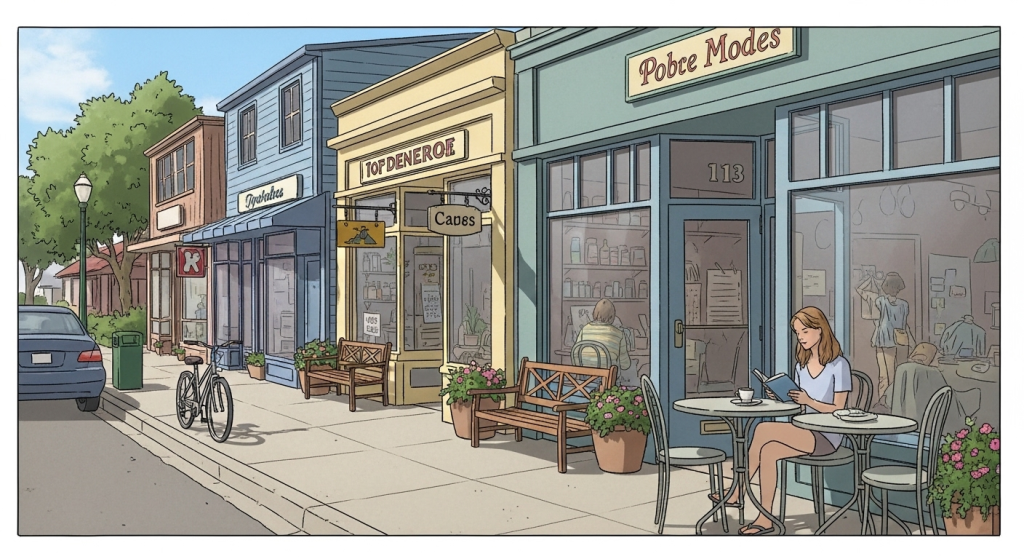
Beyond the Spring Break Scene
The perfect beach town for this stage of life has a mature atmosphere without feeling like you’ve aged out of fun. You’ll find wine bars with local vintages instead of mega-clubs with sticky floors.
Restaurants focus on showcasing regional cuisine rather than serving frozen margaritas by the gallon. The music you hear is live jazz or acoustic sets, not thumping bass at 2 AM.
These towns attract travelers who appreciate quality over quantity. Mornings start with espresso at a café where regulars greet the owner by name, not nursing hangovers.
Evenings center on sunset strolls along the beach or lingering over multi-course dinners, not pre-gaming for another night out.
You’ll meet fellow travelers who want to discuss the local history, recommend hiking trails, or share which market has the best produce—conversations that actually enhance your trip.
This doesn’t mean these destinations lack energy or excitement. They’re simply places where the excitement comes from discovering a hidden cove, learning to cook regional specialties, or watching artisans practice centuries-old crafts. The vibe is sophisticated without being stuffy, relaxed without being boring.
Safety, Walkability, and Solo-Friendly Vibes
The towns on this list share essential practical qualities that matter more now than they did in your twenties. Well-lit streets and established tourism infrastructure mean you can walk home from dinner without anxiety.
Easy navigation without constant Uber dependence saves money and creates those spontaneous discoveries—the ceramic shop you stumble upon, the viewpoint you find by taking a wrong turn.
These destinations welcome solo travelers genuinely, not just in marketing copy. You’ll find established expat communities that organize social events, locals accustomed to chatting with visitors, and other solo travelers at coffee shops and beaches.
Restaurant staff seat you at communal tables or the bar without making you feel awkward. Tour operators run small-group experiences perfect for meeting people.
For girlfriends’ getaways, these towns offer the perfect mix of activities and relaxation. Spend mornings exploring separately—one friend at yoga, another at the market—then reconvene for long lunches. For couples, they provide romance without resort packages, intimacy without isolation.
Authentic Local Culture Meets Modern Comfort
The sweet spot these destinations hit is offering genuine local experiences while maintaining modern comforts. You’ll shop at markets where fishermen sell the morning’s catch, eat at family-run restaurants serving recipes passed down generations, and attend festivals celebrating local traditions. This is the authentic travel you’re craving.
But you won’t sacrifice the conveniences that make travel enjoyable. Reliable WiFi means you can work remotely if needed or video call home. Comfortable accommodations range from boutique hotels to charming guesthouses with actual hot water and good mattresses. And yes, there’s good coffee—whether that’s expertly pulled espresso or locally roasted beans.
These towns haven’t been sanitized for tourism, but they’ve evolved to welcome travelers respectfully. Locals appreciate visitors who make an effort to learn basic phrases, respect cultural norms, and support small businesses. In return, you get invited into experiences tourists rushing through never access—the neighborhood festival, the family winery, the beach only locals know about.
European Coastal Gems That Capture Your Heart
Cascais, Portugal
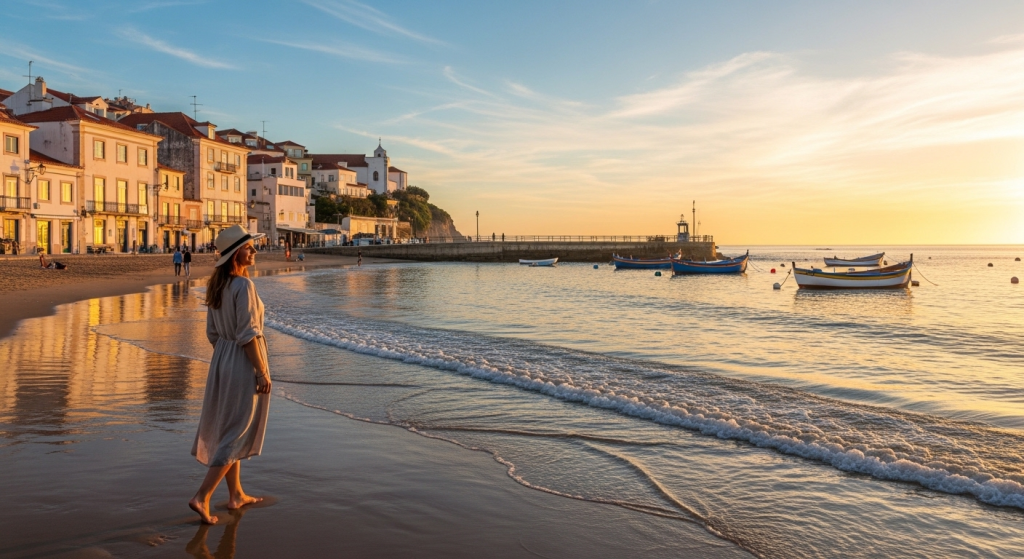
Just 30 minutes from Lisbon by train, Cascais feels worlds away from the capital’s energy. This former fishing village turned elegant resort town captures everything perfect about Portuguese coastal life—without the crowds crushing Algarve hotspots.
The town wraps around several beaches, each with distinct personalities. Praia da Rainha (Queen’s Beach) is a tiny cove with calm waters perfect for morning swims. Guincho Beach attracts surfers with dramatic Atlantic waves and winds. Between beaches, clifftop walking paths offer stunning ocean views and lead to the dramatic Boca do Inferno (Hell’s Mouth) rock formation.
Cascais excels at fresh seafood without tourist-trap pricing. Family-run restaurants serve grilled sardines, octopus salad, and the day’s catch with Portuguese wine for remarkably reasonable prices. The Saturday market overflows with local produce, cheeses, and handicrafts. For wine lovers, nearby Sintra’s wine region offers tastings at historic quintas.
Perfect for: Wine enthusiasts and history buffs who appreciate elegant architecture and cultural depth Budget: Mid-range (€80-150/night for comfortable guesthouses or boutique hotels) Best time to visit: May-June or September for warm weather without peak summer crowds Insider tip: Take the coastal train to Cabo da Roca, mainland Europe’s westernmost point, for breathtaking sunset views with almost no tourists
Polperro, Cornwall, England
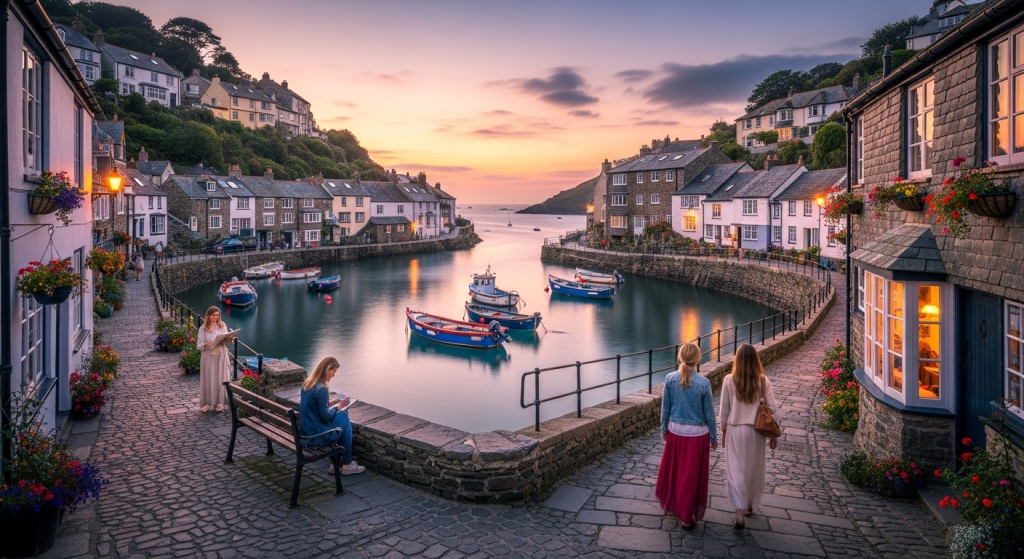
This storybook fishing village looks like it escaped from a British period drama. Narrow lanes wind between cottages that tumble down the hillside to a tiny harbor. Cars can’t access the village center, so you’ll walk cobblestone paths past galleries, craft shops, and pubs with 400-year histories.
The Cornwall Coast Path runs through Polperro, offering some of England’s most breathtaking coastal walks. The route to neighboring Talland Bay takes you past hidden coves and dramatic cliffs, with opportunities to spot seals and seabirds. Return to the village for cream tea or fresh crab sandwiches at harbourside cafés.
Polperro maintains authentic fishing village character because it’s slightly harder to reach than Cornwall’s bigger towns—which means the people you meet are travelers seeking exactly what you are. Cozy pubs serve local ales and host live music nights. Small museums preserve smuggling history (this coast was notorious for it). And the light here has attracted artists for generations.
Perfect for: Literary lovers and nature enthusiasts who romanticize British coastal villages Budget: Mid-range (£70-130/night for charming B&Bs or cottage rentals) Best time to visit: Late spring or early autumn to avoid summer crowds while enjoying mild weather Local secret: Walk to Talland Church just before sunset—the views over Talland Bay are magical, and you’ll likely have them to yourself
Rovinj, Croatia
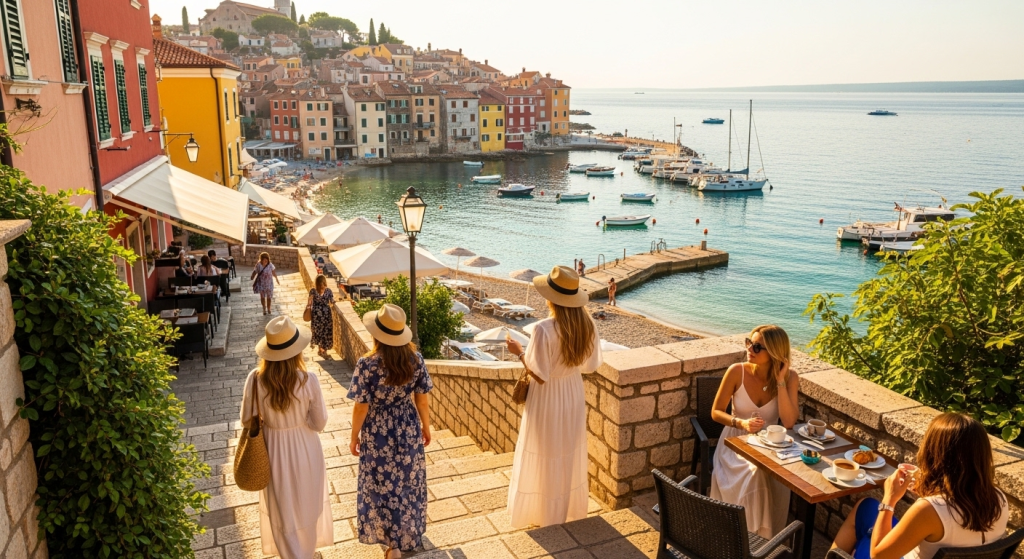
Before cruise ships dock in the afternoon, Rovinj belongs to locals and smart travelers who spend the night. This Istrian peninsula gem combines Venetian architecture with crystal-clear Adriatic waters, creating one of Croatia’s most photogenic yet authentic coastal towns.
The old town rises on a peninsula, crowned by the Church of St. Euphemia whose bell tower dominates the skyline. Wander narrow streets where laundry hangs between pastel buildings, discovering art galleries, wine bars, and family restaurants. The waterfront promenade comes alive at sunset when locals take their evening stroll.
Rovinj’s beaches are rocky coves with impossibly clear water—bring water shoes. Rent a bike to explore the surrounding countryside of olive groves and vineyards, stopping at konobas (taverns) serving Istrian specialties like truffles, wild asparagus, and local wines. The town maintains Croatian character despite growing tourism, especially if you venture beyond the main square.
Perfect for: Photography lovers and culture seekers who want Mediterranean beauty without Greek island prices Budget: Mid to budget-friendly (€60-120/night for apartments or small hotels) Best time to visit: May-June or September-early October for swimming weather without crowds Hidden beach recommendation: Walk south along the coast to Lone Bay—a pebble beach surrounded by forest, popular with locals but missed by most tourists
Cadaqués, Spain
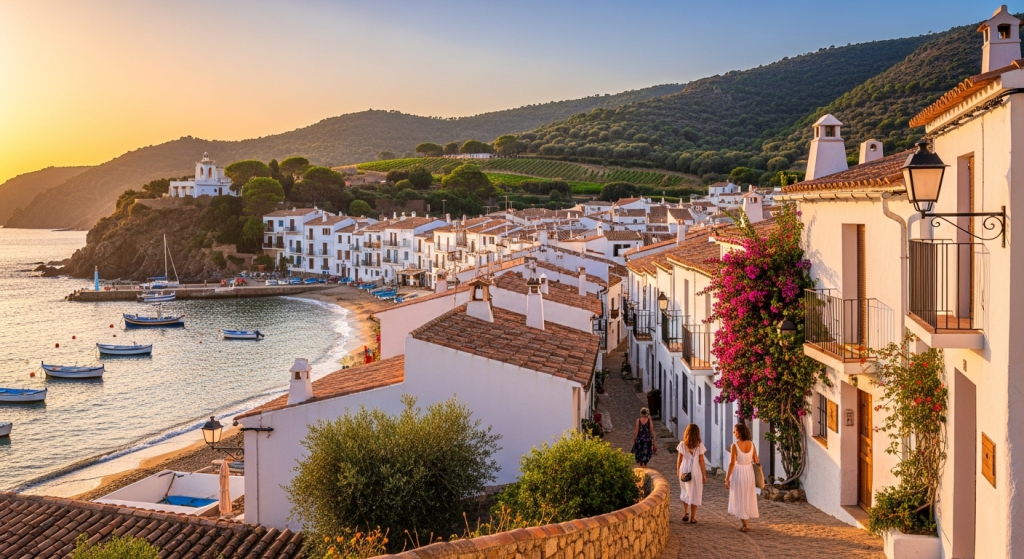
Salvador Dalí chose this whitewashed Costa Brava village as his sanctuary, and walking these streets reveals why. Cadaqués sits isolated by mountains, accessible only by a winding coastal road that keeps mass tourism at bay. The result is a town that still feels like a secret, even though artists and writers have celebrated it for decades.
White buildings with blue shutters cascade down to a rocky bay where fishing boats bob alongside yachts. The pace is deliberately slow—shops close for siesta, restaurants don’t rush you, and the main activity is watching the turquoise Mediterranean sparkle. Visit Dalí’s house-museum in nearby Port Lligat to understand his obsession with this landscape.
The food scene punches above its size. Family restaurants serve Catalan seafood specialties like suquet de peix (fish stew) and locally caught prawns. Beach bars offer simple perfection: grilled fish, cold white wine, sea views. For a special dinner, book ahead at one of the intimate restaurants where chefs showcase regional ingredients.
Perfect for: Art enthusiasts and foodies seeking sophisticated simplicity Budget: Mid-range (€90-160/night for guesthouses or small hotels) Best time to visit: June or September to avoid peak summer heat and crowds Ultimate local dining spot: Restaurant Es Baluard overlooking the bay—arrive for sunset and trust the daily specials
Caribbean & Central American Hideaways
Hopkins, Belize
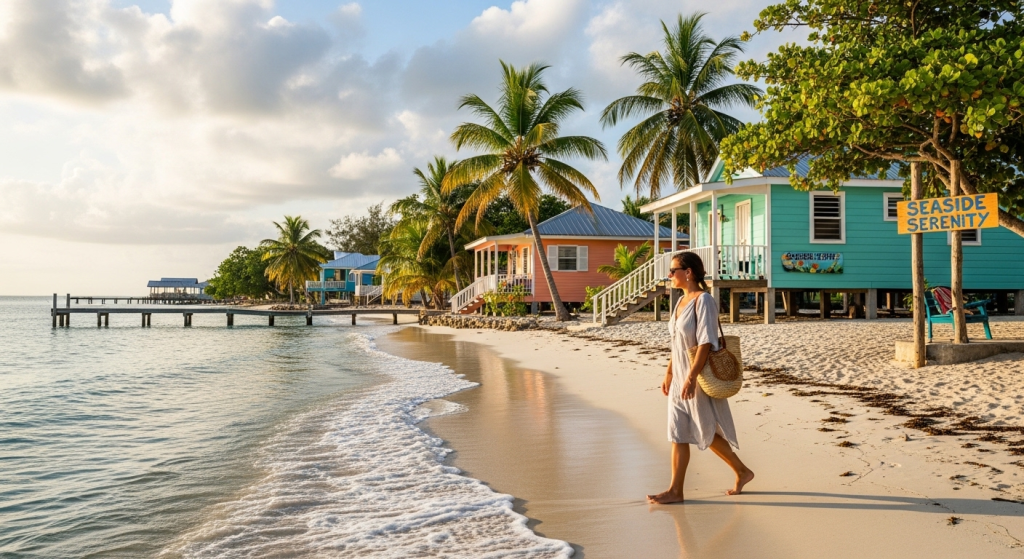
Hopkins offers something rare in Caribbean beach towns: authentic Garifuna culture combined with pristine beaches and barrier reef access, all at prices that won’t devastate your budget. This fishing village on Belize’s southern coast remains genuinely local while welcoming travelers warmly.
The main road runs parallel to miles of uncrowded beach with swaying palms and calm Caribbean waters. Unlike resort-dominated Ambergris Caye, Hopkins maintains its fishing village rhythm. Watch locals making cassava bread using traditional methods, hear Garifuna drumming at beachside bars, and eat hudut (fish stew with coconut milk) at family-run restaurants.
Hopkins positions you perfectly for adventures: snorkeling the Belize Barrier Reef, diving the Blue Hole, exploring Mayan ruins at Cockscomb Basin Wildlife Sanctuary, or cave tubing through ancient ceremonial sites. But the town itself encourages slowing down—morning beach walks, afternoon swims, evenings with fresh seafood and local Belikin beer.
Perfect for: Adventure seekers who want cultural immersion alongside outdoor activities Budget: Budget to mid-range ($60-120/night for beachfront guesthouses or small resorts) Best time to visit: November-April for dry season, though May-June offers good weather with lower prices Local experience not to miss: Take a drumming lesson with Garifuna musicians—they’re generous teachers who love sharing their culture
Las Terrenas, Dominican Republic

The Samaná Peninsula’s north coast hides this European-influenced beach town that feels nothing like the all-inclusive resorts dominating other Dominican shores. French and Italian expats settled here decades ago, creating a destination with Dominican warmth and European culinary sophistication.
Las Terrenas stretches along multiple beaches, each with distinct character. Playa Bonita offers calm waters and beachfront restaurants. Playa Cosón extends for miles with fewer crowds and dramatic waves. The town center buzzes with cafés, bakeries serving fresh croissants, and restaurants where you’ll hear French, Italian, Spanish, and English at neighboring tables.
This social atmosphere makes Las Terrenas ideal for solo travelers and groups alike. Beach bars host regular events, dive shops run small-group trips, and the expat community organizes activities from salsa lessons to beach volleyball. You’ll make friends easily while maintaining privacy when you want it.
Perfect for: Beach hoppers and social butterflies who appreciate good food and easy connections Budget: Mid-range ($80-150/night for comfortable hotels or beachfront apartments) Best time to visit: December-April for optimal weather, though shoulder seasons offer excellent value Secret beach reveal: Playa Morón, about 20 minutes away—a protected cove with turquoise water, minimal development, and almost no tourists
Placencia, Belize
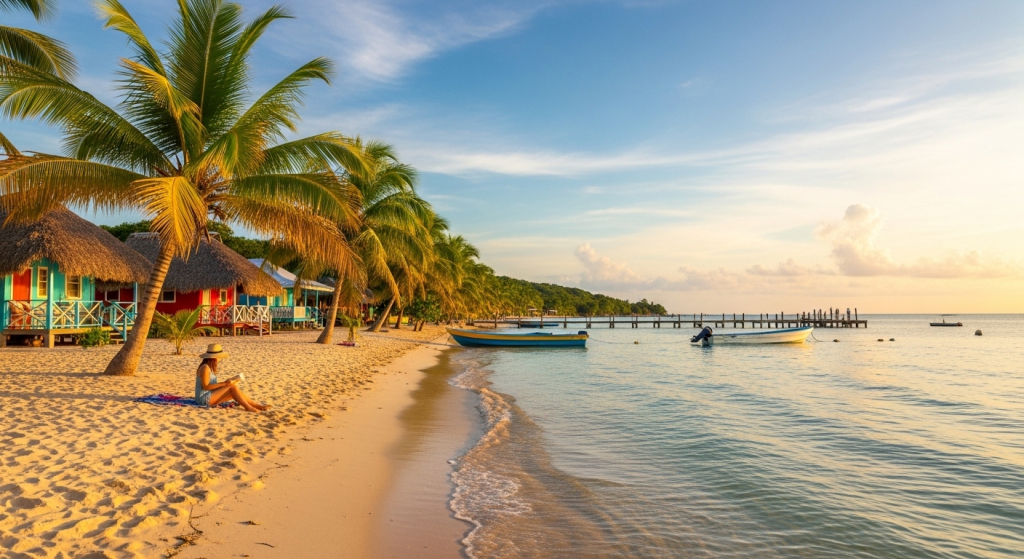
Sixteen miles of sandy beaches make Placencia the rare Belizean destination where you can actually walk barefoot for miles. This narrow peninsula on Belize’s southern coast balances laid-back Caribbean vibes with excellent infrastructure for diving, fishing, and exploring.
The village itself centers on a concrete sidewalk (officially the world’s narrowest main street) lined with colorful buildings housing restaurants, bars, and shops. Everyone knows everyone, creating a friendly small-town atmosphere where you’ll recognize faces after a few days. Locals still fish and farm while welcoming travelers who respect the community.
Placencia’s location provides easy access to world-class diving and snorkeling. The Belize Barrier Reef lies just offshore, with opportunities to swim with whale sharks (spring), spot manatees, and explore pristine coral reefs. On land, nearby jungles offer waterfall hikes, Mayan ruins, and wildlife spotting.
Perfect for: Divers and relaxation seekers who want adventure options without losing beach town tranquility Budget: Budget-friendly to mid ($50-110/night for guesthouses or small beachfront hotels) Best time to visit: November-May for dry season, with March-June for whale shark encounters Insider activity tip: Book a sailing trip to nearby cayes (small islands) for the day—you’ll snorkel pristine reefs and have deserted beaches to yourself
Puerto Viejo, Costa Rica

Costa Rica’s Caribbean coast offers completely different energy than the Pacific side, and Puerto Viejo captures this Afro-Caribbean soul perfectly. Reggae rhythms, Creole cuisine, jungle-meets-ocean landscapes, and a refreshingly unpretentious vibe make this town feel like a secret even though it’s well-established.
The beaches surrounding Puerto Viejo each offer something different. Playa Cocles attracts surfers with consistent waves. Punta Uva provides calm, clear water ideal for swimming and snorkeling. Manzanillo, at the road’s end, offers pristine jungle-backed beaches within a wildlife refuge. Rent a bike to explore them all—the coastal road is flat and scenic.
Puerto Viejo attracts wellness travelers, surfers, nature lovers, and people seeking alternatives to mainstream tourism. You’ll find excellent yoga studios, organic cafés, and a genuine environmental consciousness. The food blends Caribbean flavors—rice and beans with coconut milk, fresh fish with Caribbean spices—with international influences.
Perfect for: Wellness travelers and nature lovers who want jungle and beach combined Budget: Budget to mid-range ($45-100/night for eco-lodges or beachside cabinas) Best time to visit: February-March or September-October for drier weather (though this coast is always humid) Hidden waterfall nearby: Hike to Manzanillo’s tidal pools and secret waterfall—ask locals for directions rather than following tour groups
North American Coastal Treasures
Cannon Beach, Oregon
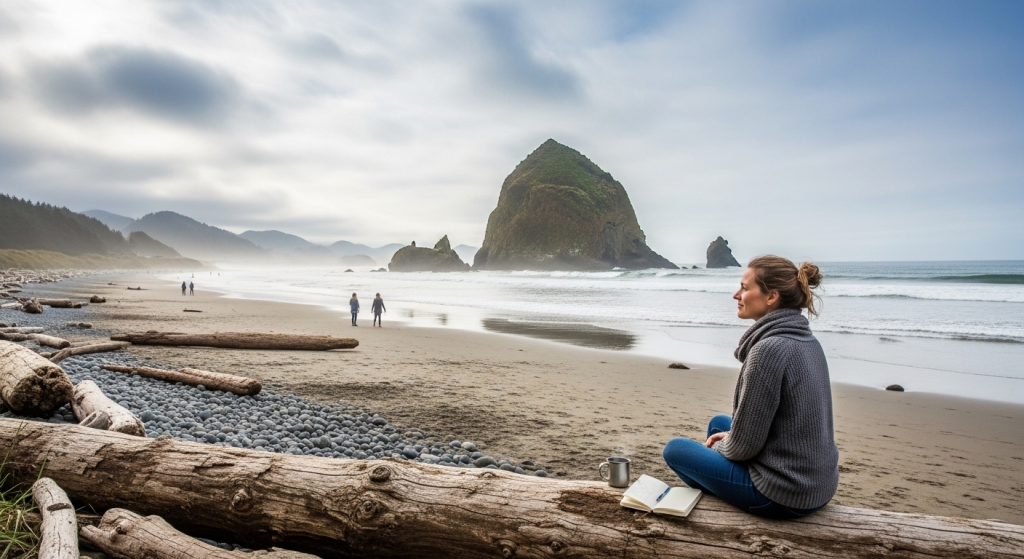
Dramatic Pacific coastline defines Cannon Beach, where iconic Haystack Rock rises 235 feet from the sand and misty mornings create an almost mystical atmosphere. This isn’t a tropical beach destination—it’s rugged, contemplative, and stunningly beautiful in a completely different way.
The town itself maintains strict development codes that preserve its charming character. Art galleries showcase local artists inspired by the dramatic landscape. Boutiques sell handcrafted goods and cozy clothing for beach walks. Restaurants focus on Pacific Northwest ingredients—fresh seafood, local produce, Oregon wines.
Cannon Beach rewards active exploration. Tide pools around Haystack Rock teem with starfish, anemones, and other marine life during low tide. The beach extends for miles, perfect for long contemplative walks. Nearby Ecola State Park offers forest hikes with ocean views that will take your breath away.
Perfect for: Contemplative travelers and artists seeking dramatic natural beauty and creative inspiration Budget: Mid to luxury ($120-250/night for inns or beachfront hotels) Best time to visit: June-September for the driest weather, though off-season offers dramatic storm watching Local coffee shop secret: Sleepy Monk Coffee Roasters serves some of Oregon’s best coffee in a cozy space—perfect for rainy mornings
Beaufort, South Carolina

Lowcountry charm flows through Beaufort without the crowds that overwhelm Charleston. This historic town on Port Royal Island offers antebellum architecture, Spanish moss draping ancient oaks, and waterfront dining overlooking marshes where herons hunt at sunset.
Beaufort’s historic district invites leisurely exploration on foot or bike. Grand homes tell stories of plantation history, Civil War occupation, and Reconstruction. The waterfront park provides perfect sunset viewing. Galleries showcase Lowcountry artists, and shops sell sweetgrass baskets and local crafts.
The food scene celebrates Lowcountry traditions with fresh twists. Shrimp and grits appears on nearly every menu, prepared dozens of ways. She-crab soup, fried green tomatoes, and fresh seafood showcase regional flavors. Small restaurants focus on quality over volume, often sourcing from local fishermen and farmers.
Perfect for: History lovers and Southern culture enthusiasts who appreciate architectural beauty and culinary traditions Budget: Mid-range ($90-170/night for historic inns or waterfront hotels) Best time to visit: March-May or October-November for comfortable temperatures and fewer tourists Ultimate shrimp and grits spot: Plums Restaurant on Bay Street—locals swear by their Lowcountry shrimp and grits with perfect creamy texture
Tofino, British Columbia
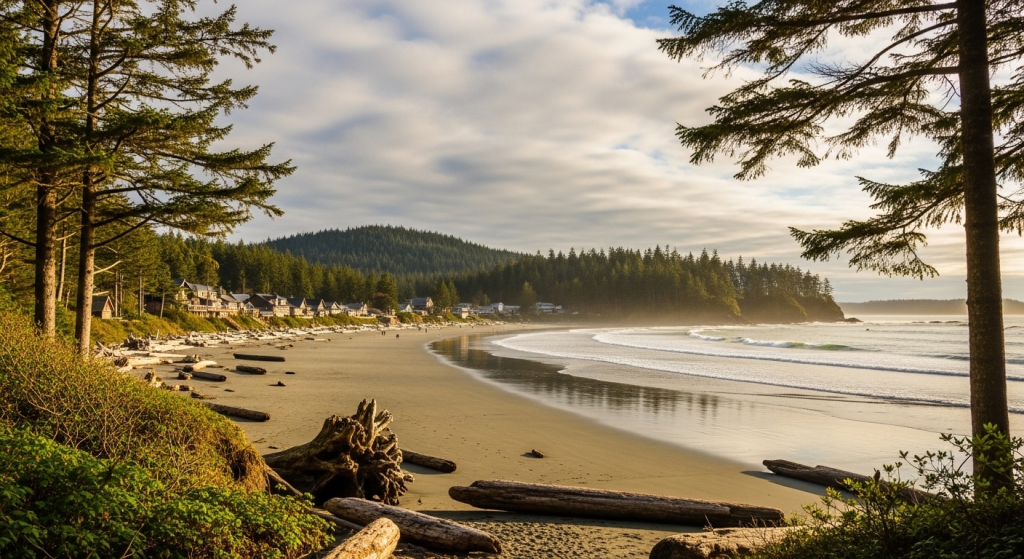
Rugged Pacific beauty meets wellness culture in Tofino, where ancient rainforests spill onto wild beaches and storm watching is a legitimate activity. This Vancouver Island destination attracts surfers, nature lovers, and anyone seeking the restorative power of dramatic coastal landscapes.
Long Beach and nearby coves offer world-class surfing, though the cold Pacific demands wetsuits year-round. When you’re not in the water, explore tide pools, hike through old-growth rainforest in Pacific Rim National Park, or soak in natural hot springs accessible by boat or seaplane. Wildlife watching includes whales, bears, and eagles.
Tofino’s wellness scene has grown sophisticated without losing its laid-back surf town roots. Yoga studios, spa services, and wellness retreats cater to travelers seeking rejuvenation. Restaurants showcase local ingredients—spot prawns, wild salmon, foraged mushrooms—often with Indigenous influences honoring the area’s Nuu-chah-nulth heritage.
Perfect for: Adventure wellness travelers who want outdoor activities combined with self-care Budget: Mid to luxury ($130-280/night for lodges or oceanfront resorts) Best time to visit: June-September for warmest weather, November-February for dramatic storm watching Breathtaking hike recommendation: Wild Pacific Trail in nearby Ucluelet offers stunning coastal views with easier access than some Tofino hikes
Apalachicola, Florida
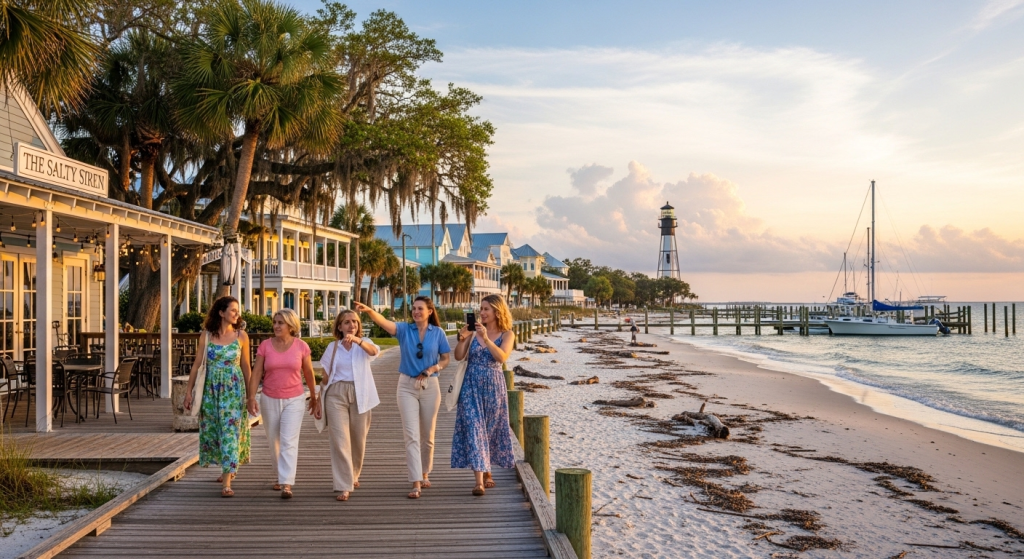
Old Florida survives in Apalachicola, a working fishing village on the Forgotten Coast where oyster boats still dominate the harbor and Victorian architecture lines brick streets. This is Florida before theme parks and high-rises, where the pace remains deliberately slow.
Apalachicola Bay produces 90% of Florida’s oysters, and the town celebrates this heritage enthusiastically. Oyster bars serve them raw, steamed, or fried—incredibly fresh and remarkably affordable. Beyond oysters, the seafood is exceptional: grouper, shrimp, scallops, all caught locally and served simply.
The town itself rewards wandering. Historic buildings house galleries, antique shops, and cafés. The riverfront park provides peaceful water views. Nearby St. George Island offers 28 miles of undeveloped beaches with sugar-white sand and calm Gulf waters—perfect for shell collecting and swimming.
Perfect for: Seafood lovers and history buffs seeking authentic Florida character Budget: Budget-friendly ($70-130/night for historic inns or beachside cottages) Best time to visit: April-May or October-November for comfortable temperatures without summer heat Local oyster bar you can’t miss: Up The Creek Raw Bar—casual waterfront spot where locals eat, with the freshest oysters you’ll ever taste
Planning Your Perfect Quiet Beach Town Escape
Choosing the Right Town for Your Travel Style
Solo travelers should prioritize destinations with established solo-friendly infrastructure and social opportunities. Las Terrenas, Puerto Viejo, and Hopkins offer easy ways to meet people through dive shops, yoga classes, and beach bars that host regular events. Safety matters more when traveling alone—towns like Cascais, Beaufort, and Rovinj provide excellent infrastructure, well-lit streets, and communities accustomed to welcoming solo visitors.
For girlfriends’ getaways, look for destinations balancing activities with relaxation. Tofino offers adventure (surfing, hiking) and pampering (spas, great restaurants). Cadaqués provides culture, beaches, and wine—perfect for groups with varied interests. Polperro works beautifully for literary-minded friends who’ll enjoy coastal walks and cozy pub evenings.
Romantic escapes benefit from destinations offering intimacy without isolation. Paraty’s island-hopping adventures, Búzios’s multiple beaches, and Galle’s historic charm provide shared experiences that create connection. Look for towns with excellent restaurants for long dinners and accommodations offering privacy.
Practical Planning Essentials
Budget Breakdown: Beyond accommodation, factor in meals ($30-80/day depending on destination), activities ($20-100/day), and transportation. Budget-friendly destinations like Hopkins, Puerto Viejo, and Hua Hin allow comfortable travel on $80-120/day total. Mid-range towns like Cascais, Rovinj, and Beaufort run $150-220/day. Luxury destinations like Tofino or Búzios may require $250-350/day for the full experience.
Timing Strategies: Shoulder seasons (just before and after peak) offer the sweet spot of good weather with fewer crowds and better prices. For Caribbean destinations, this means late April-May and November. European coastal towns shine in May-June and September. Research each destination’s specific climate patterns—some places like Tofino and Puerto Viejo don’t have traditional dry seasons.
Length of Stay: Quiet beach towns reward slower travel. Three to five days allows you to settle into the rhythm, discover local favorites, and actually relax rather than just checking boxes. Week-long stays let you explore surrounding areas, take day trips, and feel like a temporary local rather than a tourist rushing through.
These 20 quiet beach towns offer what you’re seeking now: authentic experiences, genuine rest, and the kind of travel that enriches rather than exhausts. They’re places where you can be yourself—whether that’s adventurous, contemplative, social, or solitary—without pretending to be someone you’re not.
Choose the destination that speaks to your current needs. Maybe it’s the dramatic Pacific beauty of Cannon Beach when you need contemplation. Perhaps it’s the social energy of Las Terrenas when you’re craving connection. Or the cultural richness of Hoi An when you want to learn and explore. Trust your instincts about what calls to you right now.
The best time to visit these places is before they transform from hidden gems into tourist hotspots. Several towns on this list are already being “discovered,” which means the window for experiencing their authentic character is now. Book that trip you’ve been postponing. Choose the beach town that matches your travel style. And discover why quiet coastal destinations create the most memorable escapes—because they give you space to actually experience the journey, not just photograph it.