yurt camping ideas and guide 2026

If you’ve ever wanted to explore nature but felt intimidated by traditional camping’s steep learning curve, or if you’re exhausted from convincing your family that “roughing it” can be fun, yurt camping is your game-changer.
No need to invest in expensive gear or master complicated tent setups. Whether you’re a beginner-friendly adventurer or a seasoned outdoor enthusiast looking to elevate your experience, yurt camping offers the perfect balance.
In this ultimate guide, you’ll discover everything you need to plan an epic yurt camping adventure in 2026—from understanding what makes yurts special to finding the best locations, packing essentials, and creating unforgettable memories with family and friends. Let’s dive into the scenic world of glamping done right.
What Is Yurt Camping? (Your Beginner-Friendly Introduction)

The Ancient Origins Meet Modern Comfort
Yurts originated over 3,000 years ago with Mongolian nomads who needed portable, weather-resistant shelters that could withstand harsh steppe conditions. These circular structures used a collapsible lattice framework covered with felt and animal skins—ingenious engineering that’s stood the test of time.
Today’s camping yurts honor that traditional design while incorporating modern materials and amenities. Instead of felt, you’ll find canvas or vinyl walls stretched over wooden lattice frames. The distinctive dome shape isn’t just aesthetically pleasing—it’s incredibly efficient at distributing wind pressure and shedding snow, making yurts stable in conditions that would flatten most tents.
Yurts are experiencing a renaissance among outdoor families and adventure seekers precisely because they solve a problem: how do you immerse yourself in nature without sacrificing basic comfort? When I first discovered yurt camping in Colorado, I was skeptical. But watching my then-five-year-old daughter’s face light up as she explored our circular “fort” while snow fell outside convinced me—this was camping reinvented.
Yurt vs. Traditional Camping vs. Cabin Rentals
Let’s break down how yurts stack up against alternatives. Traditional tent camping requires significant gear investment ($500-$2,000 for quality equipment), setup time (30-90 minutes), and skills that take seasons to develop. Cabin rentals offer comfort but often cost $150-$400 per night and lack that authentic outdoor connection.
Yurts hit the sweet spot. Ranging from 12 to 30 feet in diameter, they provide 113 to 706 square feet of space—enough for families of 4-8 people depending on size. Most yurt rentals cost $60-$150 per night, making them more affordable than cabins while delivering superior weather protection compared to tents. Setup time? Zero. You literally walk in and start your adventure.
The cost-effectiveness multiplies for groups. Split a $100 yurt rental among four adults, and you’re paying $25 per person for shelter that includes heating, real beds, and protection from wild weather. Compare that to individual hotel rooms at $120+ each.
Weather protection deserves emphasis. Yurts handle snow loads of 20-40 pounds per square foot and winds up to 100 mph when properly secured. I’ve weathered a spring blizzard in a Montana yurt while tent campers evacuated the park—we stayed cozy at 68 degrees inside while it was 22 degrees out.
What to Expect Inside a Typical Camping Yurt
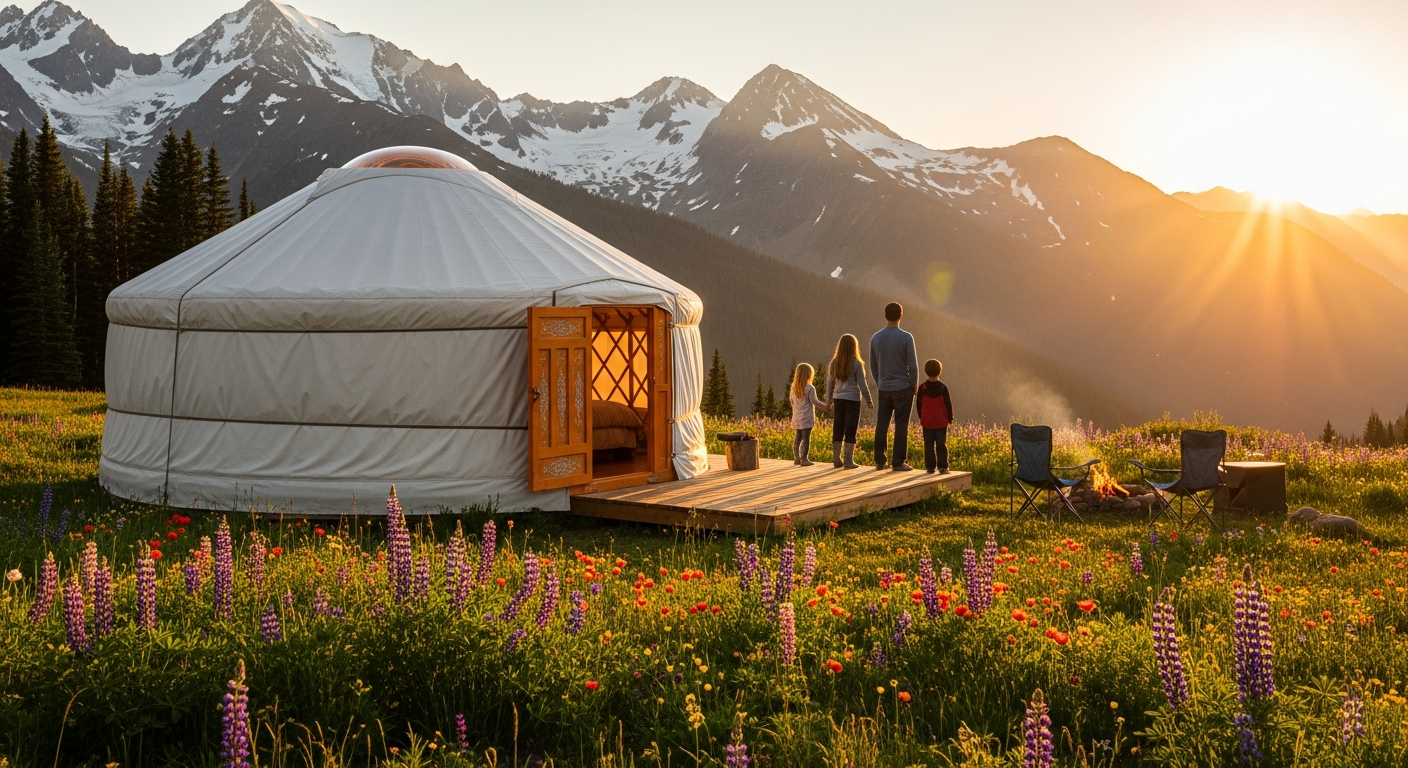
Step inside a yurt and you’ll immediately notice the unique circular floor plan. The lattice walls, called khana, create surprising structural strength while the dome skylight (often Lexan or acrylic) floods the space with natural light. Most camping yurts feature a center support ring that holds the roof rafters, creating that distinctive cathedral ceiling effect.
Standard amenities vary by location but typically include: bunk beds or platform beds (sleeping 4-8 people), a wood stove or propane heater, basic furniture like tables and benches, electrical outlets, and interior lighting. The circular layout eliminates wasted corner space—everything feels accessible and open.
Bathroom and kitchen situations differ significantly between locations. Some yurts offer fully plumbed bathrooms and kitchenettes inside, while others require you to use shared campground facilities nearby. Always check specific listings—this detail makes or breaks your comfort level, especially with kids or during winter trips.
The ambiance is what truly sets yurts apart. The circular space creates natural gathering points, the skylight provides epic stargazing opportunities, and the lattice walls breathe just enough to prevent condensation while maintaining insulation. It’s shelter that still feels connected to the outdoors.
Why Choose Yurt Camping in 2026? (Essential Benefits)

Perfect for Outdoor Newbies and Seasoned Adventurers Alike
Yurt camping eliminates the gear barrier that stops many families from trying outdoor adventures. You don’t need to research sleeping bags, compare tent ratings, or figure out camping stove fuel types. Show up with food and clothes—the yurt provides the rest.
This addresses one of outdoor recreation’s biggest safety concerns: inadequate shelter. A properly maintained yurt offers four walls, a locked door, and climate control. You’re protected from wildlife, weather extremes, and the anxiety that comes with sleeping in a flimsy tent when bears roam nearby.
For beginners, yurts provide a gentle introduction to sleeping in nature. You hear coyotes howling and wind in the pines, you wake to birdsong and sunrise—but you’re doing it from a real bed with a heater nearby. It’s the training wheels version of backcountry camping, building confidence without overwhelming newcomers.
Seasoned adventurers appreciate yurts differently. After decades of tent camping, I now choose yurts for shoulder-season trips when weather’s unpredictable or when I want to explore challenging terrain without returning to a cold, cramped tent. They’re base camps that let you push harder during the day because you know comfort awaits.
Family-Friendly Adventure Without the Hassle
Real beds transform family camping. Kids sleep better, which means parents sleep better, which means everyone enjoys the trip more. The typical yurt bunk bed setup accommodates 4-6 kids comfortably, with queen or double beds for adults.
Climate control matters enormously with children. Wood stoves in most yurts can heat the space to 65-75 degrees even when it’s below freezing outside. No more wrestling kids into sleeping bags or dealing with 3 AM “I’m cold” wake-ups. Summer yurts stay cooler than tents thanks to elevated floors and breathable walls.
The space factor cannot be overstated. In a 20-foot yurt (314 square feet), families can spread out gear, set up activity stations for rainy days, and give teenagers privacy zones. Multi-generational trips work because grandparents get real beds while grandkids explore the loft bunks.
Privacy options help too. Many families hang curtains or blankets to create sleeping zones, something impossible in traditional tents. This lets adults stay up reading while kids sleep, or teenagers decompress privately—small luxuries that prevent family friction during extended trips.
Year-Round Outdoor Access
Winter yurt camping opens up stunning, uncrowded wilderness experiences. I’ve snowshoed to remote yurts in January, arriving to find firewood stacked and a stove ready to light. Within 30 minutes, we transformed a frozen shelter into a 70-degree haven while snow accumulated outside. The contrast is magical.
Spring and fall shoulder seasons become accessible without weather worries. These are often the most scenic times—wildflower blooms, fall foliage, migrating wildlife—but also when weather turns unpredictable. Yurts let you enjoy these spectacular seasons without gambling on tent camping during potential rain, snow, or temperature swings.
Summer yurt camping solves the overheating problem that plagues tent camping. Elevated floors allow air circulation underneath, while opening the door and skylight creates cross-ventilation. Many yurts stay 10-15 degrees cooler than tents during peak afternoon heat.
Seasonal planning becomes easier because you’re not dependent on perfect weather. You can book trips months ahead with confidence, knowing that rain won’t ruin your weekend or cold snaps won’t send you home early.
Eco-Friendly and Sustainable Glamping
Yurts leave minimal environmental impact compared to permanent structures. They require no foundation beyond a simple platform, disturbing far less soil and vegetation than cabins. Most can be disassembled and relocated, making them temporary even when used for years.
Many yurt campgrounds operate on renewable energy. Solar panels power lights and outlets, composting toilets eliminate septic systems, and rainwater collection reduces infrastructure needs. You’re camping with modern amenities while maintaining a light environmental footprint.
The sustainable aspect extends to supporting conservation efforts. Many state and national parks use yurt rental revenue to fund trail maintenance, habitat restoration, and educational programs. Your $80 yurt rental directly supports the wild places you’re exploring.
Where to Find Epic Yurt Camping Locations

Top Yurt Camping Destinations Across North America
Mountain Retreats dominate the yurt camping landscape, and for good reason. Colorado offers over 30 yurt locations through its state park system, with gems like Ridgway State Park providing stunning San Juan Mountain views. Montana’s yurts access Glacier National Park’s periphery, delivering breathtaking alpine scenery. The Pacific Northwest showcases yurts in Washington’s Mount Rainier area and Oregon’s Crater Lake region, where old-growth forests meet volcanic landscapes.
Coastal Escapes prove yurts aren’t just for mountains. California’s state parks offer oceanfront yurts at locations like Half Moon Bay, where you fall asleep to crashing waves. Oregon’s coast features yurts at Cape Lookout and Beverly Beach, combining rugged shorelines with temperate rainforest. The East Coast provides fewer options but notable ones—Maryland’s Assateague Island yurts let you camp near wild horses and pristine beaches.
Desert Adventures showcase yurt camping’s versatility. Utah’s state parks place yurts near Moab’s red rock country and Bryce Canyon’s hoodoos. Arizona offers yurts in Sedona’s high desert and near the Grand Canyon’s North Rim. These locations provide access to stunning landscapes while offering shelter from desert temperature extremes—sweltering days and freezing nights.
Forest Hideaways in the Great Lakes region and Appalachian trails offer different appeal. Michigan’s Ludington State Park yurts nestle in dune forests near Lake Michigan. West Virginia’s yurts access the Monongahela National Forest’s remote wilderness. These locations excel for families seeking privacy and classic woodland camping experiences.
National and State Park Yurts provide the ultimate combination: world-class scenery with established infrastructure. While most national parks don’t offer yurts directly, many state parks adjacent to national parks do. This gives you national park access with state park affordability.
How to Search and Book Your Yurt Adventure
Recreation.gov is your primary resource for yurts in national forests and some state parks. The platform allows filtering by “yurt” under accommodation types, showing availability up to 12 months in advance. Individual state park systems—California, Oregon, Colorado, Utah—maintain their own booking sites with yurt-specific search functions.
Private glamping sites have exploded in popularity. Platforms like Hipcamp, Glamping Hub, and Airbnb now feature hundreds of privately-owned yurts, often with more amenities than public options. These typically cost more ($100-$300 per night) but offer unique locations and upgraded features like hot tubs or full kitchens.
Booking timeline matters enormously. Popular yurt locations book 6-12 months ahead, especially for summer weekends and holiday periods. I learned this the hard way when trying to book a Moab yurt for spring break—every location within 100 miles was full six months out. Book early or be flexible with dates.
Peak season versus off-season creates dramatic availability differences. Summer weekends book instantly, while winter weekdays often have last-minute availability. Shoulder seasons (April-May, September-October) offer the best balance—decent weather, good availability, and often lower rates.
Cancellation policies vary but typically require 48-72 hours notice for refunds. Some locations charge non-refundable booking fees ($8-$10). Read the fine print before confirming, especially for expensive private yurts where you might forfeit hundreds of dollars.
What to Look for When Choosing a Yurt Location
Proximity to activities should drive your decision. What’s the point of a mountain yurt if trails start five miles away? Look for locations with trailheads within walking distance, lakes or rivers nearby for paddling, and scenic viewpoints accessible without driving. The best yurts let you step outside and immediately start exploring.
Accessibility matters for your group composition. Drive-up yurts work for families with young kids or elderly members—you park 50 feet away and roll coolers directly to your door. Hike-in yurts (typically 0.5-2 miles) offer more solitude but require hauling gear. Be honest about your group’s physical abilities.
Amenities matching your needs prevents disappointment. If you need a bathroom at 2 AM, ensure your yurt has one or facilities are very close. Kitchen access determines whether you can cook elaborate meals or need to plan simpler camp cooking. Showers might be essential for some, optional for others.
Pet-friendly options exist but require specific searching. Many state parks allow dogs in certain yurts, while others prohibit them entirely. Private yurts often welcome pets but charge fees ($25-$50 per stay). Always confirm pet policies before booking.
Cell service and connectivity varies dramatically. Some yurts offer WiFi and full cellular coverage, while others provide complete digital detox. Decide which you want—I’ve found the best family bonding happens in yurts with zero cell service, but that doesn’t work for everyone.
Ultimate Yurt Camping Packing List for 2026

What’s Typically Provided (Don’t Pack These!)
Most yurts include the structural basics: bunk beds or sleeping platforms, a wood stove or propane heater with fuel, basic furniture (table, chairs, benches), interior lighting (battery or electric), and storage shelves or hooks. You won’t need to bring shelter, heating equipment, or furniture.
Bedding situations vary—this is critical to verify. Some locations provide mattresses only, expecting you to bring all bedding. Others include mattresses with waterproof covers plus blankets and pillows. A few luxury yurts provide full linens. Check your specific listing to avoid showing up without sleeping bags when none are provided.
Heating and cooling equipment is always included. Wood stoves come with fire-starting supplies (kindling, newspaper) and often a first load of firewood. Additional firewood may be available for purchase ($5-$10 per bundle) or free to gather nearby. Propane heaters in some yurts are already connected and ready to use.
Essential Items to Bring
Bedding & Comfort requirements depend on season and what’s provided. For winter trips, bring sleeping bags rated to at least 10 degrees below expected low temperatures—yurts can get cold overnight if the fire dies. Spring and fall need 20-30 degree bags. Summer requires only sheets or lightweight sleeping bags.
Pillows dramatically improve sleep quality. Even if you’re using sleeping bags, bring real pillows from home. Extra blankets matter for cold nights—the yurt might heat to 70 degrees at bedtime, but drop to 45 by morning if no one tends the fire. Mattress pads or foam toppers transform basic bunk mattresses into comfortable beds, especially for side sleepers or anyone with back issues.
Kitchen & Food packing depends entirely on yurt amenities. For yurts without kitchens, bring a camp stove, fuel, cookware (pot, pan, spatula), utensils, plates, bowls, cups, and dish soap. A good cooler with ice keeps perishables fresh for 3-4 days. Food storage containers must be bear-safe in many locations—hard-sided coolers or provided bear boxes.
Don’t forget coffee supplies for those scenic morning rituals. Watching sunrise through a yurt’s skylight while sipping hot coffee ranks among camping’s peak experiences. Bring a French press or pour-over setup, your favorite beans, and a kettle.
Clothing & Layers follow the outdoor principle: prepare for conditions 20 degrees colder and wetter than forecasted. Even summer mountain nights can drop to 40 degrees. Pack base layers, insulating mid-layers (fleece or down), waterproof outer layers, and extra warm socks. Yurts can be drafty—the circular design creates air currents that feel cooler than the actual temperature.
Indoor slippers or camp shoes keep the yurt clean and comfortable. Wet, muddy boots stay outside; clean shoes come inside. This simple habit prevents tracked-in dirt and keeps sleeping areas pleasant.
Lighting & Power needs vary by yurt. Bring headlamps for everyone (hands-free lighting wins), a lantern for ambient light during evening activities, and backup batteries. Portable chargers and power banks keep devices alive when electrical outlets aren’t available. Some families bring candles or battery-powered string lights to create cozy atmosphere—just never leave candles unattended.
Nice-to-Have Items for Enhanced Comfort
A portable Bluetooth speaker transforms evenings. We queue up acoustic playlists that complement crackling fire sounds—it sets perfect ambiance without overwhelming nature’s soundtrack. Keep volume moderate; you’re still camping.
Board games and entertainment matter for rainy days or long winter evenings. Card games, travel board games, and books provide screen-free fun. Families with young kids bring coloring supplies and activity books.
Hammocks extend your living space outdoors. String one between trees near your yurt for afternoon reading or napping. Binoculars enhance wildlife watching—elk, deer, birds, and other creatures appear regularly near yurts.
Camera gear captures breathtaking moments you’ll treasure. The unique circular architecture, skylight framing stars, and surrounding landscapes provide endless photography opportunities. Bring extra batteries—cold weather drains them fast.
String lights strung inside create magical evening ambiance, especially for romantic getaways or special occasions. Privacy curtains or room dividers help families with teenagers or multi-generational groups establish personal space in the circular layout.
Planning Your Yurt Camping Adventure (Activities & Itinerary Ideas)

Outdoor Activities Near Your Yurt
Daytime Adventures should match your group’s abilities and interests. Most yurt locations offer hiking trails ranging from easy nature walks (1-2 miles, minimal elevation gain) to challenging