15 Must Visit Places in Bali Indonesia: Temples, Beaches & Hidden Gems

Every “ultimate Bali guide” lists 47 places. You don’t have time for 47 places. The real pain point isn’t finding destinations—it’s figuring out which ones actually deserve your limited time and which ones you can skip without regret.
This guide is built differently. Instead of overwhelming you with 30+ destinations, you’re getting a curated shortlist organized by region so you can build your perfect itinerary in an afternoon.
You’ll know exactly which temples are worth visiting and which ones blur together by day three. You’ll understand the real trade-offs: yes, Tegallalang rice terraces are touristy, but here’s the exact time to visit so you’ll mostly have them to yourself.
The best part? This guide includes the honest stuff. What’s genuinely worth the hype. What to skip. How to do famous spots right so you actually enjoy them instead of resenting the crowds. Because Bali’s magic isn’t in checking boxes—it’s in timing, strategy, and knowing when to follow crowds and when to go the opposite direction.
Best Places to Visit in Bali: Cultural & Spiritual Sites

Uluwatu Temple: Clifftop Drama Done Right
Uluwatu Temple sits 70 meters above the Indian Ocean on a limestone cliff so dramatic it feels almost impossible. The temple itself is stunning, but the real draw is the Kecak fire dance performance at 6 PM (7 PM in high season). Shirtless men in checkered sarongs sit in concentric circles, chanting “cak cak cak” while one performer dances with fire, telling the Ramayana story.
Arrive by 5 PM for good seats. Book tickets in advance during July-August and December-January. Rent a sarong for 20,000 IDR if needed—temple dress code requires covered shoulders and knees. The monkeys here are clever thieves: don’t bring loose bags, sunglasses, or dangling jewelry.
Here’s the insider move: skip the sunset performance and visit at 3 PM instead. You’ll have the temple mostly to yourself, the light is still beautiful, and you’ll avoid shoulder-to-shoulder crowds. Entrance is 30,000 IDR; the performance adds 100,000 IDR. Location: southern peninsula, about 45 minutes from Seminyak.
Tirta Empul: Sacred Spring Ritual You Can Join
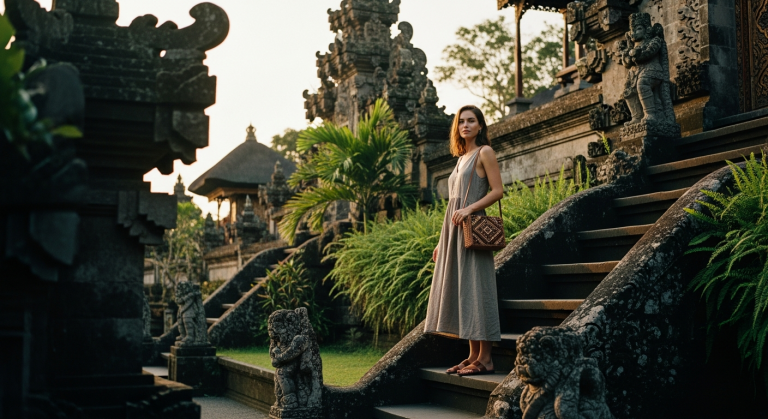
Unlike most temples where you’re a spectator, Tirta Empul invites you to participate in actual purification rituals in sacred spring-fed pools. Located 30 minutes north of Ubud in Tampaksiring, this temple has been a pilgrimage site for centuries. Locals still bathe in the holy springs, and visitors can join them with proper respect.
The water is cold, clear, and genuinely refreshing. You’ll move through a series of pools, each connected to a different intention—purification, healing, fertility.
A temple guide will explain the protocol. Bring modest swimwear and a towel. One critical cultural note: if you’re menstruating, you should observe but not enter the pools. This is a longstanding cultural protocol based on Balinese Hindu beliefs. Respecting it matters.
Arrive by 8 AM before tour buses show up. Entrance is 30,000 IDR. The experience feels genuinely spiritual—you’re not just photographing a place, you’re participating in something real.
Tanah Lot: Yes, It’s Touristy—But Go at Sunrise
Tanah Lot is the iconic sea temple, perched on a rock formation jutting from the ocean on Bali’s western coast. The issue isn’t the temple—it’s the timing. If you visit at sunset like everyone else, you’ll be standing shoulder-to-shoulder with 500 people.
Here’s the insider move: go at sunrise instead. Show up at 6 AM and you’ll have maybe 20 people on the beach. The light is softer, the temple silhouette is just as dramatic, and you’ll actually be able to breathe. Check tide times before you go—visit at low tide to walk out to the temple base. Entrance is 60,000 IDR. It’s 30-40 minutes from Seminyak or Canggu, making it an easy morning trip.
Bali Travel Ideas: Breathtaking Natural Landscapes

Tegallalang vs. Jatiluwih Rice Terraces: Which One?
Both are stunning and worth visiting, but they’re completely different experiences.
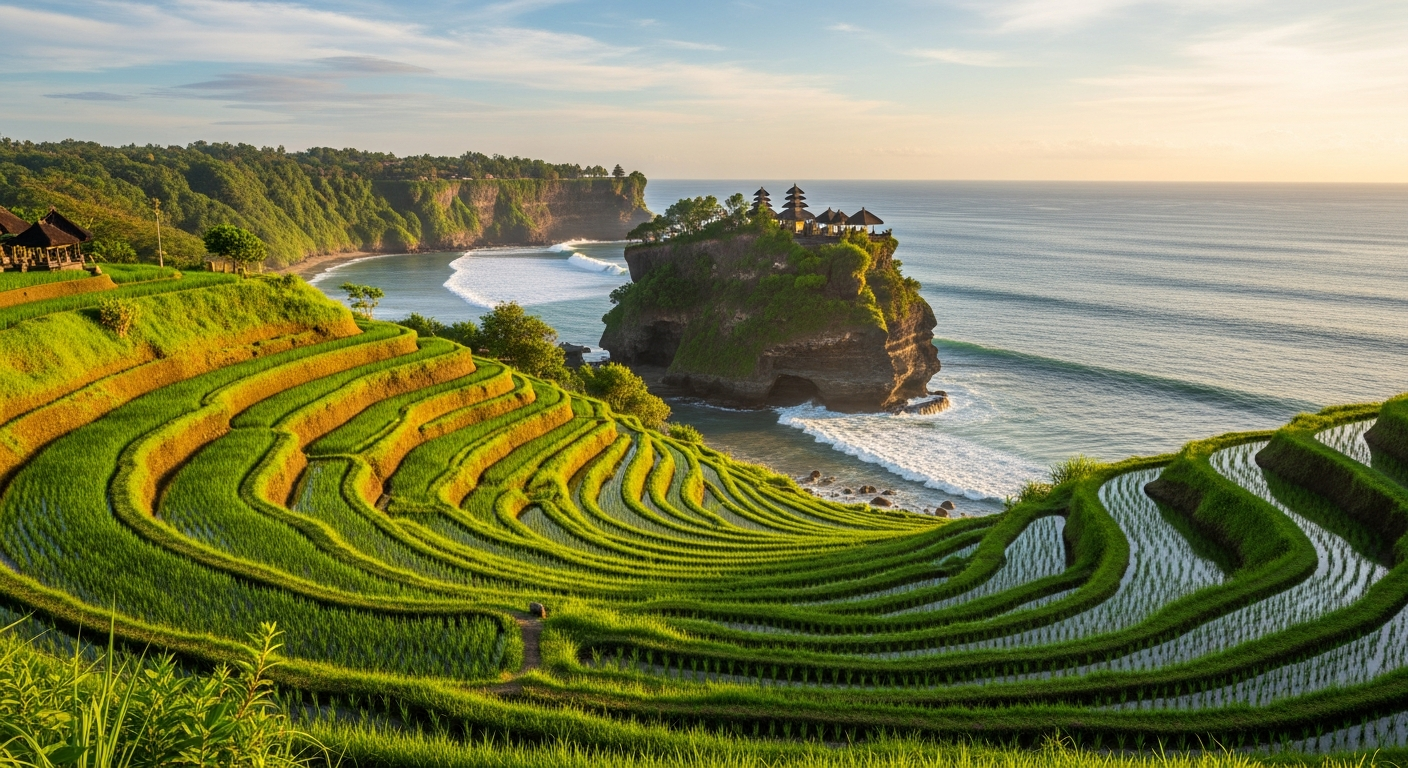
Tegallalang Rice Terraces sit 15 minutes north of Ubud and are the most famous rice terraces in Bali. They’re genuinely beautiful—emerald green during growing season (March-June), golden during harvest (August-October). They’re crowded from 9 AM to 4 PM with tour groups.
The solution: go at sunrise (6:30 AM). You’ll have the terraces almost entirely to yourself. The light hits the water in the paddies perfectly. Entrance is free if you just walk through; swing operators charge 100,000 IDR for photos. Avoid the swings if you want an authentic experience—they’re purely for Instagram.
Jatiluwih Rice Terraces are 90 minutes northwest of Ubud and are a UNESCO World Heritage site. The terraces are vaster and more authentically agricultural—you’re looking at working rice paddies, not tourist infrastructure. Far fewer visitors make it out here. The trade-off is the drive time and the need for a private driver or scooter. Entry is 40,000 IDR. Go here if you have 10+ days and want to experience rice terraces the way locals do.
For most travelers with limited time, Tegallalang at sunrise is the right choice.
Sekumpul Waterfall: Bali’s Most Unforgettable Cascade
Sekumpul is a cluster of six to seven waterfalls in north Bali, with twin main falls cascading down moss-covered cliffs into emerald pools. It’s 2.5 hours from Ubud—worth every minute of the drive.
Reality check: there are 300+ steep steps down to the main falls, and the path gets slippery. Wear proper hiking shoes. The best time to visit is wet season (November-March) when water flow is at maximum.
Hire a local guide at the entrance for 100,000-150,000 IDR—they know the best viewpoints and keep you safe on slippery sections.
This is one of the few places in Bali where you’ll feel genuinely off the beaten path. You’ll share the falls with maybe 30 people on a busy day versus hundreds at famous temples. Bring a waterproof bag for your phone and camera.
Mount Batur Sunrise Trek: Volcanic Views Worth the 3 AM Wake-Up
Mount Batur is an active volcano in northeast Bali, 1,717 meters high. Wake up at 3 AM, hike for two hours in the dark with a headlamp, reach the summit just as the sun rises, and watch the sky turn pink and gold above the clouds. Breakfast is cooked in volcanic steam vents on the summit.
You must book with a registered guide. Tours cost 30-50 USD and include hotel pickup, guide, breakfast, and transportation. Leave your hotel around 3:30 AM and summit by 6 AM.
The hike is moderate, not technical, but you’re climbing at altitude in the dark. Wear layers—it’s cold at 4 AM at elevation. Bring plenty of water and wear good hiking shoes.
The sunrise is genuinely stunning. Standing on an active volcano watching the day break is unforgettable. Book through your hotel the day before.
Bali Destination Guide: Beach & Coastal Experiences

Seminyak vs. Canggu: Choosing Your Beach Base
Both are coastal towns in southern Bali, 25 minutes apart by car. Both have great beaches, restaurants, and nightlife. They’re just aimed at different travelers.
Seminyak is more upscale and polished. Beach clubs like Potato Head and Ku De Ta are iconic sunset spots with infinity pools overlooking the ocean.
The restaurant scene is excellent. Best for: couples, travelers who want nice dinners and sunset cocktails. Hotels range from 80-150 USD/night for mid-range boutique options to 300+ USD for luxury resorts.
Canggu is younger and more laid-back. It’s become digital nomad central with coworking spaces and coffee shops. The surf breaks are better here. Accommodation is slightly cheaper (60-120 USD/night for comparable quality). Best for: solo travelers, groups of friends, budget-conscious travelers, surfers.
If you want to experience both, spend 3-4 nights in Canggu, then move to Seminyak for your last beach days. The drive is only 25 minutes, so you can visit the other for a day trip without relocating.
Uluwatu’s Hidden Beach Caves and Clifftop Views
Uluwatu is a clifftop area south of Bali with dramatic ocean views and several hidden beaches accessible through cave openings.
Padang Padang Beach is the most famous—a small cove featured in Eat Pray Love, surrounded by cliffs and turquoise water. Go early (8-9 AM) or late (4 PM onward) to avoid crowds. Entrance is 20,000 IDR. Bring water shoes because the rocks are sharp.
Bingin Beach is nearby and less crowded. It’s a clifftop area with warungs perched on the edge, offering sunset views and a genuinely laid-back vibe.
There are 200+ stairs down to the beach, but once there, you’ll find local surfers, calm water, and excellent sunset spots. Warungs serve fresh seafood and cold beer (60,000-100,000 IDR for mains).
Spend a day in Uluwatu if you’re based in Seminyak (45 minutes away). Go early to Padang Padang, spend the afternoon at Bingin, and catch sunset from a clifftop warung.
Nusa Penida Day Trip: Kelingking Beach and Beyond
Nusa Penida is an island 45 minutes by fast boat from Sanur on Bali’s east coast. It’s famous for Kelingking Beach, which has a distinctive T-Rex-shaped cliff that’s absolutely stunning in photos.
The cliff is the main attraction, not the beach itself. The hike down to the actual beach is legitimately dangerous—near-vertical with loose rocks. Most visitors just photograph the cliff from the viewpoint above, which is perfectly fine.
A full Nusa Penida day trip includes Kelingking Beach, Angel’s Billabong (a natural infinity pool in the rocks), and Broken Beach (a collapsed cave with an arch opening to the ocean).
You can do all three in a 90-minute loop by scooter or car. All-inclusive day tours from Sanur cost 50-70 USD and include boat transport, guide, and vehicle.
Book a tour if you want the stress-free experience. Go independent if you’re comfortable with logistics and want to save money. Bring water, sunscreen, and good shoes.
Itinerary Bali: Ubud & Cultural Heartland Essentials

Sacred Monkey Forest Sanctuary: Timing is Everything
Ubud’s Sacred Monkey Forest is 12+ hectares of temple ruins and jungle home to 700+ long-tailed macaques. It’s iconic and worth visiting, but the experience completely changes based on timing.
Visit at opening time (8:30 AM) and the monkeys are calmer, crowds are thin, and you’ll actually enjoy walking through the forest. Visit at 11 AM and you’re navigating tour groups while monkeys are more aggressive.
Critical rules: don’t bring sunglasses, dangling jewelry, or loose bags. Monkeys are clever—they will snatch these things. Don’t carry food.
Don’t make direct eye contact with dominant males. Entry is 80,000 IDR. Budget 90 minutes to walk through the entire sanctuary and temple ruins.
This is one of the few places in Ubud where you’ll experience wildlife integrated with spiritual practice. Just go early and respect their space.
Ubud Art Markets and Traditional Dance Performances
Ubud Art Market is the central marketplace for textiles, baskets, sarongs, and crafts. It’s touristy, but locals actually shop here, and the quality is genuinely good. Go early (7-8 AM) before tour buses arrive, or go at evening when vendors are motivated to close sales.
Start negotiations at 40% of asking price and work up from there. Most vendors expect haggling and will come down 20-30% from the initial quote.
For traditional dance, book a Legong Dance performance at Ubud Palace (7:30 PM nightly, 100,000 IDR). Arrive 30 minutes early for good seats.
Legong is one of Bali’s most refined classical dances, with intricate hand movements and elaborate costumes. The palace itself is also worth exploring during the day (free entry, respectful dress required).
Combine a morning at the art market with an evening dance performance and you’ve covered Ubud’s cultural essentials. Budget about 4-5 hours for the market and 90 minutes for the performance.
Campuhan Ridge Walk: Ubud’s Secret Escape
This 2-kilometer walking trail starts just outside central Ubud and takes you through jungle, grasslands, and rice paddies. It’s completely free and the perfect escape from Ubud’s traffic and crowds. Start at the Warwick Ibah Hotel entrance and head down into the valley. The trail is shaded, mostly flat, and takes 45-60 minutes round trip.
Go at sunrise (start 6 AM) for the best light and fewest people. You’ll share the trail with maybe 10-15 early risers instead of 200+ during peak hours. Bring water, wear good shoes, and watch for the occasional scooter on the trail.
This walk is an insider move that most guidebooks miss. It gives you the Ubud experience—nature, culture, quiet—without tourist infrastructure.
Traveling to Bali: Off-the-Beaten-Path Gems

North Bali: Munduk and Lovina—A Completely Different Island
Most travelers never leave southern Bali. North Bali is where you discover a different side of the island—one that feels less touristy and more authentically Balinese. Munduk is a mountain village surrounded by waterfalls, coffee plantations, and mist. It’s 2.5 hours from Ubud and feels like stepping into a different world.
Stay in small guesthouses or boutique hotels (30-80 USD/night) and spend your days hiking to waterfalls, visiting local coffee farms, and exploring rice terraces. Munduk Waterfall is a 15-minute walk from the village center. Twin Lakes are nearby for swimming. The pace here is slow, the air is cool, and you’ll see far more locals than tourists.
Lovina is on the north coast—black sand beaches, dolphin watching at sunrise, calm water for snorkeling. It’s less developed than Seminyak and has a more authentic fishing village vibe. Dolphin watching tours involve crowded boats, and dolphins don’t always cooperate. If you’re anti-tourist-boat experience, skip the dolphins and just enjoy the quiet beach and fresh seafood.
These areas are perfect if you have 10+ days. If you only have seven days, you’ll need to choose between north Bali and the beach scene. Most travelers choose the beach, but know that you’re missing something special.
Sidemen Valley: Rice Terraces Without the Crowds
Sidemen is east Bali’s answer to Tegallalang—working rice terraces, traditional weaving villages, mountain views, and virtually no tourists. It’s 90 minutes from Ubud, and the drive alone tells you why most travelers skip it. But that’s exactly why it’s special.
Stay overnight in small guesthouses or boutique hotels (30-70 USD/night) with terrace views. Spend your days walking through rice paddies, visiting local weaving workshops where you can watch traditional techniques, and exploring surrounding villages. Mount Agung is visible in the distance on clear days. The pace is slow, the food is excellent, and you’ll have genuine interactions with locals instead of transactional tourist encounters.
This is where you go if you want to experience authentic Bali—the agricultural rhythm, the traditional crafts, the village culture. The inconvenience is what keeps it real.
Amed: Diving and Snorkeling on the Quiet Coast
Amed is on Bali’s east coast and is a low-key diving and snorkeling hub. The main draw is the USAT Liberty shipwreck in Tulamben—a World War II cargo ship that sank in 1942 and is now a thriving artificial reef. You can snorkel or shore dive without taking a boat. Wade into the water and you’re on the wreck within 10 minutes.
The vibe here is sleepy and authentic. There’s minimal nightlife, minimal tourism infrastructure, and maximum peace. You’ll find divers and snorkelers, fresh seafood restaurants, and locals who actually live here. Hotels are budget-friendly (40-80 USD/night). It’s 2.5 hours from Ubud and worlds away from Seminyak’s scene.
Come here if you want to dive, snorkel, eat fresh seafood, and reset. This is where experienced travelers go when they want to return to the real island.
Bali Ideas: Practical Planning & Transportation Tips

Scooter Rental vs. Private Driver: The Real Trade-Offs
Scooter rental costs 5-7 USD per day and gives you total freedom. You can go wherever you want, whenever you want. The reality: Bali traffic is chaotic, roads in Ubud and Seminyak are congested, and you legally need an International Driving Permit (rarely checked but your insurance won’t cover accidents without it). If you’re a confident rider comfortable with chaotic traffic, scooters are great. If you’re nervous, skip it.
Private drivers cost 50-60 USD for 10 hours of driving. They know the routes, handle parking, and you can relax instead of navigating. This is perfect for day trips to multiple sites or anyone who doesn’t want to drive. Many hotels can arrange a driver for you.
Grab and Gojek (ride-hailing apps) work well in Seminyak, Canggu, and Ubud for short trips (3-8 USD for most rides), but they’re less reliable in remote areas. The real strategy: use a mix. Use Grab/Gojek in cities, hire a private driver for day trips, and only rent a scooter if you’re confident and want to explore remote areas.
The Three-Region Strategy: Where to Base Yourself
Instead of trying to see all of Bali from one location, split your trip into three bases. This minimizes packing and unpacking while maximizing experiences.
Region One: Ubud (3-4 nights) is your cultural and natural base. You’re close to rice terraces, temples, waterfalls, and the Monkey Forest. Everything is within 30-90 minutes. This is where you spend your days exploring and your evenings at traditional dance performances and local restaurants.
Region Two: Beach Base (3-4 nights) is either Seminyak or Canggu depending on your vibe. You’re swimming, surfing, eating at beach clubs, and catching sunsets. This is where you relax after the intensity of temple-hopping and waterfall hiking.
Region Three: Optional Add-On (2 nights) is north or east Bali—Munduk, Amed, or Sidemen. Only do this if you have 10+ days. It’s worth it, but the drive time means you’re sacrificing one of your other bases to fit it in.
This strategy works because you’re never more than 90 minutes from your next destination, and you have time to actually settle into each place instead of constantly moving. Most travelers with 7-10 days should do Ubud plus one beach base. Travelers with 12+ days can add a third region.
Common Mistakes and How to Avoid Them
Underestimating drive times is the number one mistake. Google Maps doesn’t account for Bali traffic during peak hours. Add 30-50% to estimated times if you’re traveling between 7-9 AM or 4-7 PM. What Google says is 45 minutes might actually be 75 minutes.
Temple-hopping burnout is real. After visiting three or four temples, they start blending together. Choose your temples strategically—maybe Uluwatu, Tanah Lot, and one smaller temple. Skip the rest. Quality over quantity.
Visiting Tanah Lot only at sunset is a mistake. It’s a mob scene. Sunrise or mid-morning are infinitely better experiences. Same applies to Tegallalang—sunrise changes everything.
Missing north Bali entirely is a mistake if you have more than seven days. Most itineraries skip it, but the waterfalls and mountains are genuinely unforgettable. If you only have seven days, skip it. If you have ten, make the drive.
Conclusion: Building Your Perfect Bali Itinerary

The single most important takeaway is this: Bali rewards strategic planning. You don’t need to see everything—you just need to see the right things at the right times.
The places you’ve read about here—the temples, the rice terraces, the waterfalls, the beaches—they deserve their reputation. They’re stunning. They’re worth visiting. But they’re also crowded, touristy, and exhausting if you approach them wrong. Visit Tanah Lot at sunrise instead of sunset. Visit Tegallalang at 6:30 AM instead of noon. Visit Tirta Empul early, before the tour buses. These timing adjustments transform the experience from rushed and frustrating to genuinely magical.
Build your itinerary around two to three bases (Ubud, a beach town, and optionally a northern or eastern region). This prevents the constant packing and unpacking that saps energy, and it gives you time to actually settle into each place. Plan your days by region—all your rice terrace and waterfall visits while you’re in Ubud, all your beach time while you’re in Canggu or Seminyak. This minimizes driving and maximizes actual experience.
Book your Ubud and beach hotels 2-3 months in advance if you’re traveling during high season (July-August, December-January). Book your transportation and tours a day or two ahead, not months ahead—things change, and you want flexibility. Leave room for serendipity. Some of Bali’s most unforgettable moments happen when you follow a local’s recommendation to a hidden warung, stumble on a village ceremony, or take a wrong turn and discover something unexpected.
Your next move: open Google Maps and pin your must-sees from this guide. Choose 2-3 cultural sites, 2-3 natural landscapes, and 2-3 beach experiences based on what actually speaks to you. Don’t choose what you think you should see—choose what genuinely excites you. Then organize those pins by region. That’s your itinerary. That’s your trip. That’s how you avoid the overwhelming feeling of too many options and actually build something you’ll love.