7 best things to do in apopka florida

I’ll never forget the moment I realized I’d been doing Florida wrong. After three Orlando trips spent entirely within theme park gates, I accidentally took a wrong turn off US-441 and found myself staring at the clearest spring water I’d ever seen—68 degrees year-round, so transparent I could count individual fish from 20 feet above.
No lines. No $15 parking. No screaming crowds. Just pure, Old Florida wilderness that looked exactly like it did when Seminoles paddled these same waters centuries ago.
This was Apopka, and I’d driven past it a dozen times without knowing what I was missing.
Just 20 minutes northwest of Orlando’s theme park chaos, Apopka offers something most Florida visitors never experience—authentic Old Florida without the crowds, tourist traps, or inflated prices.
While everyone else stands in line for overpriced attractions, you could be kayaking crystal-clear springs, spotting wild alligators from observation towers, or floating down pristine natural waterways that look like they haven’t changed since the Pleistocene epoch.
If you’re tired of cookie-cutter Florida vacations and want to maximize your limited time with experiences that actually feel real (and won’t drain your wallet), Apopka is your secret weapon.
This complete guide reveals the ultimate activities that locals actually do—the hidden gems that deliver unforgettable memories without the Orlando price tag.
Most of these experiences cost under $10, several are completely free, and all of them will show you a side of Florida that exists nowhere near the Mouse’s kingdom.
The best part? You can easily combine Apopka’s natural wonders with your Orlando trip without adding significant drive time. But fair warning: once you experience swimming in a natural spring or paddling past a wild manatee, those manufactured attractions start feeling pretty hollow.
Why Apopka Should Be on Your Florida Itinerary (And Why You’ve Never Heard of It)

The “Indoor Foliage Capital of the World” Has an Outdoor Secret
Apopka earned its nickname honestly—this working-class city of about 55,000 grows more indoor foliage plants than anywhere else on Earth. Drive through certain neighborhoods and you’ll see greenhouse after greenhouse stretching toward the horizon, growing the ferns and tropicals that end up in hotel lobbies from Miami to Manhattan. But here’s what the tourism boards don’t tell you: while Apopka was busy becoming an agricultural powerhouse, it accidentally preserved something far more valuable than ferns.
The city sits at the convergence of multiple spring-fed waterways and borders the massive Lake Apopka ecosystem. Because it never developed into a tourism destination, these natural areas escaped the concrete-and-commercialization fate that befell so many Florida springs. There are no gift shops blocking spring access. No mandatory “experiences” you have to purchase. Just raw nature with basic facilities—exactly what outdoor enthusiasts actually want.
What Makes Apopka Different from Typical Florida Destinations
The difference hits you immediately: real people actually live here. Unlike tourist towns where every business exists solely to extract money from visitors, Apopka has authentic local restaurants, neighborhood parks where families gather on weekends, and a downtown that serves residents first, tourists second. This creates an entirely different vibe—you’re experiencing Florida life, not Florida theater.
Budget-wise, the contrast is stunning. Kelly Park charges $5 for non-residents to spend an entire day swimming in spring water so clear it seems unreal. Compare that to any Orlando water park charging $80+ for chemically-treated pools. Lake Apopka Wildlife Drive? Completely free, and you’ll see more wildlife in two hours than most people see in a lifetime of zoo visits. Even the paid experiences like kayak rentals run about half what you’d pay at tourist-heavy locations.
The ecological authenticity matters too. These aren’t manicured, sanitized nature experiences. You’re entering actual wild Florida ecosystems—the same cypress swamps, spring runs, and wetlands that covered this peninsula before air conditioning made it habitable. Alligators are real and wild. Springs flow from actual aquifer sources, not artificial pumps. The bird species you’ll spot are genuinely rare, not imported attractions.
Best Time to Visit and How Much Time You’ll Need
Winter (November through March) offers the perfect Apopka experience—daytime temperatures in the comfortable 70s, minimal rain, and those crystal-clear springs feel absolutely magical when the air temperature drops. The 68-72 degree spring water that feels refreshing in summer becomes downright therapeutic in January. This is also when manatees migrate into the warmer spring waters, dramatically increasing your chances of spotting these gentle giants.
Summer (June through September) brings two advantages: significantly fewer crowds and rock-bottom accommodation prices if you’re staying overnight. The trade-off? Afternoon thunderstorms are almost guaranteed, and that spring water won’t provide as much temperature relief when it’s 95 degrees outside. But here’s the insider secret—summer mornings before 11 AM are absolutely spectacular, with wildlife most active and temperatures still pleasant.
Time allocation requires honest planning. You could technically hit one major activity (Kelly Park or Wekiwa Springs) in a half-day, but you’d be cheating yourself. A full day minimum lets you properly experience one major natural area plus explore downtown. Two to three days is the sweet spot—enough time to kayak one day, swim another, and explore the wildlife drive without feeling rushed. Most visitors combine Apopka activities with an Orlando trip, spending mornings at theme parks (when lines are shortest) and afternoons in Apopka’s natural areas. Just don’t make the mistake I did on my first visit: trying to cram Kelly Park, Wekiwa Springs, and the Wildlife Drive into one day. You’ll spend more time driving than experiencing.
1. Kelly Park/Rock Springs Run — The Most Stunning Natural Spring You’ve Never Seen

What Makes This Hidden Gem Absolutely Perfect
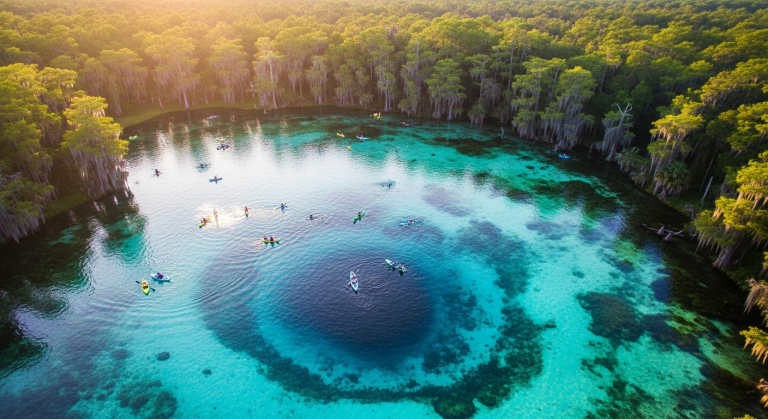
The first time you see Rock Springs, your brain struggles to process what you’re looking at. The water is so absurdly clear that it creates an optical illusion—you think the spring is maybe five feet deep until you see a diver disappear into the 80-foot cavern system. The spring pumps 26,000 gallons per minute of perfectly transparent, 68-degree water that flows into Rock Springs Run, creating what might be the world’s most perfect natural lazy river.
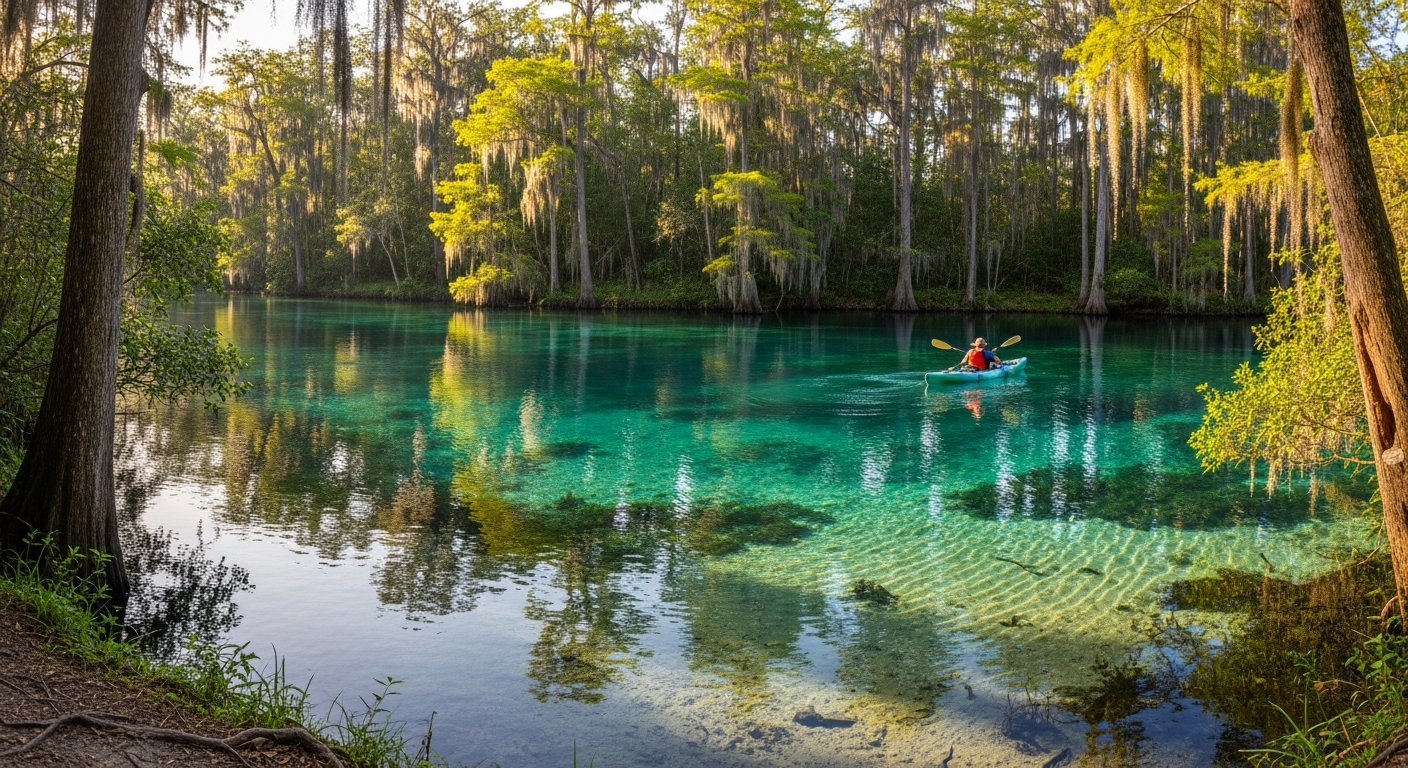
Unlike artificial lazy rivers with their chlorine smell and concrete channels, Rock Springs Run meanders through genuine Florida wilderness for about a mile before reaching the takeout point. You’ll float past cypress trees draped in Spanish moss, spot turtles sunning on logs, and drift under a canopy so thick it creates cathedral-like light effects. The current does all the work—no paddling required, just pure relaxation punctuated by the occasional “did you see that alligator?” moment. (They’re there, but they’re far more interested in fish than tubers.)
The swimming area around the spring itself offers something even better than the float: the sensation of swimming in liquid glass. Bring goggles and you can watch fish navigating the underwater vegetation with perfect clarity. The spring stays exactly 68 degrees whether it’s July or January, which means it’s refreshing in summer and surprisingly comfortable in winter once you acclimate.
Insider Tips for Maximizing Your Visit
Here’s the hard truth that ruins many people’s Kelly Park plans: the park has a strict capacity limit of 600 people, and once it’s full, they close the gates. Period. On summer weekends and any holiday, the park often reaches capacity by 9:30 AM and doesn’t reopen until people start leaving in late afternoon. I learned this the hard way after driving 45 minutes only to find a “Park Full” sign and a parking lot full of disappointed families.
The solution is brutally simple: arrive before the gates open at 8 AM (or 9 AM in winter). Yes, it’s early. Yes, you’ll have to drag yourself out of bed on vacation. But you’ll have the spring practically to yourself for the first hour, get the best picnic pavilion spots, and guarantee entry. I now set my alarm for 7 AM on Kelly Park days, stop at a local drive-through for breakfast, and I’m waiting at the gates when they open. The early morning light on the spring is absolutely magical for photography too.
Tube rental logistics: the park rents tubes for $5.50, but you can bring your own for free. I bought a basic tube at Walmart for $8 and saved money by my second visit. If you’re floating with kids, bring a few tubes and tie them together with rope—creates a family raft situation that keeps everyone together. The float takes about 30-45 minutes depending on water levels, and a tram runs continuously to shuttle you back to the start, so you can float multiple times.
Pack smart: waterproof phone cases are essential for photos, and those cheap ones from Amazon actually work fine. Bring reef-safe sunscreen (protect the spring ecosystem), water shoes (occasional sharp rocks), and a small cooler with snacks. The park has grills and picnic areas, making it perfect for an all-day hangout. Most importantly, bring cash for the entry fee—they don’t always accept cards.
Real Talk: What It Costs and What to Expect
Entry fees are refreshingly reasonable: $3 per vehicle for Orange County residents, $5 for non-residents. That’s per vehicle, not per person—pile six people in your car and you’re paying less than a dollar each. Parking is included, though spots fill up quickly (see the “arrive early” advice above).
Facilities are basic but well-maintained: clean restrooms, outdoor showers, picnic pavilions with grills, and that tram service for the lazy river. What you won’t find: food concessions, gift shops, or equipment rentals beyond tubes. This is intentional—the park prioritizes nature over commerce. Bring everything you need for the day.
Accessibility considerations: the spring area and some picnic spots are relatively accessible, but the natural lazy river requires getting in and out of a tube, navigating uneven ground, and managing a current. It’s not suitable for everyone, and the park is honest about these limitations. If someone in your group has mobility challenges, focus on the main spring swimming area, which offers easier access.
The crowd situation varies dramatically by timing. Weekday mornings, especially in fall or spring? You might share the spring with 20 people. Saturday afternoon in July? It’s packed shoulder-to-shoulder with 600 people maximizing every square foot. This isn’t necessarily bad—the park never feels dangerously overcrowded—but it fundamentally changes the experience from “peaceful nature retreat” to “popular swimming hole.”
2. Lake Apopka Wildlife Drive — A Breathtaking Safari Without Leaving Florida

Why Bird Watchers Travel Across the Country for This
Lake Apopka represents one of Florida’s greatest environmental comeback stories. This 30,000-acre lake was once so polluted from agricultural runoff that it became an ecological disaster zone. The restoration project that began in the 1990s transformed the north shore into a wildlife viewing paradise that now attracts birders from across the globe. The eBird database (the world’s largest birding citizen science project) lists over 300 species documented here—more than many countries can claim.
What makes the Wildlife Drive truly special isn’t just the species count—it’s the guaranteed sightings. I’ve never completed the 11-mile loop without seeing at least a dozen alligators, countless wading birds (herons, egrets, ibis), and raptors hunting over the wetlands. During winter migration, the concentration of waterfowl becomes almost absurd—thousands of ducks and coots covering the water like a living carpet. Bald eagles nest here. Roseate spoonbills (those impossibly pink wading birds) show up regularly. I once counted 17 different species without leaving my car.
The landscape itself is breathtaking in that subtle, wetland way that photographs never quite capture. Vast marshes stretch to the horizon, cypress stands create silhouettes against sunrise skies, and the observation towers provide perspectives that make you realize how insignificant humans are in this ecosystem. It’s humbling and magical simultaneously.
The Complete Guide to the 11-Mile Loop
First, the crucial logistics: the Wildlife Drive is only open Friday through Sunday, from sunrise to sunset. This limited schedule protects wildlife and manages visitor impact, but it means you absolutely must plan around it. Trying to visit on a Tuesday? You’re out of luck. The drive is completely free—no entrance fee, no parking charge, no hidden costs. Just show up during open hours and drive through.
The route is a one-way, 11-mile loop on a maintained gravel road suitable for any vehicle. I’ve seen everything from sports cars to RVs make it through without issues, though lower-clearance vehicles should avoid visiting right after heavy rain when puddles form. The loop takes about 90 minutes if you’re just driving, but serious wildlife watchers should budget three to four hours for frequent stops.
The four observation towers are strategically placed along the route, each offering different perspectives. Tower one (about two miles in) provides the best sunrise views and overlooks prime alligator territory. Tower two gives you the widest wetland panorama—bring binoculars to scan for distant species. Tower three sits in the middle of prime birding habitat. Tower four, near the end of the loop, offers lake views and is particularly good for raptors. I always climb all four, because you never know which one will have the spectacular sighting on any given day.
Timing matters enormously. Early morning (first hour after sunrise) is absolutely prime time—wildlife is most active, birds are feeding, and the light is perfect for photography. Late afternoon works too, though it can get hot in summer. Midday visits in summer heat will show you far less wildlife activity. Winter mornings are the ultimate experience: comfortable temperatures, peak migration season, and that golden light that makes every photo look professional.
What Locals Know That Tourists Don’t
Bring serious binoculars or a spotting scope if you have one. Phone cameras and basic point-and-shoots struggle with the distances involved—that speck you can barely see might be a rare bird species, and you’ll want magnification to identify it. I invested in decent binoculars after my first visit when I spent 20 minutes trying to photograph a distant bird with my phone, only to get home and discover I’d captured approximately three pixels of blurry bird-shaped object.
Download the Merlin Bird ID app (free from Cornell Lab of Ornithology) before you visit. It uses sound recognition to identify bird calls and helps you learn what you’re seeing. The difference between “I saw a bunch of birds” and “I identified 23 species including a painted bunting” is enormous, and the app makes it accessible even for beginners.
Pack water, snacks, and sunscreen—there are no facilities on the drive itself. Restrooms are available at the parking area, but once you start the loop, you’re committed to finishing it. The gravel road creates dust, so keep windows mostly closed if you’re prone to allergies. Bug spray is essential in warmer months, especially if you plan to get out of your car for tower climbs.
The seasonal variation is dramatic. Winter (November through March) brings migrating waterfowl in stunning numbers and the highest species diversity. Summer shows you Florida’s resident species and alligator babies. Spring migration (March through May) offers the best chance at rare sightings as birds pass through. Fall is generally the quietest season but can surprise you with early migrants.
Photography tips: shoot through your car window when possible—vehicles act as wildlife blinds, and you’ll get much closer to birds if you stay inside. For tower shots, bring a lightweight tripod or at least brace your camera against the railing to avoid shake. The best photos happen when you’re patient—find an active area and wait for the wildlife to come to you rather than constantly driving.
3. Wekiwa Springs State Park — Your Perfect Day in Natural Florida

Crystal-Clear Springs Meet Old-Growth Forest
Wekiwa Springs pumps 42 million gallons of 72-degree water daily from the Floridan Aquifer, creating a stunning swimming basin surrounded by sugar-white sand beaches. The spring run flows into the Wekiva River (yes, they’re spelled differently—long story involving Native American language translations), creating one of Central Florida’s most pristine waterways. Unlike Kelly Park’s more compact experience, Wekiwa spreads across 7,800 acres of protected wilderness, offering a full-day destination that combines swimming, paddling, and hiking.
The spring basin itself is larger than Kelly Park’s but follows the same magical formula: water so clear you can see every detail of the sandy bottom 15 feet down, constant 72-degree temperature, and that surreal blue color that looks Photoshopped until you’re standing in it. The swimming area gets crowded on summer weekends but never feels as packed as Kelly Park because there’s simply more space. Natural sand beaches provide lounging areas, and the spring stays deep enough for actual swimming, not just wading.
The hiking trails deserve equal billing with the springs. The 13.5-mile trail system winds through sand pine scrub, cypress swamps, and hardwood hammocks—distinct Florida ecosystems you won’t see from your car. The trails range from easy nature walks to more challenging full-day hikes. I particularly love the Sand Lake Trail (about 5 miles round trip), which passes through old-growth longleaf pine forest that gives you a glimpse of pre-development Florida.
Kayaking and Canoeing the Wekiva River
The Wekiva River paddle is where Wekiwa Springs transforms from “nice swimming hole” into “unforgettable wilderness experience.” The park’s concession rents canoes and kayaks for reasonable rates ($20-30 for a few hours), or you can bring your own and launch for free. The river flows through designated Wild and Scenic River corridor—federal protection that keeps development at bay and preserves the pristine character.
Paddle upstream from the spring (yes, upstream—the current is gentle enough) and you’ll enter a different world. Cypress trees create a canopy overhead, turtles sun on every available log, and if you’re quiet and lucky, you might encounter manatees. Winter is prime manatee season when these gentle giants migrate into the warmer spring water. I’ve paddled within 10 feet of manatees—they’re curious and completely unbothered by kayakers as long as you don’t chase them.
The downstream paddle toward Wekiva Island offers a longer adventure (several hours round trip) through increasingly wild terrain.