Switzerland travel essentials summer 2026

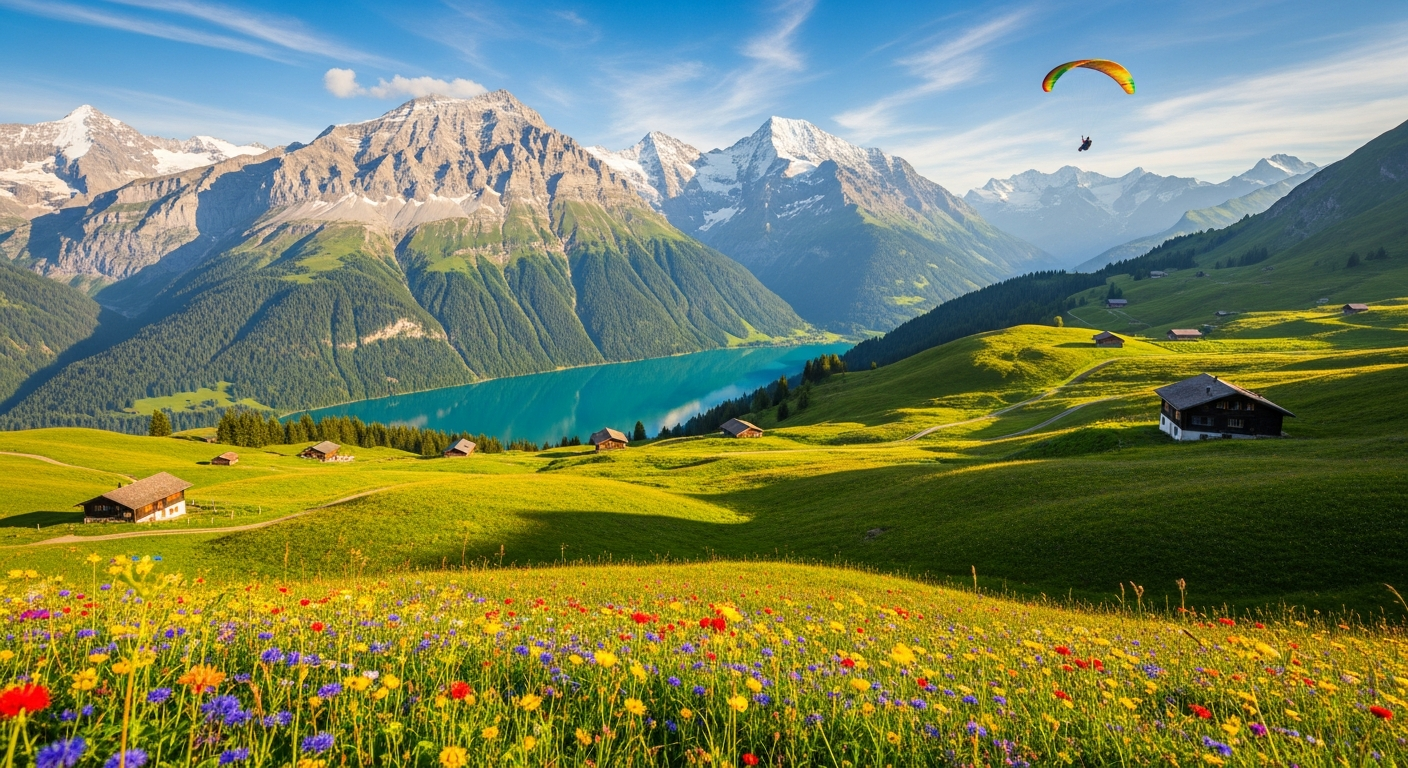
The train lurched around a bend, and suddenly the entire Lauterbrunnen Valley spread before me—72 waterfalls cascading down vertical cliffs, wildflowers carpeting meadows so green they looked Photoshopped.
My coffee spilled. I didn’t care. This was the Switzerland moment I’d been chasing, and I almost missed it by sitting on the wrong side of the train.
Here’s what nobody tells you about Switzerland in summer: yes, it’s breathtaking. Yes, it’s expensive. But it’s also completely doable on a budget if you know the insider tricks. And 2026 is shaping up to be the perfect year to make this trip happen finally—new ETIAS requirements will streamline entry, the Swiss Travel Pass just added more mountain railways, and you’ll have access to festivals and hiking trails that only run June through September.
I know you’re working with limited vacation days. I know Switzerland’s reputation for sky-high prices makes you nervous. And I know the planning overwhelm is real when every guidebook lists 47 “must-see” destinations in a country smaller than West Virginia. That’s exactly why I’m cutting through the noise to give you only what you’ll actually use—the essentials that transform a good Switzerland trip into an unforgettable one.
This guide isn’t about doing everything. It’s about doing the *right* things, packing the *right* gear, and spending your francs where they create authentic, magical experiences instead of tourist-trap regrets.
What Makes Summer 2026 the Perfect Time for Switzerland

The Climate Sweet Spot: When Alpine Weather Actually Cooperates
Switzerland’s summer runs June through September, but these months aren’t created equal. June brings wildflower season to the high Alps—those iconic meadows exploding with alpine roses and edelweiss that you see on chocolate boxes. The catch? Higher elevation trails often don’t clear of snow until mid-June, and you’ll catch occasional rain showers.
July and August deliver the most reliable weather—temperatures ranging from 18-28°C (64-82°F) in valleys, cooler at altitude. This is prime hiking season, when every mountain hut and cable car operates on full summer schedules. The downside everyone whispers about but few articles mention: these are also peak tourist months. Expect crowds at Jungfraujoch and Zermatt.
Here’s my secret weapon: early September. Temperatures stay pleasant (15-23°C), autumn colours start painting the mountainsides, and the tour buses thin out dramatically after Swiss kids return to school around August 20th. I’ve had entire alpine lakes nearly to myself in early September—something impossible in July.
2026-Specific Events Worth Building Your Trip Around
Swiss National Day on August 1st remains the country’s biggest celebration—fireworks over Lake Zurich, mountain bonfires, and free entry to most castles and museums. But here’s what makes 2026 special: Montreux Jazz Festival (July 3-18, 2026) falls perfectly for combining lakeside music with mountain adventures. The festival offers free concerts along the waterfront every evening—authentic local atmosphere without the ticket price.
Regional alpine festivals happen throughout summer, but most tourists miss them entirely. The Unspunnen Festival in Interlaken (happens every 12 years, next in 2029, but smaller alpine wrestling and yodeling competitions run throughout July and August) showcases traditional Swiss culture far more authentically than any folk show marketed to tourists. Check local tourism boards for “Alpabzug” (cow parades) in September when decorated cattle descend from summer pastures—pure magic and completely free.
Crowd Management: The Timing Tricks Nobody Mentions
Here’s what I learned the hard way: timing matters more than destination selection. The Jungfraujoch at 7 AM on a Tuesday in June? Manageable crowds, stunning sunrise. The same spot at 11 AM on a Saturday in August? Shoulder-to-shoulder tourists.
Mountain railways and cable cars publish their first and last departure times online—always take the first or second departure of the day. You’ll beat 90% of tourists and catch that magical morning light photographers pay thousands for. Similarly, popular towns like Grindelwald and Zermatt empty out around 4 PM when day-trippers leave. Book accommodation there, and you’ll experience these “overrun” destinations in peaceful evening light.
Mondays and Tuesdays consistently see fewer visitors than weekends. If you’re planning major mountain excursions like the Gornergrat Railway or Schilthorn, schedule them mid-week. Save city exploration (Zurich, Bern) for Sundays when many mountain destinations actually see *more* crowds from locals on day trips.
The Ultimate Switzerland Packing List for Summer

Layering for Alpine Weather: The Onion Approach
I watched a tourist shiver through a mountain-top lunch in July wearing shorts and a t-shirt while I sat comfortably in my light fleece. Temperature drops roughly 6°C for every 1,000 meters of elevation gain. That sun-drenched valley at 25°C becomes a chilly 13°C at 2,000 meters—and Swiss cable cars can take you up 2,000+ meters in 20 minutes.
Pack these specific layers: moisture-wicking base layer (I swear by merino wool t-shirts that work for both hiking and city dining), mid-weight fleece or down jacket, and a waterproof shell. The shell is non-negotiable—alpine weather changes in minutes, and those afternoon thunderstorms are real. I use a packable rain jacket that stuffs into its own pocket.
For bottoms: quick-dry hiking pants that convert to shorts, or athletic leggings for women. Jeans take forever to dry and restrict movement on trails. One pair of comfortable walking shoes (broken in before you arrive) and hiking boots if you’re tackling serious trails. The mistake I see constantly? New hiking boots causing blisters on day two. Break them in at home.
What NOT to bring: more than one “nice” outfit (Swiss dress codes are casual even at upscale restaurants), hair dryer (most accommodations provide them), or excessive toiletries (buy them at Migros or Coop for half what you’d pay at home). Your luggage space is precious—use it for layers, not redundancy.
Tech and Practical Gear That Earns Its Weight
Switzerland uses Type J power plugs (three round pins in a triangular pattern), though most outlets also accept Type C (two round pins). Buy a universal adapter before you leave—airport prices are brutal. Voltage is 230V, so check your devices. Most phone chargers and laptops handle dual voltage, but hair tools often don’t.
Download the SBB Mobile app before arrival. This free app covers all Swiss public transport—trains, buses, boats, cable cars. It shows real-time departures, platform changes, and lets you buy tickets directly. More importantly, it works offline once you’ve loaded your route. I’ve navigated entire Swiss journeys without data by pre-loading connections at my hotel.
A portable charger is essential for long hiking days when you’re using your phone for photos, GPS, and that SBB app. Get at least 10,000mAh capacity. Swiss hiking trails are well-marked, but having GPS backup on apps like Maps.me or AllTrails provides peace of mind.
Here’s the insider tip: bring a reusable water bottle. Swiss tap water is pristine everywhere—restaurants, public fountains, train stations. You’ll save 4-6 CHF per bottle while staying hydrated. Those alpine fountains flowing with ice-cold mountain water? Completely safe and delicious.
Budget vs. Luxury Packing Considerations
Budget travelers: pack picnic supplies. A small cutting board, pocket knife (in checked luggage!), and reusable containers let you create meals from Coop and Migros supermarkets. A simple lunch of local bread, cheese, and tomatoes costs 8 CHF versus 25 CHF at a mountain restaurant. Those savings add up to an extra day of travel.
Luxury travelers: pack one elevated outfit for splurge dining. Switzerland has incredible restaurants, and while dress codes are relaxed, you’ll feel more comfortable at places like Zurich’s Kronenhalle or Geneva’s Bayview in something beyond hiking gear. A packable dress or collared shirt with dark jeans works perfectly.
Everyone should bring: sunscreen (SPF 50—alpine sun is intense at elevation), sunglasses, a small daypack for excursions, and a basic first-aid kit with blister treatment. Swiss pharmacies are excellent but expensive. Also, bring a headlamp or small flashlight if you’re staying in mountain huts or rural guesthouses—not all have hallway lighting.
Essential Documents and Money Matters That Actually Matter

Entry Requirements and the ETIAS Reality for 2026
Your passport needs six months validity beyond your planned departure from Switzerland. This catches people constantly—check your expiration date now, not two weeks before your flight. Switzerland isn’t EU but is part of the Schengen Area, allowing free movement between 27 European countries.
The ETIAS (European Travel Information and Authorization System) should be fully operational by summer 2026 for visitors from visa-exempt countries including the US, Canada, Australia, and UK. It’s not a visa—it’s a pre-travel authorization costing approximately 7 EUR, valid for three years. Apply online at least 72 hours before departure (though approval usually takes minutes). Don’t fall for third-party websites charging 50+ EUR for “ETIAS application assistance”—the official site handles everything.
Travel insurance is non-negotiable. Swiss medical care is world-class and world-expensive. A simple emergency room visit can cost 500+ CHF. Comprehensive travel insurance covering medical emergencies, evacuation, and trip cancellation typically runs 50-100 USD for a week-long trip. I use World Nomads or SafetyWing, both covering adventure activities like hiking and paragliding.
Money-Saving Strategies Without the Sacrifice
Switzerland uses Swiss Francs (CHF), and the exchange rate hovers around 1 CHF = 1.10-1.15 USD. Credit cards work everywhere, but here’s what tourists get wrong: dynamic currency conversion. When paying by card, the terminal asks if you want to pay in CHF or your home currency. *Always* choose CHF. Paying in your home currency triggers terrible exchange rates from the payment processor—you’ll lose 3-5% on every transaction.
Withdraw cash from ATMs (not exchange bureaus) using a no-foreign-transaction-fee debit card. I use Charles Schwab or Wise. You’ll need some cash for mountain huts, small vendors at farmers markets, and the occasional rural guesthouse, but 80% of transactions can be card-based.
The Swiss Travel Pass deserves its own analysis. For 3 consecutive days (second class): 232 CHF. For 4 days: 281 CHF. It covers all trains, buses, boats, and urban transport, plus free entry to 500+ museums and 50% off most mountain railways. Do the math: Zurich to Interlaken (one-way) costs 71 CHF. Interlaken to Zermatt: 95 CHF. Two intercity journeys already justify a 3-day pass. Add free museum entry and those 50% mountain railway discounts, and it pays for itself quickly.
The alternative: Half-Fare Card (120 CHF for one month) gives 50% off all tickets but requires buying individual tickets. It makes sense if you’re staying mostly in one region or traveling slower. For first-time visitors doing the classic circuit (Zurich-Lucerne-Interlaken-Zermatt), the Swiss Travel Pass wins.
Budget Reality: What Switzerland Actually Costs
Budget travelers can survive on 150-180 CHF daily by staying in hostels (35-50 CHF), eating supermarket meals (20-25 CHF), and limiting mountain excursions to included Swiss Travel Pass routes. Free activities—lake swimming, city walking tours, hiking from valley bases—fill days beautifully. The catch? You’ll skip some iconic cable cars and eat lots of bread and cheese.
Mid-range travelers should budget 250-350 CHF daily. This covers modest hotels or guesthouses (100-150 CHF), one restaurant meal plus supermarket breakfast/lunch (60-80 CHF), and mountain railway splurges (50-100 CHF with Swiss Travel Pass discounts). This bracket lets you experience Switzerland comfortably without constant penny-pinching.
Luxury travelers spending 500+ CHF daily access Switzerland’s incredible alpine hotels, multi-course restaurant experiences, and private mountain guides. But here’s the secret: even luxury travelers save money using public transport. That Swiss Travel Pass first-class version (376 CHF for 4 days) beats renting a car when you factor in gas (2+ CHF per liter), parking (30-50 CHF daily in popular towns), and stress.
Hidden costs that surprise everyone: mountain railways not covered by Swiss Travel Pass (Jungfraujoch costs 108 CHF even with the pass), cable cars (15-40 CHF per segment), and restaurant beverages (8 CHF for a beer, 4-5 CHF for coffee). Budget an extra 30-50 CHF daily for these nickel-and-dime expenses.
Getting Around: Switzerland’s Transportation Secrets

The Swiss Travel System Decoded (Finally)
Switzerland’s public transport is famously punctual—trains arrive within 30 seconds of schedule. But here’s what confuses tourists: the system integrates trains, buses, boats, and cable cars seamlessly. Your ticket from Zurich to Zermatt might involve two trains and a bus, all covered by one ticket, with connections timed to the minute.
The SBB Mobile app shows everything. Search your destination, and it displays all options with departure times, platforms, and connections. Buy tickets directly in the app or show your Swiss Travel Pass QR code when boarding. No need to validate tickets—just have proof of purchase ready for random inspections.
Swiss Travel Pass comes in consecutive-day versions (3, 4, 8, or 15 days) or flexible versions (3, 4, or 8 days within one month). First-timers should choose consecutive days—the flexibility premium isn’t worth it unless you’re mixing Switzerland with other countries. Second-class is perfectly comfortable; first-class offers slightly roomier seats and emptier cars but costs 60% more.
The Half-Fare Card makes sense for longer stays (2+ weeks) or if you’re based in one region making day trips. Buy individual tickets at half price rather than committing to consecutive travel days. Many Swiss residents use this because it’s the most economical for regular travel.
Scenic Routes That Justify the Journey
The Glacier Express (Zermatt to St. Moritz, 8 hours) markets itself as the world’s slowest express train—and it’s spectacular. Panoramic windows showcase 291 bridges and 91 tunnels through Alpine scenery. The catch? It costs extra even with Swiss Travel Pass (seat reservation required: 49 CHF in summer). Here’s my hack: take the same route on regular regional trains (no reservation needed, fully covered by Swiss Travel Pass). You’ll see identical scenery with freedom to hop off at interesting stops.
The Bernina Express (Chur to Tirano, Italy) crosses the Alps via the UNESCO-listed Bernina Railway. Those photos of red trains on the Landwasser Viaduct? This route. Again, skip the official Bernina Express (reservation fee) and take regular regional trains on the same tracks. I’ve done both—the view doesn’t change.
The Golden Pass Line (Lucerne to Montreux) connects central Switzerland’s mountains with Lake Geneva’s Mediterranean vibes. The MOB panoramic trains offer floor-to-ceiling windows and are fully covered by Swiss Travel Pass with no reservation needed. This route is underrated—you’ll traverse three distinct cultural regions in four hours.
PostBus routes (bright yellow buses) reach remote valleys where trains don’t go. The Palm Express (Lugano to St. Moritz) and other designated scenic PostBus routes are completely free with Swiss Travel Pass. These buses navigate hairpin mountain passes with views that rival any train journey.
Authentic Experiences Beyond the Tourist Trail
Local Food Experiences Worth Every Franc
Forget hotel fondue nights marketed to tourists. Real Swiss fondue happens in alpine huts accessible only by hiking or cable car. Bergrestaurant Aescher-Wildkirchli (below Ebenalp in Appenzell) clings to a cliff face like something from a fantasy novel. Their fondue moitié-moitié (half Gruyère, half Vacherin) costs 24 CHF and comes with crusty bread, local wine, and views over the Alpstein massif. Arrive before noon to avoid crowds.
Rösti—Switzerland’s potato masterpiece—gets butchered at tourist restaurants. Locals eat it at Migros Restaurant, a cafeteria chain inside Migros supermarkets. Sounds unglamorous, but the rösti is authentic, costs 12 CHF, and comes in regional variations. The Bern location serves Berner rösti topped with bacon, onions, and cheese. It’s where construction workers and office employees eat lunch—always a good sign.
Raclette in Valais (the canton where it originated) means watching cheese melt over an open fire, then scraping it onto boiled potatoes with pickled onions. Tourist versions use electric grills. Find the real deal at Raclette Stube in Zermatt or any village festival in Valais during summer. The cheese comes from cows grazing on alpine meadows—you’ll taste the difference.
Saturday morning farmers markets in every town sell local cheese, bread, honey, and produce. The market in Bern’s Bundesplatz (7 AM-noon) offers samples freely. Buy a wedge of Alpkäse (alpine cheese), fresh bread, and local apricots for the ultimate Swiss picnic at one-third restaurant prices.
Hidden Natural Wonders That Rival the Famous Ones
Blausee (Blue Lake) near Kandersteg looks artificially colored—the water is so intensely blue it seems impossible. This small lake in a nature park costs 8 CHF entry, but you’ll have a mystical forest setting largely to yourself. Trout swim in water so clear they appear suspended in air. It’s 30 minutes from Interlaken but receives a fraction of the visitors.
The Aare River in Bern offers something unexpected: urban river floating. Locals waterproof their belongings in dry bags, wade into the glacial-fed river at Eichholz, and float downstream to