5 Things You Must Do at Kumano Nachi Taisha Shrine

Imagine standing before a towering 133-meter waterfall, with a vibrant red pagoda framing the view—this is the magic waiting for you at Kumano Nachi Taisha Shrine, one of Japan’s most sacred and breathtaking destinations.
Nestled in the mountains of Wakayama Prefecture, this World Heritage site combines natural wonder with spiritual power in ways that will leave you speechless.
Unlike the crowded temples of Kyoto or the bustling shrines of Tokyo, Kumano Nachi Taisha offers something different: an authentic connection to ancient Japan where nature itself is divine.
I’ve watched countless travelers skip this incredible place simply because they don’t know what makes it special. That changes today.
You’re about to discover the five essential experiences that transform a simple shrine visit into an unforgettable journey through Japan’s spiritual heart.
From walking the same ancient pilgrimage path that emperors traveled centuries ago to standing face-to-face with Japan’s tallest waterfall, these experiences will show you why Kumano Nachi Taisha deserves a spot on your Japan itinerary.
Whether you’re a first-time visitor to Japan or a seasoned traveler seeking something beyond the usual tourist trail, this guide delivers everything you need to make the most of your visit.
Walk the Sacred Daimonzaka Slope
Why This Ancient Pilgrimage Path Is the Perfect Start
Before you even reach Kumano Nachi Taisha, you’ll experience something that most visitors miss entirely—and that’s a mistake you won’t make. The Daimonzaka slope is your gateway to understanding what makes this place truly sacred.
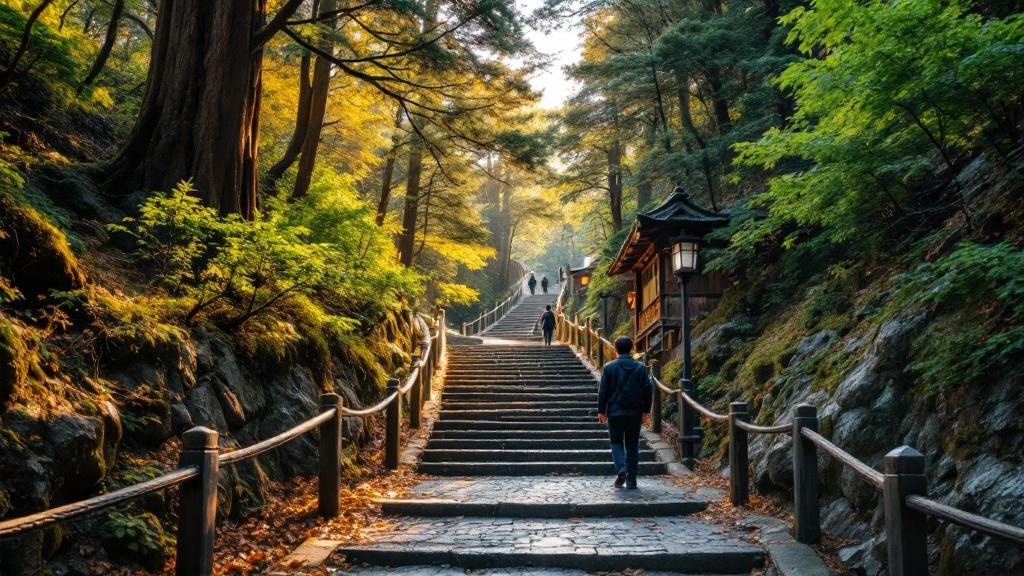
This 600-meter cobblestone staircase features 267 steps that wind through a mystical forest of towering cedars. The path is part of the legendary Kumano Kodo pilgrimage route, a network of trails that has guided spiritual seekers for over a thousand years.
Walking this approach means following in the footsteps of emperors, monks, and countless pilgrims who believed this journey could purify their souls.
The difference between driving directly to the shrine and walking Daimonzaka is like the difference between reading about meditation and actually practicing it.
You need that gradual transition from the ordinary world to sacred space. The forest canopy filters sunlight into soft, golden rays.
The sound of your footsteps on ancient stones creates a rhythm that quiets your mind. By the time you reach the top, you’re not just physically present—you’re mentally and spiritually prepared for what comes next.
Early morning visits deliver the best experience. The forest is quieter, the light is softer, and you’ll have the path mostly to yourself. The crowds typically arrive after 10 AM, so plan accordingly.
Meet the 850-Year-Old “Husband and Wife” Cedar Trees
Right at the entrance to Daimonzaka, two massive cedar trees stand guard like ancient sentinels. These are the Meoto-sugi, the “husband and wife” cedar trees, and they’re absolutely magnificent.
These 850-year-old giants earned their romantic name from a beautiful legend: their roots intertwine beneath the path, connecting them in an eternal embrace.
Japanese couples often stop here to pray for lasting love and harmony in their relationships. Even if you’re traveling solo, standing beneath these towering trees inspires awe that transcends romance.
For photography, position yourself to capture both trees in frame. The morning light filtering through their branches creates stunning contrast. Don’t rush this moment—these trees have witnessed centuries of pilgrims, and they deserve your respect and attention.
The Japanese consider these cedars sacred guardians of the path. Their presence marks your transition from the everyday world into sacred territory. Take a deep breath here. Touch the bark if you feel moved to do so. This simple act connects you to centuries of tradition.
Quick Tips for Making the Climb Easy
Let’s talk practical details that make the difference between an enjoyable walk and an exhausting struggle.
The climb takes 30-40 minutes at a comfortable, leisurely pace. You’re not racing anyone, so take your time. The path is well-maintained but uneven in places, which means comfortable, sturdy shoes are essential. Leave the flip-flops and dress shoes at your hotel.
Here’s something unique: Daimonzaka-chaya, the tea house near the path entrance, offers traditional Heian period costume rentals. Imagine walking this ancient pilgrimage route dressed as nobles did centuries ago. It’s completely optional, but it creates incredible photos and deepens your connection to the history you’re experiencing.
Bring water—there’s no shame in staying hydrated during a spiritual journey. A small towel is smart too, especially in summer when humidity makes everything damp. Rest spots appear along the way where you can catch your breath and soak in the forest atmosphere.
The path is steep in sections, but the steps are manageable for anyone with moderate fitness. If you have mobility concerns, know that you can drive to the shrine, though you’ll miss this transformative experience.
Experience the Main Shrine’s Spiritual Power
Passing Through the Vermillion Torii Gate
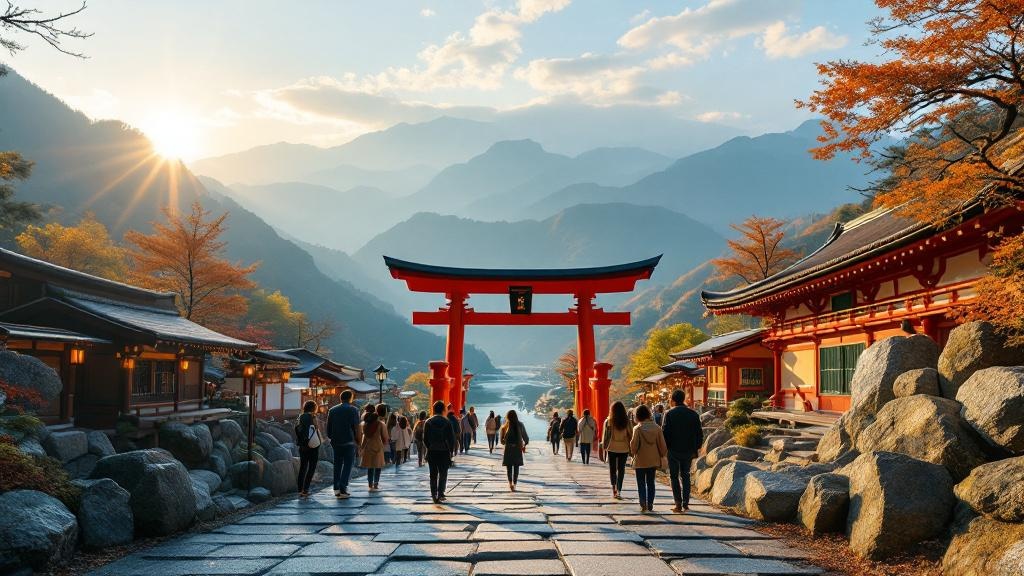
The moment you pass through the large vermillion torii gate at Kumano Nachi Taisha, something shifts. This isn’t just symbolic—you genuinely feel it.
In Shinto belief, the torii marks the boundary between the ordinary world and sacred space. Everything beyond this gate exists in a different realm, one where the divine and human worlds meet. The bright vermillion color isn’t just aesthetically beautiful—it represents power, protection, and the life force itself.
This entrance offers perfect photography opportunities. The gate frames the shrine buildings beyond, creating a composition that captures the essence of Japanese spiritual architecture. The views from here overlook the ocean in the distance, reminding you that this sacred site sits between mountain and sea, earth and water, the physical and spiritual.
Proper etiquette matters here. Bow slightly as you pass through the torii. Walk on the sides of the path, not directly down the center—that’s reserved for the kami (Shinto deities). These simple gestures show respect and enhance your experience by connecting you to centuries of tradition.
Visit All Six Sacred Buildings
Kumano Nachi Taisha consists of six main structures perched at the top of 467 stone steps. Yes, more climbing awaits you, but every step is worth it.
The shrine buildings glow with vermillion lacquer that has been renewed through centuries of careful maintenance. This distinctive color creates stunning contrast against the green mountains and blue sky. As one of the Kumano Sanzan (three sacred shrines), Nachi Taisha holds immense spiritual significance in Japanese culture.
The effective way to explore is methodically, moving from building to building without rushing. Each structure serves specific purposes in Shinto worship. The main hall enshrines twelve deities, each associated with different aspects of life and nature. You don’t need to understand every detail to appreciate the craftsmanship and spiritual atmosphere.
Take time to observe other visitors. Watch how they pray, how they move through the space. You’ll notice a quietness, a reverence that transcends language and culture. This shared respect creates a powerful collective energy.
The architecture itself teaches you about Shinto values: harmony with nature, purity of form, and the beauty of simplicity. Notice how the buildings seem to grow organically from the mountainside rather than imposing themselves upon it.
Discover Bird Rock (Karasu-ishi)
Hidden within the shrine grounds, you’ll find Karasu-ishi, the “Bird Rock”—a sacred stone that holds deep mythological significance.
This rock is believed to be the petrified form of Yatagarasu, the legendary three-legged crow that serves as a divine messenger in Japanese mythology. According to ancient texts, Yatagarasu guided Japan’s first emperor through treacherous mountains to establish his kingdom. The three-legged crow symbolizes guidance, divine intervention, and the connection between heaven and earth.
The rock itself doesn’t look particularly impressive at first glance—and that’s precisely the point. Sacred power doesn’t always announce itself with grandeur. Sometimes it dwells in humble forms, waiting for those who know where to look.
Visitors can participate in simple ritual practices here. Some touch the rock gently, offering prayers for guidance in their own life journeys. Others simply stand in quiet contemplation. There’s no wrong approach—your sincere intention matters more than perfect technique.
The Yatagarasu symbol appears throughout Kumano Nachi Taisha in artwork, amulets, and decorative elements. Once you know the story, you’ll spot this three-legged crow everywhere, each sighting deepening your understanding of the shrine’s spiritual significance.
Witness the Breathtaking Nachi Falls
Japan’s Tallest Single-Drop Waterfall
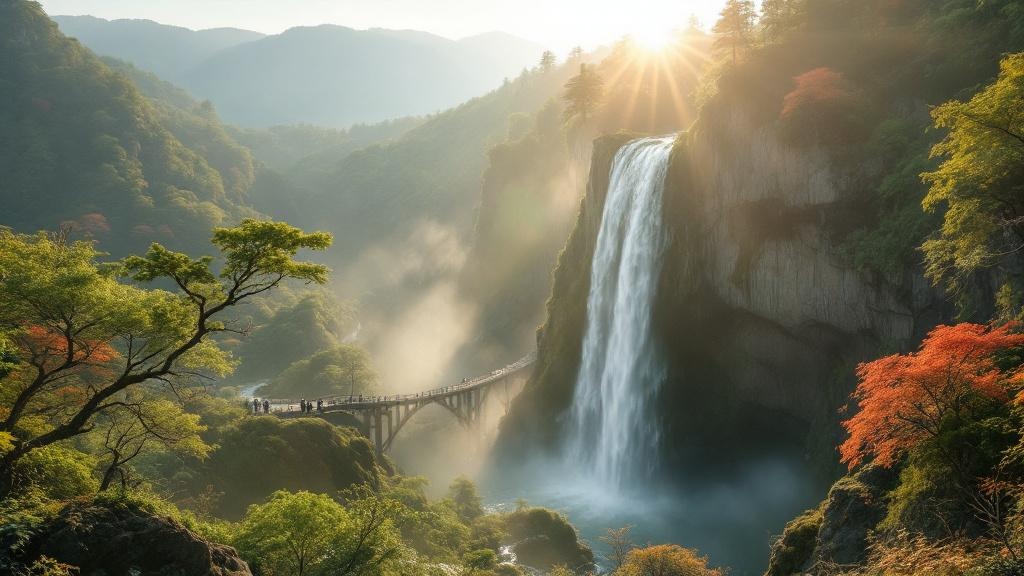
Now we arrive at the true heart of Kumano Nachi Taisha: Nachi Falls, a natural wonder so powerful that it’s worshipped as a deity itself.
The statistics are impressive—133 meters high, making it Japan’s tallest single-drop waterfall and a designated National Place of Scenic Beauty. But numbers don’t capture the visceral impact of standing before this cascade. The roar of water, the mist on your face, the sheer force of nature on display—this experience bypasses your intellect and speaks directly to something primal within you.
Here’s what makes Nachi Falls unique: it’s not just a beautiful natural feature near a shrine. The waterfall itself is the deity. This ancient tradition of waterfall worship (taki shinkō) recognizes that divine power flows through nature itself. The shrine was built here because of the falls, not the other way around.
From the main shrine grounds, you get stunning views of the waterfall in the distance, framed by mountains and forest. This perspective shows you the falls in their natural context, demonstrating why ancient people recognized this place as sacred. The best viewing spots are clearly marked, and you’ll want to spend time at each one, watching how the light changes the water’s appearance throughout the day.
Get Up Close at the Observation Platform
Viewing the falls from the shrine is amazing, but getting close delivers the ultimate experience—and it’s absolutely worth the small admission fee.
A special observation platform brings you near the base of Nachi Falls, close enough to feel the spray, hear the thunderous roar, and sense the raw power of all that water crashing down. The platform is safe and well-maintained, but the experience is intense.
Standing before the falls is a spiritual practice in itself. Buddhist monks once stood under this cascade for purification rituals, enduring the pounding water as a form of meditation and austerity training. You won’t be doing that (it’s no longer permitted), but even observing from the platform connects you to that tradition.
The mist creates a microclimate around the falls—cooler, damper, charged with negative ions that actually boost your mood and energy. Bring a towel or be prepared to get a bit wet. The sound is so loud that conversation becomes difficult, which creates a natural meditation environment.
Safety tips: the platform can be slippery from constant mist. Watch your step, especially if you’re focused on photography. The powerful energy here is exhilarating, but stay aware of your physical surroundings.
Capture That Perfect Instagram Shot
Let’s be honest—you want that iconic photo, and there’s zero shame in that desire. The view of Seigantoji’s three-story pagoda with Nachi Falls in the background is one of Japan’s most photographed scenes for good reason.
The best time for photography is morning when natural light illuminates the falls and pagoda without harsh shadows. The golden hour before sunset also delivers magical results, though you’ll compete with more photographers at that time.
For composition, position yourself so the red pagoda appears in the lower portion of your frame with the waterfall rising behind it. This creates visual balance and tells the complete story of this sacred site where Buddhist and Shinto traditions merge.
Seasonal variations transform this scene dramatically. Cherry blossoms in spring add delicate pink accents. Summer’s lush greenery creates rich contrast with the vermillion architecture. Autumn colors—typically peaking in November—set the entire landscape ablaze with reds and golds. Winter occasionally brings snow, creating a rare and stunning monochrome palette.
Even if you’re not a photography expert, this scene is so inherently beautiful that decent photos are almost guaranteed. Take your time. Experiment with different angles. The perfect shot is worth the effort.
Explore Seigantoji Temple Next Door
Understanding the Unique Shrine-Temple Connection
Right beside Kumano Nachi Taisha sits Seigantoji, a Buddhist temple that shares this sacred mountainside. Their proximity isn’t coincidental—it represents a fascinating chapter in Japanese religious history.
For most of their existence, the shrine and temple functioned as a single religious institution. This blending of Shinto and Buddhist practices was common in Japan for centuries, creating a uniquely Japanese spiritual synthesis. Shinto honored the kami of nature, while Buddhism offered teachings about enlightenment and the afterlife. Together, they provided a complete spiritual framework.
The Meiji Period (1868-1912) brought dramatic changes. The government mandated separation of Shinto and Buddhism, forcing institutions to choose one identity. Kumano Nachi Taisha became exclusively Shinto, while Seigantoji became purely Buddhist. Yet they remain neighbors, their histories forever intertwined.
Understanding this relationship deepens your appreciation of both sites. You’re not just visiting two separate religious buildings—you’re witnessing the physical manifestation of Japan’s complex spiritual heritage. This blend of traditions makes Kumano Nachi Taisha special compared to other sacred sites.
The Stunning Three-Story Pagoda
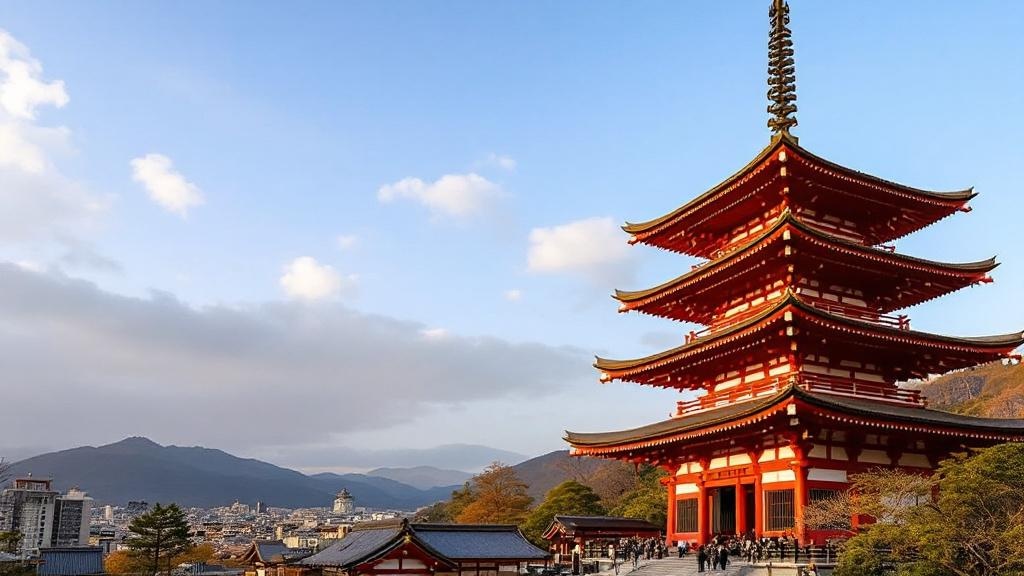
Seigantoji’s three-story pagoda is an architectural masterpiece that deserves your full attention.
The bright vermillion structure rises elegantly against the mountain backdrop, its design following classical Buddhist architectural principles while incorporating Japanese aesthetic sensibilities. Each tier represents stages of spiritual enlightenment in Buddhist cosmology, with the uppermost level symbolizing the realm of enlightenment itself.
This pagoda creates that iconic photo opportunity with Nachi Falls. From certain angles, the pagoda appears to stand guard before the waterfall, a human-made structure honoring the divine power of nature. The composition is so perfect that it seems almost designed for photography—though it predates cameras by centuries.
What the pagoda represents goes beyond aesthetics. In Buddhist tradition, pagodas house sacred relics and serve as focal points for meditation and devotion. Walking around the base, you’ll notice devotional offerings and prayers left by visitors seeking blessings.
The craftsmanship is remarkable. The structure has withstood earthquakes, typhoons, and centuries of weather while maintaining its beauty. This durability reflects the skill of traditional Japanese carpenters who built without nails, using intricate joinery that actually becomes stronger over time.
Simple Ways to Show Respect at Both Sites
Visiting both the Shinto shrine and Buddhist temple requires awareness of different etiquette traditions—but don’t worry, it’s simpler than you think.
At Kumano Nachi Taisha (the Shinto shrine), purify yourself at the water basin before approaching the main buildings. Ladle water over your hands, then rinse your mouth (don’t drink or touch the ladle to your lips). At the worship hall, bow twice, clap twice, pray silently, then bow once more. This sequence honors Shinto tradition.
At Seigantoji (the Buddhist temple), the approach differs. No clapping—Buddhism values silence and stillness. Instead, bow respectfully, place your hands together in prayer position (gassho), and bow again. Some temples have incense burners where you can make offerings; waft the smoke toward yourself as a purification gesture.
Optional offerings include coins (5-yen coins are considered lucky), prayers written on wooden plaques (ema), or purchased amulets and charms. These aren’t required, but they’re meaningful ways to participate in living traditions.
Why visit both? Because together they provide the complete experience of this sacred site. You’ll understand how these traditions coexisted, how they differ, and how they both honor the divine power manifesting through Nachi Falls.
Essential Planning Tips for Your Visit
Getting There Made Simple
Reaching Kumano Nachi Taisha requires some planning, but the journey itself becomes part of the adventure.
From Osaka, take the JR Kuroshio Limited Express to Kii-Katsuura Station—the ride takes about three hours and offers stunning coastal views. From Kyoto, you’ll connect through Osaka or take a longer route through Nara. Tokyo visitors should expect a full day of travel or consider flying to Nanki-Shirahama Airport and continuing by train.
The train journey along the coast is genuinely scenic, especially the section hugging the Pacific Ocean. You’ll pass through tunnels carved into cliffs, glimpse fishing villages, and watch the landscape transform from urban to rural to wild.
From Kii-Katsuura Station, local buses run to Nachi Taisha, taking about 30 minutes. The bus route itself is beautiful, winding up mountain roads with glimpses of the falls appearing in the distance. Check current schedules at the station—buses run regularly but not constantly.
Renting a car offers flexibility and convenience, especially if you’re exploring multiple Kumano sites. The drive provides freedom to stop at viewpoints and explore at your own pace. However, mountain roads can be challenging, and parking at the shrine is limited during peak seasons.
How Much Time You Really Need
Most visitors underestimate how much time this place deserves. Here’s the reality: you need a minimum of 2-3 hours for a meaningful visit, and half a day is better.
A thorough exploration includes walking Daimonzaka (40 minutes), exploring the shrine grounds (45-60 minutes), visiting the waterfall observation platform (30 minutes), and exploring Seigantoji Temple (30 minutes). Add time for photography, contemplation, and the unexpected moments that make travel memorable.
If you’re combining Kumano Nachi Taisha with other Kumano Kodo sites—which I strongly recommend—consider staying overnight in the area. Kii-Katsuura offers excellent accommodations, including traditional ryokan with onsen (hot springs) where you can soak away the day’s exertions.
Nearby attractions include the other Kumano Sanzan shrines (Kumano Hongu Taisha and Kumano Hayatama Taisha), additional Kumano Kodo pilgrimage routes, and the coastal onsen town of Katsuura with its famous tuna market.
Quick Practical Information
Let’s cover the essential details that prevent frustration and maximize your experience.
Admission: The shrine grounds are free to enter. The observation platform near Nachi Falls charges a small fee (around 300 yen), and Seigantoji Temple also has a nominal admission fee. Bring cash—credit cards aren’t universally accepted.
Opening hours: The grounds are accessible from dawn to dusk, though specific buildings have more limited hours (typically 8:30 AM to 4:30 PM). Early morning visits deliver the best light and fewer crowds.
What to bring: – Comfortable walking shoes (essential!) – Water and small snacks – Weather-appropriate clothing (layers are smart) – Cash for fees, offerings, and purchases – Camera with charged batteries – Small towel (useful for waterfall mist)
Accessibility considerations: Those 467 stone steps to the main shrine are real and unavoidable. If mobility is limited, you can drive closer and reduce the climbing, but some steps remain unavoidable. The path can be challenging for wheelchairs.
Weather preparation: Summer brings heat and humidity—start early and stay hydrated. The rainy season (June-July) means wet conditions but also dramatic waterfall flow. Autumn offers perfect weather and stunning colors. Winter can be cold and occasionally snowy, but beautifully serene.
The shrine is open year-round, and each season offers unique rewards. Don’t let imperfect weather deter you—mist and rain actually enhance the mystical atmosphere.
—
Kumano Nachi Taisha isn’t just another shrine on your Japan itinerary—it’s a complete spiritual experience that combines natural wonder, ancient tradition, and genuine beauty in ways that few places can match. From the moment you begin ascending Daimonzaka through ancient cedars to the final glimpse of Nachi Falls framed by the vermillion pagoda, every element creates a journey that stays with you long after you’ve returned home.
These five essential experiences—walking the sacred pilgrimage path, exploring the shrine’s spiritual power, witnessing the magnificent waterfall, discovering the temple next door, and timing your visit strategically—transform a simple sightseeing stop into something profound. You’ll understand why emperors and peasants alike made this pilgrimage for over a thousand years.
The beauty of Kumano Nachi Taisha is that it works on multiple levels. You can appreciate it as stunning photography, as historical architecture, as religious tradition, or as pure natural wonder. Or you can let it be all of these things at once, allowing the experience to unfold without forcing it into neat categories.
Ready to experience one of Japan’s most sacred sites? Start planning your visit to Kumano Nachi Taisha today. The ancient cedars, the thundering waterfall, and the vermillion shrine buildings are waiting to show you a side of Japan that most travelers never discover.