7 Solo Adventure Safety Essentials Every Traveler Needs

Solo travel transforms you in ways group trips never can. There’s something powerful about navigating unfamiliar terrain on your own terms, making spontaneous decisions, and proving to yourself that you’re capable of anything. But here’s the truth: the freedom of solo adventure comes with real responsibility for your own safety.
I’ve learned this through experience—both my own adventures and from conversations with countless solo travelers who’ve shared their stories. The difference between a life-changing journey and a dangerous situation often comes down to preparation. You don’t need to be paranoid or overly cautious, but you do need the right essentials.
This guide covers the seven categories of safety gear that every solo adventurer should understand before hitting the trail, booking that remote cabin, or exploring a new city alone. These aren’t just suggestions—they’re the proven tools that keep experienced solo travelers safe in challenging situations. Whether you’re planning your first solo camping trip or your fiftieth international adventure, these essentials will give you the confidence to explore while staying protected.
Communication & Navigation Essentials: Your Lifeline to the Outside World
When you’re traveling solo, staying connected isn’t about scrolling social media—it’s about having reliable ways to call for help and navigate safely. Cell service vanishes quickly once you leave populated areas, and that’s exactly when you need communication tools most.
Personal Locator Beacon (PLB) or Satellite Messenger
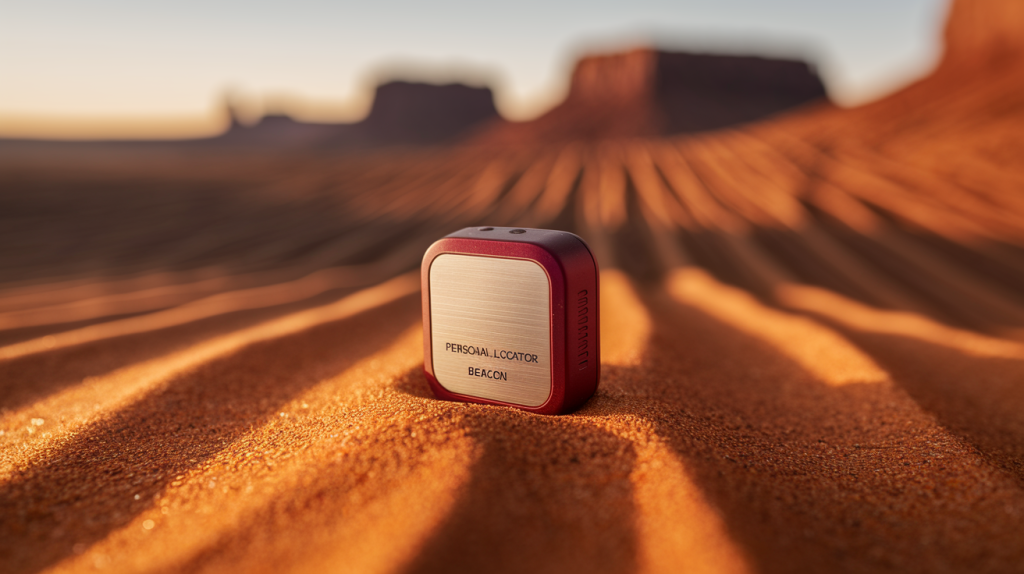
A Personal Locator Beacon or satellite messenger like the Garmin inReach or SPOT device is your ultimate safety net in remote locations.
These devices work anywhere on Earth because they communicate directly with satellites, not cell towers. When you press that SOS button, your GPS coordinates transmit to emergency rescue coordination centers within minutes.
The real-world applications go beyond emergencies. Modern satellite messengers let you send “I’m okay” check-ins to worried family members, share your exact location as you move along the trail, and even access two-way text messaging from mountaintops and desert canyons.
For solo travelers, this peace of mind is invaluable—your loved ones can track your progress, and you can reach out if plans change or weather turns dangerous.
Here’s what makes these devices beginner-friendly: they’re designed for simplicity. The SOS function is typically protected by a cover to prevent accidental activation, but when you need it, you just flip the cover and press. Rescue services receive your distress signal automatically along with your precise coordinates. You don’t need to explain where you are or what’s wrong—help is already on the way.
Offline GPS Navigation Device or Smartphone App
Paper maps have their place, but GPS technology gives you something traditional maps can’t: your exact position on the landscape in real-time.
Dedicated GPS units like Garmin devices or offline mapping apps like Gaia GPS and AllTrails Pro download detailed topographic maps to your device before you leave cell service. Once downloaded, these maps work perfectly without any signal.
The battery backup consideration is critical here. GPS drains phone batteries quickly, so carry a portable solar charger or high-capacity power bank rated for at least two full phone charges. For multi-day trips, a solar panel that attaches to your backpack can keep devices charged while you hike.
Download your maps before leaving home—trying to download large map files over slow campground WiFi is frustrating and often impossible.
Trust your navigation tools, but always verify your route makes sense. GPS helps you discover new trails confidently and prevents those dangerous wrong turns that leave you miles off course in unfamiliar territory. The combination of digital navigation and basic map-reading skills creates redundancy that keeps you safe.
Whistle and Signal Mirror
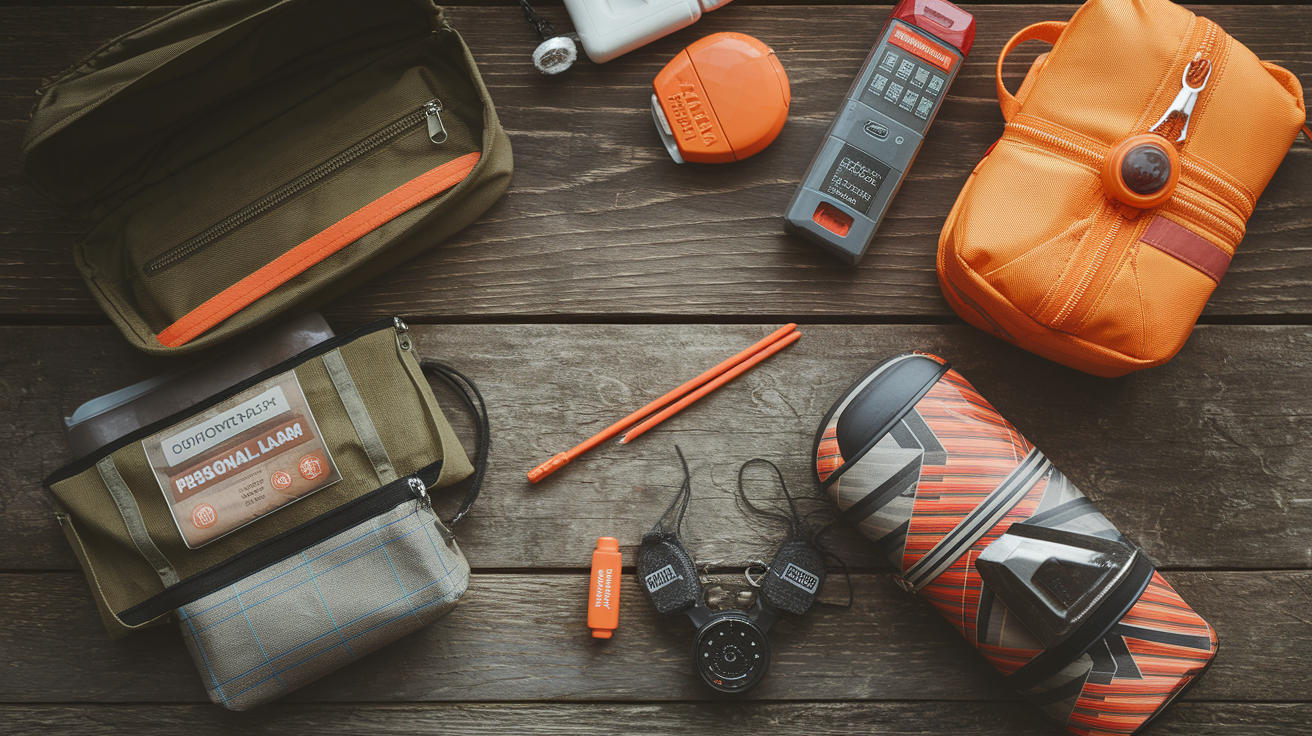
Sometimes the simplest tools are the most effective. A whistle and signal mirror weigh almost nothing, require zero batteries, and can save your life by alerting rescuers to your location from surprising distances. These low-tech essentials deserve a place in every solo adventurer’s pack.
The universal distress signal is three sharp whistle blasts repeated at regular intervals. This pattern is recognized worldwide as a call for help. A quality survival whistle (not a cheap toy) produces sound that carries much farther than your voice and doesn’t exhaust you like shouting does. You can blow a whistle for hours if necessary, but you’ll lose your voice after minutes of yelling.
Signal mirrors harness reflective power that seems almost magical. On clear days, a properly aimed signal mirror can be seen by aircraft and search parties up to 10 miles away. Modern signal mirrors include an aiming hole that helps you direct the reflection precisely toward rescuers or passing aircraft. Practice using your signal mirror before emergencies arise—it takes technique to aim the reflection accurately.
Personal Safety & Security Gear: Protecting Yourself and Your Belongings
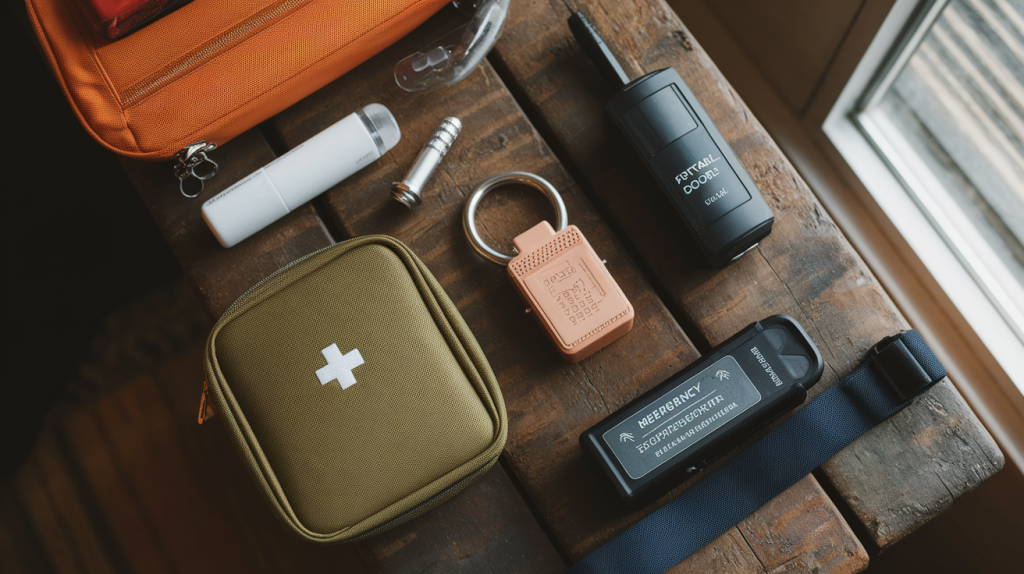
Solo travelers face unique security challenges. You can’t take turns watching gear while someone sleeps, and you’re potentially more vulnerable to theft or unwanted attention. The right security equipment creates layers of protection for both you and your belongings.
Personal Safety Alarm and Door Security
A portable door alarm or door stop alarm serves as your personal security system in hostels, budget hotels, and even campsites. These compact devices wedge under doors or hang from door handles, triggering a piercing 120+ decibel alarm if anyone tries to enter while you sleep. The deterrent effect is powerful—that ear-splitting sound startles potential threats and immediately draws attention to your room.
For solo campers, these alarms adapt perfectly to tent security. Attach small motion-activated alarms to tent zippers, and you’ll wake instantly if anyone attempts to open your tent during the night. Portable door locks add another layer—these devices brace against the door from inside, making it nearly impossible to open even with a key. This gives you peace of mind in unfamiliar accommodations where you don’t know who else has keys to your room.
Personal safety alarms that clip to your backpack or belt loop provide protection while you’re out exploring. If you feel threatened, pulling the pin activates a loud alarm that draws attention and often causes would-be attackers to flee. These work in urban environments where a whistle might be ignored as noise, but a security alarm is clearly a distress signal.
Quality Padlocks and Cable Locks
Padlocks are your first line of defense against theft in countless situations—hostel lockers, airport luggage storage, campsite gear, and even securing your backpack to fixed objects in train stations. Invest in quality locks from trusted brands rather than cheap versions that can be picked or broken easily.
The lock and key versus combination debate comes down to reliability. While combination locks seem convenient, they’re easier to forget under stress, and the mechanisms can freeze in cold weather or jam with dirt. Traditional key locks are more dependable. To avoid losing keys, attach them to your water bottle with a small carabiner or use a bright-colored keychain that’s easy to spot in your pack.
Cable locks handle larger security needs. Use them to secure backpacks to fixed objects while you explore without your main pack, lock bikes at trailheads during day hikes, or bundle multiple bags together at campsites and airports. A flexible steel cable can loop through multiple items and around poles or railings, making opportunistic theft much more difficult.
Headlamp with Red Light Function
A quality headlamp is non-negotiable for solo adventurers. Unlike flashlights, headlamps keep both hands free for navigation, setting up camp, cooking, handling emergencies, or scrambling over rocky terrain after dark. This hands-free functionality becomes critical when you’re managing everything alone.
The red light function preserves your natural night vision, which takes 20-30 minutes to fully develop. White light destroys night vision instantly, but red light lets you see what you’re doing without resetting that adaptation. This matters for stargazing, observing wildlife, moving around camp without disturbing other campers, and maintaining your ability to see in the dark if you turn off the light.
Modern LED headlamps offer incredible battery life—often 50+ hours on low settings. Look for models with multiple brightness levels so you can use dim settings for reading or camp tasks and save battery, then switch to high beams when hiking or searching for something. Rechargeable batteries save money and reduce waste, but carry backup batteries for extended trips where recharging isn’t possible.
Personal Protection Options
Bear spray is the most effective deterrent against aggressive wildlife encounters in bear country. It’s more effective than firearms and doesn’t require perfect aim—the spray creates a cloud that affects the bear’s eyes and respiratory system, stopping charges without permanent harm. Practice deploying your bear spray before trips so you can access and use it quickly under stress.
For urban adventures or trail running in areas with safety concerns, pepper spray or a personal alarm provides protection against human threats. These tools give you options if you encounter aggressive individuals, but they’re most effective when combined with awareness and good judgment about which areas to avoid.
Know local regulations before packing protection devices. Bear spray is encouraged in places like Yellowstone but might be restricted in other countries. Pepper spray legality varies widely between states and nations. Research what’s legal and appropriate for your specific destination, and understand how to use these tools responsibly.
Health & Emergency Medical Preparedness: Your Portable Clinic
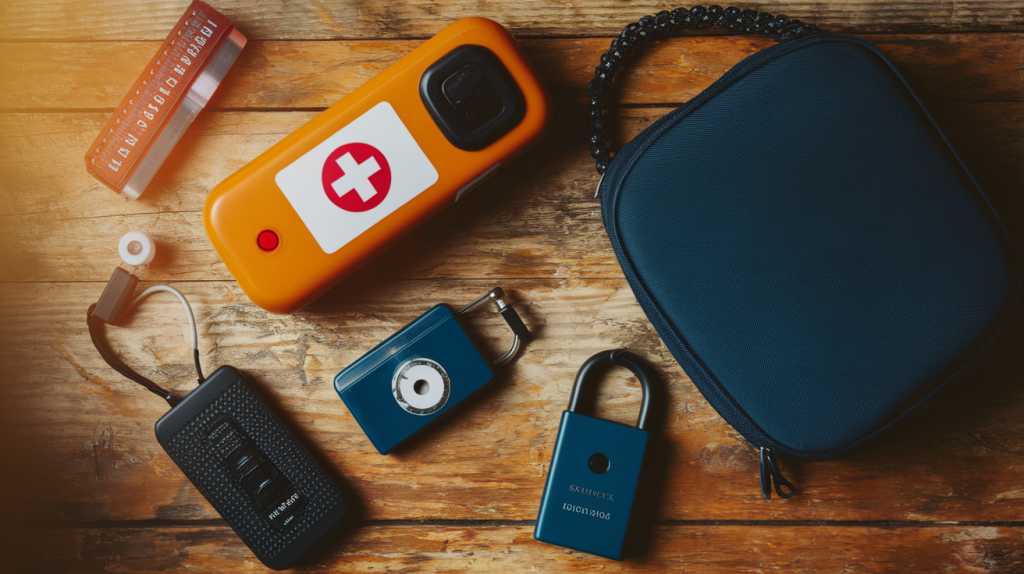
When you’re traveling solo, you are your own first responder. Medical emergencies don’t wait for convenient timing, and in remote locations, professional help might be hours or days away. Your health and emergency medical gear bridges that gap.
Comprehensive First Aid Kit (Customized for Solo Travel)
A basic first aid kit from the drugstore won’t cut it for serious solo adventures. Your kit should go beyond bandages to include comprehensive wound care supplies, multiple blister treatment options (essential for hikers), pain relievers, antihistamines for allergic reactions, anti-diarrheal medication, and all your personal prescription medications with a few days extra.
The 24-hour minimum rule guides your packing: carry enough supplies to handle injuries or illness for at least 24 hours until you can reach professional medical care, a pharmacy, or civilization. This includes adequate pain management, wound cleaning supplies, and medications for common travel ailments like headaches, stomach issues, and minor infections.
For remote backcountry trips lasting multiple days, add advanced items like an emergency dental repair kit (temporary filling material for lost fillings), irrigation syringe for cleaning deep wounds, SAM splint for stabilizing fractures, butterfly bandages or wound closure strips, and a comprehensive wilderness first aid manual. Consider taking a wilderness first aid course—the knowledge matters more than the gear.
Water Purification System
Hydration determines your survival in the wilderness. Dehydration causes poor decision-making, physical exhaustion, dangerous electrolyte imbalances, and can quickly become life-threatening. But drinking untreated water from streams, lakes, or questionable sources risks serious waterborne illnesses that leave you incapacitated.
Carry multiple purification options for redundancy. A portable filter like LifeStraw or Sawyer Mini removes bacteria and parasites from water sources, making it safe to drink immediately. These filters are lightweight, require no waiting time, and handle hundreds of gallons before needing replacement. Supplement your filter with purification tablets as backup—they’re lighter than filters, never break, and work when filters freeze or clog.
Know before you go: research water availability along your planned route. Some trails have reliable water sources every few miles, while others require carrying all your water for long stretches. Carry extra capacity for dry sections—collapsible water bottles or bladders let you carry several liters when necessary without adding weight when empty.
Emergency Shelter and Fire-Starting Kit
Unexpected overnight situations happen to even experienced adventurers. An injury that slows your pace, a navigation error that adds miles to your route, or sudden weather changes can leave you caught by darkness far from your planned campsite. A lightweight emergency bivy or space blanket prevents hypothermia in these situations.
Emergency shelters weigh just ounces but reflect body heat and block wind, creating a survivable microclimate even in harsh conditions. Space blankets are affordable and compact, while emergency bivies offer better protection and durability. Neither replaces a proper tent, but both can save your life when you’re forced to spend an unplanned night outdoors.
Multiple fire-starting methods ensure you can create warmth, dry wet clothing, purify water, and signal for help even in challenging conditions. Waterproof matches, a reliable lighter, and a ferro rod give you three independent ways to start fire. Each method works in different conditions—lighters fail at high altitude, matches get wet, ferro rods require dry tinder. Practice these skills in controlled settings before emergencies arise. Building a fire when you’re cold, stressed, and losing daylight is exponentially harder than practicing on a sunny afternoon in your backyard.
Health Precautions and Documentation
Pre-trip medical preparation prevents problems before they start. Verify your vaccinations are current for your destination—some countries require proof of yellow fever vaccination, and other immunizations protect against preventable diseases. Consult your doctor about altitude sickness prevention if you’re heading to high elevations, and get prescriptions for travel-specific medications like antibiotics for severe diarrhea or malaria prophylaxis.
Create a medical information card listing your blood type, known allergies, medical conditions, current medications, and emergency contact information. Store this in a waterproof pouch where first responders can easily find it. If you’re unconscious or unable to communicate, this card provides critical information that could save your life.
Travel insurance with evacuation coverage is essential for solo adventurers, not optional. Emergency helicopter rescue from remote locations costs tens of thousands of dollars. Medical evacuation from foreign countries to your home for treatment can exceed $100,000. Quality travel insurance ensures you can afford the emergency care you need without devastating financial consequences. Read policies carefully—some exclude “adventure activities” like hiking or climbing, so choose coverage that matches your actual plans.
Smart Planning & Documentation Tools: The Foundation of Safe Solo Adventures
The most important safety equipment doesn’t come in a package—it’s the planning and preparation you do before leaving home. These documentation and planning tools create safety nets that activate when other precautions fail.
Detailed Trip Plan and Check-In System
Before every solo adventure, provide a trusted contact with your detailed itinerary including your planned route with specific trail names or roads, expected check-in times throughout your trip, vehicle description and where you’re parking, and complete emergency contact numbers including local authorities for your destination area.
Set clear expectations about when they should contact authorities if they haven’t heard from you. Typically, this is 24 hours after your expected return time, but adjust based on your trip length and communication capabilities. Make sure your contact person understands they should actually call for help if you’re overdue—some people hesitate, not wanting to cause a fuss, but that hesitation can be dangerous.
Keep copies of your trip plan in multiple places: in your pack where rescuers can find it if they locate your gear, in your vehicle at the trailhead, and shared electronically with multiple people. If something goes wrong, this information tells rescuers exactly where to search rather than covering hundreds of square miles of wilderness.
Essential Documents and Backup Systems
Protect your important documents in a waterproof pouch—copies of your passport or ID, insurance cards, credit cards, and emergency contacts. If your primary documents get lost, damaged, or stolen, these copies help you prove your identity, access your accounts, and contact help.
Digital backups stored in secure cloud storage give you access from anywhere. Photograph all important documents and save them to services like Google Drive or Dropbox. If you lose everything physical, you can still access these documents from any device with internet. This includes your trip plans, insurance information, prescriptions, and contact lists.
Cash in small bills handles situations where cards don’t work. Not all trailheads have cell service for card readers, rural gas stations might be cash-only, and emergency situations don’t always accommodate electronic payments. Carry at least $100-200 in small bills stored in weatherproof packaging separate from your main wallet.
Weather Monitoring and Route Research
Check weather forecasts obsessively in the days leading up to your departure. Weather in mountains and remote areas changes rapidly and can turn deadly. Monitor forecasts until the moment you leave, and be willing to postpone trips when forecasts show dangerous conditions. Solo travelers don’t have partners to help navigate through storms or make group decisions about turning back.
Understand your limits honestly when researching trail difficulty. Rating systems vary, and what one person calls “moderate” might be genuinely challenging for someone else. Solo adventurers can’t rely on partners to help with navigation errors, physical struggles, or motivation when the going gets tough. Choose routes slightly below your maximum ability level to build in a safety margin.
Local knowledge is gold for solo travelers. Contact ranger stations before trips to ask about current trail conditions, recent wildlife activity, and potential hazards. Read recent trip reports on hiking forums and apps to learn what other travelers encountered. Join online hiking communities where experienced locals share advice and warnings. This information reveals problems that don’t show up on maps—washed-out bridges, aggressive wildlife, or dangerous sections that require technical skills.
Trust Your Gut and Set Boundaries
Your intuition is the most important safety tool you possess. That uncomfortable feeling when something seems wrong developed through thousands of years of human evolution. If a situation, person, or place feels unsafe, trust that instinct even if you can’t articulate exactly what’s wrong. Your subconscious processes dozens of danger signals that your conscious mind hasn’t identified yet.
Give yourself permission to change plans without guilt or shame. Solo travel means you answer only to yourself—there’s no group pressure to continue when conditions deteriorate or situations feel unsafe. Turning back, choosing an easier route, or skipping a destination that feels wrong shows wisdom, not weakness. Every experienced adventurer has stories about times they changed plans, and they’re alive to tell those stories because they listened to their instincts.
Confidence through preparation creates a positive cycle. The more prepared you are with proper gear, knowledge, and planning, the more confidently you can explore. That confidence helps you recognize the difference between normal nervousness about new experiences and genuine warning signs that something is actually dangerous. Build your skills gradually, and your judgment will develop alongside your abilities.
In Closing
Solo adventure offers unmatched freedom and personal growth, but that independence comes with responsibility for your own safety. The seven essential categories covered in this guide—communication and navigation tools, personal safety and security gear, health and emergency medical supplies, and smart planning systems—create overlapping layers of protection that keep you safe in challenging situations.
Start building your solo adventure safety kit today, but don’t feel pressured to buy everything at once. Begin with beginner-friendly solo adventures close to home while gradually acquiring gear and building skills. A day hike on a popular trail teaches you what you need for an overnight camping trip, which prepares you for multi-day backcountry adventures.
Practice using your equipment before emergencies arise. Deploy your satellite messenger, test your water filter, practice with your signal mirror, and set up your emergency shelter in your backyard. Fumbling with unfamiliar gear during an actual emergency wastes precious time and increases stress. Familiarity with your equipment builds confidence and competence.
Join local hiking groups or outdoor clubs to learn from experienced solo adventurers. These communities share knowledge generously, recommend specific gear that works in your region, and often organize group trips where you can develop skills in a supported environment before venturing out alone.
Always share your detailed trip plans and establish clear check-in systems. This simple step costs nothing but creates a critical safety net. Your contact person becomes your lifeline if something goes wrong, ensuring that help arrives when you need it most.
Remember that postponing or modifying plans shows wisdom, not weakness. The mountains, trails, and destinations will still be there next week or next year. Your safety matters more than any summit, any photograph, or any achievement. The best adventurers are the ones who live to adventure another day.
Ready to start planning your next solo adventure? Take the first step today by creating your trip plan template and sharing it with a trusted contact. Then start building your safety kit one essential at a time. Your confidence will grow with your preparation, and soon you’ll discover the incredible freedom that comes from exploring the world on your own terms—safely, confidently, and prepared for anything.