5 Carry-On Packing Mistakes That Waste Space (And How to Fix Them)

You’ve been there: sitting on your suitcase, desperately trying to zip it closed while half your wardrobe sits unpacked on the bed. Meanwhile, your travel-savvy friend breezes through the airport with a perfectly packed carry-on that somehow holds everything they need for a week-long trip.
The Problem
The truth is, most travelers waste up to 40% of their carry-on space without even realizing it. We pack the same inefficient way we learned years ago, cramming clothes into our bags and hoping for the best. The result? Overstuffed luggage, wrinkled clothes, and that sinking feeling when you realize you forgot something essential because there simply wasn’t room.
But here’s what most people don’t understand: the problem isn’t that carry-ons are too small. The problem is how we’re using the space we have. Every time you fold instead of roll, skip compression cubes, or toss items in randomly, you’re literally throwing away precious space that could fit another outfit or two.
What You’ll Learn
I’m going to show you the five biggest packing mistakes that drain your carry-on space—and more importantly, the proven solutions that’ll transform how you travel. These aren’t complicated travel hacks that require special skills or expensive gear. They’re simple, effective techniques that frequent travelers use to pack smarter, not harder.
By the end of this guide, you’ll know exactly how to maximize every inch of your carry-on, eliminate wasted space, and pack everything you actually need for your trip. No more checked bag fees, no more waiting at baggage claim, and no more stress about whether everything will fit.
Mistake #1: Packing Bulky Items Without Strategic Placement
Why This Wastes Space
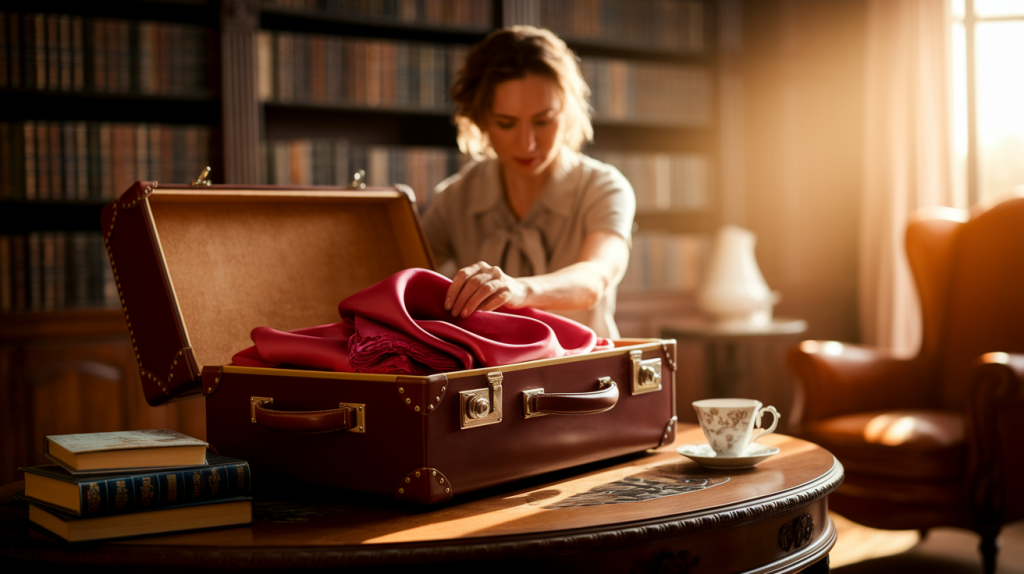
When you toss bulky items like shoes, toiletry bags, and electronics randomly into your carry-on, you create awkward gaps and dead space that soft items can’t fill efficiently. Think about it: shoes have a curved shape that leaves hollow spaces around them. Your toiletry bag is rigid and doesn’t conform to the contours of your suitcase. These items act like space-wasting obstacles when placed carelessly.
Research shows that strategic placement of bulky items can recover up to 30% more usable packing space. The difference between random packing and strategic layering is the difference between struggling to fit five days’ worth of clothes and easily packing for a full week.
The Perfect Solution: Strategic Layering
The key to efficient packing starts with building a solid foundation using your bulkiest items. Here’s the exact method professional travelers use:
Fill Your Shoes First: Before your shoes even touch your suitcase, stuff them with small items. Socks, underwear, charging cables, adapters, and even jewelry pouches fit perfectly inside shoes. This transforms wasted hollow space into valuable storage. Roll socks into tight balls and push them all the way to the toe of each shoe. Wrap charging cables around your fingers to create compact coils, then nestle them into the remaining space. This simple step alone can save you the equivalent of one packing cube’s worth of space.
Create a Solid Base: Once your shoes are stuffed, place them along the bottom of your carry-on, positioning them in the corners where the suitcase is most structured. The wheels and frame of your carry-on create rigid corners that soft clothing can’t efficiently fill anyway. Your shoes and toiletry bag belong here, creating a stable, flat base for everything else. Place heavier items like your toiletry bag and any books or electronics between the shoes to complete your foundation layer.
Utilize Every Corner: The corners and edges of your carry-on are where most people waste the most space. Bulky items should always go in these structured areas first. Position your shoes heel-to-toe in opposite corners to create a level surface. Tuck your toiletry bag along one side where the suitcase frame provides structure. This strategic placement means your soft, flexible clothing can fill the center space without having to work around awkwardly placed bulky items.
Quick Win
Try this tonight: empty your suitcase and repack it using just this one technique. Place your shoes in the bottom corners with small items stuffed inside, add your toiletry bag along the side, then pack your clothes on top. You’ll immediately see—and feel—the difference. Most travelers report fitting 2-3 additional outfits using this method alone.
Mistake #2: Folding Clothes Instead of Rolling
The Space-Wasting Truth
Folding clothes is what we’ve always done, so it feels natural. But folding creates rigid rectangles with air pockets trapped between layers. These stiff, flat stacks don’t conform to the shape of your suitcase, leaving gaps along the curves and corners. Worse, folded clothes shift during travel, creating even more wasted space as your neat stacks collapse into chaos.
The numbers tell the story: folded clothes waste approximately 25-30% more space than rolled clothes. That’s not a small difference—it’s the difference between bringing three pairs of jeans or just two. For a week-long trip, rolling versus folding can mean fitting an extra 3-4 complete outfits in the same space.
The Ultimate Rolling Method
Rolling clothes isn’t just about saving space—it’s about creating flexible, compact packages that nestle together perfectly and actually reduce wrinkles. Here’s how to do it right:
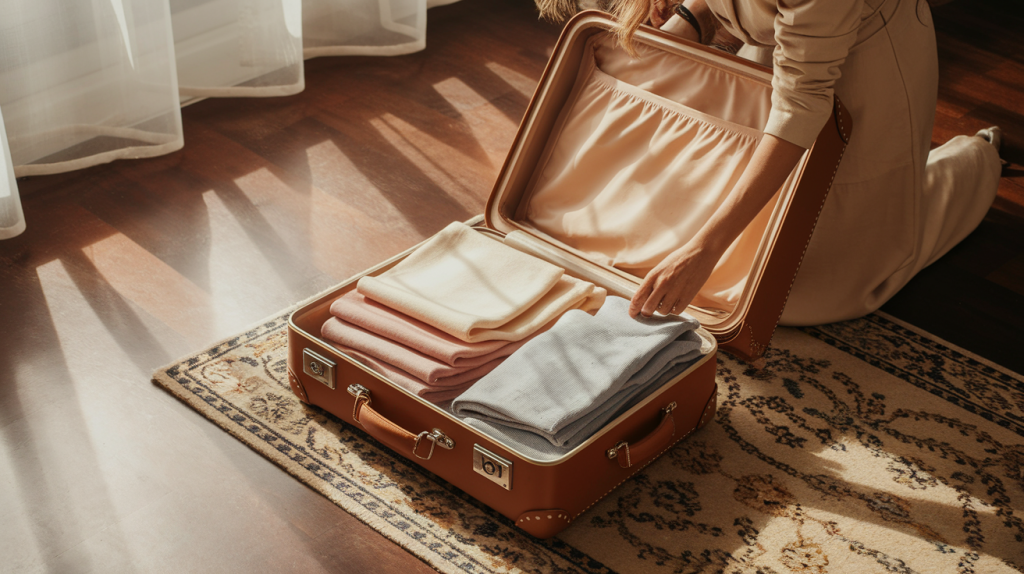
Roll Everything Tightly: Start with t-shirts and casual tops. Lay the shirt face-down, fold the sleeves in toward the center, then fold the shirt in half lengthwise. Starting from the bottom, roll tightly toward the collar, smoothing out air pockets as you go. The key word is “tightly”—loose rolls waste almost as much space as folding. For jeans and pants, fold them in half lengthwise, then roll from the ankle up. The tighter you roll, the more space you save and the fewer wrinkles you’ll see when you unpack.
Bundle Wrapping for Wrinkle-Prone Items: For dress shirts, blouses, and anything that wrinkles easily, use the bundle wrapping technique. Place your most wrinkle-prone item flat, then layer other clothes on top, wrapping each piece around a central core (like a small pouch or rolled towel). This technique uses the clothes themselves as padding, preventing the sharp creases that cause wrinkles. The bundle method works especially well for business travelers who need to arrive with crisp, professional clothing.
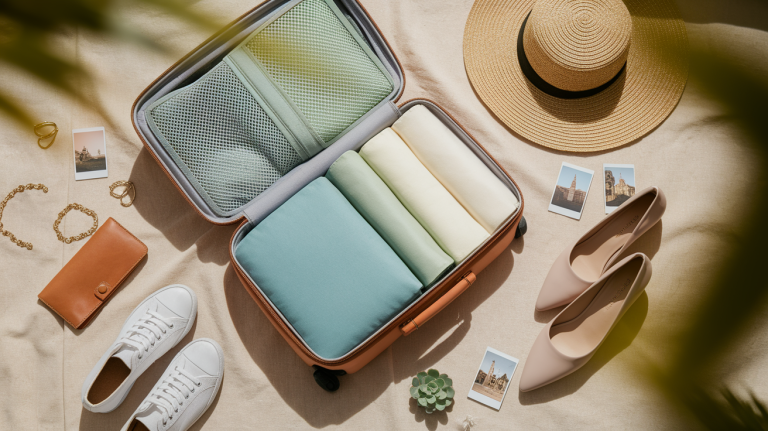
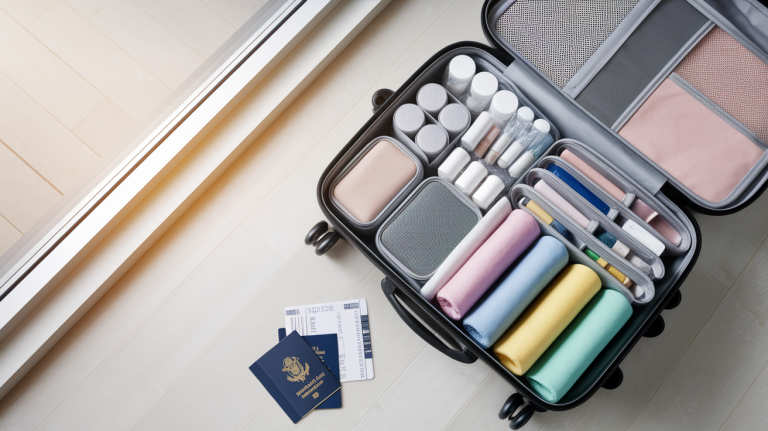
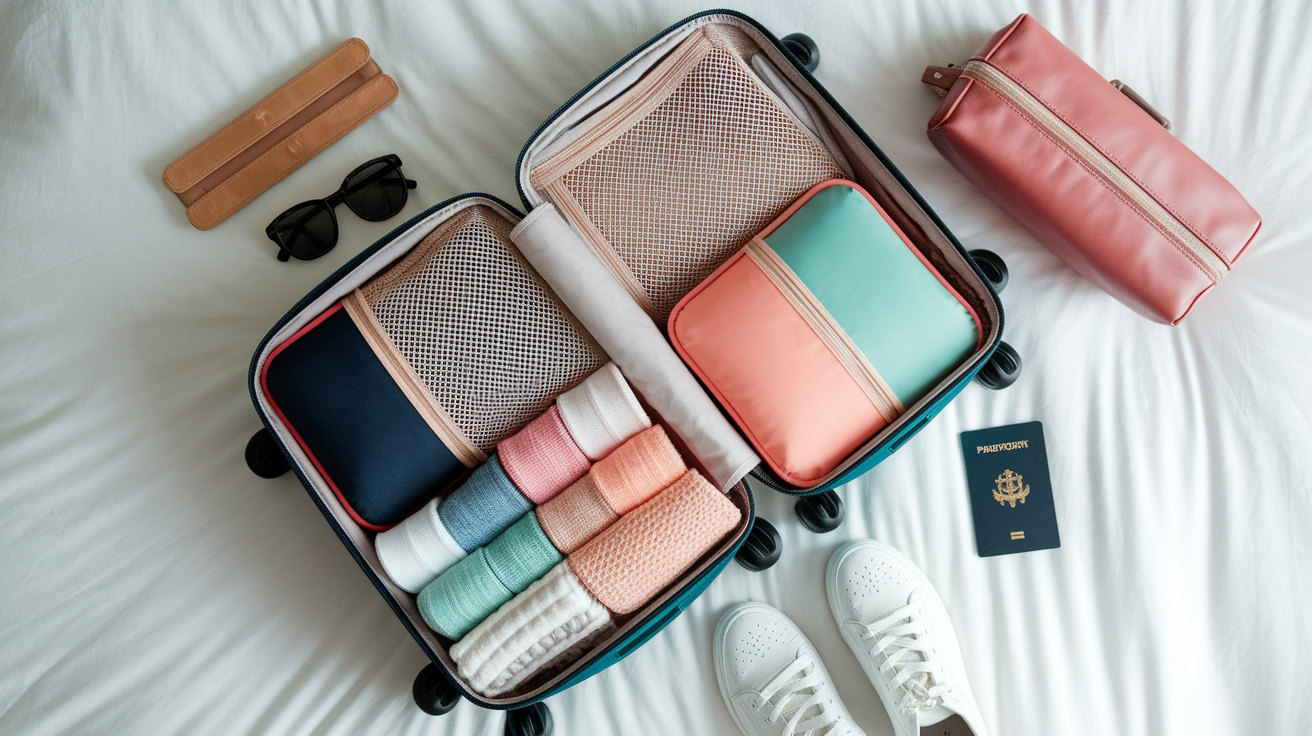
Combine with Compression: Here’s where rolling becomes truly powerful: roll your clothes first, then place the rolled items in compression packing cubes. The combination of rolling (which removes air from the fabric) and compression (which squeezes out remaining air) can reduce the space your clothes take up by nearly 50%. Your rolled clothes become firm, compact cylinders that stack like Tetris pieces, fitting perfectly into every available space.
Amazing Results You’ll See
The first time you roll your clothes properly, you’ll be shocked at how much space you save. A week’s worth of t-shirts that would take up half your suitcase when folded now fits into a single packing cube. Your jeans, which seemed impossibly bulky, roll into tight tubes that nestle along the sides of your carry-on. And the best part? When you unpack, your clothes have fewer wrinkles than they would have if you’d folded them.
Mistake #3: Skipping Compression Packing Cubes

Why Going Cube-Free Costs You
Many travelers skip packing cubes entirely, thinking they’re just an unnecessary expense or organizational tool. This is one of the costliest mistakes you can make. Without packing cubes—specifically compression packing cubes—you’re leaving 30-50% of your potential packing space unused.
When you pack clothes directly into your carry-on, they shift, expand, and create air pockets. Soft fabrics naturally contain air, and that air takes up valuable space. Your carefully rolled clothes unroll slightly during travel. Your organized stacks become jumbled messes. Every time you open your suitcase to grab something, you disturb the entire contents, creating more wasted space.
Compression packing cubes solve all of these problems while adding organization that makes your entire trip easier. They’re not just a nice-to-have—they’re essential tools for maximizing carry-on space.
The Complete Compression Solution
Investing in quality compression packing cubes transforms your packing game completely. Here’s how to use them effectively:
Invest in Quality Compression Cubes: Not all packing cubes are created equal. Standard packing cubes organize your clothes but don’t save space. Compression cubes, however, feature a second zipper that compresses the contents after you’ve filled them. Look for cubes with durable two-way zippers, breathable mesh panels, and reinforced stitching. A set of three cubes (small, medium, and large) costs between $30-50 and will last for years of travel. The space they save pays for themselves in avoided checked bag fees after just one or two trips.
Use the Two-Way Zipper Method: Here’s the proven technique: fill your compression cube with rolled clothes, leaving about an inch of space at the top. Zip the main zipper closed completely. Now comes the magic—use the compression zipper (usually a second zipper that goes around the perimeter) to squeeze out all the excess air. You’ll feel the cube flatten and shrink as air escapes through the mesh panels. The result looks like you’ve vacuum-sealed your clothes without needing any equipment. This process can compress your clothing by 30-50%, literally doubling the amount you can fit in your carry-on.
Organize by Outfit or Type: The organizational benefit of packing cubes is just as valuable as the space savings. Dedicate specific cubes to specific purposes: one cube for tops, another for bottoms, a small cube for underwear and socks. Or organize by day: one cube for the first half of your trip, another for the second half. This system means you can find exactly what you need without unpacking your entire suitcase. When you’re living out of a carry-on for a week, this organization is invaluable.
Effective Space Math
Let me give you concrete numbers: a standard carry-on has about 2,400 cubic inches of space. Without compression cubes, you might effectively use 1,600-1,800 of those inches due to air pockets and disorganization. With compression cubes, you can use 2,200-2,300 cubic inches—that’s 25-40% more usable space. In practical terms, that’s the difference between packing for 4-5 days versus packing for a full week in the same bag.
Mistake #4: Packing “Just in Case” Items You’ll Never Use

The Overpacking Trap
“But what if I need it?” This single question causes more wasted carry-on space than almost anything else. We pack three pairs of shoes when we’ll wear one. We bring five “just in case” outfits for a four-day trip. We throw in that hair dryer, that extra jacket, that book we might read, and suddenly our carry-on is stuffed with things we’ll never touch.
The psychology of “just in case” packing is powerful, but the math is clear: you’ll use about 20% of what you pack 80% of the time. Those “just in case” items sit at the bottom of your bag, taking up precious space while adding weight and stress to your travel experience.
Every item you pack should justify its space. If you’re not confident you’ll use something at least twice during your trip, it doesn’t belong in your carry-on. This mindset shift alone can free up 30-40% of your packing space.
Essential Packing Philosophy: The One-Week Rule
The secret to efficient packing is understanding that you need far less than you think. Here’s the proven framework:
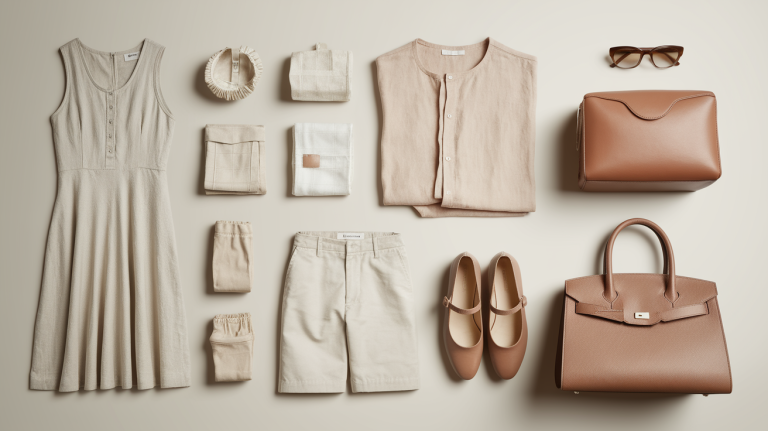
Apply the 80/20 Rule: Focus ruthlessly on versatile essentials that mix and match easily. Pack a color palette that works together—neutrals like black, navy, gray, and white, with one or two accent colors. Every top should work with every bottom. Each piece should serve multiple purposes. A black dress works for dinner, sightseeing, or casual drinks. A pair of dark jeans transitions from day to evening. This versatility means you can create 10+ different outfits from just 6-7 pieces of clothing.
Limit Shoes to Three Pairs Maximum: Shoes are the biggest space-wasters in any carry-on. Each pair takes up as much room as 3-4 rolled shirts. The solution? Be strategic. Pack one comfortable walking shoe that you can wear for hours of sightseeing. Add one dressy option—a nice loafer, ballet flat, or simple heel that elevates any outfit. Finally, include one specialty pair based on your trip: sandals for beach destinations, athletic shoes for active trips, or boots for cold weather. These three pairs cover virtually every situation you’ll encounter. Wear your bulkiest pair on the plane to save even more space.
Choose Multi-Purpose Items: This is where smart packing becomes an art. A large scarf works as a blanket on the plane, a beach cover-up, a shawl for chilly restaurants, and even an emergency bag. A sarong serves as a beach towel, a skirt, a dress, and a picnic blanket. A lightweight rain jacket doubles as a windbreaker and an extra layer for cold evenings. Every multi-purpose item you pack effectively gives you two or three items in the space of one.
Simple Reality Check
Before you zip your carry-on, do this exercise: remove everything and lay it on your bed. Pick up each item and ask yourself: “Will I definitely use this at least twice on this trip?” If the answer isn’t a confident yes, put it back in your closet. This simple reality check eliminates 90% of “just in case” items and can free up enough space to fit an extra day or two of essentials.
Mistake #5: Ignoring Your Personal Item Allowance

The Free Space You’re Leaving Behind
Here’s a secret that seasoned travelers exploit every single trip: your personal item is essentially a second carry-on that most people dramatically underutilize. Airlines allow you to bring both a carry-on and a personal item—typically a backpack, tote, or laptop bag that fits under the seat in front of you. Yet most travelers treat their personal item as just a place for their phone, wallet, and a book.
This is free real estate you’re completely ignoring. A well-chosen personal item can add 1,500-2,000 cubic inches of packing space to your travel capacity. That’s nearly doubling what you can bring without paying a single extra fee or checking a bag. When you fail to maximize your personal item, you’re essentially traveling with one hand tied behind your back.
The Personal Item Power Strategy
Transform your personal item from an afterthought into a strategic packing powerhouse:
Choose the Right Bag: Not all personal items are created equal. A slim purse or tiny laptop sleeve wastes this valuable allowance. Instead, invest in a travel backpack specifically designed to maximize the personal item dimensions allowed by airlines (typically 18″ x 14″ x 8″). Brands like Fjällräven, Osprey, and Tortuga make backpacks engineered to hit these exact dimensions—giving you maximum space while staying compliant. A structured backpack with multiple compartments also keeps items organized and accessible during your flight.
Pack Your Heaviest Items Here: Your personal item goes under the seat, not in the overhead bin, which means weight matters less than it does in your carry-on. Use this to your advantage. Pack your heaviest items—laptop, tablet, books, camera gear, full water bottle, snacks—in your personal item. This keeps your carry-on lighter and easier to lift into the overhead bin while maximizing the total weight you can bring. Some travelers fit 15-20 pounds of gear in their personal item alone.
Layer for Airport Efficiency: Your personal item is what you’ll access throughout your flight, so pack it strategically. Keep your entertainment, headphones, snacks, and anything you’ll need during the flight in easy-to-reach pockets. Place items you’ll need at security—laptop, liquids bag, electronics—near the top for quick removal. This layered approach means you’re not digging through your bag at the gate or holding up the security line.
Bonus Capacity Unlocked
When you properly utilize both your carry-on and personal item, you unlock a combined packing capacity that rivals a medium checked suitcase—without the fees, the wait, or the risk of lost luggage. Your carry-on handles clothes and shoes using all the techniques we’ve covered. Your personal item carries electronics, documents, valuables, and in-flight essentials. Together, they create a complete travel system that handles week-long trips with ease.
Think of it this way: if your carry-on is your closet, your personal item is your desk and entertainment center. Each bag has a purpose, and when both are maximized, you’re traveling with everything you need while everyone else is standing at baggage claim.
Conclusion
Recap the Game-Changers
Let’s review the five mistakes that have been wasting your carry-on space and the proven solutions that fix them:
First, strategic placement of bulky items—shoes stuffed with small items and positioned in bottom corners, toiletry bags along the sides—creates a stable foundation and recovers 30% more usable space. Second, rolling clothes instead of folding eliminates air pockets and creates flexible packages that nestle together perfectly, saving 25-30% more space. Third, compression packing cubes squeeze out excess air and keep everything organized, effectively doubling your packing capacity. Fourth, eliminating “just in case” items and focusing on versatile essentials means you pack only what you’ll actually use, freeing up 30-40% of your space. And finally, limiting shoes to three pairs maximum prevents the single biggest space-waster in any carry-on.
Your Action Plan
You don’t need to implement all of these strategies at once. Start with the easiest win: tonight, repack your carry-on using strategic placement for bulky items and rolling instead of folding. You’ll immediately see the difference. For your next trip, invest in a set of compression packing cubes—they’re the single most effective tool for maximizing space. Then, gradually adopt the mindset of packing versatile essentials instead of “just in case” items.
Each of these techniques builds on the others. Strategic placement creates the foundation. Rolling maximizes flexibility. Compression cubes squeeze out wasted air. And smart item selection ensures every piece earns its space. Together, these methods can help you pack 50-60% more efficiently than you do right now.
The Ultimate Travel Freedom
Here’s what efficient packing really gives you: freedom. Freedom from checked bag fees that add $60-120 to every trip. Freedom from waiting at baggage claim while other passengers head straight to their destination. Freedom from worrying whether your luggage will arrive when you do. Freedom to move quickly through airports, hop on last-minute flights, and travel spontaneously without the burden of overpacked bags.
When you master carry-on packing, travel becomes simpler, faster, and less stressful. You’ll breeze through security with confidence, knowing everything you need is right there with you. You’ll arrive at your destination ready to go, not waiting and worrying about lost luggage. And you’ll discover that traveling light doesn’t mean sacrificing comfort or style—it means traveling smarter.
Final Encouragement
The difference between struggling with an overstuffed carry-on and effortlessly packing for a week-long trip isn’t about having better luggage or fewer belongings. It’s about using proven techniques that maximize every inch of space you have. These aren’t complicated travel hacks—they’re simple, effective methods that work every single time.
Start implementing these strategies on your next trip. You’ll be amazed at how much more you can fit in your carry-on when you stop wasting space on inefficient packing methods. Your future traveling self will thank you every time you walk past the baggage claim carousel, carry-on in hand, ready to start your adventure.
Now it’s your turn. Which of these packing mistakes have you been making? Try one or two of these solutions on your next trip and experience the difference for yourself. Once you see how much space you’ve been wasting, you’ll never pack the same way again.