3 Days in Paris for First-Time Female Travelers

Paris calls to you with promises of croissants, cobblestone streets, and that unmistakable joie de vivre. But planning your first solo trip to the City of Light can feel overwhelming—especially when you’re navigating it as a woman traveling alone.
Should you book tickets in advance? Which neighborhoods are actually safe? Can you really dine solo at a Parisian bistro without feeling awkward?
Here’s the truth: Paris is one of the most rewarding cities for solo female travelers, and you absolutely can do this with confidence.
This guide gives you everything you need for an incredible 3-day Paris adventure. You’ll get a proven day-by-day itinerary covering essential attractions, practical safety tips tailored specifically for women traveling alone, and easy navigation advice that takes the stress out of getting around. I’m also sharing hidden gems beyond the tourist trail, simple strategies for dining solo with confidence, and money-saving tips that actually work.
No fluff, no generic advice—just the real information you need to make your first Paris trip unforgettable.
Before You Go: Essential Planning Tips for Female Travelers
Best Time to Visit Paris for First-Timers
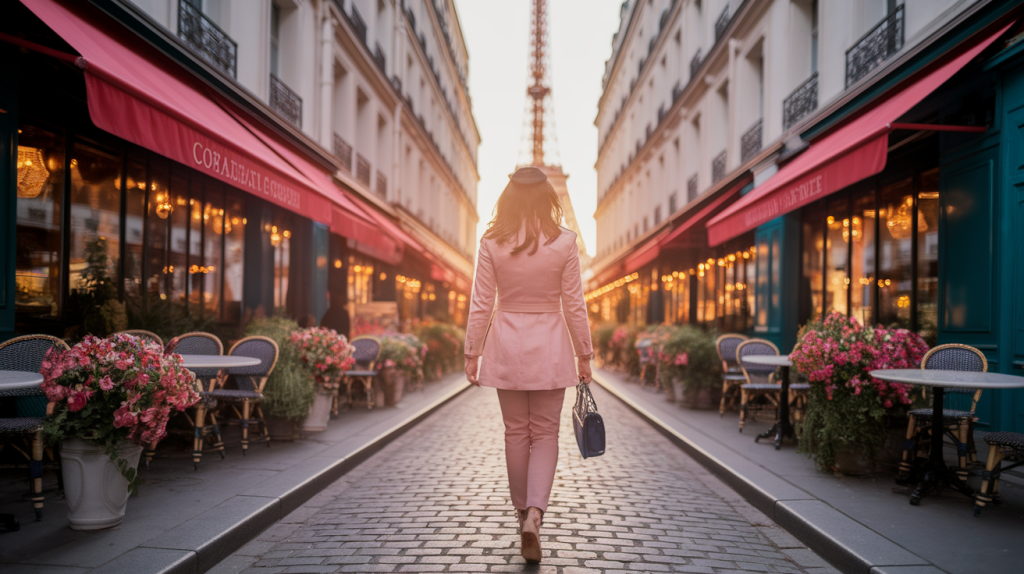
Timing matters more than you think when it comes to enjoying Paris. Spring (April through May) and fall (September through October) offer the sweet spot: perfect weather hovering in the 60s, smaller crowds at major attractions, and Parisians actually being in the city instead of on vacation. You’ll walk comfortably without sweating through your clothes, and you won’t spend half your trip waiting in lines.
Summer brings outdoor festivals and that magical long daylight, but it also brings peak tourist season. Expect shoulder-to-shoulder crowds at the Eiffel Tower and prices that make your credit card weep. Winter provides the most budget-friendly options with hotel rates dropping by 30-40%, plus you get that magical holiday atmosphere with twinkling lights along the Champs-Élysées. Just pack layers—Parisian winters are damp and chilly.
Where to Stay: Safe and Central Neighborhoods
Your neighborhood choice sets the tone for your entire trip. Le Marais tops my list for solo female travelers—it’s trendy, completely walkable, and has an excellent safety record. The LGBTQ-friendly vibe creates an inclusive atmosphere, and the narrow medieval streets are packed with boutiques, falafel shops, and cafés where you can people-watch for hours.
Saint-Germain-des-Prés delivers classic Parisian charm with easy metro access to everywhere you want to go. Yes, it’s pricier, but you’re paying for that postcard-perfect experience with historic cafés where existentialists once debated philosophy. The Latin Quarter offers budget-friendly options with a vibrant student atmosphere—it’s safe, energetic, and puts you within walking distance of Notre-Dame and the Panthéon.
Here’s what matters most: stay near a metro station. Paris’s metro system is your best friend, and proximity to a station means you can get home quickly and safely any time of day or night.
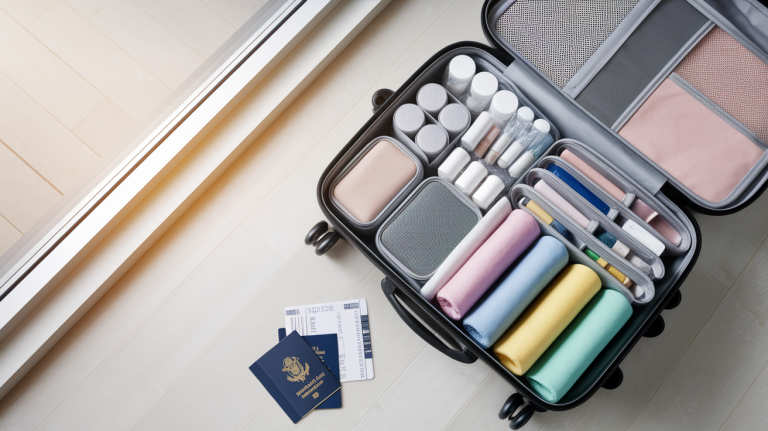
Quick Packing Essentials Every Woman Needs
Let’s talk shoes first because this is where most first-timers mess up. You’ll walk 15,000+ steps daily on cobblestones, uneven sidewalks, and metro stairs. Pack comfortable walking shoes that you’ve already broken in—blisters will ruin your trip faster than anything else. Stylish sneakers or supportive flats work perfectly; Parisians care more about your overall look than whether you’re wearing heels.
A crossbody bag or anti-theft backpack is non-negotiable for safety and convenience. Keep your hands free for taking photos, holding maps, and grabbing that spontaneous pain au chocolat. Look for bags with slash-proof material and locking zippers—theft happens in crowded tourist areas.
Create versatile outfit combinations that work from morning café visits to evening cathedral tours. Think layers: a good jacket, scarves, and pieces you can mix and match. Parisians dress more formally than Americans, so leave the athletic wear at home unless you’re actually exercising.
Don’t forget the practical stuff: a European power adapter, portable charger (your phone will die from constant photo-taking and map-checking), and offline maps downloaded before you leave. Google Maps lets you download entire city sections that work without data.
Money Matters Made Simple
Budget realistically for a mid-range Paris experience: €100-150 daily covers accommodation, food, attractions, and transportation. That breaks down to roughly €30-40 for accommodation (if you’ve booked ahead), €40-50 for meals, €20-30 for attractions, and €10-20 for transportation.
Credit cards work almost everywhere in Paris now, but carry €50-100 in cash for small cafés, market vendors, and public restrooms. Notify your bank before traveling to avoid having your card frozen for “suspicious activity” when you’re trying to buy croissants at 8 AM.
The Paris Museum Pass saves both time and money if you’re hitting multiple attractions. It costs €62 for two days or €77 for four days and covers 60+ sites including the Louvre, Versailles, and Arc de Triomphe. The real value? You skip the ticket lines at most places, which saves hours of standing around.
Your Perfect 3-Day Paris Itinerary
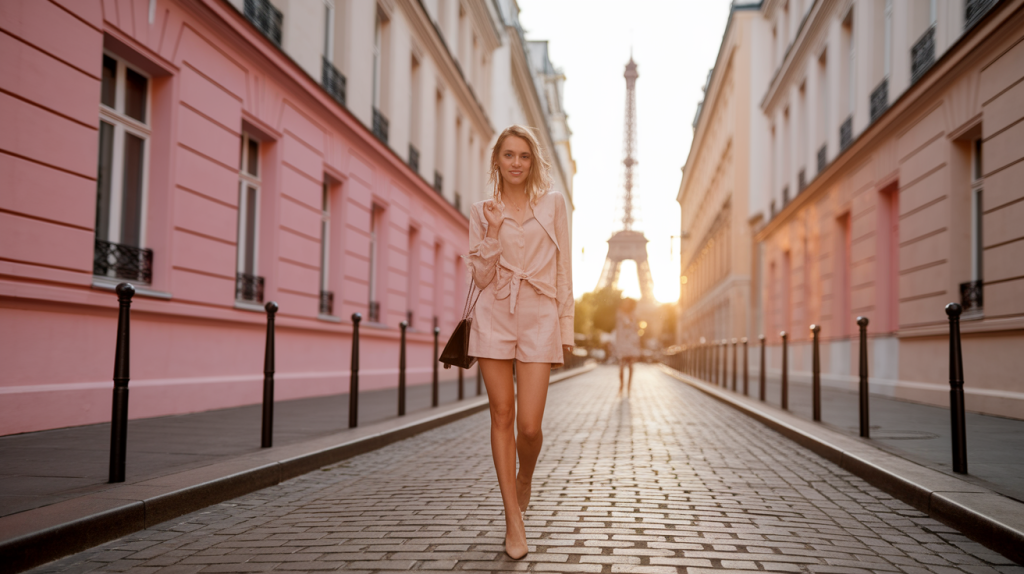
Day 1: Classic Paris Icons and the Right Bank
Start your Paris adventure at the Louvre, arriving right at opening (9 AM) to beat the crowds. This strategy matters—by 11 AM, the museum is packed with tour groups. Book your timed entry tickets online weeks in advance; the Louvre limits daily visitors, and tickets sell out.
Focus on the greatest hits: the Mona Lisa (smaller than you expect, always mobbed), Venus de Milo (stunning and usually less crowded), and the Winged Victory of Samothrace (my personal favorite—she’s breathtaking). Don’t try to see everything; the Louvre is massive and you’ll burn out. Give yourself 2-3 hours maximum.
Grab lunch at a café in the Palais Royal gardens just north of the Louvre. The gardens are peaceful, with striped columns that make for great photos, and the surrounding cafés offer people-watching opportunities that feel quintessentially Parisian. Expect to pay €15-20 for a simple lunch—café food near tourist sites costs more, but the atmosphere is worth it.
Stroll through the Tuileries Garden toward Place de la Concorde, where Marie Antoinette was executed during the French Revolution. Window shop along the Champs-Élysées (the actual stores are overpriced tourist traps, but the boulevard itself is iconic), then head to the Eiffel Tower for sunset.
Book summit tickets to the very top in advance—they release tickets 60 days out and sell out within hours. The sunset view from the top floor, watching Paris turn golden then light up as darkness falls, ranks among the most spectacular urban views on Earth. Plan to spend 2-3 hours total at the tower including security lines and elevator waits.
Dinner in the 7th arrondissement near the tower gives you charming bistro options without the crazy prices right at the base. End your evening with a river cruise on the Seine—it’s touristy but genuinely relaxing after a long day of walking, and seeing the illuminated monuments from the water provides a completely different perspective.
Day 2: Montmartre Magic and Hidden Gems
Day two takes you to bohemian Montmartre, the hilltop neighborhood where Picasso, Van Gogh, and countless other artists lived and worked. Take the metro to Abbesses station and walk up (yes, it’s a climb, but the funicular costs extra and you’ll miss the charming streets).
Visit Sacré-Cœur Basilica first thing for breathtaking city views from the dome. The basilica itself is free; climbing the dome costs €6 and requires navigating 300 narrow spiral stairs, but the panoramic view is incredible. Arrive early before tour buses unload their passengers.
Wander the artistic Place du Tertre where artists set up easels and offer to paint your portrait. It’s touristy but still charming if you embrace it. The side streets of Montmartre hold the real magic—quiet staircases, ivy-covered buildings, and that village-within-a-city feeling that makes you forget you’re in a major metropolis.
Lunch at a traditional bistro in Montmartre gives you authentic French food without the pretension of fancier neighborhoods. Try Le Consulat or La Maison Rose (the pink café you’ve seen in every Instagram photo). Expect to pay €20-25 for lunch with wine.
Discover the quirky Musée de Montmartre if you want to understand the neighborhood’s artistic history. Then hunt for vintage treasures at local boutiques along Rue des Abbesses—you’ll find unique pieces you’d never see in tourist shops.
Head to Pont Alexandre III for sunset—this is Paris’s most beautiful bridge, with ornate gold sculptures and perfect views of the Eiffel Tower in the distance. The light here during golden hour is magical for photos.
Dinner in Le Marais exposes you to the city’s best restaurant scene. This neighborhood serves everything from traditional French to trendy fusion, plus the best falafel in Paris at L’As du Fallafel. If you want to splurge on a show, the Moulin Rouge offers that classic Parisian cabaret experience, though tickets start at €87.
Day 3: Left Bank Culture and Parisian Lifestyle
Your final day explores the Left Bank’s intellectual and artistic soul. Start by browsing the famous bouquinistes—the green book stalls lining the Seine that have operated since the 16th century. You’ll find vintage posters, old books, and quirky prints that make perfect souvenirs.
Visit Notre-Dame’s exterior (the interior remains closed for restoration after the 2019 fire, but the cathedral’s Gothic façade and flying buttresses are still spectacular). The surrounding Île de la Cité, the oldest part of Paris, deserves an hour of wandering its medieval streets.
Lunch in the Latin Quarter puts you in the heart of student life with budget-friendly options everywhere. This neighborhood has served cheap, good food to broke students for centuries, and that tradition continues. Try a crêperie for a €10 lunch that’s both filling and delicious.
Tour the stunning Sainte-Chapelle with its floor-to-ceiling stained glass windows that glow like jewels when sunlight streams through. Book tickets online to skip the line—this small chapel gets crowded fast, but it’s absolutely worth the €11.50 admission. The stained glass dates to the 13th century and depicts over 1,000 Biblical scenes in vivid blues and reds.
Relax in the Luxembourg Gardens like a true Parisian. Grab a chair (they’re free), sit by the fountain, and watch locals play chess, children sail toy boats, and couples stroll arm-in-arm. This is how Parisians actually spend their time, and slowing down to experience it transforms your trip from frantic sightseeing to genuine cultural immersion.
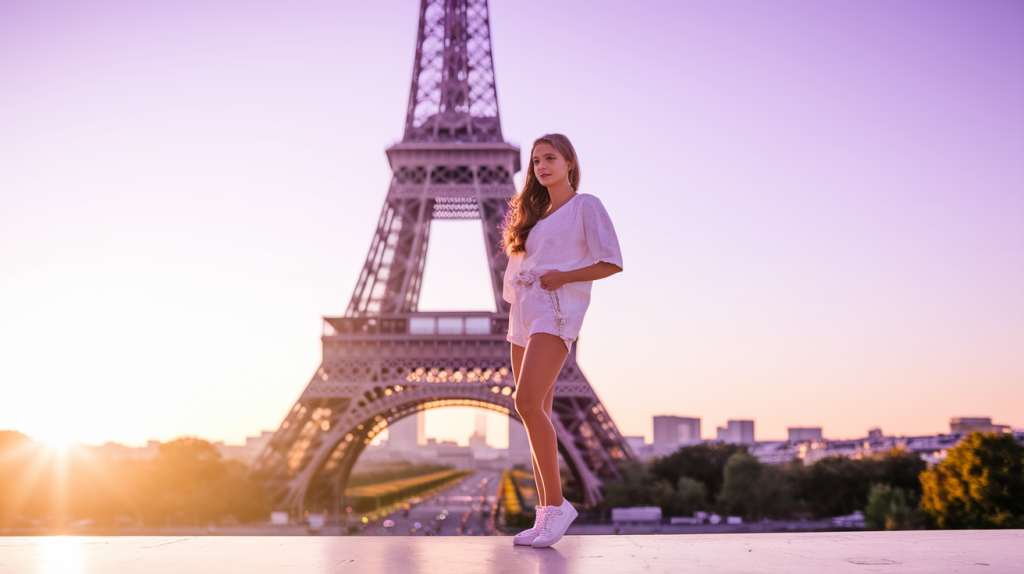
Return to the Eiffel Tower at golden hour, but this time view it from Trocadéro Gardens across the river. This vantage point gives you the iconic straight-on view with the tower perfectly framed. Stay for the hourly light show after dark—for five minutes every hour, the tower sparkles with 20,000 twinkling lights.
Your farewell dinner in Saint-Germain-des-Prés celebrates your last night in Paris. Splurge a little on a nice bistro meal—you’ve earned it. Then take an evening stroll through the illuminated city, soaking in the magic one last time.
Safety and Confidence: Navigating Paris as a Solo Female Traveler
Proven Safety Strategies That Work
Let’s address the elephant in the room: Is Paris safe for solo female travelers? Yes, absolutely. Paris ranks as one of Europe’s safest major cities, but like any big city, it requires common sense and awareness.
Trust your instincts—they’re your best travel companion. If a situation feels wrong, it probably is. Walk away without guilt or apology. That gut feeling exists for a reason, and listening to it keeps you safe.
Stay aware in crowded tourist areas where pickpockets operate. The Eiffel Tower, metro stations, Sacré-Cœur, and the Louvre are hotspots for theft. Pickpockets work in teams, using distraction techniques while someone else lifts your wallet or phone. Keep valuables in front pockets, use hidden pouches under your clothes, or leave them in your hotel safe.
Share your daily itinerary with someone back home. Send a quick text each morning with your plans and check in each evening. It takes 30 seconds and gives both you and your loved ones peace of mind.
Easy Metro and Transportation Tips
Paris’s metro system is efficient, affordable, and safe—even for solo female travelers. Purchase a Navigo Easy card (€2) that you can reload, or buy a carnet (booklet of 10 tickets) for €16.90 instead of paying €1.90 per single ticket. The savings add up fast.
Download the RATP app for real-time metro updates, route planning, and service alerts. The app works in English and shows you exactly which train to take and where to transfer. Paris’s metro is intuitive once you understand the system—lines are numbered and color-coded, and you navigate by the end station in your direction of travel.
Avoid empty metro cars late at night. If a car is empty when others are full, there’s usually a reason (often an unpleasant smell or a problematic passenger). Sit near other passengers, especially families or groups of women.
Uber and regular taxis provide safe options after dark. Uber costs about the same as licensed taxis in Paris and lets you track your route in real-time. Both are reliable and safe—just verify the license plate matches before getting in.
Dining Solo with Confidence
Here’s a secret: Parisians respect solo diners. They don’t see dining alone as sad or weird—it’s normal and even sophisticated. The awkwardness you feel? That’s in your head, not in the restaurant.
Lunch offers more budget-friendly prices than dinner at the same restaurant. Many bistros offer a “formule” or “menu du jour” at lunch—a fixed-price meal with appetizer, main, and dessert for €15-25. The exact same dishes cost twice as much at dinner.
Bring a book or journal if you feel self-conscious sitting alone. Having something to do with your hands eases that initial discomfort. But honestly, people-watching is the best solo dining activity in Paris—the café culture exists specifically for watching the world go by.
Counter seating at cafés is perfect for solo travelers. You can chat with the bartender or staff, feel less conspicuous than at a table for two, and often get faster service. Plus, you’re right where the action happens.
Learn simple French phrases that earn you smiles: “Bonjour” (hello), “S’il vous plaît” (please), “Merci” (thank you), and “L’addition, s’il vous plaît” (the check, please). Parisians appreciate when tourists make the effort, even if your pronunciation is terrible. That small effort changes interactions from transactional to friendly.
Handling Unwanted Attention
Most Parisian men are respectful, but you’ll occasionally encounter unwanted attention—catcalling, aggressive vendors, or persistent flirting. A firm “Non, merci” (no, thank you) works wonders. Say it clearly and keep walking without breaking stride.
Don’t feel obligated to be polite to aggressive vendors or anyone making you uncomfortable. You don’t owe strangers your time, attention, or a smile. Being direct isn’t rude—it’s necessary.
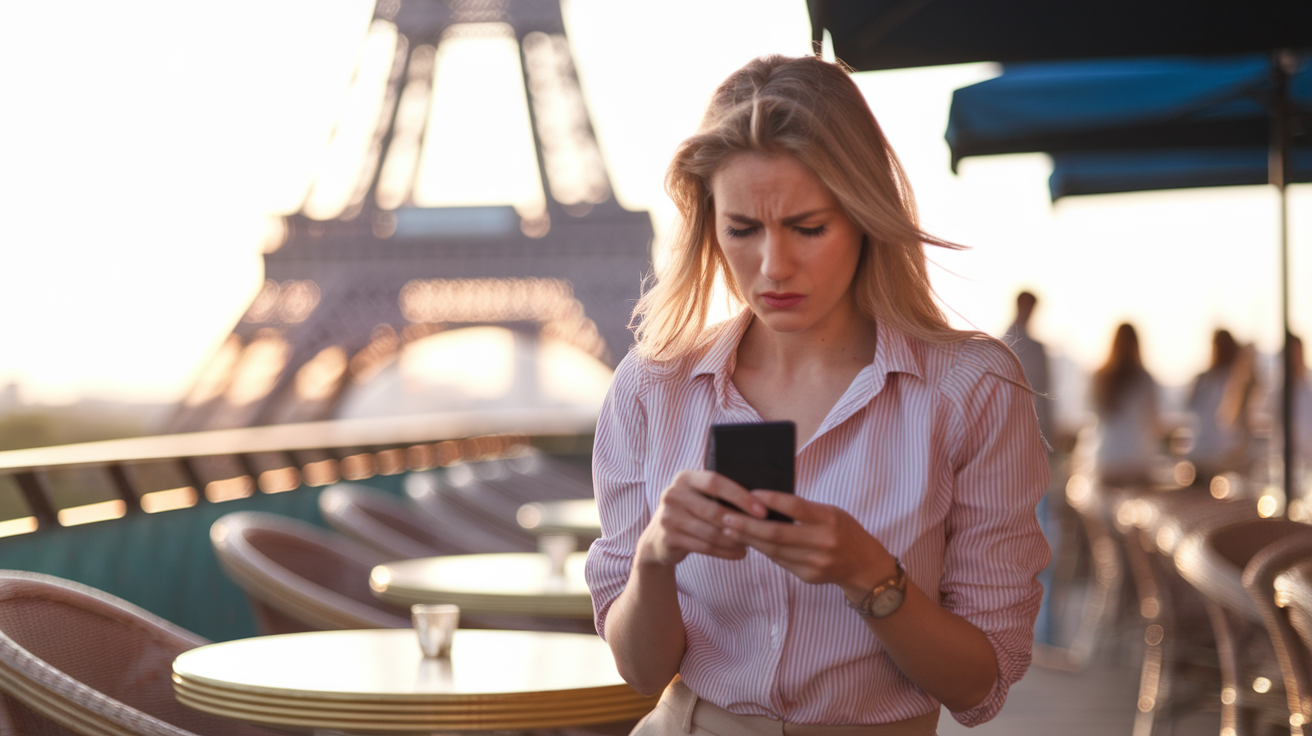
Walk with purpose and confidence. Even if you’re lost (and you will get lost—everyone does), project confidence. Stop to check your phone or map, but do it purposefully rather than looking confused and vulnerable on a street corner.
Save emergency numbers in your phone: 112 (European emergency number for police, fire, medical), 17 (police), and your embassy’s number. You probably won’t need them, but having them provides peace of mind.
Beyond the Basics: Local Secrets and Time-Saving Hacks
Hidden Gems Only Locals Know
The Promenade Plantée is Paris’s original elevated park, built in 1993—decades before New York’s High Line copied the concept. This 3-mile greenway runs along an old railway viaduct from Bastille to Bois de Vincennes. It’s peaceful, beautiful, and almost tourist-free. Walk the entire length or just explore a section—either way, you’ll see a side of Paris that most visitors miss.
Musée Rodin’s sculpture gardens deserve more time than the museum itself. The gardens (€4 admission, or free the first Sunday of each month) showcase Rodin’s most famous works including The Thinker and The Gates of Hell, set among roses and reflecting pools. It’s romantic, contemplative, and never crowded.
Canal Saint-Martin offers trendy cafés and local vibes in the 10th arrondissement. This working-class neighborhood has gentrified into one of Paris’s coolest areas, with vintage shops, independent bookstores, and cafés where actual Parisians hang out instead of tourists. The tree-lined canal with its iron footbridges makes for gorgeous photos.
Shakespeare and Company bookstore provides literary magic on the Left Bank. This English-language bookstore has hosted writers since 1919 (the current shop opened in 1951) and maintains the bohemian spirit of Paris’s Lost Generation. Browse the overstuffed shelves, read in the library upstairs, and soak in the literary history.
Quick Food Tips for Authentic Experiences
Master the morning ritual: café crème (coffee with steamed milk) and croissant at the counter. Ordering at the counter costs half what sitting costs—it’s a different price structure. Stand at the bar like locals do, enjoy your breakfast in five minutes, and move on with your day.
Lunch deals called “formule” or “menu du jour” offer amazing value. You get multiple courses for one fixed price, usually €15-25 depending on the neighborhood. This is how you eat well in Paris without destroying your budget.
Best budget eats include crêperies (both savory and sweet crêpes for €5-10), falafel in Le Marais (L’As du Fallafel is the most famous, but the entire street has good options), and fresh market picnics. Buy cheese, bread, fruit, and wine from a market, then picnic in Luxembourg Gardens or along the Seine.
Splurge on one special bistro meal during your trip. Make a reservation at a traditional bistro—Chez L’Ami Jean, Le Comptoir, or Bistrot Paul Bert—and order the fixed-price menu. This is where you experience French cuisine at its finest without Michelin-star prices.
Avoid restaurants with picture menus near major attractions. If the menu has photos and is printed in eight languages, the food is mediocre and overpriced. Walk two blocks away from any monument and you’ll find better food for less money.
Effective Ways to Skip Lines and Save Time
The Paris Museum Pass (€62 for two consecutive days, €77 for four days, €92 for six days) provides unlimited access to 60+ attractions including the Louvre, Versailles, Arc de Triomphe, Sainte-Chapelle, and more. The math works if you’re visiting 4-5 major sites over two days. The real value is skipping ticket lines at most places—you still wait in security lines, but you bypass the ticket purchase lines that can take an hour.
Book Eiffel Tower and Louvre tickets weeks in advance—at least 60 days for the Eiffel Tower summit. These tickets sell out, and day-of tickets are nearly impossible to get. The same goes for Versailles if you’re taking a day trip.
Visit popular sites at opening time or late afternoon. The 11 AM to 2 PM window is when tour buses unload, creating the worst crowds. Early morning or after 4 PM, attractions are noticeably less crowded.
Wednesday and Friday evenings, many museums stay open late with smaller crowds. The Louvre is open until 9:45 PM on Wednesdays and Fridays. You’ll share the galleries with far fewer people, and evening light through the museum’s windows creates a completely different atmosphere.
Simple Photo Spots for Amazing Instagram Content
Rue Crémieux is a hidden street in the 12th arrondissement lined with pastel-colored houses—pink, blue, yellow, and green. It looks like a movie set but it’s a real residential street (be respectful of residents when photographing). Metro: Gare de Lyon.
Café de Flore’s iconic red awning on Boulevard Saint-Germain is one of Paris’s most photographed cafés. Hemingway, Picasso, and Simone de Beauvoir all hung out here. The coffee is overpriced, but the photo opportunity is worth it.
The Eiffel Tower from Rue de l’Université gives you that perfect straight-on view with Parisian buildings framing the tower. This is the shot that screams “I’m in Paris!” Walk along Rue de l’Université until you find the perfect angle—you’ll know it when you see it.
Montmartre’s pink La Maison Rose sits at the corner of Rue de l’Abreuvoir and Rue des Saules. This rose-pink café covered in ivy has been painted by countless artists and photographed by countless tourists. It’s adorable, quintessentially Parisian, and worth the climb up Montmartre’s hills.
Make Your Paris Dream a Reality
You now have everything you need to confidently explore Paris as a solo female traveler. This isn’t just another generic itinerary—it’s a proven plan that balances iconic attractions with authentic local experiences, all while keeping your safety and comfort front and center.
The key to an amazing Paris trip? Plan ahead with timed tickets to maximize your three days, stay in central neighborhoods with easy metro access, and trust yourself to embrace the freedom of solo exploration. Mix those must-see monuments with quiet moments in gardens and cafés where you can simply exist in Paris rather than just checking off a list.
Practice a few basic French phrases—locals genuinely appreciate the effort, even if your accent is terrible. That simple “Bonjour” before asking a question in English changes the entire interaction from cold to warm.
Remember that feeling awkward or uncertain is completely normal, especially on your first solo trip. Every experienced solo traveler felt exactly the same way on their first adventure. The difference is they went anyway, and so should you.
Paris rewards the bold. It welcomes women who travel alone with open arms, incredible food, world-class art, and that indefinable magic that exists nowhere else on Earth. Your three days in Paris will challenge you, inspire you, and quite possibly change how you see both the world and yourself.
So book those tickets, pack that crossbody bag, and download your offline maps. Paris is waiting, and you’re ready for it. The City of Light has been captivating travelers for centuries—now it’s your turn to fall in love with its cobblestone streets, golden sunsets over the Seine, and that perfect croissant you’ll discover at some tiny neighborhood bakery.
Ready to plan your Paris adventure? Save this guide, start booking those advance tickets, and get ready for the trip of a lifetime. And when you’re standing at the top of the Eiffel Tower watching the city sparkle below you, remember: you did this. Solo. And it’s just the beginning.
*Bon voyage, and welcome to Paris!*