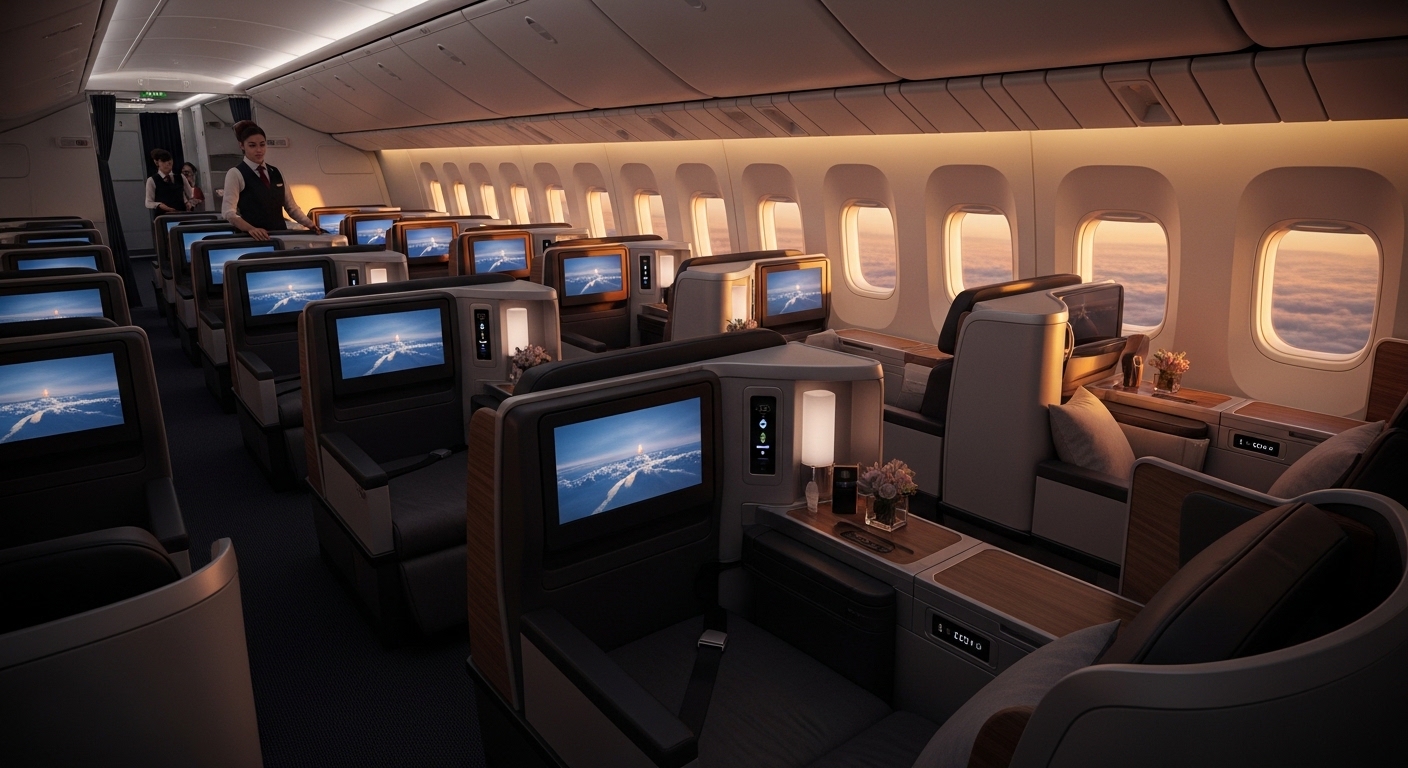
How to Book Cheap Business Class Flights

You’ve seen it happen. Someone settles into a lie-flat business class seat with a glass of champagne while you’re squeezing into economy — and you later find out they paid a fraction of what you assumed those seats cost. No, they didn’t win a lottery. They didn’t rack up years of credit card points. They just learned the rules of the game.
Here’s the truth: a small number of travelers regularly book business class for 50 to 90% less than the standard price — and they do it using a handful of strategies that are completely available to anyone willing to learn them.
This guide breaks down every single one of those strategies. The best timing windows, the search tools that actually work, the upgrade bidding system, the airline deal pipelines most travelers ignore, and a cabin-mixing technique that can cut your costs by 35% or more without giving up the luxury experience where it counts.
Let’s get into it.
The Timing Secret That Can Save You Thousands on Business Class
Here’s something most travelers get completely backwards: booking super early is often the worst thing you can do for business class.
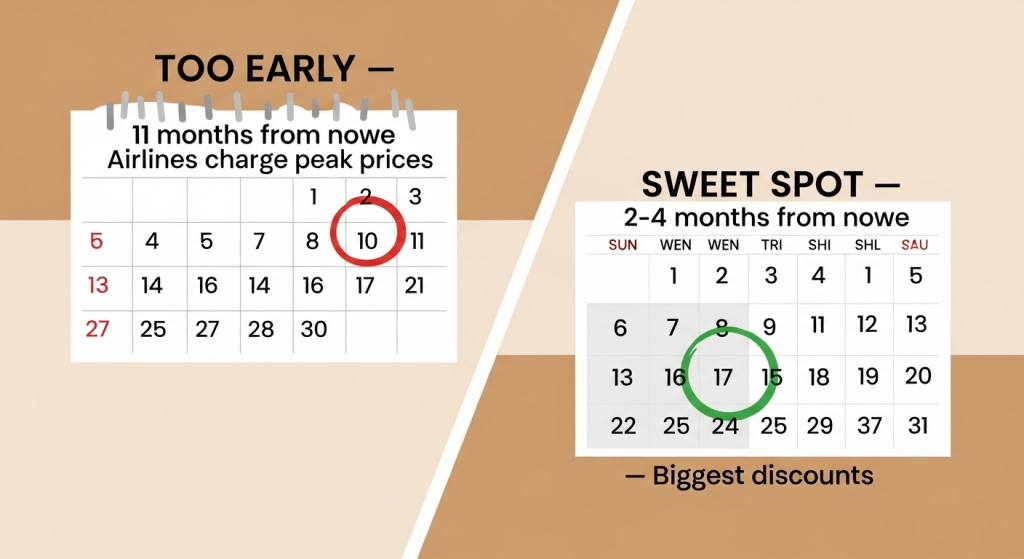
When airlines first release flights — typically 11 to 12 months in advance — they price business class seats at their absolute highest. Why? Because they know a segment of corporate travelers are completely price-insensitive and have no flexibility. Those travelers will pay whatever the current price is, so airlines start high and let the algorithms do the work.
As time passes and seats go unsold, pricing algorithms begin adjusting downward to fill the business cabin. The general consensus among experienced business class hunters is that the sweet spot is 2 to 4 months before your flight. This is when airlines get serious about filling remaining seats and when you’ll see the most significant price drops.
What about last-minute deals? They do exist — sometimes a business class seat drops 50% within two weeks of departure when the cabin is still half empty.
But this is a high-risk strategy. On popular routes or during peak season, prices can actually increase as departure approaches. Last-minute business class hunting works best if you have completely flexible dates and genuinely don’t mind booking on short notice.
Day-of-week matters too. Business travelers typically fly out Monday mornings and return Thursday or Friday evenings. Airlines price accordingly. If you’re flexible, aim for Tuesdays, Wednesdays, or Saturdays — corporate demand is lowest on these days and business class fares reflect that.
Why Google Flights Is Your Best Tool for Finding Business Class Deals
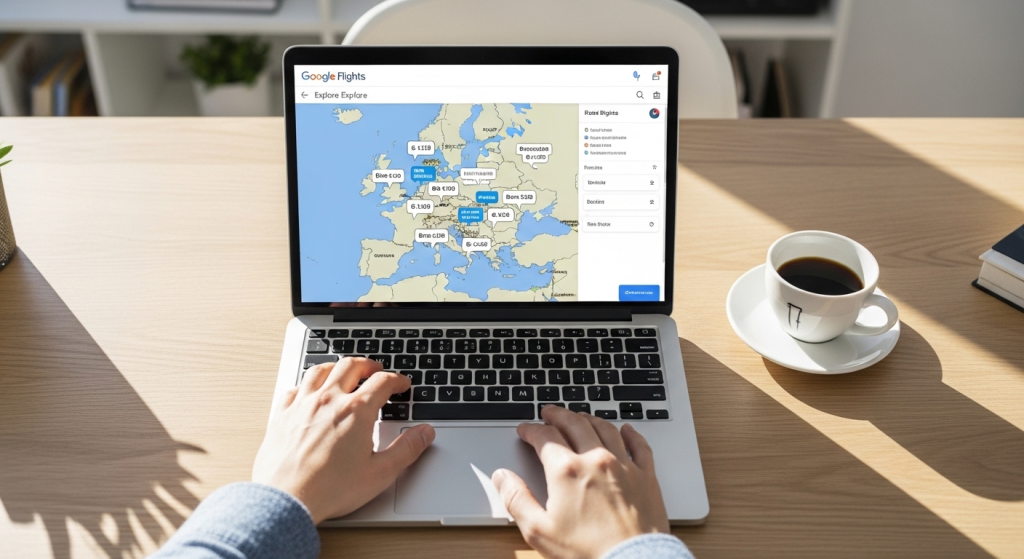
There’s one answer to “where should I search for business class flights?” — and that answer is Google Flights. Here’s why it beats every other search engine for this specific task:
Speed. Google Flights returns results almost instantly. Other engines take 10–15 seconds per search, which adds up to hours when you’re comparing dozens of routes and dates.
The Explore Map. This is where the magic happens for flexible travelers. Enter your departure city, leave the destination open, and Google Flights shows you a world map with prices to destinations everywhere. Want to go to Europe but haven’t decided where? Zoom in, compare cities, and find the cheapest business class option in seconds. What might take an hour on other platforms takes about two minutes here.
Date flexibility tools. Once you’ve picked a destination, click the date grid to see prices across a full month at a glance. The flexible dates feature lets you compare prices for weekend trips, one-week stays, or two-week itineraries all at once. This single feature can reveal fare differences of hundreds — sometimes thousands — of dollars just by shifting your trip by a day or two.
Price tracking. Found a fare you like but not ready to book? Tick the price tracking option and Google will monitor that flight and email you when the price drops significantly. No more compulsively checking fares every morning.
Use Google Flights as your starting point for every business class search. It’s free, fast, and genuinely better than any paid alternative for this kind of flexible, exploratory research.
The Layover Loophole: How Connections Cut Business Class Costs in Half
Most travelers automatically filter for non-stop flights. That reflex is costing them a fortune in business class.
The price difference between non-stop and connecting business class fares can be enormous. Airlines know that business travelers value their time above everything else and charge a steep premium for the direct route. But if your goal is experiencing business class luxury at economy-adjacent prices, being open to a connection can literally cut your cost in half.
Real example: a New York to Delhi non-stop in business class runs around $3,000. Add a two-hour layover in Mumbai and that same journey drops to $1,800. Same lie-flat seat. Same champagne. Same arrival destination. $1,200 less.
And here’s the part that reframes the whole equation: layovers in business class are a completely different experience than layovers in economy. Instead of being stuck at a crowded gate with bad airport food, you’re in a business class lounge with complimentary meals, open bar, comfortable seating, showers, and sometimes even nap rooms. That two-hour connection becomes a bonus perk of the journey rather than an inconvenience.
To find these deals, just make sure the stops filter in Google Flights is set to “any number of stops” rather than non-stop only. Pay attention to total journey time — a two-hour connection might be worth it; a 12-hour overnight layover probably isn’t. But seeing the full menu of options lets you decide what trade-off makes sense for your specific trip.
Book Economy First, Upgrade Later: The Strategy That Saved 90% on One Transatlantic Flight
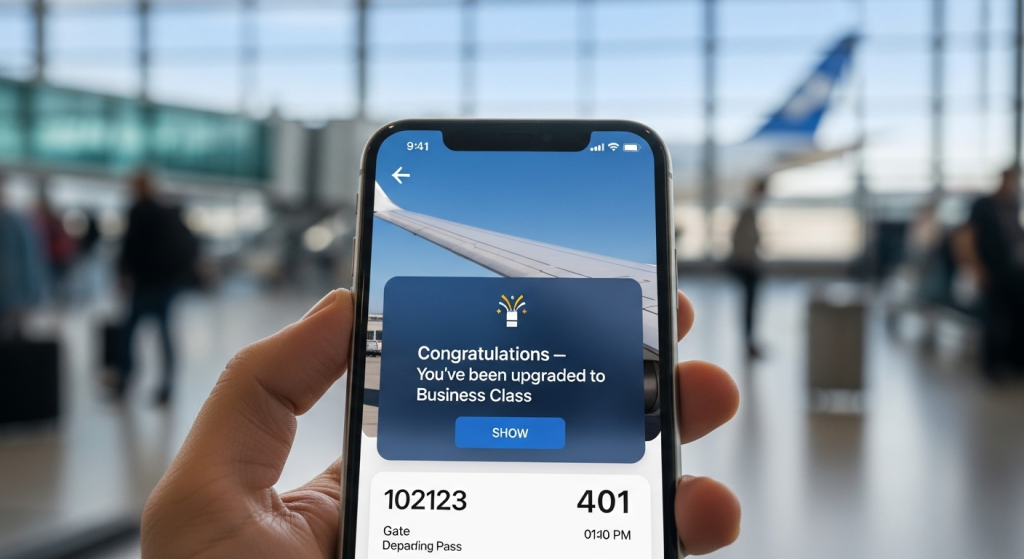
Here’s a strategy that most travelers don’t realize is even possible: book economy, then upgrade into business class later — often for a fraction of what the business class fare would have cost outright.
The logic is simple. Airlines would rather make some additional revenue from unsold business seats than fly them empty. So as departure approaches, they offer discounted upgrade options to economy passengers.
This approach has yielded a $350 upgrade on a transatlantic flight where the original business class fare was $3,500 more than economy — a 90% discount.
There are two main ways these upgrade opportunities appear:
During online check-in (24–48 hours before departure). When you check in online or at an airport kiosk, watch for an upgrade offer screen. Prices vary significantly by route and airline but can be as low as a few hundred dollars for long-haul international routes and $100–$150 for domestic flights.
Upgrade bidding systems. Many airlines now let economy passengers bid for available business class seats in the weeks before departure. You’ll receive an email inviting you to submit an offer — it’s essentially a blind auction. The airline gives guidance on the bidding range but won’t tell you if you’ve overbid. If they accept, your card is charged and you’re upgraded.
How much should you bid? A solid rule of thumb: aim for 20–40% of the price difference between economy and business. If economy costs $500 and business costs $2,000, the difference is $1,500 — so a bid of $300–$600 is in the right zone. Check FlyerTalk forums for reports from other travelers on specific routes and airlines; people share exactly what they bid and whether it worked.
One critical caveat: basic economy fares are usually ineligible for upgrades entirely. If you’re planning to use this strategy, book standard economy or premium economy. Premium economy is particularly powerful here — the cost to upgrade from premium economy to business is meaningfully lower than upgrading from basic economy, so the slightly higher upfront cost often saves you more on the back end.
How to gauge your upgrade chances before you bid: Check the seat map on the airline’s website a few days before departure by going through the seat purchase flow. You can see which seats are available without actually buying anything. If the business cabin shows a lot of open seats, there’s a strong chance the airline will offer discounted upgrades to fill it. You can also call the airline directly — some upgrade deals are only available over the phone and never appear online.
The Airline Email & Social Media Pipeline Most Travelers Completely Ignore
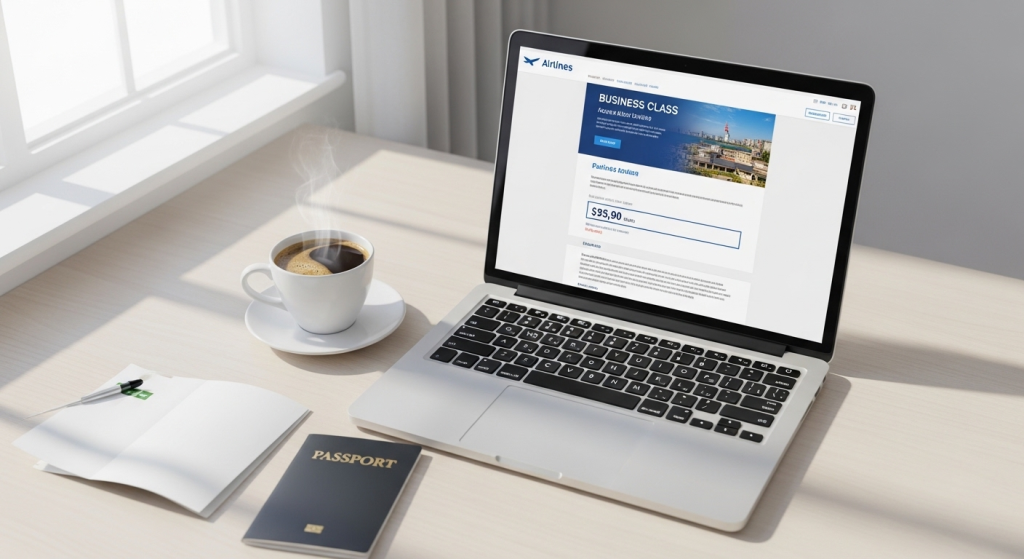
One of the biggest shifts in finding cheap business class fares comes from realizing where the best deals actually live — and it’s not on comparison sites.
Airlines reward their most loyal followers with deals that never reach the general public. The simplest way to access these is by subscribing to airline email newsletters. This takes 30 seconds per airline (scroll to the bottom of their website and look for “subscribe” or “join our mailing list”). When airlines need to fill unsold business class seats, email subscribers are the first to see targeted promotions with serious discounts.
Pro tip: create a dedicated email folder for airline newsletters so they don’t pollute your inbox but remain easily searchable when you need them. Setting up a Gmail filter to route airline emails directly into a separate folder keeps things organized without missing deals.
Frequent flyer programs are equally valuable — even if you rarely fly with a specific airline. Delta SkyMiles, United MileagePlus, and American AAdvantage members all receive exclusive business class flash sales that aren’t publicly available. Discounts of 40–50% off published fares appear regularly for members. All three programs are free to join, so there’s genuinely no downside.
Social media is where it gets interesting. Airlines post limited-time sales and promo codes on X, Facebook, and Instagram that don’t appear anywhere else. Some airlines even have dedicated deal accounts — JetBlue has a specific account just for deals. Third-party accounts like Secret Flying constantly monitor for business class sales and mistake fares. When an airline accidentally prices a long-haul business class ticket at $300 instead of $3,000, these accounts post it within minutes.
Timing is everything with mistake fares. Some disappear within minutes of being posted. Most airlines have 24-hour free cancellation policies, so if you spot a deal and aren’t 100% sure about your dates, book it and decide later.
The Cabin-Mixing Strategy: How to Get Business Class Where It Counts for 35% Less
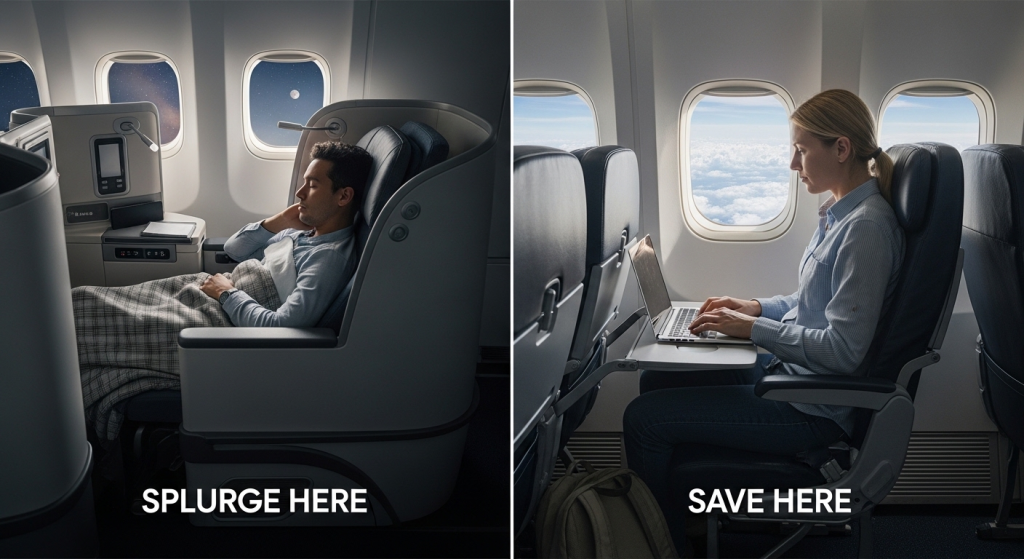
This is one of the most underused money-saving strategies in business class travel, and once you understand it, you’ll never book long-haul trips the same way again.
The core principle: not every segment of your journey deserves a business class ticket. By selectively choosing which flights to fly in business and which to take in economy, you can save thousands while still getting the premium experience exactly where it matters most.
The personal rule to work from: splurge on business for any flight over 5 hours. Those are the flights where a lie-flat seat, quality meal, and actual sleep make a meaningful difference to how you feel on arrival. For short hops under a few hours, economy is perfectly fine — you’re awake, upright, and the flight is over quickly regardless.
Here’s how it works in practice. Say you’re flying from Austin, Texas to Singapore. The all-business-class routing with connections costs around $5,200. But flying business class from Vancouver to Singapore costs only $3,200. Add a $200 economy flight from Austin to Vancouver, and your total is $3,400 — saving $1,800 (35%) compared to the original option. You still get the premium experience on the 15-hour trans-Pacific overnight flight, which is the leg where it actually matters.
This works on either end of your trip. You can add a cheap economy “positioning flight” at the beginning of your journey, or tack on an inexpensive economy connection at the end. Either way, you’re shaving significant cost while preserving the luxury experience on the legs that demand it.
Mixing outbound and return classes is another variation. Book economy for daytime flights where you’ll be awake and working anyway, and business class for overnight return flights where sleeping flat means you arrive home functional instead of destroyed. This alone can cut your round-trip cost nearly in half.
A word on premium economy as a middle ground: many airlines have significantly upgraded their premium economy cabins in recent years — wider seats, proper meals, real legroom. Premium economy typically costs 30–60% more than economy rather than the 300–400% premium for business class. For medium-length flights where you want more than economy but business class doesn’t feel justified, premium economy is a legitimately smart middle option.
Your Step-by-Step Action Plan for Booking Cheap Business Class
Here’s everything condensed into a repeatable process:
Step 1: Time your search right. Start looking 2–4 months before your trip. Avoid booking at the 11–12 month mark when prices are highest. Consider flying Tuesday, Wednesday, or Saturday to sidestep peak corporate demand.
Step 2: Use Google Flights for flexible research. Use the Explore map if your destination is open. Use the date grid to compare fares across a full month. Enable price tracking for routes you’re watching.
Step 3: Never filter for non-stop only. Always check connecting fares. Factor in business class lounge access when evaluating whether a layover is acceptable.
Step 4: Book standard economy and plan to upgrade. Monitor the seat map 3–5 days before departure for open business seats. Bid 20–40% of the fare difference. Call the airline directly for phone-only upgrade deals.
Step 5: Get on the airline’s radar. Subscribe to newsletters for every airline that flies your common routes. Join their frequent flyer programs (they’re free). Follow deal accounts on social media and set notifications.
Step 6: Mix your cabins strategically. Identify the long overnight legs of your journey and prioritize business class there. Take economy on short daytime connections. Consider premium economy as a cost-effective bridge.
The Bottom Line
Business class doesn’t have to mean business class prices — not if you understand how airline pricing actually works. The travelers consistently flying lie-flat for 50–90% less aren’t lucky. They’re patient, flexible, and strategic. They know that the best fares hide in the 2–4 month window before departure, in connecting itineraries, in upgrade bid systems, and in email newsletters that most people never sign up for.
Pick one strategy from this guide and apply it to your next trip. Book a standard economy ticket on a route where business seats are wide open and put in a bid. Subscribe to three airline newsletters this afternoon. Run your next search on Google Flights with the stops filter open.
The lie-flat seat and the champagne are closer than you think.
Ready to level up your travel game? Browse more flight hacks and business class tips at Passport Pro.
Tags: cheap business class flights, how to fly business class cheap, business class flight hacks, book business class for less, upgrade to business class, Google Flights business class, flight upgrade tips, business class travel tips, best time to book business class, premium economy vs business class, flight deal alerts, airline upgrade bidding