Best Silk Road Destinations 2026

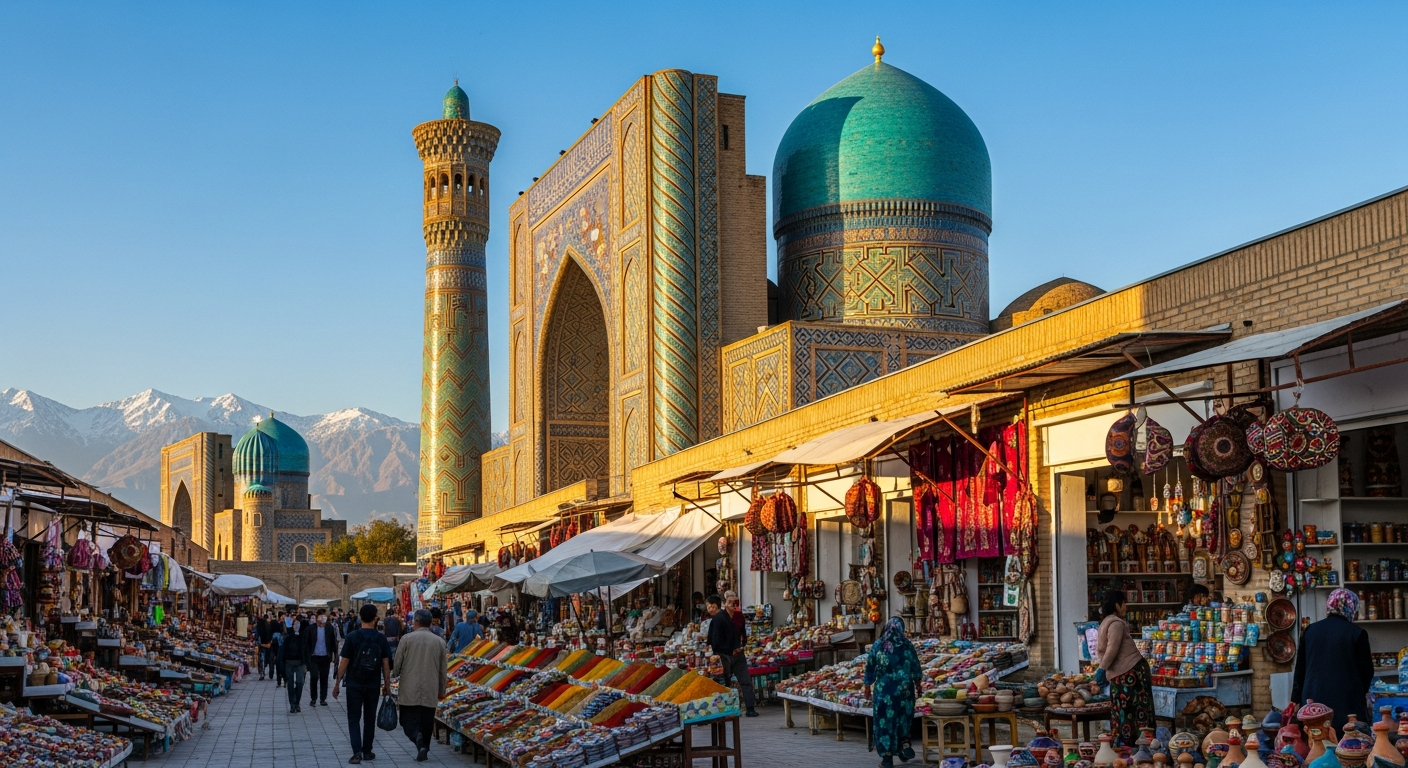
The call to prayer echoed across Samarkand’s Registan Square at dawn, and I stood there—jet-lagged, overwhelmed, utterly transfixed—watching the first rays of sunlight ignite those turquoise domes into something that looked less like architecture and more like frozen fire.
I’d spent months planning this Silk Road journey, agonizing over which countries to include, how many days I’d need, whether my budget would stretch far enough.
Standing there that morning, watching local vendors arrange their carpets while those 600-year-old minarets loomed overhead, I realized something: the Silk Road isn’t just a destination. It’s a corridor through time where you can still touch history, and 2026 is the perfect moment to experience it before the rest of the world catches on.
If you’re reading this, you’re probably wrestling with the same questions I had. You’ve got limited vacation days, a budget that doesn’t stretch to infinity, and a nagging fear that you’ll somehow miss the *real* Silk Road while stumbling through tourist traps.
You want authentic experiences—the kind your friends can’t replicate with a weekend in Paris—but you’re overwhelmed by the sheer scope of planning a multi-country journey through Central Asia.
Here’s what most travel guides won’t tell you: the Silk Road in 2026 sits in a sweet spot that won’t last forever. New infrastructure has made these destinations accessible without making them crowded. E-visas have eliminated the bureaucratic nightmares of the past.
Prices remain astonishingly low—I spent less in three weeks across Uzbekistan and Kyrgyzstan than I would’ve spent in one week in Western Europe.
But this window is closing. By 2028, industry analysts predict Central Asian tourism will triple. Right now, you can still have Samarkand’s architectural wonders almost to yourself at sunrise.
This guide draws from my own journey plus extensive research into what’s changing in 2026—new routes, improved accessibility, cultural events worth planning around.
I’ll give you exact costs, specific neighbourhoods to stay in, which side of the marshrutka to sit on for the best views. I’ll also tell you where I messed up (hello, food poisoning in Khiva) so you don’t repeat my mistakes.
Why 2026 Is the Perfect Year to Explore the Silk Road

New Infrastructure and Improved Accessibility
The biggest game-changer for 2026 is connectivity. When I first visited Central Asia in 2019, getting there meant marathon layovers in Istanbul or Moscow. Now, direct flights connect major Western hubs to Tashkent, Almaty, and Bishkek. Turkish Airlines, Air Astana, and Uzbekistan Airways have all expanded routes, and the competition has driven prices down—I found roundtrip tickets from London to Tashkent for £420 in shoulder season.
But here’s the insider tip most people miss: sometimes flying into a secondary hub saves serious money. I compared routes and discovered that flying into Bishkek instead of Tashkent saved me £340, even though I eventually needed to get to Uzbekistan. A quick $25 shared taxi to the border plus a $15 marshrutka to Tashkent still left me £300 ahead. Check multi-city options on Skyscanner—Bishkek-in, Baku-out itineraries often beat simple roundtrips.
The real headline for 2026 is the Golden Eagle Silk Road Express—a 22-day luxury train journey from Beijing to Tashkent launching this spring. Yes, it’s expensive (starting around $20,000), but for travelers with limited time and unlimited budgets, it solves the logistical puzzle of covering massive distances across multiple countries. For the rest of us, the train’s existence signals something important: infrastructure is improving along the entire route.
E-visa expansions have eliminated the single worst part of Silk Road travel—the paperwork nightmare. Uzbekistan now offers instant e-visas for 80+ countries. Kyrgyzstan provides 60-day visa-free entry for most Western travelers. Azerbaijan’s e-visa takes 72 hours. The Fergana Valley, which spans Uzbekistan, Tajikistan, and Kyrgyzstan, remains complicated (Tajikistan still requires advance visa planning), but even that’s improving.
Practical logistics: Book international flights 3-4 months out for best prices. Within Central Asia, use local airlines like Uzbekistan Airways for domestic hops—they’re reliable and cheap ($40-80 for flights that would take 12+ hours by road). Download the 2GIS app before you go; it’s like Google Maps but actually works offline in Central Asia.
Beating the Crowds Before Mass Tourism Arrives
Here’s a statistic that stunned me: Central Asia receives roughly 2% of global tourism traffic. For context, Machu Picchu sees 4-hour entry queues. The Louvre processes 10 million visitors annually. I visited Samarkand’s Shah-i-Zinda necropolis—one of the most breathtaking architectural sites on earth—on a Tuesday morning and shared it with maybe 30 other people. At sunrise in the Registan, I counted 12 tourists total.
This won’t last. Tourism to Uzbekistan grew 23% year-over-year in 2024. Kyrgyzstan is trending on Pinterest’s 2026 travel predictions. Georgia (the western terminus of many Silk Road routes) has become the darling of digital nomads and design-conscious travelers. The window for authentic, uncrowded experiences is open right now, but it’s closing.
What “uncrowded” actually means: You can still photograph Bukhara’s Kalyan Minaret without strangers in your frame. You can wander Khiva’s inner city at sunset and have entire streets to yourself. Local guesthouses in Kyrgyzstan’s jailoos (summer pastures) still operate on a “show up and they’ll find you a yurt” basis. Try that in Tuscany.
The trade-off? Infrastructure remains developing in places. WiFi is spotty outside major cities. English signage is limited. But if you’re reading a guide about the Silk Road, you’re probably not looking for a resort experience anyway.
Budget insight: Hotel prices run 60-70% lower than Western European equivalents. A beautiful boutique hotel in Bukhara’s old city—think converted madrasah with hand-painted ceilings—costs $50-80/night. The same experience in Istanbul or Barcelona? Easily $200+.
Cultural Events and Celebrations in 2026
Timing your Silk Road journey around cultural events transforms it from sightseeing into immersion. The most significant celebration is Nowruz (Persian New Year), falling on March 20-21 in 2026. This spring equinox festival spans Iran, Uzbekistan, Tajikistan, Kyrgyzstan, and Azerbaijan. Streets fill with music, traditional foods appear in markets, and locals are especially welcoming to visitors who show interest in their customs.
I happened to be in Bukhara during a smaller festival and watched locals prepare sumalak (a sweet paste made from wheat germ) in massive pots over open fires, a process that takes 24 hours of constant stirring. Strangers invited me to taste, to photograph, to sit with their families. These spontaneous cultural exchanges—impossible to manufacture, impossible to predict—are what separate a good trip from an unforgettable one.
Kyrgyzstan’s summer jailoo festivals (June-August) showcase traditional nomadic culture: eagle hunting demonstrations, horseback games like ulak tartysh (basically polo with a goat carcass—yes, really), and throat singing performances. Bukhara hosts its Silk and Spices Festival in May, transforming the old city into a living medieval bazaar.
Critical planning note: Book accommodations 3-4 months ahead if your dates overlap with major festivals. I learned this the hard way—during a smaller celebration in Samarkand, every decent hotel within the old city was fully booked. I ended up in a Soviet-era monstrosity on the outskirts, adding an hour of commuting to each day.
Etiquette reminder: During Ramadan (March 1-30 in 2026), many restaurants close during daylight hours in Muslim-majority regions. It’s not insurmountable—hotels still serve guests, and non-Muslim restaurants operate—but plan accordingly. And please, be respectful: don’t eat or drink visibly in public during fasting hours.
Uzbekistan: The Crown Jewel of Silk Road Travel

Samarkand—Where Breathtaking Architecture Meets Living History
Samarkand is the reason most people come to the Silk Road, and it delivers. The Registan Square—three madrasahs surrounding a vast plaza—is the ultimate photo opportunity, but here’s what the guidebooks get wrong: everyone tells you to visit at sunset for golden-hour lighting. They’re half right. Sunset is beautiful, but sunrise is magical. The square faces east, so the morning light hits those turquoise domes and geometric tilework with a clarity that afternoon sun can’t match. Plus, at 6:30 AM, you’ll share it with street sweepers and maybe two other photographers.
I stayed at the Hotel Registon (yes, it’s spelled differently than the square) for $45/night—a 5-minute walk from Registan, with a rooftop breakfast area overlooking the minarets. Book a room facing the square; the $10 surcharge is worth it.
Beyond the Registan, dedicate serious time to Shah-i-Zinda, a necropolis of mausoleums climbing up a hillside. This is where Samarkand’s elite were buried over six centuries, and each tomb tries to out-dazzle the last with intricate majolica tilework. The blues range from turquoise to cobalt to lapis, and the patterns are hypnotic. Local legend says you must count the steps on the way up and again on the way down; if the numbers match, you’re pure of heart. (I got different numbers both times, so interpret that how you will.)
Local secret: Siab Bazaar opens at 7 AM, and that’s when locals shop for fresh non bread, pomegranates the size of grapefruits, and spices sold by the kilo. Grab breakfast at one of the tea houses in the bazaar—fresh non, thick yogurt (katyk), and sweet black tea costs maybe $2 total. This is the authentic Samarkand most tourists miss while sleeping off jet lag.
Budget breakdown for Samarkand: Mid-range accommodation ($40-60/night), three meals including one nice dinner ($15-20/day), entrance fees to major sites ($10-15 total), local transport ($5/day for taxis). Total: $70-100/day. You can do it cheaper—guesthouses run $20-30/night, street food is $3-5/meal—but you’ll sacrifice some comfort.
Time allocation: Two full days minimum. Three is better. Rushing Samarkand to tick boxes is like sprinting through the Louvre—technically you saw it, but did you really?
Bukhara—The Complete Medieval Central Asian Experience
If Samarkand is the showstopper, Bukhara is the deep cut that true Silk Road lovers obsess over. This city contains 140+ architectural monuments within walking distance—the entire old city is essentially an open-air museum. Unlike Samarkand, where sites cluster around the Registan, Bukhara rewards wandering. Get lost in the covered bazaars. Duck into madrasahs that now house carpet workshops. Climb the Kalyan Minaret for sunset views across a cityscape that’s barely changed in 500 years.
I splurged on one night at a boutique hotel inside a converted madrasah—the Minzifa Hotel, $80/night—and it was worth every som. Hand-painted ceilings, traditional textiles, breakfast served in a courtyard where students once studied the Quran. The rest of my Bukhara stay was at a family guesthouse ($25/night) where the owner’s mother cooked dinner for guests each evening.
Secret spots: Everyone photographs Chor-Minor, the quirky four-towered gatehouse. But most tourists don’t know you can access the rooftop of the adjacent building for elevated views. Ask the shopkeeper below (politely, and maybe buy some tea); he’ll usually let you up for a small tip ($2-3).
For carpet shopping—and Bukhara is *the* place for authentic Uzbek carpets—skip the tourist shops around the Ark fortress. Instead, visit workshops in the residential neighborhoods north of the old city. I spent an afternoon at a family workshop where the grandmother demonstrated natural dye techniques using pomegranate skins and walnut husks. Prices ran 40% below tourist-center equivalents, and I could watch the actual weaving process.
Perfect itinerary: Arrive late afternoon, watch sunset from Kalyan Minaret. Next day, morning at Ark fortress and Bolo Hauz mosque, afternoon in the trading domes and bazaars. Second day, visit Sitorai Mokhi-Khosa (the emir’s summer palace, 15 minutes outside town), then explore residential neighborhoods. Evening at Lyabi-Hauz plaza for people-watching and tea.
Common mistake: Trying to see Bukhara in one day because “it’s smaller than Samarkand.” Yes, it’s more compact, but the depth of history here demands time. Give it 2-3 days.
Khiva—The Open-Air Museum City
Khiva is the Silk Road destination that photographs like a movie set—because it basically is. The entire inner city (Itchan Kala) is preserved within ancient walls, and it’s so perfectly maintained that it almost feels artificial. Until you realize: people actually live here. Families occupy houses between the monuments. Kids play soccer in the shadow of 400-year-old minarets.
The advantage of Khiva’s smaller scale? You can walk the entire Itchan Kala in half a day, hitting all major sites. The disadvantage? That’s what everyone does, and they miss the point. Khiva’s magic happens in the early morning and late evening when day-trippers have left. I stayed at the Malika Kheivak Hotel ($35/night) inside the old city walls, and those twilight hours—wandering empty alleys while the call to prayer echoed off mud-brick walls—were worth the entire trip.
Practical tip: Hire a local guide for a half-day ($20-30) to understand the history, then explore solo. My guide, Akbar, explained the function of each madrasah and caravanserai, the significance of different architectural details, and which workshops still use traditional techniques. That context made subsequent wandering far richer.
The Kalta Minor Minaret—that stumpy turquoise tower you’ve seen in photos—was supposed to be the tallest minaret in the Muslim world. The khan who commissioned it died, construction stopped, and it became the most famous unfinished building in Central Asia. It’s also the single best photo opportunity in Khiva. Arrive at sunrise when the turquoise tiles glow against the dawn sky.
Insider tip: Climb the Islam Khodja Minaret (118 steps up a claustrophobic spiral staircase) for 360-degree views over the entire old city. Go late afternoon when the light turns golden and you can see the desert stretching beyond the city walls.
Reality check: Khiva is remote. It’s a 5-6 hour drive from Bukhara across the Kyzylkum Desert. The landscape is stark—beautiful in its own way, but monotonous. Break up the journey with a stop at a desert yurt camp if time allows. Or embrace the journey as part of the experience; the remoteness is why Khiva feels frozen in time.
Kyrgyzstan: Hidden Natural Wonders Along the Silk Road

Bishkek to Issyk-Kul Lake—The Perfect Introduction
After Uzbekistan’s architectural overload, Kyrgyzstan offers a complete tonal shift: mountains, lakes, nomadic culture, and prices so low you’ll check your math twice. Bishkek, the capital, won’t blow you away—it’s a pleasant Soviet-era city with tree-lined boulevards and decent restaurants—but it’s the gateway to Kyrgyzstan’s real attractions.
The three-hour marshrutka ride from Bishkek to Issyk-Kul Lake ($5) passes through dramatic gorges and over mountain passes with snow-capped peaks on every horizon. Issyk-Kul is the second-largest alpine lake in the world, and unlike Lake Tahoe or Lake Como, it remains blissfully undeveloped. The southern shore offers authentic yurt stays starting at $15-25/night, including meals.
I stayed with a nomadic family near Bokonbaevo. The yurt—a traditional felt tent—had thick carpets, a wood stove, and sleeping platforms around the perimeter. Dinner was beshbarmak (boiled mutton with noodles, the national dish) and endless rounds of tea. The family spoke minimal English; I spoke zero Kyrgyz. We communicated through gestures, Google Translate, and shared laughter. It was one of the most authentic cultural experiences of my entire journey.
Authentic experience: Arrange an eagle hunting demonstration through your guesthouse ($30-40). These aren’t tourist shows—these are working hunters who use golden eagles to hunt foxes and rabbits in winter. Watching a trained eagle launch from a horseman’s arm and soar across the steppe is breathtaking.
Adventure level: Moderate. The yurt stays are rustic (squat toilets, no showers, shared facilities) but not hardcore. If you can handle camping, you can handle this.
Budget win: Kyrgyzstan is the cheapest Silk Road destination. A full day including accommodation, three meals, and activities runs $25-35 total. Even luxury by Kyrgyz standards (boutique guesthouses, guided treks) rarely exceeds $80/day.
Song-Kul Lake and Jailoo Culture
If Issyk-Kul is Kyrgyzstan’s introduction to nomadic culture, Song-Kul is the advanced course. This remote high-altitude lake (3,000+ meters) is accessible only June-September when nomadic families move their herds to summer pastures. Getting there requires a bone-rattling 4×4 journey over unpaved mountain tracks—plan on 3-4 hours from Kochkor.
What awaits? A vast alpine lake surrounded by rolling grasslands, yurts scattered across the landscape, horses and sheep everywhere, and night skies so dark you can see the Mil