9 Best horseback riding mountain destinations

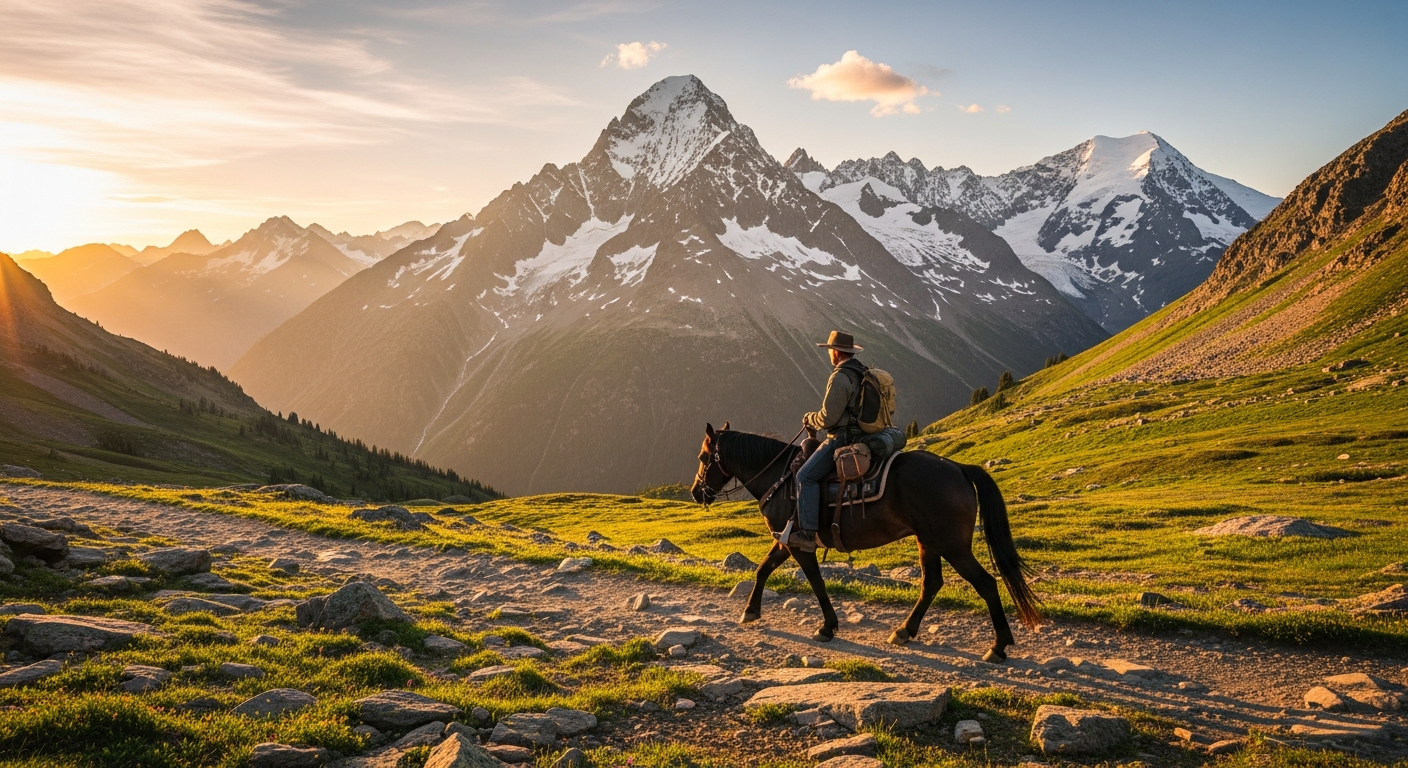
The horse beneath me stopped without command, ears pricked forward at the valley spreading 2,000 feet below. My guide, a third-generation Montana wrangler named Jake, let the silence hold for a full minute before speaking.
“This is Grizzly Ridge. No roads, no trails wide enough for ATVs. Just us and the elk.” In that moment, watching golden eagles circle the thermals while my horse’s breath created small clouds in the crisp mountain air, I understood why horseback riding remains the secret weapon for experiencing mountains in ways that hiking, skiing, and even helicopter tours simply cannot match.
If you’re reading this, you’ve got limited vacation days, possibly a mixed-skill-level group, and you’re tired of the same crowded viewpoints everyone else photographs.
You want something authentic, something that doesn’t require six months of training or a trust fund, and something that lets you cover serious ground without arriving back at the trailhead destroyed.
Mountain horseback riding delivers all of this—but only if you choose the right destination and avoid the tourist-trap operations that give the experience a bad reputation.
I’ve spent the past decade riding mountains across four continents, from budget yurt camps in Kyrgyzstan to luxury dude ranches in Wyoming. Here’s everything you need to plan an unforgettable mountain horseback adventure without the overwhelm.
Why Mountain Horseback Riding Beats Every Other Mountain Experience

The Authentic Local Perspective You Can’t Get From a Tour Bus
Here’s what most travelers don’t realize: the best mountain trails—the ones locals use, the ones that lead to hidden alpine lakes and secret viewpoints—are too narrow for vehicles, too long for casual day hikers, and completely inaccessible to tour buses. Horses change this equation entirely.
On horseback, you’ll cover 15-25 miles in a day comfortably, accessing terrain that would take backpackers three days to reach. I’ve ridden to hot springs in the Absaroka Range that aren’t on any map, watched sunrise over Patagonian glaciers from camps that require two days of riding to access, and lunched at Alpine huts in the Dolomites that see maybe a dozen visitors weekly—all because horses let you go farther, faster, while staying intimately connected to the landscape in ways a vehicle never allows.
The cultural significance matters too. In Montana and Wyoming, ranching culture is alive and working—your guides aren’t playing dress-up; they’re actual cowboys who winter feed cattle and summer guide rides. In Patagonia, you’ll ride with gauchos whose families have worked these valleys for generations. Swiss mountain guides in the Alps often come from families who’ve packed supplies to mountain huts on horseback for a century. This isn’t a show; it’s real life, and you’re participating in it.
Perfect for Every Fitness Level and Experience
The biggest myth about mountain horseback riding: you need years of riding experience. Absolute nonsense. I’ve guided complete beginners—people who’d never touched a horse—on multi-day wilderness trips. Reputable outfitters spend serious time matching riders with appropriate horses and teaching you the basics before you hit the trail.
What you do need: the ability to sit upright for several hours and handle some muscle soreness. That’s it. The horse does the technical work; you’re essentially hiking while sitting down. This makes mountain riding perfect when you’ve got limited vacation time—you’ll see more in three days on horseback than in a week of hiking, without the cardiovascular demands that leave some travelers struggling.
The multi-generational appeal is real. I’ve ridden with families where grandparents in their 70s rode alongside grandchildren as young as eight. Everyone experiences the same trail, the same views, the same campfire stories. Try that with technical mountain biking or multi-pitch climbing.
The Unexpected Budget-Friendly Advantage
A full-day guided mountain horseback ride typically runs $150-250 per person, including the horse, guide expertise, often lunch, and all equipment. Compare that to a day of lift-serviced mountain biking ($80-120 lift ticket, plus $150-300 bike rental if you didn’t bring your own), heli-skiing ($800-1,200 per day), or even guided hiking ($100-150 plus you’re doing all the physical work).
The value equation gets better with multi-day trips. A three-day pack trip into Montana’s Bob Marshall Wilderness—including horses, guides, all meals, camping equipment, and permits—averages $450-600 per day. That’s all-inclusive wilderness immersion. A comparable backpacking trip requires you to carry 40+ pounds, cover less distance, and handle all your own logistics.
Even luxury dude ranch weeks, which run $2,500-5,000 per person, include accommodation, all meals, multiple daily rides, and usually other activities. Break it down: that’s $350-700 daily for an all-inclusive mountain resort experience. Suddenly it’s not expensive; it’s actually competitive with standard resort pricing, except you’re doing something far more memorable.
The Ultimate Mountain Horseback Riding Destinations (By Experience Type)

Best for First-Timers: Banff & Lake Louise, Canadian Rockies
I’ll never forget my first mountain ride in Banff: a two-hour loop around Lake Louise that required zero experience but delivered views that photographers spend thousands to capture. The Canadian Rockies offer the perfect combination of stunning scenery with beginner-friendly infrastructure that removes planning overwhelm.
Multiple outfitters operate from Banff and Lake Louise, offering rides from one-hour gentle loops ($75-95 CAD) to full-day adventures to alpine tea houses ($250-300 CAD). The horses are bomb-proof, the guides patient, and the trails well-maintained. You’ll ride through meadows filled with wildflowers (July-August), spot elk and bighorn sheep, and access viewpoints that most tourists never see.
The hidden gem: book the earliest morning ride available, usually 8 AM. You’ll have trails virtually to yourself, catch the best light for photos, and often see more wildlife. The 10 AM and 2 PM rides get crowded and dusty. I learned this after doing both—the difference is dramatic.
Budget range: Expect $75-95 CAD for one-hour rides, $150-180 for half-day, $250-300 for full-day with lunch. Book 2-3 weeks ahead for summer (June-September), though you can sometimes snag spots with 48 hours notice in shoulder seasons. Stay in Banff town for budget options ($120-180 CAD/night for decent hotels) or Fairmont Chateau Lake Louise if you’re splurging ($450-800/night but worth it for the location).
Best for Authentic Western Experience: Montana & Wyoming, USA
Dude ranch culture in the Northern Rockies isn’t tourism pretending to be ranching—it’s actual working ranches that host guests. The difference matters. At places like Lone Mountain Ranch near Big Sky or Trail Creek Ranch in Wyoming’s Absaroka Range, you’re riding with wranglers who winter here, feeding cattle and fixing fence.
Multi-day pack trips into wilderness areas like the Bob Marshall or the Thorofare represent mountain horseback riding at its most authentic. You’ll spend days without seeing another person, camp where Lewis and Clark camped, and learn why wranglers still swear by their methods. My guide in the Bob Marshall, a 68-year-old named Dutch, could read weather in cloud formations, find water where I saw only dry creek beds, and tell stories that made you understand why this landscape matters.
The season timing is crucial. June means snow melt, high water crossings, and muddy trails—avoid it unless you’re experienced. July and August offer the best weather but book 6-9 months ahead. September is my secret favorite: golden aspen, rutting elk bugling at dawn, fewer people, and lower prices. October works too if you don’t mind cold mornings.
Budget vs. luxury breakdown: Basic dude ranches run $200-300 per person per day all-inclusive. Mid-range operations like Lone Mountain or Nine Quarter Circle charge $350-450 daily. Luxury spots like The Resort at Paws Up hit $500-800 daily. All include lodging, meals, and riding—the price difference is in accommodation quality and guide-to-guest ratios.
Best for Breathtaking Alpine Views: Swiss Alps & Dolomites
European mountain riding delivers a completely different experience from Western ranch culture. Instead of wilderness camping, you’ll ride village to village, staying in Alpine huts or mountain hotels, experiencing a landscape that’s been shaped by humans for millennia.
The Dolomites in northern Italy offer particularly stunning riding, with those iconic limestone spires creating drama around every turn. I spent a week riding hut to hut, covering maybe 20-25 miles daily through meadows and over passes, stopping for lunch at rifugios where the pasta was homemade and the views absurd.
The cultural immersion is different here. You’re not escaping civilization; you’re experiencing mountain culture that predates the United States. Your guides know which valleys produce the best cheese, where to stop for grappa made by someone’s grandmother, and the stories behind every chapel and cross you pass.
Planning considerations: European riding holidays typically require more advance booking (3-6 months for summer) and cost more than North American equivalents—expect €150-250 per day just for the riding, plus accommodation (€80-150 per night) and meals (€40-60 daily). However, the shoulder seasons (June and September) offer incredible value, with lower prices, fewer tourists, and spectacular weather.
The secret: Late September in the Alps means autumn colors, clear skies, and prices 30-40% below high season. The huts start closing in early October, so you’ve got a narrow window, but it’s magical.
Best for Adventure Seekers: Patagonia (Chile & Argentina)
Patagonian riding isn’t for everyone—and that’s precisely what makes it special. This is multi-day expeditions through genuinely wild country, where weather changes violently, trails disappear into rivers, and your gaucho guide might point out fresh puma tracks.
What makes it unique: The terrain is absurdly varied. You’ll ride through southern beech forests, cross mountain passes with condors overhead, navigate volcanic rock fields, and camp beside glacial lakes that shift from turquoise to deep blue as the light changes. The horses are small, sturdy Criollos bred for this landscape, and they’re astonishingly sure-footed.
Physical preparation matters here. You’ll ride 6-8 hours daily, often in wind and rain. I was reasonably fit and still sore the first three days. That said, you don’t need to be an athlete—just realistic about discomfort and willing to push through it.
Chilean vs. Argentine side: Chilean Patagonia (Torres del Paine area) offers more infrastructure, easier logistics, and slightly higher costs ($400-500 daily for organized trips). Argentine Patagonia (El Chaltén, Estancia areas) feels wilder, costs less ($250-400 daily), but requires more Spanish and flexibility. I’ve ridden both; if it’s your first time, start Chilean side.
Best time: December through March (Southern Hemisphere summer). December and January mean long days but higher prices and more people. February and March offer better weather stability and fewer crowds. Book 4-6 months ahead minimum.
Best Value Destination: Kyrgyzstan & Central Asia
Here’s the hidden gem nobody talks about: Kyrgyzstan offers some of the world’s most spectacular mountain riding at prices that seem impossible. A week-long horseback expedition through the Tien Shan mountains, staying in yurts, riding with nomadic herders—$50-80 per day all-inclusive. Not a typo.
The nomadic culture is the real deal. Your guides are often shepherds who summer in the high pastures with their families. You’ll stay in yurts, eat fresh bread and yogurt, drink fermented mare’s milk (kumis—an acquired taste), and ride horses that are semi-wild and incredibly capable.
The unbelievable value: A 10-day riding expedition, including horses, guides, all meals, yurt accommodation, and support vehicles, runs $500-800 total. Compare that to literally any Western destination. The trade-off is comfort—you’re sleeping on felt mats, bathing in streams, and eating simple food. If that sounds like adventure rather than hardship, this is your destination.
Adventure travel considerations: You’ll need flexibility, a sense of humor about logistics, and realistic expectations about communication (limited English outside Bishkek). Book through established operators like Kyrgyz Nomad or CBT Kyrgyzstan who handle permits and logistics. Best months: June-September, with July-August peak season for high-altitude riding.
Planning Your Perfect Mountain Riding Trip (Without the Overwhelm)

How Far in Advance to Book (And Why It Matters)
Peak season booking timelines vary dramatically by destination. Montana and Wyoming dude ranches fill up 6-12 months ahead for July-August dates—seriously. I learned this the hard way, trying to book a Bob Marshall trip in April for July. Everything was full.
The sweet spot for best selection without premium pricing: Book 3-4 months ahead for shoulder season dates (June, September). You’ll have good selection, often 15-20% lower prices than peak season, and better weather than most people realize. September in the Rockies is spectacular—cool mornings, warm afternoons, golden aspens, and bugling elk.
Last-minute options that actually work: If you’re flexible on dates and location, you can find availability 2-4 weeks out, especially for day rides or shorter trips. Canadian Rockies outfitters and some European operations maintain availability through the season. Budget destinations like Kyrgyzstan often have space with a month’s notice.
Weather and seasons affect everything. Spring mountain riding (May-early June) means mud, high water, and unpredictable weather—most outfitters aren’t even operating yet. Fall (late September-October) means potential early snow but also solitude and stunning colors. Know what you’re signing up for.
Choosing Between Day Rides, Multi-Day Trips, and Riding Vacations
Day rides ($75-250) work perfectly for testing the waters, tight schedules, or mixed-interest groups where some people want to ride while others prefer different activities. You’ll get a taste of mountain riding without major commitment. The limitation: you’re typically limited to trails within 2-3 hours of the barn, missing the deeper wilderness.
Multi-day pack trips ($200-500 per day) deliver immersive wilderness experience. You’ll access terrain that’s genuinely remote, camp under stars, and disconnect completely. These typically include all meals, camping gear, horses, and guides. The trade-off: you’re camping, which means less comfort and more weather exposure.
Week-long riding vacations at dude ranches ($2,000-8,000 all-inclusive) offer the complete package: comfortable accommodation, multiple daily rides, all meals, usually other activities (fishing, hiking, yoga), and social atmosphere. Perfect for families or groups with varied interests. What’s included: literally everything except alcohol and tips. You show up, ride, eat, and relax.
Cost-benefit analysis: Day rides offer lowest financial commitment but limited experience. Multi-day trips provide the most authentic wilderness immersion per dollar. Week-long ranches deliver the most comprehensive experience but at highest total cost. Choose based on your priority: budget, adventure level, or comfort.
The Questions You Must Ask Before Booking
Guide-to-guest ratios matter enormously. A 1:6 ratio means personalized attention and flexibility; 1:10 or higher means you’re in a trail ride conga line. Ask specifically: “What’s your maximum group size and typical guide ratio?” Anything over 1:8 should raise questions.
Horse matching process reveals professionalism. Good outfitters ask about your experience, weight, riding goals, and even personality. They’re matching temperaments, not just sizes. Red flag: operations that assign horses randomly without questions.
What’s actually included vs. hidden costs: Clarify meals, equipment (helmet, rain gear, saddlebags), permits, and transportation to trailhead. Some operations charge separately for each. Tips typically run 15-20% of trip cost and aren’t included. Ask about cancellation policies—mountain weather can force changes.
Photography opportunities vary by outfitter. Some guides happily stop for photos; others run tight schedules. Ask: “How do you handle photo stops?” If photography matters to you, mention it during booking. I’ve had guides who were incredible about this and others who seemed annoyed by every camera request.
What to Pack for Mountain Horseback Riding (The Complete Checklist)

Essential Riding Gear You Actually Need
Footwear is non-negotiable: boots with a heel (1-1.5 inches) that prevents your foot sliding through the stirrup. Hiking boots work if they have a defined heel; running shoes are dangerous. I watched someone nearly get dragged when their sneaker slipped through—the guide stopped the ride immediately to address it. If you don’t own riding boots, buy cheap cowboy boots ($40-80) rather than risk injury.
Pants: Jeans work fine for day rides, but for multi-day trips, you’ll want riding tights or stretchy hiking pants. Denim gets uncomfortable after 4-5 hours and provides zero moisture management. I switched to riding tights after one miserable week in jeans and never looked back. The inner-thigh seams on regular pants will cause chafing—this is real.
Layers for mountain weather: temperatures swing 30-40°F between morning and afternoon. Pack a base layer, insulating mid-layer (fleece or light down), waterproof shell, and sun protection. The layering system I use: merino wool base, fleece mid-layer, packable down jacket, and rain shell—all fits in saddlebags.
The one item experienced riders always bring: a small backpack or fanny pack for essentials (water, snacks, sunscreen, phone). Saddlebags are great but not easily accessible while riding. Having water and lip balm within reach matters on 6-hour rides.
The Often-Forgotten Items That Make or Break Your Ride
Sunscreen and lip balm at altitude aren’t optional—they’re survival gear. Mountain sun is brutal; I’ve gotten second-degree burns on my nose at 9,000 feet in under three hours. SPF 50+ minimum, reapply every two hours. Lip balm with SPF prevents the cracked, bleeding lips that ruin trips.
Camera/phone carrying solutions: chest-mounted phone holders ($15-25 on Amazon) let you shoot one-handed while riding. Alternatively, a wrist lanyard prevents drops. I’ve watched phones fall from pockets during mounting and dismounting—expensive mistake in remote locations.
Snacks and hydration strategies: bring more water than you think you need (3 liters for full-day rides) and protein-dense snacks (nuts, jerky, energy bars). Mountain riding burns serious calories; bonking at mile 15 of a 20-mile ride is miserable. Your outfitter should provide lunch on full-day rides, but bring backup food.
Blister prevention for non-riders: Body Glide or similar anti-chafe balm on inner thighs and anywhere clothing rubs. Trust me on this. Also, bring moleskin or Compeed blister bandages—apply at first sign of hot spots, not after blisters form.
What NOT to Bring (Common Mistakes)
Fashion choices that cause problems: loose scarves (catch on branches), dangly jewelry (gets tangled), floppy hats (blow off constantly). Wear a ball cap or secured cowboy hat, minimal jewelry, and fitted clothing. I’ve seen flowing bohemian outfits turn into safety hazards within the first mile.
Accessories that become hazards: large purses, crossbody bags that swing, anything hanging loose. If it’s not secured to your body or in saddlebags, leave it behind. Also, skip the perfume or cologne—horses have sensitive noses and it attracts insects.