what to wear in Swiss Alps This summer

# What to Wear in Swiss Alps Summer: The Complete Packing Guide for Mountain Style
Here’s the thing nobody tells you until you’re standing at the base of a cable car in your cute sundress, teeth chattering: Swiss Alps “summer” isn’t the same as your regular summer. I learned this the hard way during my first trip to Lauterbrunnen, when I packed like I was heading to the beach and spent the first two days layering every single item I’d brought just to stay warm on the trails.
You’re dealing with a fashion puzzle that most style guides completely miss. You need outfits that photograph beautifully against those epic alpine backdrops, pieces versatile enough to go from hiking trail to charming village café, and layers that actually keep you comfortable when the temperature drops 30 degrees between the valley and the peak. And let’s be real—you want to look effortlessly chic while doing it, not like you raided an outdoor gear store.
The good news? You absolutely can build a Swiss Alps summer wardrobe that’s both stylish and functional without dropping thousands on technical gear. This guide breaks down exactly what works, what doesn’t, and how to create a capsule wardrobe that handles everything from casual town strolls to serious mountain hiking—all while keeping your suitcase under the weight limit and your look polished.
Understanding Swiss Alps Summer Weather (What You’re Actually Packing For)

The Temperature Reality Check
Let’s demolish the biggest misconception right now: “summer” in the Swiss Alps doesn’t mean tank tops and shorts all day. Valley towns like Interlaken and Lauterbrunnen hit comfortable 70-80°F (21-27°C) during peak afternoon hours, which sounds perfect until you take that cable car up to Schilthorn or Jungfraujoch. Mountain peaks stay 20-30 degrees cooler than the valleys, even in July and August.
Here’s what actually happens: You start your day in the warm valley sunshine, take a 20-minute cable car ride, and suddenly you’re in what feels like early spring. The temperature at 2,500 meters (8,200 feet) typically hovers around 45-55°F (7-13°C), even on the warmest summer days. Add wind chill, and it feels even colder.
Microclimates make this even trickier. You can literally watch weather systems roll through mountain valleys in real-time—sunny and clear in Grindelwald, completely fogged in at Männlichen, light rain at First. This isn’t unusual; it’s just Tuesday in the Alps.
Your regular summer wardrobe fails here because it’s built for consistent temperatures. That cute linen jumpsuit? Gorgeous for exploring Bern, but you’ll freeze on any mountain excursion. Those denim shorts? Perfect for lakeside lunches, completely inadequate for hiking above the tree line where snow patches linger into July.
The Unpredictable Weather Factor
Afternoon thunderstorms roll through alpine regions with remarkable consistency during summer months. The pattern goes like this: beautiful clear morning, increasing clouds around noon, potential storms between 2-4 PM, clearing by evening. Plan your summit visits for morning hours, and you’ll avoid both the worst weather and the biggest crowds.
Sun exposure intensifies by roughly 10% for every 1,000 meters of elevation gain. At 3,000 meters, UV radiation is about 30% stronger than at sea level, which means you can sunburn even when it feels cool and breezy. I watched countless tourists turn lobster-red on sunny mountain terraces, convinced they didn’t need sunscreen because they weren’t hot.
Wind chill becomes your enemy on exposed peaks and inside those open-air cable cars. A pleasant 60°F day with 20 mph winds feels like 50°F on your skin. This is why you’ll see Swiss locals wearing down jackets in July—they’re not being dramatic; they’re being smart.
Activity-Based Temperature Planning
Town exploration and valley walks deliver that classic summer experience. You’ll be comfortable in regular summer clothes—breathable tops, shorts or light pants, comfortable walking shoes. These lower-elevation areas feel genuinely warm, especially in direct sunlight.
Mid-altitude hikes between 1,500-2,500 meters offer moderate temperatures with variable conditions. This is where layering becomes essential. You might start hiking in a t-shirt, add a fleece after 30 minutes, then strip back down when the trail leaves the forest and hits full sun. Temperature swings of 15-20 degrees throughout a single hike are completely normal.
High-altitude excursions above 2,500 meters require legitimate cold-weather gear. We’re talking fleece or down layers, windproof outer shells, and full-length pants. Those Instagram photos of people in sundresses at Jungfraujoch? They took the photo, then immediately went inside to warm up.
Indoor-outdoor transitions create their own challenges. Cable car stations are heated, restaurants blast air conditioning, but outdoor terraces stay chilly. You’re constantly adjusting layers, which is why packable pieces and versatile mid-layers become your best friends.
The Swiss Alps Summer Capsule Wardrobe Essentials

The Layering Foundation (Base Layers That Work Hard)
Cotton is your enemy in the mountains. I’m not being dramatic—cotton absorbs moisture, stays wet, and leaves you cold and clammy the moment you stop moving. Every experienced hiker in Switzerland will tell you the same thing: skip cotton entirely for active days.
Moisture-wicking base layers made from merino wool or technical synthetic fabrics regulate temperature, pull sweat away from your skin, and dry quickly if you get caught in rain. These aren’t just for hardcore athletes; they’re the secret to staying comfortable during any mountain activity.
Lightweight merino wool tops check every box: temperature regulation, odor resistance (you can wear them multiple days without washing), and they look like regular shirts, not athletic gear. Choose neutral colors—black, gray, navy, or cream—that mix effortlessly with everything else in your suitcase.
The magic number is 3-4 versatile base layers for a week-long trip. Two short-sleeve, one long-sleeve, and optionally one tank top gives you enough variety without overpacking. You’ll rotate through them, and the quick-dry properties mean you can hand-wash in your hotel sink if needed.
Budget-friendly options deliver impressive performance without the premium price tag. Uniqlo Heattech and Airism lines offer technical fabrics at accessible prices. Amazon Essentials and REI Co-op brand base layers perform nearly as well as luxury outdoor brands but cost 60-70% less. Save your splurge budget for the outer layer.
The Mid-Layer Heroes
Fleece pullovers and quarter-zips become your most-worn pieces in the Swiss Alps. They provide warmth without bulk, layer easily under jackets, and transition seamlessly from trail to town. Choose styles with a slightly fitted silhouette rather than boxy cuts—they’re more flattering and photograph better.
Patterned options hide wrinkles (essential for travel) and add visual interest to your photos. Fair Isle prints, color-blocking, and subtle geometric patterns elevate the look beyond basic athletic wear. These pieces work overtime in your wardrobe, pairing with leggings for hikes and jeans for evening strolls.
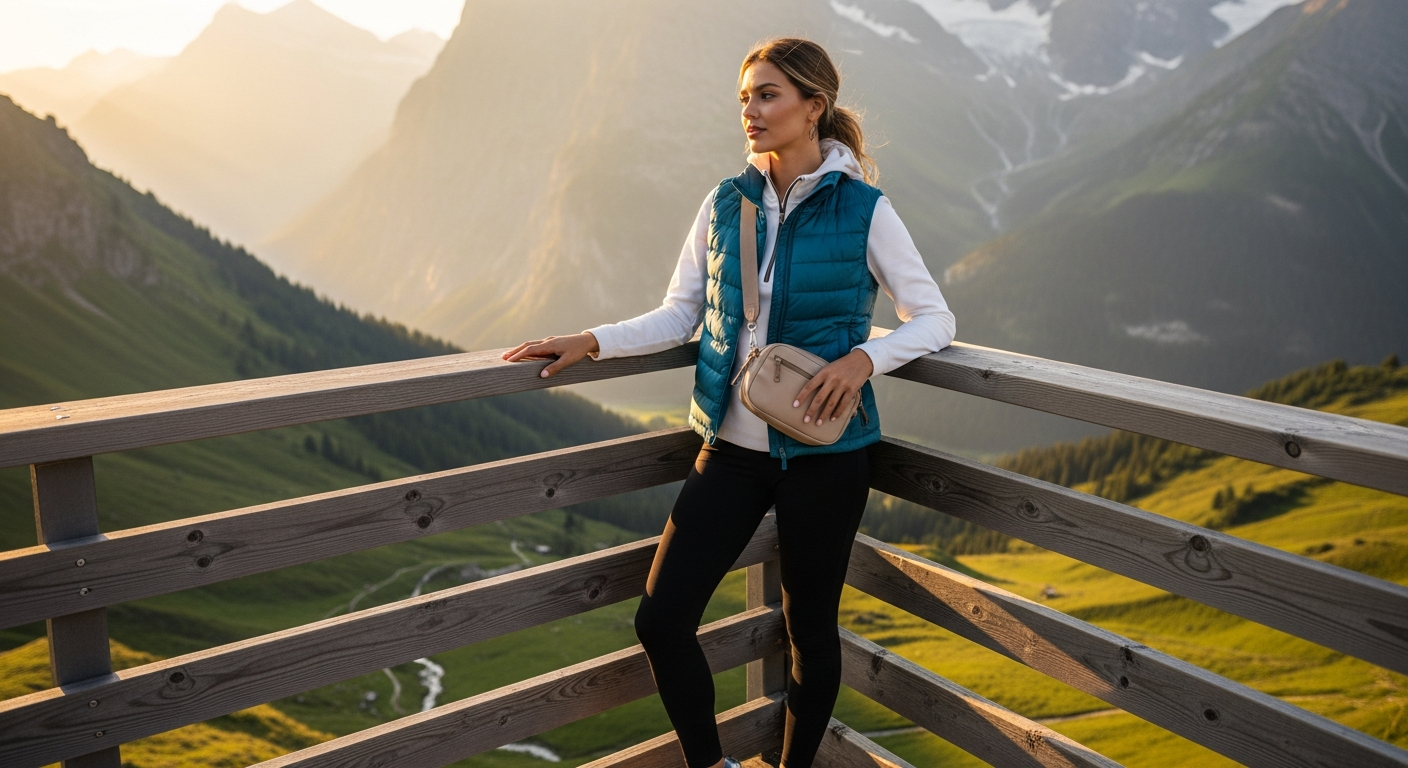
Lightweight puffer vests are the Swiss Alps staple you’ll see everywhere. They’re wildly practical—adding core warmth while keeping arms free for movement—and they pack down to nearly nothing. This is the piece locals wear constantly, layered over everything from t-shirts to button-downs.
Cozy cardigans bridge the gap between athletic gear and everyday style. Choose one in a chunky knit or textured fabric that feels intentionally fashion-forward. This becomes your go-to piece for café stops, train rides, and evening dinners when you want to look polished but stay comfortable.
Matching sets are your secret weapon for looking effortlessly put-together with zero thought. A coordinated fleece set in a neutral color or subtle pattern reads as intentional outfit, not lazy packing. You can also split the pieces to create multiple outfit combinations throughout your trip.
The Outer Layer Investment
A lightweight waterproof jacket is absolutely non-negotiable for Swiss Alps summer. Not “water-resistant”—actually waterproof with sealed seams and a proper rain rating. You will get rained on. The only question is whether you’ll stay dry and comfortable or spend the rest of your day in soggy clothes.
Look for three key features: packability (stuffs into its own pocket or a small pouch), breathability (prevents that clammy sauna feeling), and actual style (because you’ll wear this in 80% of your photos). The best jackets balance technical performance with clean lines and flattering cuts.
Understanding the difference between rain jackets and windbreakers matters more than you’d think. Rain jackets offer waterproof protection but can feel stiff. Windbreakers provide lighter protection against wind and light rain with more flexibility and comfort. Ideally, you want a rain jacket for serious weather and a packable windbreaker for breezy conditions.
Elevated options from Patagonia, Arc’teryx, and Lululemon deliver premium performance with sophisticated styling. These brands understand that outdoor enthusiasts want gear that looks good in urban settings too. Expect to invest $150-400 for these pieces, but they’ll last for years and work across multiple climates.
Budget alternatives still perform admirably if you shop smart. Columbia and The North Face outlet stores offer last season’s styles at 40-60% off. REI runs major sales four times yearly where quality technical jackets drop to under $100. Check these sales before your trip—the savings are substantial.
Bottoms That Balance Style and Function

Adventure-Ready Pants and Shorts
High-waisted hiking leggings revolutionized mountain style, and they’re more versatile than traditional hiking pants could ever be. The high waist stays put during movement, creates a flattering silhouette, and provides core coverage when you’re bending and stretching on trails. Choose ones with at least one secure pocket for essentials.
The best length for mountain activities is 7/8 or full-length. Capri-length leggings bunch awkwardly in hiking boots and leave your ankles exposed to scratchy vegetation and bugs. Full-length options tuck smoothly into boots and provide complete coverage without excess fabric.
Adventure shorts need the right inseam to balance modesty and movement—5 to 7 inches hits the sweet spot. Too short and you’re uncomfortable on steep climbs or sitting on rocks; too long and they restrict movement and look dated. Look for styles with built-in liners and stretchy fabric that moves with you.
Quick-dry materials that look like regular athletic wear but perform better make all the difference. Modern technical fabrics mimic the appearance of cotton or regular workout clothes while offering superior moisture management and durability. You can wear these pieces for hiking, then straight to lunch without looking like you just rolled off a trail.
Color strategy matters more than you might think. Dark colors (black, navy, charcoal, olive) hide dirt, dust, and trail grime that lighter colors advertise to everyone. Neutral tones mix effortlessly with every top in your wardrobe, maximizing outfit combinations from minimal pieces.
Town-Appropriate Options
Elevated joggers work beautifully for casual hiking and village strolling. Choose sleek styles in technical fabrics rather than baggy sweatpants—tapered legs and modern cuts photograph well and feel intentional. These transition seamlessly from morning hikes to afternoon shopping in mountain towns.
Linen-blend pants deliver breathable comfort for warmer valley days, but skip them for serious hiking. Linen wrinkles dramatically, offers zero stretch for climbing, and provides no protection against scratchy vegetation. Save these for lakeside lunches and city exploration days.
Midi skirts and dresses create gorgeous photos but limit your activity options. They work wonderfully for scenic train rides, village walks, and restaurant dinners. They don’t work for cable cars (windy), steep stairs (modesty concerns), or any actual hiking. Pack one if you have room and plan town-focused days.
The denim debate deserves honest discussion. Regular jeans are terrible for hiking—they restrict movement, absorb moisture, chafe, and take forever to dry. However, stretchy denim works acceptably for easy valley walks and looks perfect for town days. Bring one pair of comfortable stretch jeans for non-hiking activities if you have the space.
The Versatility Test
Creating outfits that go from trail to town without a complete change requires strategic planning. Choose bottoms in neutral colors that pair with multiple tops. Test each piece by asking: “Can I wear this for a morning hike, then straight to lunch?” If the answer is no, reconsider packing it.
The “one bottom, three tops” formula maximizes outfit variation while minimizing luggage. One pair of black leggings works with a gray fleece, white base layer, and patterned pullover—that’s three completely different looks from one bottom. Multiply this across your wardrobe, and you’ve got two weeks of outfits from one carry-on.
Pieces that photograph well against alpine backdrops lean toward rich, saturated colors or interesting patterns. Solid jewel tones (burgundy, forest green, deep blue) pop beautifully against green valleys and white peaks. Avoid busy prints that compete with the already dramatic scenery.
Avoid the “I wore the same thing in every photo” problem by planning outfit rotation before you pack. Lay out your pieces and create actual outfit combinations. Take photos. This sounds excessive, but it prevents that sinking feeling when you realize every mountain photo shows you in the same gray fleece.
Footwear Strategy: From Trails to Cobblestones

The Hiking Shoe Investment
Waterproof hiking boots versus trail shoes—this choice depends entirely on your planned activities and personal ankle stability. Boots provide maximum ankle support and protection for technical trails, rocky terrain, and multi-day hiking. Trail shoes offer lighter weight, faster drying, and more flexibility for moderate trails and mixed activities.
Breaking in new shoes before your trip is non-negotiable. I’ve watched too many travelers hobble through Swiss villages with bleeding heels because they wore brand-new boots on their first mountain hike. Wear new hiking footwear for at least 20-30 hours before your trip—around your house, on local walks, during errands. Your feet will thank you.
Ankle support considerations scale with fitness level and terrain difficulty. If you’re tackling steep, rocky trails like Schynige Platte to First, boots provide stability that prevents rolled ankles. For well-maintained paths like Panorama Trail or easy valley walks, trail shoes offer plenty of support with better comfort.
Brands that combine performance with style include Merrell (reliable, budget-friendly), Salomon (technical performance, sleek design), Hoka (maximum cushioning, distinctive style), and On Running (Swiss brand with minimalist aesthetic). These companies understand that modern hikers want shoes that work on trails and look acceptable in town.
The truth about “cute hiking boots”? They exist, but prioritize fit and function first, aesthetics second. A gorgeous boot that gives you blisters or lacks traction on wet rocks is useless. Find boots that fit your feet properly and perform well, then choose the most stylish option within those parameters.
Your Second Pair (Yes, You Need One)
Comfortable walking shoes for town days and easy trails prevent hiking boot fatigue and give your feet a break. White sneakers remain timelessly chic and pair with everything, though they will get dirty—embrace the lived-in look or choose a slightly darker color.
Waterproof options that don’t look like rain boots expand your versatility. Several brands now make water-resistant sneakers and casual shoes that handle light rain and morning dew without the bulky appearance of traditional waterproof footwear. These work beautifully for unpredictable weather days.
Slides or sandals become essential for après-hike comfort. After hours in hiking boots, your feet need to breathe and relax. Pack lightweight slides that take minimal suitcase space—Birkenstocks, simple sporty sandals, or cushioned slides all work. You’ll wear these in your hotel room, on balconies, and for quick evening strolls.
The weight versus versatility calculation for packing multiple shoes is real. Shoes are heavy and bulky, but wearing uncomfortable footwear all day ruins your trip. The sweet spot: hiking boots or trail shoes, one pair of comfortable walking sneakers, and lightweight slides. Three pairs covers every situation without destroying your luggage weight.
Sock Game Strong
Your regular athletic socks will absolutely give you blisters on mountain trails. The cushioning is wrong, the fit is wrong, and they don’t manage moisture properly for extended hiking. This isn’t an upsell—it’s physics.
Merino wool hiking socks are the splurge that’s genuinely worth it. They provide cushioning in high-impact zones, prevent blisters through seamless construction, regulate temperature, and resist odor so effectively you can wear them multiple days. Brands like Darn Tough and Smartwool cost $20-25 per pair but last for years and come with lifetime warranties.
Compression socks for long travel days and altitude adjustment help more than you’d expect. The flight to Switzerland is long, and compression socks prevent swelling and reduce fatigue. They also help your body adjust to altitude changes more comfortably during your first few days in the mountains.
The two-pair rotation system for multi-day hiking works perfectly: wear one pair, wash and dry the other. Merino wool dries quickly enough that you can hand-wash socks in your hotel sink at night, and they’ll be dry by morning. Two quality pairs handle a week-long trip easily.
Accessories That Elevate Your Alpine Look

Sun and Weather Protection
Wide-brim hats versus baseball caps comes down to sun protection needs and face shape. Wide-brim hats (3+ inch brim) provide superior sun coverage for face, ears, and neck—critical at high altitude. Baseball caps work better for windy conditions and athletic activities but offer less comprehensive protection. Choose based on your primary activities.
Sunglasses that stay put during activities need secure fit and grippy materials. Look for rubberized nose pads and temple tips that prevent sliding when you sweat. Wraparound styles offer better peripheral protection and wind blocking. Polarized lenses reduce glare from snow patches and water, making them worth the upgrade.
Lightweight scarves serve multiple purposes in the Alps: warmth for cool mornings, sun protection for your neck and shoulders, dust protection on windy trails, and instant style upgrade for town visits. Choose breathable materials like cotton or linen for summer, not heavy wool.
UV protection importance at altitude cannot be overstated. Every 1,000 meters of elevation increases UV exposure by approximately 10-12%. At Jungfraujoch (3,454 meters), you’re experiencing roughly 40% more UV radiation than at sea level.