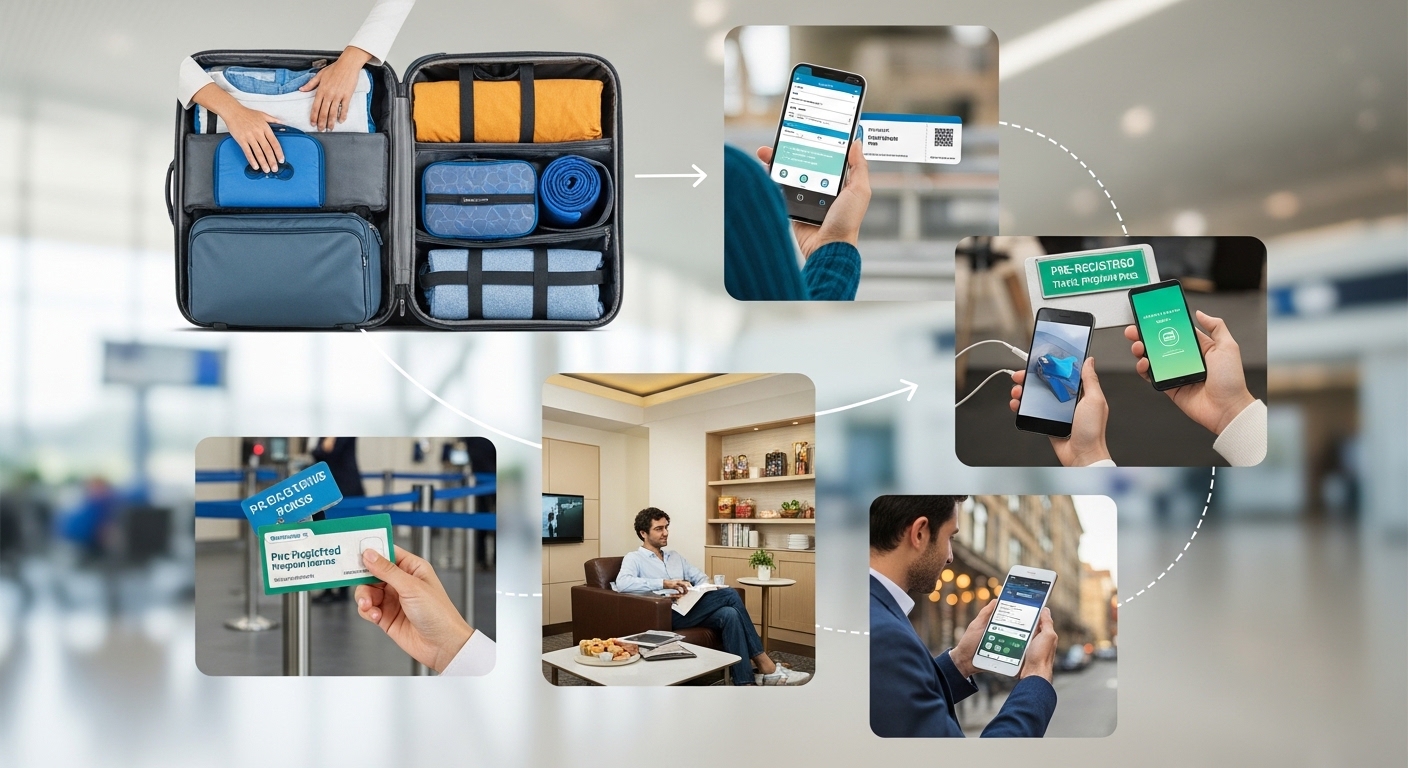
5 Smart Travel Hacks for Frequent Flyers

Most travellers approach the airport the same way: pack a bag, print a boarding pass, and hope for the best. But the most frequent flyers — the business travellers who clock hundreds of thousands of miles and treat airports like an extension of the office — have developed a pre-flight routine that quietly protects their money, their time, and their sanity.
In a viral video that sparked a wave of conversation online, a millionaire businessman revealed five deceptively simple things he does before every single flight.
None of them cost much. Some cost nothing at all. But together, they represent a system that most travellers overlook — one that can mean the difference between a smooth journey and a travel nightmare that costs thousands.
This blog post expands each of those five habits in full detail: what they are, why they matter, the data behind them, and the pros and cons of each approach. Whether you fly twice a year or twice a week, these are habits worth adopting before you ever reach the check-in desk.
Hack 1 — Photograph Your Luggage Before Check-In
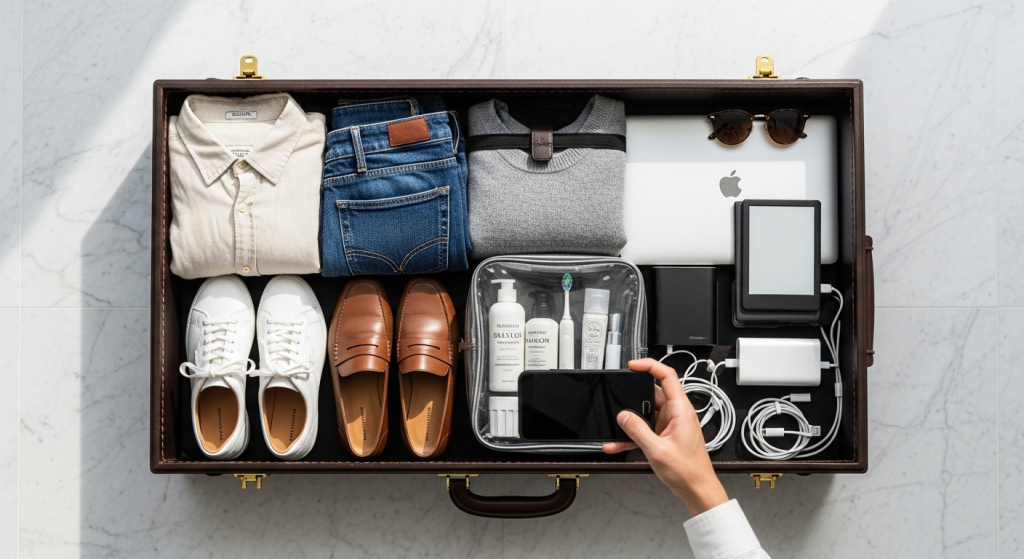
The claim: “I take a picture of my luggage just before checking so I can claim up to $3,800 if it gets lost or stolen.”
Why It Matters
The habit sounds almost too simple to matter: take a photo of your luggage — open and packed — right before you hand it to the airline. But behind this two-second action is a legal and financial strategy worth understanding.
According to the U.S. Department of Transportation, airlines operating domestic flights must compensate passengers for lost or damaged baggage up to $3,800 per ticketed passenger (updated 2024). For international travel under the Montreal Convention (covering 130+ countries), that ceiling rises to approximately $7,110 as of October 2024.
However, this is not automatic. Airlines ask for proof. If your bag is lost, they want a detailed list of every item inside — with estimated values and ideally original receipts.
Without documentation, airlines routinely underpay. A photograph of your open, packed suitcase provides an immediate visual record that is very difficult to dispute.
📊 Stat: Over 4 million bags were mishandled in just the first half of 2024. This is not a rare edge case — it is a regular operational reality of air travel.
How to Do It
- Photograph the outside of the bag (for damage claims)
- Photograph the inside with the bag open and fully packed
- Capture any high-value items in a separate close-up
- Store the photo alongside your boarding pass in your camera roll
Pros & Cons
| ✅ Pros | ⚠️ Cons |
|---|---|
| Creates timestamped visual evidence of contents | Photos alone don’t guarantee full compensation — airlines still negotiate |
| Massively strengthens lost luggage claims | Does not prevent loss or damage |
| Supports travel insurance claims too | High-value items (cash, jewellery) are often excluded from airline liability anyway |
| Costs zero — takes under 10 seconds |
💡 Pro tip: Pair this with keeping all receipts for high-value items in a digital folder. The more documentation you can provide, the stronger your claim.
Hack 2 — Bring an Empty Water Bottle and Fill It After Security
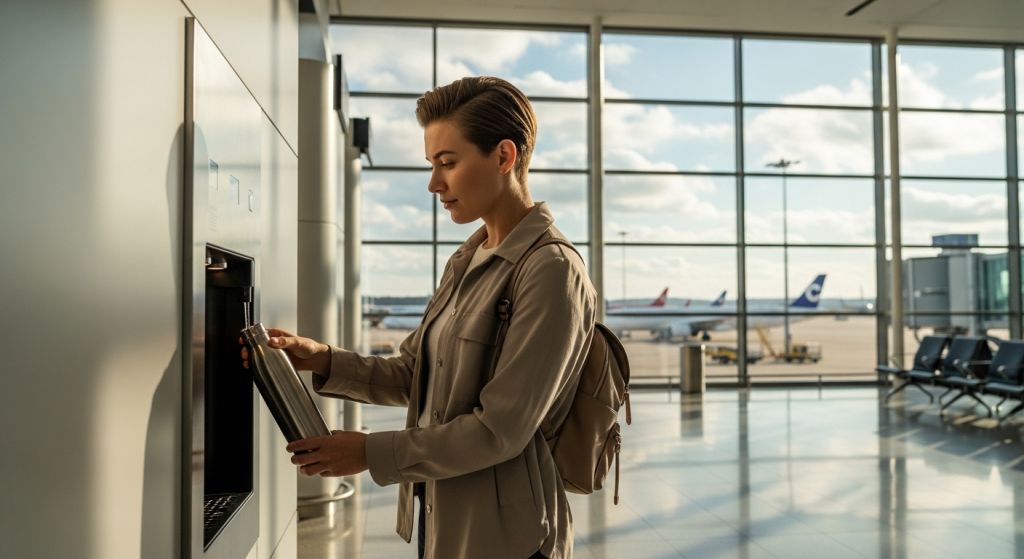
The claim: “I bring an empty water bottle and fill it up after security to save on overpriced drinks.”
Why It Matters
Airports are designed to separate you from your money. The moment you pass security, you are in a captive market. A 500ml bottle of water that costs under £1 at a supermarket can cost $5–$7 inside a terminal. A coffee. A snack. It adds up fast — and if you fly frequently, it compounds into real money across the year.
The TSA’s 3-1-1 rule prohibits liquids over 100ml in carry-on bags through security — but an empty bottle passes through without issue. Most modern airports now have water refill stations, often installed alongside drinking fountains, providing clean, chilled water at no cost.
💡 The science: Cabin humidity inside an aircraft is typically 10–20% — far lower than normal indoor environments. Dehydration at altitude worsens jet lag, causes headaches, and affects alertness. Staying hydrated isn’t just about saving money — it’s about arriving at your best.
How to Do It
- Pack an empty reusable bottle in your carry-on
- Pass through security as normal
- Look for water refill stations on the airside (often near gate areas)
- Fill up before boarding — and refill during layovers
Pros & Cons
| ✅ Pros | ⚠️ Cons |
|---|---|
| Saves $5–$7 per flight (hundreds per year for frequent flyers) | Not all airports have clearly marked refill stations |
| Promotes proper hydration at altitude | Some smaller regional airports have limited post-security facilities |
| Reduces single-use plastic consumption | Adds a small amount of weight to your carry-on |
| Premium bottles keep drinks cold for 12+ hours |
💡 Recommended: The Hydro Flask 32oz or YETI Rambler — favourites among frequent travellers for durability and temperature retention. Both fit in most seat-back pockets.
Hack 3 — Use Your Credit Card for Free Airport Lounge Access

The claim: “I use my credit card for free entry to airport lounges so I can load up on food before the flight.”
Why It Matters
Airport lounges are one of the most underutilised perks in travel. Millions walk past them daily, assuming they are only for first-class passengers. In reality, the right credit card is all it takes — and it changes the airport experience entirely.
A standard Priority Pass membership — granting access to 1,600+ lounges worldwide — costs $469/year on its own. But multiple premium travel cards include it as a cardholder perk.
Best Cards for Lounge Access (2025–2026)
| Card | Lounge Access | Annual Fee |
|---|---|---|
| Amex Platinum | 1,550+ lounges incl. Centurion, Priority Pass, Delta Sky Clubs | $695 |
| Chase Sapphire Reserve | Unlimited Priority Pass + Sapphire Lounges | $550 |
| Capital One Venture X | Priority Pass + Capital One Lounges (NYC, DFW, LAS, etc.) | $395 |
What Do Lounges Offer?
- 🍽️ Free meals and snacks (full buffet in most)
- 🍷 Premium bar service including cocktails and wine
- 🛁 Shower facilities on long-haul routes
- 📶 Reliable, fast Wi-Fi
- 💺 Quiet workspace seating — no crowds, no noise
- 🧖 Spa treatments in select premium lounges
Pros & Cons
| ✅ Pros | ⚠️ Cons |
|---|---|
| Free food and drinks — easily offsets the annual fee | Premium cards carry fees of $395–$895 |
| Quiet and productive between flights | Centurion Lounges are increasingly crowded at peak hours |
| Shower access — invaluable on long-haul connections | Guest policies tightening — companions may cost extra |
| Significantly less stressful during delays | Not every airport has a Priority Pass-affiliated lounge |
💡 Strategy tip: If you regularly fly from the same airport, check whether it has a Centurion, Sapphire, or Capital One lounge before choosing your card. Location matters more than headline lounge count.
Hack 4 — Put an Apple AirTag in Your Luggage
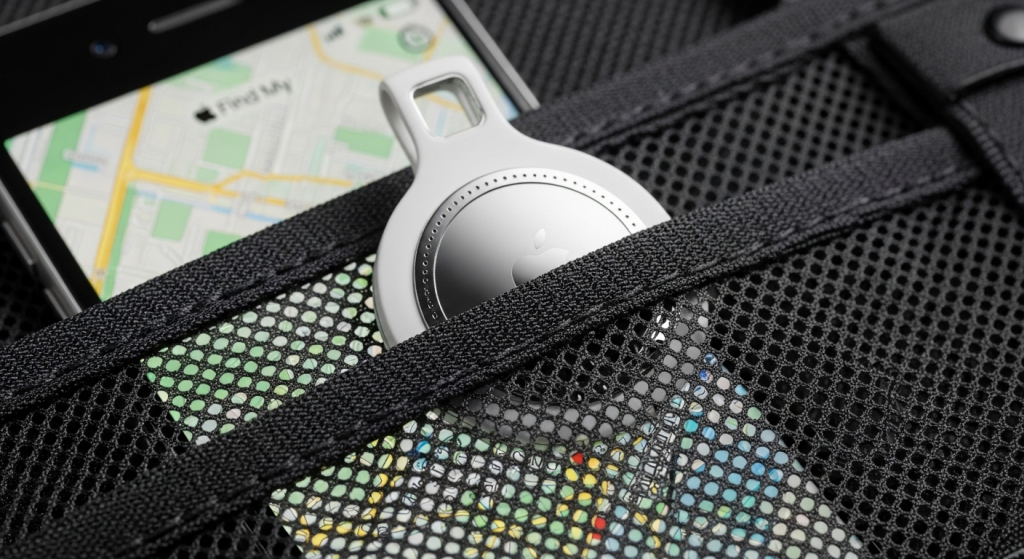
The claim: “I put an Apple AirTag in my luggage so I can track it in real time.”
Why It Matters
The aviation industry mishandled over 4 million bags in the first half of 2024 alone. The primary cause — accounting for 46% of all cases — is transfer mishandling: bags that fail to make connecting flights (SITA Baggage IT Insights, 2024).
An AirTag doesn’t prevent this from happening. What it does is tell you exactly where your bag is at all times, so you can act faster — and with documented proof — when things go wrong.
How It Works
The Apple AirTag (~$29) leverages Apple’s Find My network — which uses hundreds of millions of Apple devices as anonymous relays — to update your bag’s location every time it passes near any iPhone. Unlike GPS trackers, it:
- Requires no subscription
- Has a 1-year battery life (standard CR2032 coin cell)
- Works globally wherever Apple devices are present
🌍 Real-world impact: Travellers using AirTags have told airline staff exactly which airport their bag is in before the airline’s own system logged it. This dramatically accelerates resolution. Airlines respond faster when you can show them a pin on a map.
Pros & Cons
| ✅ Pros | ⚠️ Cons |
|---|---|
| Real-time tracking via Apple’s vast Find My network | Requires an Apple device |
| No subscription — one-time ~$29 cost | Location updates depend on Apple device density nearby |
| Provides documented location evidence for claims | Does not prevent loss — only helps locate bags after the fact |
| 1-year battery, works indefinitely with annual CR2032 swap | Some airlines previously raised concerns (though AirTags are now widely accepted) |
| Works in 185+ countries |
💡 Android users: Samsung Galaxy SmartTag2 and Tile Pro are the closest equivalents. Samsung has stronger European coverage; Tile has broader US reach.
Hack 5 — Email Yourself Copies of Your Passport and Travel Documents
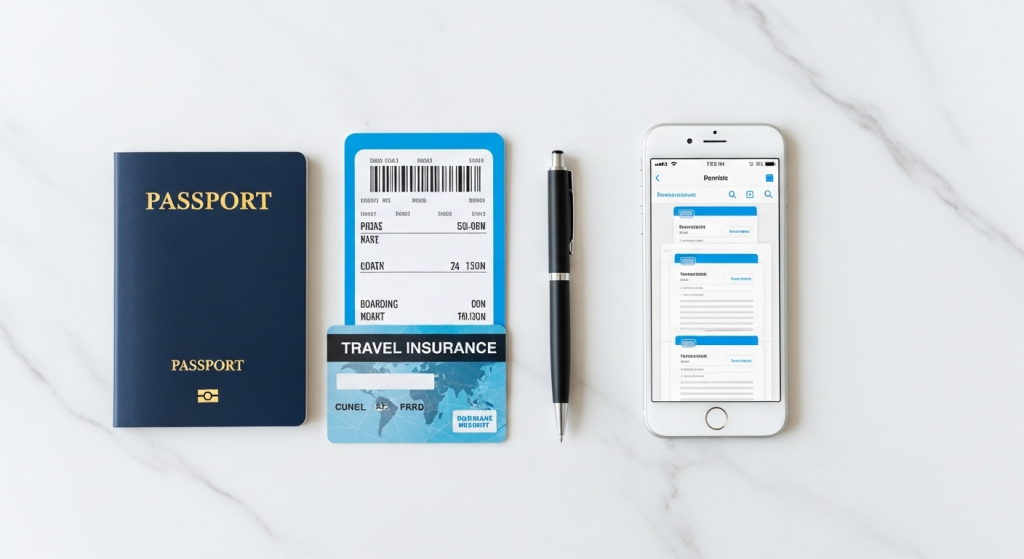
The claim: “I email myself copies of my passport and travel documents in case I lose anything.”
Why It Matters
Losing your passport abroad is one of the most disruptive travel experiences imaginable — missed flights, days at an embassy, hotel costs, and in some countries, legal complications. A digital backup doesn’t replace the physical document. But it can dramatically reduce recovery time and ease every step of the process.
When you report a lost or stolen passport to your country’s embassy or consulate, having a copy of the photo page speeds up identity verification significantly. It allows the embassy to begin processing an Emergency Travel Document much faster than if you arrive with nothing.
🔑 The key insight: Even if your phone, wallet, and bag are stolen simultaneously — which does happen — you can access your documents from any internet-connected device in the world by logging into your email.
What to Email Yourself
- 🛂 Passport photo page and personal details page
- 🗺️ Visa or entry permit
- 🏥 Travel insurance policy and emergency claim number
- ✈️ Return flight booking reference
- 🏨 Hotel confirmation and address
- 💳 Travel credit card emergency contact numbers
Pros & Cons
| ✅ Pros | ⚠️ Cons |
|---|---|
| Accessible from any device anywhere via email login | Email is not the most secure storage for sensitive documents |
| Dramatically speeds up passport replacement at embassies | A copy is not a replacement — you still need the embassy for an official document |
| Costs nothing — takes under 2 minutes | Some countries require the original physical document for certain situations |
| Can store all travel docs in one searchable thread |
💡 Enhanced version: Use a private, password-protected cloud folder (Google Drive, iCloud, or Dropbox with 2FA) instead of plain email for added security. Some seasoned travellers also leave a physical copy with a trusted person at home.
Final Thoughts — Small Habits, Big Protection
None of these five habits requires a business-class budget, elite loyalty status, or years of travel experience. They require only a few minutes of deliberate preparation before each trip. Yet the protection they provide is disproportionate to their cost.
The travellers who photograph their luggage claim thousands in compensation when things go wrong. The ones with AirTags find their bags while other passengers wait for callbacks from airline staff. The ones with the right credit card eat well in a quiet lounge while the rest of the terminal pays $12 for a sandwich.
Smart travel is not about spending more. It is about preparing better. These five habits are where that preparation starts.