
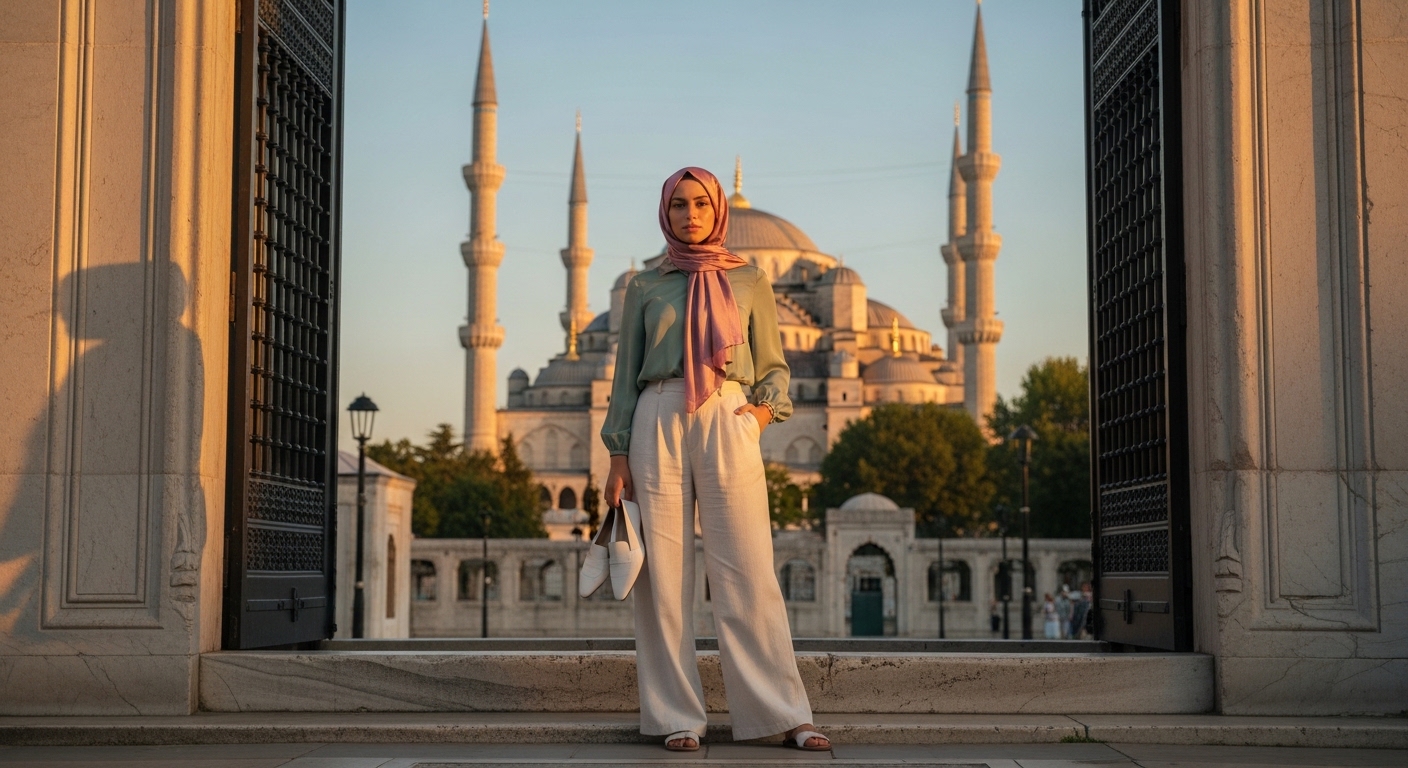
7 Istanbul Mosque Outfit Mistakes Women Make: What to Wear Instead

Istanbul is one of the most extraordinary cities in the world. Home to the Blue Mosque, Hagia Sophia, the Süleymaniye Mosque and dozens of equally stunning sacred sites, it is a city where history, culture and spiritual beauty converge in a way that genuinely stops you in your tracks.
But here is what nobody tells you before your first Istanbul trip. Getting turned away at the door of the Blue Mosque because of your outfit is one of the most frustrating travel experiences you can have — especially when the fix is so simple.
Turkey’s beautiful mosques are open to all — Muslims and non-Muslims, Turks and foreigners, young and old. But that open door comes with a clear dress code that every visitor is required to follow. And the mistakes women make when visiting Istanbul mosques are remarkably consistent — the same seven errors come up again and again.
Visiting a mosque in Istanbul is more than just sightseeing — it is a chance to connect with the city’s spiritual and cultural heart. Dressing appropriately is not just a rule — it is a sign of awareness, openness and respect that helps create a more meaningful and comfortable experience.
This guide covers the seven most common Istanbul mosque outfit mistakes women make — and exactly what to wear instead so you can walk through the door of every mosque in Istanbul with complete confidence.
Why the Istanbul Mosque Dress Code Matters More Than You Think
Before we get into the seven mistakes, it helps to understand exactly what the dress code requires — because knowing the rules makes it much easier to understand why certain outfit choices cause problems.
Women are required to cover their heads, shoulders, chests and legs. Toes can show but avoid sleeveless tops, low necklines and above the knee skirts or dresses.
Female visitors should wear slacks or a dress or blouse and skirt at least below the knees, preferably with elbow length or longer sleeves with no bare shoulders or upper arms, and a headscarf to cover their heads.
The good news is that most major mosques in Istanbul provide free loaner garments at the entrance for visitors who arrive underprepared. Both the Hagia Sophia and the Blue Mosque offer visitors free loaner garments such as headscarves shawls and long skirts to help adhere to the dress code requirements.
But relying on borrowed garments means queuing at the entrance, adjusting unfamiliar clothing over your outfit and spending your entire mosque visit feeling uncomfortable and self conscious. A few minutes of outfit planning before you leave your hotel changes everything.
Mistake 1: Bare Shoulders and Sleeveless Tops
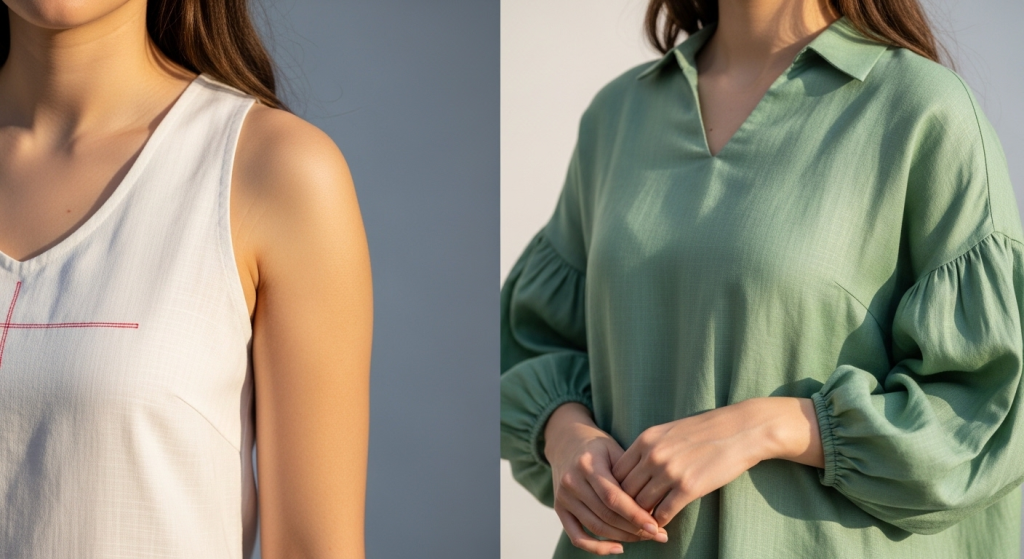
This is the single most common mosque outfit mistake women make in Istanbul — and it is entirely understandable. Istanbul in spring and summer is warm.
Sleeveless tops and vest tops are natural choices for sightseeing. And when you are moving between the Grand Bazaar, the Bosphorus and a rooftop restaurant in 25 degree heat, bare shoulders feel entirely appropriate.
But bare shoulders are not permitted inside any Istanbul mosque.
Cover your shoulders — no spaghetti straps, tube tops or tank tops. Women must cover their shoulders while in the Blue Mosque.
The mistake most women make is not bringing a cover up at all — they assume they will borrow a scarf or shawl at the entrance and drape it over their shoulders. But a thin scarf draped over bare shoulders does not adequately cover them in the way the dress code requires, and mosque attendants will often ask you to return to the entrance for a proper cover up garment.
What to wear instead: A loose fitting linen or cotton blouse with elbow length or longer sleeves is the perfect Istanbul mosque top. It keeps you cool in the spring heat, it meets the dress code completely and it looks effortlessly elegant in photos inside the mosque. Pack one specifically for mosque days — it takes up almost no space and eliminates the problem entirely.
Mistake 2: Short Skirts, Mini Dresses and Shorts
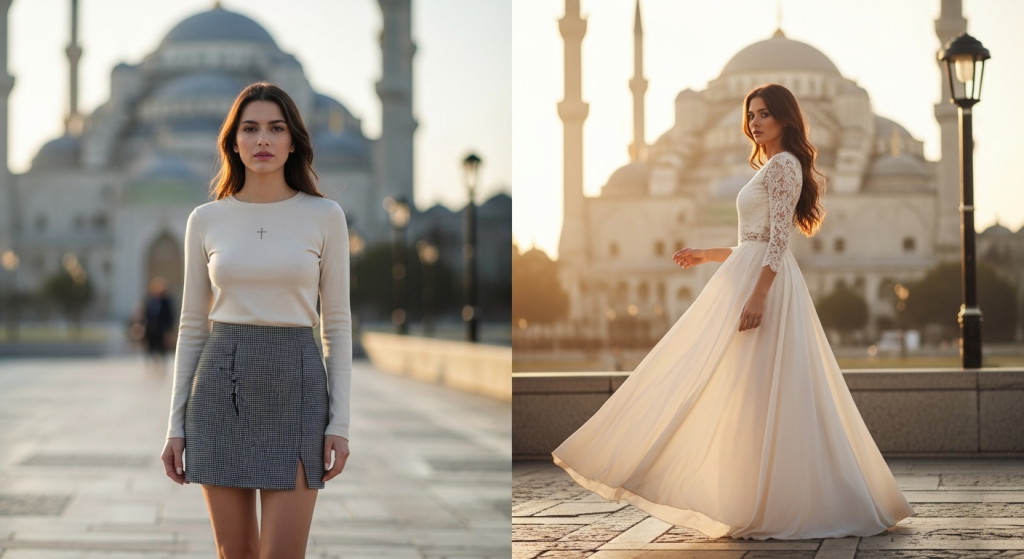
The second most common mistake is arriving at a mosque in Istanbul with uncovered legs — either in shorts, a mini skirt or a midi dress that falls above the knee.
Women need to cover their heads, shoulders and knees.
This catches many women off guard because Istanbul as a city is relatively relaxed about dress compared to many other destinations in the Muslim world. You will see women in shorts and mini skirts throughout the city without any issue. The dress code applies specifically and strictly to mosques and other religious sites — not to Istanbul generally.
A maxi dress worn to the Blue Mosque needs to be down to your ankle with no slit that reveals the leg, with long sleeves and not be low on the back or chest.
The most common version of this mistake is arriving in a midi dress that falls just below the knee — which feels covered but does not fully meet the requirement for leg coverage at most mosques.
What to wear instead: Loose fitting wide leg linen trousers are the single best mosque visit bottom for Istanbul in spring and summer. They cover your legs completely, they are cool and breathable in the heat, they photograph beautifully inside the mosque and they work as a day to evening outfit for the rest of your sightseeing. A flowing maxi skirt to the ankle is an equally strong choice that feels feminine and elegant while meeting every requirement of the dress code.
Mistake 3: Arriving Without a Headscarf
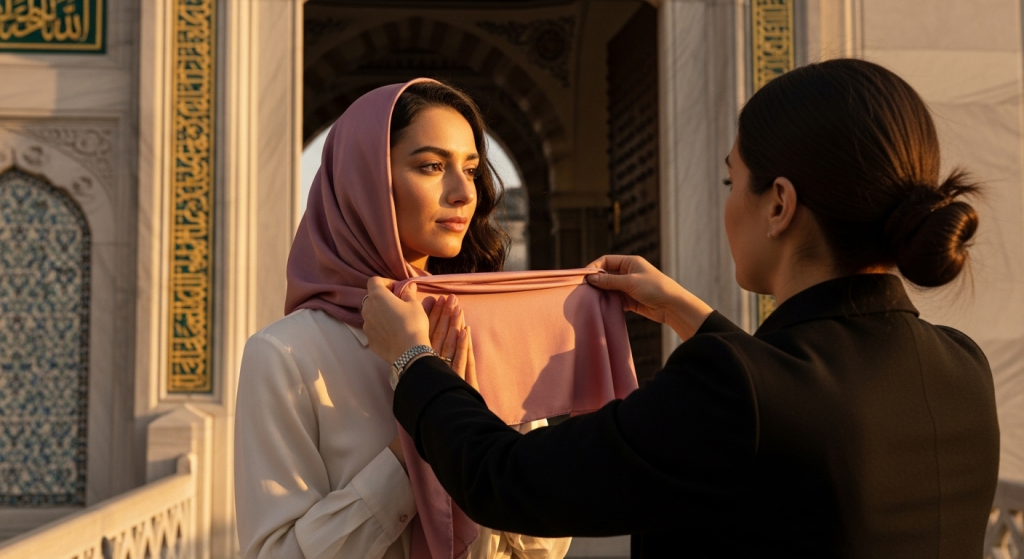
The headscarf requirement is the one element of the Istanbul mosque dress code that surprises non-Muslim women most — particularly those visiting from Western countries where head covering in religious sites is less common.
You can carry your own scarf to cover your head but please note scarves are provided at the entrance of every mosque. Cotswold Collections
While it is true that headscarves are available to borrow at the entrance of most major Istanbul mosques, there are several reasons why bringing your own is a much better approach.
Borrowed headscarves at busy mosques like the Blue Mosque are handled by hundreds of visitors every day. They are often synthetic, uncomfortable and difficult to keep in place without pins. Arriving with your own beautiful silk or lightweight cotton scarf means you can drape it elegantly, keep it in place comfortably and look genuinely stylish rather than visibly borrowed.
If you really cannot wear a headscarf, a handy garment for women is a lightweight long sleeved jacket shirt or jacket with a built-in hood. Wearing slacks, just raise the hood when you enter the mosque and you will not need a headscarf. Classpop
What to wear instead: Pack a large lightweight silk or cotton scarf specifically for mosque visits. A pashmina in a neutral or soft tone — dusty rose, cream, soft sage or pale blue — is perfect. It covers your head and shoulders simultaneously, it stays in place more easily than a smaller scarf and it adds a genuinely elegant touch to your overall outfit. This one item solves two dress code requirements at once.
Mistake 4: Tight and Form Fitting Clothing
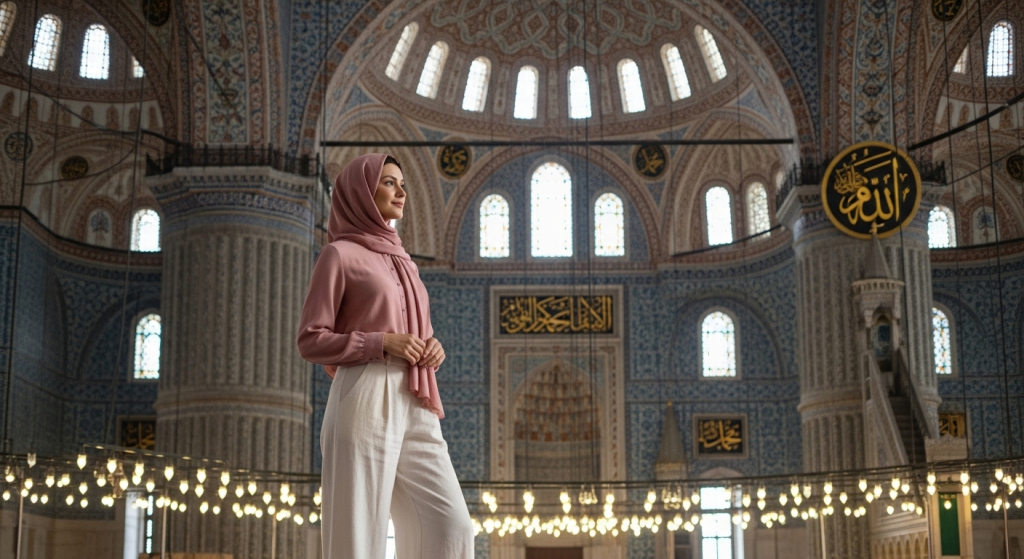
This is the mistake that catches the most women off guard because the items involved — leggings, skinny jeans, fitted maxi dresses — technically cover the required body parts but still do not meet the mosque dress code.
Women should cover their arms legs and hair and opt for loose fitting clothes that do not cling to your form. Avoid leggings. Pinterest
The key word in the Istanbul mosque dress code is loose fitting. The requirement is not just for coverage — it is for modest coverage that does not reveal the shape of the body. Leggings technically cover your legs but they are form fitting enough that most mosque attendants will ask you to put on a wrap skirt over them before entering.
We would not recommend skinny jeans for the Blue Mosque as this goes against the ethos of the rules. Also consider that in the summer jeans may be very hot to wear at the mosque. Jena Green
A fitted maxi dress with long sleeves technically covers all the required areas but if it is body con or figure hugging it will still not meet the dress code and you will be asked to cover up at the entrance.
What to wear instead: Loose fitting is the guiding principle for every item you wear to an Istanbul mosque. Wide leg linen trousers, a flowing maxi skirt, a loose tunic or an oversized blouse — all of these work perfectly. The looser and more relaxed the fit the more confidently you will walk through the entrance without being stopped. As a bonus loose fitting natural fabrics are also the coolest and most comfortable choice for sightseeing in Istanbul in spring and summer.
Mistake 5: Arriving Without Socks
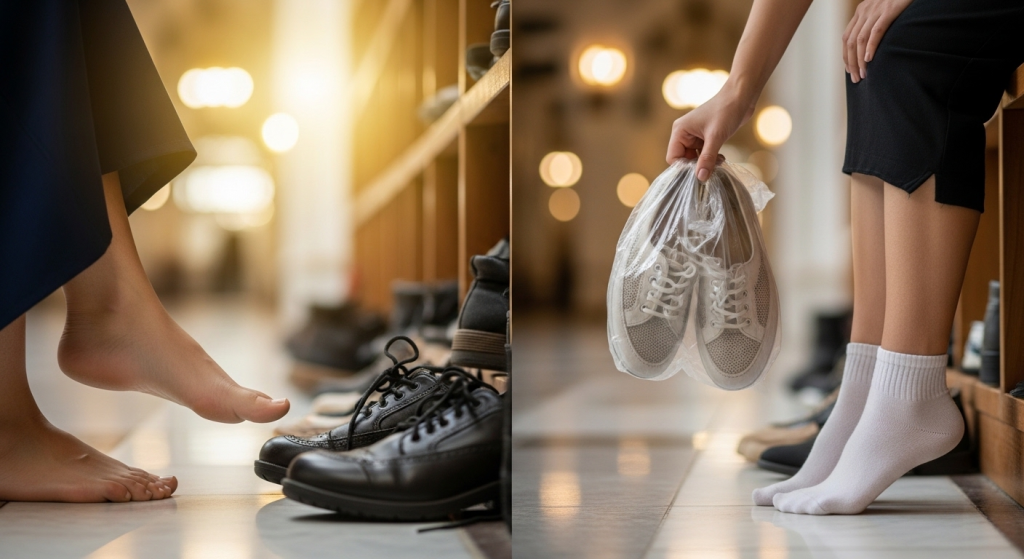
This is the most overlooked and yet most immediately uncomfortable mistake on the entire list — and it costs women nothing to fix.
Wear socks as you will be required to remove your shoes before entering the carpeted prayer area. Pinterest
Most women know that shoes must be removed at the entrance of Istanbul mosques. What they do not anticipate is what the floor actually feels like — particularly at the most visited mosques during peak tourist season. The carpeted areas of mosques like the Blue Mosque are walked on by thousands of visitors every single day. Arriving barefoot is both uncomfortable and unhygienic.
Shoes must be removed at the entrance. Socks are optional and plastic bags are provided to carry your shoes.
Many women pack sandals for an Istanbul trip because they are comfortable for sightseeing in warm weather — and then arrive at a mosque without socks and have to choose between removing their sandals and going barefoot or missing the mosque visit entirely.
What to wear instead: Pack a pair of thin white ankle socks specifically for mosque visits. They take up almost no space in your bag, they keep your feet comfortable on the carpet and they allow you to wear sandals for the rest of your sightseeing day without any problem.
Slip-on shoes — loafers, leather mules or ballet flats — are also a practical choice for mosque days because they are easy to remove and put back on quickly at the entrance.
Mistake 6: Transparent and Sheer Fabrics
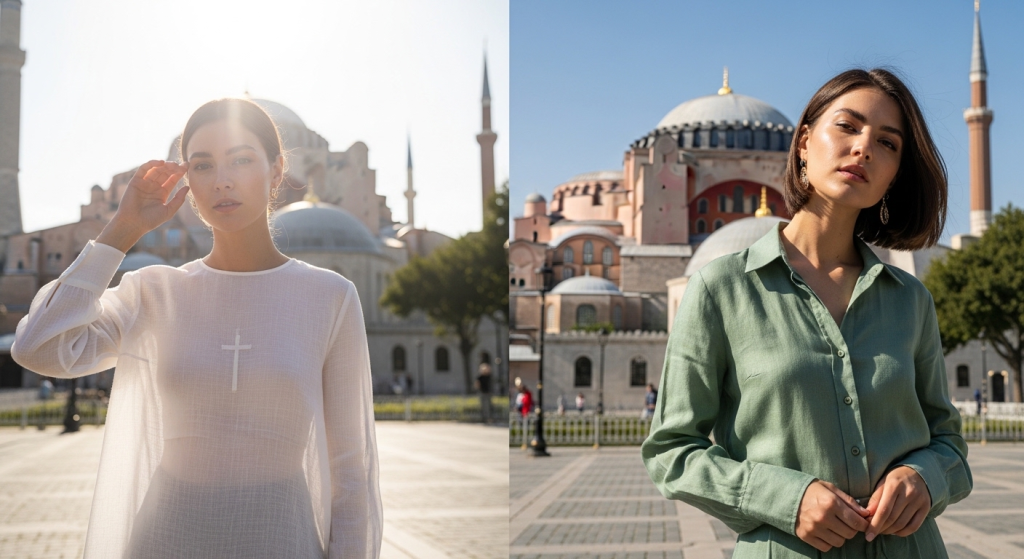
This is the mistake that most women do not even realise they are making until they step into the bright Istanbul sunlight outside a mosque entrance and a mosque attendant stops them.
Avoid transparent clothing — steer clear of clothing that is see-through or revealing.
Many beautiful spring and summer blouses — white linen, gauze cotton, chiffon — are slightly sheer in certain light. Inside a shop or hotel room they look completely opaque. But in bright Istanbul sunlight or under the interior lighting of a mosque they become transparent enough to violate the dress code.
Although we recommend lightweight fabrics the blouse should not be sheer even when hit by light.
This is a particularly easy mistake to make when packing for Istanbul in spring because the most comfortable fabrics for warm weather sightseeing — white linen, light cotton, chiffon — are the ones most likely to have this problem.
What to wear instead: Hold your blouse up to a bright light before packing it for a mosque visit day. If you can see your hand through it clearly it will likely be too sheer for the mosque dress code. Choose tightly woven natural fabrics in medium tones — sage green, dusty rose, soft terracotta, camel or pale blue — rather than white or very pale fabrics which are most likely to become transparent in bright light. Linen in medium tones is your safest and most stylish choice.
Mistake 7: Wearing a Hat Instead of a Headscarf
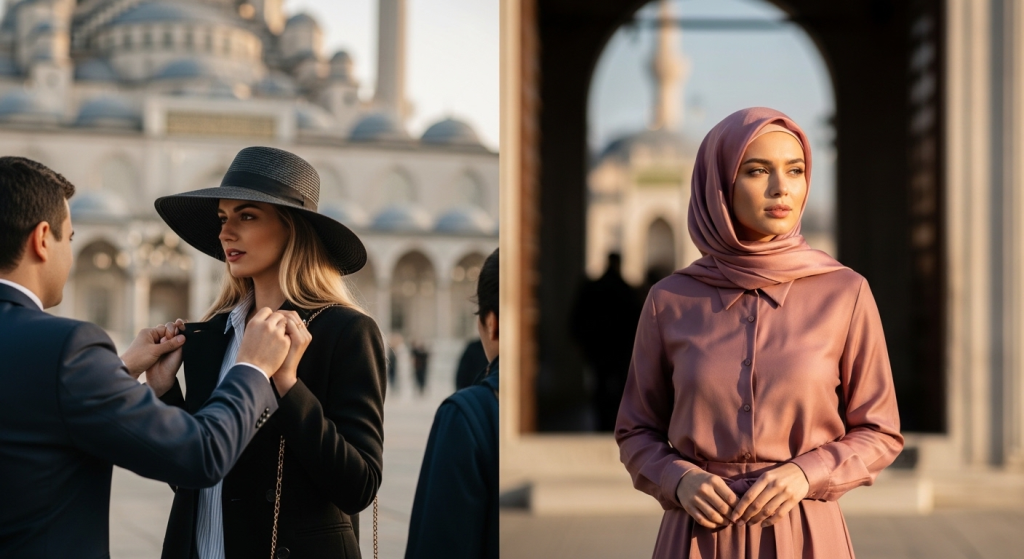
The final mistake on this list seems logical, but does not actually meet the Istanbul mosque dress code — arriving with a sun hat, baseball cap or wide-brim hat and assuming it counts as a head covering.
Women are required to wear a headscarf that covers their hair when visiting the Blue Mosque. Hats are not considered an acceptable substitute. Pinterest
Hats must be removed before entering any mosque.
This surprises many women who wear wide-brim hats as a stylish alternative to scarves throughout their Istanbul trip. A hat covers your head — but it does not cover your hair in the way the mosque dress code requires. Mosque attendants will ask you to remove it at the entrance and replace it with a headscarf.
The practical problem is that many women pack a hat for shade and sun protection during sightseeing but do not pack a scarf — assuming the hat will cover both purposes. On a mosque visit day this leaves them relying on borrowed scarves at the entrance rather than their own.
What to wear instead: Always pack a lightweight headscarf specifically for mosque visits regardless of what other headwear you are bringing on your Istanbul trip. Keep it in your day bag on any day that includes mosque visits so you are never caught without it. A large silk or cotton scarf in a beautiful neutral tone is one of the most versatile travel accessories you can own — it works as a headscarf for mosques, a wrap for cool evenings, a beach cover up and a photography prop all in one.
The Perfect Istanbul Mosque Outfit — Your Complete Guide
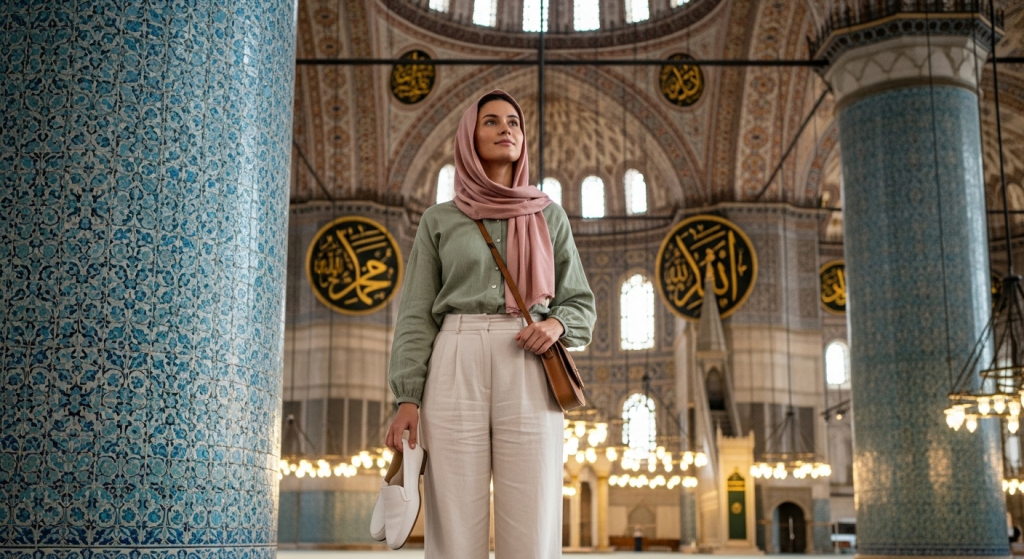
Now that you know the seven mistakes to avoid here is exactly what to wear to walk confidently into every mosque in Istanbul without being stopped, borrowed or turned away.
The Trousers or Skirt Loose fitting wide leg linen trousers in cream, sand, sage or soft terracotta cover your legs completely, keep you cool in the spring heat and look elegant both inside the mosque and throughout the rest of your sightseeing day. A flowing ankle length maxi skirt is an equally strong alternative that feels feminine and photographs beautifully inside the mosque interior.
The Top A loose fitting linen or cotton blouse with elbow length or longer sleeves in a medium tone — sage green, dusty rose, camel or soft blue. Check it against bright light before leaving your hotel to ensure it is not sheer. Avoid anything fitted, body con or transparent.
The Headscarf A large lightweight silk or cotton scarf in a neutral or soft tone. Dusty rose, cream, pale sage and soft blue all work beautifully and complement the stunning interior tiles of Istanbul’s most iconic mosques. Keep it in your day bag at all times on mosque visit days.
The Shoes Slip on shoes — leather mules, loafers or ballet flats — with a pair of thin ankle socks in your bag. Easy to remove at the entrance, comfortable on the mosque carpet and practical for a full day of sightseeing.
The Bag A small leather crossbody bag is ideal for mosque visits. Large backpacks may need to be left at the entrance or checked at security.
Quick Reference: Mosque Outfit Mistakes vs What to Wear
| Mistake | Wear Instead |
|---|---|
| Bare shoulders and sleeveless tops | Loose linen blouse with elbow length sleeves |
| Short skirts and shorts | Wide leg linen trousers or ankle length maxi skirt |
| No headscarf | Large silk or cotton scarf in neutral tone |
| Tight and form fitting clothing | Loose fitting relaxed fabrics throughout |
| No socks | Thin ankle socks in your day bag |
| Sheer and transparent fabrics | Opaque tightly woven medium tone linen |
| Hat instead of headscarf | Lightweight headscarf specifically for mosque visits |
Final Thoughts
Istanbul’s mosques are among the most breathtaking architectural and spiritual spaces in the entire world. Whether you are stepping into the iconic Blue Mosque or discovering a quiet neighbourhood gem, pack that scarf, opt for modest layers and embrace the calm beauty and heritage that define these sacred spaces.
Getting your outfit right means you arrive at every mosque in Istanbul feeling completely confident, respectful and ready to experience one of the most extraordinary cities in the world without any of the stress, frustration or embarrassment of being turned away at the door.
Save this post before your Istanbul trip and share it with anyone planning their first visit to the Blue Mosque or Hagia Sophia.