6 Ways Flying Affects Your Menstrual Cycle

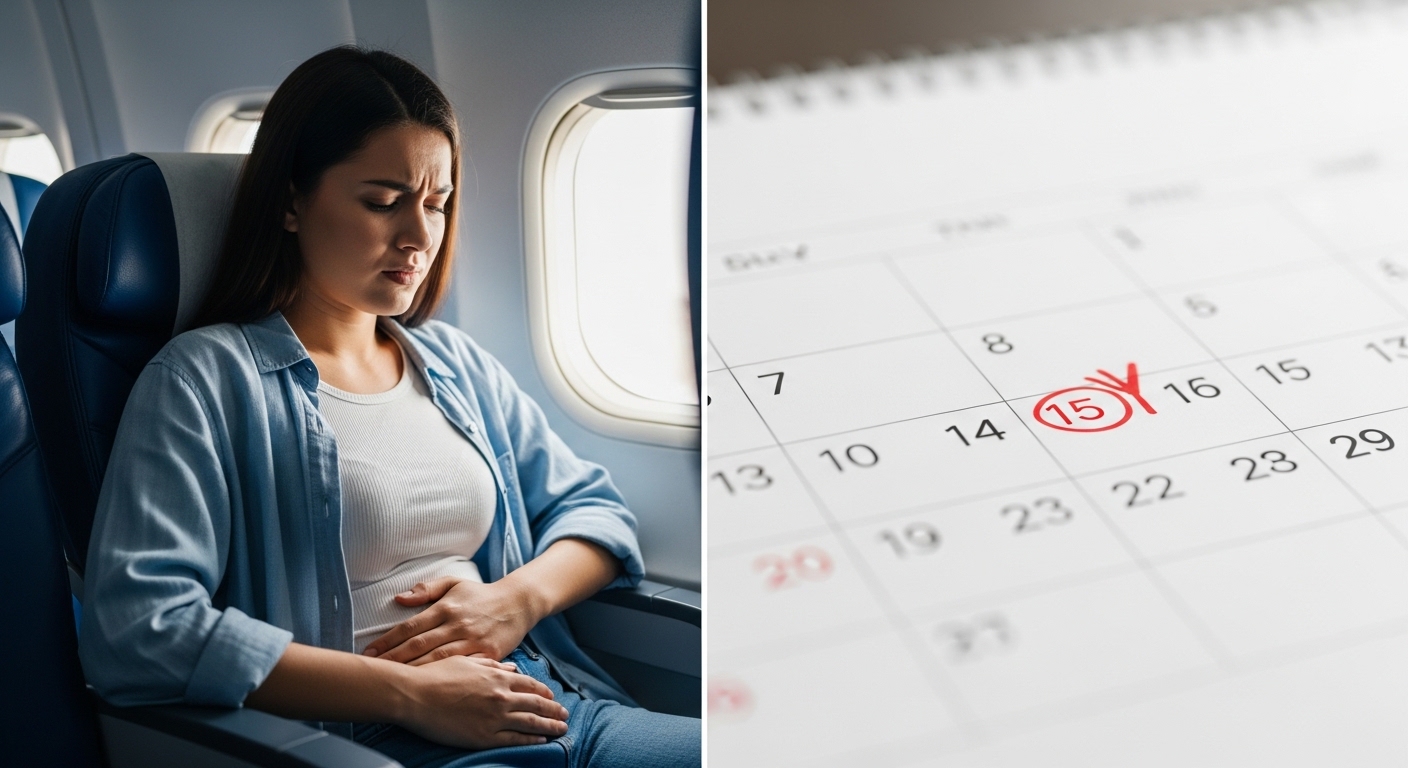
You’ve planned the perfect vacation down to the last detail—hotel booked, itinerary mapped out, camera charged—and then your period decides to crash the party three days early. Or maybe it disappears entirely when you’re expecting it. Sound familiar?
Here’s something travel guides rarely mention: flying can seriously mess with your menstrual cycle. We’re talking timing shifts, flow changes, intensified cramps, and sometimes cycles that just vanish into thin air. If you’ve ever wondered why your period goes haywire when you travel, you’re not alone—and more importantly, you’re not imagining things.
This isn’t just anecdotal evidence from frustrated travelers swapping stories in airport bathrooms. Science backs up what millions of women experience every time they board a plane.
Understanding exactly how air travel affects your hormones means you can finally stop being blindsided and start traveling prepared.
Let’s dive into the real reasons your body reacts this way and, more importantly, what you can actually do about it.
The Complete Science Behind Flying and Your Cycle
Why Your Body Reacts to Air Travel
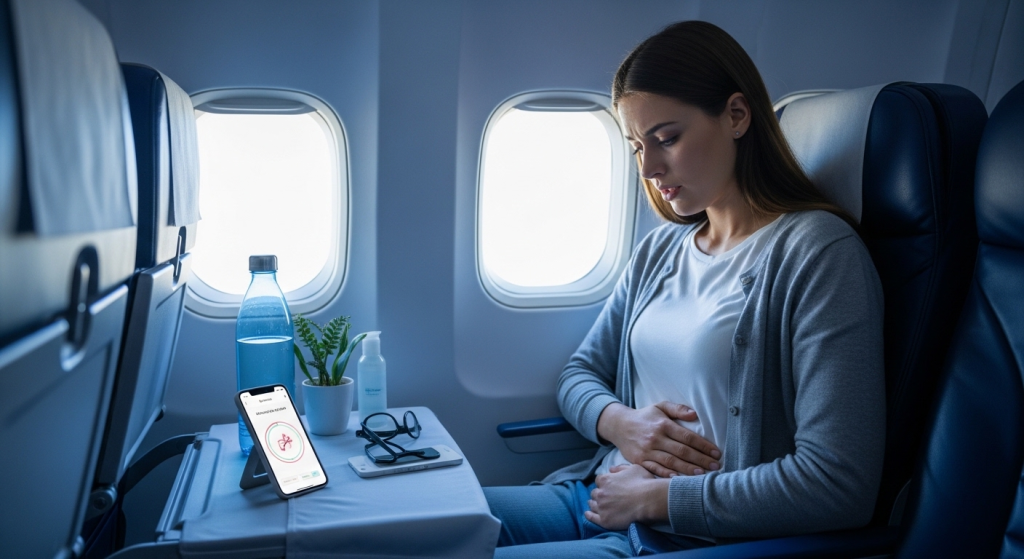
Your menstrual cycle isn’t just about reproduction—it’s intimately connected to your body’s internal clock, also known as your circadian rhythm.
This 24-hour biological timer regulates everything from when you feel hungry to when you naturally wake up. But here’s the fascinating part: your circadian rhythm and your menstrual hormones are in constant communication.
Your hypothalamus, a small region in your brain, acts as the command center for both systems. It releases hormones that trigger your ovaries to produce estrogen and progesterone, the key players in your menstrual cycle.
When your circadian rhythm gets disrupted—say, by crossing multiple time zones—your hypothalamus gets confused signals. The result? Your carefully orchestrated hormonal balance goes off-script.
Think of it like a symphony where the conductor suddenly can’t read the music. The musicians (your hormones) keep trying to play, but the timing gets wonky.
Stress Hormones Take Flight (Even When You’re Excited)
Here’s something that surprises most travelers: your body doesn’t distinguish between “good” stress and “bad” stress. Whether you’re anxious about a work trip or thrilled about a tropical vacation, your body releases the same stress hormone—cortisol.
Cortisol is helpful in short bursts, but when it floods your system during travel, it directly interferes with your reproductive hormones.
High cortisol levels can suppress the production of gonadotropin-releasing hormone (GnRH), which your body needs to trigger ovulation. Without proper GnRH levels, your estrogen and progesterone production gets disrupted, and your entire cycle can shift.
Even the excitement of planning, packing, navigating airports, and adjusting to new environments creates enough physiological stress to impact your hormones. Your body is essentially saying, “We’re in survival mode right now—let’s put the reproductive system on the back burner.”
Time Zones and Your Internal Clock
Crossing time zones doesn’t just make you tired—it creates genuine biological confusion. When you fly from New York to Paris, your body thinks it’s 3 AM while the sun is blazing at 9 AM local time. This mismatch sends conflicting signals to your hypothalamus.
Research shows that jet lag affects the secretion of melatonin, the hormone that regulates sleep. But melatonin doesn’t work in isolation—it influences the hormones that control your menstrual cycle too. The more time zones you cross, the more pronounced these effects become.
A quick two-hour flight to a nearby state? Your body barely notices. A 12-hour flight across the globe? Your hormones will definitely feel that.
6 Ways Flying Actually Changes Your Menstrual Cycle
1. Early or Late Arrivals (Your Period, Not Your Flight)
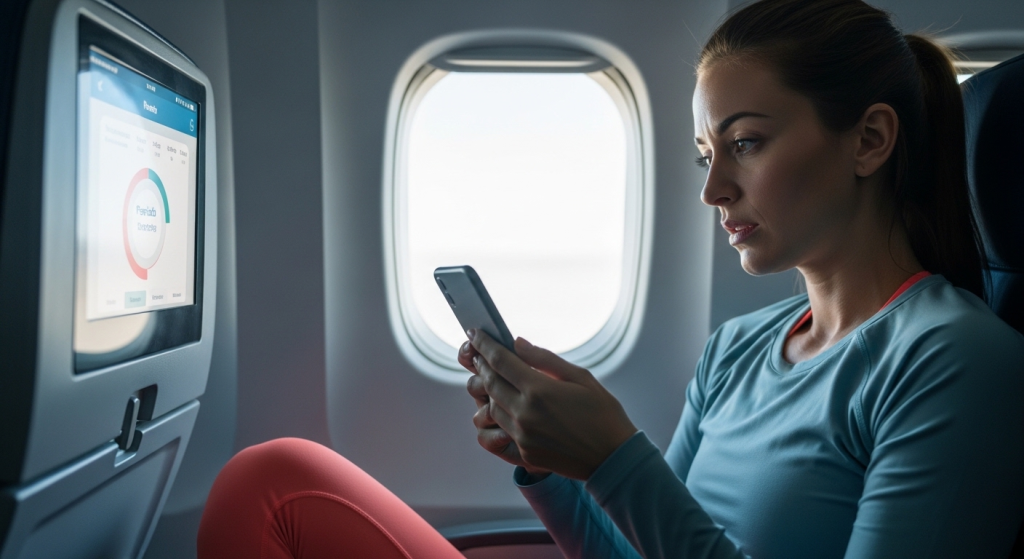
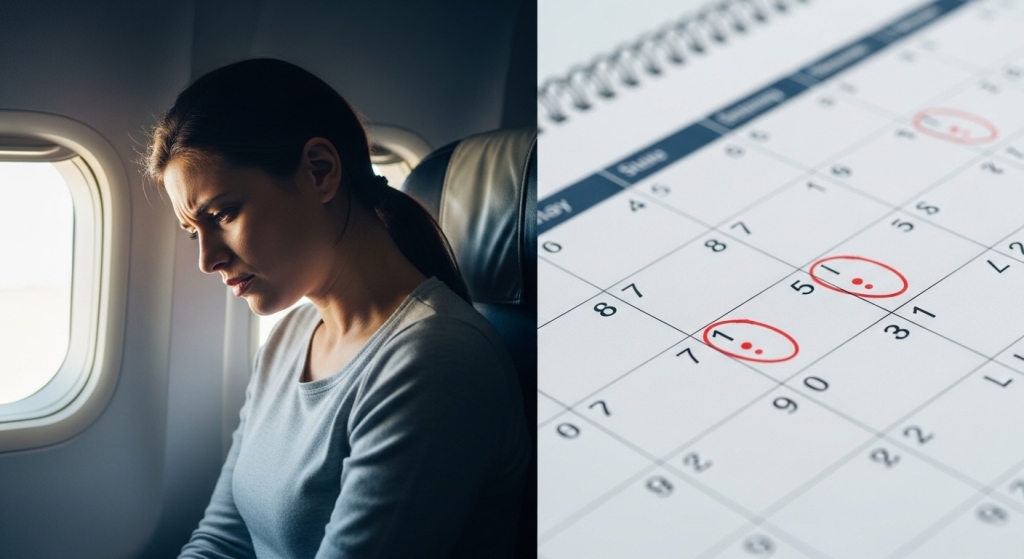
This is the most common complaint among travelers: periods that show up at completely unexpected times. You might start bleeding three days before your tracking app predicts, or your period might be fashionably late by nearly a week.
The timing shift happens because travel stress affects the length of your follicular phase—the time between your period starting and ovulation occurring.
When cortisol levels spike, this phase can shorten (bringing your period earlier) or lengthen (delaying everything). Some women report their periods starting the day they board a long-haul flight, while others find their expected period simply doesn’t arrive until they’ve been home for several days.
The unpredictability is the real challenge here. You can’t plan around your cycle when your cycle isn’t following its own schedule.
2. Heavier or Lighter Flow Than Usual
If you’ve ever experienced spotting when you normally have a moderate flow, or found yourself needing to change products more frequently than usual while traveling, blame your fluctuating hormone levels.
Stress hormones affect the thickness of your endometrial lining—the tissue that sheds during your period. Higher stress can sometimes cause a thicker lining, resulting in heavier bleeding. Conversely, if stress suppresses your hormones significantly, you might experience lighter flow or just spotting instead of your typical period.
Dehydration from flying compounds this issue. Airplane cabin air has humidity levels around 10-20%, compared to the typical 30-60% you experience on the ground. This extreme dryness affects your blood volume and can influence how heavy your flow appears.
3. Intensified PMS and Cramps
There’s nothing quite like experiencing your worst cramps at 35,000 feet with limited ability to move around, stretch, or access your usual comfort measures. Unfortunately, flying can genuinely make period symptoms worse.
The combination of dehydration, reduced oxygen levels in cabin air, and stress creates a perfect storm for intensified cramping. Your uterus contracts to shed its lining, and when you’re dehydrated, these contractions can become more painful. Add in the bloating that comes from sitting for extended periods and eating salty airplane snacks, and you’ve got a recipe for serious discomfort.
PMS symptoms like mood swings, irritability, and fatigue also intensify during travel. The stress response amplifies emotional symptoms, and jet lag makes existing fatigue feel completely overwhelming.
4. Complete Cycle Skipping
Some travelers experience something even more dramatic: their period just doesn’t show up at all. This phenomenon, called stress-induced anovulation, happens when your body decides conditions aren’t ideal for reproduction.
From an evolutionary perspective, this makes sense. When your body perceives you’re in an uncertain or stressful situation (which travel registers as, even if you’re having fun), it may suppress ovulation entirely. No ovulation means no hormonal cascade, which means no period.
This is more common among frequent travelers, people taking extended trips, or those experiencing significant time zone changes. If you’ve ever taken a month-long backpacking trip and realized your period disappeared for six weeks, this is why. Your body essentially hit pause on your reproductive system.
5. Duration Changes (Shorter or Longer Periods)
Your usual five-day period might compress into three days or stretch into a full week when you’re traveling. These duration changes stem from the same hormonal fluctuations affecting everything else.
When estrogen and progesterone levels don’t follow their typical patterns, the shedding of your endometrial lining happens at a different pace. Sometimes the lining sheds quickly, resulting in a shorter but potentially heavier period. Other times, the process drags out, giving you a longer period with lighter flow.
The practical challenge? You can’t accurately predict how many supplies you’ll need. Packing for your typical five-day period might leave you scrambling if you’re still bleeding on day seven.
6. Breakthrough Bleeding Between Periods
Spotting or light bleeding when you’re not expecting your period can be alarming, especially when you’re far from home. Breakthrough bleeding during travel is usually caused by sudden hormonal fluctuations triggered by stress.
When cortisol disrupts your normal estrogen and progesterone balance, your endometrial lining can become unstable and shed small amounts even when you’re not menstruating. This is different from implantation bleeding or signs of pregnancy—it’s your body’s direct response to the stress of travel.
While breakthrough bleeding is generally harmless, you should seek medical attention if it’s accompanied by severe pain, extremely heavy flow, or if you’re soaking through products every hour. Those symptoms warrant a doctor’s evaluation, whether you’re home or abroad.
The Ultimate Pre-Flight Preparation Guide
Pack Your Period Emergency Kit (Carry-On Essentials)
Never, and I mean never, check your period supplies in your luggage. Airlines lose bags, flights get diverted, and you don’t want to land in a foreign country at midnight without access to tampons.
Your carry-on emergency kit should include: at least 10-15 tampons or pads (more than you think you’ll need), a menstrual cup if you use one, pain relievers like ibuprofen, wet wipes for freshening up, and a few disposal bags for destinations where bathroom facilities might be limited. Add a change of underwear and consider dark-colored clothing for travel days.
TSA allows you to bring these items in your carry-on without restrictions—they don’t count toward your liquid limits. Use a small, discreet pouch that fits easily in your personal item for quick bathroom access. Those zippered pouches designed for cosmetics work perfectly and keep everything organized.
Time Your Trip Strategically (When Possible)
If you have flexibility in your travel dates, period tracking apps become your best friend. Apps like Clue or Flo predict your cycle based on past patterns, letting you see potential conflicts weeks in advance.
Planning a beach vacation? Try to schedule it during your follicular phase (right after your period ends) when you typically have more energy and fewer symptoms. Have an important business presentation? Avoid scheduling it during your typical PMS window if possible.
Of course, life doesn’t always cooperate with perfect timing. But when you can build in buffer days around important events or activities, you give yourself flexibility if your period decides to shift unexpectedly.
Pre-Travel Cycle Preparation
The week before your trip, focus on minimizing the factors that will disrupt your hormones. Stay exceptionally well-hydrated—aim for at least eight glasses of water daily. Maintain your regular sleep schedule as much as possible, even if you’re excited and tempted to stay up late packing.
Practice stress-reduction techniques like meditation, deep breathing, or gentle yoga. These activities genuinely lower cortisol levels, which can help keep your hormones more stable. Even 10 minutes of deep breathing daily makes a measurable difference.
Some women consider using hormonal birth control to delay their periods for important trips. This is a conversation to have with your healthcare provider well in advance—not the week before departure. If you’re already on birth control, your doctor might suggest skipping the placebo week to avoid getting your period during travel.
Know Before You Go: Local Resources
Research period product availability at your destination before you leave. In many countries, tampons are less common than pads, or you might only find specific brands. Knowing what’s available helps you pack appropriately.
Learn the local terms for menstrual products in the language of your destination. Having “tampons” or “pads” written in your phone’s translation app saves awkward pharmacy conversations. Make a note of pharmacies near your hotel or accommodations—Google Maps lets you save locations for offline access.
Be aware of cultural considerations too. Some countries have restrictions on where you can dispose of period products, and in certain cultures, discussing menstruation openly is taboo. A little research prevents uncomfortable situations.
Managing Your Period During the Flight and Trip
In-Flight Comfort Strategies
Change your tampon or pad right before boarding, especially for long-haul flights. This maximizes the time before you need to navigate cramped airplane bathrooms. Set a discrete alarm on your phone to remind you to change products every 4-6 hours—it’s easy to lose track of time when you’re watching movies or sleeping.
Drink water constantly, even though it means more bathroom trips. Dehydration makes cramps worse and intensifies fatigue. Bring an empty water bottle through security and fill it at water fountains after you pass through. Flight attendants will refill it during the flight too.
Wear comfortable, dark-colored clothing that won’t show accidents. Leggings or loose pants with a longer shirt provide coverage and comfort. Avoid white jeans or light-colored dresses on travel days—just trust me on this one.
Dealing with Airplane Bathrooms
Airplane bathrooms are tiny, awkward, and sometimes turbulent. Changing products requires strategy. Bring a small disposal bag in your pocket so you’re not trying to balance used products while washing your hands in that impossibly small sink.
If you’re changing a menstrual cup, wet wipes are essential since you can’t exactly rinse it thoroughly in an airplane bathroom. Some travelers carry a small water bottle specifically for this purpose. Empty and wipe your cup, then do a thorough cleaning once you reach your destination.
For destinations where bathroom facilities might lack proper disposal options, pack sealable bags to carry used products until you can dispose of them properly. It’s not glamorous, but it’s practical.
Combat Jet Lag to Minimize Cycle Disruption
The faster you adjust to your new time zone, the less your circadian rhythm disruption affects your menstrual cycle. Light exposure is your most powerful tool here. Get bright natural light in the morning at your destination and avoid bright light in the evening. This helps reset your internal clock quickly.
Adjust your sleep schedule gradually if possible. If you’re traveling east, start going to bed an hour earlier for a few nights before departure. Traveling west? Stay up an hour later. These small adjustments make the transition smoother.
Melatonin supplements can help reset your sleep cycle, but talk to your doctor first. The goal is to minimize the days you spend feeling jet-lagged, because every day of circadian disruption is another day your hormones are getting confused signals.
Pain Management Without Your Medicine Cabinet
Pack your usual pain relievers, but also prepare for situations where you might run out or need alternatives. Portable heating patches that activate with air exposure are absolute lifesavers for cramps. They’re TSA-approved, last for hours, and provide targeted relief without needing electricity.
Learn a few yoga poses that relieve menstrual cramping: child’s pose, supine twist, and cat-cow stretches can all be done in a hotel room and genuinely help. Even a 10-minute gentle stretching session reduces pain and improves circulation.
Research local pain reliever options at your destination. Ibuprofen might be called different names in different countries. In the UK, ask for “paracetamol” instead of acetaminophen. In Spain, “ibuprofeno” is readily available. Knowing the local terminology helps you find relief quickly.
Don’t Let Your Period Steal Your Authentic Experiences
Having your period while traveling doesn’t mean you need to skip activities. With the right preparation, you can swim, hike, explore, and enjoy every moment you’ve planned.
For swimming and water activities, tampons and menstrual cups work perfectly. Modern menstrual cups can be worn for up to 12 hours, making them ideal for long beach days or snorkeling excursions. Just change before your activity and you’re good to go.
Hiking and adventure activities require planning but are absolutely doable. Pack extra supplies in a small, waterproof bag. Bring disposal bags for used products on trails without facilities. Wear moisture-wicking, dark-colored athletic clothing for comfort and discretion.
Don’t let period-related nausea or cravings stop you from trying local cuisine. Eat smaller portions if you’re feeling queasy, and stay hydrated. Ginger tea or candies can settle your stomach naturally. Remember, you’ve traveled all this way—don’t let your period make you miss out on authentic experiences.
Your Period Doesn’t Get to Ruin Your Adventures
Flying affects your menstrual cycle through a perfect storm of stress hormones, circadian rhythm disruption, and time zone confusion. Your body reacts to travel as a stressor, even when you’re having the time of your life, and your hormones respond by shifting timing, changing flow, intensifying symptoms, or sometimes disappearing entirely.
The six main effects—timing changes, flow variations, intensified PMS and cramps, skipped cycles, duration shifts, and breakthrough bleeding—all stem from the same root cause: your body’s hormonal response to the stress and disruption of travel. Understanding this connection removes the mystery and empowers you to prepare effectively.
Your secret weapon is preparation. Pack smart with a comprehensive emergency kit in your carry-on. Plan strategically when you have flexibility in travel dates. Stay hydrated before, during, and after your flight. Use stress-reduction techniques to minimize hormonal disruption. Research local resources before you arrive.
Most importantly, don’t let period concerns keep you from booking that trip, taking that adventure, or exploring that new destination. Millions of women travel successfully every single day while managing their periods. With the right knowledge and preparation, you can too.
Your next flight might still affect your cycle—but now you’ll be ready for it. Safe travels, and don’t forget to pack extra supplies!