10 Suitcase Packing Tips That Actually Work

You know that sinking feeling when you’re zipping up your suitcase and realize you’ve somehow packed your entire closet but still forgot your phone charger? Or worse—you’re standing at the airline counter watching the scale tick past the weight limit while other travelers breeze by with perfectly organized carry-ons?
I’ve been there. Multiple times. And I’ve learned that most packing advice out there is either too generic (“just roll your clothes!”) or completely impractical for real travelers who want to look decent while exploring authentic local markets and dining at that stunning rooftop restaurant.
Here’s the truth: Packing well isn’t about following one magic trick. It’s about combining proven strategies that actually work together to maximize your space, minimize your stress, and set you up for unforgettable adventures without lugging around half your life.
These 10 tips will transform how you pack. You’ll reclaim precious suitcase space, breeze through airports, and have exactly what you need for those spontaneous experiences that make travel magical. Whether you’re a budget backpacker or a luxury traveler, these strategies adapt to your style.
Let’s dive in and turn you into the packing pro you’ve always wanted to be.
The Foundation: Master These Game-Changing Basics

I. Introduction
Tip 1: The Bundle Wrapping Method (Not Just Rolling)

II. The Foundation: Master These Game-Changing Basics
Rolling your clothes saves some space, sure. But if you want to prevent wrinkles and maximize every inch of your suitcase, you need to learn bundle wrapping. This technique changed everything for me during a three-week trip through Southeast Asia.
Here’s how it works: Start with a core object (a small packing cube or toiletry bag) in the center of your bed. Layer your clothes around it, alternating directions—pants lengthwise, then a shirt widthwise, then a dress diagonally. Each item wraps around the bundle, creating tension that prevents wrinkles and creates a compact, organized package.
The beauty of this method? Your clothes support each other. No single item gets crushed or creased because they’re all working together. I use bundle wrapping for my main outfits—the pieces I want to look sharp in—while I roll workout clothes, pajamas, and casual items that can handle a few wrinkles.
Quick guide to choosing your method:
- Bundle wrap: Dress shirts, blouses, dresses, dress pants, anything wrinkle-prone
- Roll: T-shirts, jeans, activewear, underwear, socks
- Flat fold: Blazers, suit jackets (these go on top of everything)
The combination approach gives you the benefits of each technique without the limitations of relying on just one.
Tip 2: The Capsule Wardrobe Formula

III. Space-Maximizing Secrets the Pros Use
This is the ultimate game-changer for chronic overpackers. The capsule wardrobe approach isn’t about packing less—it’s about packing smarter so every item works with multiple others.
Choose three colors maximum: one neutral base (black, navy, or khaki), one secondary neutral (white, gray, or cream), and one accent color that makes you happy. This simple rule means everything in your suitcase coordinates, giving you endless outfit combinations from minimal pieces.
The math is stunning: Seven carefully chosen items can create 15+ complete outfits. Pack two pairs of pants (one casual, one dressier), three tops that work for both day and evening, one dress or button-down shirt, and one lightweight layer. Each piece should transition from exploring hidden local neighborhoods during the day to that perfect sunset dinner.
I learned this the hard way in Portugal when I packed 12 different tops that only worked with specific bottoms. I wore the same three outfits on repeat while the rest took up valuable space. Now I test my capsule before trips: Can this top work with both pairs of pants? Does this dress work with sandals and sneakers? If an item doesn’t earn its space, it stays home.
Tip 3: Wear Your Bulkiest Items on the Plane

IV. Smart Strategies for Different Travel Styles
This tip alone reclaims 30% of your suitcase space instantly. Your bulkiest shoes, heaviest jacket, and thickest sweater should be on your body during travel—not crammed into your luggage.
Yes, you might feel slightly overdressed in the airport. But the payoff is breathtaking: suddenly you have room for souvenirs, an extra outfit, or simply the peace of mind that comes from a half-empty suitcase with room to breathe.
Strategic layering makes this comfortable. Wear your hiking boots or bulky sneakers with your thickest socks. Layer a tank top, t-shirt, and sweater, then top with your jacket. You can peel off layers once you’re through security and stash them in your personal item.
I use this approach religiously now. On a recent trip to Iceland, wearing my winter coat and boots on the plane freed up enough space to pack everything in a carry-on instead of checking a bag. That’s money saved on baggage fees and time saved at baggage claim—time better spent starting your adventure.
Space-Maximizing Secrets the Pros Use

V. The Pre-Trip Packing System That Prevents Chaos
Tip 4: Utilize Every Hidden Pocket and Gap

VI. Conclusion
Your suitcase has way more capacity than you think. The secret? Using every hidden pocket, gap, and hollow space strategically.
Shoes are prime real estate. Roll socks, underwear, and chargers, then stuff them inside your shoes. This fills empty space while helping shoes keep their shape. I also tuck small items like jewelry, earbuds, and travel-size toiletries into shoes.
Hats become storage containers too. Fill the crown with delicate items that need protection—sunglasses, a small camera, or breakable souvenirs on the return trip. The inside of purses and day bags should never travel empty. Pack scarves, belts, or that sarong you’ll use as a beach blanket.
Here’s a hidden gem most travelers miss: the gaps around the edges of your suitcase. Those awkward spaces along the sides? Perfect for rolled belts, charging cables, or flat items like travel documents. The corners can hold small toiletries or jewelry pouches.
Think of packing like Tetris. Every item should nestle into a space, with minimal air gaps. This approach creates natural compression without requiring special bags or vacuum sealers. The stunning result? You’ll fit 20-30% more into the same suitcase.
Tip 5: Packing Cubes Are Non-Negotiable
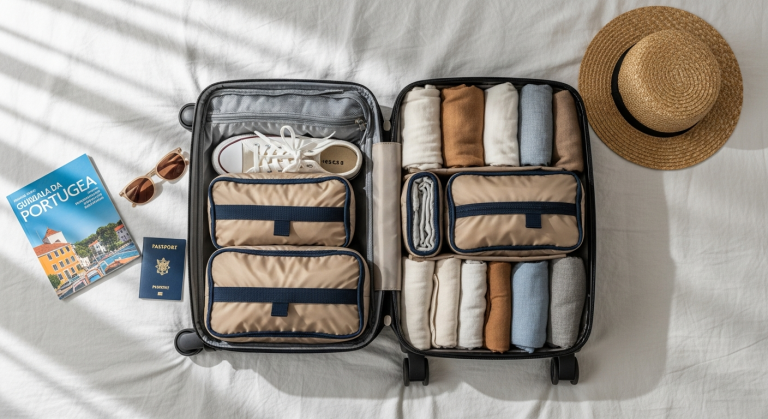
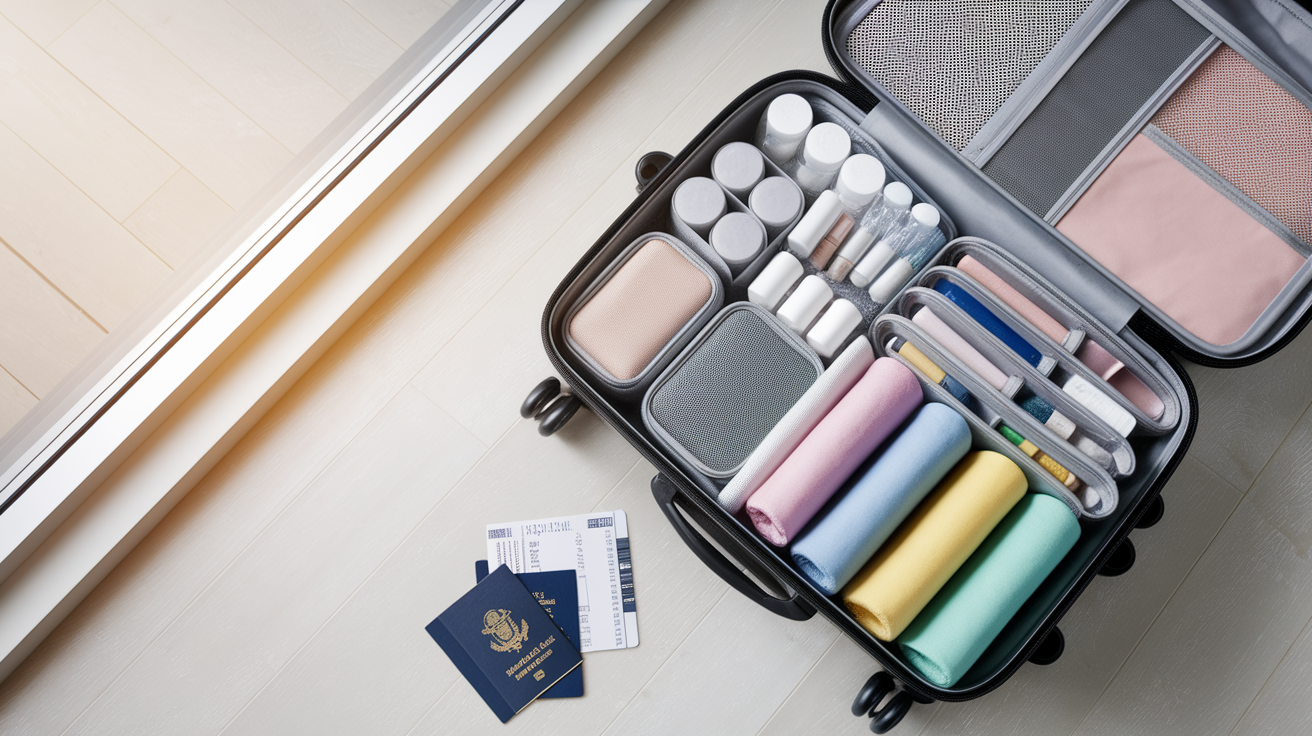
I resisted packing cubes for years, thinking they were just another travel gadget gimmick. I was completely wrong. Packing cubes transformed my suitcase from a chaotic jumble into an organized system that makes living out of a suitcase actually pleasant.
The ultimate benefit isn’t just organization—it’s the complete freedom to find anything instantly without destroying your carefully packed suitcase. Need your swimsuit? Pull out the beach cube. Looking for pajamas? Grab the sleepwear cube. No more dumping everything on the hotel bed.
The perfect packing cube system:
- Outfit cubes: Group complete outfits together for easy morning dressing
- Category cubes: Separate tops, bottoms, underwear, and accessories
- Activity cubes: Beach gear, workout clothes, hiking essentials
Compression cubes work wonders for bulky items like sweaters and jeans. They use zippers to squeeze out air, creating up to 50% more space. Regular cubes work better for wrinkle-prone items that need room to breathe.
My system: compression cubes for casual clothes, regular cubes for nicer outfits, and small cubes for accessories and undergarments. Everything has a designated home, making packing and unpacking at each destination incredibly efficient.
Tip 6: The 48-Hour Rule for Toiletries
Toiletries are where most travelers waste precious space. The 48-hour rule solves this: If you can buy it within 48 hours of arriving at your destination, leave it home.
Basic shampoo, conditioner, body wash? Available everywhere. You’re not traveling to Mars—you’re visiting places where actual humans live and shop. Buy these items locally for an authentic experience. I’ve discovered amazing products in local pharmacies from handmade soaps in Greece to coconut oil-based shampoos in Thailand.
What you should pack: prescription medications, specific skincare products your skin needs, contact lens solution if you’re particular about brands, and any specialty items that matter to your routine.
Decant everything into travel-size containers. Those 3-ounce bottles are perfect for a two-week trip. Use solid alternatives when possible—shampoo bars, solid perfume, bar soap—they don’t count toward liquid limits and never spill.
Keep everything in one clear, quart-size bag that’s permanently TSA-ready. I use a hanging toiletry bag with compartments. It keeps liquids contained, prevents spills from reaching clothes, and hangs in tiny hotel bathrooms for easy access.
The secret most travelers miss? You need less than you think. One moisturizer that works for face and body. One versatile hair product. One makeup palette instead of five individual items. Simplify, and you’ll reclaim stunning amounts of space.
Smart Strategies for Different Travel Styles
Tip 7: Pack for Laundry Access (Even on Short Trips)
This tip delivers breathtaking freedom: pack half as much by planning to do laundry. Even on trips as short as five days, doing one load of laundry means packing for three days instead of six.
Quick-dry fabrics are your best friend. Merino wool (sounds hot, but it’s naturally temperature-regulating and odor-resistant), synthetic blends designed for travel, and technical fabrics dry overnight. I can hand-wash a shirt in the hotel sink before bed, hang it in the bathroom, and wear it the next afternoon.
This works for budget hostels with coin laundry and luxury hotels with laundry service. The approach adapts to your travel style. Budget travelers save money by using local laundromats—which, bonus, make for authentic cultural experiences. You haven’t really traveled until you’ve figured out a washing machine with instructions in another language.
Luxury travelers can use hotel laundry service without guilt because you packed less, so there’s less to clean. The cost is reasonable when you’re only washing a few items instead of an entire suitcase.
Pack one complete outfit for every two days of travel, plus one extra for emergencies. A week-long trip? Four outfits. Two weeks? Seven outfits plus one backup. The math is simple, and the results are stunning: lighter luggage, more space for experiences, and less time deciding what to wear.
Tip 8: The “One In, One Out” Souvenir Strategy
Planning for souvenirs before you leave prevents the nightmare of an overstuffed suitcase on the return journey. The one-in, one-out strategy is perfect: for every souvenir you buy, one item from home stays behind.
This sounds extreme, but hear me out. That t-shirt you’ve worn three times on the trip? Leave it at the hotel with a note for housekeeping. Those cheap flip-flops from the drugstore? Donate them to a local charity. Toiletries you bought locally? Use them up or leave them behind.
I create space by packing older clothes I’m ready to retire. They serve their purpose during the trip, then I leave them behind to make room for authentic finds from local markets—hand-woven textiles, locally made ceramics, or that stunning leather bag you found in a hidden artisan shop.
Another approach: pack a lightweight, collapsible duffel bag inside your suitcase. It takes up minimal space but expands to hold souvenirs on the return trip. You can check this as a second bag if needed, knowing your original carry-on still meets size requirements.
The ultimate goal? Return home with meaningful items that remind you of unforgettable experiences, not random tourist trinkets you grabbed in a panic because you had extra space.
Tip 9: Digital Copies and Multi-Use Items Only
Every item in your suitcase should earn its space by serving multiple purposes. This mindset shift creates stunning amounts of room while ensuring you have everything you need.
Multi-use superstars:
- Sarong or large scarf: Beach blanket, picnic blanket, modest cover-up for temples, light blanket on cold planes, emergency bag, fashion accessory
- Microfiber towel: Quick-dry travel towel, yoga mat, picnic blanket, emergency rain cover for backpack
- Smartphone: Camera, guidebook, map, translator, entertainment, alarm clock, flashlight, journal
Documents go digital. Scan your passport, travel insurance, hotel confirmations, and important documents. Store copies in cloud storage and email them to yourself. This provides backup if anything gets lost while eliminating the need to carry paper copies of everything.
The perfect tech setup is minimal: one universal adapter with USB ports (charges multiple devices from one outlet), one portable battery pack, one set of earbuds, and the cables you actually need. Skip the “just in case” electronics that you’ll never use.
I travel with one small tech pouch containing everything. It fits in my personal item for easy access during flights and keeps cables from tangling with clothes in my main bag. This system works for weekend trips and month-long adventures alike.
The Pre-Trip Packing System That Prevents Chaos
Tip 10: The Three-Day-Before Layout Method
Packing the night before guarantees overpacking. You’re tired, rushed, and your anxiety brain tells you to pack “just in case” items for every possible scenario. The three-day-before layout method prevents this completely.
Here’s the complete system: Three days before departure, lay out everything you think you’ll need on your bed or floor. Every single item—clothes, shoes, toiletries, accessories, electronics. Look at it. Really look at the pile. It’s probably too much.
Walk away. Come back the next day with fresh eyes and eliminate 30%. Be ruthless. That fourth pair of shoes? Gone. The “maybe I’ll wear this” outfit? Nope. The duplicate items? Pick one.
On day three, pack everything that remains. You’ll pack calmly, strategically, using all the techniques above. No last-minute panic, no throwing random items in because you’re running late.
This method also reveals gaps. Oh, you forgot your phone charger? You have time to find it. Need a specific adapter? You can order it with overnight shipping. This breathing room eliminates the stress of realizing you forgot something essential while you’re already at the airport.
Create a master packing list on your phone. After each trip, update it based on what you actually used versus what you packed but never touched. Over time, you’ll develop a personalized checklist that’s perfect for your travel style. My list has saved me countless times—I just open it, check off items as I pack, and know I haven’t forgotten anything important.
Bonus weather and activity adjustments: Check authentic local weather patterns by looking at historical data, not just the 10-day forecast. Pack one outfit for the coldest/warmest possibility, then build the rest around the most likely conditions. For planned activities, pack exactly what you need—hiking boots for that mountain trail, nice shoes for the fancy restaurant—but don’t pack for activities you might do. If you spontaneously decide to go kayaking, you can rent gear.
The final pre-flight check takes five minutes: Open your suitcase, review everything one last time, and ask yourself, “Will I actually wear this?” Add forgotten essentials, remove last-minute doubts. Check weight distribution by lifting your bag—can you comfortably carry it? If not, remove items until you can. This prevents both overweight fees and the physical strain of lugging around too much stuff.
Your Journey to Packing Mastery Starts Now
These 10 packing tips work together to create a complete system that transforms travel preparation from stressful to simple. You’ve learned to bundle wrap and roll strategically, create a capsule wardrobe that maximizes outfits while minimizing items, and utilize every hidden space in your suitcase. You understand that packing cubes aren’t optional, toiletries should be minimal, and wearing bulky items on the plane is genius, not weird.
The hidden benefit of mastering these strategies? Packing better leads to traveling better. When you’re not worried about luggage, you’re free to embrace spontaneous adventures. That invitation to join locals for dinner? Yes, because you can quickly find the perfect outfit in your organized suitcase. That opportunity to extend your trip? Absolutely, because you packed for laundry access. That stunning handmade item at the market? You have room for it.
Better packing saves money on baggage fees, time at airports, and stress throughout your journey. It opens doors to authentic experiences because you’re traveling light enough to be flexible. You can hop on a local bus, climb stairs to a hidden viewpoint, or switch accommodations without dreading the logistics of moving your luggage.
Your action plan: Don’t try to implement all 10 tips on your next trip. Start with three that resonate most with your pain points. Chronic overpacker? Focus on the capsule wardrobe, three-day layout method, and packing for laundry. Disorganized packer? Master packing cubes, the bundle method, and utilizing hidden spaces. Once these become habits, add more strategies.
Practice on a weekend trip. Use these techniques for a short getaway where mistakes don’t matter as much. You’ll discover what works for your travel style and refine your system before that big international adventure.
Here’s the ultimate truth: Less time packing means more time experiencing those breathtaking destinations you’ve been dreaming about. The freedom of traveling light—truly light, not just “I squeezed everything into a carry-on but it weighs 40 pounds” light—opens possibilities you didn’t know existed.
Your next unforgettable journey starts with a perfectly packed suitcase. You now have the complete toolkit to make it happen. The world is waiting, and you’re ready to explore it without lugging around unnecessary baggage—literally and figuratively.
Pack smart, travel light, and create those magical moments that make every trip unforgettable. Safe travels!